April 9, 2024
by Stephen T. Messenger
Organizational dynamics is interesting. Often, we subconsciously select “trusted advisors” and gravitate towards their counsel and advice. These chosen few often think like us, agree with us, and get things done. They’re of like mind and action which create a natural relationship of mutual trust and respect, but sometimes this limits broader ideas and creativity.
I fall into this trap often. Human nature is to congregate with people of similar backgrounds, interests, and thought patterns. Like many of us, I deep-down seek confirmation bias from people I know will agree with me and have an inner desire not to ask those who I believe may disagree. I never want to hear my ideas may be flawed.
Yet those are the people I need to talk to most. They are the ones that see blind spots I do not.
A common failure is to only engage with people who we think will agree with us or can benefit us. The reality is everyone can help increase our understanding of a problem. It’s important to seek out people with different perspectives and viewpoints—and not just those who sit with us regularly. A broader network provides the background and counsel to help us see the holistic picture.
Bay of Pigs
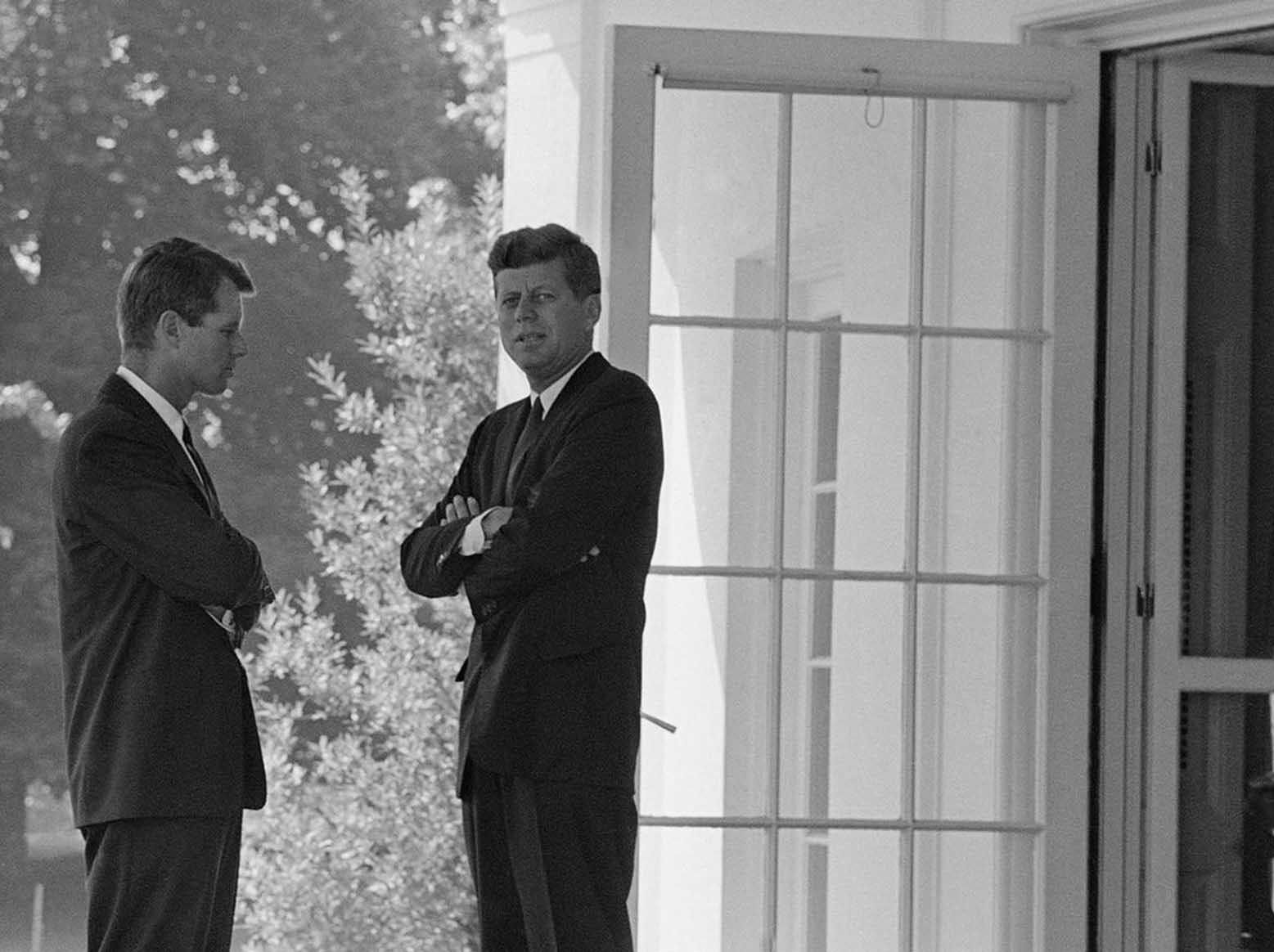
In an infamous example of only talking to a select few, President John F. Kennedy approved an attack on Fidel Castro’s Cuban dictatorship in 1961. The plan was to use a guerrilla army of Cuban exiles, trained by Americans, to invade the island nation.
Kennedy believed removing Castro from power would send a clear signal to the Soviets and Chinese that he was serious about winning the Cold War. Kennedy and his trusted inner circle were all for invading Cuba, and he relied mostly on his confidants for advice on whether to proceed.
Yet, many “outer circle” advisors were not sold that a Cuba invasion was the right move. Some State Department officials felt Castro was no real threat. Secretary of State Dean Rusk disagreed with the plan but did not speak up during the operation’s planning phase. Senior military officials at the highest levels also believed this would be a bad idea but failed to provide their best military advice.
In this instance, Kennedy is commonly blamed with groupthink, when members of a team accept the going consensus without critical debate. He ignored the many warning signs such as newspaper and radio reports a week before the invasion stating that an attack on Cuba could take place imminently. The CIA even received information that the Soviet Union knew the invasion would take place and failed to tell the President. They didn’t offer the information, and the President didn’t ask.
Ultimately, Castro knew about the raid in advance, and the American-trained guerrilla team was met in Cuba by a ready and defending force. Pinned on the sand, 114 guerrillas were killed and over 1,100 taken prisoner in less than 24 hours.
The invasion was a disaster, and President Kennedy was to blame. His decision to listen only to advisors that supported his plan led to a lack of understanding. He created an environment where others felt they couldn’t or shouldn’t provide a contrary view. Without the complete picture from his entire team, his decision led to failure.
Breaking Away from Groupthink
There are three main causes of Groupthink according to Irving Janis, Yale University research psychologist and author of Victims of Groupthink (1972) and Groupthink (1982).
The first is high group cohesiveness. Teams that are close knit often don’t want to rock the boat, and they blindly follow consensus to avoid conflict. These members avoid contradicting each other or arguing in public, and it’s easy to perceive silence as consent. This certainly was true for President Kennedy as different leaders chose silence over debate to maintain their status within the group.
Second, structural faults contribute to groupthink. These could be caused by not having the right people in the room or leaders controlling the conversation and who gets to speak. Closed-style leadership is when the person in charge begins a discussion with their opinion, and everyone else feels compelled to go along. Kennedy was for invading Cuba early; many others followed suit.
Finally, every situation is different and factors such as high stress, recent failures, time pressures, or large stakes all contribute to groupthink. President Kennedy faced all these factors during the Cold War in which behind every decision loomed a nuclear arsenal with fingers hanging over launch buttons.
Thankfully, our groupthink decisions aren’t tied to nuclear war. But we must remember that our teams may not agree with us, and they may be afraid or unwilling to speak up. This is why relying solely on trusted advisors is so dangerous.
There are simple strategies to broaden our decision-making aperture through leveraging the brainpower of our people—all our people. To put it simply, we must talk to everyone and get others to talk to us.
1. Establish a Diverse Group of Advisors. If everyone in our inner circle looks and thinks like us, there’s probably some groupthink happening. We should spend time building a team of unique personalities, backgrounds, experiences, and thinking styles. They may not be in our regular meetings, so we have to go out and find them.
2. Develop an Environment of Discussion. A senior leader I once worked for would point to every person in the room at the end of each meeting, especially to those in the back rows, encourage them to speak up. If he noticed a sour look on someone’s face, he would gently dig into that and ask what’s on their mind. This developed a culture where people felt free and safe to voice their dissent.
3. Expand Decision Making from the Boardroom to the Factory Floor. Most likely the most junior person in the organization has an opinion on the changes we’re about to make. It sure would be helpful to understand their point of view. Sometimes all it takes is for us to go down there and ask them.
4. Seek Outside Perspectives. Our core group of trusted advisors, no matter how good, don’t have all the information. We should seek out professional opinions, experts, data managers, and people that can bring a new lens to our current problems. Often an outside perspective can shed light into a lingering issue.
Trusted Advisors Are Trusted for a Reason
As a counterpoint, there is a reason those in our inner circle are there. They provide great advice and guidance and help make quality decisions. Certainly, don’t discount their advice. In fact, embrace it as foundational knowledge.
However, all of us are susceptible to having blind spots, confirmation bias, or challenges seeing beyond our own opinions. A different perspective is always helpful.
Hunt Information
Often we rely on the same people to make decisions. While this is not necessarily bad, there’s a lot of other information that we can gather by fostering a culture of inclusivity, brainstorming, and outside perspectives.
More knowledge is better when making tough choices. Be sure to utilize all our resources and talk to more than just our trusted advisors.
Subscribe at the link above to The Maximum Standard. This platform is a free, no-ad site designed to help others live up to their full potential as a leader. Thank you for committing to something greater than yourself. Your leadership matters.
We are also looking for authors. You will reap the benefits by having an idea, putting it down on paper, wrestling with it a little, and publishing it for others to see. I encourage you to take this bold journey with us. We have editors standing by to help you.
This website is a personal blog and all writings, podcasts, opinions, and posts are the authors’ own and do not represent the views of the United States Army nor any other organization. Podcast music credit in this audio file is to: “Alex Productions – Legends” is under a Creative Commons license (CC BY 3.0). / @alexproductionsnocopyright
Music promoted by BreakingCopyright: • 🌆 Royalty Free Epic Cinematic Music -…
 The Maximum Standard