July 30, 2024
by Stephen T. Messenger
For the next six weeks, we’re going to discuss the importance of the BRAG+1 fourth principle of leadership, represented by a soldier’s Gun or rifle. If you’re new to this series, start here.
To be effective leaders, we must do one thing well: complete the mission by closing with and destroying the enemy. Our people expect us to get results. Period.
I speak a lot in servant leadership forums and like to say the most important quality a servant leader must have is competence (insert collective hush across the audience). This is the opposite of what is normally spoken in these circles, traditionally highlighted with helping others, empathy, listening, and care for followers—all important. However, I believe the best way to serve others is to first be competent.
Our people are looking for us to deliver results while caring for them. They expect us to lead them to victory. To do so, the first step is to lay out clear, decisive goals to understand, work towards, and conquer. The best leaders frame these goals to their people and gain organizational momentum to success.
Every time I join a new organization, I conduct a brainstorming session with the key leaders to create what will be our decisive points to tackle for the year. These decisive points can be known by many different terms: Big, Hairy Audacious Goals (BHAGs), critical events, or focus areas to name a few.
When laid out correctly and communicated effectively, our people know exactly what is important to the organization and what their focus areas are for the year. In order to close with and destroy the enemy, we must first know who or what the enemy is. It’s up to us to lay out clear, decisive points so the organization knows where to invest time and effort to accomplish the mission.
Decisive Points, Jomini, and Desert Storm
American Army doctrine defines a decisive point as, “a geographic place, specific key event, critical factor, or function that, when acted upon, allows commanders to gain a marked advantage over an adversary or contribute materially to achieving success.” I like to call these game changers.
Game changers, when focused on, drive us towards completing our goals. They’re used to create common understanding across our formations, and then encourage unity of effort to accomplish the big rocks of our organization. This concept can be traced back to Antoine-Henri Jomini in the early 1800s.
Jomini was a Swiss military officer who served as a general in the French and Russian service. He was the author of The Art of War which, among his other works, laid a foundation for modern American military tactics. His theory influenced the American Civil War heavily and is still taught today.
He believed the goal for generals is to strategically place their armies and artillery to best face the enemy “making them act at the decisive moment and at the decisive point of the field of battle.”
American Doctrine would call this term “tactics,” by definition designed to order and arrange units on the battlefield so as to use them to their full potential. By establishing decisive points, we help leaders at all echelons in our unit understand where they need to best use their time and effort, and then accomplish that objective.
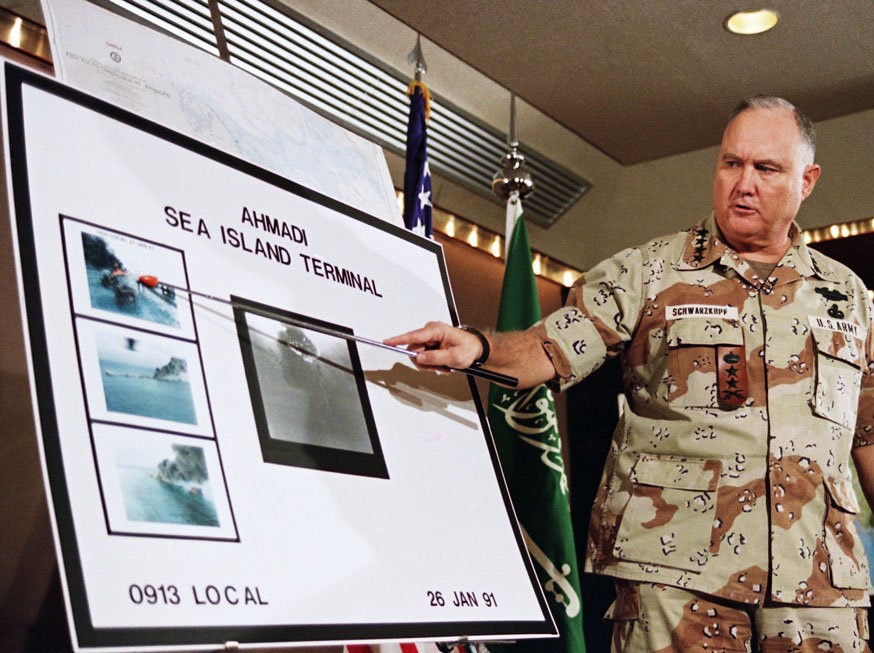
For example, in Operation Desert Storm’s 1991 liberation of Kuwait, the military used decisive points to identify and achieve key objectives in the war. Specifically, there were four geographic decisive points of tactical importance: the berm, specific highway intersections, the Euphrates River, and Kuwait City. By focusing on these four areas, generals were better able to focus their resources against the Iraqi forces, eventually liberating Kuwait.
Once the coalition forces understood what the decisive points were, they could muster resources across time and space to close with those objectives and destroy or capture them as needed. Clearly defined objectives lead to success.
Establishing Decisive Points – A Way
Decisive points in military planning are often overlooked. However, I like to use the Army’s process of operational design in a simplified manner to collectively develop organizational decisive points. Basically, if you can draw boxes and lines on a whiteboard, you can do this.
As mentioned above, my first few weeks in a new job, I outline decisive points for the year. This is a very simple process consisting of first getting all leaders in a room together with a large whiteboard. Once there, we just have a conversation on the big things we, collectively, want to accomplish this year.
1. Understand Our Current State. The first step is drawing a large, tall rectangle on the left side of the board. We then ask our leaders in the room, those that care about our mission and have more knowledge than us, where we are today. “Help us understand our current state.” Then for the next 30 minutes or so, we have a conversation about our current status.
We talk about personnel issues, morale, accomplishments, equipment shortfalls, gaps and seams, and the good, bad, and ugly of our organization. We develop a shared, honest understanding of where we stand today. When conversation dies down, we move to step two and draw a large, tall rectangle on the right side.
2. Visualize a Desired Future State. In this box, we ask our brightest people to help us visualize the future. “What do we look like one year from now?” Here we dream about 100% position fills, missions we completed, filling our gaps, and posturing for the next phase. We have a conversation on what’s realistically possible and envision ourselves 12 months from now or whatever time frame you choose.
These ideas usually spin off our current state. If we had a challenge before, we imagine that it’s solved and what that looks like. The key is to have realistic changes within the time period stated or else we come off as idealists and not realists. When the dialogue peters off here, we look to step three to close the divide between the current and future states.
3. Describe Effective Ways of Bringing that Future about. In the center, here is our time to brainstorm decisive points. What are the game changers that we can realistically do this year to achieve our desired future? These ideas should come from those in the audience so that they’re the ones committed to accomplishing the decisive points, not us telling them what to do.
We compile a list of these key tasks, prioritize what’s possible in the year, give each one a project manager or champion, clean up the document, and publish it as our road map.
The format above was a very simplified way of conducting Army Design Methodology, but is an effective method to develop game changing, decisive points that our teams are committed to achieving since it consists of their ideas, and not ours. This allows us to talk about OUR plan and not mine, leading to a codified, committed path for the year.
Establish Goals to Achieve
One of our most critical tasks is to establish goals that our organization can focus on. Without a plan, a north star, or dedicated goals and objectives, our people are simply wandering through time waiting to see where we might go.
Instead, establishing clear decisive points allows us to steer our people to identify and then close with and destroy the enemy taking steps needed to be successful towards our overarching mission.
Goal setting is the first step to getting things done.
Subscribe at the link above to The Maximum Standard. This platform is a free, no-ad site designed to help others live up to their full potential as a leader. Thank you for committing to something greater than yourself. Your leadership matters.
We are also looking for authors. You will reap the benefits by having an idea, putting it down on paper, wrestling with it a little, and publishing it for others to see. I encourage you to take this bold journey with us. We have editors standing by to help you.
This series is part of our BRAG+1 Leadership Philosophy. If you’re just joining us, start from the beginning on 16 January: A Team to BRAG about and continue from there:
Boots: Put Boots on the Ground
Regimentals: Place Service over Self
Armor: Be Resilient to Life’s Attacks
Gun: Close with and Destroy the Enemy
+1 (Belt): Not a Hint, Sniff, nor Whiff of Impropriety
This website is a personal blog and all writings, podcasts, opinions, and posts are the authors’ own and do not represent the views of the United States Army nor any other organization. Podcast music credit in this audio file is to: “Alex Productions – Legends” is under a Creative Commons license (CC BY 3.0). / @alexproductionsnocopyright
Music promoted by BreakingCopyright: • 🌆 Royalty Free Epic Cinematic Music -…
 The Maximum Standard