November 12, 2024
by Stephen T. Messenger
Teddy Roosevelt was the 26th President of the United States and certainly one of the more interesting characters in American history. To name a few of his exploits, he was a taxidermist, Sunday school teacher, Harvard grad, historian, author, law school dropout, cattle rancher, mountain climber, governor of New York, Assistant Secretary of the Navy, Army officer, and Vice President, to name a few. What a resume!
He was ambitious, driven, and motivated to achieve in every aspect of life, aggressively taking on challenges. But seldom discussed when talking about Roosevelt were the personal hardships he faced. His speech on the “Man in the Arena” was more than just words about how one must get back up when knocked down. It was a biography on how the obstacles we face in life are there to confront, not from which to shy away.
While this may have been Roosevelt’s greatest strength, it was also his weakness, as he would do anything to confront a challenge no matter the cost. This lesson resonates with us as we seek to aggressively overcome obstacles while understanding the effect our drive has on those around us.
Teddy’s Greatest Hits
Early life wasn’t all that easy for Roosevelt, but he overcame it by following his father’s call to, “Get action. Do things. Be sane. Don’t fritter away your time.” This idiom resembles the first of our five characteristics of leadership with putting our boots on the ground in different places and embracing challenges.
He grew up as a sickly child who suffered from malnutrition, a sunken chest, and debilitating asthma. His rich parents tried every era-approved—and often terrible—remedy they could find, to include electric shocks, bloodletting, violent massages, cigar smoking (yes, for a young child), and induced vomiting. Spending most of his time in bed, Teddy was a voracious reader and used this time to learn about science, nature, and adventure which captivated and drove him for the rest of his life.
After exhausting all options, his father settled on the cure: “Theodore, you have the mind, but you have not the body, and without the help of the body the mind cannot go as far as it should. You must make your body.” Teddy relentlessly started working out, including efforts in gymnastics, boxing, and weightlifting. He received his first gun and glasses at 13 years old, which opened up his world to adventure and beauty. He turned his initial hardship into a foundation for success, with all early childhood medical issues fading into the background.
Hit again by life, only four years into marriage, his wife Alice died two days after giving birth, the same day his mother passed from typhoid fever. His journal entry that day was a large “X’ followed by “The light has gone out of my life.” What might have crippled an ordinary man did not deter him, and in four months he was speaking at the 1884 Republican National Convention.
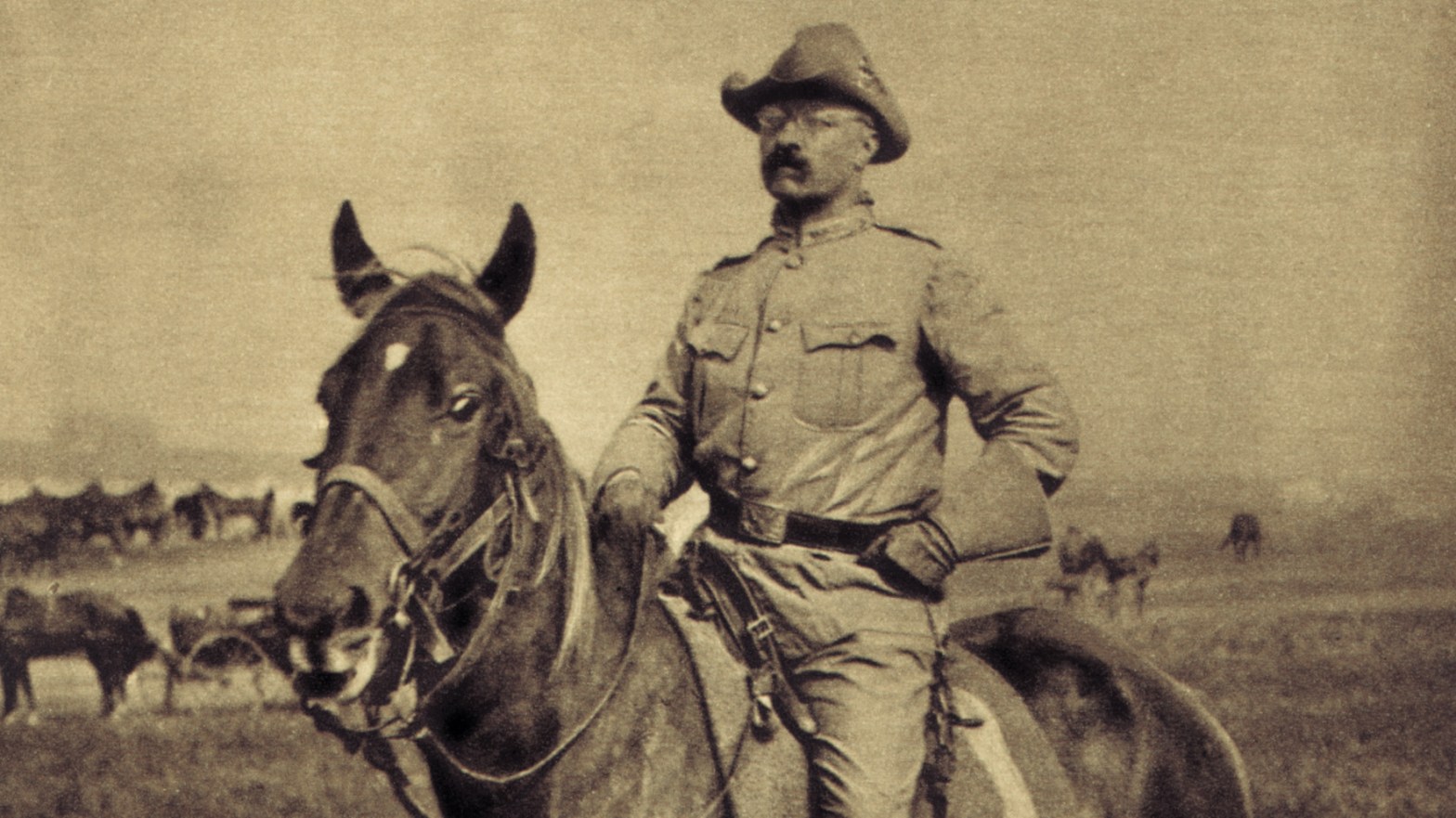
Time and time again, Roosevelt rose to the occasion. During the Spanish-American War, he quit his post as the Assistant Secretary of the Navy and formed the First U.S. Volunteer Cavalry Regiment, the Rough Riders. With little military experience for the newly commissioned lieutenant colonel, he nonetheless led a diverse group of men through training, mobilization, deployment, and combat in Cuba, where he became the hero of San Juan Hill. The only soldier on horseback, he prodded his men along into a fortified defensive position and seized both the hill and his legacy in the process.
Roosevelt never backed down in life. Whether from crippling disease, devastating family trauma, or the call to war, Teddy Roosevelt lived the leadership quality of closing with and destroying the enemy, and this lifestyle propelled him to the highest office in the land.
Overly Aggressive?
There’s no doubt Teddy Roosevelt was aggressive, but it is possible to be too aggressive at times to the detriment of our team. It’s important to be a team player, and Roosevelt flirted the line between helpful and harmful.
His willingness to volunteer and lead the Rough Riders into Cuba was noble at best and self-serving at worst. This action earned him a second life in politics and a meteoric rise to the presidency. His justification was patriotism: “It does not seem to me that it would be honorable for a man who has consistently advocated a warlike policy not to be willing himself to bear the brunt of carrying out that policy.”
Yet, sending Roosevelt into combat with little to no military experience was a gamble, with lives on the line. His aggressive behavior was again seen at the Port of Tampa, prior to loading ships to Cuba. When Roosevelt’s train was delayed to the port, he stole an engine and coal cars to move there himself. Upon arrival, he rushed his men onto a ship not designated for him and refused to unload, stranding the other unit for 48 hours without transportation. His relentless focus on getting to the fight was at the expense of the soldiers deploying with him.
Fast forward to World War I, Roosevelt—age 58 and 20 years removed from the Army—again tried to form his own command, this time as a general officer. He petitioned President Wilson to establish his own military unit but was denied by prevailing heads. This request, while again noble, was overly aggressive and would have people at risk by an untrained senior military leader.
Personifying the BRAG+1 Framework
Teddy Roosevelt captured all the competencies of a BRAG+1 leader. He put his boots on the ground in Cuba, placed service over self in public positions, was resilient through life’s attacks on his health and family, and certainly closed with the enemy.
However, his aggressiveness sometimes went too far. Placing an untrained colonel to lead the assault in Cuba was risky, his behavior at the port left his teammates out in the lurch, and his play to march an Army division into Europe in the Great War was a pipe dream stopped by common sense.
Roosevelt was a great example of how we should act: present, aggressive, resilient, chalking up victories, and summiting mountains. He is far and away one of my favorite people in American history and teaches us the lesson of being aggressive while knowing when it may be too much.
While Roosevelt’s heart was in the right place, his actions created risk for other parts of his organizations. We see this in our personal lives as well. People in meetings bulldoze others to get their point across, someone who thinks they’re right drives ahead without regard to how it affects the organization, or a colleague who disagrees with us undermines authority to get their way, often at the expense of others and in support of their egos or personal goals.
There is nothing wrong with being aggressive, in fact, I encourage it! But there is something wrong with not bringing the team along with us. Nothing we do is an individual sport. Leaders lead people, not things, and it’s our job to generate successes like Teddy Roosevelt while supporting our people in victory.
Subscribe at the link above to The Maximum Standard. This platform is a free, no-ad site designed to help others live up to their full potential as a leader. Thank you for committing to something greater than yourself. Your leadership matters.
We are also looking for authors. You will reap the benefits by having an idea, putting it down on paper, wrestling with it a little, and publishing it for others to see. I encourage you to take this bold journey with us. We have editors standing by to help you.
This series is part of our BRAG+1 Leadership Philosophy. If you’re just joining us, start from the beginning on 16 January: A Team to BRAG about and continue from there:
Boots: Put Boots on the Ground
Regimentals: Place Service over Self
Armor: Be Resilient to Life’s Attacks
Gun: Close with and Destroy the Enemy
+1 (Belt): Not a Hint, Sniff, nor Whiff of Impropriety
This website is a personal blog and all writings, podcasts, opinions, and posts are the authors’ own and do not represent the views of the United States Army nor any other organization. Podcast music credit in this audio file is to: “Alex Productions – Legends” is under a Creative Commons license (CC BY 3.0). / @alexproductionsnocopyright
Music promoted by BreakingCopyright: • 🌆 Royalty Free Epic Cinematic Music -…
 The Maximum Standard