January 30, 2024
by Stephen T. Messenger
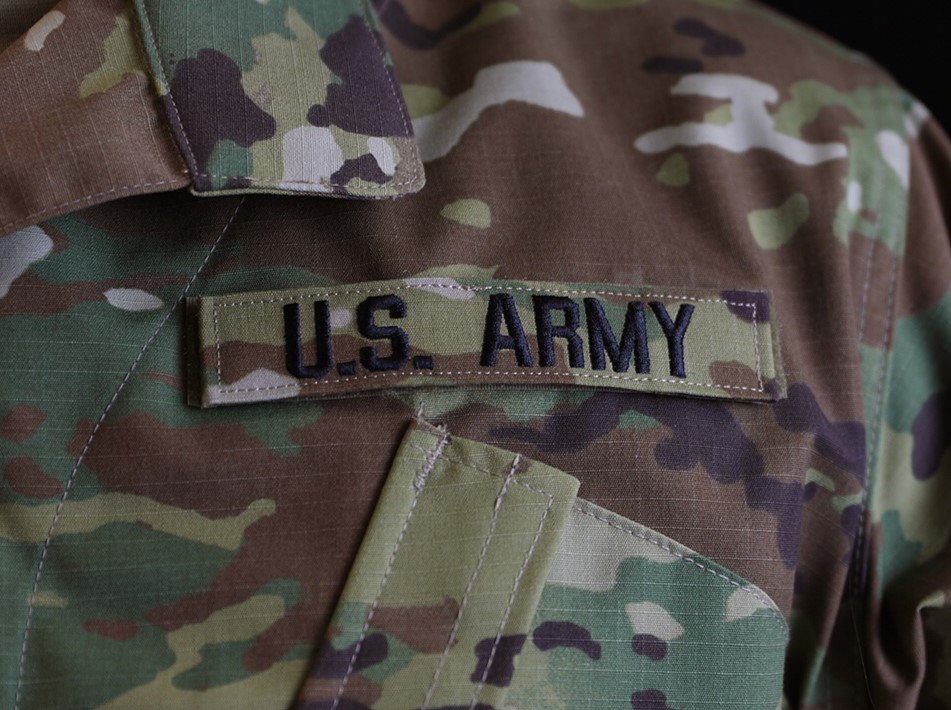
Every morning for work I put on my military uniform. There are many different types, but the one we wear the most is the Army Combat Uniform. The camouflage patterned top has two name tapes over the breast pockets.
On the right side is the soldier’s last name. On the left side is the name tape denoting “U.S. Army,” which I argue is infinitely more important. While a personal name and reputation carry valuable weight, it’s critical for leaders to know the organization is more important than them, and place service over self.
Regimentals
The word “regimentals” means military uniform, especially that of a particular unit affiliation. Today, while the word is rarely used, it denotes the clothes a soldier wears and the accoutrements that go with it.
Dating back to the 17th Century in the British Army, the regiment was the largest, permanent organizational unit, each with a rich history, tradition, and insignia. Monarchs would commission a professional soldier in the rank of colonel to raise, dress, and equip their organizations.
These regiments had specific colors, badges, insignias, uniforms, marches, anniversaries, and even mascots. Their loyalty was to the unit and the soldiers they trained and fought alongside. They wore regimentals to represent their group.
Putting on the regimentals was and still remains symbolic of placing service over self. It is not lost on me that the name tape on a soldier’s uniform stating “U.S. Army” is placed directly over the heart.
It’s Not about Me
One of the biggest reasons I love leadership is that it’s a team sport where organizational success is a collective goal greater than oneself. For the military, this goal rests in national security, deterrence, and warfighting if needed. The profession is truly founded on selfless service, with people prepared to sacrifice their lives to support and defend the Constitution of the United States and the greatest Nation on Earth.
One of the challenges I have with the military (and many organizations) is that it’s very promotion centric. There’s an “up or out culture” where the nature of the system sometimes leads toward direct competition for the top report card. While this can draw out the best in leaders, it sometimes creates an unhealthy environment based on individual personalities in a unit.
Anton Myrer’s novel Once an Eagle, seminal reading for military officers, directly addresses the tension between organizational success and individual achievement.
The protagonist Sam Damon is a career Army soldier who is the exemplar of a servant leader. He spends his military life focused on organizational goals and placing his unit and people above his career and himself. In World War I, he repeatedly risks his life charging through no-man’s land to allow other forces to exploit these gains, earning a battlefield promotion to officer.
Between World War I and II, Sam Damon sets high standards and demanding training for both himself and his soldiers to prepare for the next war. Never one to shy away from honest and unpopular opinions, Sam provides frank assessments to superiors they may not want to hear. Through this, he achieves organizational and personal success while understanding his career is not about him. He received fanatic loyalty from his soldiers.
His counterpart, Courtney Massengale, has many of the same positive traits and attributes as Sam. He is tactically and technically competent, smart, ambitious, and strives for organizational success. However, Courtney’s fatal flaw is that he believes the Army is there to serve him. He believes his last name is more important than the U.S. Army.
Courtney is driven by self-gain, personal accolades, and future opportunities. At one point in World War II on an island in the Pacific, a unit under his command is under a relentless assault by the Japanese and in danger of being destroyed. However, Courtney decides not to rescue that unit, and instead uses reinforcements to capture a Japanese city on the other side of the island. He receives great accolades at the expense of thousands of his soldiers’ lives. The opposite of Sam’s mindset, Courtney operates with a mentality that his pride, ego, and success come above all else.
There are many nuances to these two opposing characters, but generally they’re on opposite ends of the spectrum. Few leaders today can be characterized as either a pure Sam or a pure Courtney. Instead, most leaders live tenuously in the middle of the personal accolades-servant leadership spectrum.
The Left Side of the Uniform
It’s incumbent upon leaders to unabashedly focus on the left side of the name tape (the organization) and move the narrative away from the right side (yourself). To do this:
- Use the Word “We.” A leader’s language must reflect inclusivity. Every sentence should tout “our” accomplishments, “our” gains, and “our” successes; not “my.” Leader’s don’t personally own anything. They own “our” organization together.
- Know the History and Live the Culture of the Unit. Each organization has a history. Whether a start-up or 100-year-old company, history matters and shapes people’s thoughts. Likewise, the culture of a unit is owned by all of us. Study it, communicate it, and live it.
- Know What Leader the Organization Needs. Leaders bring a specific skillset with them. Yet those particular tools may not be what the organization needs at the time. The best leaders understand their culture and climate and bring to the table attributes that move the team forward.
Below are some common pitfalls when wearing regimentals.
- Don’t: Make It about You. Push praise down to subordinates and take the blame from higher leadership when something goes wrong. A leader’s job is to promote those who work for them and recognize “our” achievements and collective gains—never the leader’s.
- Don’t: Be above Others. A higher rank, larger office, or more prominent title may seem like a big deal, but it’s not. There’s a pitfall when a leader thinks they are more important than others. Sometimes, the only difference is that one was born a few years earlier. Be humble.
- Don’t: Use the Position for Personal Gain. Too often leaders think their position comes with perks that transcend their profession. Anytime a leader is gaining personally from a professional position, the red flag should immediately rise.
Wear the Regimentals Proudly
Putting on the regimentals every morning is a constant reminder that leaders are here to serve the organization and not the other way around. It’s never about you. It’s always about us.
Next time you see yourself wearing the proverbial uniform in the mirror, remember to take a look at the organizational side and proudly remind yourself why you serve.
Subscribe at this link above to The Maximum Standard. This platform is a free, no-ad site designed to help others live up to their full potential as a leader. Thank you for committing to something greater than yourself. Your leadership matters.
We are also looking for authors. You will reap the benefits by having an idea, putting it down on paper, wrestling with it a little, and publishing it for others to see. I encourage you to take this bold journey with us. We have editors standing by to help you.
Other Articles in this Series
Boots: Put Boots on the Ground
This website is a personal blog and all writings, podcasts, opinions, and posts are the authors’ own and do not represent the views of the United States Army nor any other organization. Podcast music credit in this audio file is to: “Alex Productions – Legends” is under a Creative Commons license (CC BY 3.0). / @alexproductionsnocopyright Music promoted by BreakingCopyright: • 🌆 Royalty Free Epic Cinematic Music -…
 The Maximum Standard