June 4, 2024
by Stephen T. Messenger
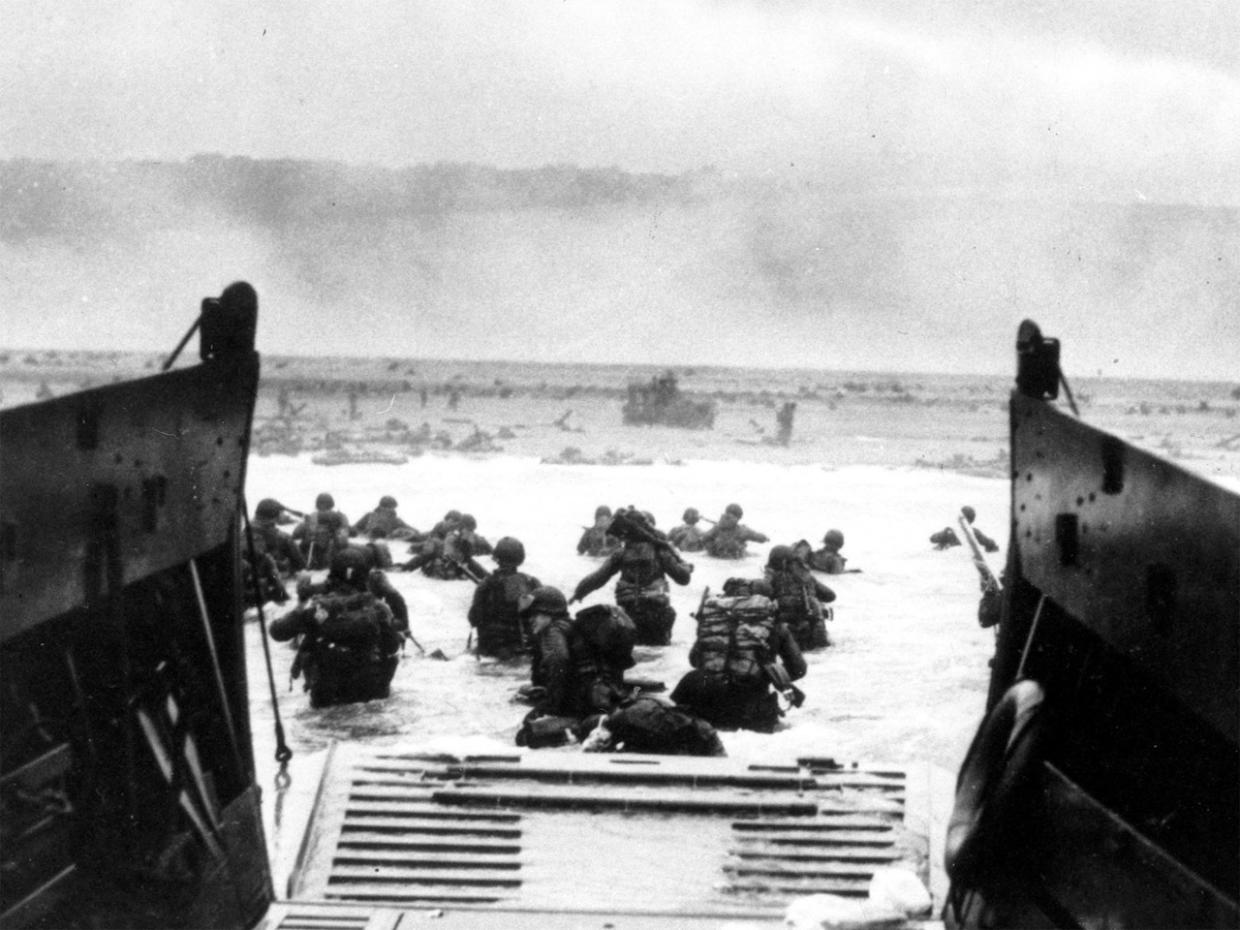
In two days, we remember the 80th anniversary of the largest amphibious assault in miliary history: D-Day. But the decision to launch began two days earlier, June 4th, when Supreme Allied Commander General Dwight D. Eisenhower had to make arguably the biggest choice of his military career.
Ultimately, on June 6th, 1944, Allied forces launched over 156,000 troops on thousands of ships and aircraft across the English Channel into Nazi occupied France. In a daring and audacious gambit, the Allies used paratroopers to drop behind enemy lines, aerial bombardment, ships to deposit soldiers on heavily fortified beaches, ranger teams scaling 100-foot cliffs, deception operations, and a massive logistics tail to support the event.
Eisenhower was the commander for the operation. He was responsible for the planning, preparation, and execution of this massive undertaking. The weight of the free world was upon his shoulders.
This D-Day, we encourage you to grab some popcorn and watch the Saving Private Ryan opener, Episode 2 of Band of Brothers, or a documentary on this event (appropriate for your audience, of course). It’s amazing!
But instead of this being a history article, we’re going to examine a number of lessons we can take in our own leadership journey as we solve difficult problems.
Planning is Essential
A major amphibious assault on France was in the works long before D-Day. Just like our landing planners, it’s important we have a deliberate planning process for our long-term success.
This includes understanding the mission and problem we’re trying to solve, developing courses of action, wargaming to make them better, selecting the best one, and communicating it effectively. Planning is critical to any event, big or small. Without a plan, we’re just winging it, and to be honest, many people like to do that.
Study, Train, and Rehearse
Being good at amphibious landings did not happen overnight. Beginning in 1942, the Allies conducted a number of amphibious landings. Before the war, Americans practiced assaults on U.S. beaches, drafted doctrine, established an Amphibious Training Center, and conducted numerous, smaller wartime landings in North Africa, Italy, and the Pacific.
Practice and refinement are critical to any task that we tackle. It is not enough to put the plan on paper—we have to rehearse our actions and refine based on what we learn.
No One Does Hard Things Alone
The D-Day landings were a combined effort of 13 Allied nations. Most remember the United States, Great Britain, and Canada landing on the beaches. But thousands of French Resistance conducted covert operations in France; Polish, Belgium, and Czechoslovakian pilots flew for the Royal Air Force; and the Danes steered ships across the channel.
It’s so important to include a coalition of the willing to help us solve our hard problems. It is harder to go alone than to go with friends.
Reframing Is Encouraged
The original D-Day landing was scheduled for June 5th. There was a narrow band of acceptable conditions between 5-7 June with full moon illumination for identifying glider landing sites and low tide at dawn to see underwater obstacles. That plus needing perfect weather conditions created a razor-thin decision space.
On the morning of June 4th, Eisenhower’s weatherman said conditions weren’t right and recommended postponing the landing. Ike agreed and pushed the invasion by 24 hours. Leaders must constantly be assessing the environment and make decisions based on changing conditions—not blindly following a plan.
Let Them Do What They Do Best
Once General Eisenhower gave the order for D-Day on June 6th, there was little else for him to do. He went and visited the troops. He wrote some correspondence. But ultimately he trusted in his men and the mission.
There were no more decisions nor plans to be made. It was simply stepping back and letting the best people do their best work. Leaders should do only what they can do.
Sometimes, and more often than not, that means providing purpose, direction, and motivation, then stepping back and getting out of the way!
June 6th, 1944
This D-Day, we hope you’ll reflect on what an incredible undertaking this operation was. With a lot of planning, the right people, continued decision-making, and trust in our people, there is little we cannot accomplish.
Subscribe at the link above to The Maximum Standard. This platform is a free, no-ad site designed to help others live up to their full potential as a leader. Thank you for committing to something greater than yourself. Your leadership matters.
We are also looking for authors. You will reap the benefits by having an idea, putting it down on paper, wrestling with it a little, and publishing it for others to see. I encourage you to take this bold journey with us. We have editors standing by to help you.
This website is a personal blog and all writings, podcasts, opinions, and posts are the authors’ own and do not represent the views of the United States Army nor any other organization. Podcast music credit in this audio file is to: “Alex Productions – Legends” is under a Creative Commons license (CC BY 3.0). / @alexproductionsnocopyright
Music promoted by BreakingCopyright: • 🌆 Royalty Free Epic Cinematic Music -…
 The Maximum Standard
Well done! Awesome idea to expound on. Thanks for the motivation and energy to get moving today.Nancy Sent from my U.S.Cellular© Smartphone
LikeLike
Nancy, always great to hear from you! And what a blessing we get to reflect on our heroes from the past. I am constantly in awe of those that have went before us and paved the way to reflect, learn, and grow. Thanks for your leadership!
LikeLike