October 15, 2024
by Stephen T. Messenger
I’ve taken over a job or two where the ethical standards weren’t that high. I could see around me the acceptance of questionable integrity and rule breaking that comes from a lackadaisical environment of morality enforcement. Let me provide a few examples I’ve experienced:
- A soldier needing parts for his military vehicle doesn’t go through the supply system but instead “acquires” that part from somewhere else. When asked where they got it, the answer is, “You don’t want to know, Sir.” That response always means something shady is happening.
- A married supervisor is having a side fling with someone at work. They try to keep it a secret against company policy (and marriage fidelity!), but everyone knows it’s happening, ignores it, and hopes it goes away.
- Office banter becomes a little more vulgar each day. The jokes continue to get more crude and offensive. There are generally three groups of people: those who join in, those who uncomfortably laugh, and those who walk away but never confront it.
These situations happen every day and as younger, fledgling leader, I admit to being a guilty onlooker in every situation. It’s hard to be above reproach and police up every little violation. Mainly because we often feel like we’re on our own, when we’re not. There are people all around that feel the same way and suffer in silence.
That’s why it’s so important to never quit communicating the ethical narrative. We must be the ones out front of the moral message to remind everyone that it’s expected to police up our shortfalls. Our organization is reliant on and expects us to take a continuous stand with the highest ethical standards we can offer. When we do, others will follow. When we don’t our ethics will crumble around us.
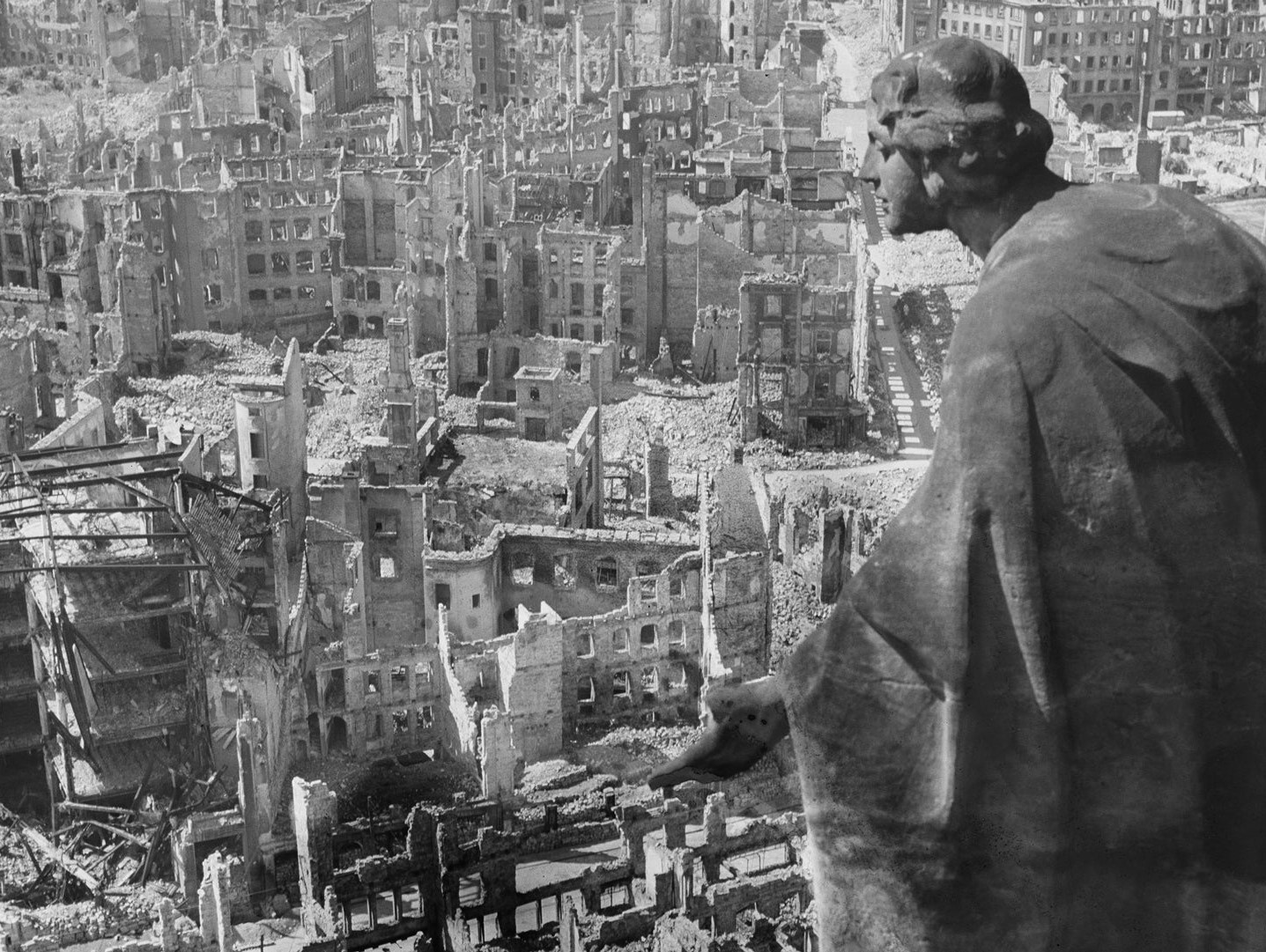
The Firebombing of Dresden and Japan
Let me caveat this transition in that we’re about to move from petty theft to firebombing cities with hundreds of thousands of civilian deaths. I acknowledge they are nowhere close to the same. But the narrative is similar. We allow what we say we will allow, and our language should match our standards.
American’s looked in horror prior to World War II at the atrocities committed through “terror bombing.” In 1937, Germany bombed Guernica in Northern Spain garnering global attention during the inception of mass aerial bombing. Casualty estimates varied from hundreds to thousands, as it was clear the attack on bridges and roads were indiscriminately and purposefully killing civilians.
The same year, the Japanese terror bombed Nanjing, then Shanghai, then Guangzhou. The first started aiming for strategic targets, but the Japanese goals shifted and were soon intended to terrorize civilians and destroy morale.
In 1937, President Franklin Roosevelt raised the moral banner and stated, “Without warning or justification of any kind, civilians, including vast numbers of women and children, are being ruthlessly murdered with bombs from the air.”
He started off on the ethical high ground, but quickly changed his tune. During American WWII attacks on the town of Dresden, Germany, the British and American bombers dropped incendiary bombs with the intent to ignite everything it could. Casualty estimates were over 25,000 civilians with over 600,000 killed during the war.
In Japan, President Roosevelt authorized the firebombing of 67 cities, 180 square miles, and a death toll of over 600,000 civilians with 8.5 million homeless. The Secretary of War, Henry Stimson, was concerned stating the United States may “get the reputation of outdoing Hitler in atrocities.” He then approved the atomic bomb drop on Hiroshima and Nagasaki killing over 200,000 civilians.
It’s easy to have the moral high ground when our adversary is the one in the wrong. However, when we’re doing it, we lose that high ground. Roosevelt could have maintained a policy of not targeting civilians. He did not. He could have focused the narrative on strategic targets. He did not. Instead, he chastised the Japanese then turned around and did the same.
As a note, American may never have won the war without a firebombing campaign of civilians. This is an ethical problem that’s been studied for decades with no great answers. But what is clear is that the President’s messaging did not match his decisions. The result was continued moral degradation with no clear explanation.
Kotter: Communicate the Change Vision
It’s our responsibility to communicate the ethical bar in our organization. Once we initially establish the high standards we want our people to live by, we have to keep that message going.
John Kotter’s fourth step of his change model is to communicate the change vision. What he means by that is to relentlessly continue a narrative that everyone repeatedly hears.
1. Simplicity and Repetition. Our message must be easy to remember. When I first started saying, “Don’t have a hint, a sniff, or a whiff or impropriety about us,” I didn’t think it would stick. But it became a thing. When something was morally amiss, others in the room would start sniffing with their noses, like they could smell what was wrong.
It didn’t take much for people to remember that line after I said it a number of times. It’s short, catchy, clear, and to the point. They were now using OUR language with each other to lay out the standard.
2. Make It Two-Way Conversation. We need to talk with people and not at them. Every team is at a different place on their moral-o-meter. It’s good to have the conversation of we’re at, where we want to go, and how we’re going to get there.
State the standards up front, and then have an open, honest conversation of our current state of affairs. It’s surprising that people want to be on the high ground; sometimes they just need to talk about it.
3. Create a Pyramid Scheme. We should have these conversations often with our leadership teams. The intent is that they then go and have the same conversations with their leadership teams. Have others pass the message levels down into their small groups.
This creates an ethical whisper down the lane where multiple echelons of leadership are having great conversations on what the standards are and how to hold each other accountable.
By using simple messages, having two-way conversations, and training leaders to train their teams, we can raise the ethical standards within our formations.
Don’t Give Up
It’s easy to let this one go. Our Utopian mindset thinks that we can lay out our ethical standards one time and everyone will fall in line. But they won’t.
Our job is to ruthlessly promote the narrative of being above reproach in the organization. Our people need to hear a continuous message from us on ethical standards, moral propriety, and legal standards. Be relentless!
Subscribe at the link above to The Maximum Standard. This platform is a free, no-ad site designed to help others live up to their full potential as a leader. Thank you for committing to something greater than yourself. Your leadership matters.
We are also looking for authors. You will reap the benefits by having an idea, putting it down on paper, wrestling with it a little, and publishing it for others to see. I encourage you to take this bold journey with us. We have editors standing by to help you.
This series is part of our BRAG+1 Leadership Philosophy. If you’re just joining us, start from the beginning on 16 January: A Team to BRAG about and continue from there:
Boots: Put Boots on the Ground
Regimentals: Place Service over Self
Armor: Be Resilient to Life’s Attacks
Gun: Close with and Destroy the Enemy
+1 (Belt): Not a Hint, Sniff, nor Whiff of Impropriety
This website is a personal blog and all writings, podcasts, opinions, and posts are the authors’ own and do not represent the views of the United States Army nor any other organization. Podcast music credit in this audio file is to: “Alex Productions – Legends” is under a Creative Commons license (CC BY 3.0). / @alexproductionsnocopyright
Music promoted by BreakingCopyright: • 🌆 Royalty Free Epic Cinematic Music -…
 The Maximum Standard