October 29, 2024
by Stephen T. Messenger
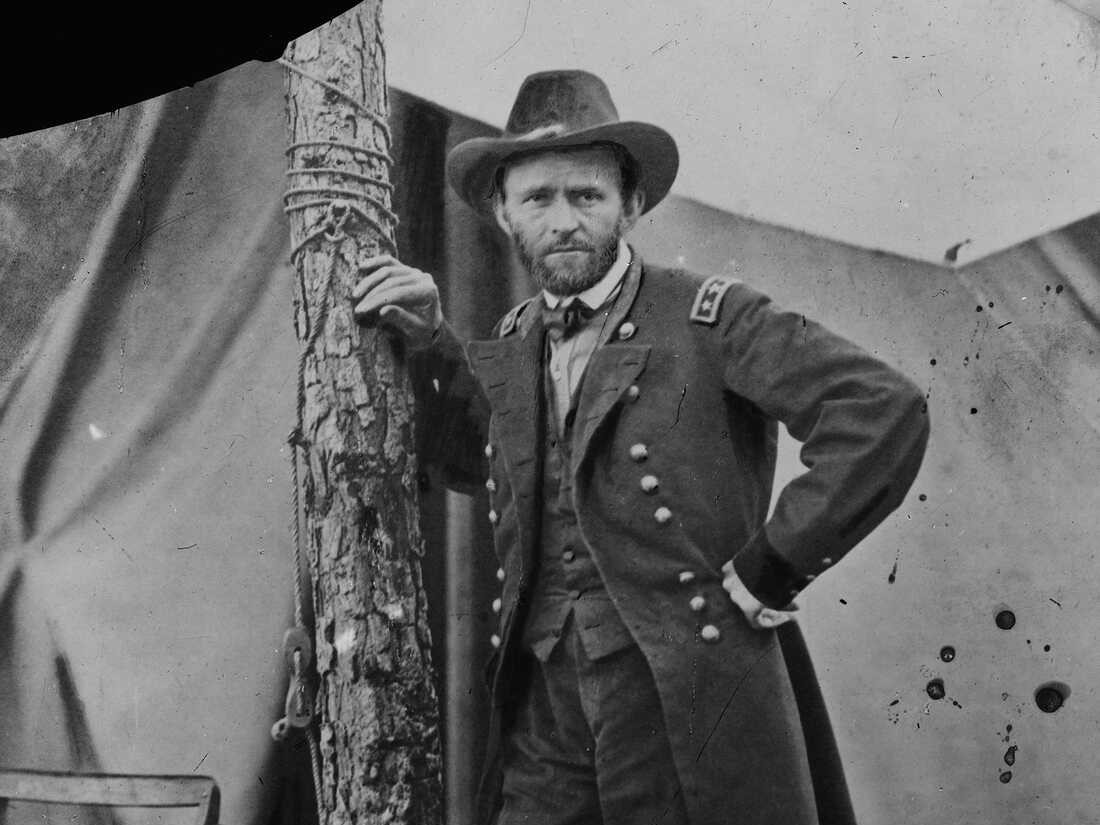
Both the hardest and easiest part of being a great leader is often just being at the point of greatest friction. Lacing up our boots and placing them in the trenches is critical to our success in our battles. Ulysses S. Grant understood this concept well, especially at a young age. While masking his Achilles heel of alcoholism a good portion of his life, Grant nonetheless was the epitome of leading from the front.
Ulysses S. Grant is best known as the President of the United States or perhaps the general who won the Civil War for the Union, but his early career set the stage for a reputation of battlefield aggressiveness. In the Mexican-American War, Grant first learned as a young officer the importance of maintaining the offensive and keeping the enemy reacting to him.
The Heroic Quartermaster
Much to his chagrin, Grant was assigned as the regimental quartermaster and commissary officer. This critical position to manage the logistics support was originally lost on Grant who wanted to see combat. But he embraced his disappointment and became a successful young logistician. Often when we’re assigned positions we don’t like, it’s easy to complain and sink into depression. Like Grant however, we need to embrace those experiences and be resilient to our inner monologue, learning what we can in undesirable positions.
Grant did just that, and his knowledge gained from sustainment support on was invaluable to his future career. Many argue that the knowledge he gained encouraged him to use railroads and rivers to gain victories in future Civil War operations.
Yet while relegated to a supporting role, he still found a way to move to the point of greatest friction. In the first of three examples in the Mexican-American War, at the Battle of Palo Alto in 1846 he participated in what amounted to an artillery volley. Outnumbered and facing 4,000 attackers against 2,300 Americans, Grant withstood cannonball fire as one “passed through our ranks, not far from me.” In the face of his first hostile fire, he stood his ground as we all must when things get tough. Resiliency matters when facing hardships.
In a second instance at the Battle of Monterey, his unit was running low on ammunition while fighting through the city streets. Taking the initiative, he jumped on his horse to speed to the rear for resupply. Grant hung low to one side, protecting himself from enemy fire that was coming from the streets. After grabbing supplies, he rode back through gunfire and arrived unharmed. While we most likely won’t be shot at, there are times when we have to ride through the fire to accomplish our objectives.
Third, outside Mexico City, Grant was commanding a platoon-sized element and dragged a disassembled howitzer cannon to a key position. He and his men moved it 300 yards to the top of a church belfry and poured fire on the enemy, allowing the Americans to advance. Grant showed great bravery in the face of adversity.
We too must follow his lead and find ways to be useful in any and all circumstances. Grant led from the front, put boots on the ground, and engaged the problems in front of him at great personal danger and sacrifice.
In July of 1852, Grant was tasked to escort civilians from New York City to California. The route was by boat through Panama and then to an overland route. Once down in Central America, the expedition was ravished by cholera, killing one third of the 300 passengers. As the quartermaster, Grant quickly took action and set up a field hospital preventing the outbreak from spreading. When some of the orderlies refused to provide care to the sick, Grant filled the gap. One passenger was amazed: “He was like a ministering angel to us all.”
Grant got it! He stepped up in the worst of times, took on the roles that he didn’t really want, and placed himself in personal danger and hardship to carry out the mission. It’s not easy being in charge, but the best of us must emulate young Ulysses S. Grant and put on our boots, regimentals, armor, and gun to make things happen.
Grant did this time and time again in the Mexican-American War, his civilian life, and again as a Civil War general and hero. We won’t get into all the accolades of his life, but Grant knew how to make things happen. As Abraham Lincoln said, “I can’t spare this man; he fights!”
The Dark Side of Grant
Just like all of us, Grant had some, we’ll call them, opportunities to improve. One accusation he carried with him through almost his whole life was that he was an alcoholic. Historians cannot conclusively determine if this was true or not, but what is clear is that his actions caused others to question his behavior. When in charge, we have to be above reproach and not give anyone a chance to question us.
In Grant’s case, repeated assignments after the war consisting of boredom and monotony caused him to hit the bottle, and many saw this. Some historians argue that he drank just as much as the next 1800’s American, but he quickly gained a poor reputation.
It became so bad he self-admitted to the Sons of Temperance in 1851 to quell his drinking. But on his next assignment in Detroit, he slipped on some sidewalk ice and blamed the storekeeper. In the subsequent trial, he was accused of drunkenness, and it captured the attention of military leaders on Grant’s condition. His reputation lessened the validity of his words. We can’t let that happen to us.
Future Civil War General George B. McClellan observed him drunk in Vancouver, which further spread rumors among senior leaders. At his next assignment, the Fort Humboldt Post Commander accused Grant of being drunk on duty and had him draft a letter of resignation from the U.S. Army in case of a subsequent incident. A short time later, it happened again. Grant signed the letter in lieu of court martial in April of 1854.
Again, there’s very little indication that Grant had a drinking problem or consumed more alcohol than the average man, but his reputation followed him nonetheless. When Grant reentered the Army during the Civil War and rose to lead the Union, his alcoholism followed him right up to President Lincoln. He was simultaneously the hero of the country and plagued by his opponents questioning his competencies because of liquor.
Not a Hint
We can be great in so many different areas of life yet suffer in one. Grant showed incredible success on the battlefield and went on to be President of the United States while living with the moniker as a drunk that plagues him long after his death.
Imagine Grant’s legacy without this hanging over him. Imagine if his critics didn’t have alcoholism to attack him. Imagine if this entire article wasn’t clouded by a drunken haze. Ulysses S. Grant would be heralded as one of the greatest Americans in our history. Instead, we question his self-control and ability to be sober while protecting his soldiers.
We must be better than him. We can’t give our critics an ethical weakness. Notice I didn’t say we can’t let them see our ethical weakness; we have to be above reproach at all we do. In Grant’s defense, there’s nothing wrong with drinking. There is wrong with drinking to a point where multiple people including our bosses think we have a problem. Ulysses S. Grant was amazing and, just like us, flawed.
It is wrong to gawk at the opposite sex outside our marriage. Or have a gambling problem. Or be vulgar or rude. Or not treat everyone with dignity or respect. Or have a reputation as one who hides or bends the truth.
All eyes are watching. We can thrive at the points of greatest friction like Grant and not have a hint, sniff, or whiff of impropriety about us.
Subscribe at the link above to The Maximum Standard. This platform is a free, no-ad site designed to help others live up to their full potential as a leader. Thank you for committing to something greater than yourself. Your leadership matters.
We are also looking for authors. You will reap the benefits by having an idea, putting it down on paper, wrestling with it a little, and publishing it for others to see. I encourage you to take this bold journey with us. We have editors standing by to help you.
This series is part of our BRAG+1 Leadership Philosophy. If you’re just joining us, start from the beginning on 16 January: A Team to BRAG about and continue from there:
Boots: Put Boots on the Ground
Regimentals: Place Service over Self
Armor: Be Resilient to Life’s Attacks
Gun: Close with and Destroy the Enemy
+1 (Belt): Not a Hint, Sniff, nor Whiff of Impropriety
This website is a personal blog and all writings, podcasts, opinions, and posts are the authors’ own and do not represent the views of the United States Army nor any other organization. Podcast music credit in this audio file is to: “Alex Productions – Legends” is under a Creative Commons license (CC BY 3.0). / @alexproductionsnocopyright
Music promoted by BreakingCopyright: • 🌆 Royalty Free Epic Cinematic Music -…
 The Maximum Standard