May 15, 2025
by Chad Maynard
It’s hard to believe I joined the U.S. Army almost 23 years ago. I originally told myself I’d do this “military thing” for four years before getting out and becoming a successful businessman. But what I found was a passion for supporting and defending our great Nation and taking care of soldiers.
Last year, the Army blessed the pursuit of that passion and sent me to Washington D.C. for a year to attend the National Defense University, Eisenhower School for National Security and Resource Strategy. It was here that I gained the time and space to reflect on my leadership philosophy over the past two decades.
As I sat on the banks of the Potomac River reflecting on the mentors and great leaders I’ve had throughout my career, I focused on the qualities I most admired in their leadership styles. Then I thought: Wait, this isn’t about them. Sure, I learned from them, and they helped shape me into the leader I am today, but this is about what drives me as a leader. What do I want to see in those I lead?
That’s when I began to write down the core attributes that define my leadership philosophy: presence, hard work, empowerment, and decision-making.
We all need to develop our own leadership philosophy. Everyone leads differently, and we need core beliefs to fall back on and communicate with others. Here are mine.
Presence
Leaders must be present and visible, not only to their superiors, but especially to their subordinates. The best of us lead from the front and lets the team know we’re always with them, and if not physically, then we’re with them mentally. We must do the things we ask of them and support them as they execute. Bottom line: we can’t be afraid to get our hands dirty.
In today’s technology-driven world, it’s easy to hide behind email, Teams, and phone calls. But there is no substitute for in-person engagement. Being present also means being accessible. An open-door policy means little if no one can actually use it. Presence builds trust and reinforces hard work. Sometimes, it means putting aside our own responsibilities to mentor or support someone else.
In the end, presence isn’t just about proximity. It’s about connection, trust, and the quiet power of being seen when it matters most.
Hard Work
Hard work is a virtue that resonates throughout an organization and sets the tone. There is no substitute for it. I’ve impressed upon those around me for many years that when everyone simply does their job as a baseline, no one else must cover for them. This is when organizations operate effectively and efficiently, firing on all cylinders. Of course, going above and beyond is even better.
I promise that no one, especially my superiors, will ever have to do the work that is expected of me. This isn’t always easy. It requires putting personal wants and needs aside and recognizing that what we do is bigger than ourselves. Hard work levels the playing field with those who might be more naturally gifted. When intellect and strong work ethic are combined across individuals and an organization, that’s where true greatness lies.
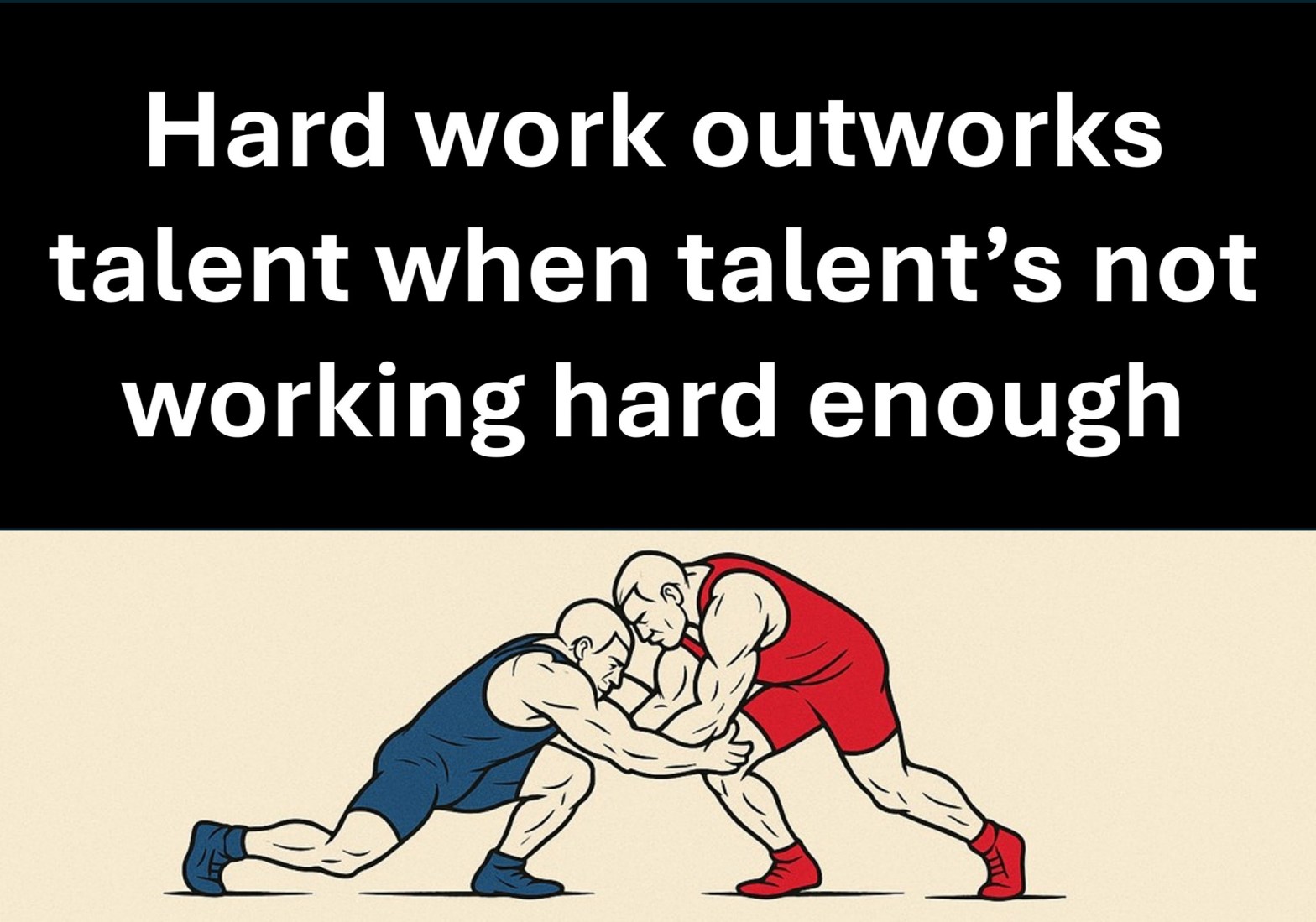
Hard work outworks talent when talent’s not working hard enough.
Empowerment
Good leaders empower their teams to operate in a decentralized manner. The Army calls that Mission Command. To simplify this concept, it means telling others what to do, not how to do it. As a leader, I want the freedom to make decisions without being micromanaged, and I believe my team should have that same freedom.
I’ll admit this was the hardest principle for me to adopt. I used to struggle with delegation, not because I didn’t trust others, but because I didn’t know how to clearly express what I wanted. That was my shortcoming, not theirs. That’s when I started focusing on communicating with intent by providing purpose, key tasks, and end state, just like Army doctrine teaches, and letting smart people take the lead.
If we expect our formations to operate with speed and precision, then we must train our leaders to think, decide, and act without waiting for orders.
Decision-Making
Empowering our team is not a substitute for making decisions. That remains the leader’s responsibility. They say in Army courses that commanders should make decisions only commanders can make. This holds true for all of us. We must educate ourselves enough to understand the situation around us and be prepared to solve problems with action, not just admire them.
When a decision needs to be made, either the data speaks for itself, or it’s time to act based on experience and judgment. Leaders owe it to their team to look at both science and the art of the decision. That includes using both available data and our personal wisdom. Our teams should never be left waiting for guidance or stuck in a holding pattern because their leader can’t make a call.
When it’s time to decide, leaders must act because indecision in command risks mission failure and erodes unit trust.
Leadership Philosophy as a Guide
Having my leadership style codified in writing has given me a philosophy that enables me to shape the future. It serves as a decision-making tool, one I refer to during every counseling session, whether I give it to a subordinate or receive it from a superior. While many leadership styles and attributes are effective, I had to reflect deeply to understand what truly drives me. Using this, I have a constant leadership drumbeat that is no surprise to anyone around me.
Others may share similar principles, but we need to identify and articulate the qualities that define us. We must write them down, share them with others, and commit to living that philosophy every day. It will help us naturally gravitate toward the attributes that resonate with our instincts. Though our lists may evolve over time, our core values will remain constant because they reflect who we are as leaders.
Always Move Forward!
Chad Maynard is a Professor of Military Science at the University of Akron and a Lieutenant Colonel in the U.S. Army Reserve. He has served in a variety of leadership roles over the course of his 23-year military career. He is married and has two children.
Click here to sign up for The Maximum Standard’s weekly email where you’ll get a leadership vignette delivered for free every Tuesday morning!
We’re always looking for authors. We coach first time authors (and anyone) through the writing process if you need a little help. It’s worth taking the first step and showing interest.
The views expressed here are the author’s own and do not necessarily reflect those of the United States Army or the Department of Defense.
 The Maximum Standard