July 10, 2025
by Michael M. Posey
“I’ve missed more than 9,000 shots in my career. I’ve lost almost 300 games. Twenty-six times I’ve been trusted to take the game-winning shot and missed. I’ve failed over and over and over again in my life. And that is why I succeed.”
—Michael Jordan, six-time NBA champion
There is something uniquely American about the concept of failure. While our nation has seen unparalleled greatness and influence on the world’s stage throughout its history, upon closer examination, we can see that this success is forged in failure.
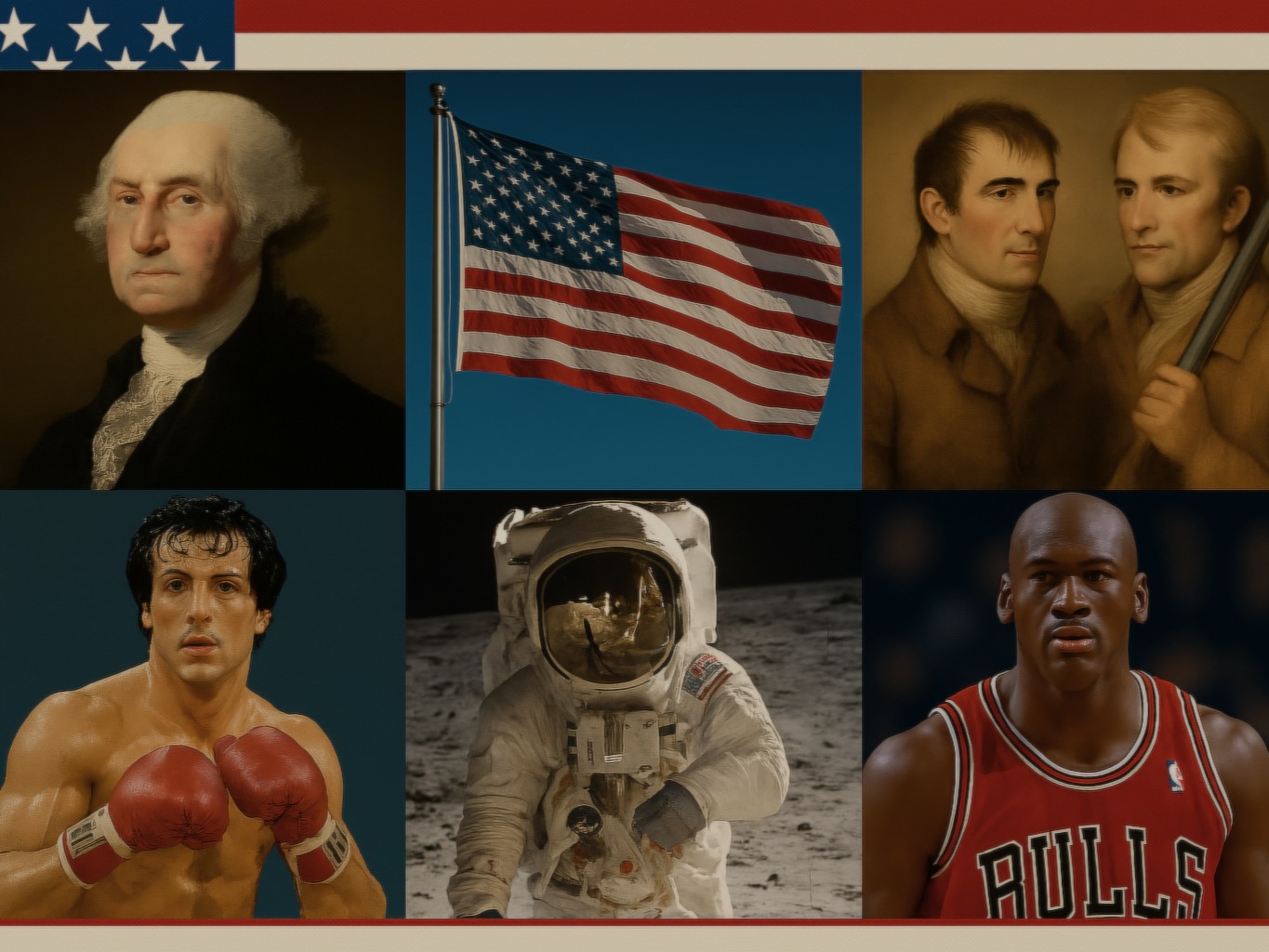
Nevertheless, America does not choose to wallow in self-pity after a setback. Instead, like Rocky Balboa, we absorb hit after hit, knowing that a temporary failure is not the end of the story. We can see from our foremost founding father, Westward expanders, and space-bound explorers that we possess the ability to write our story even after catastrophe. By using the three steps of reframing, reflecting, and re-engaging, our nation and ourselves can recover from failure and snatch victory from the jaws of defeat.
Muddy Meadow: Washington’s First Defeat
On July 3, 1754, a 22-year-old George Washington stood in the rain at Fort Necessity in what is now southwest Pennsylvania. Surrounded by French and Native forces, he surrendered after a poorly constructed fort and tactical missteps left his men vulnerable. Washington not only surrendered in battle but also unwittingly signed a document written in French, admitting to the assassination of a French officer.
However, Washington did not let this failure define him. Instead, he reframed it as a formative experience. He studied British military practices, learned the importance of logistics and terrain, and trained his troops through discipline and preparation. These lessons would shape his leadership during the Revolutionary War, where, despite enduring defeats, Washington adapted, learned, and ultimately led the Continental Army to victory and an independent United States of America.
Misguided Mission: Lewis and Clark
When Meriwether Lewis and William Clark embarked across uncharted territory in 1804, they sought a water route to the Pacific Ocean—a non-existent Northwest Passage. They realized they would not accomplish their original mission when they arrived at the Continental Divide. Yet, the tenacious Lewis and Clark did not give up; they adapted and continued west.
The duo, along with 33 volunteer members of their corps and Indigenous guides, endured harsh winters, illness, and near starvation, which plagued their journey across the Bitterroot Mountains. They shifted their focus from finding a waterway to improving the natural sciences and cartography. The explorers documented over 300 new species of plants and animals and mapped vast regions of the American West. Though they failed in their original goal, their expedition became a celebrated landmark in American exploration—an example of how Americans can turn missteps into momentum.
Mishap Before the Moon: NASA’s Tragedy and Triumph
In 1961, President John F. Kennedy charged NASA to put a man on the moon and safely return to Earth by the end of the Century. NASA launched ahead, but in 1967, a cabin fire during the pre-launch test for NASA’s Apollo 1 killed three American astronauts, exposing serious flaws in spacecraft design, materials, and safety protocols. This could have been a massive setback for NASA, the United States space race, and the Cold War.
However, NASA studied the tragedy and re-engaged the mission to the moon with sweeping reforms. Engineers redesigned the command module, implemented rigorous safety standards, and fostered a culture of accountability. Two years later, Apollo 11 landed the first humans on the Moon, fulfilling President Kennedy’s vision and fostering national unity. It was a quintessentially American moment: rising from failure with innovation, grit, and a relentless drive to improve.
The Science of Learning from Failure: Reframe, Reflect, Re-engage
We all face setbacks—whether in leadership, learning, or life. I feel embarrassed to admit the times I have come up short. Nevertheless, our egos can be our enemies. We cannot let failure bring us down; instead, we must leverage it to improve. Sylvester Stallone, playing the fictitious boxer Rocky Balboa, sums it up nicely:
“But it ain’t about how hard ya hit. It’s about how hard you can get hit and keep moving forward. How much you can take and keep moving forward. That’s how winning is done!”
Washington, Lewis and Clark, NASA, Rocky, and even NBA legend Michael Jordan faced moments when they got hit and could have let failure overwhelm them. Instead, they treated failure not as a verdict, but as feedback.
This mindset aligns with Ryan Carlson and Ayelet Fishbach’s 2024 research which identifies two psychological barriers to learning from failure: emotional discomfort (e.g., shame, frustration) and cognitive disengagement (e.g., seeing failure as uninformative). We can overcome those barriers when we reframe, reflect, and re-engage:
Reframe: Change our perspective to view failure as adjusting feedback rather than a threat. View failure as a source of information, not identity. Change the meaning of failure to combat emotional discomfort.
Reflect: Focus on improving our process rather than the bad outcome. Ask what the failure reveals about our strategy or assumptions. Use failure as an opportunity to engage cognitively and learn from the experience.
Re-engage: Make progress toward the goal, despite our setbacks. Stay committed to our goal with a revised approach.
When George Washington stood in that muddy meadow, he did not know that moment of defeat would shape the leader he would become. He was not born with the tools to lead a revolution—he developed them by reframing failure, reflecting on his missteps, and re-engaging with renewed purpose. In that way, he embodied something deeply American: the belief that our failures do not define us. Instead, we are defined by how we rise when life knocks us down.
Mike Posey is an active-duty Naval Flight Officer in the E-2C Hawkeye and the F/A-18F Super Hornet. He is a father of two phenomenal children and the husband of a fantastic woman. He holds business degrees from Carnegie Mellon University and the University of Florida and is pursuing a doctorate in education from Penn State University.
The views expressed here are the author’s own and do not necessarily reflect those of the Department of the Army, Department of Defense, or the U.S. Government.
Click above to sign up for The Maximum Standard’s weekly email where you’ll get a leadership vignette delivered for free every Tuesday morning!
We’re always looking for authors. We coach first time authors (and anyone) through the writing process if you need a little help. It’s worth taking the first step and showing interest.
 The Maximum Standard