February 12, 2026
by (Huy) Alex Le
One of the most thought-provoking questions we use every day has only two words: “So what?”
Normally, this question makes anyone sound like they couldn’t care less about the latest hot topic. But in an organizational context, it opens a gateway for those who give and receive it.
Our military expects leaders and subordinates to be critical and creative thinkers in a team of teams. In this dynamic and fast-paced world, using those qualities alongside others to our advantage helps us stay on top of our agendas and solve problems.
Through the work they do, the staff has a stake in their commander’s decision-making. They gather their tools and teams, do their analyses, and make tangible products for review by their boss. From beginning to end, this work has to be thorough and flexible.
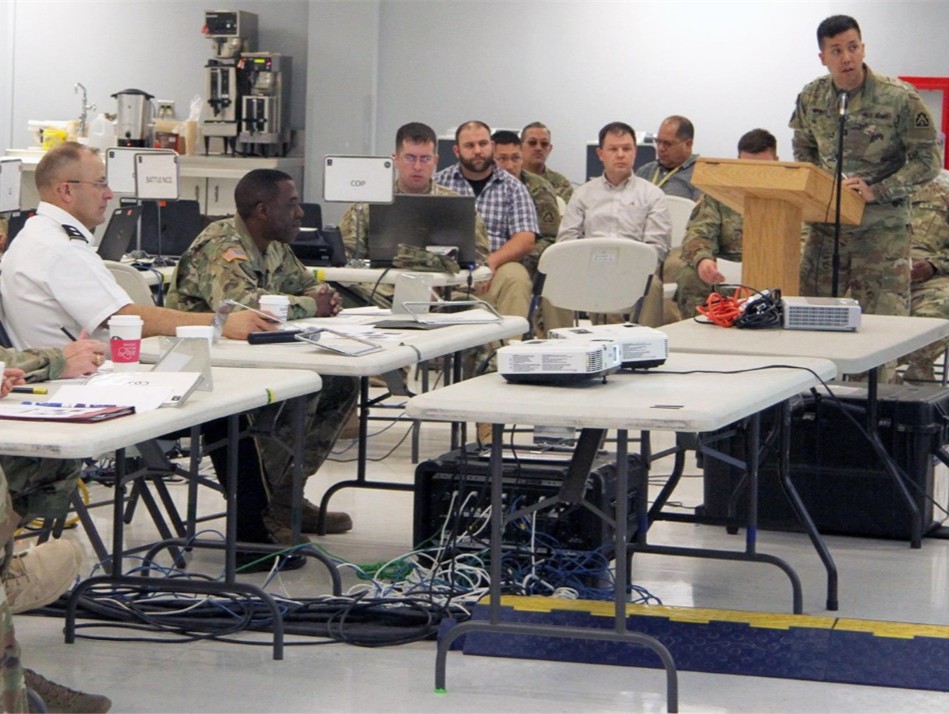
Throughout the entire process, a quality boss will ask his staff about how these different moving parts come together. “Why should this be our resupply route?” “How will these conditions affect us over time?” “Say we take these actions. What then?”
While they come from different angles of the situation, these questions are similar forms of the same two-word question: “So what?” To get to the meaning of this question, let’s look at three other ways we can phrase it as seen from an academic perspective
I. What is significant about your claim?
Your research into a problem makes you more informed than the audience you brief. You must clearly articulate how your main idea connects to the bigger picture. You bring credible and positive value by explaining why your claim matters and creates favorable progress.
II. How does this enrich my understanding?
Pick anyone in the room. They see the same problem you’re seeing but with a different lens. By exchanging and questioning information, you will fill in each other’s gaps. This creates shared understanding and the ability to move forward, together.
III. What are the implications of your claim?
With a complete and accurate working picture in hand, you must now explain the call to action. All the work you and the team have done fuels collective understanding. This shared understanding, coupled with your implications, is a catalyst for the informed decision the boss must make. They need your expert suggestions to approve action.
To make this topic more concrete, I’ll share one past experience and one future experience.
Throughout my deployment in Africa, I was the knowledge manager for a 1000-man task force. Much of my work involved putting together and formatting inputs or updates from the staff and commanders. We used the resulting products for many events to include update briefs, country briefs, emergency deployment readiness exercises, and redeployment working groups.
During these events, our bosses dissected our products and ideas in real time. They dug deeply to ensure the collective group gained a shared understanding across the knowledge of the team. If we came up short on information or recommendations, they pressed further to ensure we provided the significance, justifications, and opinions of our claims.
Our bosses liberally used, “So what?” to make sure our efforts paid off. And they did.
In a future example, I will soon begin my doctorate program. Currently, I’m looking at researching how to improve andragogy. This is the set of theories and practices supporting adult education. Like other contenders, this topic sounds worthy of research. But I can imagine the advisors asking, “So what?”
My advisors will know the big picture of education well. But even they might need a moment to pick out specific details. One way I could start answering their initial questions is by reframing the topic into another question: ”How well do we think adults are learning while they balance their everyday priorities?” Here, we can get the ball rolling.
Ask Away
Whether in the past or the future, we will find ourselves in situations where we have the power and the need to advocate for our ideas and contributions to stand on their own. The demand for influencing others to see things our way and answering a call to action has never been greater.
When done correctly, we enter every conversation with the ability to answer the significance of our argument, explain why it matters to the audience, and provide recommendations going forward. Part of maintaining this skill lies in the power of the question, “So what?” We must always be prepared to both answer and ask it.
(Huy) Alex Le is a 2019 alumnus of Drexel University and a Captain within the Pennsylvania Army National Guard. With almost ten years of service to date, he looks to rebrand himself as a logistics officer. After a successful deployment to the Horn of Africa under Task Force Associator from 2024 to 2025, he enrolled in a doctorate of education program under Gwynedd Mercy University and started up a private tutoring business (https://tutorquickle.my.canva.site). Through these steps in his return to education, he seeks to not only continue bettering himself but also cultivate thinkers and potential leaders.
The views expressed here are the author’s own and do not necessarily reflect those of the Department of the Army, Department of Defense, or the U.S. Government.
We’re always looking for authors. We coach first time authors (and anyone) through the writing process if you need a little help. It’s worth taking the first step to get published. Click the link in this paragraph to start your writing journey with us!
 The Maximum Standard