April 9, 2026
by Wes Lewis
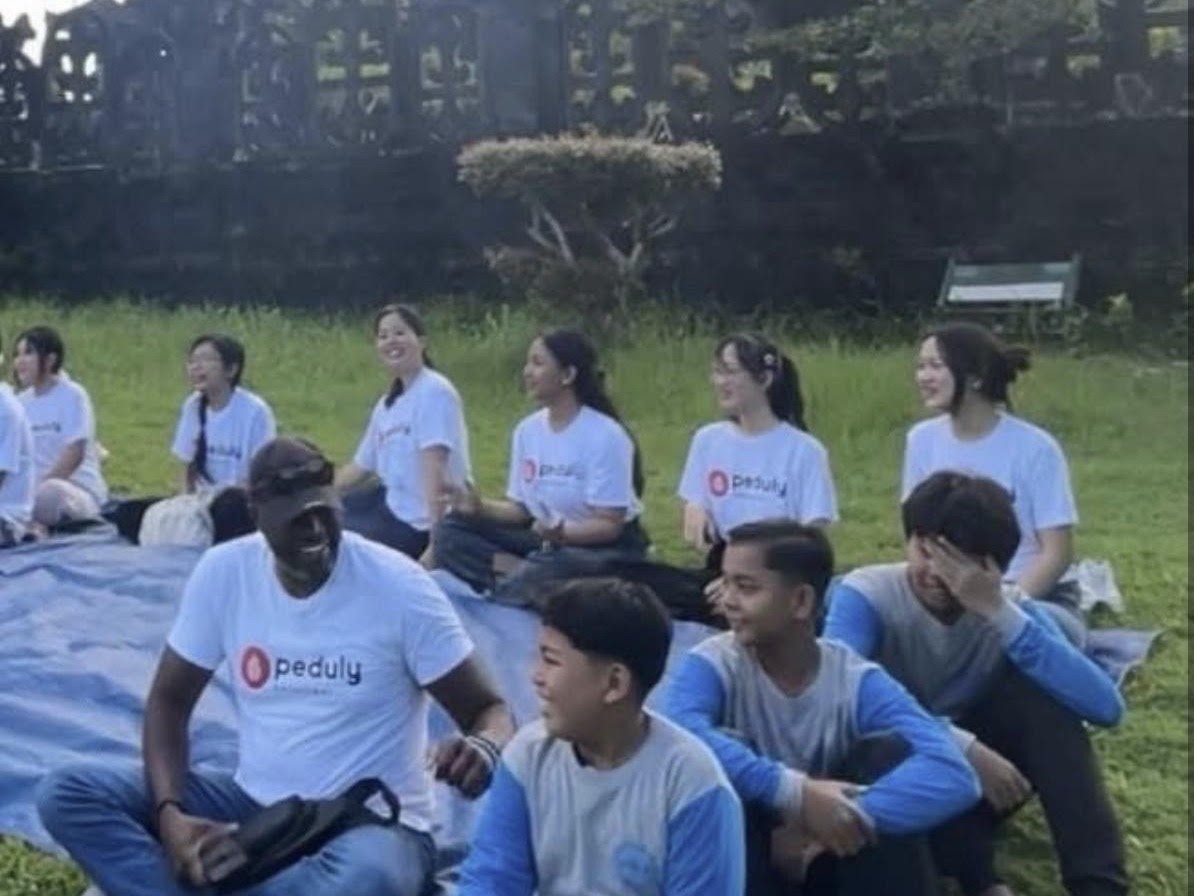
I was volunteering in Bali with Peduly, an Indonesian social impact organization that connects volunteers, donors, and communities for humanitarian and community development work, when I found myself watching a scene that felt strangely familiar. Young volunteers moved supplies from one point to another without confusion or wasted motion. One person directed traffic, another checked the flow of materials, and others adjusted on the fly when small problems appeared. No one was wearing a uniform. No one had rank on their chest. But the discipline in their movements, the trust between them, and the shared understanding of the mission reminded me of a well-run infantry squad.
What struck me most was not that they were doing something extraordinary, it was that they were doing ordinary work with an uncommon purpose. They managed time carefully. They divided responsibilities naturally. They communicated without drama. Even in a different country, culture, and language, I recognized the same leadership habits that make teams function well anywhere in the world.
In that moment, I realized something I had only begun to understand after retiring from the Army: leadership is not confined to a uniform, a title, or a single profession. The habits that shape good leaders—discipline, accountability, teamwork, and a commitment to serve others—show up wherever people take responsibility for something bigger than themselves. I thought I had left that world behind when I took off the uniform. Instead, I found it again in Bali.
How Structured People Thrive When the Structure Is Gone
One of the biggest questions facing service members as they leave the military is whether their skills will translate into civilian life. I had that same concern. After twenty-five years in the Army, much of my life had been shaped by structure: timelines, standards, responsibilities, expectations, and the constant requirement to think ahead. In the military, even difficult days move within a framework. You know the mission. You know the chain of responsibility. You know what right looks like.
Then one day, that structure is gone.
The real challenge in transition is not just employment; it is psychological. You wake up without the familiar rhythm that once defined your days. No formation. No staff updates. No fragmentary order adjusting the plan. No established system carrying part of the weight for you. This freedom sounds appealing until you realize that freedom also means you are now responsible for building the structure yourself.
I felt that shift in simple moments. I remember sitting with a blank calendar and realizing nobody was going to tell me what mattered most that day. Nobody was going to define the mission, set the timeline, or issue the next task. For someone who had spent years leading inside a highly organized environment, that absence was disorienting at first. But over time, I came to understand that the same habits developed in uniform were not lost just because the environment had changed. They were still there, waiting to be applied differently.
Old Habits Die Hard—Thankfully
During my transition, I began building Lewis Strategic Group, an organization focused on publishing, consulting, and community outreach. There was no doctrine for what I was doing. No standard operating procedure. No established battle rhythm. I had to create the systems myself.
And that was where something unexpected happened. I realized I wasn’t starting from zero.
I approached the work the same way I had for years—by identifying the objective, breaking large goals into smaller tasks, setting priorities, communicating clearly, and continuing forward even when conditions were uncertain. It wasn’t something I had to relearn. It was something I had already become.
Those habits were no longer tied to a unit or a formal chain of command. They had become part of how I think, how I organize, and how I move through problems.
That is one of the most important lessons I have learned about transition. Many veterans assume the most valuable part of their experience is tied to a specific role or specialty. Those things matter, but they are not the foundation. The real value is in how you operate—how you manage time, carry responsibility, communicate expectations, and make progress without being told what to do next.
Those are not military skills. They are leadership habits. And they do not stay behind when the uniform comes off.
Translating It Beyond the Military
Over the past several years, travel has given me an observational lens for thinking about leadership. When you move between countries, communities, and organizations, you start to notice patterns. You see who steps forward when something needs to be done. You see who stays calm when plans change. You see who quietly serves others without needing recognition. Leadership often reveals itself in those everyday moments long before it appears in a title.
That is why the experience in Indonesia stayed with me. I was not watching a military formation. I was watching young people in a civilian volunteer setting manage responsibilities with purpose and maturity. The language was different. The setting was different. But the underlying traits were familiar. They were demonstrating the same fundamentals I had seen inside strong teams throughout my career: initiative, discipline, situational awareness, trust, and service.
For veterans, that recognition matters. It means the qualities developed through years of service are not locked inside the military. They are portable. They can strengthen businesses, nonprofits, schools, local communities, and families. They can shape the way a person builds an organization, supports a cause, or leads in a new profession. Transition does not erase those traits. In many ways, it reveals how broadly they apply.
That truth should also matter to employers and communities. Veterans are not simply former service members looking for a place to fit in. They are people trained over time to lead, adapt, solve problems, and carry responsibility. Those qualities are not narrow. They are deeply transferable, and when recognized early, they can become an immediate advantage in civilian environments.
Military Leadership Skills Are Transferrable
When I think back to that volunteer event in Bali, what stays with me is not just how efficiently the team worked. It is the reminder that leadership has always been bigger than the institutions that first teach it to us. The military sharpened those lessons in my life, but it did not invent them, and it certainly did not own them.
I saw those same principles alive in a group of Indonesian volunteers serving their community with discipline and purpose. I saw them again in my own life as I learned to build structure after the Army rather than simply live inside it. That is why I believe military leadership translates everywhere. At its core, leadership is not about rank. It is about responsibility, trust, service, and the willingness to move others toward a meaningful objective.
For those preparing to leave military service, that should bring a measure of confidence. The uniform may come off, but the habits do not disappear. They travel with you. And if you pay attention, you will start to see them in places you never expected—different countries, different cultures, different environments—speaking the same language in a completely different setting.
Because in the end, leadership was never about where you learned it. It is about whether people trust you enough to follow you when it actually matters.
Wes Lewis served twenty-five years in the United States Army, culminating as Chief of the Data Support Branch at U.S. Army Human Resources Command. He is the founder of Lewis Strategic Group and writes about leadership, transition from military service, and lessons learned through global travel and observation.
LinkedIn: https://www.linkedin.com/in/wes-lewis-mba-ms-339a92320
Substack: https://substack.com/@weslewisauthor
YouTube: https://www.youtube.com/@weslewis.author
Instagram: https://www.instagram.com/weslewis.journeys
We’re always looking for authors. We coach first time authors (and anyone) through the writing process if you need a little help. It’s worth taking the first step to get published. Click the link in this paragraph to start your writing journey with us!
 The Maximum Standard