27 February 2025
by Tanner Harless
The overbearing humidity penetrates through the metal walls of the bus, a feeling I would become quite acquainted with over the next ten weeks. As the buildings roll by the window, my inner hubris kicks in: “I’m more fit than my friends, how hard can initial entry training truly be?” Before I can register my thoughts, the shuttle comes to an abrupt halt. The commanding voice of my new Senior Drill Sergeant shatters the silence like bullets to glass. “Lift your bags over your head trainees and move to the company area! Now!” In the next few minutes, the crushing weight of reality sets in. All my peers reached the staging area before me, leaving me behind. I think to myself “I knew I was the strongest, but I’m actually the weakest.” This incident helped me learn that forced humility is a painful and often needed path on our leadership journey when we can’t recognize our own blind spots.
In the simplest terms, humility is the quality of being free from pride and having a modest view of our own importance or significance. “Forced humility” is when we encounter a self-perpetuating individual failure or inadequacy, making personal growth necessary to one’s survival. Understanding the importance of humility provides a catalyst for healthy growth in our life. Having the ability to look at past failures with a humble perspective and take ownership of our faults will reduce the risk of similar pitfalls in the future. The military’s premier leader guide, Army Doctrine Publication 6-22, Army Leadership and the Profession, furthers this by stating: “A leader with the right level of humility is a willing learner, maintains accurate self-awareness, and seeks out others’ input and feedback. Leaders are seen as humble when they are aware of their limitations and abilities and apply that understanding in their leadership.” Whether we’re leading a platoon or a corporate team, humility is what keeps our eyes locked on the objective ahead.
History has a predisposition to repeat itself. Yet though we’ve watched thousands fall from grace due to lack of humility, we can still see even the most talented among us make these same mistakes. Tiger Woods, the prodigy golfer, was thought to be untouchable and for good reason. Tiger would go on to decimate long-standing tour records, as well as win the Masters five times; however, as his victories mounted, so did his ego. Finally, on a day that would change everything, Woods was apprehended by local Florida law enforcement following the collision of his car into a nearby fire hydrant. Police found Woods had five drugs in his system at the time of the crash. Had he decided to look critically at his addiction to painkillers to ensure an event like this would never happen again, perhaps history would look upon Woods more favorably. Unfortunately, he did not, and this event caused the demise of his family, career, and dignity, and would foreshadow many more encounters with law enforcement. As stated by famous American basketball coach John Wooden, “Failure isn’t fatal, but failure to change might be.” After hitting his lowest point, Woods was forced by his own inadequacies to allow true humility into his life and without this simple yet imperative mindset shift, there’s a chance he wouldn’t be here today.
There are three ways we can apply and improve ourselves through humility: considering feedback from all sources, asking questions to reveal blind spots, and unemotionally embracing failure.
Feedback Can Come from Anywhere. We all have a bias that feedback is useful only if it comes from a credible source, but that’s not always true. For example, if an opioid user ten years ago told Tiger Woods he recognized substance abuse signs in him, Woods most likely would have discarded this advice. We cannot allow ourselves to discount the feedback of others based on their status. Although the perceived credibility of an individual does hold weight in determining the validity of a critique, our receptiveness to what is being presented should be based on the quality of feedback, not the speaker who is giving it. It’s not uncommon for the best advice to originate from the most unlikely sources, and we must remove our own personal biases when receiving feedback from any source.
Ask For Feedback. It is nearly impossible to be entirely self-aware of our faults. These invisible character flaws are what are known as blind spots. This is where asking questions is essential in personal development as it can often shine a light on opportunities unknown to us. Before basic training, had I simply stopped to ask my father, an Air Force and Desert Storm veteran, what he thought of my physical fitness, perhaps I could have understood my lack of training and prevented additional scrutiny from those drill sergeants who loved to point them out.
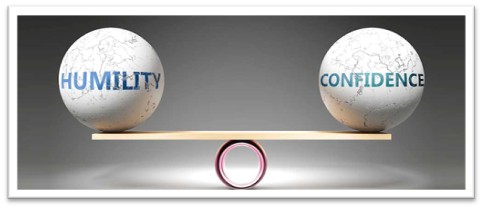
Unemotionally Embrace the Failure. No one likes to fail, but it’s the best teacher. We must continuously place ourselves in positions that test our capabilities to discover our weaknesses. Try, fail, try again, and succeed or fail. This is a reason why many individuals struggle so greatly with humility, as emotions and logic often become tangled in a sea of disappointment. To comprehend our shortfalls, we must actively work to separate logic from emotion when assessing our decisions. The Army’s After Action Review Process has three completely unemotional questions: What were we supposed to do? What did we do? How can we get better? Embracing failure and removing emotions ensure objectivity during self-evaluation and keep both our humility and confidence intact.
We all have blind spots. What separates the best leaders from the pack comes down to how willing they are to change based on their failures, understand humility, openly receive feedback, and ask hard questions about themselves. Unfortunately, growth can often be a painful but necessary process, much like how I was forced to learn humility so I could teach it to others.
Tanner Harless is a prior-enlisted soldier and Cadet at the University of Akron, currently pursuing a BA in Public Relations. Tanner served one year in support of Operation Enduring Freedom and is the President of the Student Veterans of America (SVA) University of Akron Chapter. Tanner hopes to one day commission into the Adjutant General branch in the United States Army Reserve and work towards a future career in Army instructional teaching or Public Affairs.
Leaders read, think, discuss, and write about leadership. Your first step should be to sign up for The Maximum Standard’s weekly email where you’ll get a leadership vignette delivered for free every Tuesday morning! This could also be your year to get published in the Maximum Standard—we’re always looking for authors.
 The Maximum Standard
Excellent article! A future GREAT Leader!
LikeLike
Tracy, I couldn’t agree more! I was incredibly impressed by Tanner’s professionalism and ability to deliver a great article. Thanks for adding to the conversation.
Steve
LikeLiked by 1 person