January 22, 2026
by Ralph “RJ” Johnson
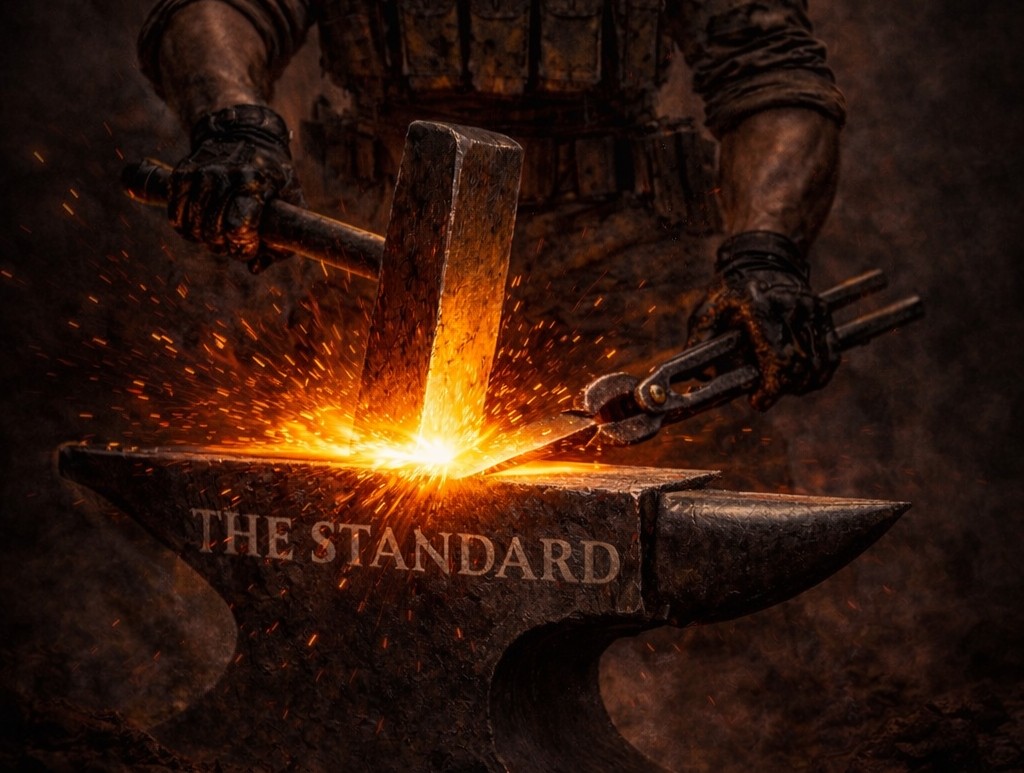
Cultures characterized by trust, discipline, and high standards are hallmarks of high-performance organizations, including the military, competitive businesses, and sports. The best teams have leaders who deliberately develop conditions for thriving climates. The role of a military commander or organizational leader requires high energy and intentionality. Command is in many ways craftsmanship, and the commander is in every meaningful sense a blacksmith.
Blacksmiths do not simply make blades. They forge weapons through fire, pressure, cooling, grinding, and balancing. The same method must be used by leaders seeking to develop warrior cultures capable of winning in high-stakes environments. This metaphor is powerful because it encapsulates three truths: great teams are not tossed together, they are deliberately formed; success is developed under stress; and high-performing organizations are created by leaders (craftsmen) who understand the process of forging teams through adversity without causing them to break.
The Fire: Creating Temperature and Pace for Transformation
The first step for a blacksmith is building the right fire, one hot enough to make raw metal malleable but controlled enough to avoid damaging it. The same concept must be applied by leaders. The “fire” of an organization is its operational tempo.
A fire not hot enough, or a pace too slow, produces little change. Teams will get soft, stagnant, and remain untested, setting the stage for mediocrity. Too hot a fire, or too relentless a training pace, burns people out; morale collapses, discipline slips, and cohesion unwinds.
Skilled craftsmen know how to create a climate of deliberate pressure, not arbitrary stress. They set a pace that elevates performance without damaging their foundation. They know when to turn up the heat during training cycles, major exercises, and deployments, and when to reduce training tempo to achieve maximum results.
The Pressure: Developing Values, Standards, and Ethical Force
When the metal has spent the right amount of time in the fire, causing it to glow, the blacksmith shapes it with a hammer. Each strike is precise and deliberate, and the metal remembers each blow, as do people. The pressure gives uniqueness to the blade similar to the culture of the organization.
In leadership, the hammer should not deliver fear or punishment. Instead, it must deliver values, standards, and discipline. Leaders use their proverbial hammer to deliver moral and ethical direction that provides the organizational structure and identity.
Every time a leader stands firm in high standards, corrects small deviations, praises high performance and excellence, or confronts misconduct incongruent with desired values, they are hammering the shape of the team. These blows develop a culture within their organizations where there is no doubt what will and will not be acceptable from a moral standpoint. The person in charge must provide that pressure for all to see.
The Cooling: Knowing When to Reduce Intensity
Even the strongest of metals cannot remain in the fire for long. A blacksmith removes the metal at the precise time and plunges it into a large pool of water, or quenchant, which hardens the blade and locks in the grains made under the heat. Neither metal nor humans can remain under pressure indefinitely.
Leaders must know when to cool their people. After hard training cycles, major exercises, deployments, or periods of intense strain, those in charge must deliberately reduce the intensity of the organization through reconstitution efforts. These could be times such as rest cycles, family time, professional development, mentorship, or resiliency days.
These breaks are not designed solely for physical recharge, but for mental recovery as well. By allowing time and space for individuals and teams to reflect on their experiences, they can lock in the knowledge that was forged under pressure. The best leaders take advantage of these cycles.
The Grind: Refining Excellence
After the blade has undergone multiple cycles of being in the fire, shaped by the hammer, and cooled in the quench, the blacksmith moves to the grindstone. This phase is slow, detailed, and unforgiving. The blacksmith notes the minor flaws in the blade and works to sharpen its edge.
A leader has the same grindstone process. This includes conducting effective after-action reviews while, more importantly, disseminating that information and implementing the lessons learned into current processes to create enduring successes. The craftsman uses his grindstone through coaching, feedback, repetition of fundamentals, and the cultural mindset of doing routine things routinely well.
Improving the small imperfections of a unit is the leader’s opportunity to sharpen individuals and teams into lethal and professional organizations that perform under pressure. Many subpar leaders stop at “good enough,” but the best ones take the grindstone to sharpen even finer edges in execution.
The Balance: Creating the Ultimate Weapon
When a master blacksmith tests the blade, they look to see if it is balanced, able to strike without wobbling, and able to hold its edge through adversity. This is the final test that both blacksmiths and leaders use to assess their teams.
Military leaders use capstones or validation exercises to assess performance. This could be the end of a training cycle, inspection, or a combat training center rotation. Business leaders may use audits, operational reviews, or capability assessments. Whatever the method, true leaders test performance to assess readiness.
Should these tests not yield desired results, leaders must decide what the right step is. Sometimes it requires returning the fire to break the team down to its core and rebuild. Often, it is minor enough to put back on the grindstone and refine the edges. Whatever the method, the result must be a balanced blade.
From Raw Metal to an Expert Blade
During my squadron command, we moved through all five phases of the blacksmith process. The Tactical Air Control Party (TACP) career field provides command and control and precision strike capabilities for the joint force. The fire was fed by robust training requirements, exercises, and constant deployment rotations. The method to achieve the right balance was a series of 90-day surges followed by 30-day resets that were predictable and resourced effectively to prevent burning out our airmen.
The next step was the pressure process to uphold the highest possible ethical standards. Routines, rituals, daily physical training, and training events were always tied to instilling the mindset that we’re a values-based and learning organization. Through transparent messaging and difficult, courageous decisions, the standard was honored regardless of organizational position.
Third, we followed the cooling method to allow our airmen proper rest time to reset, making them stronger for the next iteration. In July 2024, two flights had just finished their 90-day surges culminating in multi-week exercises, and it was clear our people were smoked. Keeping a pulse on the team, the decision was made for a two-week operational standdown with leave and half-days to recharge within the 30-day reset and maximize family time.
My favorite stage was the grindstone. This is where we spent hours reviewing our training and getting better for the next round. We’d review the training and strategic plan with lines of effort, objectives, and copious amounts of metrics to measure our performance and effectiveness. The best organizations review tapes, discuss failures, and work to improve at the smallest tasks.
This brought us to the final phase of ensuring we have a balanced lethal weapon, and a great example was the combat mission readiness validation exercise, or “check ride.” Spanning 36 hours, new TACPs endured a grueling, full mission profile at night designed to test the individual and team levels on their ability to accomplish mission-essential task standards.
Just when they thought it was over while driving back to the unit, we simulated vehicle breakdowns and culminated in a 12-mile exfiltration road march under load, adding extra items provided throughout the movement to induce additional stress.
The outcome of the holistic blacksmith process was not simply endurance, but transformation to hardened professionals who internalized that every member is an asset to the team and never a liability.
The Leader as Craftsman
Leadership is an act of creation in many ways. Those who take deliberate and methodical steps in building high-performing teams, as blacksmiths do, understand that strength is produced through heat, pressure, cooling, grinding, and balance.
The outcome is determined based on the level of mastery applied by the leader. Teams and units are never forged by accident. Much like a professional blacksmith, be intentional as a leader, embrace adversity, and watch your team grow.
Ralph Johnson is a native of Texas, husband, and father of two, serving as an Air Force Special Warfare Tactical Air Control Party officer. He is currently stationed at Maxwell Air Force Base, AL as a student at Air War College. When he is not spending time with family or working, he enjoys fitness and Brazilian Jiu-Jitsu.
The views expressed here are the author’s own and do not necessarily reflect those of the Department of the Air Force, Department of War, or the U.S. Government.


Great Article!
Having been a leader for over 19 years, this was a good reminder for me to pause, do a self assessment, and see where I am with my team!
LikeLike