April 14, 2026
by Stephen T. Messenger
Marcus Aurelius ruled the Roman Empire for 19 years beginning in 161 AD. His reign spanned from Britain to Mesopotamia and covered around 20% of the world’s population. It was the superpower of the day, an economic and military powerhouse.
Wielding such unlimited authority justly is often overwhelming for any human. As the English historian Lord Acton famously stated, “Absolute power corrupts absolutely.” Prior to Aurelius’s reign, many Roman emperors failed to rule well. His predecessor, Caligula, was unstable and erratic, eventually assassinated by his own guards. Shortly after, Nero was known for a tyrannical reign, executions, and personal luxury. After Aurelius, his son Commodus declared himself a living god and undermined the success that Marcus had put in place.
It’s interesting to see the difference between a positive and a negative ruler in the same position. Some leaders handle success with grace and wisdom, while others crumble under pressure. One insight as to why Marcus Aurelius ruled so well is that he actively learned from those who went before him. This is an exercise we should all do.
Meditate on What Others Have Taught Us
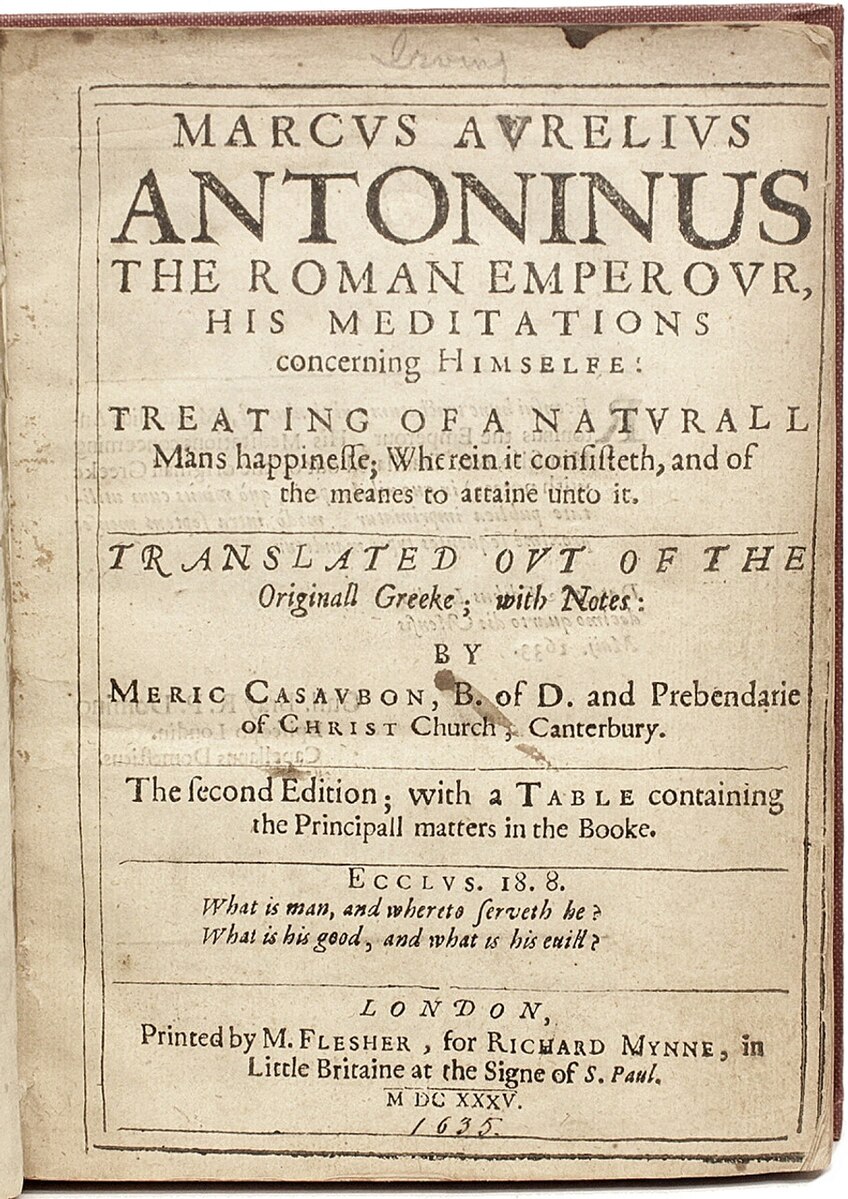
During his lifetime, Marcus Aurelius compiled personal notes to himself, never meant to be read by anyone else. It was a diary of sorts, and a raw glimpse into the thoughts of a powerful ruler faced with massive pressure. Aurelius dealt with wars, plagues, internal revolt, financial problems, and invasion. Yet, he used what he learned to remain stoic in the face of adversity.
Known today as the book Meditations, his writings cover a number of topics, but in the first chapter, he demonstrates his openness to advice. In the chapter, known as “Debt and Lessons,” Aurelius lists 16 different people he knew and what they taught him. From his parents, grandparents, teachers, and mentors, Marcus demonstrates humility and respect by acknowledging those who helped him on his journey.
The emperor, one of the most powerful people in the world, understood that he did not get there by himself, but on the backs of those who invested in him.
The Emperor’s Lessons
What Aurelius learned has become the foundation for many lessons of Stoic philosophy. He highlights ideals he should emulate, such as character, integrity, and generosity. These lessons are a masterclass in humility, where even as a powerful ruler, one must treat others with dignity and respect.
One of my favorite sections comes from his adopted father, Antoninus Pius. He was the Roman leader prior to Marcus, known as one of the “Five Good Emperors,” and led Rome with a steady hand during a time of peace. Antoninus adopted Marcus with the intent of raising and preparing him to be another great leader, which he was.
In Marcus Aurelius’s narrative about his father, he highlighted the relationship Antoninus fostered with others. While ruling, he treated citizens well, asked questions, and made others feel at ease in the presence of the ruler.
Moreover, Pius was good at his job, even-tempered, and not subject to vices. He led with the characteristics we all want our bosses to have: competence, commitment, and character. From him and his other 15 mentors, Marcus took these lessons to become the fifth of the good emperors. By being open, he not only helped himself but also those he led.
These lessons don’t just come from the “Good Emperors” of history, but from the everyday giants in our own lives. We should all try this practice of reflective meditation to capture the wisdom of those who have invested in our lives.
Meditating on our Lives
This week, I reflected on the wise mentors of my life and the lessons they passed down. I took a few 3×5-inch cards, wrote their names on the top, and started brainstorming. What I quickly found were traits I valued in others that had rubbed off on me.
It’s fascinating to think about why we act the way we do and to understand who helped plant those ideals in us. Then, we can use those lessons to continue our upward trajectories.
Some highlights of those who have taught me over my life:
My father: Consistent work over long periods of time generates big results.
My mother: Encouraging others to always do their best.
My wife: Unwavering selfless service in helping others achieve their goals.
My older brother: Gratitude.
My younger brother: A willingness to help anyone with anything.
My brother-in-law: Following God’s calling for one’s life.
My in-laws: Prayerful support from afar.
This is just a sample of the many lessons I’ve learned from those around me. What’s interesting is discovering different lessons that are seemingly in conflict with each other but are still helpful. I can reflect on two military commanders I’ve had. One impressed upon me the need for aggressive and decisive action at every turn. The other spoke to prudence and thoughtfulness. These characteristics are seemingly opposite, but when confronting decisions, I’m reminded to think about them with both temperance and action.
Much like Aristotle’s “Golden Mean,” it’s important to not be on one extreme or the other but instead act in the center. For example, with courage, too little is cowardice and too much is recklessness. By staying in the middle, we demonstrate courage.
People in our past have demonstrated a broad range of characteristics that we want to emulate. Many will appear to be in conflict, but when looked at from a holistic perspective, these lessons balance our actions. We can see how multiple people handle different situations and use the best characteristics for the best time.
Your Own Meditation
Marcus Aurelius was brilliant to capture lessons from his past onto a private document. This practice is something that we can easily do at home, and it provides a glimpse into why we act the way we do.
I encourage you to do two things. First, pick up a copy of Meditations, or find the first chapter on the internet. In a short, five-minute read, you’ll quickly understand one of the many reasons why the ruler of Rome was considered one of the greatest leaders of all time.
Second, jot down some notes on people in your past whom you’ve learned from. These lessons are invaluable and provide us a chance to thank them for being such an impactful part of our lives. A small note or text goes a long way to acknowledging the impact they’ve had on our lives.
By recognizing the lessons of those who built our foundation, we are better equipped to rule our small empires of family and workplace with wisdom and build the future for those who follow us.
Click here to sign up for The Maximum Standard’s weekly email where you’ll get a leadership vignette delivered for free every Tuesday morning!
We’re always looking for authors. We coach first time authors (and anyone) through the writing process if you need a little help. It’s worth taking the first step to get published.
This website is a personal blog and all writings, podcasts, opinions, and posts are the authors’ own and do not represent the views of the United States Army nor any other organization. Podcast music credit in this audio file is to: “Alex Productions – Legends” is under a Creative Commons license (CC BY 3.0). / @alexproductionsnocopyright

