By Stephen T. Messenger
April 21, 2026
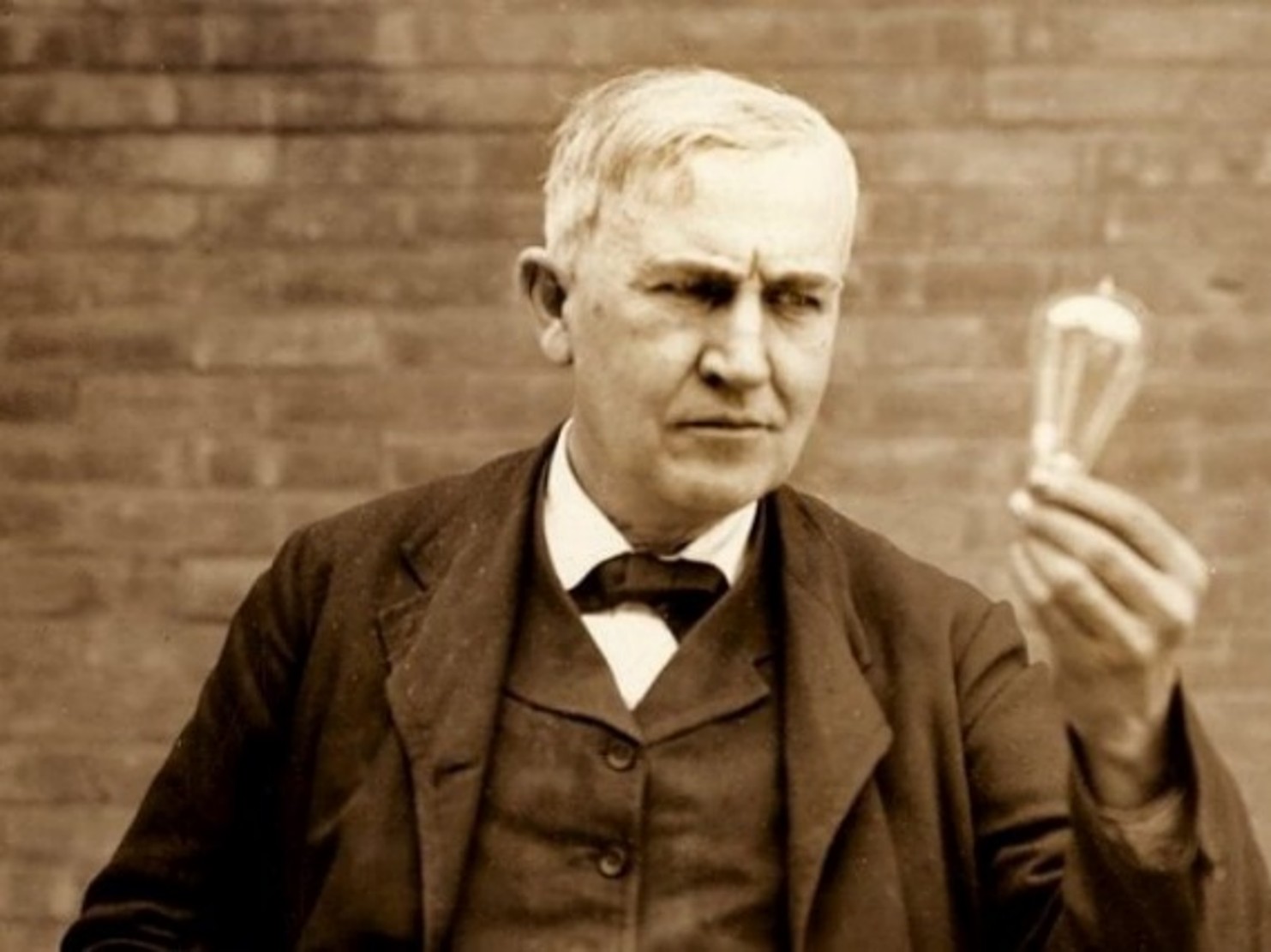
Thomas Edison, as a child, overheard a conversation between his teacher and a school inspector. The teacher said it wasn’t worthwhile to keep Edison in school because he was “addled” and had trouble thinking clearly. In this one hurtful sentence, the teacher unfairly defined Edison’s potential according to his own perceptions.
The world likes to define our potential. It often measures our performance by observing a few snapshots in time and imposes judgment on what we can accomplish in the future. Much like this teacher, the world has no idea what our true potential is, and, honestly, neither do we.
Potential is very different from performance. Potential is the capacity to achieve unrealized ability. Performance rises and falls on an almost daily, or even hourly, basis. Think about this as playing a game of chess where we’re winning one minute and in checkmate the next. Potential is more constant over time and, for a person who seeks constant improvement, can only rise.
Our potential is defined by three areas.
1. The Outer Circle. These are the people with whom we loosely interact. They don’t see our full capabilities but only observe us on the periphery at work, school, or through social media. From brief glimpses of our performance, they judge our potential early and mentally cap us at a certain level. They are not the most accurate assessors.
2. The Inner Circle. This group knows us well. They are intimately involved in our work, family, or social life. They see us at our best and worst. While they provide a more accurate assessment of our potential because they observe us more, they’re still biased based on their personal lenses of experience and history. This assessment is better, but not necessarily accurate.
3. The Inner Voice. The most important source of judged potential is ourselves. But it’s dangerous because we’re all human, and it’s easy to fall into the trap of considering ourselves worth much less than we are. Sometimes hearing negative feedback from the outer and inner circles can cause our own view of potential to drop. This is the most important voice to keep positive.
In Edison’s case, his teacher (inner circle) defined his potential to both the inspector (outer circle) and himself (inner voice). This event could have crippled one of the greatest minds of that era.
The world should not define our potential. No one, not even us, knows how much we can achieve in the future if we fully commit to our goals. Ralph Waldo Emerson once said, “The only person you are destined to become is the person you decide to be.” Sometimes, the battle to define our own potential doesn’t happen in a laboratory but in hyping ourselves up in the front seat of a truck.
The “Impossible” Journey
A few weeks ago, I drove to the far side of New York City to pick up a car that needed to be trailered home. It was a seemingly impossible mission. Driving through NYC is a nightmare to begin with, let alone with an F-150 and a trailer that’s wider than the truck. Once in New York, I then had to load a two-ton vehicle and pull it back through rush hour. I’ll admit, I was intimidated.
During planning, my inner voice was saying this was going to be more challenging than I wanted it to be and that I should just pay someone hundreds of dollars to do it. My inner circle was supportive, but skeptical. My outer circle just thought I was nuts.
This meant it was up to me to define my potential. Since I was the one competing, my inner voice was the only one who could speak success into existence. So often, this will be the case. We have to be our own biggest supporters, and our voice must be the loudest among the noise.
Honestly, my driving potential is probably capped at driving through NYC in a minivan. But I knew I could exceed it. So, with a little self-hype, I strapped the trailer on and took an exciting trip through the city. It was filled with uncomfortable bumps, close calls, lots of honking, and a brief detour while lost in crowded Harlem. After driving in circles for 45 minutes through residential neighborhoods, I was pretty sure I would never make it out of the city.
But with only me there, it was the time when my inner voice rose to the occasion and used positive self-talk to get me out of there. I reminded myself that it was no different driving a minivan than a 10,000-pound contraption and that I had been in worse spots before. It was time to get out of there. At the end of the day, I completed the mission, far exceeding my driving potential.
Don’t Let Them Define You
The world is going to attempt to define our potential through comments, evaluation reports, and comparisons to others. Our job is twofold:
1. Prove them wrong and exceed that potential, no matter how high or low they judge it.
2. Help others realize their unlimited potential.
The first step is to ditch those in our life who are seeking to limit us. Refuse to listen to the voices that say we are not intelligent enough, strong enough, or capable enough to achieve our goals. They are wrong, and we need to eliminate these voices from our heads. Then, create our own narrative of success.
The second step is to be the voice that encourages and motivates others to achieve their maximum standard. Leaders help draw out unrealized potential in others and encourage them to do more.
Thomas Edison’s mom did both. After hearing about the teacher’s comments, she brought young Tom back to school and, in his own words:
“…angrily told the teacher that he didn’t know what he was talking about, that I had more brains than he himself, and a lot more talk like that. In fact, she was the most enthusiastic champion a boy ever had, and I determined right then that I would be worthy of her and show her that her confidence was not misplaced.”
Edison’s mother fundamentally changed his life’s trajectory that day. He needed his mom to model his inner voice for him, demonstrating the positive self-talk that he would carry for life. She was Edison’s first great leader. Today, we all have the opportunity to be that champion for ourselves… and someone else.
The world will always give us a ceiling. It’s up to us to decide who builds the roof.
Click here to sign up for The Maximum Standard’s weekly email where you’ll get a leadership vignette delivered for free every Tuesday morning!
We’re always looking for authors. We coach first time authors (and anyone) through the writing process if you need a little help. It’s worth taking the first step to get published.
This website is a personal blog and all writings, podcasts, opinions, and posts are the authors’ own and do not represent the views of the United States Army nor any other organization. Podcast music credit in this audio file is to: “Alex Productions – Legends” is under a Creative Commons license (CC BY 3.0). / @alexproductionsnocopyright
The Wizard of Electricity. T.P’s Weekly. Volume 10. November 29, 1907 p. 695. https://books.google.com/books?id=7phFAQAAMAAJ&printsec=frontcover&source=gbs_ge_summary_r&cad=0#v=onepage&q&f=false

