by Stephen T. Messenger
June 3, 2026
We all want to be part of a team with a positive and unwavering culture, the glue that holds people together. Organizations that have this consist of people who will do anything to complete the mission and watch out for each other. This should be on the forefront of our minds as we seek to create an enduring culture that survives the good times and the bad.
I’ve seen teams respond to adversity in a number of ways. Some cultures fall apart when confronted with failure. But the best ones band together, locked arm-in-arm to handle failure even in the worst of times.
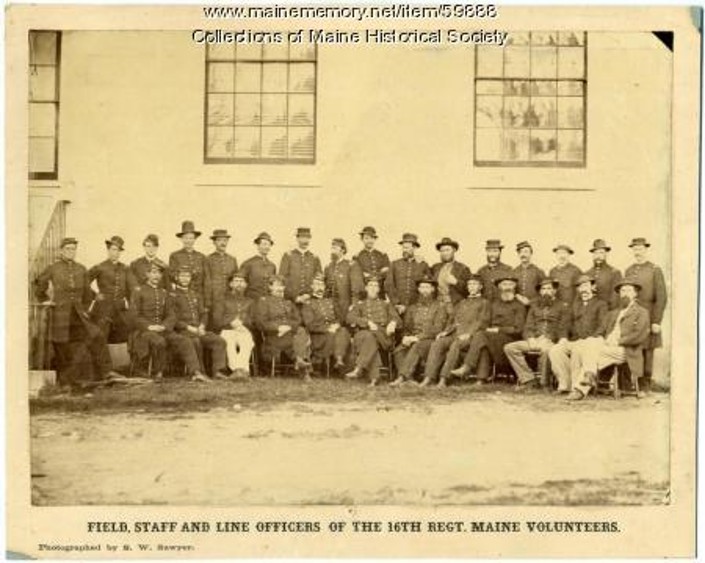
Few teams demonstrated this more than the 16th Maine Regiment at the Battle of Gettysburg. Their culture endured no matter the difficult mission or circumstances. We can learn from this unit on how to build a long-lasting culture that remains even in defeat.
Hold Your Position at Any Cost
The 16th Maine Regiment was a Union Civil War infantry unit that mustered in August of 1862. They participated in the major campaigns of Antietam, Fredericksburg and Chancellorsville prior to finding themselves at Gettysburg in July of 1863. Commanded by Colonel Charles Tilden, they marched proudly into battle the morning of July 1, arriving around noon.
By 2:00 p.m., it was already a busy day. They had established fortified positions and repulsed repeated Confederate attacks. However, the Rebels kept pouring in troops, and the Union lines were fracturing. Brigadier General John Robinson, the senior commander on the ground, understood that a Union retreat was imminent, and he needed a stay-behind force to cover their movement.
Approaching Colonel Tilden, Robinson ordered him to “Hold this position at any cost,” while the rest of the Corps withdrew. Colonel Tilden relayed the orders to his men, understanding that they were put in a deadly position to cover the retreat of the main body. Everyone in the unit knew of the impending danger. Knowing the threat, his color bearer asked if they were really going to fight to the last man.
Tilden slammed his sword into the ground and broke off the hilt; a silent declaration that they would fight until they could fight no more. Inspired by their commander, the men continued to delay the Confederates, buying precious time until completely surrounded.
Knowing capture was imminent, they grabbed their regimental colors and began to tear them up to avoid a captured battle flag. After fighting all day, their thoughts were on avoiding regimental disgrace. They divided the pieces among the different soldiers and were captured, shipped off to different prisoner camps each with hidden pieces of the flag.
Of the original 275 men on the field, ultimately 11 soldiers died, 62 were wounded, and 159 were captured, leaving only 39 remaining for muster by the end of the day. It was a devastating day for the regiment, yet their culture endured.
Years later, at the dedication of the 16th Maine monument, the speaker mentioned the sacrifice of the 16th Maine, and three veterans walked to the stage. Surprising the speaker, they pulled out their pieces of the colors and waved them high. Through the highs and lows of the unit, their culture never faltered.
Culture: Bonding People Together
As shown by the 16th Maine, culture isn’t catchy slogans or cat posters. It’s the shared values, beliefs, and norms that a group of people collectively agree on and live out. The best cultures create teams that are productive, valued, engaged, and will do everything for their organization and the people they are with.
While a good mission and vision statement help guide culture, these statements alone are not enough to create one. Three main ingredients are shared values, behavioral norms, and symbols and rituals. Leaders who work on growing these things create organizations that thrive no matter the situation.
Shared Values
To have a great culture, every group needs to agree upon its main beliefs that guide every decision and interaction. When people consent to act in a way that benefits the people around them and the team, they share the accountability of enforcing positive activities.
The 16th Maine believed in the Union cause. They had been fighting for nine months at this point in three major campaigns, marching hundreds of miles, and living the patriotic cause of the Union soldier. This unit shared the desire to fight and win on the fields of battle.
Behavioral Norms
A positive culture creates an environment with unwritten rules on how people act. While not explicitly stated, people learn to act in accordance with group behavior by observing and practicing the activities of those around them. They all agree and fall in line.
The soldiers of the 16th Maine were given an order to hold at all costs. There are no rules for this assignment. But they just understood the assignment as a norm. To a man, they accepted their fate of standing their ground to allow 16,000 Union soldiers to escape, and as a group, they acknowledged the mission and fought until the bitter end.
Symbols and Rituals
Finally, culture is solidified by visual items that support values and norms. These are visual reminders and activities that reinforce expected behavior. Employees can tangibly see these and be reminded of group expectations.
The 16th Maine colors were their symbol of pride. Refusing to let them be captured, they tore them up to preserve their culture and took their heritage with them to the prison camps. Years later, the symbol represented all they appreciated in their team, heritage, and mission.
Resting on shared values, norms, and symbols, the 16th Maine developed a culture that we can all emulate. This doesn’t happen naturally; it requires actionable steps. While leading modern organizations looks vastly different than commanding Civil War soldiers on a battlefield, the bedrock of human cohesion remains identical. Leaders today must have a clear game plan to lock in their organizational culture.
Ways to Establish Culture
Culture is formed when the leader focuses on improving it, and the team willingly jumps on board. They can do so in a number of ways.
1. Establishing the “Why.” Everyone wants to have purpose in life. Knowing it and working towards it is critical.
2. Fostering Psychological Safety. Employees must be able to operate without fear of embarrassment or failure. They must feel safe in their environment.
3. Instituting a Team Mindset. There are no individuals in culture. When everyone is rowing the same way, collective success grows.
4. Leading with Integrity. The goal is transparency and honesty in an organization. When we are all open to each other, culture improves.
5. Developing Trust. The best cultures have an air of complete confidence that those around us are looking out for our best interests.
6. Hardening Resilience. Things always go wrong. Great cultures are able to bounce back even when things look bad.
7. Recognizing Others. This isn’t just the boss celebrating the wins, but everyone lifting each other up.
Leaders who focus on these areas create opportunities to improve culture. By relentlessly pouring into the team, leaders can take actionable steps to improve the environment.
Save the Colors
The 16th Maine Regiment was a close-knit group, hardened by war. Their shared experiences led to a culture that was able to hold its position at all costs. This doesn’t come naturally.
Leaders who focus on cultural improvement are able to see tangible gains in their organization. It begins by modeling the way in words and deeds. Culture is the backbone of any group. By focusing on values, norms, and symbols, great teams can become even greater.
Just like Colonel Tilden stuck his sword in the ground and snapped it off to signify his enduring commitment to the Union, so must we demonstrate our unwavering allegiance to create the best organization we can.
Click here to sign up for The Maximum Standard’s weekly email where you’ll get a leadership vignette delivered for free every Tuesday morning!
We’re always looking for authors. We coach first time authors (and anyone) through the writing process if you need a little help. It’s worth taking the first step to get published.
This website is a personal blog and all writings, podcasts, opinions, and posts are the authors’ own and do not represent the views of the United States Army nor any other organization. Podcast music credit in this audio file is to: “Alex Productions – Legends” is under a Creative Commons license (CC BY 3.0). / @alexproductionsnocopyright

