September 29, 2026
by Stephen T. Messenger
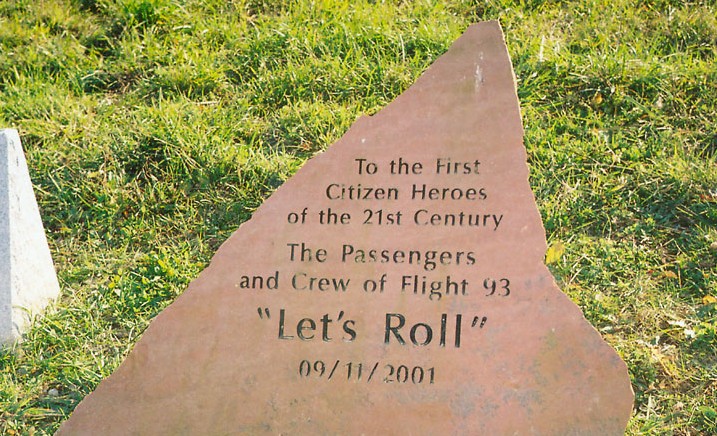
Visiting the 9/11 crash site of United Airlines Flight 93 last week in Shanksville, Pennsylvania, it was impossible to miss, upon this hallowed ground, the echoes of both the gravity of that horrific event and the heroism of American citizens. The terrorist hijackers were most likely targeting the United States Capitol building. Yet the passengers had a vote.
They could have chosen to do nothing, but instead they did everything. That’s the thing with problems. When we choose to do nothing, they often grow. When we choose to attack them, we have the ability to create a desired future. Our job is not to stare at a problem, but to solve it. If we don’t, three things are likely to happen: the problem grows, our options shrink, and the costs rise.
These three outcomes are rooted in the historical precedent of failing to take action before events such as the expansion of pre-World War II Germany, Pearl Harbor, and the 2008 financial crisis. Instead of admiring problems, leaders need to lean into them, much like the Flight 93 passengers did.
Let’s Roll
Todd Beamer boarded his United Airlines flight on September 11th, 2001, in Newark, New Jersey, headed to California on a routine business trip. Thirty-seven passengers and seven crew members settled into the flight when four terrorists took over the cockpit and turned the aircraft, with their sights set on Washington, D.C.
The terrorists warned the passengers over the intercom that they had a bomb on board and to sit down. The passengers moved to the back of the plane and began making calls on onboard phones to loved ones. Todd couldn’t get through to his pregnant wife, so he made contact with Lisa Jefferson, a GTE Airfone operator.
Beamer explained the situation and stated that he, the other passengers, and two flight attendants were going to take the plane back instead of sitting there. They recited the Lord’s Prayer and Psalm 23 together, and Beamer asked Jefferson to tell his wife that he loved her.
The final thing Jefferson heard was Beamer asking if the other passengers were ready, and then, “Okay, let’s roll.”
These heroes fought back against the terrorists, preventing them from reaching their final target. Instead, the plane crashed in a central Pennsylvania field, sparing countless lives. Todd Beamer and his fellow passengers’ willingness to take action changed history that day.
When We Don’t Roll
The heroics aboard Flight 93 are incredibly germane to us today. We see problems all the time and have the ability to either attack them or ignore them. When we attack them, we usually make a difference. When we turn our heads and do nothing, we pay the consequences through bigger problems, fewer options, and higher costs—as history proves over and over.
We will encounter problems every day where we get to decide whether to take action or not. The following diplomatic, military, and economic historical examples serve as high-level leadership laboratories for decision-making.
1. The Problem Gets Bigger: WWII Germany
When we ignore a problem, it tends to grow. Simply looking the other way doesn’t mean our issue will go away. In fact, it often expands. In 1933, Hitler began his aggressive foreign policy and clearly stated his goals in speeches and writings. He was going to unite all Germans and expand his territory in Eastern Europe.
The signals were clear. Germany withdrew from a disarmament conference and the League of Nations. They created the Luftwaffe and re-instituted conscription. Next, they remilitarized the Rhineland, annexed Austria, and threatened the annexation of parts of Czechoslovakia.
Rather than confronting Hitler’s expansion directly, Britain and France pursued a policy of appeasement, hoping concessions would satisfy some of Germany’s demands and preserve peace. They negotiated with Hitler instead of confronting him as a bad actor. At Munich, Chamberlain agreed to the transfer of the Sudetenland to Germany, returning to Britain with what he called “peace for our time.” It was not. Germany went on to occupy all of Czechoslovakia and then invade Poland. The problem just kept getting bigger.
Problems require solutions, not just talk. I’ve been in many meetings where we identify and dissect a problem and then walk out without any future plans to solve that issue. Problem solvers do more than just talk. They solve problems and keep them from growing. If we don’t, our problems move closer to our doorstep.
2. The Options Get Smaller: Pearl Harbor
By ignoring problems, we begin to box ourselves in as our options become limited. The morning of December 7, 1941, seemed sleepy for military personnel on the island of Oahu, but it was anything but. We often talk about this surprise attack having no warning; however, there were clues to the Japanese attack that could have mobilized a defense force faster.
First, a state-of-the-art radar picked up dozens of aircraft heading toward Hawaii. Forty-five minutes before the first bomb dropped, the radar operators reported it. Their supervisor’s response: “Don’t worry about it.” Next, Japan sent a 14-part diplomatic message to the U.S. on the night of December 6th. While it wasn’t a declaration of war, it hinted for the U.S. to “get ready.”
Meanwhile in Hawaii, the USS Condor sighted a periscope around 3:40 a.m., and the USS Ward found a midget submarine and sank it at 6:37 a.m. The military failed to put all these indicators together to sound the alarm. Once the bombs started dropping, they lost all their options and could only play defense. In two hours, the U.S. lost over 2,400 Americans, eight battleships, four destroyers, and almost 200 aircraft.
We have to understand the indicators and take action when we see or hear them. I admit I have ignored performance issues in the past, allowing an employee to become more emboldened in their bad behavior, and limited my corrective options. If we don’t respond to indicators, we start to lose decision space, and the problem boxes us into a single course of action.
3. The Cost Gets Higher: 2008 Financial Crisis
It was no secret that there were risks in the 2008 financial market before the crash. People were out to make money and accepted the risk of subprime lending, rocketing housing prices, predatory lending, inflated mortgage debt, and short-term borrowing. They prioritized personal gain while ignoring a future crash.
It’s hard to say that people didn’t see this coming. For example, investment banks accepted mortgages from overextended borrowers who couldn’t afford their loans. They were making money on short-term mortgages that were designed to fail. Yet, the near-term potential outweighed the risk.
Ultimately, American net worth dropped by $17 trillion and 7.5 million jobs were lost. The biggest problem was that this crisis damaged families for decades. After losing a home and job, millions of families fell into poverty and struggled for years to regain what they lost. This was all because the people making money were ignoring the problem as they benefited from temporary gain.
When we turn away from serious issues, the cost of our problems tends to rise. I once accepted more and more projects for our team because of the recognition it was gaining us. Soon, we found ourselves overwhelmed by projects and unable to complete our standard tasks, let alone everything else. Just because a problem may benefit us in the short term, we cannot ignore the long-term impacts and wish the increasing costs away.
The Price of Waiting
Todd Beamer, the airline crew, and his fellow passengers understood there is a cost to waiting. Had they not made their decision, the problem would have gotten bigger, the options would have gotten fewer, and the cost would have increased.
While the Flight 93 decision to storm the cockpit was an extreme (and heroic) example, we most likely will never have to make a life-or-death decision like that. Nor will we likely be involved with preventing a rising bad-actor nation, stopping a surprise military attack, or averting a financial market crash. However, we do make daily decisions that require action instead of inaction, lest the problems begin to grow.
As a counterpoint, doing nothing does not mean we’re not making a decision. When we deliberately choose to do nothing with the understanding that our situation may not change, that is still a decision. The problem arises when we knowingly fail to take action, hoping a problem will go away.
Todd Beamer, an ordinary American turned national hero, summed it up perfectly in two words when having to make a hard choice to bring about a better future: “Let’s roll!”
Click here to sign up for The Maximum Standard’s weekly email where you’ll get a leadership vignette delivered for free every Tuesday morning!
We’re always looking for authors. We coach first time authors (and anyone) through the writing process if you need a little help. It’s worth taking the first step to get published.
This website is a personal blog and all writings, podcasts, opinions, and posts are the authors’ own and do not represent the views of the United States Army nor any other organization. Podcast music credit in this audio file is to: “Alex Productions – Legends” is under a Creative Commons license (CC BY 3.0). / @alexproductionsnocopyright

