Oblintunity: An obligation that one must do, but at the same time provides massive opportunity for personal growth and development
I’ve recently been part of a mission to place military medical professionals into civilian hospitals struggling with high numbers of COVID patients and staffing shortages. These military doctors, nurses, and technicians spend 30 days on-site with the potential for extension.
The way the teams get there is through an overwhelmed hospital requesting support, the State agreeing, and, if approved at the Federal level, the military sending teams to support local communities. When receiving orders, these medical professionals are obliged to leave their families for an extended period and provide medical care.
They are in support of the decisive effort in our Nation’s response to COVID.
Like good soldiers, sailors, and airmen, they take orders and defend our Nation. It’s the nature of the job. And they do it proudly.
However, this is tough. Many teams were away over Thanksgiving, Christmas, and New Year’s. The notification period is extremely short, and they could be assigned to any State in the Nation. Even during non-holiday times, families are disrupted, lives placed on hold, and routines completely changed.
As these teams integrate into the hospitals, I see an interesting phenomenon. The members turn this obligation into an incredible opportunity.
Every patient they meet is a chance to heal, connect, and encourage. They are directly impacting lives while demonstrating military leadership in towns that don’t traditionally see service members. They are taking 30 days to think about their personal goals and set conditions to improve physically, spiritually, emotionally, mentally, and familywise.
I’ve seen these leaders take a disruption and turn it into unbridled success.
It certainly got me thinking: what if every obligation a leader encountered at home and work, they turned it into an opportunity?
The new project from the boss you got stuck with is a chance to create lasting organizational change
That lunch with that difficult client is now a challenge to gain a large purchase order
The five-day work trip away from family develops deeper relationships with peers
Attending a mandatory work function allows you to meet people in the office you haven’t talked to before
Taking your sick child to the doctor is a moment to create a lasting memory during the car ride
Too often leaders get fixated on the tasks they want to do, when they want to do them. When a disruption in their life appears, it’s easy to dismiss this as a distraction instead of a benefit.
I’ve been on a string of extended work trips lately. While it’s tough being away from the family for long period of time, I’ve maximized that by building relationships, tackling online college assignments early so I won’t need to do them at home, working out every morning, improving my spiritual life, and saving money and hotel points for future family trips.
Obligations can turn into opportunity.
Building relationships is one of the largest opportunities. Leaders must form bonds with others inside and outside their organizations, and obligations are a time to connect with others. These linkages are critical to good working relationships and organizational success.
Most obligations come with a human dimension. You’re usually with other people who are forced onto the same project as you. Great leaders operate within the human domain and find ways to build teams and connect with others for future projects.
Finally, oblitunities must be met head on with a positive attitude. It’s critical that even when faced with a mandatory event, leaders put on a good face for their employees, peers, and yes, especially their kids.
I’ve been amazed to watch these medical professionals seamlessly integrate with civilian hospital teams. They quickly form bonds with their civilian counterparts and work side by side saving lives.
Their ability to be missioned on short notice, spend a month in a different State, proudly help others, and have a great attitude is a testament to the amazing service members we have out in the force. And many are taking time to improve their personal lives while out helping our Nation.
I love seeing obligations turn into opportunity! We as leaders must capitalize on these Oblitunities* and encourage others to do the same.
Subscribing to The Maximum Standard is not an obligation, but it’s certainly an opportunity to develop yourself as a leader. I encourage you to sign up to receive a free, weekly 3-4 minute leadership read every Tuesday. There’s no obligation and we would love to join you on your leadership journey!
*I first heard the term “Oblitunity” from Pastor Doug Echols of Bethel Baptist Church in Yorktown, VA in a sermon he preached in November 2021.
One opportunity to change your life. One decision to shift the direction in which you’re going. One moment to say yes or no. One person that will forever have an impact on your life.
As a young military officer, I’ve not always had the level of mentorship and leadership I expected when I initially entered the Army. The ones that were supposed to mold me and teach me at times left me behind, turned their backs on me, and failed me.
I am not saying that no one’s ever been there; I’ve worked with some amazing leaders that have pushed and encouraged me to be my best.
But I went through a period where I felt betrayed, depressed, scared, hurt, confused, and just downright broken. I wanted to give up on my career and the military because of some the people around me. Their behaviors were often damaging to others and encouraged emulating, not to use it loosely, toxic leadership.
I thought there was no way that I could continue in the military, but then I met “That One Person!”
I recently went on my first out-of-state mission and was the Officer In Charge (OIC) of a three person team. We were to link up with a more senior group outside our normal chain of command. This was unique for me, and I didn’t know what to expect.
Amazingly, before I was even on the ground, the senior officer of the mission called just to say hi and give me a heads up on my responsibilities. It seemed like a simple gesture, but I immediately felt like part of the team.
Once on the ground, I was given tasks and trusted to accomplish them with no oversight but still was provided guidance, advice, and mentorship. I had a sense of pride and respect because I was trusted, and my suggestions were continuously being taken into consideration.
Even as a junior officer, I was considered an equal part of the team and was not put down or laughed at for things that I said. I felt this sense of accomplishment and value all because of “That One Person!”
I thought long and hard about why he was different.
To begin, he was one of the most enthusiastic leaders that I have ever come across. He was motivating, intelligent, supportive, hospitable, and always willing to share knowledge. The mentorship that he provided, the feedback that he gave after briefs or conversations, and his everyday spirit that kept the team going far exceeded any previous leadership I’ve seen.
I had no idea that leaders like him existed. He was a leader with such a positive mindset and outlook on the Army. He allowed everyone to be a unique individual and encouraged the team to learn individually and collectively and become the best version of themselves.
He talked about “leadership as a drug” and it being the “best drug you can ever take.” He’s fueled by the impact he makes on other people’s lives and not his own personal accolades. Coming across a leader like this is rewarding because he builds up individuals and strengthens teams.
My path was completely altered by this one encounter.
Leaders, no matter what profession, do not always realize the impact that they have on someone’s life, whether that impact is positive or negative. I imagine many of my negative leaders had no idea the terrible impact they had on me. I also imagine many of my great leaders do not know the positive impact they have on me.
As I continue to grow and learn what kind of leader I wish to be, I take interactions with people like him to heart.
I want to be that daughter, sister, niece, friend, aunt, girlfriend, co-worker, and leader in my family, military, and community that understands the impact I’ll have on someone else’s life. I want to lead by example, set high standards, be successful, encourage others, and have a positive impact.
I want to be “That One Person.”
It only takes one person to change a life, one person to trust and encourage you, one person to meet you at the door, and one person to care.
I will be “That One Person” to someone else.
I challenge you to be “That One Person” as well.
____________
Brittany Lake is a logistics officer with six years-experience in the United States Army. She was born and raised in Waterflow, New Mexico and is a graduate of both the New Mexico Military Institute with an associate’s degree in General Education and Norwich University with a bachelor’s degree in Psychology. She will be attending the Captains Career Course in 2023 to further her military career at Fort Lee, VA and is working towards her master’s degree in Teaching Early Childhood Education. She enjoys being involved in monthly 5K runs with her community and plans to complete her second half marathon this year. Her hobbies include spending time with her family and two cats, riding dirt bikes, traveling, and enjoying the outdoors.
The views of the author are her personal opinions and do not necessarily reflect the views of the United States Army
Subscribe by clicking the link below for a free, weekly leadership email delivered to your inbox with the latest article. The best way to grow as a leader is to read, think, discuss, and write about leadership. This is an easy first step to get a weekly reminder to deliberately work on your leadership journey!
“The size of your dreams must always exceed your current capacity to achieve them. If your dreams do not scare you, they are not big enough.”
— Ellen Johnson Sirleaf
Every year in January, much to my wife’s chagrin, I outline a list of twenty personal, audacious goals that I want to accomplish by December. These objectives require a significant level of motivation to achieve. At a minimum, they involve a deliberate and sustained effort over time.
As I put the finishing touches on this year’s list, I both felt the satisfaction of challenging myself along with the immediate stress of having to meet these goals over the next twelve months. The question always comes back to why I place this stress onto my year—and believe me, it is incredibly stressful!
Goal setting is a fundamental tenant of leadership. If you have no idea where you’re going, you’re never going to get there. However, these audacious, personal goals help mold me into a more holistic leader at work along with improving as an individual, husband, and father at home.
I divide my personal goals into four categories of learn, encourage, work out, and grow.
Learning helps me think broader and more deeply, building mental capacity over time.
Encouraging is about family and community, intending to forge deeper relationships.
Working out is geared towards getting stronger and training my body to deal with the stressors of life.
Finally, growing is about improving my spiritual, emotional, and financial health.
(To be clear, none of these twenty goals are work related; they are all personal achievements. Work goals stay in the office where they belong)
I also throw in a bonus category to challenge myself to get out in the world and see something new. These always include taking the family with me and enjoying time together.
Your goals must be bold and audacious. Ellen Johnson Sirleaf was the first female elected head of state in Africa. As a young woman, she repeatedly questioned Liberia’s ability and desire to stand up for equality, and she set a goal to solve this problem.
Along her journey, she faced prison, death threats, and exile. Yet she never gave up on her dream to improve the nation in the face of naysayers and setbacks.
Along the way, she graduated from Harvard, participated in numerous levels of government, won the presidency, and ultimately earned the Nobel Peace Prize. Her goals in life were always larger than what was possible and fraught with peril. Audacious goal setting is a scary journey to embark on but one that bears incredible success.
My annual goals can’t compare to President Sirleaf’s, but collectively they provide a roadmap to improving my life mentally, physically, emotionally, and spiritually. It provides focus and forces me to invest time and energy to achieve these goals.
Once you determine what your goals are, you can efficiently use your resources to attack those priorities. You can plan your year and ensure you’re not wasting the precious commodity of time, but instead harness the power of the calendar to meet goals.
A personal goals list will not get you promoted or earn a better paycheck in itself; it will make you a better leader and direct your focus. You’ll see sustained growth in multiple areas and achieve more than you thought was possible. Over time, your capacity will grow across a wide range of skillsets as you seek to be more than you could ask or imagine.
One note: rarely do I achieve every task on my list. However, the energy put into working towards these goals bears tangible benefits in many other areas. For example, last year I had the goal to read twenty-six books. However, I was heavily involved in a degree program, and my personal reading took a back seat to academic reading and writing.
While I didn’t achieve my original goal, the books I did read helped shape my academic lens and assisted in many of the assignments. A task strived for and not completed still bears great fruit. Oftentimes it is the journey, not the destination.
Goal setting is hard. Great leaders pick goals to improve their personal habits, which leads to gains across the spectrum of leadership. This year, I challenge you to select some bold and audacious goals. You’ll see benefits over time as you steadily work towards accomplishing more than you thought possible.
Dream big and scare yourself!
This is your year!
Leaders read, think, discuss, and write about leadership. Your first step should be to sign up for The Maximum Standard’s weekly email where you’ll get a leadership vignette delivered for free every Tuesday morning — type in your email below!
This could also be your year to get published in the Maximum Standard—we’re always looking for authors. Lead well this year!
“I’d rather be lucky than good.” People often say or think this when cutting things close. But in practice, it’s flawed reasoning because it’s not a choice of one or the other: lucky or good. Instead, luck happens when we create opportunities by taking action in the spaces around us.
Luck is about combining what we have with whatever’s available. In other words, “capabilities plus opportunities equal success.” Within the past few years, I have realized several ways in which we make our own luck. We do this by staying open to opportunities, strategically positioning ourselves, taking risks, and seizing moments. Finally, as we create our own luck, it’s our job to help others create theirs as well.
On April 16, 1945, the USS Laffey of the Allen M. Sumner class faced the largest kamikaze attack ever leveled against a single ship. Under Navy Commander Frederick Becton, the Laffey directed all guns on her attackers. As damage and casualties mounted, her crew took measures to stay afloat, including partial flooding, evasive maneuvers, and working with friendly air patrols.
The Laffey took ten direct hits, and the crew kept fighting “… as long as there was a single gun left to fire.” Today, the Laffey floats as a testament to the luck of her crew. But we know it wasn’t just luck that kept them alive. The captain continuously made decisions to position the ship to have the best chance of survival. Blind luck didn’t keep them afloat. Purposeful choices, risky maneuvers, and capitalizing on environmental conditions were the differentiators. They followed the four ways to make their own luck.
1. Stay Open to Opportunities
Opportunities are out there waiting, but it’s up to us to find them. This happened to me as an Army National Guardsman when I volunteered for a military deployment.
In 2023, my unit was seeking soldiers to accompany its parent brigade in a rotation to train Ukrainian military units. I immediately volunteered, but the position somehow vanished. Simultaneously, however, the brigade was also preparing another battalion to deploy to the Horn of Africa. I volunteered again, staying open to any opportunity that came my way. If we’re not continuously seeking opportunities to thrive, they won’t show up for us.
The crew of the Laffey understood this well. Captain Becton saw opportunities to keep the ship afloat, whatever it took. He didn’t just wait for those actions. He made them happen.
When we’re proactive and open to alternative opportunities, we have a better chance of finding our luck. Without doing so, we remain in our metaphorical bubbles.
2. Put Yourself in the Right Place
The next step to luck is to strategically place ourselves in positions to maximize our advantage. Getting our foot in the door gets us closer to our goals.
In my deployment opportunity, the brigade was building its two task forces within an ever-shrinking time window. I understood that soldiers within the brigade had an easier time getting onto the deployment, and I positioned myself inside the unit to fill the open slots, subsequently being accepted to the deployment.
We need to constantly be seeking the place where luck happens. As the skipper, Becton took great responsibility in directing everything, including the ship, his crew, their guns, and himself to be in the right places at the right times. This was how he made his own luck.
We must always move to the point of opportunity before the opportunity moves away from us.
3. Take Calculated Risks
Creating luck is an active process. It often takes professional risks to make it happen.
The greatest risk I took on this deployment was balancing my obligations as an Army officer, a high school teacher, and a graduate student. In the two weeks following my Captain’s Career Course and right before the deployment, I had to pull all-nighters to plan the final month for my high school students and request late assignment exceptions for my graduate course. It was a lot, and a risk, but after settling those affairs, I flew down to Fort Barfoot and integrated with the Africa-bound unit.
Upon arrival, I became the unit’s primary safety officer and knowledge manager due to a manpower oversight. I had no prior experience in either role. But like the unit motto says, “No Step Backward.” If I didn’t take those risks, then I wouldn’t have opened new doors to opportunities.
Becton drove the Laffey like he stole it, circling at full speed to stave off the kamikaze fighters. Without this risk, the ship may have been lost. Luck requires more than living a status-quo life. It often demands calculated risks.
4. Recognize and Seize the Moment
Finally, we create luck by understanding where we are in life and capitalizing on those opportunities.
No one asked me to be a teacher, a soldier, a graduate student, or a tutor. I made those leaps of faith based on opportunities before me. Luck happens when we seize the moment. Prior to flying out to Africa, I had our safety and knowledge management programs established and working for the task force. From the moment I volunteered and was accepted to the unit, I made those moves toward luck.
The same was true with Commander Becton. He fully understood the threats of a kamikaze attack. But instead of hoping his crew would be successful, he took action and seized the moment through his leadership to fend off the attack. His decisions saved the ship as he seized the moment.
These examples of simple volunteerism and complicated warfighting show how luck never comes to us; it waits for us to step forward to claim it.
Create Luck for Others
Leaders set conditions not only for their own luck but for the luck of those around them. They do this by making opportunities, putting themselves in the right positions, taking risks, and seizing the moment.
From my deployment experience, I knew I wanted to prepare our replacements as best I could. The digital workspace I created and refined became an enduring blueprint. I codified my experiences into interactive manuals. Once our replacements arrived in the country, I meticulously trained them so that they could be just as successful. Hard work from both sides guaranteed a successful handoff.
It’s not better to be lucky or good; it’s better to be both. Captain Becton proved this as he made several challenging decisions to ensure his crew was lucky.
Ultimately, the story of the USS Laffey isn’t about a ship that survived by chance. It’s about a captain and crew that stepped forward to claim their own luck. The odds of us facing an air attack aboard a ship are low. Still, we will navigate the bureaucracy of life. Always work hard and position yourself well to make your own luck. Then help those around you make theirs.
(Huy) Alex Le is a 2019 alumnus of Drexel University and a Captain within the Pennsylvania Army National Guard. With almost ten years of service to date, he looks to rebrand himself as a logistics officer. After a successful deployment to the Horn of Africa under Task Force Associator from 2024 to 2025, he enrolled in a doctorate of education program with one course completed from Gwynedd Mercy University. He also started up a private tutoring business (https://tutorquickle.my.canva.site). Through these steps in his return to education, he seeks to not only continue bettering himself but also cultivate thinkers and potential leaders.
The views expressed here are the author’s own and do not necessarily reflect those of the Department of the Army, Department of War, or the U.S. Government.
The 2026 NCAA March Madness tournament has narrowed from the 68 teams that started to the Final Four. It has been amazing to watch, knowing that any team, on any given day, can win one of these games. Life is a lot like that. Sometimes we just have to put ourselves out there and try things in which we may not succeed.
I have this narrative that I am perfectly average. I’m average height, build, and intelligence. These traits have made me an underdog my whole life. But my redeeming quality is that I’m incredibly hardworking. This skill has transcends any genetics of being average.
The underdogs know this, and it’s amazing watching a lower-seeded team upset a heavyweight, much like No. 3 Illinois’ stunning 65–55 takedown of No. 2 Houston. The beauty of this tournament, and life, is that any team can win, as it’s all settled on the court.
Too often, we sit on the sidelines because we don’t think we can win. But any time we get a chance to play, we have a shot. As Kentucky’s Otega Oweh put it after an insane buzzer-beater to tie in the last second: “It’s March. I feel like that’s just what happens. It’s crazy. I just tried to get the shot up.”
It’s a great lesson to always “get the shot up,” reminiscent of Wayne Gretzky’s classic, “You miss 100% of the shots you don’t take.” Watching the tournament this year presents three ideals to convince us to get on the court: anyone has a chance to win as long as we are in the game, don’t leave anything in reserve, and focus on the here and now.
That’s Why We Play the Game
Life is intimidating. There are so many things out there that persuade us to stay in bed and turn off the alarm. Marcus Aurelius famously stated that when we want to huddle under the covers, we should instead get up and do the things that we were born to do.
Many NCAA basketball coaches understand the great divide between elite and low-seeded teams. But the court remains the great equalizer. After the first round, the AP framed it as, “All it takes is one thunderclap moment by an underdog for the chalk to be washed away.” The “chalk” is the team that’s expected to win. Underdogs seeded 12, 11, 10, and 9 all made it through the first round. Teams 11, 9, and 6 made it to the Sweet Sixteen. And No. 9 Iowa and No. 6 Tennessee were in the Elite Eight. Amazing!
I remember competing in the Master Tactician Competition at Fort Leavenworth in 2014. I was a logistician competing in a tactician’s world, my own version of the NIL divide, but through dedicated study and just competing, I made it through the first three of four rounds and finished a formidable fifth overall.
Just like Marcus stated, the underdog teams and I could have stayed in bed, but they went for it. That’s something we all need to do.
Eliminate the Reserve Tank
It’s tempting to rest up and save our energy for the big moment. The problem is, we never know when that moment will be the “big one.” Sometimes, “saving yourself for later” is a form of arrogance. The tournament showed that even top seeds like Houston lost when they couldn’t find their rhythm until it was “too little, too late.”
Illinois coach Brad Underwood understands this well. He admits to a few games this season where “…we’ve gotten up early and let teams come back.” With the pressure of the Elite Eight, he understands the need to rely on the work already put in so we can all play our best on the court.
I can remember attempting to get into an impressive Army school. The testing and training were ridiculously hard to qualify for. And simply being accepted was subjecting yourself to even harder training and testing in the next round. But to get there, the candidates had to go all in during qualifying.
To get to the elite levels, we have to leave it all on the court. There’s no point looking back and asking, “What if?” Instead, whether we win or lose, it’s important to know we tried our hardest.
Focus on What Matters
I’m not a huge basketball fan, but one of my favorite moments is when fans try to distract free throw shooters from making the shot. There have been half-naked spectators, college frat boys pretending to give birth, and all sorts of shenanigans. But to be at our best, we have to block out the noise.
There are so many distractions in our lives. We have to focus on the high-percentage actions that drive results. The NCAA tournament would call these “points in the paint.” It’s about doing the high percentage activities to run up the score.
When Kentucky went down by a basket with seconds left, their coach Mark Pope said it best: “One of the things I was really proud of was there was no pause, throw your hands up, feel sorry for yourself reaction from our guys.” We have to focus on the task at hand. I can remember getting my next Army assignment, and my mindset shifting to that next job in six months. But there were still things that required my total focus in the here and now.
David Allen said, “You can do anything, but not everything.” For us, that means focusing on what really matters and blocking out the noise.
The Final Four
Every year, 68 teams start the tournament, and there’s only one winner. While that winner will most likely be a top-seeded team, it doesn’t mean the other teams should give up. Instead, it means that they should try even harder.
For us, we’re probably not top-seeded at whatever we’re trying to accomplish, but instead of discouraging us, it should encourage us. When we get on the court, give our all, and spend time and energy on the most important things, we have a much greater chance of coming in first. And while the scoreboard may not always favor the underdog, the person who leaves the court with an empty reserve tank never truly loses. The tournament ends, but the standard we set carries us into the next season.
We’re always looking for authors. We coach first time authors (and anyone) through the writing process if you need a little help. It’s worth taking the first step to get published.
This website is a personal blog and all writings, podcasts, opinions, and posts are the authors’ own and do not represent the views of the United States Army nor any other organization. Podcast music credit in this audio file is to: “Alex Productions – Legends” is under a Creative Commons license (CC BY 3.0). / @alexproductionsnocopyright
Dwight D. Eisenhower walked the fields of Gettysburg in 1915 as a cadet attending the U.S. Military Academy. Last weekend, I wandered the same hallowed grounds, learning about and gaining an understanding of the battle in 1863, much as Eisenhower did.
He was participating in a battlefield staff ride, field trips for military professionals meant not to memorize facts, but to understand concepts of war to use them more effectively in the future. While history will never repeat, it often rhymes, a saying commonly attributed to Mark Twain. In this case, Twain could not have been more correct.
Dwight Eisenhower must have been thinking about Gettysburg in early June of 1944, prior to D-Day. The similarities between what he learned on the battlefield standing at the starting point of Pickett’s Charge and his monumental decision staring across the English Channel to give the go for D-Day had to be rhyming in his head. This is a striking reminder that the study of the past informs our future.
Pickett’s Charge
It was 87 degrees with high humidity on July 3, 1863. Confederate Major General George Pickett stood watching the Union lines almost a mile away, ready and excited to lead his troops into combat for the first time. The two forces stood on opposite ridgelines after fighting for the past two days, both sides hoping for a decisive blow.
General Robert E. Lee’s strategy was to conduct a forward assault of 12,500 men over open terrain and surge against the Union line. It was a bold, audacious plan not supported by some of his subordinate commanders. Yet after a punishing artillery barrage at 1 p.m., the generals gave the order to proceed, and with a Rebel yell, Pickett shouted to his all-Virginian division, “Don’t forget today that you are from Old Virginia!”
What happened next Eisenhower could almost see and smell while standing on the battlefield. I walked the same path as Pickett and Eisenhower across the undulating terrain. It’s easy to see why this was a killing field.
Lieutenant Colonel Franklin Sawyer of the Union 8th Ohio Infantry told of the carnage from his perspective during Pickett’s Charge: “They were at once enveloped in a dense cloud of smoke and dust…Arms, heads, blankets, guns and knapsacks were thrown and tossed in to the clear air…A moan went up from the field, distinctly to be heard amid the storm of battle…”
In the end, the Confederates lost almost half their men, suffering 6,555 casualties in one hour. They retreated back to their lines a shell of their former selves. When Pickett was ordered to reform his division, his response was supposedly: “Sir, I have no division.”
I could imagine a young Eisenhower standing at Gettysburg seeing in his mind’s eye the frontal assault disaster, and reflecting greatly on it. If this were a movie, Cadet Dwight’s young face would be surveying the field, and it would transform to General Eisenhower, Supreme Commander of the Allied Expeditionary Forces in Western Europe, looking across the English Channel on D-Day.
Eisenhower’s Charge
Pickett’s Charge and the D-Day invasion into France rhymed. They both were frontal assaults into a heavily fortified position with divisions of troops just waiting for the signal. In this case, the cadet turned General Eisenhower was having to make the same decision as General Lee did to commit the bulk of his forces into the breach.
But for Eisenhower, this was no longer a theoretical exercise. In 1918, he served as the commander of Camp Colt, a tank training center located on the very same field as Pickett’s Charge. He spent months maneuvering on the same undulating terrain. He knew exactly what it looked like for an attacking force to be exposed to a dug-in defender.
Like Lee, Ike was considering the conditions of his forces and the environment. He had to contend with weather and sea conditions, the readiness of his troops and equipment, pre-assault bombardment, enemy defenses, sustainment, and morale.
Perhaps most pressing, he had to consider the strategic ramifications if D-Day failed. From Gettysburg, I imagine he remembered Robert E. Lee’s quote saying, “this has all been my fault,” and the defeat which led to the demise of the Confederacy. Eisenhower even drafted a letter in the event of failure:
“Our landings in the Cherbourg-Havre area have failed to gain a satisfactory foothold and I have withdrawn the troops. My decision to attack at this time and place was based upon the best information available. The troops, the air, and the Navy did all that bravery and devotion to duty could do. If any blame or fault attaches to the attempt it is mine alone.”
This language is very Lee-esque. The gravity of this decision and the ghosts of Gettysburg had to be weighing on him. From a historical perspective and a failed Pickett’s Charge, perhaps the right decision was to delay or fight another day on another ground. But victory often goes to the bold.
Eisenhower knew the Gettysburg staff ride was informative of history but not directive of the future. I see him using the lessons from Pickett’s Charge to mitigate Lee’s mistakes. Lee lacked reliable intelligence, conducted an overt frontal assault, and used underwhelming artillery support, among other issues. Eisenhower used deception, darkness, distraction, bombardment, intelligence, and overwhelming logistics support to correct some of Lee’s mistakes.
Finally, once the plans were in place, he made the best decision he could when he approved the order with a simple, “OK, we’ll go.”
The Past Rhymes with the Future
General James Mattis said about learning from the past: “If you haven’t read hundreds of books, you are functionally illiterate, and you will be incompetent, because your personal experiences alone aren’t broad enough to sustain you.” Eisenhower probably didn’t understand that as a cadet at Gettysburg, but he did as a four-star general.
His past helped shape present decisions. It’s incumbent upon us to learn from the past to inform our present. As I walked the battlefields of Gettysburg, I couldn’t help but feel the echoes of the field wanting me to understand how this applied to my present and future.
The lessons are there in staff rides and books to help us make better decisions. It’s up to us whether we choose to study them or ignore them at our peril.
We’re always looking for authors. We coach first time authors (and anyone) through the writing process if you need a little help. It’s worth taking the first step to get published.
This website is a personal blog and all writings, podcasts, opinions, and posts are the authors’ own and do not represent the views of the United States Army nor any other organization. Podcast music credit in this audio file is to: “Alex Productions – Legends” is under a Creative Commons license (CC BY 3.0). / @alexproductionsnocopyright
A Nazi guard ripped out the lining of his coat, seized his manuscript, and threw years of intellectual labor into the fire. In that moment, Viktor Frankl had a choice. He could mentally give up on living or choose to wake every day to recreate his life’s work.
Frankl’s Man’s Search for Meaning is a glimpse into both the best and worst of human behavior. Frankl was a Jewish neurologist and psychologist from Austria prior to World War II. At the age of 37, the Nazis took him and his family to a number of concentration camps where he and his wife were separated.
What followed was a series of injustices that are beyond human comprehension. He was physically tortured, mentally abused, and emotionally isolated. But his story of finding meaning in the chaos revolves around that lost manuscript he wrote and how reconstructing it became a psychological lifeline.
In the end, his story to us was about rising every morning with the intent to fulfill our purpose in life. This links to Stoic concepts and results in three takeaways from Frankl’s experience directly traced to the ancient philosophers. His theory, called logotherapy, focused on finding our “why,” choosing our attitude, and believing that suffering won’t last forever. But to understand this through Frankl’s lens, we must know his story.
Turning Loss into Legacy
Frankl developed a manuscript of his logotherapy theory prior to his deportation. It was literally his life’s work. Before arriving at Auschwitz, he hid the manuscript inside the lining of his coat and tried to keep it through the intake process. But a guard found the papers and confiscated them, destroying everything he worked for and devastating his psyche.
Frankl now had to choose what to live for. He writes about asking himself if it was worth living when his sense of meaning was lost. But instead of spiraling into despair, Frankl reset his mind to survive and reconstruct his manuscript, to help others in the future. This shift was the difference between his death and survival.
He began to reconstruct his ideas by memorizing large sections, writing on scraps of paper, and hiding notes. This microwork allowed him to rebuild his manuscript mentally, and he cemented his belief that he must survive to rewrite his life’s work. This got him through starvation, abuse, forced labor, and sickness. He concluded that people can survive anything as long as their lives have purpose.
After being liberated, Frankl returned to Vienna and rewrote his theory, eventually becoming his book, Man’s Search for Meaning, which has sold tens of millions of copies. His theory of surviving with meaning was proven in the depths of a concentration camp and brought him a will to live. Frankl’s manuscript became his purpose, and he came to realize that purposeful living was a universal law, one the Stoics had determined centuries earlier.
Purpose as a Survival Mechanism
Frankl famously observed that those with a purpose, a task, or a loved one to return to were the ones who survived. This was a point of his theory of logotherapy: that we must all have a “why” or a sense of meaning in our lives.
Marcus Aurelius brought this same Stoic concept to bear, speaking about how we all have a duty to perform. In Meditations, Aurelius writes that we shouldn’t linger under the covers in the morning, but get up and do the work of a human being. The sun, birds, ants, and animals do their part. So should we.
Ultimately, we can’t wait for meaning to come to us; we have to find our own meaning. That’s the reason to get out of bed.
Regardless of the Situation, We Choose Our Attitude
Frankl’s philosophy was, “Everything can be taken from a man but one thing: the last of the human freedoms—to choose one’s attitude in any given set of circumstances.” He would know. Absolutely everything was taken from him but his will to survive.
There will always be this space between what we want and what we control. The environment happens to us. Our response is what we own. Stoic philosopher Epictetus calls this the “Dichotomy of Control.” Born a slave, he taught that we should focus on what we control while accepting what we cannot. In his paraphrased words, it’s not what happens to us, but our reaction that matters.
This is often easy to say and hard to do. Frankl saw the worst of mankind in concentration camps. Yet, he was able to assert that no one could conquer his will to live.
Surviving the Lows to Anticipate the Eventual Highs
Finally, Frankl found that there is meaning even in suffering, so long as there is a reason to suffer. This is not about pretending that everything is fine but acknowledging the reality of our current situation. Frankl didn’t ignore life, but he looked to the future.
Seneca’s Stoic teachings spoke to “Premeditatio Malorum,” or the rehearsal of our nightmares. It’s where we imagine the worst that could happen to us. By expecting the lows, we can’t be broken by them. This creates a psychological floor which prevents us from panicking if they happen.
The lows are a natural part of life. They’re not only meant to be suffered through but are a bridge to get to the highs. Life is a combination of ups and downs, and we must live through both.
Life Has Meaning Which We Must Find
No one could understand the concept of finding purpose more than Viktor Frankl. Everything, literally every possession of his life including his name, was taken from him. Yet he found purpose in creating his manuscript, not for the sake of fame, but for helping others in the future.
His story mirrors another Stoic, Admiral James Stockdale. A fighter pilot shot down in Vietnam, he spent years in a prisoner of war camp, abused and tortured. Stockdale was well equipped with Stoic teachings, and understood that to survive, he had to have purpose, choose his attitude, and weather the lows.
This theory is codified in the “Stockdale Paradox.” Here, we must have faith that, no matter how dire it looks, it will work out in the end, all while confronting the brutal reality that we’re currently facing.
Both Frankl and Stockdale accepted their current situation, while also believing that one day it would end. This allowed them to wake up every day with a reason. Instead of quitting, they survived the lowest of lows, and went on to have a significant impact on the future.
Life has meaning when we have purpose. The key is to rise every day knowing our reason to live, and then go out and make it happen.
We’re always looking for authors. We coach first time authors (and anyone) through the writing process if you need a little help. It’s worth taking the first step to get published.
This website is a personal blog and all writings, podcasts, opinions, and posts are the authors’ own and do not represent the views of the United States Army nor any other organization. Podcast music credit in this audio file is to: “Alex Productions – Legends” is under a Creative Commons license (CC BY 3.0). / @alexproductionsnocopyright
Dr. Carol Kinsey Goman wrote about this question in a 2024 Forbes article titled The Power of Likability. In it, she tells a story about a recent college graduate who was interviewing for a prestigious company and got the job.
When she asked the applicant why she was hired over all the others, the person explained it was because she passed the “sit next to on a bus test.” In this theory, companies want to hire people they would feel comfortable sitting next to on a long bus ride. If the hiring team is going to spend countless hours in the workplace with this new person, it should feel like a treat, not a burden, to sit near them on a metaphorical bus.
Yes, competency matters. A lot. But so does liking the person we’re going to spend all day with, five days a week. Likability is an important part of being around other people. If we don’t want to sit next to someone on a bus for a few minutes, we wouldn’t want to work alongside them for years.
Which raises a bigger question. What actually makes someone likable?
Yeah, But Do You Like People?
Perhaps you have someone in your life who is truly likable. I do. Every time I’m around them, I leave feeling like a better version of myself and more motivated to conquer the world. I often wonder why they’re like that and if I am or could be too.
It reminds me of a phrase I use a lot. “If we want to be a leader, we have to do two things. First, we have to like people. Second, we have to do something about it. Dale Carnegie makes a similar argument in his book How to Win Friends and Influence People.
He tells a story about his dog, and it’s similar to mine. Every day I come home, my dog runs up to see me, happy as all get up. I like him because he likes me. Dogs win people over for a simple reason: they like us first.
Carnegie says, “You can make more friends in two months by becoming interested in other people than you can in two years by getting other people interested in you.”
He also tells the story of President Teddy Roosevelt, who knew every White House worker by name. He asked about their families, hobbies, and interests. In other words, he first liked them.
Then he had a habit of calling workers if he thought they’d be interested in something. He knew the valet’s wife loved rare birds, and once called her to tell her a bird was on the White House lawn. In other words, he did something about liking people.
But liking people isn’t just a feeling. It shows up in our specific behaviors.
Keys to Being Likable
Podcaster Jennifer Cohen from Habits & Hustle talks about three keys to likability: empathy, authenticity, and enthusiasm. These are the characteristics people tend to display when they genuinely like other people.
Empathy. This trait is the ability to understand and share the feelings of those around us. Generally, people want to feel heard and understood. No one likes telling a story designed to evoke a certain emotion and receiving nothing in return.
To be empathetic, we should ask questions and take a genuine interest in what the other person is experiencing. We celebrate wins when they’re on a high, and we commiserate during lows when they’re feeling down. Empathetic people hear other people’s underlying feelings and try to understand why they feel the way they do. And as Cohen says, we should be empathetic even when we don’t agree with them.
Authenticity. The second characteristic is the quality of being real or true. No one likes a fake, and it’s important to be confident in the person we are. That means not trying to be like other people, not chasing something we don’t want just because the crowd does, and not pretending we are something we’re not.
Being authentic means knowing what we genuinely believe and staying both consistent and humble about those values. Authentic people tell the truth with kindness, admit when they don’t know something, and live out their value system. Research professor Dr. Brené Brown believes that vulnerability in sharing our thoughts and feelings is the start of authenticity. People just want to know we are honest and genuine.
Enthusiasm. Finally, no one wants to be around a “Debbie Downer.” If you recall the recurring SNL skit, Debbie can find the negative in every sentence spoken, even the most positive ones. Now imagine if we were the opposite. Now, I don’t mean fake optimism or ignoring reality, but sincere encouragement.
Enthusiastic people enter each workday excited to be there, give compliments to people, share credit, and find moments of joy even when things get tough. This isn’t about being fake happy all the time, but it is about not letting the stressors of life spill over negatively into other people. Ideally, when a person leaves our presence, they should feel better than when they arrived.
The Secret Superpower Everyone Already Knows
Nothing we’ve written about today is a secret. In fact, many of these lessons sound like the simple rules we learned in kindergarten: be kind, listen, and treat others well. When we genuinely like the people around us, they tend to like us back.
In today’s language, that means putting our phones away during conversations. It’s moving away from a computer screen when someone walks in the office. It’s introducing people to other people when acquaintances meet. It’s about remembering the details of other people’s lives and following up on them. But most importantly, it’s about being like our dogs.
They like us, want to run to us, and love being with us. If a dog could talk, it would want to know all about our day… and probably ask when dinner is. The love and affection a dog shows for humans is reciprocated. The reason is simple: dogs feel what we feel, they are unapologetically themselves, and they are genuinely excited to see us.
If we can live out this not-so-secret superpower that dogs have by being empathetic, authentic, and enthusiastic, or genuinely liking other people, we’ll probably pass the “sit next to you on a bus” test too.
We’re always looking for authors. We coach first time authors (and anyone) through the writing process if you need a little help. It’s worth taking the first step to get published.
This website is a personal blog and all writings, podcasts, opinions, and posts are the authors’ own and do not represent the views of the United States Army nor any other organization. Podcast music credit in this audio file is to: “Alex Productions – Legends” is under a Creative Commons license (CC BY 3.0). / @alexproductionsnocopyright
I had only been at the Command and Staff College for eight months, working among colleagues whose credibility far predated my arrival. I suddenly found myself operating from a position where I was in charge of a project with no official authority yet leading a cross-functional team filled with intelligent and experienced peers.
We all find ourselves in positions like this. It’s the space I refer to as the squish: the ambiguous middle where leadership is required, authority is constrained, and influence matters most. Here, traditional hierarchies go out the window, and our command leadership must be replaced by perspective-taking, trust, and respect.
The “What Now” Moment We’ll All Face
My task was to introduce Joint All-Domain Operations (JADO) into Professional Military Education (PME) at scale. A small team had previously implemented an impactful elective, but now we were building it out into a larger program. I looked around the collaboration room; in it were distinguished professors and lieutenant colonels of varied backgrounds. The idea as originally pitched to me came with a warning: it may be perceived as a threat to some of these experts’ life work.
The uncertainty was palpable in their posture and stillness. I could have framed the effort as guidance. I could have focused on process. I could have invoked institutional priority. All of those were true and already understood, but leaning on these concepts to move forward would only heighten the very concerns I needed to mitigate. I laughed inside as the standing Marine Corps phrase from The Basic School echoed in my head, “What now, lieutenant (colonel)?”
When Knife Hands Aren’t Enough
Our dominant concepts of leadership tend to revolve around positional authority within hierarchical organizations. This is readily apparent in military structures but equally visible in the private sector. We picture leaders as those who direct, compel, and evaluate; individuals whose authority is formalized and whose legitimacy is reinforced by structure.
Notably, leadership in these contexts is well studied, taught, and researched. A simple keyword search for “leadership” yields tens of thousands of books, frameworks, and development programs. We intuitively understand this form of leadership because most organizations depend on it to function. Many of us have experienced it directly, applied aspects of it ourselves, or learned to recognize its familiar styles and tools.
But much of today’s consequential work happens outside these familiar structures. It unfolds in spaces where authority is less defined, peers are empowered, cultures intersect, and directive tools carry unintended costs. In these environments, like those found in joint, multinational, academic, interagency, or corporate middle layers, leaders are accountable for outcomes they cannot order into existence.
The Shift to Informal Leadership
Formative military training and continuing education overwhelmingly focus on positional authority, which often centers on command leadership. This is not to discount the importance of this instruction. Rather, it is to offer that regardless of institution, most people spend limited time in command roles; they instead are more often team members or specialist contributors.
Interestingly, I would align the most significant contributions of my own career to informal roles where organizational change or improved multinational partnership occurred through leading collective action. My impact occurred by, with, and through peers, rather than by virtue of positional authority.
Leadership in the squish doesn’t rest on personality or style. It rests on setting the conditions that allow peers, often with varied incentives and identities, to bring their expertise and effort to bear in pursuit of collective gain. Over time, I have found that leadership in these environments hinges on three practices: perspective-taking, trust-building, and respect.
Perspective-taking
Military readers are most likely familiar with the concept of intelligence preparation of the battlefield, or the systematic process of analyzing all variables such as enemy, terrain, and weather to assess the effects on operations. This is how I envision perspective-taking. It is a deliberate effort to understand where each potential contributor is coming from as they join the team. An individual’s experience, cultural frameworks, professional identity, and perceptions of risk all shape how people engage in group dynamics. Bureaucratic position matters as well.
As Miles’s Law suggests, “where you stand depends on where you sit,” and institutional roles are frequently internalized as personal positions. Together, these individual and institutional factors shape what each person brings to the table. Perspective-taking helps the peer leader anticipate friction, reduce resistance, and create conditions for convergence.
Trust-building
Without the ability to compel compliance, peer leaders must rely on trust-building to create conditions that encourage engagement and shared purpose. Research supports this dynamic. In her work on implementation research, Dr. Allison Metz identifies the foundation of equalizing power differentiators as “co-creation and humility.” In practice, trust is reinforced through behavior, such as how individuals run meetings, how disagreements are framed, how input is integrated, and how credit is allocated.
Building trust in these environments requires balancing openness with direction. Leaders must encourage debate while still guiding the group toward both directed and shared objectives. This is complicated by the realities of human behavior: some contribute readily; others hesitate. Yet those quieter voices often hold insights critical to progress. By deliberately drawing them into the conversation while managing dominant voices, peer leaders signal that all contributions matter.
Respect
Underpinning perspective-taking and trust-building is respect. It is the enabling condition that sustains leadership in the squish. Challenging work requires the full engagement of teams, and research consistently shows, such as the 2022 study by Zhao, that respect is central to collaboration and innovation. In practice, this places an imperative on leaders to reinforce the value that each individual’s expertise and prior contributions bring to the collective objective.
Respect becomes especially critical during periods of change, when new approaches can feel like a rejection of past work or professional identity. When transformation is the goal, leaders must take deliberate steps to help team members carry forward into what comes next. Without this effort, resistance hardens. With it, individuals are far more willing to invest in a future they can see themselves in.
From Theory to the Global Stage
I saw these dynamics most clearly not in theory, but in practice. In 2023, one such moment occurred in a collaboration room on the fourth floor of the Multinational Joint Warfare Center in Istanbul, Turkey. Around the table were experts in intelligence, targeting, and operations from multiple nations, services, and organizations.
We shared a common objective: NATO needed a targeting process that would give the Supreme Headquarters Allied Powers Europe (SHAPE) a meaningful way to influence how resources were prioritized. The only way forward was to understand national and organizational perspectives, create trust across professional and cultural lines, and ensure that each participant had a voice in the process.
The Squish Is Where It Happens
Leadership in the squish is rarely visible and often undervalued. It lacks the clarity of command and the simplicity of authority, yet it is where much of today’s consequential work is done. In these spaces, progress is not directive; it is fostered through alignment built on perspective-taking, trust, and respect.
The practices described here are not novel. Most readers will recognize them intuitively. What is different is the context in which they become essential rather than optional. When authority is constrained and outcomes still matter, these practices are no longer stylistic preferences; they become functional requirements for collective action in service of institutional objectives.
In such environments, leadership emerges not from position, but from the ability to create conditions where peers can move forward together. That is the quiet work of leading through the squish, and it is where many leaders will spend far more time than they expect.
Subscribe at the link above to get the newest article in your inbox. The Maximum Standard is ad free and no cost, you can opt out at any time. It’s just leaders helping leaders.
Bio: Joe McAlarnen is a Marine officer who has served on active duty for almost 25 years. He is passionate about his family, Fútbol, Liverpool FC, and Virginia Tech. Find him on LinkedIn at www.linkedin.com/in/joe-mcalarnen.
The views expressed here are the author’s own and do not necessarily reflect those of the United States Marine Corps, Department of the Navy, Department of War or the U.S. Government.
We’re always looking for authors. We coach first time authors (and anyone) through the writing process if you need a little help. It’s worth taking the first step to get published. Click the link in this paragraph to start your writing journey with us!
I found myself again sitting in yet another routinely scheduled team meeting that wasn’t going anywhere. I looked around at the faces of the bored participants, each questioning their life choices of attending this worthless event. Some were half paying attention. Some weren’t even pretending at this point. Others were checking their phones in (not so) secret as we waited for two strong personalities to talk about a very specific topic that only applied to them. You’ve been there.
This type of meeting is the death of organizational efficiency. Yet, they happen countless times across our workplaces destroying unimaginable hours of productivity. Actually, someone has done the math. There are over 55 million meetings each week in America. Organizations spend on average 15% of their time in these sessions, and employees report that only 11% of that time is actually productive.
The problem may be too many meetings, yes, but we should focus on increasing that 11% of reported non-productive time. That could mean eliminating them. But better, it certainly means making each gathering more useful to employees. To do so, we should focus on four core meetings that every organization needs, adapted from Kavit Haria with my spin on it.
Needs Versus Wants
My son likes to challenge me on a need versus a want. He often quips that, “You do not need it. You want it.” This is the same with many of our meetings. We don’t need them. We want them, or at least feel compelled to do them. Yet our employees do not.
Our job as meeting organizers is to get to a space where our people both need the meeting and want to be there. It takes effort, but by ruthlessly planning our meetings, we can make them both a need and a want.
To get there, we must do three things. First, establish a predictable meeting rhythm where everyone knows where to be, how often, and why they are there. Second, have a clear purpose and agenda for every engagement. Finally, have an ending point where we never go long, and often go short. By focusing on these three simple items, we can raise the reported level of engagement by our employees.
The Four Horsemen of the Meeting Schedule
Organizations thrive on predictability. There is a reason the expression, “running like a finely tuned engine,” exists. Because when all parts are working as they should, the engine of our organization works greatly. When we throw a wrench into it, the place literally seizes up. That’s why having a predictable rhythm of events is crucial to any group of people. These four meetings will help us do that.
Daily Stand Up (5 minutes)
The first thing we need is a daily touchpoint. This meeting is like starting our car every morning to make sure it runs before we drive it. While many people start rolling their eyes when they hear “stand ups,” this event is crucial for people to come together, update on yesterday’s events, note any emergencies, and drive on with the day. Each person has a voice to discuss any items of interest to the group.
The intent is to keep it quick, hence standing up. If it’s more than five minutes total, we’ve talked too long. If something is important to one or two people, they can huddle after, and everyone else goes back to work with known priorities, a face-to-face to build relationships, and a motivated “thank you” for everything they do. Keep it quick, simple, and motivating.
Weekly Huddle (1 hour)
The second meeting we need is a tactical meeting to make sure the tires have air and there’s gas in the tank to drive the organization effectively. In these meetings, we focus on the next two to three weeks. It’s how we plan for the near term and keep everyone aligned to the priorities of the collective team.
We relentlessly focus on what items are important for multi-day execution. It’s about identifying problems, risks, and tripwires that are on the horizon. Each member of the team should cover their area of expertise and provide an update on what’s happening in their sphere of influence. Everyone gets a voice, and everyone participates.
Monthly Planning (2 hours)
This third type of meeting is like getting an oil change. It’s routine maintenance to correct any deficiencies so the organization will run smoothly over the next few months. The planners look at the big picture. They think about how all the moving parts fit together to cover the equities of the group. These meetings are about long-term thinking and success and everyone there should have a voice.
This is our chance to see how all the parts fit together and tackle the most pressing matters, many of which were identified in the weekly huddles. We have a focused agenda going in and work on two or three major topics each month. Using divergent and then convergent thinking, we always come back to solutions and assign a project lead for the next steps.
Quarterly Strategic (1 day)
This final meeting is about long-term planning and strategy. Here, we go offsite to separate from work for a day and look at the long term. We’re always in a fight to solve today’s problems, which means no one is solving tomorrow’s. This session is a chance to ensure long-term successes are being accomplished without being distracted by daily challenges.
Our job in these meetings is to understand our end states and ensure we have the ways and means to accomplish them long term. It’s about how we shape organizations one, two, and three years from now. Are we meeting our goals? Do we need to reframe? These sessions create shared understanding, build teams, and generate strategic impact. If no one is looking long-term, the future is highly uncertain.
The Power of Meetings
I am convinced that all of us, especially myself, do not harness the full power of meetings to make a significant impact on our organizations. We allow too many of them to have no agenda, get off track, and generate no impact. Moreover, we either allow too many people in the room, or we don’t give the right people in the room a voice.
By relentlessly scheduling our meetings to have deliberate objectives and take individual problems offline, we have to the opportunity to reshape how our meetings help instead of hurt. Too many times, we have them for the sake of having them. Even worse, we schedule most meetings for an hour, when many could be much shorter… or an email.
Meetings are actually a tremendous enabler when used right. Yet they’ve gotten a bad reputation based on how we conduct them. By reframing our schedules to adhere to the four types of meetings, we can eliminate wasted time and energy. When we align our meetings properly, we can increase our morale, productivity, and desire to sit in more meetings.
We’re always looking for authors. We coach first time authors (and anyone) through the writing process if you need a little help. It’s worth taking the first step to get published.
This website is a personal blog and all writings, podcasts, opinions, and posts are the authors’ own and do not represent the views of the United States Army nor any other organization. Podcast music credit in this audio file is to: “Alex Productions – Legends” is under a Creative Commons license (CC BY 3.0). / @alexproductionsnocopyright
If we really want to understand human behavior, we can skip the personality tests entirely. We just need to stand at an airport gate for about twenty minutes and watch.
Specifically, we should watch the passenger boarding with four bags while confidently insisting, “This is my personal item.” Not “these are my personal items.” Singular, not plural. As if the carry-on bag, the backpack, the shopping tote, and the winter coat stuffed to the absolute structural limits of what a small suitcase can endure have somehow achieved a kind of metaphysical unity through sheer audacity, one noble, singular object, born of ambition and a deep unwillingness to pay a checked-bag fee.
Welcome to The Carry-On Bag Theory: the spiritual successor to the Shopping Cart Theory, now upgraded with wheels, TSA PreCheck, and a remarkable, almost athletic capacity for self-deception.
A Behavioral Classic, Reimagined
The Shopping Cart Theory, for those not yet initiated into its elegant gospel, is beautifully simple. Returning a cart to its corral reveals our capacity for self-governance. There is no reward for doing it and no punishment for abandoning it to careen freely across the parking lot toward a stranger’s Camry. There is only a choice, one that benefits strangers at a minor inconvenience to us. Behavioral scientists love it precisely because it is a litmus test conducted in the wild, without a laboratory, without a clipboard, and without anyone watching.
When there are no consequences either way, what do we do? Do we leave the cart where it stands, knowing full well it will eventually slam into a stranger’s car during a windstorm, or do we walk thirty extra feet because civilization, it turns out, requires occasional effort from all of us? That is the whole theory. It is almost annoyingly pure in its simplicity.
The airport, however, offers something considerably richer. It offers a full masterclass in rationalization under pressure, observed in real time with a captive audience.
Why Airports Expose Our True Nature
Airports are, in the most literal sense, petri dishes for behavioral observation. They combine everything psychologists dream about in a single teeming environment: high stress, ambiguous enforcement, time scarcity, and several hundred strangers we will almost certainly never see again. It is anonymity with consequences, just not consequences for us, personally. Instead, the penalties accrue quietly to everyone else.
Research in behavioral economics confirms what every exhausted gate agent already knows in their bones. When rules exist but enforcement is sporadic, and when resources feel scarce, humans optimize reliably for personal advantage over collective efficiency. A 2018 study published in Psychological Science found that perceived scarcity, whether real or merely imagined, triggers self-interested behavior even among people who, under perfectly normal circumstances, hold doors open and say “excuse me” when their cart bumps ours in the cereal aisle. Strip away the social fabric, add a departure board, and apparently all bets are off.
Enter the carry-on bag. Or bags. Plural. Many, many bags.
The Carry-On Bag Spectrum: A Taxonomy
Most travelers fall into predictable behavioral categories, each one revealing something genuinely illuminating about how we navigate rules when personal convenience and institutional compliance happen to collide in the boarding zone.
The Complier (2 Bags)
This person follows posted regulations without negotiation, without sighing, and without any visible inner turmoil. One carry-on, one personal item, both comfortably within dimensional guidelines. They move through the boarding process like a well-oiled machine, finding their seat, stowing their bag, and settling in before the rest of us have finished arguing with ourselves about whether the gate agent will notice the second tote. These people almost certainly return shopping carts, tip twenty percent without calculating whether the service merited it, and have never once in their lives thought, “I could probably get away with this.” They are the scaffolding of society. We do not deserve them.
The Rational Optimizer (3 Bags)
This group understands the rules thoroughly and has studied, with some dedication, exactly how far they bend before snapping. They know that “personal item” is subject to interpretation, that gate agents are exhausted by hour six of their shift, and that if we board confidently enough and with sufficient forward momentum, no one will challenge the tote bag that is, technically speaking, a small piece of carry-on luggage wearing the clothing of a tote bag. This traveler has run the cost-benefit analysis and determined that the roughly eight percent chance of being asked to gate-check is an acceptable trade-off for the convenience of keeping everything within arm’s reach. They are not breaking rules, exactly. They are exploring definitional boundaries, like a philosopher, but with more carry-ons.
The Confident Rule-Bender (4+ Bags)
This traveler operates on a philosophy that is, in its own way, admirably straightforward: if no one stops me, it is allowed. They board with a carry-on, a backpack, a duty-free shopping bag still in its crinkly branded paper, and a jacket so overstuffed it has crossed the invisible threshold into soft-sided luggage territory. And here is the thing. This is not necessarily entitlement, at least not in the theatrical, villainous sense. It is adaptive behavior, emerging entirely predictably under weak enforcement systems. When violations go unchallenged, they calcify into precedent. What was once brazen becomes, through simple repetition, normalized. The rule-bender did not create this dynamic. They merely recognized it and acted accordingly, which is its own kind of depressing talent.
The Jacket Stuffer (Category-Defying)
The Stuffer deserves their own anthropological study, possibly their own chapter in a textbook. They are wearing a jacket in a climate-controlled terminal; a perfectly comfortable, sixty-eight degree terminal, and that jacket contains a laptop, two charging cables, a Kindle, noise-canceling headphones, a water bottle, three granola bars, and a hardcover book. Are they breaking the rules? Technically, no. Are they exploiting a loophole with the sophistication of a tax attorney who moonlights in aerospace engineering? Absolutely. From a purely behavioral standpoint, this is innovation under constraint. The same fundamental impulse that once led humans to invent the wheel is now applied with equal ingenuity to avoiding a thirty-five-dollar checked-bag fee.
The Science Behind the Overhead Bin Wars
Here is where the satire and the sociology become genuinely indistinguishable. Studies on social norms, particularly the research of behavioral economist Dan Ariely at Duke University, demonstrate that when violations go unchallenged, they normalize with startling speed. Observing someone else break a rule makes us statistically more likely to break it ourselves, as though rule-bending is mildly contagious. What begins as an individual exception, one bold four-bag pioneer on a Tuesday afternoon flight, gradually becomes a collective expectation shared by entire boarding zones.
The downstream effects of this are familiar to anyone who has ever boarded a full flight. Overhead bins fill before half the plane has even reached the jetway. Boarding processes slow to what can only be described as a Sisyphean crawl, with each successive passenger performing an increasingly elaborate bin-Tetris routine. Gate agents are forced into reactive, exhausting enforcement mode, doing crowd control for a problem the system itself created. And the people who actually followed the rules, the Compliers, bless them, end up gate-checking their properly sized, regulation-compliant bags while the four-bag traveler settles in comfortably overhead, feet from the front.
Just like abandoned shopping carts, the cost is distributed evenly across everyone, but it is never paid by the individual who caused it. The tragedy is not that some people game the system. The tragedy is that the system rewards them for doing so, consistently and without consequence, which is a fairly efficient way to teach everyone else that the rules are optional.
What the Carry-On Bag Theory Really Reveals
This theory is not about luggage, any more than the Shopping Cart Theory was ever really about grocery stores. It is about what happens when personal convenience conflicts with shared responsibility, and no one is watching closely enough to intervene. It is about the gap between written rules and enforced norms, between what we say the standards are and what we actually allow to happen on a Tuesday afternoon in Terminal C. It is about how quickly the concepts of “allowed” and “unchallenged” become functionally indistinguishable in the human mind, a merger that happens quietly, without announcement, and with remarkable efficiency.
The same dynamics surface everywhere we look, once we know what to look for. Corporate expense policies, where a working dinner for two becomes a business dinner for six because no one ever audits the receipts with any real intent. Traffic behavior, where the gap between the posted speed limit and the speed everyone actually drives has widened to a comfortable fifteen miles per hour that no one discusses. Workplace accountability, where “I didn’t see that email” has become a socially acceptable explanation for missed deadlines. Systems do not fail because of bad actors in the dramatic, mustache-twirling sense. They fail when the incentive structure rewards rule-bending over cooperation, when convenience consistently trumps consideration, and when individual benefits quietly accrue while collective costs compound in the background: invisible, unattributed, and growing.
For Leaders: Culture Is What We Tolerate
For anyone responsible for organizational culture whether running a Fortune 500 company, a military unit, a school, or a mid-sized regional airline with chronic overhead-bin problems, the Carry-On Bag Theory is not merely a metaphor. It functions as a diagnostic tool and a behavioral mirror we can hold up to the systems we oversee.
Culture is not defined by what we write in the handbook, however carefully worded and professionally formatted that handbook may be. Culture is defined by what we consistently allow. When small violations go unchallenged, we are not simply permitting individual instances of minor rule-bending. We are actively normalizing a pattern. We are teaching the people around us that the rules are negotiable, that enforcement is sporadic, and that the system, on balance, rewards those willing to push the boundaries furthest. That is a curriculum, even if we never intended to teach it.
High-performing organizations are the kind that execute well under genuine pressure. They do not rely on constant policing to maintain standards. They design environments where doing the right thing is expected, visible, and reinforced by the culture itself, and where the social cost of bending the rules quietly outweighs the personal convenience of doing so. Discipline at the margins, in the small, unglamorous, easily-ignored moments, ends up determining success at scale. Because whether we are boarding a plane or executing a complex operation, the small stuff is never really small. It is a preview, a dress rehearsal, and a reliable indicator of exactly what will happen when the stakes get considerably higher.
Final Boarding Call
The shopping cart did not disappear, of course. It evolved, as things do. It now has wheels, fits overhead when circumstances align favorably, and quietly reveals, to anyone paying attention, how we navigate shared spaces when accountability is optional, the bins are finite, and everyone else is simply trying to get home.
So next time we find ourselves at the gate, it is worth taking a moment to watch the bags. Notice who boards with two, and who boards with four, and who boards wearing a jacket in July that somehow weighs fifteen pounds and clinks faintly when they walk. We will learn a remarkable amount, not just about air travel and not just about the eternal human struggle against the checked-bag fee, but about human nature itself when the rules are soft, the overhead bins are closing fast, and no one appears to be watching very carefully.
And maybe, just maybe, we will think twice before convincing ourselves that the purse, the laptop bag, and the shopping tote taken together are technically one personal item. Or maybe we won’t. That’s the theory.
Jerel B. Foster is a retired Command Sergeant Major with over three decades of leadership, having commanded and guided high-performing teams in some of the most demanding operational environments in the world. Rooted in the stoic belief that true leadership is forged through discipline, resilience, and unwavering service to others, he has dedicated his career to developing unbreakable leaders and building organizations that endure under pressure. Jerel, now channels that same ethos into his work as an operations executive, strategist, and mentor backed by a lifetime of earned experience. www.linkedin.com/in/jerel-b-foster
We’re always looking for authors. We coach first time authors (and anyone) through the writing process if you need a little help. It’s worth taking the first step to get published. Click the link in this paragraph to start your writing journey with us!
For 18 months, I’ve been working hard on improving my sleep. There’s just one problem. When I want to sleep, my family is up. When I’m up, my family wants to sleep. The frustrating part is that my kids are most engaging right around 10 p.m., the same time I’m least engaging.
After some careful study, I’ve realized that we’re on different sleep cycles. It’s the reason why I’m an early riser, and they’re night owls. When the two don’t match up, there’s friction.
Even worse, if we don’t understand our own circadian rhythms, we could be trying to be productive when our bodies are fighting us. The tension is real… and real disruptive.
That’s why it is so important to understand the chronotype of our bodies. A chronotype is the natural inclination that we all have to sleep, eat, exercise, and engage best during certain parts of the day. If we understand our type, we have a better chance of managing our day based on our strengths. There are generally four categories of chronotypes: the lion, bear, wolf, and dolphin, and knowing our type will improve our productivity.
Chronotypes Matter
Dr. Michael Breus of the American Board of Sleep Medicine has studied sleep patterns for years. He developed a theory that there are four chronotype categories where each individual is genetically programmed to sleep at certain times. We’ve probably heard the two general categories where we’re either a morning person or a night owl. In reality, these choices aren’t binary but fall within a scale.
If we can understand when our bodies naturally want to sleep and work, we have a better chance of leveraging our expected rhythms to be productive at the right times. The U.S. Army believes so strongly in the value of sleep that they made it one of its five principles of Holistic Health and Fitness.
While we may not always be able to stick to these cycles, knowing where we best perform can help us during normal schedules to maximize our time. During disrupted schedules, we’re at least aware of how the changes in sleep are affecting our productivity. The four categories that Dr. Breus developed can inform this thinking.
Lions. These types of people do their best work in the morning. Lions hunt early and get things done first. They are optimistic, disciplined, and regimented. My profession, the military, loves lions. They go to bed early, wake up early, and work out early. In the mornings, lions are energized and sociable, ready to tackle the day like hunting a wildebeest.
Lions have an increased chance of healthy heart fitness, proper weight, and mental health. Approximately 15% of the population are lions. They’re most productive waking up around 6, focusing best between 9 a.m. and 2 p.m., and going to bed early around 10 p.m., on time, with no regrets.
Bears. This chronotype follows the solar patterns. When the sun rises, so do they. When the sun sets, they call it a day. Society roughly follows the pattern of the bear with work schedules, eating times, and social interactions. Bears can maintain the typical 9 to 5 office hours and still hang out in the evenings. Basically, they match expected norms.
However, bears have a tendency to carry sleep debt. They lack sleep during the weekdays and hibernate or sleep in on weekends. This creates a challenge in health with them often experiencing weight issues. They wake around 7 a.m., are most productive from 10 a.m. to 2 p.m., and turn in around 11 p.m. They’re also the most common chronotype with 55% of all people being bears.
Wolves. This type is the late-night crew. Wolves are nighttime hunters and nocturnal beings. They are creative, find new experiences, and take risks. They wake up later than the other two animals and go to bed much later. Their rhythms don’t match society, so they’re always groggy for morning work and school while socializing well into the night
About 15% of the population are wolves. They wake up with just enough time to make it to work (7:30 a.m.), reach peak productivity between 1 p.m. and 5 p.m., and go to bed at midnight. They often don’t get enough sleep, which can impact their health. This cycle creates problems linking up with societal norms.
Dolphins. This last type are ones whose brains are running wild even when it’s nighttime. Like the aquatic mammal, half their brain keeps thinking while the other half is sleeping poorly. Their nervous energy at night prevents them from fully resting, and they’re alert while trying to sleep because of a non-standard pattern of increased nighttime brain activity.
About 10% of people are dolphins. They wake up early, say 6 a.m., go to bed late around 11 p.m., and are most productive between 3 p.m. to 7 p.m. In the morning, when everyone else is ramping up for the day, they are crashing. However, this type is intelligent and focused on details, albeit often anxious.
No One Size Fits All
Remember, these are models and few people cleanly fit into these exact types. But what is clear from science is that most of us need about seven hours of sleep every night. For lions, it’s easier to power down and go to bed early to wake up early. For wolves, that means understanding that work or school may require an early rise, which could be a challenge to those night people.
It’s hard to change our chronotype. But it’s easier to train our circadian rhythm, or our sleep cycle, by when we sleep and rise. The key is to match our chronotype to our circadian rhythm to the times we need to be most productive while getting our full complement of sleep. If we can manage those four pieces, we’ll be more alert, productive, and engaged at the right times.
Keep in mind also that our chronotype also shifts over our lives. Young children start as lions, going to bed early but needing more sleep than adults. As teenagers, they shift to wolves, staying up late and often having to be dragged out of bed in the mornings (you parents get me). Then in adulthood, they settle into their genetically influenced type. As an older adult, they often revert back to lions, hence the early-bird specials for dinner.
Managing our Sleep
So when we know our sleep patterns and compare them to when we need to be most alert, we can now take steps to be more productive. First, our work schedule probably isn’t going to change, but the times when we need to be most “on” might. If we can schedule our toughest mental work when we’re most alert, our brains will perform better.
Second, know there are certain associations between our sleep type and how we act. Morning people are often better with standardized school material while wolves are usually wired more for creativity. Evening people often struggle to have a consistent sleep schedule resulting in grogginess, while lions lack social energy at evening events. If we know we have certain requirements, we can occasionally adjust our sleep to meet them.
Finally, other things may be affecting our sleep. Caffeine, alcohol, sugar, meal timing, late-night screen time, and workout schedules can all affect our sleep. It’s important to match our intake to our rhythms with our chronotype to be most productive. What we feed our bodies physically and mentally matters greatly.
Own Our Animal
Know yourself and know your enemy and you will be successful in 1,000 battles, says Chinese Philosopher Sun Tzu. I’m more of a lion myself, and here I am at 11 p.m. finishing up this article. I can feel my brain working slower and my body wanting to bail. It’s a perfect case study on what not to do.
The next day: In contrast, as I review this in the morning, I can tell I’m sharper, clearer, and write more better(er). I know this because this morning edit cleaned up a lot of evening nonsense that I typed.
The key is to own our animal. Being a lion, bear, wolf, or dolphin is not good or bad, it just is. And if we know how to engage our bodies with our world, we can harness the power of sleep and productivity to be incredibly successful.
We’re always looking for authors. We coach first time authors (and anyone) through the writing process if you need a little help. It’s worth taking the first step to get published.
This website is a personal blog and all writings, podcasts, opinions, and posts are the authors’ own and do not represent the views of the United States Army nor any other organization. Podcast music credit in this audio file is to: “Alex Productions – Legends” is under a Creative Commons license (CC BY 3.0). / @alexproductionsnocopyright
“Major VC, stop asking, just execute. I trust you. You have my intent and guidance. Let me know if you need me to knock down an obstacle in your way, otherwise RUN!”
These were the words said to my Assistant Operations Officer three months prior to deploying 60 personnel, vehicles, and $25 million of equipment 1,600 miles to the West Coast for our military exercises RED FLAG and BAMBOO EAGLE. It was a highly visible event with many moving parts, and he was understandably cautious about getting it wrong. But he had already shown me his ability to plan, coordinate, prepare, and execute large exercises in the past; each success added trust to the bucket. That little affirmation helped facilitate his confidence and yield a successful deployment, execution, and redeployment of personnel and equipment across multiple locations, even garnering Air Force-level accolades.
In high-performing teams, there is a critical ingredient that is non-negotiable. Without it, initiative dies, risk aversion paralyzes decision making, subordinates avoid action, and leaders revert to firm control that stifles growth. Basically, the mission fractures. This ingredient is trust.
The Decisive Factor
Trust is the invisible force that turns guidance and intent into action, strategy into execution, and teams into something greater than the sum of their parts. It determines the level of capacity an organization has to seize the initiative and take prudent risks to maintain a competitive advantage. In my Air Force Air War College studies on how to develop culture, I think of organizational trust as a bucket. A shallow bucket creates minimal initiative and risk-taking. When the bucket is full, speed, adaptability, and freedom of action are unlocked.
When a follower decides to exercise initiative and accept prudent risk, they place their personal and sometimes organizational reputation on the line. Here, they are operating in a space where their boss may or may not agree or approve. Basically, a person in this position must ask themselves: “Am I willing to take action that I know is important without fear my boss will punish me for doing so, even if it doesn’t work?”
The Confluence of Trust, Initiative, and Risk
Stephen Covey describes trust as equal parts competence and character. He believes character is rooted in integrity, values, and ethics while competence is rooted in judgment, skill, and reliability. Subordinates must believe their leaders have the requisite knowledge, judgment, and skills to lead them, and supervisors must believe their team is trained and proficient in their functions with the mindset of doing the right thing to make progress.
We all want to be surrounded by people of competence and character; we want to be those people too. These trusting relationships create initiative and risk acceptance on behalf of the boss to make things happen when they’re not around.
Initiative is empowered judgment and action in key moments to take advantage of an opportunity. It’s confidence in the level of mutual trust between two people to act when orders and policies do not fit the current situation. It also fosters responsiveness, allowing teams to navigate challenges and solve problems.
Risk acceptance is the judgment to move forward with a mission or task after careful consideration of potential loss to resources or objectives. It’s about understanding the risks clearly and making deliberate decisions. It is not recklessness; it is informed action.
Both initiative and risk acceptance require trust, because without it, the faucet closes.
Trust Unlocks Disciplined Initiative and Prudent Risk Taking
The world is rapidly evolving, both in warfare and business. Artificial intelligence, the race for quantum computing, evolving technologies, and more have made the military and business landscape extremely competitive.
So how do teams not just survive, but create advantage in this environment? Trust! It is the only way to increase speed, agility, and adaptability to capitalize on opportunities. No single leader can micromanage a fast fight or evolving business landscape. No leader can script every contingency. And no team can adapt when everyone is waiting for permission.
When trust fills the bucket, teammates have the confidence to shoulder their share of the task. Teams act with unity of effort and have a bias towards action. Initiative flows from the bottom up, not the top down. And the beauty is, things happen automatically!
Major VC understood that terrain and weather would complicate long-haul communications during our exercise. Rather than wait, he coordinated with a sister squadron in Hawaii to secure advanced communications equipment. He later back-briefed me on his actions and the associated $900 shipping cost. I was happy. Why? Because he solved a problem using three essential items: my trust, intent, and boundaries to operate within.
A key role as leaders is to maximize mutual trust, allowing our people to increase ownership and freedom of action. The more trust flowing into the bucket, the safer our people feel to make decisions and take action to accomplish the mission when we’re not around.
The Harsh Reality on Trust
Here is the uncomfortable truth: most organizations say they value trust but operate on fear.
Fear of failure. Fear of judgment. Fear of punishment.
Fear punches holes in the bucket, and our trust leaks out. This is catastrophic because trust is one of the hardest things to build. It is gained in droplets and lost in buckets. It requires leaders of high standards, competence, and character who must live out their values every day in public and private. It doesn’t mean everyone has to like our message or decisions all the time. But words and deeds must be consistent.
Ways to Fill the Trust Bucket
Trust doesn’t appear on its own. It is earned through deliberate actions. Some ways to do so are:
Reassure our team constantly on how much we trust them.
Develop people of strong character and high competence.
Courageously hold those who fail to meet standards accountable.
Don’t lie, cheat, or steal, nor tolerate those who do. I’m sure we have the first half covered. Relentlessly enforce the second half.
Assess decisions, actions, policies, procedures, and statements to determine: “Does this build trust, or erode it?”
Match our words and actions in everything we do. Complete alignment!
Leaders control the faucet. Each interaction we have with others either adds trust to the bucket or punctures a hole draining it. The severity of the action determines the size of the hole. And some holes take a lot of work to patch up.
If leaders want teams to act boldly, we must create an environment where exercising initiative and accepting prudent risk are expected, honest mistakes are discussed rather than punished, and subordinates are encouraged and expected to think, decide, and act.
Low-trusting teams never won a war, built a great company, or held a nation together. But those teams that trusted each other to lead with boldness and confidence, up and down the leadership chain, to execute the boss’s intent and make it happen, achieved greatness.
Leaders don’t get the initiative they want; they get the initiative that trust allows. Remember to keep our trust bucket filled!
Bio: Ralph Johnson is a native of Texas, husband, and father of two, serving as an Air Force Special Warfare Tactical Air Control Party officer. He’s currently stationed at Maxwell AFB, AL as a student at Air War College. When he is not spending time with family or working, he enjoys fitness and Brazilian Jiu-Jitsu.
The views expressed here are the author’s own and do not necessarily reflect those of the Department of the Air Force, Department of War, or the U.S. Government.
For as long as I can remember at work, I’ve been eating at my desk. Lunchtime comes around, and I hit the community kitchen, throw some leftovers in the microwave, head back to my office, and chow down while continuing to be productive. As a model employee, work stops for nothing, not even food.
This year, I tried something different. Every day at noon, I ask people around me to grab lunch and fellowship for 30 minutes. The rallying cry: Never eat lunch at your desk.
In this experiment, I’ve found that having a group lunch every day does three things. It builds interoffice relationships, increases happiness levels, and makes us more productive.
Breaking Bread Builds Bonds
In 1938, Harvard began a study tracking 268 sophomores and continued to follow them for over 80 years. Now known as the Harvard Study of Adult Development, researchers studied physical and mental health, following the subjects and their descendants to assess human behavior. What they found was fascinating.
Good relationships keep us happier and healthier. Period. More than wealth, IQ, or social class, the quality of close relationships predicted long-term health and life satisfaction.
For decades, my lunch relationship was with my computer and work. This year, it’s about the people I work with. We have somewhere between three and ten people attend each day, and we share stories of our kids, weekends, and lives. We sometimes learn more about each other in 30 minutes than we learn in a month of passing each other in the hallways.
The stories are funny, emotional, exciting, and entertaining. We’ve talked about restaurants, vacations, jokes, and fails. In that short window, we’ve grown together as a team and enjoyed each other’s company.
But the biggest benefit of our “family lunches” is that we build trust with each other that has grown exponentially over these half hour periods. And that trust doesn’t stay at the table, it expands into the rest of the day in the forms of collaboration and decision-making.
Shared Supper Sparks Satisfaction
The 2025 World Happiness Report has been studying social connections for over a decade. They have determined that sharing meals has a direct correlation to the levels of happiness in individuals. Across 142 countries, they’ve studied countries that share almost every meal with others and countries that habitually eat alone.
The results show that community meals are a high indicator of well-being. Those who break bread with others state a higher level of life satisfaction than those who eat alone. These results transcend income levels, age, gender, and country. Yet in America, one in four people reported eating every meal alone the day before the survey.
I’ve noticed that immediately following our group meals, I am in a much better mood. I just spent time with my work friends, laughed, and escaped the daily grind of work. My mood increased, my social capital went up, and I enjoyed time recharging for the second half of the day.
Coupled with building relationships, community lunches increase happiness in people and communities. It not only raises individual-level satisfaction, but group happiness as well, which continues into the workday.
Team Tables Turbocharge Throughput
A 2015 study from Cornell University’s Dyson School found an increase in productivity from teams who ate meals together. They surveyed 50 firehouses over 15 months and found significant differences between those teams who ate together and those teams who didn’t. Notably, the group lunches created networking and social opportunities that increased morale and success at work.
But it expands beyond the firehouse. Columbia University found that families who eat dinner together five or more times per week have kids who do better academically, eat healthier, and have fewer behavioral problems than those who do not. This directly correlates to the workplace as shared bonds increase performance within teams.
I’ve found that taking a dedicated 30 minutes for lunch with friends helps me be more productive. It gives my brain a mental retreat to relax and refresh for the afternoon’s work. I’m more mentally alert after eating than if I were to work straight through lunch to burnout. Finally, the trust we build while hanging out directly correlates to our work, improving teamwork and engagement levels.
Our brains were not made to work continuously. Taking a break allows us to mentally reset and prepare for the second half of the day, while building bonds to work more effectively as a team.
Communal Cuisine Cultivates Culture
I used to think that working during lunch was making me more productive. What I’ve learned is that it was making me less so.
By stepping away from our desks and breaking bread together, we strengthen relationships, increase happiness, and become more productive. While it often seems counterintuitive, pausing for lunch is one of the great work hacks that costs nothing and gives everything.
Next lunch, knock on some doors and invite coworkers to a standing lunch date. You’ll be surprised at the immediate return on investment, and how much it lasts.
We’re always looking for authors. We coach first time authors (and anyone) through the writing process if you need a little help. It’s worth taking the first step to get published.
This website is a personal blog and all writings, podcasts, opinions, and posts are the authors’ own and do not represent the views of the United States Army nor any other organization. Podcast music credit in this audio file is to: “Alex Productions – Legends” is under a Creative Commons license (CC BY 3.0). / @alexproductionsnocopyright
One of the most thought-provoking questions we use every day has only two words: “So what?”
Normally, this question makes anyone sound like they couldn’t care less about the latest hot topic. But in an organizational context, it opens a gateway for those who give and receive it.
Our military expects leaders and subordinates to be critical and creative thinkers in a team of teams. In this dynamic and fast-paced world, using those qualities alongside others to our advantage helps us stay on top of our agendas and solve problems.
Through the work they do, the staff has a stake in their commander’s decision-making. They gather their tools and teams, do their analyses, and make tangible products for review by their boss. From beginning to end, this work has to be thorough and flexible.
Throughout the entire process, a quality boss will ask his staff about how these different moving parts come together. “Why should this be our resupply route?” “How will these conditions affect us over time?” “Say we take these actions. What then?”
While they come from different angles of the situation, these questions are similar forms of the same two-word question: “So what?” To get to the meaning of this question, let’s look at three other ways we can phrase it as seen from an academic perspective
I. What is significant about your claim?
Your research into a problem makes you more informed than the audience you brief. You must clearly articulate how your main idea connects to the bigger picture. You bring credible and positive value by explaining why your claim matters and creates favorable progress.
II. How does this enrich my understanding?
Pick anyone in the room. They see the same problem you’re seeing but with a different lens. By exchanging and questioning information, you will fill in each other’s gaps. This creates shared understanding and the ability to move forward, together.
III. What are the implications of your claim?
With a complete and accurate working picture in hand, you must now explain the call to action. All the work you and the team have done fuels collective understanding. This shared understanding, coupled with your implications, is a catalyst for the informed decision the boss must make. They need your expert suggestions to approve action.
To make this topic more concrete, I’ll share one past experience and one future experience.
Throughout my deployment in Africa, I was the knowledge manager for a 1000-man task force. Much of my work involved putting together and formatting inputs or updates from the staff and commanders. We used the resulting products for many events to include update briefs, country briefs, emergency deployment readiness exercises, and redeployment working groups.
During these events, our bosses dissected our products and ideas in real time. They dug deeply to ensure the collective group gained a shared understanding across the knowledge of the team. If we came up short on information or recommendations, they pressed further to ensure we provided the significance, justifications, and opinions of our claims.
Our bosses liberally used, “So what?” to make sure our efforts paid off. And they did.
In a future example, I will soon begin my doctorate program. Currently, I’m looking at researching how to improve andragogy. This is the set of theories and practices supporting adult education. Like other contenders, this topic sounds worthy of research. But I can imagine the advisors asking, “So what?”
My advisors will know the big picture of education well. But even they might need a moment to pick out specific details. One way I could start answering their initial questions is by reframing the topic into another question: ”How well do we think adults are learning while they balance their everyday priorities?” Here, we can get the ball rolling.
Ask Away
Whether in the past or the future, we will find ourselves in situations where we have the power and the need to advocate for our ideas and contributions to stand on their own. The demand for influencing others to see things our way and answering a call to action has never been greater.
When done correctly, we enter every conversation with the ability to answer the significance of our argument, explain why it matters to the audience, and provide recommendations going forward. Part of maintaining this skill lies in the power of the question, “So what?” We must always be prepared to both answer and ask it.
(Huy) Alex Le is a 2019 alumnus of Drexel University and a Captain within the Pennsylvania Army National Guard. With almost ten years of service to date, he looks to rebrand himself as a logistics officer. After a successful deployment to the Horn of Africa under Task Force Associator from 2024 to 2025, he enrolled in a doctorate of education program under Gwynedd Mercy University and started up a private tutoring business (https://tutorquickle.my.canva.site). Through these steps in his return to education, he seeks to not only continue bettering himself but also cultivate thinkers and potential leaders.
The views expressed here are the author’s own and do not necessarily reflect those of the Department of the Army, Department of Defense, or the U.S. Government.
We’re always looking for authors. We coach first time authors (and anyone) through the writing process if you need a little help. It’s worth taking the first step to get published. Click the link in this paragraph to start your writing journey with us!
Every day, I come home from work and hang my jacket on this one particular hook in our house. It’s not in the closet, but more out in the open, easy to reach, and quickly accessible. It’s just what I do, and have been doing for months since we moved in.
Last week, my wife, out of seemingly nowhere, let me know that she hates it when I place it there. Her point was that it was in the open and taking up space for something else.
I had no idea! Prior to this conversation, my actions were both correct in my mind and failing in hers. I was both right and wrong at the same time.
This wasn’t anyone’s fault, just a simple communication disconnect. But this happens so often. We supervise, work with, or work for people who have different expectations than ours. And when those two people don’t communicate, one is frustrated, and one is failing without even knowing it.
That’s why it’s so important to clearly communicate our expectations, or we create a Schrodinger’s Cat situation.
The Cat in the Box
Erwin Schrodinger in 1935 created a thought experiment where a cat is placed in a sealed box with a radioactive atom, a Geiger counter, and a vial of poison. If the atom decays, the Geiger counter senses it and has a mechanism to release the poison. Why someone would do this, I don’t know, but in this particular scenario, there is a 50% chance the atom will decay within the hour, and the poison kills the cat.
There are two fates for the cat. Fifty percent of the time, the cat dies. The other half, the cat lives. According to Schrodinger (and quantum mechanics, which is beyond my comprehension), until the box is opened and we can verify the cat’s status, the atom exists in both its normal and decayed condition; therefore, the cat is in this nebulous state of being both alive and dead until we can verify.
While this experiment has a number of quantum physics applications, for us, it shows how reality can exist in multiple states until it is observed. Every day at work, we exist in multiple states of being right and wrong until our boss tells us so. This is why unambiguous communication is critical to organizational success.
Being In Multiple States Causes Confusion
In four of my last five assignments covering over a half-decade, my bosses were in different locations. We rarely saw each other, and I was working independently under their written and verbal (virtual) guidance. They often provided explicit direction, and I followed it as best I could.
But in reality, until they came out and checked on me, I was both completely in line with their guidance and absolutely out of line with what I didn’t know. They can’t possibly tell me every one of their expectations, and I’m paid to often guess what actions would best meet the boss’s intent. I was both right and wrong at the same time.
Once they visited, they could then observe where I was right or wrong, and thank me in some areas and help me get back on track in others. When we don’t have clear guidance, whether from states away or the next office, those ambiguous times are often the most challenging. We make decisions that we think are correct, but we won’t know until the boss validates them.
Ways to Clearly Communicate
Luckily, whether the boss is in the next cubicle or hundreds of miles away, there are effective strategies to communicate in a manner where we don’t wonder whether Schrodinger’s cat is dead or alive.
1. Listen. If we’re the subordinate, the first step is to hear what the boss is saying and listen. Listening is less a passive act than an active skill. Sometimes, we have to hear things that are unstated in order to truly understand what other people want. I’m sure my wife hinted that where I hung my jacket was bothering her; I just didn’t listen.
2. Speak Directly. If we’re the boss, we must clearly define our expectations. When we provide guidance that is obscure, vague, or can be interpreted in different ways, we’re causing confusion in the organization. A better way is to speak clearly and directly about what we want. If my wife had said early on that she didn’t want my coat hanging there, I would have moved it. No big deal.
3. Build Relationships. Communication is always better when two people know, trust, and like each other. It’s important in the workplace to build relationships so we can freely share ideas and transmit information more effectively. Never underestimate the power of relationships. My wife and I have an amazing relationship, but it was still hard to understand the “jacket incident.” Imagine how much harder it is with people at work.
4. Communicate Early and Often. Unstated expectations are unmet expectations. There is no need to let an issue fester. If something is wrong or off, the other person wants to know about it. Tell them. We owe it to others to identify a problem and convey our expectations. If we let it go, the situation will not change. I left my jacket up for months before I even knew it was an issue.
While my jacket on the wrong hook incident was just a placeholder for me, this lack of communication created a slow-burning friction that neither me nor my wife wanted. When we let things go, the situation does not change and the organizational climate will begin to decay.
Clear communication is not hard, but it does take work. It is incumbent on us to either provide clear guidance or ask when we’re unsure of the direction we’ve received. When in doubt, state our desires or clarify the direction we’ve been given.
Save the Cat: Don’t Be Both Right and Wrong
Schrodinger’s cat was in both an alive and dead state at the same time. We owe it to those around us not to wonder if they’re like the physicist’s cat: both right and wrong at the same time. As bosses, we should be as explicit as possible. As subordinates, we are owed clear guidance to execute the boss’s intent, and when in doubt, we should have a good enough relationship to ask.
When we provide or receive clear expectations, there’s no longer a box obscuring whether we’re right or wrong. When there’s obscure guidance and instruction, Schrodinger’s box creates confusion leaving us to wonder whether we’re right or wrong.
Do everyone a favor and let’s throw the box out (along with the radioactive material. No one wants that!). Set clear direction in our organization and watch people move heaven and earth to make it happen!
We’re always looking for authors. We coach first time authors (and anyone) through the writing process if you need a little help. It’s worth taking the first step to get published.
This website is a personal blog and all writings, podcasts, opinions, and posts are the authors’ own and do not represent the views of the United States Army nor any other organization. Podcast music credit in this audio file is to: “Alex Productions – Legends” is under a Creative Commons license (CC BY 3.0). / @alexproductionsnocopyright
“The only thing of real importance that leaders do is to create and manage culture.”
-Edgar Schein
The military understands that culture is not just a concept, but a critical component in the transformation process from civilian to warfighter. Recruits arrive at basic training as one of many, with different backgrounds and attributes. While individuality is stripped away, drill sergeants mold service members to become part of a greater collective while still leveraging their skillsets. Basic training is designed to teach people who are different what it means to become a team.
This principle applies to any organization. The initial integration is where the foundation of culture begins: creating shared understanding and common values transforms individuals into cohesive teams. Culture is the first standard. It’s a journey where without it, no team can achieve excellence, regardless of talent or effort.
The Transformation from Individual to A-Team
We arrived at Basic Training as a motley crew, a ragtag group that could not be mistaken for the A-Team. If you remember, this group of four from the 1980’s TV show was completely different, yet leveraged their strengths to collectively excel. John “Hannibal” Smith was a U.S. Army colonel and strategist. Tempelton “Face” Peck was an intelligence officer, con-man, and smooth talker. H.M. Murdock was a skilled pilot. And B.A. Baracus was a heavy weapons specialist and mechanic, also known for his strength. These four different people should never be together. Yet they bonded through repeated covert missions behind enemy lines to become a highly knit team because of their different strengths.
Back to basic training, we were individuals from all backgrounds and walks of life, with our only goal to pass initial entry training, not understanding the team concept. But it was quickly apparent that we would do everything together. Training, sweating, missing our past lives, and even using the restroom became group activities. We would win as a team, and we would surely be punished as a team.
The Drill Instructors loved to make full use of the forward area of the barracks, known as the Quarterdeck, to provide corrective training. This is where the undisciplined, or sometimes just unlucky, found themselves taking part in what can only be described as misery. Recruits performed seemingly endless mountain climbers, leg lifts, and pushups. Not just any pushups, but diamond pushups, after all, diamonds are forever.
If you’re particularly unlucky, your bunkmate might be a physical education major at the University of Connecticut. This bunkmate might think it’s fun to smile at the drill instructors while engaged in corrective action on the quarterdeck. This gesture is likely to infuriate the drill instructors, and the entire team will pay the price with their sweat.
But shared hardship builds shared responsibility. Teams that sweat together, struggle together, and learn together are the teams that survive and succeed. They observe where each one thrives and where each one is challenged, and discover how to help in times of need.
Over time, our differences will turn into similarities when we become laser-focused on achieving group goals instead of individual ones. In Basic Training, that goal was usually to survive today, then repeat every 24 hours. But when we forget our differences and unite as a team, our goals will be achieved, and success will be collectively earned.
This is the A-Team mentality. If you have a problem… If no one else can help… Maybe you can hire… the A-Team. With four different people knowing and trusting in each other’s strengths, they thrived as soldiers of fortune, able to accomplish any mission.
Strengths, Weaknesses, and the Cost of Specialization
Everyone comes with a different skillset. Some excel at physical training, a handful will shoot well on the range, and others are mentally resilient, but our team is only as strong as the weakest link. Only after we recognize our strengths and weaknesses can we realize the full potential of the team.
Each member of the A-Team had issues, as we all do. Hannibal was overconfident and routinely placed them in bad situations. Face was constantly distracted by women. B.A. had a fear of flying. And Murdock was mentally unstable.
In a realistic example, around 2010, the Army transitioned to a team recruiting concept. Some recruiters would process packets while others canvassed the area and established centers of influence to aid in recruiting efforts. The idea was to place individuals where they were the strongest and leverage the strengths of individuals to make a more efficient team.
The drawbacks were that packet processors never grew as recruiters, and the communicative recruiters never understood the administrative processes. This was a disservice to both types of people when team recruitment went away. It begs the question: should leaders leverage strengths or develop well-rounded individuals for long-term sustainability? There’s no great answer to that.
In basic training, even with our strengths and weaknesses, we still have to get through each individual event. But through the process, we build camaraderie by leveraging each other’s strengths. This creates culture, and every individual workplace has its own culture. However, the best ones foster respect, curiosity, and interest in other people. This type of environment reduces stress, boosts productivity, and retains loyal employees.
Confronting the Dilemma
Initial military training is an example of the “Heterogeneity Dilemma.” This is where individuals and groups with significant differences in their behaviors, preferences, and decision-making collide and initially produce communication challenges and discomfort.
Over time and through strong leadership and team-building events, those challenges lead to more creative groups and better performance. Different backgrounds bring unique experiences, perspectives, and problem-solving approaches. The differences that individuals bring to a team encourage critical discussions, foster innovation, and enhance creativity.
For example, a team composed of individuals from varied cultural and professional backgrounds is more likely to approach problems from multiple angles, leading to better decision-making and performance. These high-performing teams are more likely to avoid common thinking pitfalls like groupthink or confirmation bias.
However, achieving this synergy requires intentional effort to build trust, respect, and understanding among team members. Discomfort from initial differences is not a threat, but a necessary stage in achieving cohesion and performance.
Leaders who embrace the Heterogeneity Dilemma within their organizations unlock the full potential of their teams. This principle applies not only to the military but to any organization striving for excellence.
From Difference to Dominance
The journey from a ragtag group to a cohesive team is a testament to the power of leadership and teamwork. Through shared experiences, strong leaders, and mutual respect, individuals can overcome initial challenges to achieve extraordinary results.
Whether in basic training, the workplace, or on the A-Team, embracing differences and fostering teamwork are essential for building resilient, innovative, and high-performing teams.
Teams are not born; they are forged. Leaders such as Hannibal who prioritize culture and leverage strengths create teams that survive, endure, and dominate, just like the A-Team.
Sean Elwin is a Massachusetts native and father of two with over 20 years of active-duty experience and deployments to Kosovo, Horn of Africa, and Iraq. He is a Marine through and through. His other articles include:
Jacob Pattison is an Army Non-Commissioned Officer with 20 years of active service, filling leadership positions from team leader to operations sergeant major. In his spare time, he can be found hanging out with his family, being in the great outdoors, and inching closer to completing his master’s program one course at a time. his other articles include:
We’re always looking for authors. We coach first time authors (and anyone) through the writing process if you need a little help. We would love to work with your article in any current form to get it published on The Maximum Standard!
The views expressed here are the authors’ own and do not necessarily reflect those of the Department of the Army, Department of War, or the U.S. Government.
“You are no better than anyone else, and no one is better than you.”
John Wooden
We’ve all been told by our moms to “Never judge a book by its cover” or “Things aren’t always what they seem.” These sayings were ingrained in us from a young age, yet we’re often so quick to dismiss this great advice. Why?
The psychological effects of the halo and the horn have much to do with it. In the halo effect, we observe other people and knight them as angelic when we see things we like. With the horn effect, we’re immediately turned off by what we see and label them as having metaphorical devilish horns. These observations affect the way we treat people, good or bad, without knowing who they really are.
Snap judgments are dangerous by nature and run the risk of mislabeling others. This halo and horn bias results in misplaced trust, missed talent, or lost opportunities. A better way to approach this bias is to judge a book by its content and thoughtfully assess with intent, discovering not what others appear to be, but who they actually are.
The Tab Check
On a soldier’s uniform, the left side is reserved for the unit patch. But when they attend and pass a difficult school, they earn a tab that goes above their patch. The major ones are sapper, ranger, or special forces schools. There are also badges to rest upon the chest of the soldiers who graduated from other coveted schools, have proved expertise in their skills, or have been in combat. Each service has these symbols of accomplishment on their uniforms: Air Force has pilot wings, Navy has the SEAL Trident, and the Marines have the Marine Special Operator Insignia.
These are all important and amazing accomplishments! But no single school automatically defines someone. When soldiers in the infantry community first introduce themselves, there’s sometimes a “tab check” to ensure that they attended and graduated Ranger School, a rite of passage for infantrymen. A successful tab check and you’re in the club (halo). A not-so-successful check and one of the first questions is: “So when are you going to Ranger School?” (horn).
No matter who we meet, the question is whether we have enough information to judge based on what we see rather than who they are.
One of the First Lessons
As a young infantry lieutenant, my initial assignment was Fort Benning, Georgia, at the Infantry Officer Basic Course. We had a team of seasoned cadre to mentor and coach us young, mostly tab-less and badge-less officers. The Army sends the best instructors to mold newly commissioned second lieutenants, and their halos were on full display, minus our staff sergeant. The captain and sergeant first class each angelically strutted around with seemingly every tab and badge known to man on their uniform.
But the staff sergeant, his uniform was as tab-less as could be, with only the bare minimum on display: name, rank, U.S. Army, and his unit. To us young lieutenants, his horns were practically showing. The first Friday, he taught a course, and while we were previously wowed by our multi-tabbed and badged instructors all week, this instructor was a bit of a letdown. After all, this guy couldn’t teach us much when he hadn’t been to combat, let alone any schools.
Monday morning brought him back to the podium and in a new uniform. His horns had disappeared, and a halo was on full display as his uniform suddenly sported every badge, tab, and patch I could imagine, far exceeding the other instructors.
He knew exactly what was happening, and his opening comments went something like this: “Last week, you thought I had zero experience and nothing to share. In your mind, I was the lowest-ranked and least experienced instructor. In my Friday class, you all checked out.
“But today, I can see it on your faces. You think I now know a lot more than I did last week and can offer you knowledge to be successful in your career. But I’m not smarter today. Nothing changed but some cloth sewn on my uniform.
“You’re going to meet people for the rest of your career. Some will have visibly done impressive things. Some accomplishments will be harder to see. Your job is not to judge them on day one. But to listen and give everyone a chance.
“It’s not in what others wear that makes them worthy of your attention. It’s their competence, character, and commitment to team success.”
What he exposed that morning wasn’t just a bias we held as young lieutenants, but a leadership failure we were already rehearsing.
It’s Not about the Patch
It’s not just our officer class that does this, it’s science. Edward Thorndike conducted the initial Halo Effect Experiment in 1920, seeking to understand how physical attractiveness influences perception by other people. Thorndike presented military officers with photos of people along with their biographies. The officers then evaluated each person on physical traits and personality.
Of course, there’s no way the officers could have known anything beyond their physical appearance, but it didn’t stop them from judging. They rated personality traits higher on the photos with more physically attractive people.
This study provided empirical evidence for the halo and horn effects, where superficial qualities change the perception of unknown traits. Many studies have validated this since.
I see this all the time. People dismiss others because they’re too old or they don’t know the other person’s background. I’ve seen military students practically ignore civilian instructors before learning of their PhDs in leadership or 20+ years of military experience and rank far beyond the student. I’ve seen older guests be relegated to the back, only to find out they were World War II vets. I’ve also seen people with all the tabs gain instant credibility only to struggle with their task.
Level the Playing Field
Just because we have biases does not mean all is lost. These strategies can help us reduce or overcome the halo and horn effect.
1. Focus on content. We wouldn’t buy a car just because it looks good. We would first take a test drive. When we meet others, don’t form initial impressions based on looks, but focus on their behaviors, actions, and words.
2. Do some research. Find evidence to validate or refute initial impressions.
3. Collaborate with others. Seek out different opinions and perspectives from those around us.
4. Know what we’re biased by. If our first inclination is to judge someone based on their military badges or civilian dress, know that’s an issue going in, and actively work to combat it.
Using these strategies can help prevent us from making value-judgments based on little information. This allows us to accurately assess others regardless of our first opinions.
Angels and Demons
We all see halos and horns, whether we admit it or not. They’re shortcuts our brains take when information is incomplete and time feels compressed. But the people we meet demand better than shortcuts.
The uniform, the resume, the title, or the tab may tell part of a story, but never the whole one. Our job is to dig deeper than the surface and get to what really matters: competence to do the job, character to do the right thing, and commitment to helping others.
We owe people more than first impressions. When we meet someone new, pause the judgment, observe performance, and listen long enough to separate appearance from ability. When we do, we stop chasing outward show and start recognizing substance. And that is where real learning, trust, and leadership begin.
We’re always looking for authors. We coach first time authors (and anyone) through the writing process if you need a little help. It’s worth taking the first step to get published.
This website is a personal blog and all writings, podcasts, opinions, and posts are the authors’ own and do not represent the views of the United States Army nor any other organization. Podcast music credit in this audio file is to: “Alex Productions – Legends” is under a Creative Commons license (CC BY 3.0). / @alexproductionsnocopyright
On a cold morning in Tallahassee, I found myself struggling to push through the halfway point of a grueling 3-mile Marine Corps Physical Fitness Test. My breath was heavy, and the will to continue was slipping away.
Through the thin fog, I spotted Staff Sergeant Champion, a mentor of sorts, standing next to a red pull-up bar with a stopwatch in hand. Since I’ve known him, he has consistently placed others’ goals above his own. His booming voice cut through the air as he shouted my name with excitement, running toward me with an almost contagious energy: “KEEP GOING! DON’T YOU STOP! ONE MORE LAP TO GO! YOU’RE AT 11 MINUTES AND 22 SECONDS!”
His enthusiasm ignited something within me. In that moment, the weight in my legs seemed to lift, replaced by a surge of adrenaline and determination. My stride lengthened, and I pushed forward with renewed vigor. When I crossed the finish line at 23 minutes and 7 seconds, minutes faster than my previous best, his pride in my accomplishment was evident.
That single interaction left a profound mark on me and shaped my understanding of leadership and the power of motivation. It was a vivid example of how servant leadership, rooted in genuine care and encouragement, can inspire others to achieve more than they ever thought possible.
The Desire to Serve Others
Servant leadership is a concept first coined by author and scholar Robert K. Greenleaf in his now-famous 1970 essay “The Servant as Leader.” His work was partially inspired by Hermann Hesse’s Journey to the East, a story of Leo, a humble servant.
In this story, Leo is a simple member of a traveling party who subtly supports the group from the background. The narrator describes Leo as pleasant, beloved, happy, and having a rapport with animals. Along the way, Leo disappears from the group. Years later, they reconnect, and to the narrator’s surprise, he discovers that Leo is more than a simple servant but has always been a man of extreme importance.
This tale serves as the foundation for Greenleaf’s philosophy. He argues that true leadership begins with a desire to serve others, no matter the position. He contrasts the “servant-first” leader with the “leader-first” individual, one who seeks power or material gain over others.
Staff Sergeant Champion’s actions on that cold morning perfectly align with Greenleaf’s philosophy of servant leadership. His focus was not on his own authority or position but on my success and growth. By running toward me with encouragement and enthusiasm, he fell back from his official position to demonstrate a genuine desire to serve and support me in achieving my goal. His actions were not about asserting power but empowering me to push beyond my perceived limits. This is the essence of servant leadership: putting the needs of others first and inspiring them to reach their full potential.
Putting Service into Action
From Greenleaf’s work, we can derive several actionable insights about servant leadership and its role in fostering motivation. Much like Leo, those in power are at their best when they lay it down for the needs of the team.
Servant leadership begins with a genuine desire to promote others, focusing on meeting individual needs, fostering their growth, and empowering them to succeed. These actions create a supportive and nurturing environment that motivates individuals, almost like a loving mother lifting up her children.
When asked by the narrator why artists look half-dead while their art looks fully alive, Leo replied: “It is the same with mothers. When they have borne children and given them their milk and beauty and strength, they themselves become invisible, and no one asks about them any more.” The narrator became depressed by this remark, but Leo corrected him: “Perhaps it is sad and yet also beautiful.” Serving others does mean we take a backseat, and that sacrifice is precisely what gives the act its beauty.
Staff Sergeant Champion invested in me and then stepped into the background. His actions highlight the ripple effect of servant leadership. Through encouragement, he not only motivated me to perform better in that moment but left a lasting impression on how I lead.
I have adopted a similar approach in my own leadership journey, focusing on serving others and helping them achieve their goals. This ripple effect is a hallmark of servant leadership, as it inspires those who are served to become servant-leaders themselves, creating a perpetual cycle of motivation and growth.
Servant leadership stands in stark contrast to other leadership styles, such as authoritarian or transactional leadership. An authoritarian leader might have focused solely on my previous performance, criticizing my earlier time and demanding improvement. A transactional leader might have offered external rewards for a faster time. Frankly, these strategies often work. There are many driven not by intrinsic motivation but either by freedom from punishment or by the desire for reward. But as the narrator of our story noticed, once Leo left the group along with his service, they shattered into disunity, finger-pointing, a loss of faith, and “it did seem as if the prosperity of the League… was completely gone.”
However, Staff Sergeant Champion’s servant-first approach motivated me intrinsically by showing genuine care and belief in my potential. This intrinsic motivation is far more powerful and enduring than external rewards or fear of criticism. Leo would support this narrative with his pleasant demeanor and encouragement of others.
Service is a Challenging Lifestyle
The principles of servant leadership can be applied in a variety of contexts, from workplaces to schools to communities. Just as Staff Sergeant Champion’s encouragement helped me push through a challenging moment, small acts of care and support can have a profound impact on individuals in any setting. For example, a teacher takes the time to mentor one struggling student, changing their educational mentality. A manager invests in the professional development of their motivated team member and inspires them to improve. These small acts are the first stone in the pond of creating ripple effects.
But beware, practicing servant leadership is not without its challenges. Balancing service with authority can be difficult, especially in environments where traditional leadership styles dominate. Additionally, servant-leaders may face resistance from those who are accustomed to hierarchical structures.
However, Staff Sergeant Champion’s approach demonstrates how these challenges can be overcome. He was in a position of authority, but by focusing on the needs of others and leading with empathy and encouragement, he was able to motivate me effectively without relying on coercion or authority.
Be Transformative
As I reflect on that morning in Tallahassee, I am reminded of the transformative power of servant leadership. It is a leadership style that prioritizes service, fosters trust, and inspires motivation through care and encouragement. The experience with Staff Sergeant Champion not only helped me achieve a personal milestone but also shaped my understanding of what it means to lead. It’s a vivid example of how servant leadership can act as a catalyst for motivation, inspiring individuals to achieve more than they ever thought possible.
In a world that often prioritizes power and results over people, servant leadership offers a refreshing and impactful alternative. By adopting the principles of servant leadership, we can create environments where individuals feel supported, valued, and driven to succeed. Whether in the military, the workplace, or the community, servant leadership has the potential to inspire meaningful change and foster a culture of growth and collaboration.
As Greenleaf suggests, the true test of leadership is whether those served grow as individuals and become more likely to serve others. In the narrator’s case, Leo taught him that serving others produces the highest organizational reward, no matter the rank. By embracing this philosophy, we can all become catalysts for motivation and positive change.
Subscribe to The Maximum Standard below. No spam. No ads. Cancel anytime.
Just leadership articles delivered to your inbox from other leaders.
Mitchell Watson is a proud husband to Rachel, best friend to his dog Cash, and an enthusiast of all things fitness and outdoors. When he’s not hiking trails or lifting weights, he’s working to support soldiers and their families through his role with Army Family, Morale, Welfare and Recreation. Mitchell believes in the power of servant leadership and the ripple effect of positivity. Connect with him on LinkedIn to talk leadership, outdoor adventures, or share ideas on building stronger communities!
The views expressed here are the author’s own and do not necessarily reflect those of the Department of the Army, Department of Defense, or the U.S. Government.
We’re always looking for authors. We coach first time authors (and anyone) through the writing process if you need a little help. It’s worth taking the first step to get published. Click the link in this paragraph to start your writing journey with us!
Last week, I was speaking to someone about completing a task. They were struggling, and I had some great ideas to help them out. But after my third suggestion, I noticed that they weren’t receptive to my input. That’s when they let me know they weren’t asking for help; they were trying to vent.
I was in the wrong conversation. Where I thought we were solving problems, they just wanted to share emotions and tell a story. The result was a few hurt feelings, and me not helping at all.
It is critically important to be in the same mode of discussion as the person we’re talking to. After researching the different types of conversations, I found Charles Duhigg’s theory in his book Super Communicators the most effective where he argues there are three types of conversation: practical, emotional, and social. To communicate effectively, we must align our conversation to successfully connect.
Types of Conversations
Regardless of the type of interaction, the most important thing to remember is being in the same one with your partner. However, the ways scholars categorize conversations vary greatly, depending on who we ask.
David Angel believes there are four types: debate, dialogue, discourse, and diatribe. The first two are conversations between multiple people, while the latter two are one-way discussions. Meanwhile, discourse and dialogue are cooperative while diatribe and debate are competitive. He has a quad-chart to describe it, and it’s a helpful visual.
Ivan Andreev references four different communication types. Analytical communicators talk about hard numbers and facts. Intuitive types prefer the big picture while avoiding the details. In contrast to intuitive, functional communicators are detail-oriented and want to discuss facts in depth. Lastly, personal styles seek human connection and focus on emotions and feelings.
Finally, psychologist Jose Alvarez talks about five kinds. Casual conversations exchange quick, small bits of information between those who know each other. Deep conversations are where participants uncover levels of emotion through intimacy and trust. Therapeutic ones are where mental health professionals attempt to promote self-growth. Constructive conversations solve problems. Finally, destructive conversations create conflict and discomfort.
These different types are all very interesting, but with so many, it becomes hard to keep track of them all. Journalist and author Charles Duhigg researched this problem and solved the complication by simplifying it into three conversational styles. To me, it’s the easiest model to grasp when trying to identify what’s happening in the moment.
1. Practical. “What is this really about?” A practical conversation asks to understand the decision-making and thought processes behind the players. In practical engagements, most people have an agenda and are trying to accomplish something or solve a problem. In this conversation, both parties should understand what the other is trying to achieve.
2. Emotional. “How do we feel?” Here, the conversation focuses on beliefs, emotions, and memories. Emotions are a critical component of two people talking. It is a process of sharing thoughts and attempting to connect on a deeper level. These people are growing closer through an exchange of feelings.
3. Social. “Who are we to each other?” Social conversations are about identity and togetherness. Social roles and norms influence people talking to each other. It allows us as participants to focus on relationships and attempt to discover how others see us and how we see ourselves. These conversations create networks and bring people together.
Regardless of how we want to frame different types of conversations, the important thing is that we get on the same page as the person we’re talking to.
On the Same Page
When people are having different conversations, trouble arises. When we enter a conversation, we must understand what the other person is expecting. Or else, we’re that person who keeps talking as we roll our eyes wishing it would stop.
I was recently working with a person on a project mainly over Teams. We never had a one-on-one engagement, but spoke frequently in groups about our task. One day, he was in the area, and we met in my office. It was a great opportunity to make some progress.
But unknown to me, he showed up wanting to have a social conversation. We spent the whole 30 minutes exchanging information about the past and people we knew. At the end, I casually mentioned that we didn’t really get anything done, and he was surprised we were even going to work on anything at all. He was having a social call while I was having a practical meeting.
We were in two different conversations. But I could have avoided this whole miscommunication through an easy solution: ask and share.
Duhigg outlines a number of great ideas in his book, but the simplest one is to ask the other person what they are looking for in this conversation and share what we want. My wife has a phrase: “Unstated expectations are unmet expectations,” especially when applied to personal preferences on where we go and what we do.
As we enter a conversation, if we’re unsure the other person knows, we should share our goals and expectations. Or we could first ask: “What are you trying to get out of this?” Much like a good meeting, a good conversation has a mutually agreed-upon framework to cue the participants into what types of sharing will result in a successful engagement.
Without knowing this, and as demonstrated by my failed engagement example, unstated expectations are unmet expectations. Duhigg says this another way: effective conversation requires the parties to understand the kind of conversation they’re having and match each other. Without matching, confusion results.
Super Communicators
Duhigg believes “conversation is the communal air we breathe.” If that’s true, when one person is breathing the wrong gas, it results in miscommunication… or suffocation, to extend this analogy. No one should ever be without oxygen while talking.
By using the simple framework of practical, emotional, or social conversations, we are more likely to understand the conversation we’re having. It’s important to state our intentions clearly, and we should ask clarifying questions if it seems like the two partners are speaking past each other.
Finally, it’s possible to mix and match the conversations. We can still have a practical conversation while building social components and injecting emotional aspects. That said, don’t be afraid to combine the models or use any of the other frameworks.
In the end, it doesn’t matter what kind of conversation we’re having, just that we’re having the same one. Most communication failures don’t come from bad intent or poor skill, but from mismatched expectations. Leaders who pause to align the purpose of the exchange create trust, efficiency, and far better outcomes.
We’re always looking for authors. We coach first time authors (and anyone) through the writing process if you need a little help. It’s worth taking the first step to get published.
This website is a personal blog and all writings, podcasts, opinions, and posts are the authors’ own and do not represent the views of the United States Army nor any other organization. Podcast music credit in this audio file is to: “Alex Productions – Legends” is under a Creative Commons license (CC BY 3.0). / @alexproductionsnocopyright
Cultures characterized by trust, discipline, and high standards are hallmarks of high-performance organizations, including the military, competitive businesses, and sports. The best teams have leaders who deliberately develop conditions for thriving climates. The role of a military commander or organizational leader requires high energy and intentionality. Command is in many ways craftsmanship, and the commander is in every meaningful sense a blacksmith.
Blacksmiths do not simply make blades. They forge weapons through fire, pressure, cooling, grinding, and balancing. The same method must be used by leaders seeking to develop warrior cultures capable of winning in high-stakes environments. This metaphor is powerful because it encapsulates three truths: great teams are not tossed together, they are deliberately formed; success is developed under stress; and high-performing organizations are created by leaders (craftsmen) who understand the process of forging teams through adversity without causing them to break.
The Fire: Creating Temperature and Pace for Transformation
The first step for a blacksmith is building the right fire, one hot enough to make raw metal malleable but controlled enough to avoid damaging it. The same concept must be applied by leaders. The “fire” of an organization is its operational tempo.
A fire not hot enough, or a pace too slow, produces little change. Teams will get soft, stagnant, and remain untested, setting the stage for mediocrity. Too hot a fire, or too relentless a training pace, burns people out; morale collapses, discipline slips, and cohesion unwinds.
Skilled craftsmen know how to create a climate of deliberate pressure, not arbitrary stress. They set a pace that elevates performance without damaging their foundation. They know when to turn up the heat during training cycles, major exercises, and deployments, and when to reduce training tempo to achieve maximum results.
The Pressure: Developing Values, Standards, and Ethical Force
When the metal has spent the right amount of time in the fire, causing it to glow, the blacksmith shapes it with a hammer. Each strike is precise and deliberate, and the metal remembers each blow, as do people. The pressure gives uniqueness to the blade similar to the culture of the organization.
In leadership, the hammer should not deliver fear or punishment. Instead, it must deliver values, standards, and discipline. Leaders use their proverbial hammer to deliver moral and ethical direction that provides the organizational structure and identity.
Every time a leader stands firm in high standards, corrects small deviations, praises high performance and excellence, or confronts misconduct incongruent with desired values, they are hammering the shape of the team. These blows develop a culture within their organizations where there is no doubt what will and will not be acceptable from a moral standpoint. The person in charge must provide that pressure for all to see.
The Cooling: Knowing When to Reduce Intensity
Even the strongest of metals cannot remain in the fire for long. A blacksmith removes the metal at the precise time and plunges it into a large pool of water, or quenchant, which hardens the blade and locks in the grains made under the heat. Neither metal nor humans can remain under pressure indefinitely.
Leaders must know when to cool their people. After hard training cycles, major exercises, deployments, or periods of intense strain, those in charge must deliberately reduce the intensity of the organization through reconstitution efforts. These could be times such as rest cycles, family time, professional development, mentorship, or resiliency days.
These breaks are not designed solely for physical recharge, but for mental recovery as well. By allowing time and space for individuals and teams to reflect on their experiences, they can lock in the knowledge that was forged under pressure. The best leaders take advantage of these cycles.
The Grind: Refining Excellence
After the blade has undergone multiple cycles of being in the fire, shaped by the hammer, and cooled in the quench, the blacksmith moves to the grindstone. This phase is slow, detailed, and unforgiving. The blacksmith notes the minor flaws in the blade and works to sharpen its edge.
A leader has the same grindstone process. This includes conducting effective after-action reviews while, more importantly, disseminating that information and implementing the lessons learned into current processes to create enduring successes. The craftsman uses his grindstone through coaching, feedback, repetition of fundamentals, and the cultural mindset of doing routine things routinely well.
Improving the small imperfections of a unit is the leader’s opportunity to sharpen individuals and teams into lethal and professional organizations that perform under pressure. Many subpar leaders stop at “good enough,” but the best ones take the grindstone to sharpen even finer edges in execution.
The Balance: Creating the Ultimate Weapon
When a master blacksmith tests the blade, they look to see if it is balanced, able to strike without wobbling, and able to hold its edge through adversity. This is the final test that both blacksmiths and leaders use to assess their teams.
Military leaders use capstones or validation exercises to assess performance. This could be the end of a training cycle, inspection, or a combat training center rotation. Business leaders may use audits, operational reviews, or capability assessments. Whatever the method, true leaders test performance to assess readiness.
Should these tests not yield desired results, leaders must decide what the right step is. Sometimes it requires returning the fire to break the team down to its core and rebuild. Often, it is minor enough to put back on the grindstone and refine the edges. Whatever the method, the result must be a balanced blade.
From Raw Metal to an Expert Blade
During my squadron command, we moved through all five phases of the blacksmith process. The Tactical Air Control Party (TACP) career field provides command and control and precision strike capabilities for the joint force. The fire was fed by robust training requirements, exercises, and constant deployment rotations. The method to achieve the right balance was a series of 90-day surges followed by 30-day resets that were predictable and resourced effectively to prevent burning out our airmen.
The next step was the pressure process to uphold the highest possible ethical standards. Routines, rituals, daily physical training, and training events were always tied to instilling the mindset that we’re a values-based and learning organization. Through transparent messaging and difficult, courageous decisions, the standard was honored regardless of organizational position.
Third, we followed the cooling method to allow our airmen proper rest time to reset, making them stronger for the next iteration. In July 2024, two flights had just finished their 90-day surges culminating in multi-week exercises, and it was clear our people were smoked. Keeping a pulse on the team, the decision was made for a two-week operational standdown with leave and half-days to recharge within the 30-day reset and maximize family time.
My favorite stage was the grindstone. This is where we spent hours reviewing our training and getting better for the next round. We’d review the training and strategic plan with lines of effort, objectives, and copious amounts of metrics to measure our performance and effectiveness. The best organizations review tapes, discuss failures, and work to improve at the smallest tasks.
This brought us to the final phase of ensuring we have a balanced lethal weapon, and a great example was the combat mission readiness validation exercise, or “check ride.” Spanning 36 hours, new TACPs endured a grueling, full mission profile at night designed to test the individual and team levels on their ability to accomplish mission-essential task standards.
Just when they thought it was over while driving back to the unit, we simulated vehicle breakdowns and culminated in a 12-mile exfiltration road march under load, adding extra items provided throughout the movement to induce additional stress.
The outcome of the holistic blacksmith process was not simply endurance, but transformation to hardened professionals who internalized that every member is an asset to the team and never a liability.
The Leader as Craftsman
Leadership is an act of creation in many ways. Those who take deliberate and methodical steps in building high-performing teams, as blacksmiths do, understand that strength is produced through heat, pressure, cooling, grinding, and balance.
The outcome is determined based on the level of mastery applied by the leader. Teams and units are never forged by accident. Much like a professional blacksmith, be intentional as a leader, embrace adversity, and watch your team grow.
Ralph Johnson is a native of Texas, husband, and father of two, serving as an Air Force Special Warfare Tactical Air Control Party officer. He is currently stationed at Maxwell Air Force Base, AL as a student at Air War College. When he is not spending time with family or working, he enjoys fitness and Brazilian Jiu-Jitsu.
The views expressed here are the author’s own and do not necessarily reflect those of the Department of the Air Force, Department of War, or the U.S. Government.
“Accountability separates the wishers in life from the action-takers that care enough about their future to account for their daily actions.” – John Di Lemme
We’ve all been there. A project at work goes wrong, and we’re sitting in the conference room trying to understand what happened. One person acknowledges the failure but has no way to implement solutions. Another didn’t even know there was a problem. A third chimes in with ways to fix it.
Across the group, we’ll have a range of people who feel responsible and accountable to those who couldn’t care less about the project failing.
This diverse response demonstrates the accountability ladder theory. Each person has a different level of perceived ownership, ranging from ignorance to solving problems. Our job is to understand where each person is and move ourselves and others further up the ladder.
Climbing the Accountability Ladder
The Accountability Ladder is a tool that helps us identify the extent to which people take ownership of a particular situation. It was developed by Bruce Gordon in 2007 when he was the President of the civil rights organization NAACP.
There are eight steps to the ladder with the top four rungs representing levels of accountability and the bottom four representing levels of being unaccountable. Basically, those who hold themselves accountable live by an internal locus of control, where they believe they control their outcomes and future. Those who fail to hold themselves accountable live by an external locus of control in which they feel they are driven by the environment through no fault of their own.
This ladder helps individuals reflect on their mindset during a project to determine how vested they are in success. A person on Level 1 is considered the least accountable, with Level 8 being the most accountable. Let’s walk through the eight rungs.
Level 1: Are Unaware. This person fails to even acknowledge that there’s a problem. They are either uninformed or disinterested in the project and in the success of the team. These people use phrases like, “I don’t see anything wrong,” “I didn’t know,” or “No one ever told me.” At this stage, there is no ownership or initiative. They’re simply along for the ride.
Level 2: Blame Others. At this stage, the person understands there is a problem, but they deny any personal wrongdoing. Everything is the fault of someone else. They have a victim mentality and refuse to admit mistakes. You may hear them say, “It’s their fault, not mine,” and believe others are in the wrong, but not them.
Level 3: Make Excuses. This person also acknowledges there’s a problem but will make excuses as to why it wasn’t their fault. It gets back to poor guidance, old processes, lack of communication, inadequate resources, or anything but them. “Well, I can’t do it,” is their mantra and instead of looking for solutions, they look for excuses.
Level 4: Wait and Hope. Here, the person is aware of the situation and wants it to get better, but they’re not willing to do anything about it. With teammates around, they think, “Someone will solve this,” but it won’t be them. The good news is they aren’t making excuses, but the bad news is they won’t take action. They will sit there, admire the problem, and hope someone takes care of it.
Levels 1 through 4 are considered the unaccountable stages where the external locus of control makes them feel like victims and powerless to take action. Levels 5 through 8 are stages where the individual feels an internal locus of control. They are empowered to take action and accountable for the success or failure of the project.
Level 5: Acknowledge Reality. This is a critical crossover mentality from victim to champion. Here, the person accepts reality and their part in the situation. They accept responsibility for what went wrong and stop making excuses. They admit, “I should have done something,” and while they’re not yet solving the problem, they accept ownership of the situation.
Level 6: Own It and Take a Position. Now, this person accepts responsibility and looks to get better. They move from “We have a problem,” to “It’s my problem,” and they’re willing to take steps to solve it. On this rung, no longer is the individual deflecting blame, but instead accepting it and taking steps to avoid the same mistake in the future.
Level 7: Find and Create Solutions. At this stage, the person is no longer waiting to hear problems but has conducted research and says, “I have an idea.” They move from being a problem identifier to a problem solver and actively jump in with new solutions. They are brainstorming and collaborating to make this better. Most importantly, they believe they have the influence to make a difference.
Level 8: Implement Solutions. “I’ve got it, boss!” This person has full accountability of the problem and is already taking action to solve it. They understand they have the authority and ability to take action and are already doing so. They assume full responsibility for the issue and lead others through tangible steps to make things right. These are the ones we want on our team, and most importantly, we want to be like them ourselves.
Why Climb the Ladder?
We’re all on different rungs of the ladder based on the project. A person may be on Level 8 for their capstone project, but have no interest in another area they’re a part of, and be a Level 3 employee. But when people move higher on the ladder, there are a number of benefits:
Increased Problem Solving: The higher we climb, the more we create solutions across the organization.
Stronger Relationships: The most trusted people at work are the ones who don’t blame others and take responsibility for things around them.
Better Team Performance: When everyone is accountable and solving problems, success is happening all around us.
Shift from External to Internal Locus of Control: We want people to be empowered to solve problems; not just feel like they have no control over their lives.
Coaching Up the Ladder
This tool is helpful during individual coaching sessions. When one-on-one, bring out this chart and talk about where our people feel they are on the ladder in various areas. It will be eye-opening and therapeutic to have a common understanding of where they feel empowered and where they feel they’re the victim.
When you have a professional dialogue on accountability within this ladder, you suddenly find root causes for why people are not climbing as high as they could based on their perception in the workplace. Taking time to understand their point of view is critical to reducing obstacles in their path and moving them up the ladder.
Climb High
This ladder is a window to the soul that we can use on ourselves and others. Each time we climb another step, we have the ability to take more control of our lives and solve problems with the help of others. And any time we can understand where our people are on the ladder, have a conversation on why they are there, and encourage them to climb higher, we are making our organization better.
Accountability is about taking responsibility for ourselves, others, and our results. Let’s ask next time we want to throw out an excuse, which rung are we on, and whether we need to climb higher to be the most effective leader our people need.
We’re always looking for authors. We coach first time authors (and anyone) through the writing process if you need a little help. It’s worth taking the first step to get published.
This website is a personal blog and all writings, podcasts, opinions, and posts are the authors’ own and do not represent the views of the United States Army nor any other organization. Podcast music credit in this audio file is to: “Alex Productions – Legends” is under a Creative Commons license (CC BY 3.0). / @alexproductionsnocopyright
By the time the phone rang for the tenth time that day, I’m sure the person on the other end could sense my frustration. I know, because I can often hear it in other people’s voices when they answer. But what if every time we picked up the phone, we considered it an opportunity to serve instead of considering it a distraction?
How many times a day do you answer a phone call? How often do you return missed calls? You might be calling family or friends, doing business, or answering the phones for a living. When you look at the caller ID, you might be excited to talk to the person on the other end or dread the coming conversation.
Regardless of the nature of the call, leaders should always answer the phone with the same phrase: “How may I help you?” These five words allow leaders to make themselves ready and available to support the person on the other line, lower any possible tensions, and place an attitude of service at the very beginning of the conversation.
Demonstrate Availability
As leaders, we’re expected to help address and fix problems. We must stay in that readiness mindset as often as we can, but especially when people bring us their issues. When we answer the phone with “How may I help you?” we convey a clear message: I am here, I am ready, and I can help, regardless of who is on the other line.
Let’s consider this from the caller’s perspective. They have some sort of issue, and they’re calling us to get help. The first thing anyone wants is for their problem to be heard. They’re looking for someone emotionally available to listen and express empathy for their situation.
When we start a conversation offering to help someone, we place an obligation upon ourselves to see that promise through. That’s what a leader does. We take accountability and responsibility for problems, even if they’re someone else’s, and work with them to find a solution. The entire cascade of fixing problems and finding solutions begins by making ourselves available.
Lower Tensions
Some phone calls, we know, are going to be confrontational from the start. We’ve all had those moments where we see caller ID and know we’re in for a rough one. Whether it’s an angry boss, client, or significant other, that feeling is pretty universal, and when we know someone is upset with us, it’s easy to get defensive.
If we can learn how to answer the phone correctly during these tense moments, we might be able to lower temperatures considerably and have a more productive conversation, instead of a combative one. If we can answer with a “How may I help you?” we might save ourselves quite a big headache.
Using this method, I can demonstrate almost immediately that I’m not here to be combative or defensive. I’m choosing to engage in a polite discussion, and hopefully that behavior will be reciprocated. Let’s be real; it might not be. We might get torn apart regardless of how we answer the phone. But we all already know that we cannot control the actions and behaviors of others, only our own. When dealing with a potentially combative phone call, we can choose to start the conversation off on a Stoic, polite foot and potentially keep any emotional responses in check.
Convey Service
At the core of all leaders should be an attitude of service. This means service to others, to our organization, and to a cause and purpose greater than ourselves. I could sit in my office at work and answer every phone call curtly with: “This is Dr. Console.” I’ve had my own doctors answer my calls like that, and sometimes, I can detect a slight pang of annoyance that I dared to bother them with a phone call.
Simple phrasing can inadvertently (or advertently for some) make it seem as if one person is superior to the other, and create a clear divide. “How may I help you?” does not just convey that we’re free to talk now, but that we’re here to help you. That subtle change can be quite powerful.
Our job when answering the phone is to make the caller feel a part of the team, like they belong. Big degrees, position titles, or fancy education don’t really matter when we’re trying to establish a connection with someone. Leaders place their willingness to serve others at the heart of work, and our word choice can convey that desire to serve upon first contact. We can win others over and serve people more effectively with five simple words.
More than a Transaction
No matter the occupation, we all deal with phone calls. On the other end of the phone is another human being, usually looking for help, advice, or information. They are calling us because we are leaders, and they expect to be helped by us.
As professionals, we need to remember every phone call is more than a transaction. It’s an opportunity to demonstrate leadership in real time. By answering with a simple “How may I help you?” we do more than offer assistance, we signal availability, lower tensions, and lead with an attitude of service.
Leadership isn’t reserved for the great moments in life, but often in the small, conscious choices we make every day. The next time our phone rings, remember, our response will set the tone, influence someone’s experience, and shape the engagement.
The 2012 film Zero Dark Thirty, based on real events, portrays CIA agents dedicating their careers to locating Osama bin Laden. After years of setbacks, frustrations, and dead ends, they are summoned into the boss’ conference room.
As frustrated as they are, he shouts: “I want to make something absolutely clear. If you thought there was some secret cell somewhere working al-Qaeda, I want you to know that you are wrong! This is it. There’s no working group coming to the rescue. There’s nobody else hidden away on some other floor. This is just us. And we are FAILING!”
It would be nice if there were people in the back room working on solutions to all our problems, ready to come to the rescue. But it’s clear that nobody is focused on our lives but us. Sure, we have a boss, but their job is not to do ours. It’s to make sure we do it, and they expect us to be successful.
There are two key ideas in this narrative. First, we have to act like no one is coming to save us and do everything in our power to not just avoid failure, but deliver overwhelming success. Second, when we see someone drowning, we can be their help.
Ender’s Game: No Help and a Helper
The novel Ender’s Game follows a similar theme to Zero Dark Thirty: no one is coming to help. Young Ender Wiggins is a child recruited to become a high-ranking officer in Space Command. The adult instructors put him through tests where he shows promise, elevating him to the top of the class. However, this newfound success draws the attention of the other cadets, who begin to bully Ender.
As the instructors watch Ender getting pummeled by his classmates, they debate helping him out. Ultimately, they decide that Ender must learn that in his battles, there is no help coming. He must figure it out by himself.
Ironically, Ender turns around and is always there to help his friends when they need assistance. He accepts that he is totally responsible for his own fate while reaching down to assist others around him. This is a great picture of leadership where we are accountable to succeed on our own while lifting others up.
There Is No Help Coming
We’ve all experienced places where no help is coming. No person will swoop in to fix our marriage or parenting; it’s all on us. At work, (hopefully) someone isn’t watching over our shoulder waiting to jump in and solve a problem we’re struggling with. And when we feel down, there’s no therapist that’s waiting to knock on our door to help us cheer up.
This isn’t meant to drive us to hopelessness; in fact, quite the opposite. Once we come to the realization that our life is our responsibility and can be determined by our actions, we gain control of our life. It comes from the psychological principles of self-reliance, resiliency, and internal locus of control.
Self-reliance is the ability to trust our own judgment and capabilities to be successful. Resiliency is the ability to stand in a tough place and recover quickly from adversity while still moving forward. Locus of control is the belief that we own our actions and subsequent outcomes, with the results based on our choices. With these three mindsets, we recognize that our destinies are shaped by the decisions we make.
Now, perhaps we’re in a place with lots of help. That’s a great thing. But at the same time, we should still have the mindset that we control our outcomes based on our thoughts, actions, and decisions, and can make it through any situation no matter what.
You Are the Help Coming
On the flip side, there are people out there who believe the opposite: help has to come, or I am doomed. For these people who work around us or are potentially in our home, they are looking to us to help, and we should jump in when needed.
On the radio, there’s a DJ on the National Christian Music Radio Station KLUV that likes to say: “There are good people in this world. If you can’t find one, be one.” Just because we have the mindset that no help is coming for us, it doesn’t mean we shouldn’t help those around us.
Not only is the gift of helps a great leadership trait, it also has positive psychological effects. People who help experience a neural response similar to those who receive. We are wired to want to give joy and kindness. Studies have shown that giving has a number of positive effects including stronger friendships, a sense of belonging, reduced stress, higher self-esteem, and many more.
Just because no help may be coming for us, doesn’t mean we shouldn’t go out of our way to help others. As the DJ says, be the good in this world for those who need it.
We Can Be Both
As a young infantry platoon leader on a remote outpost in Afghanistan, I frequently manned the Quick Reaction Force, or QRF. This was a team of four military HMMWVs with machine guns that would respond if an element outside the wire received contact. It was the last local combat power we had if things went sideways.
We were simultaneously the help for someone else and the last help that was coming. When on the QRF, after us there was no one. We had to solve whatever problem we responded to.
Life is like this. We should be actively looking to help people in all walks of life. At the same time, we will constantly experience problems. In those, we need the mindset that we can solve these challenges with our skills, knowledge, experience, judgment, and critical thinking, five key attributes of military commanders.
There have been so many times in my life when I had to figure it out myself: a student at Airborne School, patrols in Afghanistan, my marriage, raising a child (in this case no help was coming to help both my wife and me), commanding a garrison, and literally hundreds of work projects that I was expected to solve. This is not a bad thing. People trust us to get the job done. Simultaneously, people trust us to help them in their time of need.
There is no secret back room solving our problems. Responsibility rests with us, and so does the duty to help others.
We’re always looking for authors. We coach first time authors (and anyone) through the writing process if you need a little help. It’s worth taking the first step to get published.
This website is a personal blog and all writings, podcasts, opinions, and posts are the authors’ own and do not represent the views of the United States Army nor any other organization. Podcast music credit in this audio file is to: “Alex Productions – Legends” is under a Creative Commons license (CC BY 3.0). / @alexproductionsnocopyright
“It’s never just business. It never will be. If it ever does become just business, that will mean that business is very bad.” — Phil Knight
Nike didn’t begin as a legend, but started with uncertainty. Phil Knight, the co-founder of the Nike footwear and clothing company, describes in his memoir, Shoe Dog, months when bankruptcy hovered over him. Banks denied him credit hours before payroll, overseas factories faltered without notice, and customs agents seized shipments over minor paperwork issues. Some weeks, the team had no inventory and no idea how long they would survive.
But today, Nike made it through that challenging beginning because Knight understood a critical component in leadership is that it’s never transactional and never inhuman; it’s more than just business. He goes on to explain how he moved from surviving to thriving during those days through leadership forged in trust, purpose, and endurance when the outcome is anything but guaranteed.
Trust: Waffle Irons and Mission Command
Before Nike had its iconic swoosh logo, it had an unbreakable bond of trust. Phil Knight and Bill Bowerman, a University of Oregon athlete and his track coach, shared a restless desire to make better shoes.
Knight once brought Bowerman a shoe prototype he thought could revolutionize the sport. Trusting Bowerman to provide critical feedback, Bowerman studied it, tore it open, and examined every scrap. Rubber curled, and glue flecks drifted like dust. This ransacking, unearthing behavior was not the iconic coach rejecting Knight, rather it was Bowerman studying the shoe in pursuit of perfection.
Even though Bowerman’s creativity sometimes looked like chaos, Knight trusted him explicitly. In 1971, Bowerman poured melted urethane into his wife’s waffle iron, filling the kitchen with the smell of burnt rubber. When Bowerman pried it open in front of his protégé, Knight saw the pattern that would become Nike’s iconic waffle sole. Bowerman’s approach embodied Knight’s leadership philosophy: “Don’t tell people how to do things; tell them what to do and let them surprise you with their results.”
The United States Army has a similar concept in what it calls mission command. In its simplest terms, leaders provide their people with intent, and trust them to accomplish the mission in their own way. Knight demonstrated this trust within his business through Bowerman.
Purpose: The North Star at the Hanoi Hilton
Vice Admiral (Ret.) Barry Costello, a mentor of mine, reminds us that leaders must care for ourselves first, then our families, then our mission. This North Star becomes a purpose that drives us within our profession.
Taking care of ourselves depends on the circumstances, with some situations being more demanding than building a business. Admiral James Stockdale, the senior ranking officer at the “Hanoi Hilton” during the Vietnam War survived years as a POW by embracing the Stoic teachings of Epictetus: confront reality honestly and believe you will prevail. This balance of brutal truth and unwavering hope became the Stockdale Paradox. His purpose was to survive himself, return to see his family, and make the Nation proud even in his darkest hours.
Phil Knight lived a less hostile version of purpose, but one no less important. Running became his ritual for clarity while building Nike and serving as his North Star. However, in his book, he confronted where he fell short with his family. His greatest regret, he wrote, was not spending more time with his son Matthew before he tragically passed. Knight’s story of heartache reminds us that family can never be the price for success.
Our purpose must be grounded in self-care, family, and our mission. All three go together.
Endurance: Leaving Others in the Dust
Leading others is a marathon and not a sprint. We must be able to survive the hard times and demonstrate our endurance. Nike defined it early days by demonstrating stamina far from any headquarters.
At dusty California track meets, Knight would arrive with boxes of shoes and almost no money. Before rubberized tracks, dust would float across the lanes as runners warmed up. Knight would connect with the runners individually and pitch his shoes, selling them from the trunk of his car. I can picture Knight in the heat, explaining how his shoe could transform running. He worked tirelessly in the dust, inspired by his vision to earn enough to make one more month, then one more quarter.
Moments like this explain Knight’s grit and Nike’s success: “The cowards never started, and the weak died along the way. That leaves us.” Knight connected with people in his business transactions, transcending monetary exchange for enduring connections.
Leadership must constantly demonstrate endurance in the highs and lows of business and life. We will all have dusty days, and must fight through the frustration to thrive along our journey.
Leadership Beyond Business
I learned these three lessons in my own way as a controller at TOPGUN. Here, I needed every ounce of trust, purpose, and endurance to survive this 13-week program to develop Naval aviators in the most updated strike-fighter tactics.
Early on and long after a difficult debrief ended, I sat alone replaying my tapes. Always the perfectionist, I was frustrated with the amateurish radio calls I made during an event and feared I would never improve. I thought my squadron had made a mistake sending me to the dusty Fallon, NV, schoolhouse. I was struggling to trust myself, understand my purpose, and endure this grueling course.
Then LT “Jello” Aiello, one of the most respected fighter pilot instructors, walked in and could feel my frustration. He told me I wasn’t the wrong guy. I was simply overwhelmed. The course was a mountain, and I needed to climb it one step at a time. His belief steadied me and helped me find hope during this challenging time.
His wise counsel helped me trust in the instructors, my peers, and myself to tackle this course. His words allowed me to remember my purpose that I’m doing this for myself, my family, and the Navy. Finally, he gave me the grace to allow myself to stumble along the journey while continuing to pushing forward.
While by no means comparing this to Stockdale’s experience, I was in his paradox of balancing hope and truth, reminded that leaders encourage others and persevere. Stockdale once quipped, “It is in disaster, not success, that the heroes and bums really get sorted out.”
Steadiness begins inside but spreads outward. Leaders steady their teams through trust in their people, purpose in life, and perseverance in hardship.
Trust: A Better Way Forward
The best teams share the same DNA: trust in each other, clarity of purpose, and the encouragement to endure. Leadership is forged in the places where it is tested: the dusty track meet, the POW’s cell, the kitchen where a waffle iron becomes a prototype, and the quiet room where an instructor believes in you before you believe in yourself.
Our host, Steve, challenges us “to be great today.” One way forward is to identify one person you lead and give them intent, not instructions. Trust them enough to let them surprise you. Ensure they know their purpose. And encourage them to persevere in the hard times.
This action should remind you that leadership is never just business; it’s human.
Mike Posey is an active-duty Naval Flight Officer in the E-2C Hawkeye and the F/A-18F Super Hornet. He is a father of two phenomenal children and the husband of a fantastic woman. He holds business degrees from Carnegie Mellon University and the University of Florida and is pursuing a doctorate in education from Penn State University.
The views expressed here are the author’s own and do not necessarily reflect those of the Department of the Army, Department of Defense, or the U.S. Government.
Other articles by Mike Posey in The Maximum Standard:
We’re always looking for authors. We coach first time authors (and anyone) through the writing process if you need a little help. It’s worth taking the first step to get published. Click the link in this paragraph to start your writing journey with us!
Every year in January, I develop twenty personal, audacious goals to accomplish by the following December. It’s a challenge and a thrill to get them all done, and it encourages me to fulfill my maximum standard, the whole concept of this website.
In the article each year, I come back to this quote from Ellen Johnson Sirleaf: “The size of your dreams must always exceed your current capacity to achieve them. If your dreams do not scare you, they are not big enough.” Trust me, every year, I swear to you that I scare myself with the size of the goals.
This year is different. While I still have a list of things I want to achieve, I’m more focused on becoming the person I want to be. “Doing things” is different from becoming a better version of ourselves. And while action remains the vehicle, becoming a better person is the goal.
Doing Versus Being
I don’t know about you, but I love a good checklist. Sometimes, the first item on my checklist is to create a checklist so I can check something off immediately. I would call this the definition of “doing.” It’s a conscious effort to accomplish something to feel better about myself. This act likely has goodness in many other ways to propel me forward, but ultimately, I’m looking to check a box and move on.
“Being,” in this year’s narrative, is different. It’s about growing as a person, family member, friend, co-worker, neighbor, acquaintance, or stranger. It’s a conscious effort to evolve to positively impact those around us.
Becoming someone better often requires us to accomplish activities that help us grow. While there’s still a checklist and activities to complete, they all serve a common purpose: to make us a better person.
Moving from Doing to Being
This year, I asked myself, “What kind of person do I want to be?” This is harder than figuring out what I want to do. For example, completing a triathlon is a noble goal, but how does that help me in the long run? Fitness fades over time, but mindsets last forever.
So, I first listed the attributes of the kind of person I want to be, then wrote down what that person would do if they were me. The results were enlightening, and I found eight character traits I want to focus on this year.
1. To be… A Mighty Man of God. I will go all in on God and see the fruits of His labor in my life.
2. To be… An Encourager. I seek to lift up my bride, kids, and those around me at all times.
3. To be… A Mentor and Coach. My goal is to help others along in their journeys.
4. To be… Physically Fit. Fresh from surgery, I will return to my former fitness levels.
5. To be… Adventurous. If there is fun to be had, I will be the first to raise my hand.
6. To be… An Improved Writer. Through reading and writing, I’ll demonstrate growth.
7. To be… A Great Sleeper. Nothing functions well without rest, and I’ll continue to improve my sleep.
8. To be… Financially Sound. I will continue to work on building generational wealth for my family.
Each of these eight items requires hard work, focus, and dedication, which means they all require action. For each characteristic, I then laid out goals to accomplish.
While this may seem counterintuitive to the narrative of being versus doing, it’s actually aligned, just backwards. Instead of focusing on checking boxes, my goal is to focus on embodying the qualities at the top of this list. You can see the full list in the photo at the top of the article, where each quality has actionable items.
For example, under being an encourager, one of the things I want to do is date my wife more. It’s not to say I dated her and check a box, but to be a better encourager to my bride. I’m not eating healthier to check that box that I avoided donuts today, but to be more physically fit. And I’m attempting my first cold plunge this year, not just because it’s fun, but to cultivate adventure in my life.
Being Can Change the World
Ellen Johnson Sirleaf was the first female elected head of state in Africa. As a young woman, she repeatedly questioned Liberia’s ability and desire to stand up for equality, and she set a goal to become the person who could solve this problem.
Reading her speeches and memoirs, she outlined a clear picture of who she wanted to become. She aimed to be a serious, principled, resilient public servant. She sought to become someone who chose responsibility over comfort and discipline over ego.
Along her journey, she faced prison, death threats, and exile. Yet she never gave up on her dream to improve the nation in the face of naysayers and setbacks. Along the way, she achieved. She graduated from Harvard, participated in numerous levels of government, won the presidency, and ultimately earned the Nobel Peace Prize.
Her achievements in life were amazing, but her focus on the person she wanted to be was what truly enabled her to change Liberia. She understood that being is more important than doing, and doing serves being.
Who Do We Want to Be This Year?
It’s a worthy exercise to understand the type of person we want to be. I mentioned that my previous goals scared me, as per the Ellen Johnson Sirleaf quote. I’ll tell you, attempting to become a better person is even scarier, in an exciting way.
This year, in 2026, who do you want to become, and how will you become that person? Whatever you pursue, focus on lifting others up. The more we can make it about other people and less about ourselves, the greater our influence on the world!
We’re always looking for authors. We coach first time authors (and anyone) through the writing process if you need a little help. It’s worth taking the first step to get published.
This website is a personal blog and all writings, podcasts, opinions, and posts are the authors’ own and do not represent the views of the United States Army nor any other organization. Podcast music credit in this audio file is to: “Alex Productions – Legends” is under a Creative Commons license (CC BY 3.0). / @alexproductionsnocopyright
As 2025 winds down, we face two significant milestones. The first is the holiday season. The second is setting conditions for 2026 to be successful.
The holidays give us a chance to relax, recharge, live life well, and spend time with family. At the same time, they offer space to establish the mindset and planning foundation that gives us an advantage in personal and professional goals. Together, these allow us to walk into the new year energized and prepared to move immediately.
The Holiday Recharge
With the two holidays of Christmas and New Years around the corner, most people have a pair of small vacations or elect to take an extended one. Arguably, the holidays are anything but relaxing. There is travel, parties, preparations, and the rush of getting things done. Instead of winding down, we often amp up, running from event to event.
While this can be fun, it is also exhausting. Our goal, instead of trying to do everything, should be to do what energizes us while still fulfilling our obligations. We rarely have a chance to catch our breath in this hectic world. Rather than trying to attend and do everything, we have an opportunity to selectively plan December to accomplish key events and responsibly recover from a demanding year. We do this by managing our time, food, and sleep.
Own Our Time. Recharging is not just about managing big events, but daily tasks. By packing too much holiday fun into our lives, we can easily exhaust ourselves and turn the season into something draining. By clearly mapping out our days and leaving time for both seasonal and restorative activities, we position ourselves for success.
Eat to Perform. The holidays are a great chance to, dare I say, overindulge and experiment with all kinds of amazingly delicious food and drink. Yet this is a recipe for disaster, as going off the rails in consumption only leads to less energy and motivation. Our goal should be to responsibly enjoy the eclectic mix of holiday food while maintaining our energy and fitness goals into 2026.
Sleep Like a Boss. Sleep is the hero of any holiday season. If we can win the war on sleep, we will carry the right amount of energy through the holidays and into the new year. That is why high performers focus relentlessly on nightly rituals: consistent schedules, clear nighttime patterns, the right sleep environment, and eliminating stimulants near bedtime.
Set Boundaries by Saying “No.” We all want to attend every family and friend holiday event, experience all the new foods, and stay up late. But this is negligent, if not simply impossible. Instead of accepting every invitation, a better approach is to think about who we want to see and what we want to do, then plan around that. Everything else is an opportunity to politely decline. Remember, we do not owe anyone an explanation. “No” is a complete sentence.
The Setting of Conditions
Most people wait until January 1st to tackle new goals. A better approach is to set conditions now by planning activities that allow us not only to start on New Year’s Day, but to sprint into it. We can do that while recharging, if not by starting outright, then by building a clear plan to execute.
Physical. Working out during the recharge period may seem counterintuitive. One approach is not to fully jump into a new routine, but to do enough to stay loose and ready. This modified training does not exhaust us, but increases strength, flexibility, and motivation. By not waiting until January 1st to begin, we enter the new year with increased energy while capitalizing on downtime.
Mental. This is the year to get “more smarterer.” But seriously, it is not about intelligence. It is about keeping our brain active, learning, and engaged. There are many ways to do this: taking classes, starting a program, reading books, and writing, among many others. None of these will happen without a plan. We have to capture what we want to do now so that we actually do it in 2026. Make some notes on 2026 activities and lock them into our plans.
Nutritional. Eating right is hard, especially over the holidays. But having the right food in our house is the first step toward holistic improvement. By going to the store and buying nutritious food that can be used in multiple ways, we set conditions to properly fuel the body. First step, clean out the junk and stock the shelves with good stuff.
Spiritual. Perhaps the most important conditions we need to set involve how we stay in tune with our faith. God is a combat multiplier. By harnessing the power of prayer and Biblical teaching, our efforts, when focused on God’s will rather than our own, carry the blessing of someone greater than ourselves. This requires a clear idea of how to connect with Him daily.
Have a Plan. Bottom line, physical, mental, nutritional, and spiritual health will not happen by accident. The holidays give us the time and space to think this through.
Holidays Are for Recharging and Setting Conditions
Like a great Hallmark movie, the holidays are for spending time with family and friends. They are also for ensuring we personally achieve the rest and rejuvenation needed before returning to normal life. Most importantly, they give us the opportunity to enter the next year stronger than ever.
Unless we intentionally plan to attend what we want and say no to what we don’t need or want, the holidays can quickly get away from us. Instead of letting the holidays own us, we need to own the holidays.
That mindset is at the heart of “the maximum standard” concept. If you’ve never read the initial theory of the name of this website, now’s the time to do it.
The best leaders haven’t drifted into excellence. They prepare for it, set conditions for it, and execute with purpose.
The Maximum Standard is taking a break until January. We already have five guest authors with submitted articles in the 2026 editing process. We hope you’re next!
Rest up, reset, and we will see you in 2026, ready to move.
We’re always looking for authors. We coach first time authors (and anyone) through the writing process if you need a little help. It’s worth taking the first step to get published.
This website is a personal blog and all writings, podcasts, opinions, and posts are the authors’ own and do not represent the views of the United States Army nor any other organization. Podcast music credit in this audio file is to: “Alex Productions – Legends” is under a Creative Commons license (CC BY 3.0). / @alexproductionsnocopyright
I love the story of a teacher who divided her art class into two groups. The first group was graded on quality. Their assignment was to spend the entire semester creating one perfect clay vase. The goal was perfection, and their final grade depended on achieving it.
The second group was graded on quantity. They were instructed to make as many vases as possible. Quality didn’t matter but output did.
At the end of the semester, the results were surprising. The students chasing perfection produced vases that were okay, but nothing extraordinary. With the students who had focused on quantity, not only did they produce a large number of pots, but their vases were better than the ones from the perfectionists.
The lesson is clear: when we obsess over perfection, we spend all our energy trying to be flawless. When we focus on repeated attempts, failure, and iteration, we learn through every cycle, and our skills improve naturally.
Malcolm Gladwell in his book Outliers said that it takes 10,000 hours of practice to become an expert at something. Mastery doesn’t happen overnight. It requires repeated effort, trial and error, and consistent learning. In the era of social media, this can be especially frustrating. Every feed is filled with people traveling to exotic places, achieving amazing fitness milestones, or living lives of extraordinary wealth. Meanwhile, many of us are still stuck our “40th vase” in failing, learning, and trying again.
This isn’t just motivational talk. Research backs it up. In 1993, K. Anders Ericsson conducted landmark studies on how deliberate practice shapes expertise. He found that it’s not innate talent or planning that produces mastery, but sustained, focused, and feedback-driven effort. His framework identifies four core components that transform repeated practice into high-quality outcomes:
Repetition with feedback Simply trying and failing isn’t enough. Improvement requires quality feedback. Someone observing our work such as a coach, mentor, or peer, can identify where we’re off track. This allows us to make targeted adjustments and refine our technique. We can’t discount being critiqued enough.
Targeted improvement on specific weaknesses This principle aligns with The Theory of Constraints by Eliyahu Goldratt. He believed that every system has a limiting factor. By finding and focusing on our weakest areas, we can accelerate overall performance. For instance, one of our clay students might struggle with symmetry or balance. If they concentrate on that one aspect, it will dramatically improve the overall product.
Continuous adjustments Repetition is not just about quantity but about making small, incremental changes over time. This aligns with the “1% rule” from James Clear’s Atomic Habits where improving just 1% everyday compounds into massive growth. A small tweak in hand positioning, pressure, or technique might seem trivial, but over dozens of attempts, it produces dramatic improvement.
Stretching just beyond current ability Quantity alone isn’t sufficient. We must challenge ourselves to go slightly beyond our current capacity. The students making multiple vases likely experimented with new techniques, shapes, and approaches. By stepping out of our comfort zone, we embrace failure as a learning tool, which drives continuous improvement.
These principles translate across disciplines. In physical fitness, three perfect workouts in a year don’t produce the same gains as consistent effort, even if some sessions are imperfect. In writing, creating one flawless article is far less instructive than writing multiple drafts, exploring new topics, and putting our work out for feedback. I personally learn more from producing many articles than from laboring over a single perfect piece.
The biggest barrier isn’t a lack of effort, it’s fear of failure. We hesitate to show our work to the world, worried that imperfections will embarrass us. Yet, visible failure is one of the most powerful tools for improvement. When others see what we’ve done, they provide feedback, ideas, and corrections that we can’t generate in isolation. Without putting our “vase” on display, we rob ourselves of the insight needed to improve.
Showing our failures isn’t easy, but it is essential. Every failed attempt is a lesson, and every iteration a step closer to mastery. The next time we chase a perfect outcome, consider this: perfection is a moving target, often unattainable. A better goal is progress over perfection. It’s to make a better vase than the last one, to improve slightly every day, and to embrace the learning that comes from quantity, iteration, and failure.
In the end, mastery is not a single perfect performance. It’s hundreds of imperfect attempts, each building on the last. The students who made many vases didn’t start with extraordinary skill, but they gained it through persistent, deliberate action. Their results weren’t a fluke, and they were the inevitable outcome of focusing on process over product.
So, whether we’re learning a craft, improving our fitness, developing a skill at work, or pursuing personal growth, remember the Perfect Pot Paradox:
Perfection-focus leads to stagnation.
Iteration and quantity lead to improvement and excellence.
In the next vase, the next article, or the next workout, don’t aim for perfect. Aim to be better than yesterday. It’s not just okay to fail, learn, and try again; it’s imperative to growth. Let’s allow our repeated efforts to compound into skill, mastery, and achievement.
We’re always looking for authors. We coach first time authors (and anyone) through the writing process if you need a little help. It’s worth taking the first step to get published.
This website is a personal blog and all writings, podcasts, opinions, and posts are the authors’ own and do not represent the views of the United States Army nor any other organization. Podcast music credit in this audio file is to: “Alex Productions – Legends” is under a Creative Commons license (CC BY 3.0). / @alexproductionsnocopyright
The Spartans of ancient Greece remain one of history’s most formidable fighting forces. They earned that reputation not simply through aggression or physical toughness, though they had plenty of both, but through rigorous training, disciplined leadership, and a collective mindset that allowed them to stand against superior numbers and still fight to win.
No moment captures this better than the stand of the 300 Spartans at Thermopylae in 480 BC. During the second Persian invasion, King Xerxes I sought to conquer Greece. The Greek alliance, led by Sparta under King Leonidas, moved to the narrow pass at Thermopylae to block the Persian advance. Roughly 7,000 men from various Greek city-states stood together, but it was the 300 Spartans who anchored the line and set the tone for the entire coalition.
In Steven Pressfield’s Gates of Fire, he imagines the battle as it could have unfolded and highlights the cultural principles that made the Spartans so effective. These lessons remain relevant today in uniform, in business, and in everyday life.
1. It’s About the Team
The Spartans believed the strength of a unit resided in the collective, not the individual. In one training scene, an instructor asks a young Spartan why losing a helmet or breastplate carries no penalty, but losing a shield results in loss of citizenship.
The answer: “A warrior carries helmet and breastplate for his own protection, but his shield for the safety of the whole line.”
That one sentence is the core of Spartan culture. Their mindset was never focused on individual survival. It was always on the phalanx, the man beside them, and the cohesion of the whole unit.
Teams fail when individuals think of themselves first. They succeed when every member understands that their primary duty is to the group. To be effective, we have to think, and act, like a member of a team, not a solo performer.
2. Lead from the Front
Spartan training included eight-day exercises without food, water, or sleep, designed to simulate the misery of real combat. Trainees complained that going to war would be easier than the preparation.
But through all of it, they could see their king. At sixty years old, Leonidas endured every hardship alongside them. There was no question where he would stand when the battle began: in the front rank, at the point of greatest danger.
This is leadership in its purest form. Leaders belong at the point of greatest friction. They must stand where the consequences are real and where their presence gives strength to those around them. No leader worthy of the title hides in the back or avoids risk. They stand forward, set the example, and absorb the pressure so their people can move.
3. Hardship Creates Opportunity
When the Spartans realized they needed to send their 300 best warriors to delay the Persians, they knew it was a one-way mission. Those men were not coming home. And yet, they did not shrink from the task. They understood a truth many avoid: hardship is the arena where greatness is forged.
No one seeks war, but warriors train for the day the test comes. The battlefield becomes the proving ground, the moment where everything we’ve prepared for is put to work.
This principle applies broadly. Investors buy when markets crash. Builders buy land when housing collapses. Leaders step forward when situations deteriorate. In every crisis, there is opportunity, not for personal gain alone, but for growth, excellence, and service. Hardships reveal character.
4. Always Be Ready
We live in a culture that encourages comfort and delay. We put off the hard things such as exercise, discipline, sleep, and preparation because easy pleasures are always within arm’s reach.
The Spartans rejected that mindset. While preparing for the Persian invasion, they were instructed: “Exercise campaign discipline at all times. Let no man heed nature’s call without spear and shield at his side.”
Readiness wasn’t a state they turned on for war; instead, it was the baseline and way of life.
We can all apply this. Be physically ready to help or save someone if needed. Be mentally sharp to solve the next hard problem. Be spiritually resilient when life delivers a blow. Attacks will come, but we just don’t know when. Our job is to be ready.
5. Stand in the Face of Danger
After the first day at Thermopylae, many Greek allies deserted. When confronted, the Spartan leaders acknowledged the shared humanity. Everyone had lain awake that night thinking about home, family, fear, and the instinct to run.
Even the leader admitted he felt the same. Then he asked if others had those thoughts. A lone voice answered:
“Yes! But we didn’t do it!”
We all feel the urge to run from discomfort and our fear, stress, confrontation, and responsibility. Strength is not the absence of fear. Strength is standing firm despite it, shoulder-to-shoulder with those who rely on us.
In life, fear is normal. Desertion is a choice.
6. Know Who We Fight For
On the final day, when the Spartans knew they would not survive, yet there was no panic nor retreat. They just stood with purpose. Before the final charge, the leader delivered a message that still echoes today:
“Forget country. Forget king. Forget wife and children and freedom. Forget every concept, however noble, that you imagine you fight for here today. Act for this alone: for the man who stands at your shoulder. He is everything…”
Hopefully, none of us will face the certainty of death on a battlefield. But the principle remains: the most powerful form of motivation is the person beside us. When we give our all for a mission, an organization, or our family, it shouldn’t be for personal glory. It should be for the people whose lives we touch directly, for the ones on our right and left.
7. Act Like a King
On the final day of the battle when King Leonidas fell, the Spartans risked everything to recover his body. Their loyalty was fierce because he earned it.
Pressfield writes of a true king and leader:
“The king does not abide within his tent while his men bleed and die upon the field. The king does not dine while his men go hungry, nor sleep while they stand watch upon the wall. The king does not command his men’s loyalty through fear nor purchase it with gold; He earns their love by the sweat of his own back and the pains he endures for their sake.”
This is the leadership model that inspires people to follow us into fire. If we serve others rather than demanding their service, we build teams that will stand firm in the hardest moments.
Spartan Lessons for Modern Life
The Spartans lived and died by principles that hold value far beyond the battlefield. Lead from the front. Think as a team. Recognize that hardship is the path to excellence. Stay ready. Stand firm in danger. Fight for the person beside us. And lead in a way that earns loyalty, not demands it.
We don’t need to be a Spartan, a soldier, or a warrior to apply these lessons. Whether we’re a parent, a professional, or a leader of any kind, these timeless principles strengthen teams, build trust, and prepare us to overcome whatever challenges stand in our path.
The Spartans understood what all great teams eventually learn: unity, discipline, and purpose are combat multipliers.
We’re always looking for authors. We coach first time authors (and anyone) through the writing process if you need a little help. It’s worth taking the first step to get published.
This website is a personal blog and all writings, podcasts, opinions, and posts are the authors’ own and do not represent the views of the United States Army nor any other organization. Podcast music credit in this audio file is to: “Alex Productions – Legends” is under a Creative Commons license (CC BY 3.0). / @alexproductionsnocopyright
“God gave you a gift of 84,600 seconds today. Have you used one of them to say thank you?”
–William Arthur Ward
As we approach Thanksgiving, I am reminded of the importance of this holiday. It’s especially impactful to me this year because I’m just coming off shoulder surgery, and I’m currently doing everything one-handed.
It’s so encouraging how many people go out of their way to help me out as I recover. It’s really helped me cultivate an increased attitude of gratitude by seeing how kind, gracious, and patient others are as I’m doing everything slower.
An attitude of thankfulness comes naturally for some people and must be learned by others. However, whether we do it by instinct or train ourselves to be consistent, it is a characteristic that all great leaders must possess. And practice leads to muscle memory.
The Example
I worked for a senior military leader who used to start and end every single meeting with “thank you.” In large public forums, he would often say he hoped someone would submit a suggestion box comment with:
“The boss thanks us too much! Stop it. We get it, he’s thankful!”
I’m not sure that ever happened, but I do know this leader lived a life of thankfulness through cards, notes, handshakes, and continuous verbal affirmation. I was inspired by how a senior leader understood that true leadership was about challenging others to achieve their maximum standard and then thanking them profusely for it.
In a commonly told story, there was a woman who worked as a janitor in a company for decades. One particular year, there was a change of management, and the new owner decided to write a thank you note to every employee in the company.
The woman read her card and began crying. She asked to go home, and the company, thinking she was ill, let her take the rest of the day off.
The backstory was that this woman never once received a thank you of any kind from anyone in the company. Over multiple decades, not one person expressed any type of gratitude whatsoever for her very important services. When she heard there would be a new boss, she decided to quit.
The very same day she received the thank you note. The gratitude this new owner showed through his note made her change her mind and remain with the company.
As a leader, spouse, and parent, I think about how many people do so much for me, and I fail to thank them. There are many followers that work hard, and I know I often miss the mark in recognizing their achievements—this is even after significant effort to recognize people. Still, I don’t get to everyone and can do better.
Ask Ourselves
Great leaders thank others. Not just those who work for them, but those who work around them. Here are some questions to ponder when we think about our leadership thankfulness:
– Do we start and end every meeting with a thank you?
– How often do we go out of our way to recognize someone’s performance?
– When was the last time we wrote a thank you note and personally handed it to someone?
– Have we called someone recently, not texted, just to show appreciation for their hard work?
– Who was the last person we told, “I’m proud of you?”
Thankfulness is not one-time event; it’s continuous. If we aspire to be a leader known for gratitude, we have to actively practice it.
Practice It
With Thanksgiving around the corner, it’s a great time to start expressing our appreciation for the hard work around us. After all, if we’re doing it right and not micromanaging, they are the ones doing everything. Today is the day to start recognizing them.
Start small. With 84,600 seconds in the day, take a few of them to thank those who work hard on our behalf.
This Thanksgiving, I am thankful for leaders like you who strive to be better every day!
We’re always looking for authors. We coach first time authors (and anyone) through the writing process if you need a little help. It’s worth taking the first step and showing interest.
This website is a personal blog and all writings, podcasts, opinions, and posts are the authors’ own and do not represent the views of the United States Army nor any other organization. Podcast music credit in this audio file is to: “Alex Productions – Legends” is under a Creative Commons license (CC BY 3.0). / @alexproductionsnocopyright
Leaders talk often about resilience. We talk about grit, adaptability, and discipline. But we rarely talk about limitations, those dark, scary weaknesses we like to keep hidden.
But what happens when the world narrows and something we’ve always relied upon disappears overnight? It just feels different in those moments. It becomes raw, exposed, and unfiltered.
I learned that recently after shoulder surgery. As a right-handed operator suddenly functioning only with my left hand, the experience was humbling. I say that right now as I try to write and edit an article with one hand.
The routines that normally flow without thought, like tying shoes, eating, brushing teeth, and… well, everything, became slow, awkward, and frustrating.
But limitation has a way of forcing adaptation. When every task requires intention, patience, and humility, we can understand a deeper leadership truth: the measure of a leader is not what they do effortlessly, but what they do deliberately when nothing is easy.
And that truth led me to Nicholas James Vujicic.
A Life That Redefines “Hard”
Born in 1982 with tetra-amelia syndrome, Nick Vujicic entered the world with no arms and no legs. His parents were stunned, doctors had no road map, and his childhood, by every single account, was marked by struggle.
Vujicic endured bullying, depression, isolation, and the daily pain of watching others do effortlessly what he could not do at all. He questioned his purpose. He doubted his future. For years, he wrestled with identity and value.
But as he grew, something shifted. He stopped asking the question that traps so many: “Why me?” and instead asked the question that frees people: “What can I do with what I have?”
That pivot, away from grievance, was where his life began.
Mastery Built One Task at a Time
For most people, independence is assumed, but for Vujicic, independence was engineered.
He learned how to roll in a controlled way, how to balance upright, how to turn pages, brush his teeth, write with a small foot-like appendage, type, swim, and perform tasks people had quietly assumed he would never accomplish.
None of this came easily. All of it required small victories repeated thousands of times. Leadership often praises bold strokes and strategic breakthroughs, but Vujicic built his life on micro-disciplines stacked carefully over time.
He proved that great leaders are not defined by the size of their obstacles but by the discipline they bring to overcoming them.
My living with one usable hand for a few weeks is not the same as living without limbs for life. But the experience provides a window into his world, and into the habits that sustained him.
The number one principle he had was: don’t give up. It would have been so easy to lie down and quit, but instead, he chose not to be defined by his limitations but to thrive because of them.
From Limitation to Leadership
What separates Vujicic from others with similar challenges is what he did with the mastery he built. He pursued education and earned a bachelor’s degree in accounting and finance. He learned to swim and surf. He married. He became a father.
And then he became one of the world’s most influential speakers, addressing millions across more than 70 countries.
His message is not built on theatrics or charisma. It’s based on reality, hardship, and perseverance. People don’t listen to Vujicic because he is perfect, but because his struggle is undeniable, and his discipline is visible.
That is why his story remains relevant to anyone who has faced hardship in their lives.
What Temporary Limitation Teaches Us
Operating with one hand, again, is nothing like what Vujicic goes through. But we all have temporary limitations that cause us to pause and think. These setbacks challenge us to confront the reality we face and realize that these obstacles, while they can slow us down, cannot break us.
What it also does is provide gratitude for the things that we possess today. So often, we roll through life on muscle memory, unaware of how great we have it today. It raises the question:
If limitation can make me more deliberate, disciplined, and grateful, then why am I not living that way when everything is working?
Most people wait for adversity to sharpen their character. Leaders cannot afford that. Leaders refine themselves continuously, especially when things are easy. Limitation, whether temporary or lifelong, clarifies the purpose of discipline. It reminds us that strength is not the absence of difficulty. Strength is the mastery of difficulty.
And few people embody that more than Nick Vujicic.
Vujicic’s life proves that the boundary between limitation and impact is not physical, it’s internal. His story challenges every leader to stop waiting for perfect conditions and start leading with what we have today.
And if a man born without limbs can build influence, family, purpose, and global reach, then leaders with temporary limitations, whether a recovering shoulder or a challenging season, can thrive with discipline and intention.
Because leadership is not defined by the hand we favor. It’s defined by what we do when we only have one to work with.
We’re always looking for authors. We coach first time authors (and anyone) through the writing process if you need a little help. It’s worth taking the first step and showing interest.
This website is a personal blog and all writings, podcasts, opinions, and posts are the authors’ own and do not represent the views of the United States Army nor any other organization. Podcast music credit in this audio file is to: “Alex Productions – Legends” is under a Creative Commons license (CC BY 3.0). / @alexproductionsnocopyright
“Leadership is a potent combination of strategy and character, but if you must be without one be without strategy” – Gen. Norman Schwarzkopf
When it comes to leadership, many view it in terms of making decisions, having authority, and knowing strategy. However, General Norman Schwarzkopf, a highly respected military leader of the 20th century and Commander of the Coalition Forces during the Gulf War in 1991, viewed it differently. To him leadership was the fundamental principle of “character.” In his eyes the most powerful expression of character was to lead by example.
As the Commander of Coalition Forces, he found himself leading approximately 700,000 coalition troops to a swift victory in Operation Desert Storm. What sets him apart from other leaders of his time was not simply his brilliant strategic and tactical knowledge, but his unwavering commitment to being professional, having self-discipline, and demonstrating compassion.
Professionalism: Being Present
Schwarzkopf was renowned for his calm, stoic presence that inspired confidence and earned respect from those around him. A great example is his famous press conference that was held following the success of Operation Desert Storm, known as “The Mother of All News Conferences.”
In front of an international audience, Schwarzkopf delivered a detailed briefing on the operational success of Desert Storm. He calmly explained the Coalition’s strategy, anticipating questions and answering them with humility, crediting the troops over himself. Instead of demeaning the Iraqi forces, he spoke about them with respect and professionalism.
Schwarzkopf briefed so well that reporters and military officials still talk about it today. His presence wasn’t about showmanship or ego; rather, it was about being fully present: emotionally, mentally, and physically. He had demonstrated that leadership isn’t about dominating the room, but commanding it through authenticity, clarity, and respect.
He knew that being present wasn’t simply standing in front of people. Leadership is about listening, observing, and responding to those right in front of us. As leaders, we must recognize that the perception of our presence is just as important as our physical presence. People notice when we demonstrate engagement, focus, and authenticity, and these qualities build credibility, foster morale, and inspire loyalty.
Self-Discipline: Emotional Control
Schwarzkopf’s leadership was grounded in self-discipline, a trait that would define his character and command. Nicknamed “Stormin’ Norman” due to his fiery personality and his fierce temper, he was not immune to anger. However, unlike others, he was able to recognize that such emotion would inevitably undermine the very thing that he held in such high regard: the principle of character. He understood his anger would only dissolve the trust and respect from those who served under him. Fueled by resolve, he over time mastered controlling his anger.
He demonstrated a prime example of maintaining self-control during the Gulf War. Under constant stress leading a Coalition of thirty nations, and facing intense political and public pressure, Schwarzkopf was able to maintain his professionalism during every public appearance and command meeting. Even when confronted with misinformation, provocation, and at times hostility from reporters, he would respond with a calm firmness, but never anger. His ability to remain calm under pressure gave his soldiers and allies confidence in his leadership.
Schwarzkopf, by mastering his temper, demonstrated one of the most difficult forms of self-discipline: emotional control. In moments where other leaders would lash out in anger, he chose restraint. This restraint would become a form of strength, not weakness, and helped reinforce the respect from those who followed him.
Compassion: Hidden Strength
Schwarzkopf believed that a leader should never ask their people to do something they wouldn’t do themselves. He demonstrated this notion not just with words, but through actions. He wasn’t a behind the desk leader and would often take time to visit his soldiers at the front whenever he could. This would be a habit that he had picked up from serving in Vietnam.
During his second tour the soldiers under his command found themselves trapped in a minefield. Upon hearing of their predicament, he immediately went out to the scene. Once there he encouraged the soldiers to slowly retrace their steps; but in the process, one soldier tripped a mine. This young man, now severely injured, was flailing in pain and many feared he might set off another explosion. Though he was injured himself, Schwarzkopf rushed to the wounded soldier to help hold him down while another placed a splint on the soldier’s legs.
It was at that time a second mine went off, killing three soldiers and severely wounding another. Despite the disastrous scene that unfolded before his eyes, Schwarzkopf successfully led the survivors to safety and earned the Silver Star for his heroic actions.
Schwarzkopf’s decision to enter the minefield to rescue his soldiers was not something he was expected to do, nor required. As the commanding officer, he could’ve directed the rescue from afar or tasked it to someone else. However, it was his sense of responsibility and compassion for his soldiers that drove him to take action. This moment sheds light on his core leadership philosophy: true leaders lead from the front and not from the back.
The Legacy of Character
General Norman Schwarzkopf’s legacy reminds us that leadership is not defined by our authority as a leader, but by our character that guides decisions and actions. Throughout his career, he had demonstrated professionalism, self-discipline, and compassion not when it was convenient, but as a constant reflection of who he was and the values he held dear.
His example is a testament that leadership is not a position that you claim, but the responsibility that you fill with purpose and humility. Ultimately, true leadership begins the moment we have the personal courage to look inward. That is where we confront our flaws, nurture our virtues, and commit to bettering ourselves, not just for our personal growth, but for the well-being of those who put their trust in us.
Alexander Limber is a student at The University of Akron, majoring in Emergency Management and Homeland Security. He is a Cadet in the Akron Army ROTC program and is looking to branch Infantry or Armor. His hobbies include weightlifting, reading, and spending time with friends and family.
We’re always looking for authors. We coach first time authors (and anyone) through the writing process if you need a little help. It’s worth taking the first step and showing interest.
Subscribe above to join The Maximum Standard community. We are looking for others to lead along with us, write about leadership, and improve organizations. Clicking above will place you on our weekly, free email distribution list – no ads, no fluff. Just leaders connecting with leaders. Join us!
“A people without the knowledge of their past history, origin and culture is like a tree without roots.” – Marcus Garvey
On November 10, 2025, the United States Marine Corps marks 250 years of unbroken service to the Nation. Few institutions in history have endured so long or shaped so many lives through discipline, sacrifice, and purpose.
The Corps has forged my leadership, identity, and unshakable sense of duty. The heritage of Marines is not nostalgia, but the foundation of character.
The Uniform
The Marine Dress Blues are both iconic and unmistakable. You can spot a Marine a mile away, standing proud in their dress uniform, displaying our colors of the American Flag. The intricate design of the Marine Corps Blue offers a glimpse into their rich history and recounts tales from the past.
There are several distinguishing uniform traits. The blood stripe on the trousers of Officers and Non-Commissioned Officers commemorates the lives lost during the Battle of Chapultepec. The high-standing collar honors the style worn by the Continental Marines which gave birth to the nickname “Leathernecks.” The Mameluke Sword, carried by Officers, echoes the story of how one was first given to Lt. O’Bannon by Prince Hamet during the First Barbary War.
These are just a few of the uniform components which carry deep meaning and symbolism. The Eagle, Globe, and Anchor emblem epitomizes the Marine with global reach and commitment, its core purpose.
Back to Basic
The symbolism of the Marine Corps is beaten into recruits at Parris Island. Our history along with customs and courtesies is an essential element of training. Drill Instructors spend hours with recruits in a classroom that is purposefully suited for sleep instead of learning. The lights are dimmed and the air-conditioned cranked to an almost uncomfortable level.
Recruits are taught to slap themselves on the back of their head or to stand in the rear of the class if they feel sleepy. The sound of faces hitting the deck and pit bull drill instructors screaming is proof that neither works very well.
Death by PowerPoint is excruciating as slide after slide turns into hour after hour as recruits try desperately not to fall asleep from the sheer exhaustion of training. There is a reason for all this madness, and that reason is knowing beyond a shadow of a doubt where we came from and our storied culture.
We were born in the legendary Tun Tavern, Marines were made during the amphibious landing at Tripoli, storming of the Halls of Montezuma, island hopping in the Pacific, fierce fighting during the Tet Offensive and the adaptability during the Battles of Fallujah. The names of Archibald Henderson, Chesty Puller, and two-time Medal of Honor recipients Smedley Butler and Daniel Daly are etched in our brains forever.
This legacy was drilled into on our brains at boot camp. Every Marine’s knowledge is tested in a classroom prior to graduation, and the history and customs will stay with us and shape us as Marines and Leaders throughout our time in the Corps and extend through all aspects of life. We are “Once a Marine; always a Marine!”
Customs and courtesies are building blocks and set the framework for leadership. They teach us respect for authority, discipline, and self-respect. Traditions and history teach us lessons from the past. In the case of the United States Marines, we are value-programmed to deal with adversity, rise to the challenge, and never give up.
There is a tongue-in-cheek saying in the Corps “That every good Marine has at least two NJPs (Non-Judicial Punishments).” This narrative is falsely associated with Chesty who once said, “Take me to the brig. I want to see the real Marines.” His quote was directed at resiliency, calling out the toughness of Marines regardless of their rank or billet, and implying that any Marine, even the best ones, are fallible.
This commentary on making mistakes and getting back up is true for any individual whether they are proudly serving our Nation, working at McDonald’s, or the Chief of Staff at Boston General Hospital. This narrative served me well. I figured if two makes you good then having four must make you the best.
The Birthday Celebration
The Corps celebrates its birthday like no other branch of service. The Marine Corps birthday is celebrated by units, veteran organizations, and Marine Corps Leagues across the globe. Marines are expected to attend the Ball every year to celebrate their birthright. It’s a time for camaraderie, remembrance, and traditions.
Legacy is remembered through cake cutting ceremonies, the recognition of the youngest and oldest Marine, a reading of General Lejeune’s birthday message, and the fallen comrade table. This poignant ceremony of an empty chair is a solemn remembrance of all Marines, Sailors, Soldiers, and Airmen that never made it home.
After the ceremony and dinner, a more lighthearted tradition takes effect. The smoking of cigars and drinking of rum signifies the rum rations once given to Marines and Sailors.
Some will call remembering our history brainwashing because I can still recite the three purposes of the interior guard: preserve order, enforce regulations, protect property. I will never forget the four cities that saw heavy fighting during the Tet Offensive were Hue, Saigon, Da Nang, Khe Sanh. And Semper Fidelis is etched in my head as adopted by the Marines in 1883 meaning “Always faithful,” reflecting our commitment to the country, fellow warfighters, and the mission at hand.
My indoctrination came at the hands of four exceptional leaders known as Drill Instructors who cared enough to instill in Platoon 2037 the importance of understanding who we are and where we come from, and why we exist with a purpose.
This message resonates across the five to six million Marines who wore the dress blues since we started two and a half centuries ago. Legacy is important.
In every generation, Marines remind us that leadership begins with knowing where we come from, what we stand for, and who we serve. That’s not just a military truth. It’s a human one. Nothing embodies that like the United States Marine Corps.
Happy 250th Devil Dogs!
Sean Elwin is a Massachusetts native and father of two with over 20 years of active-duty experience and deployments to Kosovo, Horn of Africa, and Iraq. He is a Marine through and through.
Communication is only effective when we truly understand our audience. From ancient philosophy to modern crises, the most skilled communicators succeed by tailoring their messaging to who is listening, the emotional context, and the purpose behind their words. When this alignment fails, even well-intentioned messages can backfire dramatically. A powerful illustration of this principle comes from one of the most infamous corporate communication failures in recent history: the Deepwater Horizon oil spill.
Deepwater Horizon
In April 2010, the Deepwater Horizon oil rig exploded, killing 11 workers and releasing millions of barrels of oil into the Gulf of Mexico over 87 days. The disaster devastated marine life, coastal economies, and public trust.
Tony Hayward, CEO of British Petroleum, was the face of the company during this crisis. He was charged with communicating humility, empathy, and accountability, showing that BP understood the gravity of the situation and was taking responsibility.
However, at one point, he let slip a statement that would become infamous: “I’d like my life back.” The public perceived this as tone-deaf and self-centered. Rather than showing concern for the victims and the environment, he highlighted his personal inconvenience.
This created emotional dissonance. The public, grieving and angry, could not connect with his words, and the fallout was immediate. The impacts through global media coverage were condemnation by national leaders, a plummeting BP stock price, and, ultimately, Hayward’s removal as CEO. This example demonstrates the consequences of failing to understand the audience, context, and emotional tone in communication.
The two methods of understanding rhetorical analysis and Aristotelian Appeals can help us avoid these same mistakes.
Rhetorical Analysis
Before we write or speak in public, it’s important to understand how the message will resonate with our audience. Rhetorical analysis is a fancy term from High School English on the study of how communication strategies affect the audience. It allows us to understand why some messages resonate while others fail catastrophically.
Rhetorical analysis has three key components.
Audience. If we don’t consider who we’re speaking to, we’ll probably miss the mark. Hayward failed to accurately gauge his audience. The public was grieving and angered by the disaster. By focusing on his own fatigue instead of the victims’ suffering, he completely misread the emotional state and expectations of those listening.
Purpose: We have to know why we’re being asked to write or speak, then think about whether we should inform, persuade, entertain, motivate, or something else. The purpose of Hayward’s repetitive communications was to reflect apology, reassurance, and accountability. His actual statement was the opposite, undermining his purpose entirely.
Context: We need to understand what’s going on in the background historically, socially, and culturally. The BP situation was a national and global crisis, with intense media scrutiny and public outrage. Understanding this heightened context was critical, and Hayward’s casual, self-centered comment ignored it.
Aristotelian Appeals
Our Greek philosopher friend talked about the principles of persuasion. He believed there were three main ways a speaker or writer could influence an audience.
Ethos is in establishing credibility and trustworthiness. When we engage any audience, we must first get them to trust us. Hayward’s credibility collapsed. The public could no longer trust him to lead BP responsibly because he was perceived to be unconcerned about the human and environmental toll.
Pathos is the emotional appeal to an audience. It’s how we pull at the heartstrings or connect with them to the story in an intimate way. Hayward’s statement completely failed to align with the audience’s emotions. The public wanted empathy and acknowledgment of loss; instead, they received self-pity. This emotional disconnect amplified outrage and made the message ineffective.
Logos is the logical reasoning or evidence that we use to persuade others of our message. When we pontificate with opinions, we lose our audience by not making a rational, sound argument of our point. While Hayward’s statement was not inherently illogical, it was irrelevant to the rational concerns of the audience, such as accountability measures, cleanup efforts, and corporate responsibility. Logic alone cannot salvage a message when emotional and ethical alignment is unbalanced.
Hayward’s words demonstrated how ignoring the situation, failing to establish credibility, misreading audience emotion, and neglecting logical appeals can create public communication failures. When we think through these items beforehand, we can avoid the pitfalls.
The Street Fair Pivot
I’ve faced my own lessons in understanding audience and context, though on a much smaller scale. I was once asked to speak at a local street fair to what I thought was a small group of city officials. I had planned a structured talk about the military, economic impacts, and our community links.
When I arrived, I realized my perception did not match reality. The audience was thousands of people, ranging from families, party-goers, and children who expected entertainment, not a formal briefing. Looking at the crowd, I knew my original message had no chance of landing, and I had to pivot quickly, injecting humor and energy into the event.
Much like Hayward, my initial mistake was failing to read the situation and audience. The lesson was clear: knowing your audience, understanding context, and choosing the right appeals are critical, even when the stakes are far smaller than an international crisis.
Know Thine Audience
Many leaders have thrived in this space. Winston Churchill, in his 1940 “We Shall Fight on the Beaches” speech, motivated the nation to resist Nazi oppression through emotional appeal. Martin Luther King, Jr. inspired change through his 1963 “I Have a Dream” speech using pathos, ethos, and logos. And public speaker Tony Robbins is an expert at using personal credibility, emotional stories, and logic to inspire others.
From BP’s Deepwater Horizon disaster to small-scale public speaking, the principles remain the same. Effective communication requires a clear understanding of who our audience is and what they feel. It forces us to think about the purpose of our message. Quality communication requires knowing the context of our environment. Finally, it helps us use ethos, pathos, and logos to engage, persuade, and connect.
Failing in any of these areas can transform a message from effective to disastrous. The key to successful communication is not just what we say, but how, when, and to whom we say it. By aligning messaging, audiences, and context, we achieve maximum impact.
We’re always looking for authors. We coach first time authors (and anyone) through the writing process if you need a little help. It’s worth taking the first step and showing interest.
Subscribe above to join The Maximum Standard community. We are looking for others to lead along with us, write about leadership, and improve organizations. Clicking above will place you on our weekly, free email distribution list – no ads, no fluff. Just leaders connecting with leaders. Join us!
Many of us deal with challenging environments where things change rapidly and it’s difficult to understand what’s happening. Another way of saying this: “It’s like the Wild West out there!”
One popular military and business planning acronym tries to capture this narrative: VUCA which stands for volatility, uncertainty, complexity, and ambiguity. It’s often heard echoing throughout the halls of planning teams, throwing out the term when things get tough. But if you listen closely, you’ll see that VUCA is talked about by many and understood by few.
Countless people use these four terms interchangeably to infer that chaos is reigning. However, each letter has a distinct connotation that we should be able to understand and leverage the difference when we plan in complex systems.
Graphing VUCA
These four environmental challenges should be thought about as four unique situations we’ll encounter during planning. They can be graphed on a chart with the x-axis being how much we know about a situation and the y-axis being how well we can predict the results of our actions.
We’ll talk about each frame below along with two examples: one military and one raising kids, a complex challenge to the most battle-hardened of us.
The Four Chaotic Horsemen
Volatility
In the top right, volatility is where we know a lot about the situation and can relatively predict what will happen. It’s when the operational environment changes rapidly and unpredictably, demanding immediate adaptation. This is when we need to build in extra resources and manning to respond rapidly to emergent situations. Keeping a reserve on hand is key.
In the military realm, a clear example of volatility was the U.S. withdrawal from Afghanistan in 2021. When we announced our withdrawal, we knew there would be violence, anger, and panic, but we didn’t predict the rapid change in the environment, immediate escalation, and sudden decision pressure laid upon U.S. military forces. The situation escalated with insufficient support to handle the crisis, quickly leading an uncontrollable situation.
At home, volatility feels much the same, smaller in scale but no less intense. An infant creates a volatile environment. We know about babies, we can read books about them, and there are over 100 million born each year. We can also predict what will happen when we feed, care for, or neglect them. However, they are rapid change agents acting with volatility, crying randomly, waking up at all hours, and often unpredictable.
Uncertainty
In the bottom right, uncertainty is having high knowledge but low predictive capability. It’s the ability to know a lot about a situation but possessing the difficulty of predicting how our actions will generate desired change. Here, we know that change is likely, but it’s hard to predict. In this situation, we need to continue to collect information to mitigate surprises. This will reduce uncertainty through understanding intelligence and using communication.
Militarily, the United States knows a lot about China. We study their goals, capabilities, and vision for achieving their objectives specifically through their 100-year anniversary in 2049. But what we don’t know is when or what actions they will take regarding Taiwan, building an alternate world order, and militarizing regional areas. There’s deep uncertainty about what they will do next, and we can’t predict their timing or choices.
Likewise as parents, uncertainty defines the toddler years. We know our kids well. We raised them and shape their environment. But as they explore, they become unpredictable. This is especially true with boys who find danger at every corner, thinking they can fly, creating bike ramps, and sticking things in electrical sockets. We have knowledge, but little foresight.
Complexity
In the top left, Complexity denotes low knowledge but high predictive capability. It demonstrates the difficulty to understand the interactions of multiple parts or factors. Here, we have some predictive capability of the primary and subsequent effects of changing one or more factors in a highly interdependent system or even system of systems, but each action creates more problems. To counter, we should find specialists to address each part of the system.
In military operations, the counterinsurgency in Iraq exemplified complexity. We faced sectarian dynamics, tribal politics, insurgent networks, Iranian influence, and regional spillover, all acting in unpredictable ways. We struggled to understand this unknown environment, and kept trying things to make the situation better, all while affecting other parts of the system that had different consequences.
In parenting, complexity takes shape during the teenage years. We have less visibility into our children’s academic and social life outside the home, but know there are educational, social, physical, and mental pressures, each acting in unpredictable ways. When we engage our teens, we know our actions will trigger other reactions in their world.
Ambiguity
Finally, ambiguity is low knowledge and low predictive capability. It’s a special kind of uncertainty, one born not of chaos, but of interpretation. Different people see the same situation differently because contextual clues are missing or unclear. In these cases, we must experiment, test ideas, and learn through adaptation.
Militarily, ambiguity defines the debate over AI and autonomous weapons. Countries now use drones and AI to target enemy combatants. There is ambiguity about their ethical use, legal accountability, and impact on deterrence. When does too much technology in war become morale overreach? Perspectives vary widely.
In parenting, ambiguity thrives when kids leave home. Once they’re in college or working, we have limited knowledge about their lives and can’t predict their futures or outcomes. They are on their own. We can only provide injects with caution, try to help them in ways they are appreciative, and continue to love them even when we see “unknown unknowns” in their lives
VUCA: Not Just a Buzz Word
Too often, we throw around the word VUCA as a tagline inferring: “It’s bananas out there!” But each letter points to a distinct environmental challenge. Recognizing the difference matters because how we respond to volatility is not how we should handle ambiguity.
Next time we find ourselves in a fast-changing or uncertain environment, whether planning military operations or parenting children of all ages, pause and ask how much we know about the situation and how well we can predict what results will come from our actions.
Then we’ll know we’re not just VUCA, but we’re understanding the environment and thinking about how to best lead through it.
We’re always looking for authors. We coach first time authors (and anyone) through the writing process if you need a little help. It’s worth taking the first step and showing interest.
Subscribe above to join The Maximum Standard community. We are looking for others to lead along with us, write about leadership, and improve organizations. Clicking above will place you on our weekly, free email distribution list – no ads, no fluff. Just leaders connecting with leaders. Join us!
Change is hard. Most people resist leaving the comfort of the status quo. Yet, leading change is a job that every leader must do, and few do well. When we try to shift behaviors across our organization, success requires deliberate, inclusive steps instead of imposing new behaviors on our people without their commitment.
John Kotter is the leading expert in change management. He outlines an eight-step process to walk change agents through how to bring others along. If we miss or struggle at even one of these steps, the potential to fail increases. I know, because I’ve done it.
The Failed Attempt
We’ve all been on the wrong end of change initiatives before. They feel worthless, inefficient, and unnecessary. We walk away with a lack of trust in those attempting to make changes and wonder why they were even leading us in the first place. Even worse, I’ve been the one to attempt organizational change and stumbled through the process.
When I was leading a recruiting and retention division, the primary metric when I arrived was the number of people we brought in or retained in the company. It made sense at first, but digging in, a more effective metric would be to track behaviors instead of numbers.
If every week, the recruiters made so many calls, emails, contacts, and meetings, the results were bound to go up. I imposed my change initiative on the group and rapidly tried to create a better future. The problem was, no one bought into my idea that behaviors would drive success. I failed to get the major players on board, and many had been doing this for so long, they didn’t want to change.
My initiative was over before it began. That experience taught me that good intentions are not enough. Change demands a deliberate process.
There’s a Better Way
John Kotter in his book Leading Change, outlines a deliberate process to help leaders drive results while gaining commitment from our people. If you’re looking to make change, you need to read this book first.
1. Establish a Sense of Urgency. The first step is to get others to believe we are facing a significant problem. People must feel pressure that if we don’t change, we will face significant problems or never find amazing opportunities. My failure was not dealing with the complacency in the organization. Few people saw the need to change, and I never drove the “why” narrative. The best change agents convince those around them that change is needed.
2. Create a Guiding Coalition. Next, we have to get the most influential people on board. Change cannot happen alone. We must find others to come alongside and push the initiatives leveraging their spheres of influence. I garnered the commitment of one or two people, but not enough with the position, expertise, credibility, and leadership to tip the scales. Find those with clout and have them help drive change.
3. Develop a Vision. A vision is the North Star that shows everyone where we’re heading and why it matters. It points in the right direction, motivates people to move, and coordinates action across the force. I struggled to provide a clear and compelling vision for the future, resulting in few people wanting to follow. Quality visions and strategies provide waypoints, motivation, and hope to our people.
4. Communicate the Change Vision. Whatever amount we think we’re communicating our vision, multiply that by 100. Really. Use every medium possible to move our narrative across the organization. I never really permeated the message to every level and didn’t have the guiding coalition to do so. Developing a communication strategy to continuously message our people is critical to success.
5. Empower Employees for Broad Based Action. Once people catch the idea, we need to move barriers out of their way to let them make it happen. Too often, structures, skills, systems, and mid-level managers are blocking people from supporting the vision. I had a few junior leaders who weren’t bought in and let everyone else know it. Remove the obstacles to allow great people to make great gains in support of the vision.
6. Generate Short Term Wins. Once things are moving forward, it’s important everyone sees the change is working. Set periodic benchmarks, meet objectives, and celebrate the wins! The victories have to be visible, unambiguous, and related to the change effort. Everyone can see that the change is starting to work. I actually did well at this, but because I struggled with the first five steps, others never made the connection between our wins and adjustments. Find the good stuff and recognize those enacting change.
7. Consolidate Gains and Produce More Wins. The Army likes to talk about exploiting victories. When we penetrate the enemy’s lines, keep pressing! The same is true for change. When we see change working, continue to follow up with more urgency, initiatives, and success. I’m not sure I ever got to this point in my changes. But those who do need to continue pushing to realize the full potential of the organization.
8. Anchor New Approaches in the Culture. Finally, once we’re seeing those wins, it’s so important to develop long-term success. Often this is a direct product of changing culture. This step is often the hardest because cultural change takes time, energy, and commitment across the organization. Once people’s outward and inward beliefs and actions begin to change, we know we have the opportunity to make a lasting difference.
People Actually Like Change
In a conversation Kotter had with a manager, the manager stated that human nature likes to reject change. Kotter pushes back by asking whether they would appreciate change if they won the lottery. This causes the manager to admit that people are open to change if it’s in their best interests.
This is the key. Are the changes we’re making going to make things better for people and the organization?
When change aligns with people’s best interests, leaders don’t have to push, they can guide. That’s when transformation truly happens.
If you want to know more, grab the book Leading Change. It will be instrumental to your change journey.
We’re always looking for authors. We coach first time authors (and anyone) through the writing process if you need a little help. It’s worth taking the first step and showing interest.
Subscribe above to join The Maximum Standard community. We are looking for others to lead along with us, write about leadership, and improve organizations. Clicking above will place you on our weekly, free email distribution list – no ads, no fluff. Just leaders connecting with leaders. Join us!
In the moment, a major failure seems catastrophic, like everything we’ve build just fell apart in an instant. But hidden inside that collapse is the foundation for something stronger, if we choose to rebuild it.
It’s natural and appropriate to process our failures and dealing with failure is very similar to the Kübler-Ross five grief stages of denial, anger, bargaining, depression, and acceptance. But I argue there’s a sixth phase to processing failure and that is improvement. Our goal is to move from failure to improvement as fast as possible.
The Eleventh Inning Error
Last week, the Philadelphia Phillies lost their playoff series to the Los Angeles Dodgers on a walk-off error. The pitcher, 24-year-old Orion Kerkering, entered the game to end the inning with the bases loaded, two outs, and tied in the bottom of the eleventh inning.
Kerkering got the batter to softly tap the ball back to the pitcher’s mound, a play he has successfully made hundreds of times in his career. But in a panic, he bobbled the ball and then threw it wildly to home plate instead of an easy out at first base, allowing the Dodgers to win and take the series.
This was a hard-to-watch human moment. Kerkering, feeling the full weight of the loss, bent over, dropping his hands to his knees and lowered his head to the ground as the Dodgers flooded the field in celebration, running past the crestfallen Kerkering. Every one of us has had that moment, watching a mistake echo louder than it should.
Orion slowly walked to the dugout and sat down on the bench as the realization of what happened settled in. For the national audience watching, everyone knew this was a moment he would remember the rest of his life. To him, that inning probably felt like the end of the world. But it wasn’t, and it never is. Our lowest moments often feel final, but they never are.
In order to move from our failure feeling final to recovering and thriving in the next phase of life, we must go through the five stages of grief.
From Worst to First
Dr. Elizabeth Kübler-Ross, known for her work On Death and Dying, outlined five stages of grief: denial, anger, bargaining, depression, and acceptance. Though her model centered on loss, the same emotions surface after failure. Understanding them helps us move through each one and toward growth.
Denial. This is where the mind hits pause. It protects us from the shock of what just happened. We tell ourselves, “That didn’t just happen,” or “There’s no way this is real.” You could see it in Orion Kerkering’s frozen stare after the error as his body tried to process what the mind could not yet accept.
Anger. Once reality hits, emotion follows fast. We get frustrated at others, the situation, or ourselves. Orion never lashed out, but you could see the tension in his face as he walked off the field. We have all felt that same inner fire when the mistake is ours alone.
Bargaining. Next comes the replay. We go over every detail in our minds, saying, “If only I had done this differently.” You can imagine Orion replaying that throw a thousand times, seeing all the ways it could have gone right. We all do it. It is how we try to make sense of what is already done.
Depression. Then comes the weight. The noise fades, and the heaviness settles in. For Orion, it was the quiet walk to the dugout, head down and alone with his thoughts. That low moment is part of the process. It is where we start to rebuild.
Acceptance. Finally, the fog lifts. We stop replaying the error and begin to see what is next. Orion will reach this stage just as we all do. Acceptance is not the end; it is the opening to the next phase: improvement.
If we do it right, no one event defines any of us. We only define ourselves when we choose to become better through adversity.
An Additional Stage: Improvement
Acceptance isn’t the end. It’s the doorway. The real power comes in what we do next: improve. Acceptance says, “I failed.” Improvement says, “Now I know how to win.” I wish I could remember who wrote this book quote, but the author states that “You can’t win history.”
Basically, no matter if we win or lose today, there will always be more to win or lose tomorrow, and we will never be on top forever. Even if the Phillies won the World Series, they will still feel the pressure in five short months when the next season starts.
So after we fail, it’s up to us to sift through the events of what happened and do everything possible to learn from our mistakes. We should look at processes, people, relationships, and lessons to improve our position and decision-making skills going into the next round.
Only by deep reflection and openness to continuous improvement can we posture ourselves for future success. This is all about “failing up” and making sure our last failure helps us achieve our next success.
From the Valley (Dugout) to the Mountain (Pitcher’s Mound)
Yes, failing is embarrassing, terrible, and mentally exhausting. But it can also be a learning tool to move us forward on our journey that isn’t grounded in wins and losses but in sustained improvement. When we use our failure to inform our future, we are creating tomorrow’s momentum and opportunity.
Our job is to go through the phases of grief as fast as possible and get to the improvement phase. Once there, we clearly see how to get better.
Orion Kerkering is in a tough place this week, but I have no doubt that he will continue to improve and be a great player and human being, hopefully back on the mound for the Phillies.
Failure only feels final. But it’s not. What defines us isn’t the moment we fall. It’s the strength we find when we rise again.
We’re always looking for authors. We coach first time authors (and anyone) through the writing process if you need a little help. It’s worth taking the first step and showing interest.
Subscribe above to join The Maximum Standard community. We are looking for others to lead along with us, write about leadership, and improve organizations. Clicking above will place you on our weekly, free email distribution list – no ads, no fluff. Just leaders connecting with leaders. Join us!
We all have a superpower. It’s something we’re uniquely great at and do naturally. Others notice our skill and understand it’s a benefit to our leadership.
Once we identify it, it is our responsibility to leverage that superpower to obtain mission accomplishment and organizational improvement.
Think about your unique superpower. It’s often something that happens innately and without much training. It’s something you’re talented and passionate about. This skill is one that has served you well and you use it often.
None of us will excel at every key leadership attribute. This is about having one great trait that amplifies others. When we identify and leverage our superpower, we can use our signature strength for overall success.
The Brotherly Shove
If you follow football, you understand the Philadelphia Eagles’ superpower play. If it is third or fourth down and they have two yards or less to go, they pull out the Tush Push. In this play, the entire team stacks on the line for a quarterback sneak that isn’t very sneaky at all.
Two running backs stand behind the quarterback, and on the snap, the offensive line surges forward with the running backs pushing the quarterback across the line. They have run this play to near perfection, with a 91.3% success rate since 2022 and a 96.6% success rate on fourth and one in the same time period.
Oh yeah, it helps to have a quarterback like Jalen Hurts who can squat 600 pounds and drives the ball forward. The other team knows this is coming and can do nothing to stop it. They’ve tried different formations, jumping the line, yelling to get the offense to jump, calling on the league to stop it, and pleading with the refs to call offsides penalties. Yet the Eagles keep rolling along (minus their loss to the Broncos last week).
They know their strengths and uniquely use them to help win. Howie Roseman, General Manager for the Eagles, says: “Everything we’re doing is legal and it works, and just because people do something that’s really good, doesn’t mean it should be outlawed.”
He’s right. In fact, when we find something that we’re really good at, we should be doing it as much as possible.
Tush Pushes Throughout History
Just as the Eagles execute their play with precision and self-awareness, history’s greatest leaders succeeded by leaning into their defining strength.
George Washington’s superpower was moral authority. He had an unshakable integrity to do the right thing which led a fractured army to believe in the legitimacy of a new nation.
Theodore Roosevelt led with courageous energy. He demonstrated relentless drive from his background as an adventurer and used it to reform government and project national strength.
In business, Henry Ford leveraged his superpower of process innovation. He revolutionized industry through assembly lines and focused on efficiency to drive economic progress.
In the last example, Mother Teresa’s skill was compassionate service. She loved people and had a heart to sit with the poorest of the poor and model humble leadership to help others.
All four of these historical figures grew their superpowers from a young age. They didn’t consciously practice them but leveraged their natural talents and passions to inspire others. Whether it was morality, adventure, improvements, or care, these four leaders knew what their skill was and leveraged it appropriately.
Our Personal Brotherly Shove?
It’s often uncomfortable to name our own superpower. It can easily feel like we’re boasting or self-promoting. Moreover, once we tell others, there will be times when we’re not demonstrating it, and others will see. It can be scary to name it and claim it, but once we identify and use this skill, we can use it to benefit the team and have others hold us accountable.
The first step is to solicit others to help identify our gifts. A good way to do this is to ask those closest to us what positive adjectives describe us. When we put these words together, it starts to paint a picture of our strengths and talents as others see them. Next, find the words in that list that we appreciate about ourselves to understand our passions. These words that intersect between passion and talent are a good indicator of our superpowers.
Next, ask yourself a few simple questions. What activities and traits do you default to? When you were young, what activities did you do or attributes did you recognize that stood out? What have others in the past told you that you made look easy? Finally, what do personality tests or the DiSC tell you? If you haven’t taken these, consider looking into these tests.
Finally, reflect on what you excel at during work. Do you thrive in planning, interpersonal skills, teaching, administration, inventing new ideas, getting things done, or bringing others together, to name a few?
When you put these three things together—what others tell you, what you like to do personally, and where you thrive at work—you’ll get a pretty good idea of where your strengths are. Come up with a few superpower proposals and test this with people around you.
You’ll know you’ve found it when it feels like it fits you perfectly.
Make Our Tush Push Unstoppable
When we learn to drive our superpower forward, like the Eagles’ unstoppable push, there truly is no limit to how far we can move our teams. More importantly, we can leverage this skill to become the best version of ourselves.
By using our best qualities to augment our other attributes, we make everyone around us better. After all, that’s where we become the most valuable when we are using all our assets for the good of the team.
We’re always looking for authors. We coach first time authors (and anyone) through the writing process if you need a little help. It’s worth taking the first step and showing interest.
Subscribe above to join The Maximum Standard community. We are looking for others to lead along with us, write about leadership, and improve organizations. Clicking above will place you on our weekly, free email distribution list – no ads, no fluff. Just leaders connecting with leaders. Join us!
The corporate identity of an organization is critically important. If we can’t describe what our culture is, that’s a problem. One job of leaders is to establish a short, distinct organizational narrative for our group to learn, know, and love. This identity must be an ironclad message to everyone, so they have a common language to rally around and achieve by their actions.
The Iron Brigade
In the Civil War, one culture stood out in the Union Army above the rest, but this brigade had an auspicious start. Five mid-West regiments assembled to create the brigade with the nicknames the Calico (6th Wisconsin), the Huckleberries (7th Wisconsin), the Babies (19th Indiana), the Feather-beds (24th Michigan), and the purported Ragged Asstetical (2nd Wisconsin). They didn’t have the most intimidating monikers. In fact, the “Asstetical,” what I perceive to be an intentional, humorous misspelling of pleasing to the eyes, received its name based on a lack of pantaloons.
However, this group of men took pride in being tough, and at South Mountain, they earned a new nickname, the Iron Brigade. General George McClellan saw them bravely stand in the face of the enemy and stare down death. He remarked, “They must be made of iron,” and hence it became their identity.
At Gettysburg, they saved the Union’s position on the first day by delaying Confederate forces from taking the high ground. Without their tenacious effort, the battle would have been much different. It came at a cost of losing over half their men, to include the commander, General John Gibbon.
The next two days of Gettysburg found them front and center fighting all over the battlefield in hallowed places such as Cemetery Hill, Brenner’s Hill, Pickett’s Charge, and Culp’s Hill. The Iron Brigade knew their job was to stand like iron no matter what was thrown at them. This was their identity.
Establishing an Identity
Culture is the sum of beliefs, values, and attitudes that a group of people collectively agree upon. Identity is the shared perspective of that messaging. I would argue that the best identities are short and pithy, easy to remember. It’s something that inspires people to achieve and live up to that vision.
One way to establish an identity is to speak it into existence, like McClellan did with the Iron Brigade. Once the Brigade latched onto that narrative, the old Feather-beds were gone, and the new steel was forged. Just as military leaders have crafted identities that inspire action, this can also be done on the national level.
Winston Churchill called his people into greatness in 1940 when Britain was standing seemingly alone against Nazi Germany after France fell. In his speech to Parliament and the nation:
“Let us therefore brace ourselves to our duties, and so bear ourselves that if the British Empire and its Commonwealth last for a thousand years, men will still say, ‘This was their finest hour.’”
He essentially called his people from a tired, attacked, and outmatched nation to a destiny of greatness. They had to weather constant bombardment in the Blitz, extreme rationing, a global war, Allies hesitantly joining, and British soldiers dying in combat. But they did, and history declared them living up to “Britain’s Finest Hour,” spoken by Churchill himself. He established their identity.
A culture comes from the leader understanding the group’s narrative. It’s shaped by what we constantly pay attention to, measure, and act upon. It comes from constant role modelling, teaching, coaching, and mentoring what is important. And it’s where we reward people when we see culture building.
A culture is formed through stories, legends, and myths from the past. Leaders constantly remind others of their identity and call them out, so eventually, the group calls it out in themselves. This forms a shared principle that is simple enough for the most junior person to grasp and pride themselves in, yet deep enough to call forth action, culture, and drive.
The Iron Brigade and “Our finest hour” are two great examples of a collective identity that drove a group to do great things.
I formerly was a member of the 82d Airborne Division whose moniker was to deploy anywhere in the world with wheels up in 18 hours, jump, fight, and win. This short statement shaped our identity to stay in warfighting shape, always be ready, and know that tomorrow we could be in battle. It was a constant reminder of the importance of our job and the need to stay focused.
This happens at the corporate level, as well. Amazon has “customer obsession,” Patagonia is in business to “save our home planet,” and Starbucks is “creating a third place.” We all need to establish a corporate identity in our organizations. To do so, we must first answer three simple questions.
Forming Identity
Dr. Victoria Wilson of Duke University says that building identity requires three questions. Who are we? What are we doing? What do we want to be in the future?
We need to know what makes our organization unique and what types of personalities do we need to thrive. The Iron Brigade needed soldiers that would stand and fight, never bending or breaking.
Second, we need to know what our mission is. All members must be clear on why the organization exists. For example, the 82d Airborne paratroopers stand ready, 24/7, to respond to any global emergency and live for that purpose.
Finally, we need to know where we’re going. This question shapes the mentality, vision, and people that we want to be tomorrow. For the British in World War II, it meant holding off at all costs, in all hardships, to stand up against Nazi Germany.
By answering these three questions and putting into words a short, concise identity statement, we can shape the culture of our organization.
Shaping Iron
The culture of an organization is going to happen whether we shape it or not. There’s a danger of letting it form organically. The Iron Brigade could have retained their “huckleberry” and “baby” monikers and fought like their namesakes in battle; however, McClellan reshaped their identity by intentionally developing a narrative of success. Just as he formed the Iron Brigade, so too must we deliberately shape our organization’s identity, otherwise, it will form without purpose.
We’re always looking for authors. We coach first time authors (and anyone) through the writing process if you need a little help. It’s worth taking the first step and showing interest.
Subscribe above to join The Maximum Standard community. We are looking for others to lead along with us, write about leadership, and improve organizations. Clicking above will place you on our weekly, free email distribution list – no ads, no fluff. Just leaders connecting with leaders. Join us!
There truly is only one finite resource we have and that’s time. There are ways to gain more money, knowledge, relationships, information, and more, but we can’t gain or lose time. It simply marches on.
That’s why we need to harness the power of the clock to our advantage. I see so many people struggle with time management. They say they don’t have enough time, as they spend hours literally wasting it on non-productive activity or items that aren’t the priority.
Instead of frittering away our time, we need to master it. The Pomodoro Technique is one of many ways to supercharge our time management skills, and it’s one I use a lot. This method breaks work into 25-minute intervals with short breaks in between. The goal is to focus energy into that time and take a short break to recharge immediately after, allowing our minds to prepare for the next segment. The result is intense, concentrated effort that gets things done.
There Are Only So Many Hours in a Day
I’m currently grading essays for a college class. Depending on the length and quality, it takes time to provide accurate and helpful feedback to students. When I ask my peers grading papers how long it takes them, their answers are all over the map from 30 minutes to two hours.
By that math, it could take up to 40 hours to grade 20 essays, leaving zero hours for anything else in a normal workweek. Of course, we all have tens of hours of other work, so that simply can’t happen.
Therefore, I use the Pomodoro Technique to allocate one hour to grade a paper. I eliminate all distractions—no other computer windows are open (ahem, email), the door is shut, the phones are on silent. From the time I open an essay to the time the final feedback is in place, I have to be done in 60 minutes.
I take a short break and move on to the next one. Using this method, I provide the same amount of feedback to each student, know exactly how long it will take to grade the number of essays I have, and hyper-focus my effort without distraction. The result is standardized feedback for students and quality time management to do everything else I have to do.
The Pomodoro Technique
This time management theory was invented by Francesco Cirillo in the 1980s. The name “Pomodoro” is Italian for tomato, as Cirillo used a tomato-shaped kitchen timer when he was a university student. His theory was to maximize productivity by intensely focusing on a task for 25 straight minutes, then come up for air for a five-minute break.
These intervals called “Pomodoros” work to intensely focus our attention on the task at hand, but while still providing enough mental breaks to reset our brain and quickly get back in the game. This prevents exhaustion, minimizes stress, and mitigates burnout.
Using Our Tomatoes
There is nothing fancy about this method. First, we list all our tasks we need to tackle in a day and divide them into interval chunks. Next, we set the timer for one Pomodoro, or 25 minutes, and have our first task-chunk prepped and laid out in front of us.
Next, and what I believe is the most important part, we eliminate all distractions that could interrupt our work during this time. We find an isolated spot, turn off email, phone, notifications, and social media, shut the door with a sign on it that we’re working and not to be bothered, and have some water handy.
Now we start the timer and relentlessly focus on that task and nothing else. After the 25-minute tomato goes off, we take a five-minute break to relax, reset, and clear our minds. We then repeat the process over four Pomodoros and then take a longer break of 30 minutes.
Three Tomato Rules to Maximize Productivity
This technique has three rules we must follow if we’re going to make the most of our time.
1. Take big projects and break them down. Estimate how many Pomodoros we need for the total project and break it down into 25-minute blocks of actionable steps. We plan out our sections and then tackle them in sequence.
2. Group small tasks together. Those tasks that take less than 25 minutes should be combined with other less time-consuming items. For example, find five things that take about five minutes each and knock them all out in one Pomodoro.
3. Stay on task. Once the timer starts, it cannot stop nor can we get sidetracked. This block of time must be dedicated to our task at hand and nothing else – no email, phone, chats, nor drop-ins. Any stray voltage ideas should be captured and returned to later. Focus. Focus. Focus.
Now, there will be times when we get distracted by something unavoidable. No problem. Take a five-minute break and start again. Each interruption should be a learning point on how to prevent the same stoppage in the future.
On the flip side, if we finish our task early, find something else to be productive. Start the next task, overlearn, or take time to reflect.
The Benefits of Tomato Time Management
Increased Productivity. Short, focused energy with non-negotiable deadlines makes things happen. Without distractions, we maximize concentration and hence results. This method forces me to crank through papers and meet self-imposed deadlines.
Reduced Procrastination. When we clearly understand what tasks need to be accomplished and when, it forces us to get to work. Moreover, the schedule creates a sense of urgency. When I know I have a certain number of assignments to grade and only so much time, I feel forced to get to it.
Improved Focus. When we take routine breaks, it prevents our mind from getting tired and allows us to build mental endurance. We need this to stay productive all day long. When I’m on this system, I can routinely knock out one essay an hour, every hour.
It’s Flexible. We can make our intervals as long or short as we want. I use 50-minute blocks and 10-minute breaks. Consider making them longer or shorter than 25 minutes as it fits your personality and task.
Tomato It Up
The Pomodoro Technique helps us stay productive and efficient in managing our day. It’s a simple way of ensuring that we maximize our time through a mix of hyper-productivity and recharge breaks. This can be used for large projects, studying for a test, or routine tasks. If you’re looking to outwork everyone around you, this is a way to do it.
We’re always looking for authors. We coach first time authors (and anyone) through the writing process if you need a little help. It’s worth taking the first step and showing interest.
Subscribe above to join The Maximum Standard community. We are looking for others to lead along with us, write about leadership, and improve organizations. Clicking above will place you on our weekly, free email distribution list – no ads, no fluff. Just leaders connecting with leaders. Join us!
In the bloodiest battle of the Civil War at Gettysburg, Confederate General Robert E. Lee had to make a decision that would change the course of the war. It was a paralyzing choice, one where there was no right answer, and a decision which would have a significant impact on the future.
We will face high-stakes decisions in life, and when we do, it’s not enough to trust instinct alone. We must actively seek counsel, embrace uncomfortable perspectives of others, and rigorously test our assumptions to prevent blind spots from driving us toward disaster.
The Third Day at Gettysburg
On July 3, 1863, General Lee ordered what would become known as Pickett’s Charge, a massed assault of nearly 12,500 Confederate soldiers advancing across open fields toward entrenched Union forces on Cemetery Ridge. The charge was meant to break the Union line in one decisive blow, but instead it became one of the most infamous failures of the war.
Nearly half of the attacking force became casualties in less than an hour, with entire brigades shattered by Union artillery and rifle fire. The failed assault forced Lee to retreat from Gettysburg, ending his invasion of the North and marking a decisive turning point in the war.
General Lee could have walked away from this fight, but he didn’t. In hindsight, the decision to attack appears reckless, but it reflected several critical failures in his decision-making approach at that moment.
First, Lee relied heavily on his own instincts and past battlefield successes rather than seeking full counsel from his subordinates, many of whom had serious reservations about the attack. His reluctance to fully invite dissenting perspectives narrowed his options and reinforced his own belief that the Union center was vulnerable.
Compounding this was an incomplete intelligence picture. Lee underestimated the strength and readiness of Union defenses and overestimated the exhaustion of his opponent. The fog of war is always present, but Lee’s decision illustrates the danger of acting on assumptions without validating them through reliable reconnaissance and multiple perspectives.
Finally, he underestimated the toll his own forces had endured over two days of brutal combat, pushing exhausted soldiers into an assault with little chance of success.
These combined factors led to catastrophic losses and marked the high-water mark of the Confederacy.
Dealing with Hard Decisions
Last week, I visited the Gettysburg battlefield and saw the ground of Pickett’s Charge. It was roughly three-quarters of a mile across uncovered, open terrain. Our day was a little cooler and less humid, we were well fed and hydrated, and zero cannons were pointing at our position. It was still intimidating. So, what was Robert E. Lee thinking?
General Lee prior to Gettysburg had a 4-0-1 winning record in the Civil War, and he was running circles around the Union forces. But on this battlefield, he had no shortage of challenges. He never had a complete picture of the field, faced coordination problems among some subordinate commanders, and struggled with army-wide communication.
These factors contributed significantly to his defeat at Gettysburg, a turning point that weakened Confederate prospects. Just as Pickett’s men marched into the teeth of Union fire, leaders today can march their teams into disaster if we act on unchecked assumptions.
Trap #1. Trust Only Our Instincts. We should surround ourselves with wise counselors and solicit their advice. None of us are as smart as all of us. Even if we don’t agree, having conflicting opinions help us shape better decisions.
General Lee was calling the shots himself. It worked for him before, but the scale and complexity of Civil War battles were increasing. Meanwhile on the other side of the lines, his opposing General, George Meade, was seeking advice from all his senior leaders… and won.
Trap #2. Assume We See the Whole Picture. We’ll never know everything, but it pays to gather as much info as we can and use it to make our decision. By putting out feelers, asking questions, challenging assumptions, and collecting intelligence, we have the ability to make better choices.
When Lee ordered Pickett’s Charge, he made several assumptions that the Union Army would fold under a 12,500-man assault. But his assumptions were wrong. His opponent Meade also lacked a full picture, but he learned more by waiting for the attack than attacking into the unknown.
Trap #3. Let Confidence Be Overconfidence. Especially with a track record of success, we tend to trust ourselves more than we should, more so when we’re tired. Yet every day is an opportunity to start fresh and reassess where we’re at. Confidence is great! Overconfidence is dangerous.
On Day Three, the last day of Gettysburg fighting, General Lee thought his troops were strong enough for this three-quarters mile-long assault over open ground into withering fire… and win. They were exhausted, dehydrated, and overextended. It was a valiant attack but ended with a devastating loss.
It’s Our Decision to Make
When we have tough decisions to make, it’s worth thinking about the traps. First, include wise counsel and don’t rely solely on intuition, even if it’s great. Second, gather as much information as possible. Finally, be confident, but realize we have blind spots.
Tough decisions will always come, but if we slow down, seek counsel, and challenge our assumptions, we’ll stand a better chance of avoiding our own Pickett’s Charge.
We’re always looking for authors. We coach first time authors (and anyone) through the writing process if you need a little help. It’s worth taking the first step and showing interest.
Subscribe above to join The Maximum Standard community. We are looking for others to lead along with us, write about leadership, and improve organizations. Clicking above will place you on our weekly, free email distribution list – no ads, no fluff. Just leaders connecting with leaders. Join us!
There are few impulses that are more powerful than the urge to criticize someone else’s work. I say that tongue-in-cheek, but leaders who are continuously seeking to complete the mission and make the organization better want to provide advice to help us. When we’re on the receiving end, however, we frequently struggle to view feedback through the right lens and process it effectively.
When someone gives us feedback, it’s a gift. In this present, there’s an art to receiving and using it to advance our personal and professional growth. But first, we must understand two common responses to feedback.
The Good Feedback We Reject
Often we receive helpful feedback from a caring colleague and struggle to process it. For whatever reason, we’re not receptive to someone else criticizing our work. We hear it, are offended, and push back.
I remember receiving feedback when I was a young captain producing staff products for the Brigade Commander. In the review process, the Executive Office (XO) came down and told me that my product didn’t answer the question. I immediately raised my shields and began justifying how it helped the Commander make decisions. After my unwarranted defensive counterpunches, he agreed to send it to the boss for review with the warning that it wasn’t a complete product.
The next day I was called up to the Commander’s office to explain my work. It didn’t go well. The boss had more questions than I had answers, and I found myself redoing the entire project.
There are people out there with experience and wisdom and have our best interests at heart. These are the ones to befriend, to ask for feedback, and use their high-quality comments to improve.
The Bad Feedback We Embrace
Another type of feedback comes from those who offer unhelpful input that we mistakenly accept as valid, which can take us down the wrong path. We hear it, are appalled at our blind spot, and quickly shift to appease the person who gave it to us, whether they’re right or wrong.
One of my favorite things to do when in a leadership position is to know people’s birthdays and celebrate them. I have a list of names and make it a point to call them, wish them a great day, and thank them for their work. At one new assignment, there were almost 600 people, and it was a seemingly overwhelming task.
Several senior leaders with great intentions in the unit advised me not to start the practice arguing it could undermine their relationships and set my successor up for failure. I hesitated and delayed this effort as I tried to understand their point of view.
But after a month, I had a strong internal pull to do it. So, I obtained the list and started making birthday calls, averaging two per day. It proved to be one of the best decisions I made, forming meaningful connections I otherwise would have missed.
Even when people have organizational interests in mind, it doesn’t mean their feedback is accurate. We must think hard about advice we receive and evaluate it critically.
How to Receive and Process Feedback
We must first recognize that feedback may not always be helpful. We won’t know until we evaluate it. To do so, we can use a simple three-step process to discern quality: thank, dig, reflect. Below are micro-scripts and a short evaluation checklist we can use in the moment.
1. Thank you. The first words out of our mouths when someone gives us feedback should be “thank you.” Expressing gratitude signals we welcome correction and reduces defensive escalation.
Micro-script: “I really appreciate you telling me that. Thank you.”
(At this point we’re not committing to change; we’re acknowledging the effort)
2. Tell me more. Ask for specifics so we understand the behavior and context. Asking for detail moves the exchange from emotion to data.
Microscript: “Can you give a specific example?” / “What exactly did you see me do?” / “What would you do differently?”
If a comment is vague (e.g., “Do that better”) ask for the example and the desired outcome.
3. Reflect. Decide whether the feedback is valuable and what to do with it: change completely, adjust slightly, or discard. Reflection should consider motive, credibility, and alignment with mission and values.
Reflection checklist:
Specificity: Is the feedback concrete or vague?
Evidence: Are examples provided?
Source: Does the giver have relevant experience or perspective?
Motive: Is there a helpful intent or self-interest?
Frequency: Have others made similar observations?
Actionability: Can I do something about it that will improve outcomes?
Beware of red flags that lower the feedback’s value: no examples, personal attacks, inconsistent recommendations, unrealistic demands, or advice that primarily benefits the giver.
Finally, run this feedback through a trusted advisor who we know has our best interest at the forefront. By triangulating data with others who we trust and know us best, we can validate a lot of feedback that may seem off.
The Good, the Bad, and the Ugly of Feedback
Feedback varies in quality and delivery. It can be presented professionally or delivered messy. How we respond through thanking, understanding , and reflecting determines whether feedback becomes fuel for growth or a distraction. Try this simple experiment: for one month, solicit three candid observations, implement one small change, and record what happens. The habit of seeking and testing feedback is a reliable path to improvement.
We’re always looking for authors. We coach first time authors (and anyone) through the writing process if you need a little help. It’s worth taking the first step and showing interest.
Subscribe above to join The Maximum Standard community. We are looking for others to lead along with us, write about leadership, and improve organizations. Clicking above will place you on our weekly, free email distribution list – no ads, no fluff. Just leaders connecting with leaders. Join us!
Most of us aren’t taught to say no, yet it may be the most powerful skill we have. Last month, we talked about saying no to things. There was such a positive response, I wanted to dig a little deeper.
There are only a limited number of hours in the day, and it’s important to know where each one is going. At the same time, there will be a constant demand from other people to use those hours. None of this is bad but just know that every time we say yes to something, we’re saying no to something else.
My current job at the Army War College is amazing! I’m an instructor, and there are countless opportunities to lead battlefield staff rides, run a research project, enroll in continuing education, earn coaching certifications, write for publications, speak on panels and more. These opportunities are incredible, yet it is impossible to participate in them all.
Lately, I’ve become very sensitive in that accepting one of these events comes with a time cost or forces me to do multiple things at half-effort. This is a great lesson in our personal and professional lives: sometimes saying no to someone is really saying yes to ourselves.
Why We Say Yes
We’re value programmed to be compliant and kind. When someone needs help with something or wants us to join in a cool activity, we’re wired to default to agreement. Moreover, we don’t want to disappoint others by saying no.
Dr. Sunita Sah, author of Defy: The Power of No in a World that Demands Yes talks about the three reasons we struggle with no.
First, we don’t want others to think we lack confidence in them by shooting down their idea. When we say no, we subconsciously feel like we’re telling the other person they have bad ideas and can’t be trusted.
Second, we confuse compliance with consent. Compliance is agreeing with something even when we don’t want to do it. Consent is permission or agreement. Compliance is being or feeling forced while consent is having permission to choose what’s best for us in the moment.
Third, we have no idea how to say no without feeling like a jerk.
These three reasons turn our “no” into a “maybe” or “yes” without us even realizing it. But there’s an easy solution.
Knowing Our Values
When we’re faced with a decision to add more to our plate and remove something else, the first thing we need to understand is our values. This simple act will help prioritize what is truly important in our lives. For example, some values are faith, family, education, adventure, wealth, career, and joy to name a few.
When we know and prioritize our values, we can then weigh what we’re being asked to do against what we will give up. For instance, I was once asked to volunteer at my kid’s school, but I realized my values were more in line with spending time with my kids at home.
Once we have our values aligned, we can say no to things to say yes to others.
1. Saying no to protect our passions. I really enjoy writing a weekly article for The Maximum Standard. On a lazy Saturday, instead of napping, cleaning out my inbox, or watching a ballgame, I chose to write this article.
2. Saying no to see our families. It’s so easy to work late. I’ve done it for years in the Army and missed way too many dinners. Now, with a flexible schedule, I have no excuse to miss dinner. I say no to projects or inbox work so I can say yes to my family.
3. Saying no to relax. We all need to recharge. When we say yes to everything, our body battery constantly gets depleted. What will we say no to so that we have energy for what matters most?
4. Saying no to guard ourselves. There are things out there that just aren’t worth our time. We’re asked to attend alcohol-fueled parties, tempted doomscroll social media, lured into casinos, or pulled into gossip. It’s better to guard our time than get sucked into negative influence.
Saying No Isn’t Easy, but It’s Imperative
Just because saying no isn’t easy, doesn’t mean it can’t be done well. First, thank the person for thinking of us: “That’s kind of you to offer. Thank you!” Second, be brief and clear with our no: “That’s not something I can commit to.” There’s no need to overexplain. As we’ve heard many times, no is a complete sentence. Third, offer encouragement for them: “…but I hope it goes well.” Other ways are:
Sorry, I can’t take that on right now. But I know you’ll find the right solution.
I need to pass this time, but I’ll be thinking of you.
I appreciate the opportunity, but I need to focus on some other things.
While saying no may seem hard, it’s actually harder to say yes and have to do something you don’t want to do. Next time we’re asked to commit to something, see if it aligns with our values, know if it will trump something else we’d rather do, and say no politely and firmly.
Saying no is saying yes to something else. The more we honor that truth, the more control we regain over our lives.
We’re always looking for authors. We coach first time authors (and anyone) through the writing process if you need a little help. It’s worth taking the first step and showing interest.
Subscribe above to join The Maximum Standard community. We are looking for others to lead along with us, write about leadership, and improve organizations. Clicking above will place you on our weekly, free email distribution list – no ads, no fluff. Just leaders connecting with leaders. Join us!
This week, we dropped our college daughter off at school. She’s officially a senior and into her last two semesters. My wife and I are incredibly proud of the young woman she’s growing up to be. Upon initial drop-off in 2023, we threw our best advice at her, and my daughter gave us one piece back in return.
After reviewing them, they certainly stood the test of time, and I’m doubling down on the wisdom this year. Not only is this advice great for sending our kids off to new adventures, but it’s also helpful for our personal leadership journey during any new endeavor.
1. Understand Our Big Rocks and Focus on Them.
My advice came from a probably familiar story by author Stephen Covey about understanding what’s most important in life. He calls these our big rocks. Big rocks are the things that we simply can’t fail at. Some people call them “glass balls” that we can’t drop while we’re juggling our life.
He argues there are other things besides the big rocks such as smaller rocks, pebbles, or sand. While these other things may be good, they’re often a waste of time that prevents us from achieving our true goals.
For my daughter, I believe her four big rocks were most likely these in order: God, grades, exercise, and work.
It’s critical to maintain our comprehensive fitness. This includes spiritual resiliency (God), mental acuity (grades), health (exercise, eating right, and sleep), and financial stability with an eye to the future (work). College offers a lot of great activities that support holistic fitness to include the emotional and social components.
The environment also offers a lot of other activities (the smaller rocks, pebbles, and sand) that distract students from achieving their goals: parties, alcohol, social media, unnecessary drama, the ability to sleep in, and a host of other ways to push aside what’s really important. Whether in school or not, we all have these distractors in our lives. Yet none of them really take us closer to our ultimate end state.
Focus on the big rocks above all else and don’t get distracted from our end goals.
2. When We Make a Mistake, Don’t Compound It with Another
My wife offered better advice than me (as usual); it was about messing up. She said you’re going to make a bad decision—it’s going to happen. The key is to not compound that decision with another bad one.
First, we have to acknowledge that we’re all going to make bad decisions. There’s even a popularized phrase by English poet, Alexander Pope: “To err is human…” We’re fallible people who often choose poorly. That’s okay. What’s not okay is being oblivious to a bad situation.
I think about this like my Spidey-sense. It’s when I find myself in a place that just doesn’t feel right. I shouldn’t be in that part of town, making a decision with no options, overcome by peer pressure, or in a bad conversation that I knowingly walked into. Something in my gut knows it’s wrong, and I was the one who put myself there.
It’s not good to be there, but great when we’re aware enough to see the lurking danger. Now’s our time to make a better decision to improve our situation. Ask for help. Phone a friend. Call your parents (hint… hint…). Do something to accept the consequences of our mistakes and prevent anything worse from happening.
We all mess up. It’s what we do after which proves our character and demonstrates our leadership ability.
3. Take Charge of Our Life—Don’t Let It Take Charge of Us
My daughter’s parting shot of wisdom two years ago was that we have to run our life, or it’ll run us. This was encouragingly profound coming from my 18-year-old daughter which still rings true today, and she certainly understands that life is going to pass us by if we don’t take control of it.
She’s done this well in the last two years. She’s on track to graduate in six semesters, has some money in the bank, is participating in some manageable small rocks to go with her big ones, and is focused on life after graduation.
None of us can wait until life knocks on the door one day and asks us if we want to be successful. We have to go out and get it. It ties into the big rocks—go hunt what’s important and don’t get distracted.
“Be true to the game, because the game will be true to you. If you try to shortcut the game, then the game will shortcut you. If you put forth the effort, good things will be bestowed upon you. That’s truly about the game, and in some ways that’s about life too.” -Michael Jordan
The Beauty of Advice
My one piece of advice turned into three with some great help from my wife and daughter. Only, they’re a lot better at it.
As I read this wisdom two years later and reflected, the theme is that we have ultimate ownership of our lives. We choose where to spend our precious time and energy along with who we spend that time with. Then, we naturally make life decisions that will have both positive and negative results. Our job is not to be perfect, but to reframe and make a better choice. That’s how we control our lives instead of our lives controlling us.
What’s the best college or life wisdom you’ve gotten from parents or given to your kids?
We’re always looking for authors. We coach first time authors (and anyone) through the writing process if you need a little help. It’s worth taking the first step and showing interest.
Last week, I found myself in a challenging situation. At my parents’ house, a swarm of yellow jackets nested in the chimney. Hundreds were outside, and a few dozen started finding their way inside. We tried everything from plugging holes, setting up bug zappers, spraying Raid, and swatting with fly swatters to name a few, but they kept coming. It felt like an immovable rock standing in our way.
Then I remembered Archimedes. Sometimes we face problems that are brutal to solve. No matter how hard we push or try, the rock doesn’t budge. Archimedes solved his seemingly immovable object conundrum through leverage. The key to many of our problems is not to push harder, but to find the right lever to solve our issue.
Have We Tried a Fulcrum?
Archimedes was a Greek mathematician who lived in Syracuse, Sicily from 287-212 B.C. His work set the stage for geometry and physics, and he is known for discovering the sphere, cylinder, the foundations of pi, and the principles of buoyancy.
He established the law of the lever, a fundamental principle of physics, where a small force can move a large object by using a lever with the proper spacing of a fulcrum. Known as the Archimedes Lever, he famously said, “Give me a lever long enough and a fulcrum on which to place it, and I shall move the world.”
In this principle of leverage, a person can use a lever by wedging one end under the object to be moved. They then place a fulcrum, or balancing point underneath, and provide force. The key is to know the right size and placement of both the lever and the fulcrum. In doing so, we have the ability to maximize our force against an object by using the right tools that are the right size (lever) and positioning them accordingly (fulcrum).
He’s right. We can harness immense power through strategic positioning and proper equipment. There are many problems that seem immovable, but when we leverage the right tools in the right positions, problems become more solvable.
Four Types of Levers
When we reach the point where our problem becomes more than we can handle, it’s time to lengthen the lever and move the fulcrum to a more favorable position. We can do that through people, technology, money, and expertise.
People. An ancient Chinese proverb says, “When everyone adds fuel, the flames rise high.” The English version is, “Many hands make light work,” a phrase used in the Civil War to raise support for the military, but I learned it from Nicolas Cage in Con Air. Or the Bible puts it as, “Two are better than one, because they have a good return for their labor.”
However, we say it, getting assistance from others should be our default position when in need. Honestly, people love being asked to help and feel useful. To counter the yellow jackets, we equipped some family members with fly swatters and went after it. More people often equal more leverage.
Technology. In today’s technology advancing society, there continues to be more and better tools that can help us. If we need to move something heavy, why not use a truck instead of our brute strength. If we need to brainstorm a solution, why not let ChatGPT take a quick stab at it. And as we were fighting swarming yellow jackets, we set up the electric bug zapper up to do some of the dirty work for us.
Archimedes used the lever and fulcrum. Our levers today are things like: YouTube solutions instead of experimenting, WebMD instead of wondering, and data analytics instead of guessing. Our organizations probably have tools available to help solve whatever we’re facing. We don’t always need to rely on them, but sometimes we should.
Money. Money can fix some things but not everything. For example, it can’t fix relationships, marriages, health, exercising, education, or happiness. But it can help solve many problems when we buy the right things. Often we’re grasping at straws to solve a problem with what we have on hand. If we bought the right equipment, we’d have a much better shot. Our wasp spray ran out, the electric zapper broke, and we were plugging access holes in the brick with painter’s tape.
Thirty dollars and a trip to the store could have solved these issues. Instead, we fought with what we had and lost. Or we could have used that money to hire a professional.
Expertise. When our skills and knowledge are simply not enough, we should leverage experts to fight our battles. At work, there are specialized departments to eliminate our frustrations in IT, finance, help desks, payroll, human resources, supply, and many others. Use the subject matter expert as a fulcrum instead of figuring it out on our own. Call them. The company pays them for a reason.
Ultimately, my dad hired an exterminator who did in 30 minutes what we spent hours on. In this case, they did what more people, technology, and money couldn’t. Put the right levers and fulcrums in place and solve the problem.
Gain an Asymmetric Advantage
So often I think I can make progress by brute force or relentless willpower. Perhaps that’s true. But it’s so much easier to use the tools and expertise around us to create an asymmetric advantage.
Archimedes had it right. A small force can move a large weight when using the proper tools correctly and strategically aligned in the right place. When we have that in position, a tiny force can move mountains.
We’re always looking for authors. We coach first time authors (and anyone) through the writing process if you need a little help. It’s worth taking the first step and showing interest.
This website is a personal blog and all writings, podcasts, opinions, and posts are the authors’ own and do not represent the views of the United States Army nor any other organization. Podcast music credit in this audio file is to: “Alex Productions – Legends” is under a Creative Commons license (CC BY 3.0). / @alexproductionsnocopyright
Time is the most valuable commodity we have, yet it’s constantly under attack. The real challenge isn’t just managing our time, it’s defending it. And the best defense is simple: say “no” more often.
There are so many things competing for our time. Worse yet, there are so many people asking for hours from our day, hours we’ll never get back, for something that may not move our agenda forward. To take this back, we must say “no” to more things.
One of my most quoted lines from that old sitcom Friends is when Phoebe is asked to help assemble some furniture. Her response, with barely a pause: “Oh, I wish I could, but I don’t want to.” Maybe more interesting are her friends’ reactions. They both nod in agreement and affirmatively respond with, “Yep” and “Makes sense.” https://www.youtube.com/watch?v=NOZ33vHNqFg
In this ten-second clip, she gives us the model answer when someone asks for our time and it doesn’t fit our agenda. She’s polite, honest, and crystal clear on her intentions. Moreover, she never gives a reason. While she used more words, “No” is a complete sentence. We don’t always have to justify our response.
Saying no allows us to protect the precious time we have to complete our priorities. If we say yes to everything, we’ll eventually fill our time with other people’s agendas, leaving little room for our own. The most damaging example that affects just about every one of us is our dreaded inbox.
The Inbox Is a Thief
Like many of you, every day at work I open my computer ready to tackle big, important projects that demand my attention and have due dates. Simultaneously, I have my email open in the background so something important doesn’t get missed.
I start working on my project, but invariably, emails start to roll in, all pulling me into other people’s priorities. Most of what lands there I never asked for, yet every “To” or “Cc” is a request to stop what I’m doing and focus on someone else’s priority.
What they’re really asking is for me to stop what I’m doing and put them first. And time and time again, I do, trying to be a good teammate and keep my inbox clean. This tension occurs every day from texts, phone calls, notifications, emails, drop-ins, emergency meetings, and hundreds of other distractions that we struggle to say no to.
Whether it’s email, calls, or unexpected drop-ins, the requests never stop. That’s why some of the most accomplished people in the world have mastered the art of saying no.
The Difference between Successful and Really Successful People If you don’t take Phoebe’s word for it, Warren Buffett said, “The difference between successful people and really successful people is that really successful people say no to almost everything.” Three easy ways to do this are to invest in ourselves first, focus on what matters, and eliminate distractions.
Invest in Ourselves First. Speaking of twenty-year-old television, The Biggest Loser was a weight loss reality show where contestants not only worked to win the game, but to reclaim their lives. I remember many a mom on the show stating they were overweight because they poured everything they had into their family, leaving nothing left for themselves.
While investing in others is good, in excess, it can destroy our lives. Much like the airplane announcement states to put the oxygen mask on yourself first before helping others, we have to invest in ourselves first so we can help others.
It’s not selfish to take classes, grow personally and professionally, network, eat right, work out, and do things to make us better. It not only helps us, but everyone around us. Our personal growth bleeds into our work, family, and interests, and raising the bar. A rising tide lifts all ships, and we have to be the ones to raise it.
Focus on What Matters. There’s a popular concept by Stephen Covey about big rocks. It’s where we take a cylinder and put large rocks into it, signifying the most important stuff in our lives. Next, we put pebbles in, representing less important things, and they filter into the cracks. Then we put sand in as the least important things, and it fills the remaining gaps. Everything fits.
If we added these things in reverse order, the big rocks wouldn’t fit in the cylinder. The sand and pebbles at the bottom would push them out, demonstrating we wouldn’t complete our most important tasks because we’re taking care of the inconsequential. We must know what those big rocks are and relentlessly protect them.
There are things we do each day that truly matter. There are many things we do because we want to or we’re asked to. It’s so important to understand what tasks in our life we have to complete and what we can let go. Focus on what matters, not merely on what’s in front of us.
Eliminate Distractions. Finally, we have to ruthlessly eliminate the distractions in our lives. Imagine if we took out all the fluff and had the time and space to complete the big rocks. No one wants to hear this, but there are many things in our lives that prevent us from using our time productively.
Time vampires drain hours from our lives without producing a return on investment. They include doom-scrolling social media and YouTube, compulsively checking email, meetings with no purpose, long conversations that go nowhere, extended commutes where we don’t utilize time effectively, and constant news cycles justifying it by thinking we’re “staying informed.”
These distractions easily take hours a day. By purging the nonsense and saying no to these time thieves, we can reclaim our lives and replace the hours with productive work.
Just Say No
Nancy Reagan launched the “Just Say No” campaign in the War Against Drugs in the early 1980’s. It was the rallying cry for kids and parents everywhere to stop the madness at its source. In the same way, we have to just say no to distractions that prevent us from focusing on our priorities.
Everyone is going to want portions of our time. Many deserve it, and we should say yes to important events for our family and friends. But many other people are going to attempt to steal time from us, either purposefully or innocently, by asking for our time, talent, and energy.
Next time this happens, think about the cost and benefits, and whether we truly have more important things to do. Let them down politely, professionally, and clearly. Our time is our life. Protect it. Say no more often. And if we need a script, just channel Phoebe: “Oh, I wish I could, but I don’t want to.”
We’re always looking for authors. We coach first time authors (and anyone) through the writing process if you need a little help. It’s worth taking the first step and showing interest.
This website is a personal blog and all writings, podcasts, opinions, and posts are the authors’ own and do not represent the views of the United States Army nor any other organization. Podcast music credit in this audio file is to: “Alex Productions – Legends” is under a Creative Commons license (CC BY 3.0). / @alexproductionsnocopyright
We all have a voice in our heads that keeps a running commentary of our lives. Like a sports commentator, although far less objective or professional, it quickly interprets events around us and makes judgments that feed our story. The problem is, the inner narrator is not always reliable, therefore we need to control the story, so it doesn’t control us.
Judgment Based on Weak Context
I was speaking during a meeting the other week with forty-plus colleagues. My inner narrator noted my points were clear, succinct, and valuable, forwarding an important conversation. My narrator then, without asking as it usually does, took stock of the room while I was speaking.
It noticed one person yawning. Unhelpfully redirecting me, my inner narrator immediately informed me that my comments were boring and unhelpful. Soon after, it took stock of another colleague sipping coffee while paying close attention and nodding, reinforcing the idea that my comments were landing well.
The thing is, the inner narrator often guesses based on weak context, with no guarantee of accuracy. In all three unsolicited opinions, it made judgment calls that could have been right or wrong. It’s completely plausible that my comments were terrible and a disruption to the group, that the yawn was because the person slept poorly last night, and that the coffee drinker was smiling and nodding at his choice of latte.
Instead of trusting the snap judgements of the inner narrator, it’s best to use these commentaries to inform us, help us improve, and not dictate our emotions.
Why the Inner Narrator Matters
The inner narrator is the voice inside us that tells us the story of our lives. Much like in sports, it has a play-by-play announcer and color commentary. The play-by-play observes and states the facts around us while the color commentary makes value judgments based on our experiences, beliefs, memories, and emotions.
The judgment is based on our history, culture, upbringing, and value system. It then tells us the story of our lives, trying to make sense of what we see around us. It often interprets other people’s actions and explains what they may be thinking and why they may be acting a certain way.
All of this is good, except when it isn’t. We need an internal voice to make sense of what’s happening around us, but it’s important to note the inner narrator affects our self-esteem and confidence. A positive one can build us up while a negative one can break us down and at the extreme end cripple our desire to take action.
It’s our job to listen to the inner narrator but not let it control us.
The Greatest Quarterback
Tom Brady was drafted 199th in the 2000 NFL Draft. The play-by-play in his head stated the clear facts that six other quarterbacks were chosen ahead of him and 198 players, and that he clearly was not valued highly by NFL teams. His color commentary announcer then could have easily piled on: you’re not good enough to start, and hopefully you’ll keep a job as a backup.
Instead of wallowing in language of the negative narrator telling Brady he’s undervalued and overrated, he rejected the “you’re not good enough narrative.” Instead, Brady listened to a positive color commentary telling him that he just needed another shot to prove himself.
He threw himself into practicing harder and studying longer than his peers, and Brady waited for his chance. In 2001, the starting quarterback Drew Bledsoe was injured, and Brady never gave the starting job back. He now holds the record for most Super Bowl wins at seven.
Controlling the Voices Within
Like Brady, there are three things we must do to leverage our inner narrator.
Become Aware. First, we have to know that the play-by-play announcer and color commentator are not going anywhere, and they’re actually helpful. They allow us to make sense of the world around us and interpret our surroundings. Now, they’re not always right, but much like today’s generative AI and large language models, they provide some pretty good insight even though they occasionally push wrong narratives. We need to know that they are fallible and learn to leverage them effectively.
The more wisdom, knowledge, and experience we gain, along with practice we have assessing and critiquing our inner narrator, the more accurate it will become. Many people are great at reading others. It’s not luck. They’ve harnessed the power of the inner narrator.
Challenge Unhelpful Narratives. Second, when we hear that inner negative voice trying to drag us down, we need to challenge it. My wife uses a phrase with our kids about a three-part test to see if we should have said something: Was it kind, true, and helpful? Our words should be all three if we’re going to say them out loud. This is also a great test for our inner narrator. If it is saying things that aren’t kind, true, or helpful, we need to challenge it.
Just like addressing hurtful words from our kids or inappropriate phrases at work, we should be stopping our inner narrator dead in its tracks when we hear something unhelpful. Push back when it sounds like a burden rather than encouragement.
Strengthen a Healthier Internal Voice. Finally, we should be working to improve our inner narrator to both speak the truth and help us improve in our situations. Often, we speak to ourselves worse than we would speak to others. It’s almost easier to forgive someone else for messing up the same thing we did. A healthy inner voice encourages us much like we try to lift others up in times of struggle.
The best inner narrators are like home team sports announcers. While they’re objective in their play-by-play, they also root for their team. There is a positive bias that wants to see a win. Our inner narrator should be biased in the same way.
Take Control of that Voice
Tom Brady learned to control his inner narrator. While he was drafted well beyond where he wanted to be, he was aware of the voice inside his head and understood it needed to state objective truth. He quickly challenged unhelpful narratives that he was less than and worked hard to prove his worth. Finally, he learned to strengthen his voice to raise him to the level he wanted to achieve.
Our inner narrator does not have to have a negative influence on our lives. We can use it to help us understand our surroundings and speak life instead of strife. The best of us control the inner narrator and use it to advance our agenda and inspire us to improve.
We’re always looking for authors. We coach first time authors (and anyone) through the writing process if you need a little help. It’s worth taking the first step and showing interest.
This website is a personal blog and all writings, podcasts, opinions, and posts are the authors’ own and do not represent the views of the United States Army nor any other organization. Podcast music credit in this audio file is to: “Alex Productions – Legends” is under a Creative Commons license (CC BY 3.0). / @alexproductionsnocopyright
We all experience failure. What matters is not that we failed, but how we recover and learn from our experiences. We must learn to treat failure not as a defining moment, but as one step in a long arc of growth.
I recall being a young infantry platoon leader at the tip of the spear for a battalion attack on a small town. In this exercise in the dark forest of Fort Bragg, a few key leaders and I conducted a recon at 0200 to scout out possible avenues of approach.
Seeing the buildings ahead in the shadows, we slowly snuck forward doing our utmost to avoid detection. That’s when it happened. My foot snagged a tripwire, launching a flare straight up and illuminating our position. It was bright as day, and I was the reason we gave away our location.
My heart sank. I felt terrible. I knew I was the reason we’d all be killed in this exercise. But, in this failure, I experienced one of my most powerful lessons as an infantry officer about stealth and used it in the future to become a much better leader.
No One Is Immune
My story is just one example, but even history’s greatest leaders have faced moments of failure. As told by Mike Posey a few weeks ago in The Maximum Standard article, Forged in Failure, American legends from George Washington to Michael Jordan struggled and learned from their shortcoming. History is full of examples of our greatest heroes, from presidents to athletes to experts, facing failure before finding success.
John Maxwell, a renowned leadership expert, tells of when he launched a church in the early 1970s. He was forced to step down after seeing no growth, yet this experience shaped his future success.
Another highly admired leadership author Stephen Covey, best known for writing The Seven Habits of Highly Effective People, published a similar book 19 years before Habits was published. Although Spiritual Roots of Human Behavior had many of the same concepts, it never took off and was considered a failure. But it did help him launch his future writing career.
Disappointment is part of life, but often we can only see it from our current lens of struggle. A better way of looking at our shortcomings is to use a longer view of time.
Plan, Absorb, Recover, Adapt
Igor Linkov, an expert in risk prevention, talks about resilience from an organizational perspective that can also be used in our own lives. He states that resilience is the four-step process of making and following a plan, absorbing inevitable disruption, recovering from that challenge, and adapting to the new knowledge base.
Plan
First, we should all be on a plan. When I asked my dad once if I was on the right track for something, he told me, “It doesn’t matter, as long as you have a plan.” Short-term and long-term planning is essential to achieve goals, stay on track, and advance our agendas with an eye on progress. As the Cheshire Cat said, “If you don’t know where you are going, any road will take you there.”
Before I hit my tripwire in the middle of the night, I was on a great short- and long-term plan. In the moment, it was a recon of the enemy position, and a follow-on attack the next day. Over time, it was becoming a better leader and officer beginning a decades-long military career. I was on a good path and tracking towards my goals.
We all need direction, and a plan that helps us achieve our goals. During this plan, disruption is inevitable, and we should use that as motivation to learn from mistakes and get better over time.
Absorb
Disruption is going to happen. Period. No one has gone through life without failing. Linkov argues that when we encounter disruption, our individual performance is going to drop. We’re going to feel terrible and want to curl up in the fetal position. But no matter how catastrophic the failure was, we have to internalize the situation, take some deep breaths, and stabilize the failure.
For my tripwire, in that moment I was devastated. I potentially gave away our position for a large-scale morning assault. We hit the ground hard and lay there for what seemed like an hour, absorbing the incident. We took stock of our new situation, regulated our emotions, and regained control.
Bad stuff is going to happen to us. Like a prize fighter in boxing, we must absorb the blows of life. Yes, we’re going to feel terrible. We must quickly put that behind us. There are things to do.
Recover
Now that we’re past the initial shock, we must regroup and adjust to the surrounding environment. Conditions have changed. Our job is to adapt to them. We apologize for any incident, conduct damage control, and adjust our plans if needed. Life continues in the face of disaster. So, we have to quickly get our minds right, not just for our sake, but for those around us.
After retreating from the tripwire event, we realized the simulated enemy was expecting us on this route but was sleeping during the flare. We quickly adjusted our plan and conducted a recon along an alternate entry, carefully looking for other early-warning devices. This new route was a better option and the one we used to successfully attack the next morning.
Failure generates behavioral change, and not in a bad way. We often learn the most from our least enjoyable experiences. Embrace the event and learn from what happened.
Adapt
Now that our failure is behind us, it’s time to deeply reflect on what we’ve learned. These incidents should help us become better in the future and be an ever-present reminder in the back of our heads to not make the same mistake. A lesson learned is only learned if we don’t repeat it. Our job is not to have the same incident twice.
As for me, this shaped my thought process across decades of leadership. Tactically, I became far more deliberate with every step, a habit that served me well in a later combat deployment to Afghanistan. But in everyday life, it’s a constant reminder of the tripwires out there that can catch us off guard if we’re not paying attention, and to remain constantly vigilant.
Everyone makes mistakes and that’s okay. But making the same mistake twice when we know better is unacceptable.
Recovering from Disruption
Failure seems devastating in the moment. The world seems like it’s going to end, and there’s no silver lining. However, history has shown that just about every one of our leadership heroes has experienced significant failure, absorbed that blow, recovered from the incident, and went on to be successful.
Failure must be looked at through the lens of history and not in the moment. If we handle it right, those lessons we learn will serve us well throughout a successful lifetime, and we’ll avoid the same tripwires in the future. Our mistakes don’t define us, but when we take the long view, they shape us into the leaders we are meant to become.
We’re always looking for authors. We coach first time authors (and anyone) through the writing process if you need a little help. It’s worth taking the first step and showing interest.
This website is a personal blog and all writings, podcasts, opinions, and posts are the authors’ own and do not represent the views of the United States Army nor any other organization. Podcast music credit in this audio file is to: “Alex Productions – Legends” is under a Creative Commons license (CC BY 3.0). / @alexproductionsnocopyright
We have a four-part saying in our house when someone leaves for school or work: “Go gettem’ Tiger! You’re a winner! Do your best! Make the Messenger’s proud!” The third statement is the one that always gets me. We’re called to try our hardest in the task at hand. If something is worth doing, we should do it well.
It’s really one of the main questions in life. Did we do our best? Jimmy Carter learned this lesson early in a Navy interview to work hard, be honest, and prioritize our life properly.
The Nuclear Question
Upon graduation from the United States Naval Academy, Midshipman Jimmy Carter was looking to join the nuclear submarine community. To get in, he had to pass a challenging interview with Admiral Hyman G. Rickover, known as the “Father of the Nuclear Navy.”
Rickover possessed incredibly high standards and relentless drive in his 63 total years in the military, more than anyone else. He was instrumental in developing the modern-day Navy’s nuclear propulsion and established his legacy through zero nuclear reactor incidents that remains to this day. Rickover was the definition of high standards and excellence, and one he expected from his team.
Jimmy Carter sat for the interview which lasted over two hours. They discussed a variety of subjects with Rickover allowing Carter to guide the conversation. Carter chose his most familiar topics such as seamanship, music, tactics, and gunnery, and the Admiral asked him questions that challenged his knowledge. Each time, Carter realized that his depth of knowledge in each subject was shallow.
Rickover then asked where Carter placed in the Naval Academy. He proudly responded that he was #59 out of 820 midshipmen. After what must have seemed like an eternal pause, Rickover asked, “But did you do your best?”
As told by Carter in his autobiography, Why Not the Best?, “I started to say, ‘Yes sir,’ but I remembered who this was and recalled several times I could have learned more about our allies, our enemies, weapons, strategy, and so forth. I was just human. I finally gulped and said, ‘No sir, I didn’t always do my best.’ He looked at me for a long time and then turned his chair around to end the interview. He asked one final question, which I have never been able to forget—or to answer. He said, ‘Why not?’ I sat there for a while, shaken, and then slowly left the room.”
For Carter, this was a turning point in his life. He understood from the interview that in order to be the best, we have to do our best. Carter understood this to mean that whatever the task, small or large, his charge was to carry it out to the best of his ability. The three lessons to take away from this story, although only one of them has to do with giving our all-out effort, are to work hard, be honest, and know what’s important in life.
Work Hard
One of the hardest working presidents we’ve had was Teddy Roosevelt. He overcame numerous obstacles in life to include a childhood disease, the death of his wife and mom on the same day, multiple political races, austere hunting trips, the assault on San Juan Hill, and governing New York. Each event required hard work and perseverance to get things done.
Roosevelt knew that life would be a challenge and one that required us to rise to the occasion. In his autobiography, he wrote, “We need the positive virtues of resolution, of courage, of indomitable will, of power to do without shrinking the rough work that must always be done.” Life will not hand us success. We have to earn it. Carter realized this same epiphany through the interview that he carried with him his whole life. Hard work outworks talent when talent isn’t working hard enough.
Be Honest
Teddy Roosevelt was riding near his ranch when his cowhand found a neighbor’s steer and prepared to brand it. Roosevelt stopped him, alerting the rancher that it was someone else’s animal. The cowboy insisted it was fine, because they were branding it with the Roosevelt symbol. Indignant, Roosevelt responded for the man to “…get back to the ranch and get out. I don’t need you anymore. A man who will steal for me will steal from me.”
He knew the power of integrity, and whether operating at the highest levels of government or running a peanut farm like Jimmy Carter, we have to be without a hint of impropriety. Carter could have lied in the interview and said he did his best. Most of us probably would have done the same. But as a man of integrity, he took time to assess his effort and honestly stated that he could have given more. This could have cost him the interview, but he preserved his reputation.
Know What’s Important
Finally, we must know what’s important in life. As a 23-year-old New York State Assemblyman, Roosevelt left politics after the death of his wife and mother. He moved to North Dakota on a ranch for two years, knowing that he needed mental separation from the crisis in his life. Roosevelt, who was no stranger to going all out, knew that “Far and away the best prize that life has to offer is the chance to work hard at work worth doing.”
We sometimes need to say no. Often we’re convinced to try hard in a certain area of our life, but perhaps that’s not what’s best for us. A promotion is great, but not when it creates unhealthy stress. Or making money is good, but not at the expense of 80 hours per week of sales calls. Success for Carter may have been #1 in his class, but at what cost? Perhaps he wouldn’t have made such incredible relationships with his peers.
What is Our Best?
The story of Jimmy Carter is a compelling tale about the value of giving our best in every endeavor. This is an important quality, but Carter is also teaching us to value honesty and know what’s important. After his presidency, Carter was an activist in diplomatic peace negotiations, writer of 30 novels to include children’s books, advocate for Habitat for Humanity, and active Sunday school teacher. He put his efforts in the right places which required honesty and service.
Carter ended up getting that job. He joined the nuclear Navy and did his best, led a life of honesty, and focused on that was important. Much like the Carters, “Do your best” is more than a line we say in our house. It’s a way of life worth choosing every day. Jimmy Carter showed us that effort, honesty, and clarity of purpose are more powerful than any resume line or award.
The world doesn’t need more perfect people. It needs more people doing their best for the right reasons.
So go gettem’ Tiger! You’re a winner! Do your best! And make your tribe proud!
We’re always looking for authors. We coach first time authors (and anyone) through the writing process if you need a little help. It’s worth taking the first step and showing interest.
This website is a personal blog and all writings, podcasts, opinions, and posts are the authors’ own and do not represent the views of the United States Army nor any other organization. Podcast music credit in this audio file is to: “Alex Productions – Legends” is under a Creative Commons license (CC BY 3.0). / @alexproductionsnocopyright
There is a constant pull in life for us to take the easy path. All of us are susceptible to dangerous and attractive shortcuts that pull us down into the muck and mire of forgoing hard work and choosing comfort over distress. Yet, it’s often the ones who constantly fight to ignore the vices of life who find the joy of living lies through everyday struggles.
Ultimately, this choice is between easy and hard and often determines our level of growth.
The Cheating Scandal(s)
America sends our best and brightest high school graduates to military service academies every year to elevate our already amazing young men and women into our greatest officers. Yet even our top candidates are not without temptation.
This year, nearly 100 Air Force Academy cadets were investigated for cheating on a weekly knowledge test, with dozens admitting guilt and punished for this brazen act. Somewhere in the school year, our virtuous cadets were tempted somehow to take the easy road… and cheat.
Sadly, this is not shocking in military academies even though cadets are taught not to “lie, cheat, steal, or tolerate those who do.” In March of 2020, 72 first-year West Point cadets cheated on a calculus exam. The following year, up to 105 midshipmen at the Naval Academy cheated on a physics exam with 18 of them expelled by the institution.
It’s so easy to accept answers when they are placed in front of us, shortcut a seldom used one-way road to save time, or use ChatGPT when we should be using our own brains. But it doesn’t have to be.
The Choice of Hercules
Xenophon, a student of Socrates, recounts one of these difficult choices we all face in his book Memorabilia. In it, he describes Socrates telling the story of Hercules and his difficult choice.
It begins with Hercules standing at a fork in the road, trying to determine which path to take. Suddenly, two goddesses appear. One is a seductive and attractive woman named Kakia or happiness. This term to the Greek was considered eudaimonia or flourishing and living well. She represents vice and all the bad qualities we don’t want in ourselves.
Kakai butts in front of the other woman and promises Hercules a path of luxury, easy living, and a flourishing life off the backs of others. It was the shortcut to happiness, and all Hercules had to do was accept her offer and proceed to paradise.
The other woman patiently listened and spoke when it was her turn. She was plain-dressed and quiet, although naturally beautiful. Called Areté, meaning excellence, virtue, or the fulfillment of potential, her message was completely different. If Hercules followed her, he would live a life of hardship, challenge, and effort.
Not only that, his path would be more dangerous than he could imagine. He would be tested time after time, encounter loss, and suffer greatly. She states, “Nothing that is really good and admirable is granted by the gods without some effort and application.”
However, Hercules was offered the opportunity to encounter each challenge with the four stoic virtues of courage, self-discipline, wisdom, and justice. Instead of being handed happiness by Kakai, he would earn it through honor and effort.
Of course, our hero chooses virtue over vice. He looks at Areté and proclaims, “I will take thee as my guide. The road of Labour and honest effort shall be mine.” And as promised, his road became hard.
Amidst his journey, he faced the 12 Labors of Hercules among other trials. These included tasks such as slaying the Lernaean Hydra, capturing the Erymanthian Boar, and stealing the Girdle of Hippolyta. One of his labors was in conquering the mundane, in this case, cleaning the Augean Stables. He was charged with getting rid of the dung of 3,000 oxen that had not been cleaned for 30 years. Think about that next time we don’t want to clean the toilet.
In each task, these labors challenged Hercules to use his brains, brawn, perseverance, and stoic virtues to overcome seemingly impossible challenges. After completing them, he tragically dies at the hands of his unwitting bride who mistakenly gave him a tunic dipped in the blood of the centaur Nessus, thinking it was a love potion. It was actually the blood of the Hydra killing Hercules.
However, Zeus halted Hercules’ death by sending a lightning bolt and bringing Hercules to live in Olympus with the Gods. Through Hercules’ struggles and sufferings, Zeus rewarded him with fame and immortality, more than he could have received through Kakai and vice.
We Learn through the Journey
There are no good shortcuts to life that help us improve as a person, yet we will constantly be tempted to take the easy road. The students who cheated on military academy exams may have passed the test if they weren’t caught, but they wouldn’t have gotten any smarter. ChatGPT could write this article for me, but then I wouldn’t be able to easily talk about it and remember it later. And Hercules could have listened to Kakai, but he would have been lost in mythology with no one wanting to write a story about him.
We all have a choice to take the easy or hard path. There are many tools to make our lives easier such as large language models, YouTube book summaries instead of reading, and weight loss drug supplements as opposed to working out and eating right. All three of these things will get us where we need to go, but it won’t improve our abilities to get there on our own.
Like Hercules, we need to write that paper, read that book, and hit the gym. When we choose virtue over vice and tackle the hard things in life, we will reap the reward of doing those hard things. It may not always be easy, but it is necessary to take the path less traveled.
We’re always looking for authors. We coach first time authors (and anyone) through the writing process if you need a little help. It’s worth taking the first step and showing interest.
This website is a personal blog and all writings, podcasts, opinions, and posts are the authors’ own and do not represent the views of the United States Army nor any other organization. Podcast music credit in this audio file is to: “Alex Productions – Legends” is under a Creative Commons license (CC BY 3.0). / @alexproductionsnocopyright
“I’ve missed more than 9,000 shots in my career. I’ve lost almost 300 games. Twenty-six times I’ve been trusted to take the game-winning shot and missed. I’ve failed over and over and over again in my life. And that is why I succeed.”
—Michael Jordan, six-time NBA champion
There is something uniquely American about the concept of failure. While our nation has seen unparalleled greatness and influence on the world’s stage throughout its history, upon closer examination, we can see that this success is forged in failure.
Nevertheless, America does not choose to wallow in self-pity after a setback. Instead, like Rocky Balboa, we absorb hit after hit, knowing that a temporary failure is not the end of the story. We can see from our foremost founding father, Westward expanders, and space-bound explorers that we possess the ability to write our story even after catastrophe. By using the three steps of reframing, reflecting, and re-engaging, our nation and ourselves can recover from failure and snatch victory from the jaws of defeat.
Muddy Meadow: Washington’s First Defeat
On July 3, 1754, a 22-year-old George Washington stood in the rain at Fort Necessity in what is now southwest Pennsylvania. Surrounded by French and Native forces, he surrendered after a poorly constructed fort and tactical missteps left his men vulnerable. Washington not only surrendered in battle but also unwittingly signed a document written in French, admitting to the assassination of a French officer.
However, Washington did not let this failure define him. Instead, he reframed it as a formative experience. He studied British military practices, learned the importance of logistics and terrain, and trained his troops through discipline and preparation. These lessons would shape his leadership during the Revolutionary War, where, despite enduring defeats, Washington adapted, learned, and ultimately led the Continental Army to victory and an independent United States of America.
Misguided Mission: Lewis and Clark
When Meriwether Lewis and William Clark embarked across uncharted territory in 1804, they sought a water route to the Pacific Ocean—a non-existent Northwest Passage. They realized they would not accomplish their original mission when they arrived at the Continental Divide. Yet, the tenacious Lewis and Clark did not give up; they adapted and continued west.
The duo, along with 33 volunteer members of their corps and Indigenous guides, endured harsh winters, illness, and near starvation, which plagued their journey across the Bitterroot Mountains. They shifted their focus from finding a waterway to improving the natural sciences and cartography. The explorers documented over 300 new species of plants and animals and mapped vast regions of the American West. Though they failed in their original goal, their expedition became a celebrated landmark in American exploration—an example of how Americans can turn missteps into momentum.
Mishap Before the Moon: NASA’s Tragedy and Triumph
In 1961, President John F. Kennedy charged NASA to put a man on the moon and safely return to Earth by the end of the Century. NASA launched ahead, but in 1967, a cabin fire during the pre-launch test for NASA’s Apollo 1 killed three American astronauts, exposing serious flaws in spacecraft design, materials, and safety protocols. This could have been a massive setback for NASA, the United States space race, and the Cold War.
However, NASA studied the tragedy and re-engaged the mission to the moon with sweeping reforms. Engineers redesigned the command module, implemented rigorous safety standards, and fostered a culture of accountability. Two years later, Apollo 11 landed the first humans on the Moon, fulfilling President Kennedy’s vision and fostering national unity. It was a quintessentially American moment: rising from failure with innovation, grit, and a relentless drive to improve.
The Science of Learning from Failure: Reframe, Reflect, Re-engage
We all face setbacks—whether in leadership, learning, or life. I feel embarrassed to admit the times I have come up short. Nevertheless, our egos can be our enemies. We cannot let failure bring us down; instead, we must leverage it to improve. Sylvester Stallone, playing the fictitious boxer Rocky Balboa, sums it up nicely:
“But it ain’t about how hard ya hit. It’s about how hard you can get hit and keep moving forward. How much you can take and keep moving forward. That’s how winning is done!”
Washington, Lewis and Clark, NASA, Rocky, and even NBA legend Michael Jordan faced moments when they got hit and could have let failure overwhelm them. Instead, they treated failure not as a verdict, but as feedback.
This mindset aligns with Ryan Carlson and Ayelet Fishbach’s 2024 research which identifies two psychological barriers to learning from failure: emotional discomfort (e.g., shame, frustration) and cognitive disengagement (e.g., seeing failure as uninformative). We can overcome those barriers when we reframe, reflect, and re-engage:
Reframe: Change our perspective to view failure as adjusting feedback rather than a threat. View failure as a source of information, not identity. Change the meaning of failure to combat emotional discomfort.
Reflect: Focus on improving our process rather than the bad outcome. Ask what the failure reveals about our strategy or assumptions. Use failure as an opportunity to engage cognitively and learn from the experience.
Re-engage: Make progress toward the goal, despite our setbacks. Stay committed to our goal with a revised approach.
When George Washington stood in that muddy meadow, he did not know that moment of defeat would shape the leader he would become. He was not born with the tools to lead a revolution—he developed them by reframing failure, reflecting on his missteps, and re-engaging with renewed purpose. In that way, he embodied something deeply American: the belief that our failures do not define us. Instead, we are defined by how we rise when life knocks us down.
Mike Posey is an active-duty Naval Flight Officer in the E-2C Hawkeye and the F/A-18F Super Hornet. He is a father of two phenomenal children and the husband of a fantastic woman. He holds business degrees from Carnegie Mellon University and the University of Florida and is pursuing a doctorate in education from Penn State University.
The views expressed here are the author’s own and do not necessarily reflect those of the Department of the Army, Department of Defense, or the U.S. Government.
We’re always looking for authors. We coach first time authors (and anyone) through the writing process if you need a little help. It’s worth taking the first step and showing interest.
We’ve all gotten vague directions from a boss. With the good ones, it’s easy. We ask, clarify, and move out. But with others, we hesitate. Let’s be honest. Sometimes, we’re scared to ask.
Leaders need to cultivate an environment of approachability with their people. Those who are personable, open to questions, and team players create an environment where others feel free to question their boss’s intent without fear of repercussion. Those who aren’t can cripple an organization.
I once delivered news about a senior leader’s surprise visit to a person of significance and how we would support them. They responded with gruff, direct guidance that was contrary to much of what I knew about the visit. They said it with such confidence, and when I asked a follow-up question, they were dismissive and curt, immediately killing the conversation.
The input sent me down a completely different path, wasting time and energy trying to verify the false information they told me. But because of their confidence in saying it, I checked, double-checked, and triple-checked before I went back to tell them we were sticking to the original plan. What a waste of time!
Bosses who can’t be approached to clarify their intent can create dangerous environments. This next story about the FBI is a perfect metaphor for what happens when fear replaces clarity in an organization.
Watching the Borders
When J. Edgar Hoover was the Director of the FBI, he ruled with an iron fist. His subordinates rarely questioned even his most suspect orders, and he saw the Bureau as an extension of himself. Often, he would ask employees to run his personal errands.
At one point, he ordered that all memorandums have specific width margins. He wanted to write his comments on the side in response to the authors.
Once, handed a memo for review, he scribbled on the side, “Watch the borders.” His staff, not understanding what this meant, furiously polled the departments asking if there was something happening on the Mexican or Canadian borders that they should know about. In a popularized version of this story, and likely apocryphal, his staff took this as a directive to mobilize the U.S. Army to the Mexican border and began preparations for troop movement.
It turns out, Hoover wasn’t looking for border protection. He was upset that the memo margin spacing was violating his order, yet his people were afraid to ask. This cautionary tale demonstrates the danger in an unapproachable boss and a staff’s reluctance to seek clarification from confusing directions.
The Counterproductive Leader Deters Questions
People can be unapproachable for a number of reasons. The Army defines many of these reasons in its Army Leadership and the Profession. There are five counterproductive leadership behaviors below looked at with a lens on preventing subordinates from approaching their boss.
Abusive behaviors. When leaders are mean, cruel, and degrading to others, they deter people from approaching them. They use words to belittle people, look down upon them, or mock them for asking what they consider stupid questions. Ironically, it is often their fault for not issuing clear guidance.
Self-serving behaviors. This is seen when leaders put their own needs above the collective mission. They use arrogance and directive leadership to get things done right and fast, without care for others. They want to look good and feel threatened if questioned.
Erratic behaviors. Weall need predictability in bosses. We should know how they will react to good news and bad news while being able to reliably guess their emotional response. When leaders lose tempers, shut down, or are insecure, it lessens our desire to want to approach them.
Leadership incompetence. When the boss demonstrates a history of poor decision-making skills, it’s often dangerous to ask for clarification because we don’t want to know what they’ll direct next. Some know they have shortfalls and some don’t, but either scenario deters approachability.
Corrupt behaviors. These actions are in violation of standards and regulations where leaders are out there doing their own thing. They make it difficult to approach them when their actions are illegal, unethical, or immoral, and it’s less risk to determine their guidance without them.
When leaders exhibit these behaviors, it makes us wary of asking follow-up questions. We perceive the least likely response as receiving enhanced understanding of their intent, but the most likely response will be getting our head chewed off. This causes us to think twice before asking.
From this warning, we must prevent ourselves from being a boss that deters people asking for clarification.
The Keys to Approachability
The three simple things we can do to encourage other people to approach us are to be personable, open to questions and feedback, and team-focused.
Personable. First and foremost, we need to like the people around us. Simply by engaging others, asking about their day, knowing their families, and striking up conversations, we develop relationships.
Leader-member Exchange Theory is all about this. It’s where we don’t treat everyone equally, but form multiple, unique relationships with each person to improve how we interact with others. Getting to know our people is the cornerstone to being approachable.
Open to Questions and Feedback. Second and as discussed last week, small questions lead to big opportunities to grow trust. When someone asks for clarification, it’s because they want to understand how they can help more.
No matter how big and complex, or small and simple the question, answer it quickly, completely, and with a smile. And when someone wants to give feedback, always accept it and reflect on it, following up if needed.
Team Player. Finally, everyone around us knows if we’re a team player or not. They know by the things we say, what we do, and where we focus our time. If we exude that we’re here for others and the mission, and not ourselves, people will follow us anywhere.
There are many ways to be a team player, but my humble recommendation is to lift others up as much as possible. Recognize their successes. Applaud their work. Thank them continuously. Team players focus on other people and the mission, and not themselves.
Are People Knocking at Our Door?
Here’s the litmus test of being approachable: people line up at our door, not out of fear but out of trust. We need to be the kind of leader people seek out, not avoid.
Don’t get caught in the counterproductive leadership trap. Instead, encourage people to come and find help through an approachable leader who is personable, willing to accept feedback and questions, and is a team player.
We’re always looking for authors. We coach first time authors (and anyone) through the writing process if you need a little help. It’s worth taking the first step and showing interest.
This website is a personal blog and all writings, podcasts, opinions, and posts are the authors’ own and do not represent the views of the United States Army nor any other organization. Podcast music credit in this audio file is to: “Alex Productions – Legends” is under a Creative Commons license (CC BY 3.0). / @alexproductionsnocopyright
We are in positions of leadership to plan appropriately and solve problems. This charge is often easy to forget when the volume of small questions becomes overwhelming and all land in our lap. Multiple people asking the same questions can get frustrating, but it’s important to welcome those questions instead of expecting others to know every detail of what we’re thinking.
By listening to and answering these questions as they arise, we can both build confidence in our leadership and show people they’re valued. That lesson hit home for me just last week when I found myself navigating this very issue on two fronts: one leading an event at work and one volunteering at church.
I was in oversight of a large project at the Army War College. We, and especially the fantastic planners of the event, worked tirelessly for ten months to ensure smooth execution—and it was. But like every complicated project, there were countless questions from people that we’ve already answered through many emails, planning events, shared drive documents, and conversations.
Yet, the questions kept coming and were often asked while interrupting important events. It was easy to get frustrated by these distractions, and honestly, I was a little bit.
At the same time, I was volunteering at a Church Vacation Bible School each night. On the second day, I found myself doing the same thing that frustrated me with my people. I asked the leader, Elizabeth, a question that she already put out in an email I hadn’t read. After she cheerily answered it, I mentioned I’m running a project at work where people ask me little questions all the time, and I know her frustration.
Without missing a beat, she said: “Oh no, it’s great! That’s what I’m here for.” What a gracious response to someone in the organization. This simple, cheerful example of leadership helped me reframe my attitude towards questions at work the rest of the week.
Welcome the Problems
As Colin Powell famously said, “The day the soldiers stop bringing you their problems is the day you stopped leading them. They have either lost confidence that you can help them or concluded that you do not care. Either case is a failure of leadership.”
His words ring true across every stage of life. I saw this as a child and again as a teenager. At the first sign of blood, I remember running to my parents for help, knowing they would stop everything to assist. I knew they could help, they wanted to help, and they would help in the future.
As a teenager, I remember asking a baseball coach to help with a small scrape. He dismissed it immediately and told me to get back on the field. I didn’t come back to him for help the next time.
There’s a quote often attributed to Gandhi: “Your beliefs become your thoughts, Your thoughts become your words, Your words become your actions, Your actions become your habits, Your habits become your values, Your values become your destiny.” Every time we help someone in thoughts, words, and deeds, it becomes habit to them, and they know we’re on their side. Each question matters. Each answer matters more.
Building Confidence
The more patience we have in answering questions and fixing small things, the more confidence our people have in us. Four ways to do this are to show appreciation, follow through, eliminate judgment, and be decisive.
First, we should always default to gratitude. People show up to work every day looking to do a good job. People asking us questions is usually about them trying to understand and be better. Our church director did such a great job smiling and thanking people when they asked, including me.
Second, follow through on any commitments. A trusted leader is a credible leader. If we say we’re going to send an email, fix something, or figure out the answer, that should be the first thing on our to-do list.
Third, it’s our job to remove all judgement from the question. Sure, they may have all the information buried in their email, and we told them four times already, but it’s okay to tell them again and get them moving.
Finally, make a decision. When asked, it’s important to tell them the answer and have them execute. If we don’t know, quickly find out. We must quickly solve problems and launch people out to do great things, while we move to the next event.
Building Care
Once we’ve built confidence, the next layer is care. The second part of Colin Powell’s quote is to ensure they know how valued they are. We do that by showing empathy, being approachable, and recognizing contributions.
First, people ask questions because they’re confused. This is natural in big events—there’s a lot going on! We need to acknowledge that we may not have communicated clearly or put the information out. A little empathy goes a long way.
Second, as we’re moving around the event to check progress, it’s important to reach out to people, ask how things are going, and ask if they have any questions. We need leadership that wants to help and is looking to decrease ambiguity.
Lastly, appreciation is a superpower. The more we use those two coveted words, “thank you,” the more people feel valued and recognized. We’re not the only person working hard out there. It takes all of us rowing in the same direction. Our job is to appreciate the effort.
Accountability Matters
As a side note, we also need people to be prepared, study their profession, and come ready to execute. Little things will always slip, and that’s okay. But it’s also important that we hold people accountable when they’re simply not prepared.
We can create a shared sense of accountability by laying out clear expectations from the beginning, obtaining commitment in those tasks, and holding people to the standard. This creates an environment of shared goals and team dedication.
Bring Us Your Problems
When confidence, care, and accountability are in balance, problems become progress. When people are asking questions, it shows they care. We shouldn’t be frustrated like I was but instead emulate the Vacation Bible School Director who welcomed questions and happily solved problems.
Next time we get asked a question, let’s not consider it an interruption, but an opportunity to make things better.
We’re always looking for authors. We coach first time authors (and anyone) through the writing process if you need a little help. It’s worth taking the first step and showing interest.
This website is a personal blog and all writings, podcasts, opinions, and posts are the authors’ own and do not represent the views of the United States Army nor any other organization. Podcast music credit in this audio file is to: “Alex Productions – Legends” is under a Creative Commons license (CC BY 3.0). / @alexproductionsnocopyright
I asked myself, “How many times in my 25-year career have I not felt psychologically safe?” The answer was uncomfortably high.
Last week, we discussed the question: “Boss, what do you want me to do?” I posted this on LinkedIn, and the discussion was amazing! There were over 150 comments with some proponents and some opponents but all great feedback.
What I got out of the comments section was that people are more willing to take initiative when they feel supported by their boss. This caused me to revisit an article I wrote here in 2023 and ask, “Am I creating a culture where people feel safe to make things happen on their own?”
In other words, we need to create an environment of psychological safety with our people. Full stop.
Psychological Safety
Psychological safety is the shared belief that anyone can speak up without a risk of public humiliation or punishment. It’s when an employee feels they can take action without fearing a boss is going to crush them on the backside. It’s the confidence that a leader will act in a way that is favorable to both individuals and the group.
But it’s more than just the leader-member exchange. Psychological safety is a feeling where every participant trusts each other to the point where they’re comfortable bringing forth ideas and dialogue to the group. It’s not enough to build trust with the leader but to have it with everyone in the room.
This is sometimes challenging because two factors that must both be true:
Our leaders, peers, and subordinates in an organization must be accepting of any type of dialogue or idea.
We must feel safe enough to express those ideas.
Psychological Safety Relates to Performance Standards
I ran across the above sketchnote from Professor Amy Edmondson, Novartis Professor of Leadership and Management at the Harvard Business School. Bottom line: leaders set the tone.
I’ve thought about this often in my occupation but never conceptualized it. In my last assignment influencing thousands of people, I loved it so much I pulled this diagram out with all the senior leaders and discussed it.
The x-axis is a scale of performance standards ranging from low to high. I argue that leaders must always set the bar high and push the organization to do more than they can think or imagine. In fact, it’s the mantra of this website – The Maximum Standard.
The y-axis represents the psychological safety our team may feel, high or low, in the organization. It’s something we control.
Putting these two factors together, the matrix becomes compelling.
Low Standards and Low Psychological Safety = Apathy. In most cases, our people come in to work every day wanting to do a good job. Yet, if we set low standards and they simultaneously believe we’ll rip their head off if they do or say something they don’t like, they’re not motivated to perform. They remain silent to protect themselves from the boss.
High Standards and Low Psychological Safety – Anxiety. High standards are great. But an unsafe environment just stresses everyone out. If we’re driving our people to do more while creating an environment where they’re fearful of bringing new ideas to the table, we’re creating anxiety in our team. This may result in paralysis or at the very least frustrated employees.
Low Performance Standards and High Psychological Safety = Comfort. In this scenario, the standards are again low, but trust and safety are high. This is good and bad. Good because people like working there. Bad because there are no major gains happening. We’ll get by but not move the ball forward.
High Performance Standards and High Psychological Safety = Learning. This is where we must aim to be. Our people are held to the highest standards while being comfortable speaking up, talking about new ideas, and making progress by trying and failing.
The Learning Zone
Personally, I want to live in the Learning Zone. I want to be challenged every day by others and myself but have my mistakes overwritten by the boss. As a leader, I want to create an environment where my people are trying new things and learning everyday—not afraid to fail but willing to fail for the sake of seeking breakthroughs.
Here, people feel empowered to speak up, share concerns, and ask questions knowing they’ll be heard. They’re comfortable saying, “I don’t know,” and then go seek out the answers. They admit mistakes and learn from them, sharing lessons with the group. Finally, they live in a state where they’re not hindered by interpersonal fear and a cooperative culture thrives.
It’s About the Discussion
So how do we get there? We have to talk about it. I recommend taking this sketchnote and having a dialogue with your leadership team. Ask where everyone is on the chart. Share thoughts about it. Talk about where you have been, where you are, and where you want to go. And let them frame the conversation while you listen.
Then let them have the same conversation with their leadership team.
This is often about cultural shift, and it won’t happen by itself. Groups typically take on the personalities of their leadership. We have to start a strategy to assess psychological safety and then cultivate it to filter down to all levels in our organization. Create safe spaces and challenge our team!
We’re always looking for authors. We coach first time authors (and anyone) through the writing process if you need a little help. It’s worth taking the first step and showing interest.
This website is a personal blog and all writings, podcasts, opinions, and posts are the authors’ own and do not represent the views of the United States Army nor any other organization. Podcast music credit in this audio file is to: “Alex Productions – Legends” is under a Creative Commons license (CC BY 3.0). / @alexproductionsnocopyright
Too many professionals make the same mistake: they wait to be told what to do. If we ever find ourselves asking, “What do you need me to do, boss?” Stop. That question signals hesitation, not leadership.
I once had an incredibly competent, smart, and reliable person working for me. They would receive tasks, knock them out quickly, and fade into the background for a while. Once they became a little bored or had a face-to-face with me, they would default to their go-to phrase of asking what to do next, thinking they were being helpful and supportive.
But they weren’t. This person did not think for themselves and tackle problems until being asked. After realizing the pattern of being unable to identify and solve problems on their own, I counseled them with, “What I really need you to do is: know what to do without asking, and go do it.”
It’s our job to anticipate organizational needs and solve them before the boss even knows. If we want to be indispensable, do four things: read the terrain, understand intent, act early, and accept risk. General John Buford did it at Gettysburg. We can do it at work.
Take the High Ground
In June 1863, Confederate General Robert E. Lee led the Army of Northern Virginia into southern Pennsylvania, searching for a decisive battle on Union soil. As Union forces scrambled to respond, Brigadier General John Buford arrived in Gettysburg on June 30th with his cavalry. He had no specific orders telling him what to do.
But Buford didn’t wait for instructions. He surveyed the landscape and immediately saw what mattered most: the high ground. The ridges west and south of Gettysburg offered the perfect defensive positions, essential for holding back Lee’s advancing army. He also knew that Union reinforcements would be coming from the south, while the Confederate forces would approach from the west.
Without asking for guidance or permission, Buford acted. He pushed his cavalry forward to delay the Confederates, buying time for Union infantry to arrive and prepare defensive positions on the high ground.
His judgment proved decisive. On July 1st, Confederate troops ran into Buford’s screen and were delayed for hours by disciplined Union cavalry. That precious time allowed the main Union force to occupy Cemetery Hill and Culp’s Hill, terrain critical to the Union’s success over the next three days of battle.
Because Buford acted early, read the situation, and accepted the risk of committing his forces without orders, the Union army gained a crucial advantage that shaped the outcome of the entire battle.
Four Ways to Be Proactive
Buford didn’t seek input from his boss or wait for directions. He read the terrain, understood the boss’s intent, acted early, and accepted risk.
Read the Terrain. We need to be the ones who understand what’s happening in more than just our own little world. We must be able to read a room, know what is working and what isn’t, and see where we can help.
We do that by being engaged. If there’s a meeting that may not apply to us, ask to attend. Learn about other departments. Shadow our buddy in another section. Find out how our role affects everything else.
Buford knew how to read the terrain. He assessed where the bad guys were, and good guys were along with how long it would take them to arrive. He saw the high ground as decisive and started thinking about how it would help achieve organizational outcomes.
By being knowledgeable about the big picture, we are an enabler to the boss.
Understand the Boss’s Intent. The military talks about knowing commander’s intent two levels up. It’s important to know what our boss and boss’s boss are trying to achieve. This intent can be thought of as the “why” behind what we’re doing.
If we know “why” the organization needs something to happen, then we can more easily determine “what” to do and “how” to do it in the absence of orders. When we know what the bosses are trying to accomplish, then we can adjust as the situation changes.
Buford did not know Gettysburg was going to be the decisive battle of the Civil War. However, he did know that George Meade’s goals as the Commander of the Army of the Potomac were to stop the Confederate advance above the Mason-Dixon Line and destroy its forces. Buford made decisions from knowing commander’s intent.
We must know organizational goals which allow us to act accordingly in the absence of orders.
Act Early. At the 2025 Army War College graduation, keynote speaker General James Rainey said that colonels always operate from the offense. This charge applies far beyond colonels to proactive employees. They need to know their limits of authority, and act aggressively within those limits.
We all want subordinates who take the initiative, therefore we should be subordinates who take the initiative. Solve problems, execute decisively, and make things happen. The best ones are solving conflict long before the boss even knows about them.
When Buford arrived at Gettysburg, he didn’t wait to receive guidance. He acted early to shape the battlefield by delaying the Confederates and choosing the defensive positions that would last most of the battle. When his boss finally arrived, conditions were already set for success.
It’s our job to make decisions in the absence of guidance, solving problems on the spot.
Accept Risk. It’s easy to ask for permission for everything. That keeps us out of trouble. But it’s not productive to ask every time, and frankly, it’s annoying for the boss. We all have levels of delegated authority and risk that we’re allowed to take. Use every ounce of that!
Remember, it’s only prudent to accept risk on the boss’ behalf when we understand the conditions and know their intent. These two benchmarks are a guide for placing a decisional risk onto our shoulders. We can take risks as long as we’re acting in good faith and understand our limits, while keeping the boss informed.
Buford assumed all the risk by setting conditions for a massive battle on the field of his choosing. Upon arrival, he immediately sent word to his boss over 10 miles away of his actions. When Major General John Reynolds arrived, he reportedly said, “Good ground… the Devil’s to pay.” In other words, “Great call!”
It is our job to understand the situation, read the terrain, understand the boss’s intent, act early, and accept risk while keeping the boss informed.
Here’s What I’ve Already Done
Instead of asking, “What do you want me to do?,” a better way is to tell the boss what we know, how that’s a problem, and the steps we’ve already taken. Most times, the boss is thankful that we took the initiative and worked towards a solution, so they don’t have to.
Don’t ask what needs doing. See it. Do it. Solve problems before our boss even notices they exist. That’s how we become essential.
We’re always looking for authors. We coach first time authors (and anyone) through the writing process if you need a little help. It’s worth taking the first step and showing interest.
This website is a personal blog and all writings, podcasts, opinions, and posts are the authors’ own and do not represent the views of the United States Army nor any other organization. Podcast music credit in this audio file is to: “Alex Productions – Legends” is under a Creative Commons license (CC BY 3.0). / @alexproductionsnocopyright
In Coach Wooden and Me, basketball great Kareem Abdul-Jabbar shares how he and his mentor navigated life’s triumphs and struggles over five decades. John Wooden provided Abdul-Jabbar with lessons that transcended basketball, exemplifying the power of mentorship. This powerful act of experts mentoring protégés distributes wisdom, experience, and a passion for excellence across generations.
Sports fans judge coaches by the number of wins and losses their team accumulates. However, many overlook the impact of a coach’s ability to mentor others, sometimes depicted in a coaching tree, a lineage of coaches who have been mentored by the same person. Coaching trees illustrate “coaching families,” head coaches who develop assistant coaches who, in turn, become head coaches themselves.
On the court, in combat, or in the classroom, a coaching tree can transform a profession, as seasoned experts share their best insights with those they identify as future talent. A mentor’s legacy can ripple outward, nurturing future leaders with the right skills and values who then influence more individuals, eventually reshaping entire organizations. Basketball coach Larry Brown, military strategist George C. Marshall, and U.S. Army War College professors Charles “Chuck” Allen and Al Lord exemplify the art of cultivating a coaching tree.
Brown: Growing Leaders One Coach at a Time
Like Wooden, Larry Brown once coached at UCLA. Unlike Wooden, Brown coached both collegiate and professional basketball, leading multiple teams over his career. The only coach to win an NCAA championship and an NBA title, Brown repeatedly rebuilt teams and instilled discipline into his players. Most notably, Brown mentored assistants who later became coaching trailblazers.
Famed coaches, such as Gregg Popovich and Alvin Gentry, grew under his coaching tree. Popovich, in turn, built one of basketball’s largest trees, producing six future NBA coaches. Popovich and his protégés absorbed Brown’s emphasis on fundamentals, accountability, and adaptability.
Brown’s example reminds us that leadership constitutes more than just winning games. It involves teaching and reinforcing core values, synchronizing individual efforts for a collective purpose. Brown’s legacy demonstrates how a mentor’s influence extends far beyond that of a single team or season.
The Other Marshall Plan: Developing Army Talent
Military circles immortalize George C. Marshall, a soldier and statesman who served our nation at the highest levels distinguished by both his leadership and mentorship. Marshall instilled in his protégés integrity, strategic foresight, and the courage to speak truth to power.
His storied career—from serving as the Army Chief of Staff to later occupying roles as Secretary of State and Secretary of Defense—showcased his character and ethical decision-making. Marshall raised a generation of military leaders who would steer the course of history during and after World War II. Marshall instinctively identified talent and lifted Dwight D. Eisenhower, Omar Bradley, and Walter Bedell Smith into principled leaders.
Marshall’s approach illustrated that an organization’s character thrives through the virtue of its members. Marshall built his mentorship style on open communication and an unwavering commitment to integrity, providing a blueprint for raising the next generation of experts in any field. Marshall showed that leaders who invest in others ultimately build legacies that endure.
Allen and Al: Creating Warrior-Scholars
The power of mentorship extends beyond sports arenas and the battlefield. At the U.S. Army War College, Professors Chuck Allen and Al Lord have spent decades shaping future military and civilian leaders through education.
Professor Allen inspires his students to think critically about ethical decision-making, cultural awareness, and the complexities of modern military operations. A pillar of the Carlisle community, he demonstrates that leadership goes beyond theory and analysis; leaders must apply lessons to real-world challenges. I am inspired by his example. Like him, I wish to write about meaningful topics to better our profession.
Similarly, Professor Al Lord cultivates academic excellence. Lord served as the director of the Joint Warfighting Advanced Studies Program, where he mentored me. In this capacity, he spearheaded much of the Army War College’s educational wargaming, designing and executing experiential learning for the next generation of strategic leaders.
Your Legacy: Changed Lives
Larry Brown nurtured coaching prodigies who transformed basketball. George C. Marshall mentored some of the Army’s most significant generals in our nation’s history. Though you may not find them in history books, Professors Allen and Lord mentored hundreds of U.S. Army War College students and faculty. These warrior-scholars bridged the gap between the theoretical and practical aspects of leadership, and now, those they taught and mentored are better equipped. Though they will retire soon, I will carry their wisdom forward at the War College and beyond. How could I not? They trusted me with their legacy, and I am a branch on their coaching trees, one of their many protégés.
Growing coaching trees—in sports, the military, or academics—requires generosity and commitment to sharing wisdom. By encouraging and developing others, we become mentors to future mentors. We can steward our professions, ensuring knowledge, values, and excellence flourish for future generations. So, share your expertise and values, allowing the best in you to ripple out into the world. Leaders are mentors, so invest today by developing others. Grow your coaching tree and leave a lasting legacy.
——
Mike Posey is an active-duty Naval Flight Officer in the E-2C Hawkeye and the F/A-18F Super Hornet. He is a father of two phenomenal children and the husband of a fantastic woman. He holds business degrees from Carnegie Mellon University and the University of Florida and is pursuing a doctorate in education from Penn State University. He currently teaches at the U.S. Army War College.
The views expressed here are the author’s own and do not necessarily reflect those of the Department of the Army, Department of Defense, or the U.S. Government.
We’re always looking for authors. We coach first time authors (and anyone) through the writing process if you need a little help. It’s worth taking the first step and showing interest.
I remember being a young, little league baseball shortstop hoping the ball wouldn’t get hit to me. I lacked confidence in throwing over to first and was afraid of messing up the game for my team. I didn’t have the experience or the mindset to welcome the challenge.
This type of thinking is exactly the opposite of elite athlete mindsets. They always want the ball. Legendary New York Yankees shortstop Derek Jeter said, “You want to be in a situation where the game is on the line. That’s what you prepare for. That’s why you play the game.”
Our thinking needs to be more aligned with wanting to face the challenge at hand rather than avoiding pressure situations. We need leaders who are excited to tackle the hardest problems we face with grit, determination, and optimism.
True Leadership Welcomes Obstacles
I had a boss that used to say the easy problems had been solved before they got to us. We’re here to tackle the hardest ones and welcome them when they come.
What separates the best leaders from all the others is not the absence of problems but the desire to tackle them. Looking back at our presidents, the ones we celebrate on Mount Rushmore faced the most pivotal challenges of the nation. George Washington led the revolution, Thomas Jefferson authored the Declaration of Independence, Abraham Lincoln reconnected the North and South, and Theodore Roosevelt was president during rapid industrial change connecting America to the world.
Other presidents are not as well-known and fade into the background. James Monroe was president during the era of good feelings, and Calvin Coolidge was referred to as “Silent Cal” during the roaring 20s. Monroe and Coolidge presided over stable times which is good, but it was the crucible of crisis that allowed Washington, Lincoln, and others to demonstrate uncommon leadership.
Major challenges are what bring out the best in leaders, and while we don’t want to manufacture crises, we don’t want to run away from them either. Instead, when there’s an uncomfortable situation in front of us, we should run towards the sound of the guns. Three stoic characteristics can help us tackle problems with a better mindset.
Grit. This quality is about perseverance during trials and focusing on long term objectives.
Epictetus was born a slave in the Roman empire. He lived in extreme poverty under his master, Epaphroditus, who abused and tortured him. But Epictetus was mentally free, and that was what differentiated him from others facing challenges.
After being released, he used his experience of slavery and abuse to teach others how to live rationally, even in the worst conditions. To use his words, “It’s not what happens to you, but how you react to it that matters.”
Grit is about passion and persistence in the face of obstacles. This quality recognizes that sustained effort achieves results even during setbacks. We must always be leaning forward into problems instead of running from them.
Determination. This characteristic is about a steadfast commitment to do what is right, no matter the cost.
Marcus Aurelius ruled during one of the most challenging and chaotic times of Roman history. He faced a deadly pandemic, continuous wars, internal betrayals, and personal loss of multiple children. Yet he was determined to govern justly and beyond reproach.
His journal of private thoughts, while not meant to be published, became the book Meditations, demonstrating how he strengthened himself daily, even when surrounded by plague, instability, and chaos. From his pen, “You have power over your mind—not outside events. Realize this, and you will find strength.”
Determination is about wanting something so badly that nothing will stop us from accomplishing it. It’s knowing our goals and ruthlessly pursuing them at all costs.
Optimism. Finally, this quality is about having a mindset that no matter how bad it gets, we will see the positive results on the other side.
Musonius Rufus lived in the 1st century and was exiled by Roman emperors for teaching Stoicism. After being banished to the island of Gyaros, a desolate place lacking in food and water, he embraced the exile, saying it was a chance to live more simply. He used this to teach on the island and changed the isle of banishment into a productive classroom.
Even in the dark places, he found a way to be optimistic. Epictetus, his student, wrote: “Wherever you find yourself, build a life there. It is not circumstances, but our view of them, that makes them good or bad.”
In the same way, optimism is a key component that we must demonstrate in the face of problems. We need leaders who not only understand that not everything may go our way but also respond with the understanding that we have the collective skills to thrive in any situation.
Life Is a Series of Challenges
It’s easy to hope that the ball isn’t going to be hit to us, but leadership is about embracing the challenges and thriving in the worst situations.
President John F. Kennedy said, “We stand today on the edge of a new frontier… but the new frontier of which I speak is not a set of promises – it is a set of challenges. It sums up not what I intend to offer the American people, but what I intend to ask of them.”
The stoics knew that fate wasn’t always going to be kind, but that we can be resilient, determined, and positive in our response. It is not the situation that shapes our lives, but how we respond to them.
Every person needs a leader that wants the responsibility during crises and is confident to solve problems as they arise with grit, determination, and optimism. It’s up to us to be that leader.
We’re always looking for authors. We coach first time authors (and anyone) through the writing process if you need a little help. It’s worth taking the first step and showing interest.
This website is a personal blog and all writings, podcasts, opinions, and posts are the authors’ own and do not represent the views of the United States Army nor any other organization. Podcast music credit in this audio file is to: “Alex Productions – Legends” is under a Creative Commons license (CC BY 3.0). / @alexproductionsnocopyright
I don’t have a green thumb, but last month, I tried something new on the lawn: weed and feed.
After moving into a new house last August, we had to grow a yard from scratch, literally from bare dirt. The problem was that we ended up with as many weeds as blades of grass.
This year, I was determined to get it under control. I carefully read the weed and feed instructions and applied the recommended amount, but the whole time, I was doubtful. This can’t possibly work, I thought. It’s not enough. The pellets aren’t sticking to the weeds. There’s no way this is going to make a difference.
But then a quiet voice inside me said, “Trust the process.”
It’s funny how often success comes from simple, consistent actions, yet we still doubt and look for shortcuts. Real growth takes time. In leadership, it’s not about grand gestures or instant results. It’s about following clear steps, making steady progress, and having the patience to let growth take root.
The Process Works
Trusting the process means having faith in our actions, especially when things seem like they’re not working. It’s the belief that each step is bringing us closer to our goal, even if it feels fruitless or part of a setback. There’s simply no way that we can know the outcome for sure, but through patience and perseverance we make steady progress.
When I read the instructions on the weed and feed, they made no sense to me. The label said to use a spreader setting of 4.5 out of 10, distributing what I thought was way too small an amount. Every fiber in my being wanted to crank up the setting to pour more weed killer and nutrients onto the ground, doubting all the scientists and biologists who wrote the book.
But trusting the process is having faith that our actions will lead to the greater good. Often, it’s about doing less than doing more. I love to work out but know that rest and recovery are just as important as the exercise itself. Yet my human brain struggles to trust the passive process of resting, rather than actively hitting the gym.
Holding the Line
In late 1950 Korea, U.S. and UN forces were in full retreat from the Chinese intervention. There was real talk of abandoning the peninsula in its entirety. That’s when General Matthew Ridgway took command of 8th Army.
Best known as the WWII commanding general of the 82d Airborne Division, Ridgway understood how to trust the process, much like trusting his parachute equipment while jumping out of airplanes. Instead of trying anything flashy, he focused on the blocking and tackling of soldiers: boots on the ground, logistics, small unit leadership, and aggressive patrolling.
He trusted the slow, methodical process of rebuilding morale, cohesion, leadership in commanders, and achieving realistic small wins instead of seeking game-changing, quick victories.
This didn’t produce instant success, but over the following months, U.S. and UN forces pushed back, retook Seoul, and stabilized the front. The war settled into a more favorable stalemate rather than a catastrophic defeat.
Ridgway believed in the fundamentals. He trusted in a process rather than a quick win. It isn’t easy to be patient in times of war, but Ridgway knew that if the basics were executed relentlessly, the situation would turn. And it did.
Three ways to trust the process are to follow the directions, continue to make progress, and have patience. Much like growing a lawn, there is nothing secret, complicated, or hard to do. It’s simply about trusting the process.
Follow Clear Steps. Let’s be honest, the directions to success are out there. Floss every day, an apple a day keeps the doctor away, make our beds, drink water, work hard, smile, and get enough sleep. Much like weed and feed, there are very clear steps to being successful. Go outside and start putting one foot in front of the other.
Make Steady Progress. Often the key to life is just continuing to move forward. There will always be obstacles in our way, but consistency routinely beats challenges. There is nothing hard about growing a lawn; it is all about planting seeds, watering daily, and seeing small seedlings pop up.
Have Patience. This is often the hardest of the three steps, because we want to see results today! Our fast-paced culture doesn’t want to wait. Yet just like growing grass, we start with dirt and it will look like dirt for a while. When the grass comes up, it will look sparse. We can’t expect it to happen overnight.
There are a few key aspects to trusting the process. First, accept what we can’t control. Life will present us with situations beyond our influence. We can’t change time, make decisions for other people, or determine weather patterns. Fighting against forces we have no say in only leads to frustration.
Second, practice grace. When things aren’t going our way, it’s easy to feel guilty, pessimistic, or doubtful. It’s easier to let negative self-talk get to us, which is why we need to talk to ourselves as we would a close friend. We wouldn’t tell someone who is struggling that they’re going to fail. Instead, we need to build ourselves up with encouragement, kindness, and patience.
Finally, trust in timing. It’s normal to experience frustration when we don’t get our way. The instructions on my weed and feed said it would take seven days to see results, yet on day two I was looking out the window for success. Progress takes time, weeds don’t die in one day, and Korea wasn’t recovered overnight. We know things take a while. Don’t fight time, but let it work for us.
The Process Works
Looking at my lawn today, I wish I could say it’s a lush greenery with zero weeds. It’s not. Weed and feed is only one step in many to cultivate a prize-winning lawn. But each blade of new grass is proof that the process is working quietly, steadily, and faithfully beneath the surface.
When we take small steps towards improvement, accept what we cannot control, and leverage time as a force multiplier, we see results.
Trust the process.
We’re always looking for authors. We coach first time authors (and anyone) through the writing process if you need a little help. It’s worth taking the first step and showing interest.
This website is a personal blog and all writings, podcasts, opinions, and posts are the authors’ own and do not represent the views of the United States Army nor any other organization. Podcast music credit in this audio file is to: “Alex Productions – Legends” is under a Creative Commons license (CC BY 3.0). / @alexproductionsnocopyright
There are many avenues to success. We may be naturally talented, spend countless hours practicing our craft, or just get lucky. These will generate wins on a decent level. But eventually, ability and practice can only get us so far, and our luck will run out. To get to the highest level of success, we must see ourselves at that level. No matter the field or industry, super high achievers reach the pinnacle of success through the practice of visualization and envisioning their performance before any big event.
Sports psychologists view visualization as a powerful tool for athletes to improve in both their physical performance and mental readiness on game day. Athletes who envision their success prior to competing see enhanced performance, reduced anxiety, and increased confidence. The U.S. Navy Blue Angels flight demonstration squad is a prime example of how envisioning success can lead us and our teams to new heights.
The Blue Angels are a group of fighter jet pilots who specialize in advanced acrobatic aerial maneuvers in tight formations. They fly impossibly close to one another, wingtips mere feet from touching. They execute complex rolls, turns, and other movements as one cohesive unit in six different jets. The consequences of a mishap are deadly and catastrophic; there is no margin for error.
Before every flight, the team of pilots and support staff meets in a conference room to rehearse for their upcoming mission. In the video below, you can see just how intense this preparation is and how these professionals embody the principles of Engaged Preparation, Attention to Minute Details, and Ready-to-Go Backups to envision their success.
Engaged Preparation
As attributed to General Dwight D. Eisenhower, plans are worthless; planning is everything. In the video clip you can see the level of planning the Blue Angels go through before they fly. They make note of the most likely weather patterns, wind speed, and visibility. They have a scheduled route and contingency for every emergency.
You will also notice the full engagement of every team member during this phase. Everyone is a fully involved, active listener. You see people taking notes and tracing the exact route on their maps as it correlates to how their Commander intends the flight to take place. There isn’t a single distracted member in that room, and I highly doubt any sort of disturbance would be tolerated. They are totally locked in.
If we want our team to achieve greatness, we cannot rely on just one single member to be ready. Everyone must know the plan and actively engage in the preparation phase so that they can see the vision of what the team’s overall objective is and what they are doing to play their part in achieving that objective.
Attention to Detail
One of the most amazing things in this clip is the level of detail the pilots show during the actual flight rehearsal. They sit in their office chairs as if they were in the cockpits of their jets, eyes closed, imagining what the view will be like given the projected weather and visibility.
They go through foot and hand movements, pulling imaginary levers, pushing pedals and buttons, and moving the throttle as if it were all right there with them. They perform these actions with precise timing, responding exactly to each command. They practice the tiniest details; moving their heads to exactly where they will need to look and positioning their bodies correctly to account for how turns, climbs, and dives will affect them. And most importantly, they move as one single entity.
In this moment, they are literally seeing how they will perform their tasks. They are not just practicing, they are perfecting. The attention to every detail is perhaps the most important part of envisioning success, and if we want ourselves and our teams to reach the highest level, then no detail is too small to be overlooked.
Role-Players at the Ready
You might have also noticed the individuals sitting on the periphery of the room. The primary pilots were rehearsing and practicing at the table, but who were these people behind them, and why were they there?
These individuals were the backup pilots, safety officers, and intel gatherers. If you watch them closely, they are just as prepared and locked in as the pilots who will be flying. They are essential to the team’s success. What happens if weather conditions change right before take-off? Someone is monitoring that and can relay information to the team. Did you consider fuel levels and the nearest landing site at a specific point along the route in case of an emergency? No, but your safety officer sure did. What if one of the primary pilots is too sick to fly? Back-up to the rescue!
It is not enough to rely on just a few star individuals within our organization to carry the team’s success. We are a team of teams, and as leaders it is our job to make sure every single person is trained up, knows the plan, and is ready to go should their number be called.
Envision the Future
We can all agree that to score some wins in life, it helps to be good at what we do, practice pertinent skills, and sometimes have something land in our laps. But if we want our team to achieve results at the highest level, we first must visualize that success.
Leaders accomplish this by guiding their teams through engaged preparation, attention to detail, and ensuring that role-players and backups are fully prepared to perform. If we can clearly see ourselves at the top of the mountain, we’ll reach it one day.
Leaders read, think, discuss, and write about leadership. Your first step should be to sign up for The Maximum Standard’s weekly email where you’ll get a leadership vignette delivered for free every Tuesday morning! This could also be your year to get published in the Maximum Standard—we’re always looking for authors.
Memorial Day evokes a wide range of emotions across our Nation. Many consider this holiday to be the unofficial beginning of summer. The grill comes out, the lawn games appear, and the fun begins. Here in Wisconsin, I haven’t met a group of locals who don’t love to take full advantage of the limited summer window.
Some wake up on Monday and complete the Murph workout, a CrossFit Memorial Day staple, in honor of our fallen. Others have to work and barely even consider Memorial Day different from any other day. Unfortunately, life sometimes has a way to overshadow remembering the sacrifice our military has made to keep this Nation’s freedoms intact.
But to many, this day is full of reflecting on ancestors and loved ones that fought and died so valiantly to secure and preserve the freedoms we enjoy.
If you look closely, there are families and friends spending today in deep sadness and sorrow, staring at the gold star hanging in their window or a living room portrait of their fallen warrior. These reminders are of loved ones who never returned home from war, or of a friend who may have died heroically, giving their own life. Many others proudly remember their ancestors who served and perished, defending our Nation and our world from injustice and tyranny.
At 22 years old, Marine Corporal Jason Dunham was on a convoy in Husaybah, Iraq in 2004. After hearing small arms fire in the city and moving his squad towards the sound of the guns, an insurgent attacked him, resulting in a hand-to-hand struggle. During the fight, Corporal Dunham saw the insurgent release a grenade that endangered his fellow Marines. He first warned his squad and then covered the grenade with his helmet and body, saving the lives of at least two of his friends; he made the ultimate sacrifice.
In his posthumous Medal of Honor ceremony, President George W. Bush stated that Corporal Dunham “gave his own life so that others may live.” What a profound statement. America has seen over 1.1 million combat deaths, from the Revolutionary War to the War in Afghanistan[1]. Each one of these service members embody President Bush’s statement—they died so that we may live.
A few years ago, I walked the battlefield at Gettysburg and stood where Colonel Joshua Chamberlin from the 20th Maine Union Army gave the order to fix bayonets and charge downhill against an attacking Confederate Army. His heroic leadership, while resulting in the death of some of his men, helped save the battle and keep our Nation united. Shortly after that, I walked the Gettysburg National Cemetery where this single plot of land hosts the final resting place of heroes who died, beginning in that battle and every war since.
It’s sobering to walk hollowed grounds such as these. Markers are everywhere, each representing the death and casualties of men and women who fell in battle. Each one represents the ultimate sacrifice—it is humbling to think that they were willing to die on our behalf, and many are still willing today.
We must never forget this sacrifice. Every year, fewer and fewer Americans are connected to military service. Over the past two decades, the number of veterans in the United States declined by one-third to 18 million service members. That makes up only 7% of the adult population. Military service no longer permeates every community and town as during draft years, and today’s military instead comprises of family heritage and individual military decisions. Every year, America becomes less connected to this sacred holiday.
Thankfully, we live in a Nation that still honors our heroes. From first responders to medical personnel to essential workers, America recognizes selfless service. And no act is greater than dying to save others. While Corporal Dunham laid down his life for his squad, he also laid down his life for us. He died, so that we may live.
Abraham Lincoln affirmed the importance of sacrificial nature in the Gettysburg Address: “That we here highly resolve that these dead shall not have died in vain—that this Nation, under God, shall have a new birth of freedom, and that government of the people, by the people, for the people, shall not perish from the earth.” The world needs American sacrifice—since 1775 it always has, and always will.
It’s perfectly fine to enjoy Memorial Day Weekend with friends and family. In fact, we honor those who died for our freedoms by enjoying what they have provided. But at the same time, we must never forget the sacrifice. Thank you for taking time this weekend to honor the fallen.
Subscribe at the link above to The Maximum Standard. This platform is a free, no-ad site designed to help others live up to their full potential as a leader. Thank you for committing to something greater than yourself. Your leadership matters.
We are also looking for authors. You will reap the benefits by having an idea, putting it down on paper, wrestling with it a little, and publishing it for others to see. I encourage you to take this bold journey with us. We have editors standing by to help you.
This website is a personal blog and all writings, podcasts, opinions, and posts are the authors’ own and do not represent the views of the United States Army nor any other organization. Podcast music credit in this audio file is to: “Alex Productions – Legends” is under a Creative Commons license (CC BY 3.0). / @alexproductionsnocopyright
Pacesetting leadership is when the person in charge sets an extremely high tempo and standard to their team and expects them to follow. To earn the respect of the pacesetter, team members are expected to meet or exceed the leader’s example no matter what. If we fall behind, they keep going without us.
There are times to use pacesetting leadership, times to avoid it, and things smart leaders should keep in mind before running hard with our teams.
Keep Up or Fall Out
The sun was peeking out behind the horizon on my first morning as a member of the Army ROTC program. We just finished warm-up calisthenics which I didn’t find too challenging and were ready to run. The cadet in charge bellowed out to choose which group-level to run with: slow, medium, or fast.
I didn’t want to embarrass myself in the fast group, so I confidently stepped in behind all the medium runners. Ninety seconds in, it hit me, I was going to fall out.
The guy setting the pace was perfectly steady, but he far exceeded my ability. I hung in as long as I could, but the group slowly started to distance themselves from me. I watched them fade into the sunrise with them barely realizing that I was no longer with them. I had been left behind.
The Pacesetter Defined
Pacesetting leadership is a lot like a military run where the person in charge is a high energy, fast tempo driver with relentless motivation to get things done. Their mantra is “Keep up. Now.” The pacesetter expects everyone to produce the same amount of energy, effort, and quality as them. Results are what counts.
Their actions are often more visible than their words, and they lead through doing and not by encouraging others. They are often driven and competitive, with no tolerance for those that aren’t running hard with them. Their message is that if you can’t keep up with me, then you shouldn’t be here.
Some examples are Elon Musk who works long hours and demands innovation, Tom Brady who said, “You want to know which ring is my favorite? The next one,” and George Patton who demanded tempo, aggression, and excellence on his relentless march to Berlin.
The Upside of Pacesetting Leadership
When done right, pacesetting can be transformative. This method creates speed and efficiency in a team, provides a role model to emulate, and attracts people who are seeking excellence themselves.
First, pacesetters move fast and expect results. They are great for high-tempo activities like sports and military tactical units. They get results for jobs that demand high competencies such as firefighters, SWAT teams, and start-up companies. If you want to move fast, follow them.
Second, pacesetters show others how it should be done by example. They command respect and demonstrate drive. They are competent, confident, and tactically and technically proficient. Others want to be like them. If there are functional tasks like assembly line operations, they can go all day and produce more than anyone else.
Finally, they draw in others who want to run fast and win. Those that aren’t interested in going all-out, all-the-time naturally quit. This develops teams that want to be there and thrive in pressure situations to generate results.
The Downside of Pacesetting Leadership
While pacesetters are building winning teams, they also develop a hidden cost that sometimes doesn’t appear until it’s too late. They run the risk of creating teams that are tired, have low morale, lack teamwork, and can’t keep up forever.
Teams trying to maintain pace may face burnout and fatigue. Not everyone can go all out, all the time. Many feel overworked and unable to keep up with the boss. They may fall behind, disengage, or even collapse.
Morale may suffer at the expense of hard-charging bosses. This environment could feel like a sink or swim culture where results are valued over people. If team members fall out, it may appear that people are expendable.
There can be a lack of trust in this culture where performance is king. The side effect is fear or resentment towards the leader. They may feel the boss isn’t looking out for them as a person. Moreover, pacesetting leaders often micromanage which leads to decreased trust.
Lastly, this high pace could be unsustainable over time. Even the hardest charging leaders can burn out themselves. We saw this happen to Simone Biles when she withdrew from the 2021 Olympics citing the “twisties” and mental health concerns.
When to Use (or Avoid) This Style
Pacesetting leadership has a time and place. It is best for short-term, high-stakes environments with a trained team. That’s when the leader issues a “follow me” command and takes off. An example is a shift supervisor at a busy restaurant. They lead by example jumping in to help and setting a strong work ethic.
Another situation is a parent getting kids ready for school when the bus is rounding the corner. They set a clear, fast pace to get everyone moving with a sense of urgency. Finally, a captain of a sports team would use pacesetting when the team is slacking off, and the leader must show intensity and focus to motivate others to raise their game.
Pacesetting leadership is not a great idea when we have a new or inexperienced team. If someone doesn’t know what they’re doing, they’ll just get lost in the frenetic pace. A new employee learning how to navigate the filing process needs coaching and instruction, not a boss outpacing them.
It’s also not preferred when a team has low morale or stress. If the boss is pushing people harder when they’re already at their limit, more frustration could happen. After a stressful quarter, employees may need encouragement rather than another huge task to tackle.
But there are ways to use pacesetting smartly. When we combine deliberate coaching with periods of surge, we can gain great results while incrementally learning tasks. It’s important to slow down the pace to assess, consolidate, and listen to our team. Finally, when we run hard, we should stop and celebrate our wins when they happen and applaud the hard work and effort.
Pacesetting at It’s Finest
Sometimes, you lead the run and sometimes, you have to circle back for the ones falling out. Great leaders know the difference.
Pacesetting leadership can achieve results, but without balance, it can leave damage behind. The key is knowing when to press forward, when to pause, and who might be worth waiting for.
When done right, this method can generate great results. When done poorly, we can leave a wake of chaos in our path.
We’re always looking for authors. We coach first time authors (and anyone) through the writing process if you need a little help. It’s worth taking the first step and showing interest.
This website is a personal blog and all writings, podcasts, opinions, and posts are the authors’ own and do not represent the views of the United States Army nor any other organization. Podcast music credit in this audio file is to: “Alex Productions – Legends” is under a Creative Commons license (CC BY 3.0). / @alexproductionsnocopyright
It’s hard to believe I joined the U.S. Army almost 23 years ago. I originally told myself I’d do this “military thing” for four years before getting out and becoming a successful businessman. But what I found was a passion for supporting and defending our great Nation and taking care of soldiers.
Last year, the Army blessed the pursuit of that passion and sent me to Washington D.C. for a year to attend the National Defense University, Eisenhower School for National Security and Resource Strategy. It was here that I gained the time and space to reflect on my leadership philosophy over the past two decades.
As I sat on the banks of the Potomac River reflecting on the mentors and great leaders I’ve had throughout my career, I focused on the qualities I most admired in their leadership styles. Then I thought: Wait, this isn’t about them. Sure, I learned from them, and they helped shape me into the leader I am today, but this is about what drives me as a leader. What do I want to see in those I lead?
That’s when I began to write down the core attributes that define my leadership philosophy: presence, hard work, empowerment, and decision-making.
We all need to develop our own leadership philosophy. Everyone leads differently, and we need core beliefs to fall back on and communicate with others. Here are mine.
Presence
Leaders must be present and visible, not only to their superiors, but especially to their subordinates. The best of us lead from the front and lets the team know we’re always with them, and if not physically, then we’re with them mentally. We must do the things we ask of them and support them as they execute. Bottom line: we can’t be afraid to get our hands dirty.
In today’s technology-driven world, it’s easy to hide behind email, Teams, and phone calls. But there is no substitute for in-person engagement. Being present also means being accessible. An open-door policy means little if no one can actually use it. Presence builds trust and reinforces hard work. Sometimes, it means putting aside our own responsibilities to mentor or support someone else.
In the end, presence isn’t just about proximity. It’s about connection, trust, and the quiet power of being seen when it matters most.
Hard Work
Hard work is a virtue that resonates throughout an organization and sets the tone. There is no substitute for it. I’ve impressed upon those around me for many years that when everyone simply does their job as a baseline, no one else must cover for them. This is when organizations operate effectively and efficiently, firing on all cylinders. Of course, going above and beyond is even better.
I promise that no one, especially my superiors, will ever have to do the work that is expected of me. This isn’t always easy. It requires putting personal wants and needs aside and recognizing that what we do is bigger than ourselves. Hard work levels the playing field with those who might be more naturally gifted. When intellect and strong work ethic are combined across individuals and an organization, that’s where true greatness lies.
Hard work outworks talent when talent’s not working hard enough.
Empowerment
Good leaders empower their teams to operate in a decentralized manner. The Army calls that Mission Command. To simplify this concept, it means telling others what to do, not how to do it. As a leader, I want the freedom to make decisions without being micromanaged, and I believe my team should have that same freedom.
I’ll admit this was the hardest principle for me to adopt. I used to struggle with delegation, not because I didn’t trust others, but because I didn’t know how to clearly express what I wanted. That was my shortcoming, not theirs. That’s when I started focusing on communicating with intent by providing purpose, key tasks, and end state, just like Army doctrine teaches, and letting smart people take the lead.
If we expect our formations to operate with speed and precision, then we must train our leaders to think, decide, and act without waiting for orders.
Decision-Making
Empowering our team is not a substitute for making decisions. That remains the leader’s responsibility. They say in Army courses that commanders should make decisions only commanders can make. This holds true for all of us. We must educate ourselves enough to understand the situation around us and be prepared to solve problems with action, not just admire them.
When a decision needs to be made, either the data speaks for itself, or it’s time to act based on experience and judgment. Leaders owe it to their team to look at both science and the art of the decision. That includes using both available data and our personal wisdom. Our teams should never be left waiting for guidance or stuck in a holding pattern because their leader can’t make a call.
When it’s time to decide, leaders must act because indecision in command risks mission failure and erodes unit trust.
Leadership Philosophy as a Guide
Having my leadership style codified in writing has given me a philosophy that enables me to shape the future. It serves as a decision-making tool, one I refer to during every counseling session, whether I give it to a subordinate or receive it from a superior. While many leadership styles and attributes are effective, I had to reflect deeply to understand what truly drives me. Using this, I have a constant leadership drumbeat that is no surprise to anyone around me.
Others may share similar principles, but we need to identify and articulate the qualities that define us. We must write them down, share them with others, and commit to living that philosophy every day. It will help us naturally gravitate toward the attributes that resonate with our instincts. Though our lists may evolve over time, our core values will remain constant because they reflect who we are as leaders.
Always Move Forward!
Chad Maynard is a Professor of Military Science at the University of Akron and a Lieutenant Colonel in the U.S. Army Reserve. He has served in a variety of leadership roles over the course of his 23-year military career. He is married and has two children.
We’re always looking for authors. We coach first time authors (and anyone) through the writing process if you need a little help. It’s worth taking the first step and showing interest.
The views expressed here are the author’s own and do not necessarily reflect those of the United States Army or the Department of Defense.
In 165 A.D., the Roman Empire was struck by a devastating pandemic (likely smallpox) known today as the Antonine Plague. It would kill as many as five million people over 15 years, including soldiers, farmers, and entire communities. At the helm of the empire during this catastrophe stood Marcus Aurelius, a philosopher-emperor trained in the Stoic tradition.
Rather than retreating into comfort or passing responsibility to others, Marcus stayed fully engaged. He led military campaigns on the empire’s borders while managing the health crisis at its core. He made difficult fiscal decisions, including the sale of imperial treasures to fund relief efforts and military defense. When Rome’s elite panicked or looked to scapegoat others, Marcus responded with measured calm and fairness.
Even as death surrounded him, Marcus continued writing his Meditations, quietly affirming his commitment to the Stoic virtues. These virtues include temperance in resisting despair, courage in facing fear and loss, justice in putting the good of the people above his own, and wisdom in seeking the right course.
His actions were not driven by ego or desire for legacy, but by principle. He governed as a servant of duty, not ambition. In a time when many would have succumbed to fear or indulgence, Marcus Aurelius modeled disciplined, values-based leadership. His life reminds us that great leaders are revealed in both comfort and crisis, and by the virtues they embody in both peace and chaos.
The Four Virtues
Cicero, Rome’s greatest orator and stoic philosopher, sought to find Summum Bonum, or “the highest good” in his personal life. Another stoic term is “eudaimonia,” meaning a life worth living, or a flourishing life. This goal, Cicero believed, is what we should all strive towards. Many people disagree on what eudaimonia is, but the stoics believe it’s virtue.
Every moment in life we have the chance to exercise virtue. Socrates, another precursor to ancient Stoicism, believed that by doing good repeatedly, we become good. It is in living virtuously that we become better. Even when faced with despair, sadness, elation, joy, or turmoil, we should control our reactions. By doing good in the face of challenges, we become better people.
Stoicism rests on four virtues: wisdom, temperance, courage, and justice. According to Cisero, “Virtue is a habit of the mind, consistent with nature and moderation and reason.”
Temperance
This word has been mostly lost in the English language, but temperance closely resembles self-discipline and self-control. It’s the way we can manage our emotions when faced with challenging situations. This trait is commonly thought of when we’re being “stoic,” enduring hardships without reacting or showing emotion.
I talk about temperance as not letting the sine wave get too high or low. It is managing the extremes and controlling our attitude, rather than letting emotions dictate it. For Marcus Aurelius, it meant being unflappable even when Rome was ravished by plague.
Courage
The second virtue is courage, the ability to stand strong in the face of danger. This trait is not the absence of fear but the ability to press on in the face of it. This courage comes in many forms ranging from physical to mental to emotional. It could be providing an unpopular opinion, making a risky business decision, or walking out of a relationship.
For the Emperor, it was campaigning with his men during the peak of the plague or selling off portions of Rome to support his people. Courage is about perseverance and confidence that the actions we take will have positive effects.
Justice
Marcus Aurelius believed justice was the most important virtue and Ciscero agreed. In his work, On Moral Duties, he argued justice bonds human society together into community. It rests on principles that include: do no harm to others, treat possessions as either common or public, help those in need, and prioritize the good of society as much as oneself.
Marcus Aurelius illustrated this philosophy with this phrase: “What injures the hive injures the bee.” Justice is about thinking of others. Yes, stoics believe people should be held accountable for their actions, but the heart of justice is living in harmony with others.
Wisdom
For stoics, wisdom begins with the knowledge of what we can control and what we cannot. This characteristic helps us understand how to respond when we encounter both the positive and negative situations in life. Wisdom dictates our actions and helps us make decisions that will be helpful and beneficial.
Marcus Aurelius spent over a decade being mentored by his uncle, Antoninus Pius, the Emperor of Rome. Here, he studied everything he could to prepare himself for the throne. Near the end of Aurelius’ reign, a friend asked him where he was off to. He was headed to a lecture and told the man: “From Sextus the philosopher I shall learn what I do not yet know.”
The Interconnectedness of the Virtues
These four virtues help us think about how to achieve eudaimonia and live our best lives. They cannot act independently but must be used together. The virtues operate under three assumptions.
First, humans are concerned about themselves and will act accordingly. Second, we assume there are more people than just us out there and must interact with them. Finally, we understand there is a tension between the first two that will be exposed as we walk through life.
The first two virtues, temperance and courage, are an internal look to live a good life through patience and advancement. The third virtue of justice is an external understanding that we are part of a larger picture and must work in community. Finally, wisdom helps us deal with the highs and lows of life.
When we use them together, we are able to effectively act in a way that looks out for ourselves and our society, all while behaving in a way that produces our best life.
To Be the Best Version
Stoics believe that virtuous living will help us flourish in life. The four virtues of temperance, courage, justice, and wisdom are ways to help us interact with problems and people.
We get there by practicing these virtues and becoming better at them, one act at a time. Stoicism is about putting our personal ambition aside and leading appropriately every day through calm and chaos for the good of our teams. Whether leading Rome through a pandemic or in ordinary life, being virtuous is a great way to help us live well.
We’re always looking for authors. We coach first time authors (and anyone) through the writing process if you need a little help. It’s worth taking the first step and showing interest.
This website is a personal blog and all writings, podcasts, opinions, and posts are the authors’ own and do not represent the views of the United States Army nor any other organization. Podcast music credit in this audio file is to: “Alex Productions – Legends” is under a Creative Commons license (CC BY 3.0). / @alexproductionsnocopyright
We all occasionally find ourselves at the precipice of big life decisions. When we stand in those moments, we ask ourselves which door we want to take and what will happen in the future. The problem is that we can’t see beyond any door we’re about to open. All we can do is make the best choice we can. In those moments, I believe the wisest course is to bet on ourselves.
Right now, I am wrestling with several significant life decisions. These are not small matters like choosing a fitness plan or deciding on a large purchase. These are life-altering decisions with the potential to affect my future, finances, family, and freedom.
There are countless branches that the future can hold, and I honestly do not know which path is best. What I do know is that action is better than inaction.
To Be or Not to Be
This iconic soliloquy comes from William Shakespeare’s Hamlet in Act 3, Scene 1. Here, the young prince is mourning the death of his father, the former king, when the ghost of his father appears. Hamlet is then confronted with a decision of enormous consequence. Should he avenge his father by killing his uncle, Claudius, who now sits on the throne?
Hamlet is plagued by indecision. Was the ghost real? Did Claudius truly murder his father? If so, should Hamlet kill him? What would be the consequences? What if Claudius was allowed to live?
Caught in this emotional storm, Hamlet even considers ending his own life. In the words “to be or not to be,” he questions whether it is nobler to suffer life’s hardships or to escape them altogether. This is not just about vengeance. Shakespeare is urging all of us to consider whether to endure the slings and arrows of life or to metaphorically abandon the fight.
Hamlet, like many of us, did not have the answers. He stood paralyzed at the threshold of a monumental decision.
To Invade or Not to Invade
Centuries later, another leader would face a decision with a kingdom in the balance. General Dwight D. Eisenhower had to decide whether to launch the D-Day invasion in 1944 during World War II. As the Supreme Allied Commander, it was his decision alone whether to launch 166,000 troops across the English Channel onto the beaches of Normandy.
The weather was far from ideal. Poor conditions threatened to undermine the invasion before it began. A failed attempt would have led to catastrophic loss of life, crushed morale, and could have prolonged or lost the war.
Eisenhower could not predict the outcome and made the call to invade. In his struggle, he even penned a letter taking full responsibility, stating, “If any blame or fault attaches to the attempt, it is mine alone.”
History knows what followed. The invasion was successful and marked the beginning of the end of Nazi occupation. But at that moment, the weight of the decision rested solely on his shoulders. He chose to act and placed his trust in his people.
To Charge or Not to Charge
But it does not always work out. Robert E. Lee stood before a monumental decision after two days of intense fighting at Gettysburg. He was facing significant pressure to deliver a decisive victory as the Confederacy was running low on resources, and a win could have changed the war entirely.
Lee, like Eisenhower, fully trusted his army and decided to launch a massive attack against the center of the Union line on Cemetery Ridge. Pickett’s Charge then began, with General George Pickett leading 12,500 soldiers across open fields and into heavy artillery and rifle fire.
Unlike D-Day, this decision was a disaster, with nearly half of the Confederate forces were killed, wounded, or captured. Moreover, this day marked the beginning of the end for the Confederacy. Lee’s decision was equally weighty as Eisenhower’s, and he too chose to bet on his people, resulting in an outcome of irreversible consequence.
To Decide or Not to Decide
Choosing a life-altering decision is tough. I write about it not because I have all the answers but because I too am walking through those uncertain moments, and you will do the same. When it feels like there is no path forward, we need a structured approach to guide us.
Clarify Our Goals and Values. We need to understand where we want to be in five, ten, or twenty years and which option aligns with that vision. Moreover, we must know our value system and what is truly important, whether it be career, family, finances, freedom, security, or something else.
Identify the Consequences. Consider the short- and long-term benefits and impacts of the decision. Also, look at the risks and rewards of each choice on both yourself and others. Understanding both the worst- and best-case scenarios often helps us realize impacts of our choices.
Gather Information and Consult Others. Research and trusted advisors are critical, and someone has been in a similar situation. Talk to them, gather more information, and become more informed about the decision. Most importantly, seek diverse perspectives.
Use Decision-Making Frameworks. Some helpful tools include a pro and con list to assess tangible aspects of each choice, the 10-10-10 Rule that considers how we will feel about the decision in ten days, ten months, and ten years, and a decision matrix to weigh factors based on importance. Pay attention to both the logical and emotional reasoning and strive to balance them. Don’t rush the decision-making process if you don’t have to.
Accept Uncertainty. No matter which door we choose, we will not know the outcome until we walk through it. Even then, it may remain unclear. No perfect decision exists. Make a decision and then make the next choice when it comes time.
Bet on Ourselves
We all face difficult choices. Hopefully, they will not involve avenging a father’s death, launching a seaborne invasion, or leading an open field charge. But the stakes in our own lives can feel just as high.
The good news is that we are not without tools. We have a wealth of knowledge, experience, support systems, and intuition. No decision guarantees success, but we have what it takes to act with courage, clarity, and conviction.
In the end, it is not certainty we need to act, but courage. And the courage to bet on ourselves may be the wisest decision of all.
We’re always looking for authors. We coach first time authors (and anyone) through the writing process if you need a little help. It’s worth taking the first step and showing interest.
This website is a personal blog and all writings, podcasts, opinions, and posts are the authors’ own and do not represent the views of the United States Army nor any other organization. Podcast music credit in this audio file is to: “Alex Productions – Legends” is under a Creative Commons license (CC BY 3.0). / @alexproductionsnocopyright
In a world of constant demands and distractions, being organized is often the key differentiator between success and failure. As a leader, the ability to juggle multiple responsibilities without losing focus is a skill that can make or break both us and our organization.
Reflecting on my own journey, from balancing college commitments to leading within my fraternity and ROTC, I’ve come to realize that the most impactful leaders are not necessarily the ones with the most talent, but those who can maintain order amidst the chaos. The three strategies of organizing our mind, space, and people can help any leader arrange their world and work with purpose.
We Need a System
Upon stepping into university life, I thought I’d have it all together. I was organized in high school and figured I’d stay that way on campus. But I quickly realized that the relentless pace of college was getting to me, and my performance started to spiral. In high school, every day was structured with the same five to seven classes; it was “rinse and repeat.” But college was a different beast. Every professor ran their course differently, classes were spread across campus, and I felt more disconnected from classmates and professors alike.
My mind became overrun trying to track assignments, figure out what to prioritize, keep up with fraternity events, meet ROTC requirements, and still squeeze in the kind of experiences I thought defined college. My space, both physical and digital, was the most cluttered it had ever been. My desk was a mess, my phone was constantly buzzing with reminders, and my room collected dust from weeks of neglect. The people around me were relying on me when I wasn’t sure I could even rely on myself.
I needed a system. What emerged was a clear approach: organizing my mind, my space, and my people. That’s what changed my life.
Organize Our Mind
Effective leadership begins with mental clarity. Many of us are balancing exams, work, training, and social responsibilities, and it’s easy to get overwhelmed. That’s where structured planning becomes our secret weapon. I use digital calendars, checklists, and time-blocking to break days into manageable pieces. These simple tools give our brains breathing room to focus on what matters most.
One theory that really helped me was the Eisenhower Matrix, which separates tasks into four categories: urgent and important, important but not urgent, urgent but not important, and neither. President Eisenhower once said, “What is important is seldom urgent and what is urgent is seldom important.” Applying this helped me stop reacting to everything and start working proactively.
But organizing our minds isn’t just about apps and frameworks, it’s about sanity. I found that short naps between classes, lo-fi background music while studying, and even taking a moment to clean my space helped reset my brain. Sometimes clarity comes from a checklist; other times, it comes from just stepping outside for a few minutes to breathe.
Organize Our Space
A cluttered space leads to a cluttered mind. I used to work in piles of textbooks, notebooks, cords, and snacks, all stacked on my desk and oozing out of drawers. It was chaotic, and honestly, it mirrored how I felt internally. That’s when I realized I couldn’t organize and hence lead effectively without a clean surface to work under my full control.
It wasn’t about having a Pinterest-perfect desk; it was about having a space where I could think clearly. Even something as small as making my bed in the morning gave me momentum. I found that when my environment was in order, I was a better communicator, teammate, problem-solver, and friend.
Inspired by minimalist principles, I created specific draws and binders, one for schoolwork, one for ROTC, and one for Phi Psi. I reorganized my folders on my laptop and finally cleaned out the random files in my Downloads. It wasn’t glamorous, but it gave me mental breathing room. Unfortunately, I may be organized with how and where everything goes, but as I do better and gain more responsibilities, it’s impossible to be perfectly organized and not cluttered in some manner. But the more organized the space, the more organized the mind.
Organize Our People
Even the most organized mind and space can’t carry the weight of leadership alone. I used to think being a leader meant doing everything myself and being the “face” of the organization. But that quickly led to burnout. What changed everything was learning to trust others and delegate.
I leaned into the Situational Leadership Theory, which taught me to adjust my leadership based on where team members were in their development. In ROTC, that meant delegating tasks to confident and competent people and trusting them to do it. In my fraternity, it meant coaching or supporting a younger member to organize an event based on their skills, even if I could’ve done it faster myself.
What surprised me was how much relief I felt. I moved from doing to mentoring. When I let people shine in their own way, not only did the team grow stronger, but we had more fun, and everyone seemed to enjoy themselves more. We bonded over late-night planning sessions and laughed through our mistakes. Leadership wasn’t just about being efficient, it was about creating a group that actually wanted to show up and do the work together.
Organization is Foundational
By organizing our minds, our spaces, and our people, we build a strong foundation for leadership success. These strategies aren’t just theory, they’ve helped me stay focused and effective in the face of constant demands. Whether we’re leading a team or simply managing our own responsibilities, the war for organization is real, but victory is achievable. When we lead with mental clarity, physical intention, and collaborative structure, we grow, not just as individuals, but as a team.
Aidan Sullivan is a Reynoldsburg, Ohio native, son, and sibling to veterans. He is a third-year University of Akron student in Mechanical Engineering Technology. He holds leadership roles across the campus to include Army ROTC, Vice President of Judicial Affairs for the Interfraternity Council, an active member of the Phi Kappa Psi Fraternity and former executive board member and was the Lead Powertrain Designer for the Zips BAJA team. Aiden plans to commission as an active Army Engineering Officer serving in an Arctic unit.
We’re always looking for authors. We coach first time authors (and anyone) through the writing process if you need a little help. It’s worth taking the first step and showing interest.
The views expressed here are the author’s own and do not necessarily reflect those of the United States Army or the Department of Defense.
Everyone needs someone in their corner. Whether a person is thriving or struggling, having someone ready to lift them up can make all the difference. Many people don’t have that kind of support, but we can choose to be it.
At the start of the year, I made a simple goal: “Lift others up.” Four months later, after an honest assessment, I realized I was doing… well, just okay. Looking around at my coworkers and kids, I saw plenty of missed opportunities and moments where a few simple words could have made a huge impact. There’s massive room for improvement, not just for me, but for all of us who want to be encouragers.
This challenge reminds me of a military pop-up target rifle range. On the range, green silhouettes rise behind berms at distances between 25 and 300 meters. The shooter’s task is straightforward: knock the target down in the few seconds before it retracts. Every day around us, good deeds pop up just like those targets. They’re moments waiting to be recognized, yet so many disappear before we fire a compliment.
The true encourager doesn’t let targets pass by. We lock onto the good actions we see, zero in, and take the shot with a sincere word of praise, delivered right on time. It’s our job to become compliment snipers.
Lifting others up doesn’t mean handing out endless praise without accountability. It means helping people achieve their full potential through positive feedback, clear recognition, and genuine encouragement.
The Science of Compliments
Research backs this up. A 2020 study by Erica Boothby and Vanessa Bohns showed that people consistently underestimate the impact of their compliments. Many feel awkward offering praise or fear it’ll come across as insincere. Yet a 2022 University of Pennsylvania study found that the person receiving a compliment feels significantly better than the giver expects, and even more, the giver often walks away feeling more connected, more confident as a leader, and more emotionally intelligent.
In short, a few words of praise offer a huge return for almost no investment.
The Key to Effective Encouragement
If we want to be known as great encouragers, we need to focus on quantity, quality, and timing. Like any good marksman, we have to fire often, aim carefully, and shoot the compliment without hesitation.
Quantity: Praise Often
Early in my Army career, I was taught the phrase accuracy by volume when engaging the real enemy. When it comes to encouragement, the same principle applies. Studies suggest we should strive for at least five positive comments for every correction. If someone is struggling emotionally or behaviorally, that ratio should be even higher. But the real lesson is simple. There’s no limit to positivity.
Bonds in marriage, family, teams, and leadership all strengthen when positive reinforcement is frequent and sincere. Look around throughout the day and we’ll see a hundred small targets pop up. Fire often.
Quality: Be Specific
As one of my marksmanship instructors used to say, “Aim center of mass and hit your target.” Once we’re firing more compliments, we need to make sure they hit home. Saying “good job” is fine, but it doesn’t tell the person what they did right or why it mattered.
The Army’s resiliency training has a module called effective praise, which encourages us to name the action and tie it to a real result. It shows that we see them, we recognize their effort, and we appreciate what they bring to the team. Specificity makes the compliment feel real, and it builds real momentum.
Timeliness: Fire Now
On a pop-up range, you have only a few seconds to fire before the target disappears. The same goes for encouragement. If you delay too long, the moment fades.
I once heard a pastor say that when it comes to marriage, if you see your spouse doing something good, say it right then. If you think of something you admire, express it. That advice applies to everyone. When we see someone doing something admirable, we should engage right away. Take the shot. Then look for the next target.
Keep It Real
Above all, compliments must be sincere. Empty flattery is easy to spot and leaves people feeling patronized. The best compliments start by noticing a real behavior or effort that aligns with our values. Then we reflect on why that action stood out to us.
When we deliver it, we keep it simple and specific. We don’t need flowery speeches; just a clear statement, given with authenticity and respect, can hit harder than any grand gesture.
Raising the Bar
If we want to become known as encouragers, it’s going to take effort and attention. The good news is, it’s the kind of work that’s enjoyable, fulfilling, and welcomed by everyone around us.
The world is full of small victories waiting to be recognized. Every day, targets are popping up. It’s up to us to stay alert, take aim, and lift people up with our words.
The range is live. The targets are waiting. Time to fire.
We’re always looking for authors. We coach first time authors (and anyone) through the writing process if you need a little help. It’s worth taking the first step and showing interest.
This website is a personal blog and all writings, podcasts, opinions, and posts are the authors’ own and do not represent the views of the United States Army nor any other organization. Podcast music credit in this audio file is to: “Alex Productions – Legends” is under a Creative Commons license (CC BY 3.0). / @alexproductionsnocopyright
Master Sergeant Gary Gordon and Sergeant First Class Randall Shughart, operators with 1st Special Forces Operational Detachment-Delta, were providing aerial sniper support for a downed UH-60 Black Hawk helicopter. Armed irregular citizens in the Somalian capital just shot down a second Black Hawk leaving four crew members either critically wounded or perhaps killed on the ground with an angry mob approaching. Friendly ground forces were unable to maneuver and secure the crash—it was Gordan and Shughart or nothing. In similitude to Isaiah 6:8, where Isaiah heard the voice of the Lord say, ‘“Whom shall I send, and who will go for us?” and I said, “Here am I. Send me,”’ they volunteered to be dropped on the objective to secure the crew in the face of countless approaching bloodthirsty insurrectionists. They fully understood this was a one-way mission.
Upon insertion, they fought wave after wave of enemy insurgents. Expending all their ammo during the firefight, the enemy was relentless even as they took countless casualties from the two Americans. As they continued to fight, Shughart was mortally wounded. When the enemy finally approached the downed helicopter, Gordon fought with just his pistol until he was overrun. But it wasn’t in vain. Because of their brave actions, Chief Warrant Officer Michael Durant, the lone survivor of the crash, would ultimately live. Their dedication to both the mission and the life of Durant displayed not only bravery at the highest levels, but resolute discipline. They understood what needed to be done and then acted upon it, regardless of how they felt.
Discipline Defined
Discipline is a term thrown around often but rarely well defined. It appears as a required leadership attribute on the first page of the Ranger Handbook with limited context. Army University Press explains it as “…the state of order and obedience among personnel…” Merriam Webster’s traditional definition refers to it as following orders and standards. The problem is none of these explanations fully capture what discipline truly entails.
The practitioner on the ground knows what it is, even if they can’t articulate it. Former Navy SEAL Jocko Willink, who used it as an unwavering principle in his profession, explained discipline as “doing the tasks that you don’t necessarily want to do, but that you know will help you.” This interpretation captures the essence of the immense challenge and importance of this concept. Discipline is doing what must be done, regardless of motivation, in a relentlessly consistent manner.
For example, military discipline covers a number of activities. It is daily fitness training, because stronger people are harder to kill. It means continued repetition of combat skills, whether that be practicing reload drills on the M4 until our hands blister or practicing life-saving battlefield casualty care to rescue our comrades on the battlefield. It means committing to being an expert in our profession, like meticulously studying Army doctrine. It’s laying down our lives for the mission and our fellow soldiers, just like Master Sergeant Gordon and Sergeant First Class Shughart did. They didn’t just know what needed to be done—they did it.
Discipline means completing necessary tasks—however mundane—every day, so we can be a better soldier for our team and a better person for the people who matter to us. It is getting better in whatever we do—even if it’s just 1% better. This kind of discipline is the most critical and fundamental characteristic. The beauty of discipline is that it is not innate: we must earn it. When we earn our discipline, every other leadership attribute begins to grow.
Discipline Differs from Motivation
We can’t mistake motivation as synonymous with discipline. Motivation often fades quickly and proves transient. It might inspire action in the short-term, but often fades when the path becomes difficult, much like New Year’s resolutions when most people quit on January 15th. Motivation resembles the person there in the calm but who disappears when adversity arises. Motivation is temporary; discipline is permanent.
Discipline is that friend who is steadfast and reliable but requires effort to sustain the relationship. During the first few weeks of starting a new training regimen, we begin motivated but wane over time. As we progress through the daily grind, there will be days of fatigue where we just don’t feel like training. Motivation has fled, but what remains is the true test of discipline. Those who fail push it off until tomorrow. Those who embody discipline complete the training today.
Discipline is not Innate, it is Developed
The path to how we develop discipline is simple: commit to something that will bring us closer to our goals and make it a non-negotiable daily task. While this sounds simple, it’s not necessarily easy. The route to discipline is rocky and uphill, adorned with trials and obstacles. Moreover, there’s no endpoint to this mission, only incremental progress. Discipline is forged through consistent effort, despite setbacks along the way. When we stray from our discipline, we compromise long-term development.
I practice three things every day to build discipline: I get up early, train, and have a good breakfast. Consistently waking up while everyone else is fast asleep in their warm beds is hard, but this is what builds a champion. Daily, regimented training with a deliberate plan to rotate muscle groups and push harder every day is a chore, but a chore of professional servicemembers and athletes. Finally, non-negotiable healthy nutrition habits in the face of terrible saturated choices feed our machine and make sure we gain and not lose.
These three disciplines are so ingrained in me, I’m unsettled if I fail to complete one of these tasks. Through simple daily practices, I’ve bolstered my physical and mental fortitude along with greater consistency in many other aspects of my life. Discipline makes us stronger, which in turn makes us better people. Discipline enhances our professionalism, competency, and resilience. We must choose daily to sacrifice our comfort for progression. Discipline does not underpin success, it decides it.
Master Sergeant Gordon and Sergeant First Class Shughart epitomize discipline. They knowingly entered an area of operations that was fraught with danger and swarming with enemy combatants. They displayed discipline in performing their duties, no matter the cost, so they might save their fellow soldier and friend. They knew ground insertion would most likely cost them their lives, and they did it anyway. We must be ready to do the same, whether it’s a life-saving decision or the constant pursuit of betterment. Discipline is not given but earned, one day—one task—at a time. It is critical we earn it so that on the day we hear the call, we can stand ready and confidently say, “Here am I. Send me!”
Benji Patton is in the Ohio Army National Guard and is a Cadet at the University of Akron. He enjoys lifting, studying, and spending time outdoors and with his family.
Do you want to be the next guest author? Click here for more information. We coach first time authors (and anyone) through the writing process if you need a little help. You’ll be amazed at the results!
The views expressed here are the author’s own and do not necessarily reflect those of the United States Army or the Department of Defense.
Leaders read, think, discuss, and write about leadership. Your first step should be to sign up for The Maximum Standard’s weekly email where you’ll get a leadership vignette delivered for free every Tuesday morning!
I was invited to speak at an event in Philadelphia last week and excitedly began the over two-hour trek from farm country to urban sprawl. The event was at 5:00 pm, and I quickly realized I was competing with rush hour traffic, three major accidents, and an afternoon Phillies game. As the cows faded to busier highways and then gridlocked motorists, my 90-minute buffer quickly shrunk to ten.
Infuriatingly, the last three miles took 35 minutes. The last mile took 15.
Isn’t that the way with many projects. We start excited to tackle a new thing, pour our energy into getting to the 90% mark, and then realize getting across the finish line is the hardest and most frustrating. Like traffic, everything converges at once with the final details, nuances, and task completion sapping our energy.
Yet while the hardest part is often closing the mission out, it’s also what separates the good from the great. A leadership imperative is to finish the task at all costs. This is not a “nice-to-have” quality, it’s required.
The Closer
In Major League Baseball, the closer is the pitcher that enters the game in the last inning when their team is up by three runs or fewer. At this point, 24 outs (89%), have already been recorded, and the closer must get the final three. The other eight innings are now meaningless, and the win or loss falls on them. Their only job is to finish.
Completing a project is much like a closer. We have one task: get the job done. When we’re facing the final three outs of our project, we must have the same mentality. Close the game out and prepare for the next one.
The Last Ten Percent
The 90/10 Rule for projects states that the last 10% of the project will take 90% of the time. One of the reasons is that most projects remain hidden from the public until completed, with the end being the first time anyone sees them. Hence, we want everything to be perfect during the great reveal which naturally induces stress into our system.
Second, we stave off the harder or less enjoyable parts of the project for the end, wanting to do the fun and comfortable tasks in the beginning. Third, last minute complications often throw a curve into our plans. Finally, the end often requires less group work and more individual detail, so the team disappears to focus on other things while we’re left holding the ball.
I’ve seen this many times in my own life. I’m currently working on an article with a coworker that took a short time to write, but the final review phase is seemingly taking forever. It has gone through three peer-review feedback rounds, each one requiring a rethink of our writing.
The stress of having it as concise as possible for the public is agonizingly painful. Moreover, editing is not my favorite part, the journal needs a different format than what we wrote, and much of my help moved on to work on the next project, along with some of my motivation. The last 10% is certainly the hardest… and most important.
Closing Out the Last Ten Percent
The four identified challenges above are real, but there are ways to prevent us from striking out in the ninth. Instead of being captured by these four pitfalls, we need to plan for them.
1. It Must Be Perfect. Going into any project, we have to accept that perfection is impossible to attain. There’s even a project management mantra that encourages us to get the project to 90% and call it good. While this satisfies our desire to close out the task, getting those last three outs are still a thing.
However, a better way of looking at this is by the value it provides. As we close it out, we should ensure the project, while perhaps not perfect, delivers the answer to the problem. For my car ride, that meant getting to the event on time, even if just barely. For a closer, it’s three outs with a walk or two. For an article, it’s a solid piece that might not be perfect but is pretty darn good. In the end, it’s about a value-driven result.
2. I Hate That Part of It. All of us have strengths and weaknesses, passions and dreads. There will be parts of the project we are naturally drawn to and parts we never want to do. It’s so important to understand where those areas are and plan for them ahead of time.
One technique is to knock out the frustrating tasks early. The beginning and middle are when we’re still motivated to be productive. For me and writing, I hate citations. A better technique is to complete full footnotes as I go instead of curse them at the end. By cranking the less desirable tasks out now, we don’t face them when we’re mentally done.
3. Surprise Complications. Life will always throw us a curveball. Honestly, there’s not much good advice besides: expect delays, plan in extra time for the unknown, and be comfortable when things fall apart.
A closer entering to take down the final three batters knows which ones he’s going to face and reads the scouting reports. But when a pitch hitter comes in, their plans have to shift. The best thing to do is know multiple scouting reports, plan for ambiguity, and attack the problem in front of us.
4. Everybody Left but Me. If we’re leading the project, it all comes down to us. I picture that baseball closer in the ninth inning when the coach hands them the ball. They will literally win the game or blow the save – there is no other option. When we’re left holding the ball, it’s up to us to get the project across the line.
A closer is what separates the leaders from the followers. If we have a bunch of 90% completed projects laying around, all we have is a pile of uncompleted work. We get paid to finish the job, and this takes heart, grit, tenacity, and an unwavering desire to finish. It’s a mindset.
Laser Focus on Closing
To complete a project, whether we’re a baseball closer, project manager, or driver of a vehicle, the best way is to have laser focus and relentless pursuit on completion at all costs. Project completion is a desired skill. Going the last mile is not nice to have, it’s a leadership imperative.
We’re always looking for authors. We coach first time authors (and anyone) through the writing process if you need a little help. It’s worth taking the first step and showing interest.
This website is a personal blog and all writings, podcasts, opinions, and posts are the authors’ own and do not represent the views of the United States Army nor any other organization. Podcast music credit in this audio file is to: “Alex Productions – Legends” is under a Creative Commons license (CC BY 3.0). / @alexproductionsnocopyright
We all want our teams to “get it.” They should relentlessly embrace organizational vision and live by our core values. They should be naturally “on board.” Unfortunately, employees often get lost in a company and miss the real reason the organization exists. Many not only fail to embody the vision and values, but some have never heard them uttered by leadership. It’s our job to ensure each person understands why an organization exists and continuously reinforce how their actions make a difference.
Our company is led by a very charismatic man, Tim Stanley. Tim loves to share his vision with those who show interest. When I began working for him, we would often meet at the end of the day and discuss where he saw the company going. He passionately described his goals, underlying motivations, and what he wanted to see from our teams. It was a great experience for me and helped me develop as a leader. I “got it” and was “on board.”
As the company grew, he didn’t have time to have intimate discussions with every new team member. He and I talked about that. I felt if the rest of the team could see and hear the vision and values, we could have more people bought in. As the owner and leader of the company, he needed to articulate this for our growing teams.
The process of developing our values was a long journey. Our first attempt only amounted to a large pile of words. I made posters with our purpose, vision, and values, and the print was so small it barely fit on the printed paper. The team really didn’t “get it.” It was too much, confusing, and impersonal. We attempted a few iterations but never saw the engagement we were seeking.
In our second iteration, we discussed this issue with a leadership consultant, and it finally clicked. We needed short, succinct statements of our core values coupled with regular discussions about what they meant. Here are the results:
“Build Trust with Communication”
“Relentless Pursuit of Excellence”
“Our Client’s Problems are our Priority”
“Do the Right Thing”
“Innovate. Together”
These have been consistently repeated throughout the company. We now see significantly more impact from the shared values and more team members are truly on board. Our leaders live them out, recognize them in our staff, and repeat them as part of our company vocabulary.
The Philosophy of Repetition
Clarity emerges through repetition. For individuals to truly embrace values, they need to hear them repeatedly. One-time meetings, memos, or posters are not sufficient. Instead, values should be woven into the daily fabric of the team’s routine and personified in leadership.
Simon Sinek famously notes, “Repetition is the mother of all learning.” This statement is not just about memorizing information; it’s about making core values a natural part of the team culture.
When leaders regularly repeat the organization’s values and get employees to emulate those behaviors, they start to feel connected to those values. According to a study by the National Training Laboratory, retention rates can increase from 5% through hearing something to 75% by practicing it.
As we work with our team members, we are intentional to recognize times when they practice core values. Then, we celebrate that person displaying that value.
Why Repetition is Key
Our brains naturally remember information better when we encounter it multiple times, a principle known as spaced repetition. This technique is effective in educational settings and can yield similar results in professional environments.
1. Reinforcement of Values
When people hear company values regularly, they are more likely to remember and uphold them. For example, if a company’s core value revolves around relentless pursuit of excellence, reiterating this in different contexts—like meetings, emails, or team-building activities—can lead to an increase in customer satisfaction ratings. Personal and team pride are driven around the specific values.
2. Creating a Common Language
Repetition helps establish a shared vocabulary among team members. When everyone is frequently exposed to the same phrases that describe core values, communication becomes more effective. This shared language can reduce misunderstandings. For example, when we say we are, “Doing the right thing,” everyone knows the right thing is ethical propriety above all else and not helping a customer no matter what.
3. Built-in Accountability
Frequent promotion of values develops accountability. When expectations are defined clearly and revisited, team members hold each other accountable. A workplace culture built around shared values can lead to an increase in team trust as no one needs to guess what the company values are. When they see a violation of culture from a subordinate, peer, or supervisor, they can point at the wall or Tim’s latest speech to correct the issue.
Practical Ways to Implement Repetition
Understanding the importance of repetition is one thing; applying it is another. Here are some actionable strategies to seamlessly incorporate core values into our team’s everyday tasks.
1. Kick-off Meetings
Start each team meeting with a brief conversation about one of the core values and its relevance to current projects. This approach sets the tone and reinforces values by having everyone talk about it, helping team members identify them in their work. Don’t be a talking head but facilitate a dialogue.
Regularly share stories that illustrate core values in action. Showcasing real-life examples helps to anchor these values in the minds of team members. For instance, every week, highlight a team member who provided exceptional customer service, linking this behavior back to the company’s commitment to excellence.
4. Feedback Loops
Encourage public discussions about how well the team embodies these values. Use feedback sessions to clarify expectations and emphasize the meaning of these values in day-to-day roles. This two-way communication fosters a culture where values are actively assessed and integrated.
5. Employee Recognition
Recognize and reward behaviors that exemplify core values. Whether it’s through shout-outs in meetings or a monthly rewards program, public acknowledgment boosts morale and encourages others to follow suit. This step can lead to a considerable increase in employee engagement and satisfaction.
Tailoring Repetition for Your Team
When we act out our values, we show our teams that we believe in those principles and “practice what we preach.” Without that, we will struggle to advance our company values.
Remember that everyone receives information in a slightly different manner. For instance, some individuals learn better through listening to discussions, while others prefer visual aids or reading materials. Tailoring approaches can enhance the impact of your repetition efforts significantly, helping team members internalize values more effectively.
Placing emphasis on ‘repetition, repetition, repetition’ serves as a crucial reminder about the power of consistent reinforcement in creating a unified team environment. By embedding core values into every interaction—be it through meetings, visual cues, storytelling, feedback, or recognition—you can instill a culture that not only understands what those values are but truly lives by them.
Jon Hodgin is Vice President of Information Technology for TDS IT in Northwest Arkansas. Jon thrives on helping others succeed. In 1998 he began his career in technology with a vendor for a global retailer. Since 2006 he’s been with TDS IT and is working to build the managed technology services division of the company. When he is not at work he might be found enjoying time with his family, wandering in the Ozarks, or out on his kayak looking for rapids or fish that might be biting.
Leaders read, think, discuss, and write about leadership. Your first step should be to sign up for The Maximum Standard’s weekly email where you’ll get a leadership vignette delivered for free every Tuesday morning! This could also be your year to get published in the Maximum Standard—we’re always looking for authors. We coach first time authors (and anyone) through the writing process if you need a little help. It’s worth taking the first step and showing interest.
This website is a personal blog and all writings, podcasts, opinions, and posts are the authors’ own and do not represent the views of any organization.
My first job was working at a fast food restaurant. I was given the important task of hamburger bun toasting. Every day, I would arrive, continuously feed hamburger buns into the conveyor belt, and gather the lightly toasted ones on the other side. It was monotonous work that, believe it or not, wasn’t very fulfilling, but was necessary.
The team leader, who was a nice guy, managed a shift of about eight high school kids, mostly looking for a little extra money and free soda in their bellies.
Well, during the lunch and dinner rushes, the line of cars piling up in the drive-thru was relentless. There were hangry people ready to consume their mouth-watering burgers on a perfectly toasted bun. During these times, the team leader became a hyper-focused, production-driven authoritarian and had little care for our well-being. If the bun production, or any of the less important parts of the assembly line, were slow, he would let us know in no uncertain terms. When the rush was over, he went back to his nice-guy persona who truly cared about everyone there. It then became more a country club environment where we could all laugh and joke.
Leaders often must exhibit different leadership styles based on personality, environment, and desire for results. Sometimes the boss has a locked-in style of leading, and for the better ones, it changes based on what’s happening around them.
But, when a leader understands the environment and the subsequent approach they should take, they are able to adjust their style to create a positive work environment and deliver results. The Managerial Grid is a theory to help understand five ways to lead others.
Production-Focused or People Focused
Robert Blake and Jane Mouton developed this theory in the 1960s as a model of situational leadership based on two factors: concern for people and concern for production. They used their research to graph leadership styles on what is known as the Managerial Grid.
They rated a leader’s concern for people on a scale of one to nine on the x-axis. Next, they rated a leader’s concern for production on a scale of one to nine on the y-axis. The result was a grid consisting of 81 squares that depicted how a boss would act based on their level of focus on the two dimensions. The result was five different leadership styles. It’s easy to think some are good and some are bad, but they’re just different ways based on the situation.
Country Club Management. In the top left, are bosses who have a high concern for people but a low concern for production. These leaders are looking to create the best experience for their people, help them enjoy work, and ensure a friendly and comfortable atmosphere. They are the ones who walk around every day, greet the team, and remove obstacles, rarely mentioning the work at hand.
This style is predicated on positive interactions with employees to encourage them to be successful without the pressure of production-based conversations. The risk is that a low focus on tasks may result in low production.
I used this style as a junior-ranking action officer leading a planning team full of people who outranked me. They were all competent, capable, and knew what needed to be done. My job was simply to facilitate dialogue and a positive atmosphere to allow them to work together.
Team Management. Moving to the top right quadrant, team managers are those with a high concern for both people and production. These leaders are committed to mission success while fostering a participatory environment and caring for others. This can create employees who feel valued, empowered, trusted, and clearly know their expectations.
This style, according to Blake and Mouton, is the most effective one. Leaders here are seen as engaged, committed, and seeking organizational wins. The risk is that the leader is all-in, all-the-time, on-everything, and can burn out or seem too much to others.
I used this style when placing military medical teams into civilian hospitals during COVID. I led a small team of committed professionals on no-fail missions, travelling across country for nearly seven months straight. It required clear performance standards while managing our mental well-being.
Impoverished Management. The bottom left depicts bosses who have a low concern for both people and performance. These leaders do not focus on employee satisfaction, instead just letting them work. At the same time, they don’t clearly outline requirements, planning, or deadlines, believing the job will get done without them.
This method is obviously not preferred based on the name. Most leaders here are seen as disconnected and uncaring. However, with a proficient team who cares, it could still work without leader engagement. There are many risks, the biggest being disorganization and apathy in the ranks.
I was once assigned as the team leader for an academic group project. The atmosphere was already tense based on personalities, and I just wanted to do well without any drama. I remained in the background, let smart people do smart people things, completed the project, and moved on.
Authority-Compliance Management. This is sometimes called task management or dictatorial. In the bottom right quadrant, leaders here are focused on production above all else, at the expense of their people. The employees are a means to an end and the mission is the priority above all else. Often using direct language and clear expectations, these leaders get the job done.
The benefits of this style include employees knowing both their clear organizational goals and what success looks like. The risk is that leaders are often seen as disconnected, uncaring, and controlling, resulting in high turnover and dissatisfaction.
I worked at a distribution center once where the name of the game was the number of boxes moved. The culture was focused on clear expectations for production, and if someone couldn’t meet it, they were on the termination block. It was a hard environment to be a caring leader in.
Middle of the Road Management. The final style rests right in the center as both moderate concern for people and production. The boss cares about being successful and that their people have good morale but isn’t discouraged if neither comes to fruition. They usually get the job done and everyone feels generally satisfied at the end of the day.
This is sometimes described as maintaining balance but, in reality, it’s more being “sorta” passionate. They’re neither all in, nor all out. This could lead to average performance and morale with the job just getting done.
Let’s be honest, there have been times when we’re all in the middle. For me, after the birth of our first child, my wife and I weren’t sleeping well and were overwhelmed with a newborn. My energy was depleted and, while I tried to care at work, I was admittedly only half-there many days.
Environment Dictates Style
The original concept assumes that bosses lead in a fixed style and cannot change. This is simply not true. As illustrated by my bun-toasting example earlier, the best leaders have the ability to adjust their style based on the environment and people around them.
For the environment, sometimes the mission has to be completed above all else. In the movie Saving Private Ryan, the D-Day invasion scene sees Tom Hanks sending solider after soldier to their death to assault a pillbox. He prioritized the mission over the men. Later on, he let a German go free instead of executing him. He placed his people’s, and his own, mental health over the mission.
In reality, we often must adjust our style based on individual personalities. We can assume everyone appreciates a people-focused approach, but there are employees out there who would rather be left alone and do their work. They don’t need a long discussion about weekend plans to serve as a break. Or some would love to see you more often, but don’t need you to constantly track their work progress and give advice.
If we asked each person what level of engagement they wanted, it would certainly help us interact with them better.
The Beauty of the Grid
Understanding Blake and Mouton’s Managerial grid can help us relate to our employees as individuals and increase the productivity of environments as a whole. We’re all motivated in different ways. Some enjoy being in a country club environment at work and some just want to get the job done.
When we recognize how our approach affects employee morale and satisfaction along with mission accomplishment, we can adjust our style to meet the needs of our people and organizations. After all, that’s how the drive-thru customers get a perfectly toasted bun from happy employees.
We’re always looking for authors. We coach first time authors (and anyone) through the writing process if you need a little help. It’s worth taking the first step and showing interest.
This website is a personal blog and all writings, podcasts, opinions, and posts are the authors’ own and do not represent the views of the United States Army nor any other organization. Podcast music credit in this audio file is to: “Alex Productions – Legends” is under a Creative Commons license (CC BY 3.0). / @alexproductionsnocopyright
We all feel stressed at times. Often, this comes from the pressure we impose on ourselves, wishing to conquer the world by taking on multiple tasks and showcasing our talents. Whether we work in industry, educate others, serve in the nonprofit sector or government, attend school, care for loved ones, or labor in any occupation, we probably have felt overwhelmed by events and our “to-do” list.
Like many, I often demand too much of myself and find life imbalanced. When I feel overwhelmed, I remember the straightforward advice given to me by Retired Vice Admiral Barry Costello, then the two-star commander of Cruiser-Destroyer Group One, as I prepared to fly into combat: “Take care of yourself first, then your family. Only after you have taken care of those first two priorities can you focus on the third: the mission.”
Before Flying Over Baghdad
The USS Constellation (CV-64) executed her final voyage as part of Operation Iraqi Freedom in 2003. Embarked on board, the flyers were summoned to the fo’c’sle to listen to the then Chairman of the Joint Chiefs of Staff, General Richard Myers, give us a pep talk. Hosting our nation’s senior 4-star General on our aircraft carrier reminded us of the gravity of our mission. Lightly oscillating with the waves of the Northern Arabian Gulf, the aviators of Carrier Air Wing Two stood at attention, ever so slightly swaying with the motion. After the Chairman finished, the media reporters left the ship’s space with him. We continued to stand as our admiral spoke to us on this calm, warm March evening. This would be his final opportunity to address the aviators on board before we would fly into combat the next night.
Admiral Costello paced through our ranks. “What is important to you?” he queried, turning to face a young pilot.
The lieutenant responded, “Sir, flying well is important to me.”
“What else? What else is important?” he asked, turning to face another aviator.
The lieutenant commander answered, “Admiral, my family is important to me.”
“Thank you. What else? What else do you prioritize?” he questioned. Pausing for effect, he paced the ranks some more, facing a pilot from a different squadron.
“Uh… my health, Sir,” the lieutenant junior grade replied.
“Ah… okay, yes. We need to bin the big priorities in our lives. I’m going to summarize what you all have told me is important. Let’s say that we have to take care of the Navy mission. We also need to prioritize our families and take care of ourselves.
He continued to pace, now standing behind me, and his booming voice echoed through the ship.
“How should we prioritize these three big priorities in our life?”
One aviator responded, “Sir, the Navy mission, then my family, and then myself.”
His response sounded pretty good to me. Admiral Costello asked another, “Okay, how about you? How would you prioritize these three important aspects in our lives?”
He echoed his shipmate’s exact answer. The next aviator followed suit, and the one after him did the same.
The Admiral raised his voice slightly, “Is that what you all believe? Should we first prioritize the Navy mission, then our families, and then ourselves?”
Most in the Air Wing were unsure if the admiral’s question was rhetorical or not, but a few replied, “Yes, Sir!” The answers popped in the carrier’s fo’c’sle.
Life Advice
Admiral Costello retorted, “Well. You are all wrong.” He quietly walked back to the front of the formation. “Stand at ease, gentlemen.” His silence between phrases brought power to his voice.
“I want you to take care of yourself first. Now, I do not mean that you should ever act selfishly. I am talking about eating right, working out, getting enough sleep, reading, worshiping and being spiritually active – if that is important to you, and being emotionally balanced. You have to prioritize yourself first so that you can do the next most important thing: take care of your family.
“Your family will be with you long after you leave the Navy. I know we’re away, but please write that letter, make a video of yourself reading to your kids, and complete your legal paperwork. In other words, do whatever you can to ensure your family is well taken care of. It is only when you’ve taken care of yourself and your family that you can focus on the Navy mission.”
“As you fly into harm’s way, I need you to succeed with your part of the Navy mission, so I ask you to prioritize your lives accordingly.”
Life Priorities: Clarity When Overwhelmed
I am back ashore now and far from a combat zone, yet the admiral’s words still move me. When I feel overwhelmed, I do my best to recall that on the eve of combat operations, speaking to a room full of young aviators who may not come back, this military leader reminded us to take care of ourselves first and families second, because it is only then that we can focus on our mission. So, I encourage us to live this way as well. Prioritize our lives in a manner that is healthy and brings clarity when this world becomes stressful, which for many of us, is a daily occurrence.
Mike Posey is an active-duty Naval Flight Officer in the E-2C Hawkeye and the F/A-18F Super Hornet. He is a father of two phenomenal children and the husband of a fantastic woman. He holds business degrees from Carnegie Mellon University and the University of Florida and is currently pursuing a doctorate in education from Penn State University.
The views expressed here are the author’s own and do not necessarily reflect those of the United States Navy or the Department of Defense.
Do you want to be the next guest author? Click here for more information. We coach first time authors (and anyone) through the writing process if you need a little help. You’ll be amazed at the results!
Leaders read, think, discuss, and write about leadership. Your first step should be to sign up for The Maximum Standard’s weekly email where you’ll get a leadership vignette delivered for free every Tuesday morning!
Photo Credits: Arabian Gulf (Mar. 21, 2003) — Rear Adm. Barry Costello, Commander Cruiser Destroyer Group One (CCDG-1), and pilots assigned to Carrier Air Wing Two (CVW-2) listen to a pre-flight brief in one of the squadron ready rooms. U.S. Navy photo by Photographer’s Mate 2nd Class Felix Garza Jr. (RELEASED)
According to a 2024 Gallup poll, only 21% of employees feel passionate about their work. Perhaps more alarming, 63% of respondents across 160 countries described themselves as “not engaged.”
One of the main reasons for these low engagement numbers is management. Direct supervisors are a driving factor in whether an employee is doing their best work. Incompetent, micromanaging, or toxic bosses often hurt morale more than the job itself. Conversely, positive, engaging bosses help people achieve results and enjoy their jobs.
A passionate employee is going to do their best work. While the onus ultimately falls on the individual to choose their attitude, the role of the boss is critical in unlocking the full potential of their team.
The Intégro Leadership Institute developed the Passion Pyramid to help leaders understand the five core needs of employees and guide them from disengagement to passion. By recognizing where employees are on this pyramid and interacting with them accordingly, leaders can increase engagement across their teams.
Leaders Control Passion Levels
The intersection of talent, passion, and opportunity is what I call the “sweet spot” of life. People who are skilled, love what they do, and have a career aligned with their strengths are typically fulfilled at work. I’ve been fortunate to live in that sweet spot throughout my U.S. Army career, having held over twenty different positions and felt passionate about nearly all of them.
The few exceptions were due to unhealthy supervisors. Even someone as passionate about the military as I am struggled to stay engaged under poor leadership. That’s how much influence a boss has.
The Passion Pyramid: Five Essential Employee Needs
The Passion Pyramid argues there are five employee needs. Fulfillment can be obtained by an employee moving up the ladder, and the boss can help them do so. Leaders should be aware of these needs and help employees move up the pyramid both to benefit themselves and the organization.
1. To Be Respected. Using the most basic form of employee engagement, bosses must treat others with the utmost respect. It’s no longer acceptable for leaders to belittle, insult, or even ignore employees. People skills are required to make others feel trusted, valued, and heard. From the first day to the last, engagement starts with helping individuals feel needed and important. Leaders do this through their words, actions, and consistent interaction.
2. To Learn and Grow. Most employees show up wanting to succeed and improve. That becomes difficult when their job is the same mundane task years on end. Leaders should coach, counsel, and mentor their people, creating opportunities for them to expand their skills. Good bosses offer training to expand the knowledge base of employees and complete more tasks. Great bosses build defined roadmaps for professional development leading to future opportunities.
3. To Be an Insider. People want to be in the loop. When employees feel informed and included, they develop a deeper connection to the organization. Bosses who are inclusive, transparent, and push information to their people develop connections based on an open flow of information. Everyone wants to sit at the “cool kids’ table,” and it’s the leader’s job to make every employee feel like they’re already there.
4. To Do Meaningful Work. Employees want to know their work matters. Leaders must connect daily tactical tasks to the organization’s strategic mission and values. By aligning purpose, values, and vision with daily tasks, employees understand how they are contributing to a greater cause. The result is increased commitment and engagement. Just about every dinner table conversation in the country starts with, “How was work today?” Great bosses give their team a meaningful story to tell.
5. To Be on a Winning Team. At the top of the pyramid, passionate employees are part of high-performing teams. Just like in the Super Bowl, where players have their needs met but still feel deflated after a loss, employees need to experience wins. These don’t have to be massive achievements, just meaningful successes. It’s the leader’s job to remind our people that they were on a winning team today.
One Size Doesn’t Fit All
Every organization has employees scattered across different levels of the pyramid. Some are thriving and passionately contributing, while others are struggling to feel included or valued. Leadership is the art of recognizing where each person falls on the pyramid and help them climb higher.
Employees who are respected, learners, in the know, doing important work, and winning bring massive value to any team. Sadly, only one in five people are estimated to be at this level.
The Leader’s Challenge—and Opportunity
Imagine a team where every member is passionate, engaged, and going above and beyond daily. It would transform how we operate. The Passion Pyramid offers a practical roadmap to create that kind of team. By understanding and supporting each employee’s journey, leaders can unleash extraordinary performance, satisfaction, and purpose.
Want to build a passionate team? Start by assessing where each person is on the pyramid—and lead them upward with intention. Share this with fellow leaders who care about making work meaningful.
We’re always looking for authors. We coach first time authors (and anyone) through the writing process if you need a little help. It’s worth taking the first step and showing interest.
This website is a personal blog and all writings, podcasts, opinions, and posts are the authors’ own and do not represent the views of the United States Army nor any other organization. Podcast music credit in this audio file is to: “Alex Productions – Legends” is under a Creative Commons license (CC BY 3.0). / @alexproductionsnocopyright
Leadership is a lifelong journey that transcends our profession’s environments and borders. No longer confined solely to work life, we need leadership skills in our families, communities, and relationships. It must be cultivated from the time we leave our childhood homes and passed on to the next generation as we practice it for decades. While this concept applies across many professions, the military has codified this practice through a military officer’s career. Here, leadership evolves and extends from one domain to another honed through ROTC, nurtured in family circles, tested in the Army, and ultimately extended to influence society and the world at large.
From the rigorous training of an ROTC program to the profound responsibility of military service in the Army and beyond, effective leadership involves a blend of discipline, self-awareness, and the capacity to inspire others. Leadership is not just a role or title; it’s a mindset that impacts our professional journey, family, personal circles, and even the broader community.
Leadership in the ROTC Program: Building the Foundation
For many aspiring young soldiers, the Reserve Officers’ Training Corps (ROTC) is the first significant exposure to leadership in a military context. The ROTC program is designed to develop the leadership skills of college-aged cadets across 273 host universities and over 1,100 affiliate institutions, preparing them to become officers in the U.S. Army. The program combines academic instruction with leadership training, instilling the core values of duty, respect, integrity, and honor.
In ROTC, leadership is shaped through both structured and unstructured experiences. Cadets learn how to lead teams, manage tasks, and navigate complex problems in high-pressure situations, all while managing a rigorous academic course load. This is the foundation of a leader’s skill set, taking responsibility for oneself and others, making decisions that can impact lives, and fostering an environment of respect and trust.
Leadership in ROTC is not simply about giving orders or holding a position of power, in fact roles change frequently. It is about serving as an example, exhibiting discipline, and learning how to support others in their growth. The bond created within the ROTC community is unique, and the shared experience fosters teamwork, loyalty, and an unwavering commitment to one another’s success.
Leadership at Home: The Influence of Family and Personal Circles
The leadership learned in ROTC does not stay confined to the military; it carries over to personal relationships, particularly with family and close friends. In the home, leadership is often about service, support, and prioritizing the well-being of loved ones.
A cadet or military officer who leads effectively within their family tends to model the same skills that they would use in the Army, such as communication, decision-making, responsibility, and empathy. It is within the family unit that a leader learns to balance personal and professional commitments, understanding that strong leadership includes providing emotional support, understanding others’ perspectives, and fostering an environment of care and encouragement.
Family and personal relationships also serve as a testing ground for leadership principles. Can a leader maintain patience and empathy when dealing with difficult family dynamics? Can they demonstrate strength during times of adversity while being attuned to the needs of others? These questions reveal the human side of leadership, proving that the best leaders are those who can navigate both the battlefield and the challenges of everyday life.
Leadership in the Army: Leading with Integrity
Once in the Army, leadership takes on a more formal and critical role. As an officer, the responsibility grows exponentially. Leaders are entrusted with the well-being of their soldiers, the effectiveness of their units, and the success of missions that can affect national security. Leadership within the Army requires more than just technical skills; it demands a moral compass, the ability to inspire, and the courage to make tough decisions that may affect people’s lives.
The Army places a significant emphasis on continuous leadership development. Officers are trained to be decision-makers who act with integrity, serve with humility, and empower others to excel. Leadership in the Army is also about trust. Soldiers must trust their leaders, and leaders must trust their soldiers. This reciprocal trust forms the bedrock of effective military operations.
In the Army, leaders are also tasked with ensuring that their soldiers understand their own roles within the broader mission and the importance of collective success. A great leader focuses not just on accomplishing the mission but on developing the individuals within the team. This includes mentoring others, facilitating their growth, and ensuring that every member feels valued and capable of contributing to the mission.
Leadership beyond the Army: Impacting Society and the World
As officers progress in their military careers, their influence extends beyond the Army to society at large. Leaders in the military are often called upon to represent their country, uphold national values, and work toward global peace and security. Leadership is no longer just about military strategies or operational excellence; it’s about serving as a role model, an ambassador, and an advocate for broader causes such as justice, freedom, and international cooperation.
Leaders who have been shaped by the discipline and ethics of the Army often carry these values into civilian life where they may transition into leadership roles in government, business, or nonprofit organizations. The leadership lessons learned in ROTC and the Army can be applied to many facets of life. They can inspire individuals to act on important social issues, lead efforts for change, and empower others to make a difference.
Many former military leaders go on to become advocates for their fellow veterans, ensuring that their service is honored, and their needs are met. In this way, the leadership ethos continues to extend far beyond the confines of the military, enriching society with lessons in resilience, service, and duty to others.
Leadership as a Lifelong Journey
Leadership is a process and must be fostered over time regardless of the path we take. For a U.S Army officer, leadership is a lifelong journey forged in the crucible of ROTC, tested in the context of family and personal relationships, honed through the challenges of the military, and ultimately extended to the wider world. It is not confined to one environment but is instead something that shapes and is shaped by every experience. The principles of leadership integrity, empathy, accountability, and service are universal, and their application is far-reaching.
A true leader understands that their role is not limited to commanding soldiers or fulfilling obligations within a particular organization. Leadership is about completing the mission, making a positive impact, fostering trust, and building a legacy that extends well beyond the military. Whether serving in the Army or engaging with the world beyond, the influence of effective leadership ripples through every circle it touches. Leadership extends beyond a profession and impacts family, community, and society creating a powerful legacy of service and dedication.
Effective leaders shape the world in profound ways: one person, one relationship, and one mission at a time.
Bio: Evan Corman is an assistant professor of military science at Rutgers University where he teaches the sophomore cadets. He is also serving as a captain in the United States Army Reserve serving as a team chief in the 404 Civil Affairs Airborne Company. He graduated from Shippensburg University where he was commissioned into the Field Artillery Corps as an active-duty officer. He served honorably in the 82nd airborne division where he completed his active-duty time. He recently graduated from Johns Hopkins University with a Master of Arts in Museum Studies.
You could be the next author on the Maximum Standard! we’re always looking for authors. We coach first time authors (and anyone) through the writing process if you need a little help. It’s worth taking the first step by contacting us at themaximumstandard@gmail.com.
This website is a personal blog and all writings, podcasts, opinions, and posts are the authors’ own and do not represent the views of any organization.
It’s one thing to read about something—it’s another thing to do it. How often do we study up on a topic but never actually experience it? In contrast, the concept of experiential learning uses studying and doing to develop increased understanding, knowledge, and skills. We learn best by performing an activity, reflecting on it, analyzing the results, and doing it again. This method can improve our skills in whatever area we choose.
In 2004, I fell in love with the Appalachian Trail. We moved briefly near a State Park with an entrance to the white blazes, and I took a few mile out-and-back hikes. Over the last twenty years, I’ve read books and articles, watched documentaries, visited museums, browsed YouTube videos, and talked to thru hikers to learn more. Finally, last week after two decades of dreams, I threw a pack on and took a 13-mile, one-way trip through the mountains. While my experiential learning was admittedly drawn out, I needed all four components to learn more about the trail.
The Origins of Experiential Learning
Kurt Lewin, German-American psychologist in the early 1900s, argued that learning is a four-stage cycle. It begins with a concrete experience, is improved by observations and reflections, grows through forming abstract concepts and new ideas, and is cemented by performing the activity again. The cycle is then repeated to improve knowledge and understanding.
This theory is grounded in having tangible experiences combined with individual and social learning to create opportunities for immense growth. Swiss psychologist Jean Piaget added to this with his idea that experience, conceptualization, reflection, and action are the basis for adult learning. The work of these men along with others led to the four stages of the Experiential Learning Cycle of experiencing, reflecting, thinking, and acting.
Experiencing. The first step is having a concrete experience. It’s the act of going out and trying something new. This could be a new sport, hobby, or interest. The key is to have “an experience” in a small dosage that helps us understand it more. A more conventional way of saying this is, “Just do it.”
When I began my interest in the Appalachian Trail, I went out and took a thirty-minute hike. It was short, fun, and exciting enough to encourage me to learn more. I walked without a pack, in great weather, and on a challenging uphill climb. I learned a lot while wanting more.
Reflecting. Once the concrete experience is complete, the second step is reflective observation where we think deeply about what we did and where we want to go next. This involves deliberate thought on our concrete experience, how we can improve, and what our next steps are. It derives new meaning from our feelings, thoughts, and actions.
After my short hike, I thought a lot about the trail. It was calling me. I dreamed about longer hikes and a 2,100-mile thru hike, equipment I would need, and ways to get back on the trail in both bulk and moderation. My reflection filled gaps from the concrete experience and helped me build on my journey.
Thinking. The third step is abstract conceptualization or thinking collaboratively about the event. This is where we bring in outside sources such as books, videos, experts, or other learners. In this, we share ideas and lessons which increase knowledge. The heart of adult learning is through interactions and conversations with others.
My thinking came in the form of books, websites, and videos along with chatting with the occasional long-distance hiker. It’s so important to add to our concrete experience and personal thoughts with outside ideas and conversations. It broadens our aperture and helps us see different viewpoints.
Acting. Finally, active experimentation brings our experience, knowledge, and collaborative conversations together to try it again. We test our new theories by repeating the activity with increased intensity. The cycle then repeats.
My hike last weekend brought together a significant amount of self-actualized and comprehensive ideas combined with many non-Appalachian Trail hikes over the years. This longer journey forced me to test hydration, nutrition, timing, and social theories on the trail. In the process, I began thinking about the next level of overnight stays, water purification, and unexpected weather precautions. The second experience answered questions and discovered new ones as the cycle repeated itself.
The Iterative Process
These four steps do not necessarily need to be conducted in order. Each repetition of doing, reflecting, conversing, and doing it again is an iterative process to increase knowledge at every step. In fact, many times they are done simultaneously and in different orders. The key is to experience things, reflect on that time, learn and grow individually and through others, and experience it again.
For example, if I wanted to write an article but had never done it before, I would probably start by reading how to write an article from experts. I would next think about topic, run it by some close colleagues to see what they think, and receive feedback. I would then reflect on that feedback and start writing while studying my topic. After a draft, I would talk to more mentors, study more writing techniques and my topic, and keep writing the article.
In this process, nothing was linear. I performed the task, reflected about my performance, spoke to others about it, and wrote some more. There was no order, but there was a continuous iterative process between these four tasks to generate improvement.
Go Walk the Trail
We learn best while doing. We can read or study a topic all day long, but until we’re actually performing the activity, we can’t experience the full benefits of learning. Experiential learning requires performing the activity, reflecting on it, talking with others about it, and doing it again. In the end, reading about a topic may be interesting, but until we physically do the activity, it’s an abstract concept.
My short trail jaunt combined with learning and discussing long distance hiking needed me to revisit the trail again to bring it all together. I now have a whole new lens on hiking plus a number of new questions I need to answer. The experiential cycle continues.
If there’s something we’re interested in, we need to “just do it!” You’ll be amazed by how much more we learn than reading alone.
Leaders read, think, discuss, and write about leadership. Your first step should be to sign up for The Maximum Standard’s weekly email where you’ll get a leadership vignette delivered for free every Tuesday morning! This could also be your year to get published in the Maximum Standard—we’re always looking for authors. We coach first time authors (and anyone) through the writing process if you need a little help. It’s worth taking the first step and showing interest.
This website is a personal blog and all writings, podcasts, opinions, and posts are the authors’ own and do not represent the views of the United States Army nor any other organization. Podcast music credit in this audio file is to: “Alex Productions – Legends” is under a Creative Commons license (CC BY 3.0). / @alexproductionsnocopyright
I admit it, I’m not a perfect leader. In fact, perfection in any aspect of life is something I will never attain, and I’ve come to terms with that. Embracing my imperfections is crucial to my growth as a leader, and I believe it’s an essential aspect of guiding team members, companies, and families effectively.
Last year I went through a challenging period where I felt stretched to my limit with seemingly never-ending demands within my department, from clients, and through random, additional tasks. Honestly, I was struggling. During that period, I had a client with a simple IT issue to resolve. They asked I personally address the issue rather than delegate to my staff. Because I felt so stretched, I tried a shortcut to resolve the issue and ended up paying the price. They’re still a client, but I’m not sure if they’ll stay. I botched it, and not just with a staff member in that company but with a senior leader.
We were able to salvage that relationship, but in my mind it will go down as one of my worst mistakes. As it was, I felt like stepping down. In all my career, I had not made a mistake like this on such a simple task. “How could I have done something so stupid?” was a question that kept me up at night.
After some reflection, I chose to share this vulnerable moment with my team. I chose not to learn the lesson in isolation, but to share the struggle, show the failure, and relate to the team as the imperfect leader that I am. I did not hand the problem off to my team. I still worked the issue to the point of resolution and communicated with the client, but I continued to communicate with my team where I was in the process of cleaning up the mess I made for myself. They had insight into solutions that I had not considered, and their help was invaluable to fixing this problem.
An amazing thing happened. They began to share more freely in areas where they were struggling. We became more of a team by connecting through our failures and lifting each other up. The results of sharing that failure paid great dividends, and I know it will continue to pay forward.
It’s not just me saying this. A 2022 study by the Fisher Leadership Institute at Ohio State University found the same thing. Their research proved that leaders who own up to their errors and avoid the false image of perfection are more effective overall. Admitting mistakes demonstrates humility, a critical leadership quality we all want our bosses to have. This translates, according to the study, to improved team performance and a desire to continuously improve.
As the leader, I never want to present myself as someone who is out of reach or aspirational. I want others to recognize the efforts and not reach for perfection, but to genuinely pursue excellence.
I believe that being honest about failures and shortcomings is a vital part of that pursuit. We must foster an environment of trust and transparency. I want my team members to know that making mistakes is a natural part of life. Poet Thomas Jones wrote, “To err, is human; to recover, is Angelic; to persevere is Diabolical.” We will make mistakes, we should own up to them, and we must learn from them and keep going.
In John Maxwell’s book, Failing Forward, he challenged leaders to share their failures to encourage a culture of learning from our mistakes rather than sweeping them under the rug or passing them off to the next guy. The principle worked as in my organization. We created a space where innovation and risk-taking are encouraged and we grow together, agreeing that failure is not the end, but an opportunity to improve. Admitting my flaws and failures doesn’t make me a weaker leader; it makes me more approachable and relatable.
My team sees that I’m human, and that together, we can work through challenges and find solutions. Sharing mistakes builds trust through honest communication, which is crucial for effective leadership. Only through this trust can we build a cohesive and productive team, where every member feels valued and understood.
“Great leaders don’t try to be perfect, they try to be themselves … and that’s what makes them great.” Simon Sinek
Jon Hodgin is Vice President of Information Technology for TDS IT in Northwest Arkansas. Jon thrives on helping others succeed. In 1998 he began his career in technology with a vendor for a global retailer. Since 2006 he’s been with TDS IT and is working to build the managed technology services division of the company. When he is not at work he might be found enjoying time with his family, wandering in the Ozarks, or out on his kayak looking for rapids or fish that might be biting.
Leaders read, think, discuss, and write about leadership. Your first step should be to sign up for The Maximum Standard’s weekly email where you’ll get a leadership vignette delivered for free every Tuesday morning! This could also be your year to get published in the Maximum Standard—we’re always looking for authors. We coach first time authors (and anyone) through the writing process if you need a little help. It’s worth taking the first step and showing interest.
This website is a personal blog and all writings, podcasts, opinions, and posts are the authors’ own and do not represent the views of any organization.
This week the weather finally became nice, and I grabbed my bike for a ride. Not having ridden since the fall, my body certainly wasn’t ready to sit in the saddle for a long, hard workout. Yet, I found myself magnetically pulled five miles towards a mountain pass and then an additional 2.5-mile, 1,000-foot climb up the Appalachians.
I was not completely ready for this, and my legs were screaming up the incline that occasionally hit a 15% slope. There were multiple times I was ready to quit, but I trudged on, fighting back my mind’s desire to throw in the towel, turn around, and head home.
As my lungs burned, it made me wonder about the science of not quitting. We’ve been told from an early age to never give up and finish what we’ve started. If you’re like me, I’ve been value-programmed to keep going no matter what, but have occasionally stopped reading a terrible novel, not finished a workout, or lost interest in doing a puzzle.
The decision to quit in the moment, however, is more nuanced than “I don’t feel like it.” It has to do with three independent aspects of our psyche that are competing to get us to quit or keep going. If we can lean into one of these positive aspects, we have a better shot at not quitting.
The Psychology of Quitting
Stopping an activity affects the cognitive, emotional, and social aspects of our minds. If we feel like quitting in the moment, it’s probably because of one of these. At the same time, one or more of these can override the other desires to quit.
Cognitive is the rational side where our mind is debating whether to quit by using logic to balance out the pros and cons. It weighs the current struggles we’re going through with future benefits. If the benefits outweigh the pain, our mind makes a logical decision to continue the activity. During my bike ride, my brain was screaming to stop and found no benefits of continuing the climb.
Emotional is how we feel about our decision. Here we consider emotions such as anxiety, boredom, excitement, fear, or triumph. A decision to continue may intensely pull at the heartstrings like when we’re running a race sponsoring a cancer survivor or feeling the triumph of closing out a crossword puzzle. My emotions riding up the hill were centered around a feeling of satisfaction if I made it to the top.
Finally, the social aspect of quitting is how our family and friends may applaud, judge, celebrate, or criticize our actions. We all have a circle of acquaintances with whom we share life, and we typically want to make proud. Our decisions can be influenced by what we predict they will think of us, good or bad. On my bike ride, I knew about halfway up the hill I was going to write about this, and my actions to my social circle will be a story of either success or failure.
Putting the Decision to Quit into Practice
When we combine the cognitive, emotional, and social impact in our decision on whether to quit in the moment, we gain a holistic look at the impacts of our decisions.
Social Decision to Continue. Chief Petty Officer Douglas “Mike” Day and his Seal Team raided the house of a high-level al-Qaeda official in Iraq’s Anbar province on April 6, 2007. Upon entering, insurgents from less than 10 feet away opened fire hitting him 16 times, 11 in his body armor. The remaining five bullets directly impacted his exposed areas along with a grenade blast.
His retold his thought process afterward, first thinking: “God get me home to my girls, and then extreme anger. Then I just went to work. It was muscle memory. I just did what I was trained to do.” He took down three bad guys, completed the mission, and walked to the medevac helicopter.
I’m speculating here, but cognitively he probably thought stopping to take care of his wounds would be smart and emotionally he wanted to withdraw to get medical help. But socially he was fighting for his Navy Seal teammates and his family. He made the social choice to continue instead of giving up.
Emotional Decision to Continue. Derek Redmond was a British Olympic 400-meter sprinter in the 1992 Summer Games. He missed running four years earlier after tearing his Achilles an hour before the race, a devastating setback. Five surgeries and four years later, he was ready.
Halfway into his semifinal run, his hamstring tore. He could have chosen to stop right there, avoiding significant injury, but instead he hopped on one foot within his lane. His dad ran out of the stands to support him, and they completed the race together in an emotional moment.
Physically speaking, Redmond should have stopped, as I’m sure his brain was telling him. While socially his country was watching, he had already lost the race. His emotions wanted him to finish though, and with his dad carrying him along, they finished together.
Cognitive Decision to Continue. When Apollo 13 astronaut Jim Lovell reported over 200,000 miles from the Earth, “Houston, we have a problem,” the NASA ground crew leapt into action. An explosion took out the crew’s regular supply of oxygen, water, electricity, heat, and light.
Engineers and mission controllers worked around the clock to solve three main problems of power conservation, removing carbon dioxide from the module, and plotting a course home. It took two days of no sleep to solve this. Their teamwork saved the lives of three astronauts.
I would imagine that the team was emotionally exhausted and wanted to quit, and while social was a factor, it wasn’t the external pressure that kept them going. It was the cognitive belief from this team of engineers that their brains could solve these problems in the face of mental exhaustion to bring their people home.
Don’t Give Up
The desire to either continue or quit comes down to the three aspects: cognitive, emotional, and social. In every situation they vary. Next time we feel like giving up, we should think about these three aspects independently. This allows us to weigh out the risks and rewards, emotional impacts we are facing, and the effect on our family and social network.
Once we look at these objectively, we can make better decisions. Of course, never quitting is a false narrative. There are times when it’s smart to stop and try again another day.
For example, a cross-country drive from a driver with heavy eyelids puts those around them at risk. A hiker deciding whether to summit or turn back before dark without a light or adequate supplies should probably plan better and turn around. Finally, a bike rider climbing that hill who fears they will collapse from exhaustion and would need help getting back may want to make a U-turn halfway up the mountain.
Ultimately, it’s smarter to plan realistic goals and tackle those challenges as they come without stopping, and the decision to quit must not be taken lightly. It comes down to focusing on the cognitive, emotional, and social reasons that we should continue. In any grand endeavor, something inside us will always encourage us to quit, yet something else will encourage us to continue. We must fight that urge to the furthest extent possible and complete the mission so long as it’s safe to do so.
Leaders read, think, discuss, and write about leadership. Your first step should be to sign up for The Maximum Standard’s weekly email where you’ll get a leadership vignette delivered for free every Tuesday morning! This could also be your year to get published in the Maximum Standard—we’re always looking for authors. We coach first time authors (and anyone) through the writing process if you need a little help. It’s worth taking the first step and showing interest.
This website is a personal blog and all writings, podcasts, opinions, and posts are the authors’ own and do not represent the views of the United States Army nor any other organization. Podcast music credit in this audio file is to: “Alex Productions – Legends” is under a Creative Commons license (CC BY 3.0). / @alexproductionsnocopyright
Unfortunately, we all fall victim to broken trust at one point in our lives. For me, not only did I lose trust in someone, but I also lost a friend because of it. I used to be very close with a person who relied on me for help, and as a good friend I was always there for them; however, when the tables were turned, they were never there for me. This person would constantly make false promises and, over time, I slowly lost trust in them until their credibility and image were shattered in my mind.
This is both a warning and a lesson as we lead because when we’re in charge, all eyes and ears are constantly assessing our credibility. Our words and subsequent actions determine our trustworthiness and shape our legacy. Leadership is built upon the foundation of trust between us and our people. It can sometimes be challenging to live out every commitment we make; however, it’s our duty to make good on our promises.
General Douglas MacArthur is a prime example of maintaining credibility as he was a profound leader and a dedicated commander who was committed to keeping his word even in the face of adversity.
MacArthur: A Hard Promise
Following the attack on Pearl Harbor, Imperial Japan launched an invasion of the Philippines on December 8th, 1941. Here, MacArthur and his combined U.S. and Filipino forces would courageously defend against the assault until May 1942 when President Franklin D. Roosevelt ordered MacArthur to give up the island. MacArthur was forced to make a hard decision to leave his beloved Filipino people behind and inevitably retrograde to Australia to rethink his Pacific theater efforts. However, before he left he made a vow to the people of the Philippines declaring “I shall return,” marking his everlasting commitment to those he fought alongside. MacArthur’s pledge shaped the course of history by promising the people of the Philippines that he wouldn’t abandon them. He had become a beacon of hope for the Filipino people as they suffered under control of Imperial Japan.
Still loyal to the United States and inspired by MacArthur’s promise to liberate them, resistance groups formed in opposition to the occupation. Many of the fighters were trained by American forces prior to the start of WWII and personally by MacArthur himself beginning in 1935, which helped support their trust and faith in the general’s return. The resistance fighters would continue to resist the Japanese for two and a half years before MacArthur would return to the Philippines, leading Allied forces to liberate the Island. He would make good on his promise and demonstrate his commitment as a leader by staying true to his word. Even to this day the Filipino people commemorate Douglas MacArthur for his actions.
Our Credibility Defines Our Trust
The importance of keeping our word cannot be overstated because it shapes our credibility as leaders. MacArthur demonstrated the importance of this. His promise to return was credible in the minds of the Filipino people. They believed wholeheartedly that MacArthur would rescue them, so they continued to fight. As leaders, we need to recognize that our words followed by our actions impact our organizations for better or worse. Our people look to us for guidance and direction. However, by making false promises we diminish our credibility and burn the bridge of trust. That’s what happened with me and my friend. I could no longer trust this person and had to sever the relationship. This is why we always need to think about how our words and actions affect those around us. Our credibility shows others that we can be relied on even during times of adversity.
The U.S. Army believes that mutual trust is a crucial part of leadership and essential for a cohesive organization. According to Army Doctrine Publication 6-22, Army Leadership and The Profession: “Trust enables the ability of leaders to influence subordinates and effective command and control. Trust encompasses reliance upon others, confidence in their abilities, and consistency in behavior.” By having trust across all levels within the Army, it enables mission accomplishment. Our level of effectiveness is directly correlated to our level of trust in our leadership and each other.
Words Followed by Action Establish Trust
From an individual perspective, we lose trust in those who give us false hope by breaking their word. Leaders need to be mindful of what they say and what they promise to their people. If we forget to follow through or make an unrealistic promise, it could result in adverse effects such as lack of trust from others. If this becomes a pattern, they may even predict we will let them down in the future. In contrast, leaders sticking to their words and following through on commitments leads to the development of trust.
For example, MacArthur had cultivated an environment of trust when he was the military advisor for the Philippines prior to WWII, constantly demonstrating through training, speeches, and events his love of the island. Based on his performance and care of their people, Filipino President Manuel Quezon bestowed the rank of Field Marshal to MacArthur. Through his initiatives, MacArthur fostered and developed trust with the people of the Philippines to the extent where when he promised to return, they did not doubt him for a second.
As leaders we are able to establish trust within our organizations by being dependable. When we say we’re going to finish a project, we finish it quick and report our progress. When we say we’ll send a text or email, we don’t wait but instead knock out that task. When we say we’re going to be there, we show up on time, every time without fail. And when we say we will return, we will also come back. We have to continuously and predictably demonstrate that our words and deeds are the same.
Leaders Are Credible
The fact is that a leader’s credibility is reinforced by their words and actions. We must be mindful of what we say and do, as a mismatch can impact the way that we’re seen by our people. This loss of credibility and trust affects the cohesiveness and effectiveness of our organizations. The good news is that like Douglas MacArthur, when we focus on unequivocally keeping our word, our credibility is established just like the general did to the Philippines.
Alexander Limber is a student at The University of Akron, majoring in Emergency Management and Homeland Security. He is a Cadet in the Akron Army ROTC program and is looking to branch Infantry or Armor. His hobbies include weightlifting, reading, and spending time with friends and family.
Leaders read, think, discuss, and write about leadership. Your first step should be to sign up for The Maximum Standard’s weekly email where you’ll get a leadership vignette delivered for free every Tuesday morning! This could also be your year to get published in the Maximum Standard—we’re always looking for authors. We coach first time authors (and anyone) through the writing process if you need a little help. It’s worth taking the first step and showing interest.
This website is a personal blog and all writings, podcasts, opinions, and posts are the authors’ own and do not represent the views of the United States Army nor any other organization.
I’m currently in charge of a small team of incredibly talented individuals. They are hardworking, competent, professional, and very successful in their work. Yet at the same time, we’re undergoing massive organizational change, injecting varying degrees of stress into our environment.
Especially amidst uncertainty, it’s so important that we focus on the health of our people. When psychological safety decreases, communication must increase. The 4-H Leadership Model discusses a way to help teams grow and prosper by focusing not only on productivity, but also on the human aspect of leading others.
Manfred Kets de Vries’ 4-H Leadership Model
Every group of people has its own personality and group dynamics. The best teams are those that are highly successful while having fun. Both positive performance and interpersonal relations are needed to create exceptional cultures. When you combine these two factors together, there’s little a team won’t accomplish. In contrast, when you have a team that’s performing but just going through the motions, or one that has a great culture but is not successful nor accomplishing stated objectives, the group rarely is living their best lives. That’s what we all seek: professional success while enjoying what we do at work and home.
The goal is to take a bunch of successful people and help them realize that the great work they’re doing is important and fun. Manfred Kets de Vries, a renowned professor of leadership, speaks to this point, arguing it’s not enough to simply be successful but to also thrive in our places of work.
He grew up in the Netherlands during World War II, and his early research looked at the darker side of leadership because of his exposure to German aggression. From this, he understood the importance of avoiding autocratic leadership styles, solely driving mission goals. Instead, leaders must take active steps to ensure their people are successful and want to come to work each day. In his 4-H Model, he outlines the four characteristics leaders should demonstrate to encourage hard work, fun, and growth.
Humor. Everyone loves to laugh at work. It’s important to create an environment where people can walk into a room and enjoy each other’s company. Tell a joke. Talk about a funny thing that happened at home. Smile. Laugh at something you did wrong. People spend eight or more hours at work every day. It’s okay to have fun.
Taking it a step further. Rebecca Hinds found that people don’t want to have shallow fun at work; they want to have deep fun. Shallow fun is a Foosball table in the break room. Deep fun is working hard on projects and ideas that stretch the imagination on important things while making a difference. Another way is to have surprises during the workday like unexpected trips or work adventures. If we want our people to enjoy work, we inject fun.
I always try to have a semi-humorous story at work every day for shallow fun. But I also try to challenge a group with a thought project to start off every meeting like who their favorite military theorist is and why. Shallow and deep fun take constant work but are important to build humor and enjoyment into daily activities.
Humility. No one likes a boss who knows it all and speaks at us. Instead, we like to be heard and understood. The second “H” is about listening to respond. So many times I’ve waited for my turn to speak without actually listening to the conversation or caring in what direction it was going. I was going to get my already pre-planned comments into the discussion no matter what. Instead, we should listen to the other person and respond to the last sentence—people feel valued and important when others thoughtfully listen.
Michal Lehmann and his research team found listening well increases perceived levels of humility to all parties in a conversation. They believe two types of humility increase workplace culture. First, interpersonal humility is observable behaviors like complimenting others, receiving feedback well, and supporting people’s needs. Second, intrapersonal humility is knowing our strengths and weaknesses and remembering that we are fallible leaders. Our teams need us to be humble.
Still new to my place of work, I learn something new every day. I try to have a mindset where I understand others know way more than me, and my job is to learn and improve every day. I focus hard on listening and being humble in my growth. This is not an easy skill, and I fail often.
Humanity. The third “H” relates to how we treat others. Empathy and compassion are two qualities that everyone desires in their boss. When we truly care about those around us, they sense it and increase a feeling of belonging to the group. Empathy is being aware of and sensitive to the emotions of others around us. Compassion is being sympathetic to the stress of others and wanting to help.
Udi Dorner speaks on humanity where we all have problems from our personal lives that we subconsciously bring to work. We must demonstrate a balance of performance and empathy where we create a culture where life is more important than work, but we also have to get stuff done. Dorner found people feel humanized when leaders are sensitive to employee emotions, set realistic goals, encourage communication, and actively listen.
We all have life happening around us. In times of uncertainty, it’s important to treat people going through hard times as humans. For example, I have never denied a request for leave for any reason. I always say that if you want to take a day off, don’t ask me. Just tell me when.
Hope. The last component in the 4-H Leadership Model is providing optimistic leadership. Hope is the active process of expecting positive results with confidence. We all need a confident leader. No one wants to follow someone who has already conceded defeat and believes their actions are fruitless. Instead, we need inspiring leaders who will help us believe that the impossible is possible.
In the book “Raising a Modern Day Knight” by Robert Lewis, he argues one quality every young leader should have is “expecting the greater reward.” This is the belief that good things are around the corner and the hard work we’re doing today will bear fruit. We all need leaders who are going to push us to achieve more than we thought we could. Leaders arouse hope in others that they will be successful in their task.
It’s hard to be optimistic in the low points. But I try to constantly project realistic positivity; realistic being the key word. Too optimistic and we come off as dreamers. I’ve found that confidently laying out plans and directions, even when unsure if they will work, goes a long way in building the confidence of others.
Performance and Care
Leaders influence others to make things happen. This comes with a careful combination of driving performance while taking care of people. By using the 4-H Model of humor, humility, humanity, and hope, we can help our people achieve more while feeling great about the work they’re doing. Ultimately, the goal is success at work achieved by people who love coming in every day. Even in hard times, the best of us need quality, caring leaders to inspire us.
Leaders read, think, discuss, and write about leadership. Your first step should be to sign up for The Maximum Standard’s weekly email where you’ll get a leadership vignette delivered for free every Tuesday morning! This could also be your year to get published in the Maximum Standard—we’re always looking for authors. We coach first time authors (and anyone) through the writing process if you need a little help. It’s worth taking the first step and showing interest.
This website is a personal blog and all writings, podcasts, opinions, and posts are the authors’ own and do not represent the views of the United States Army nor any other organization. Podcast music credit in this audio file is to: “Alex Productions – Legends” is under a Creative Commons license (CC BY 3.0). / @alexproductionsnocopyright
For many of us who grew up in the 1990s, walk-up music was often associated with pro wrestling. This was especially true during the so-called “Attitude Era” when legend Stone Cold Steve Austin was wreaking havoc. Austin’s entrance to the sounds of shredded glass followed by an abrasive rock guitar riff established the Texas Rattlesnake and his hard-nosed, brash personality.
Entrance music was and still is instrumental with a wrestler’s character, and it was the audience’s introduction to their persona.
Have you ever played a song in your head when your boss, your commander, or someone with authority walked in? The theory is that every leader is tied to an entrance song that other people hear. This is the general idea behind the Walk-Up Music Concept.
At a recent military course I was attending, we were challenged to select our walk-up music to describe what our leadership style says about us when we enter a room.
The institutional structure of these military leadership courses often gives students the ability to go into thoughtful discussions about leadership doctrine, philosophy, and visions. This exercise was a fun way to explore that.
The concept was simple: pick any song you associate with your leadership approach or style. It was a lighthearted and entertaining topic of discussion that carried throughout the course.
Let’s have some fun and explore some walk-up music and genres that could be linked to leadership styles:
The Raw Energy & Charismatic Leader: Ultimate Warrior Theme Song “Unstable”
Young, energetic leaders with an overabundance of energy are ready to take on the world! Fresh-faced Lieutenants or newly pinned Non-Commissioned Officers with excitement and charisma need a theme song to fire others up.
Let’s stick with the pro wrestling world and talk about the best walk-up/entrance song, in my opinion, of all time. WWE Hall of Famer The Ultimate Warrior’s theme song was titled “Unstable.” The instrumental track is 100 seconds of pure raw energy matching the Warrior’s electric entrance into the ring. With the guitar, drums, and cymbals, it’s the perfect song to get our people motivated!
The Autocratic Leader: The John Williams Collection
Autocratic leaders are ones with individual control over all decisions. They expect strict obedience and often evoke fear in their followers. The acclaimed composer and conductor John Williams produced legendary autocratic film scores. From Jaws to the Star Wars saga, the Academy Award winner’s music is synonymous over the last half century with raising the level of anxiety when a boss walks in the room.
Whether it’s the strong instrumental tones where Jaws is slinking towards an unsuspecting victim or Darth Vader’s Imperial March from the Empire Strikes Back as he enters looking to choke someone, these songs induce followers to cower and obey.
This music plays as the figure walks in and establishes their presence in the room. There is one clear boss and no questions asked! They might not be popular, but they do make decisions and get results (or not), albeit with the full dedication or disdain of their team. Not many people want this music to play when they walk in the room, but we’ve all heard it in some of our bosses.
The Transformational Leader: The Outkast Collection
A transformational leader is a person who inspires positive changes convincing others to follow. Transformational leaders are generally energetic, enthusiastic, and passionate and are the ones who want their teams to succeed.
I can’t think of a more transformational musical catalog than Atlanta-based rap duo Outkast. The hip-hop act is considered one of the best in the business. Their style elevated Southern Hip Hop in the 90’s dominated by West Coast Rap Commercial hits like “Hey Ya!”, “B.O.B.”, “ATLiens”, and “The Way You Move” as just a small sample of their eclectic catalog. Their unique way of mixing thoughtful and complex topics with upbeat, dynamic and charged sounds is the ideal soundtrack for a transformational leader.
Other Leadership Styles and Associated Walk-Up Music
The Cheerful or Happy Leader. It’s a no-brainer, and you gotta go with “Happy” by Pharrell Williams where the entrance is fun and shows their mood. This type of leader is always positive, inspiring, and doesn’t let bad news get them down no matter what!
The Disorganized Leader. We’ve all had that leader who is just a “walking mess” from organizational skills to holding a meeting and everything in between. For this, just some good old “Circus Music” or the theme song to the “The Three Stooges” TV show suits the individual perfectly.
The AC-DC Leader. For obvious reasons, legendary rock band AC/DC and its songs are a favorite go-to for military leaders and other hard-chargers across many industries. While AC/DC is not a leadership approach, it is common to hear “Hells Bells,” “Back in Black,” and “Thunderstruck,” among others at events to get people fired up! If you’re a leader looking for your walk-up music, you can’t go wrong with AC/DC.
The Reality of “Walk-Up Music”
Here’s the deal. We get to determine what other people think our walk-up music is by how we act every day. The way we carry ourselves, our energy, and how we treat, lead, and inspire others will undoubtably leave a mark on those around us. This concept represents how we are perceived in other people’s minds which evoke lasting memories of a time, place, and events creating the soundtrack of a person’s life.
Try it out!
If this concept is new, ask your colleagues what song they would associate with you. Their answers might be surprising. Use it as a fun team building event or part of your next leader professional development session. And then consider how your actions have led to other people hearing that song in you. Music changes and so can leadership styles. Use this as self-reflection, constructive feedback, and lifelong learning. No one song should define our lives because, just like musicians, we all have a lifelong work and music catalogs evolving over time!
Share what is your “Walk-Up Song” in the comments section below.
About the Author:
Alex Licea is a senior enlisted military leader with over 22 years of military service. He has served in Iraq and Afghanistan. He earned his Masters Degree from Georgetown University and is an avid fan of the Miami Dolphins, WWE, the Yellowstone series, chicken wings and Ranch dressing.
Leaders read, think, discuss, and write about leadership. Your first step should be to sign up for The Maximum Standard’s weekly email where you’ll get a leadership vignette delivered for free every Tuesday morning! This could also be your year to get published in the Maximum Standard—we’re always looking for authors. We coach first time authors (and anyone) through the writing process if you need a little help. It’s worth taking the first step and showing interest.
This website is a personal blog and all writings, podcasts, opinions, and posts are the authors’ own and do not represent the views of the United States Army nor any other organization.
In any pursuit, whether it’s sports, business, art, or personal development, surrounding ourselves with people who challenge and surpass our current abilities is one of the most effective ways to grow. Seeking out mentors, competitors, or peers who excel in areas we want to improve pushes us to up our game. When we work alongside or learn from someone better than us, their expertise provides valuable insight, their example sets a higher standard, and their success serves as tangible proof of what’s possible.
This approach fosters continuous learning and improvement, preventing complacency and stagnation. Growth happens in discomfort, and by embracing the challenge of keeping up with someone more skilled, we accelerate our own progress. Working with those more talented than us is crucial for self-improvement and takes us to the next level.
History is full of examples where junior officers learned from great generals, shaping them into outstanding leaders themselves. One example is Napoleon Bonaparte and his marshals. Many of Napoleon’s protegees, such as Louis-Nicolas Davout and Jean Lannes started as relatively junior officers but learned from Napoleon’s tactical genius, eventually becoming some of the most formidable commanders in Europe. They learned under the tutelage of Napoleon to become greater themselves. Greatness begets greatness.
The Table Tennis Massacre
I’m a pretty good ping pong player. We’ve had a table in our basement on most military assignments where there was room, and I’ve been playing with my kids, brothers, bride, and family for decades. Our setup is simple, and my weapon of choice is the three-dollar Walmart paddle we bought as a set in 2004. While not a blanket statement, I’ve basically been undefeated in the 21st Century. At this assignment, I’ve been feeling the call for more, and daydreamed about entering a local ping pong tournament. To start, I visited the local table tennis club at our community center a few weeks ago.
It went less as I planned and more like the Rocky movie series, except in this case, the underdog lost every bout. I played the president of the club (Apollo Creed), a 74-year-old man (Mr. T), a no-kidding Russian who spoke broken English (Ivan Drago), and a cocky kid off the streets (Tommy Gunn). Basically, it was a bloodbath. I knew I was in trouble the second I walked in. They all very politely admired my Walmart special as they drew their paddles out of sealed, black plastic mini-suitcases and were waxing them as I entered.
Next Level Learning
While it was embarrassing to lose miserably to every single person I played, it was absolutely enlightening to learn what the next level looks like. I met dedicated students of the game who spent time, money, and effort on getting better. They were all incredibly kind and encouraging, providing tips and advice throughout the three-hour smack down. I learned so much from their experience, example, and success.
1. Experience Provides Valuable Insight. Simply being in the presence of those greater than us allows a glimpse of ways to get better. I saw more spins, slams, and sick serves in 180 minutes than I’d seen or performed in the last 18 years. Being around them and watching their skills made me think about how I could get better and experiment with my own techniques.
I once served on the Commander’s Action Group at United States Transportation Command, working relatively near the commander. General Darren McDew was an incredible leader who I had the opportunity to observe lead at the highest levels. His actions, words, and deeds made me a better officer just by observing him. When we have the opportunity to place ourselves near experts, we instantly learn from it.
2. Example Sets a Higher Standard. It was very clear in my Rocky Balboa beatdown that I was outclassed by experience. These players had the right equipment, practice, and mindset to excel. They raised the bar from a three-dollar ping pong paddle to ones costing hundreds of dollars. They played less with family and more with experts. And they practiced, practiced, and practiced, often trying new moves on each other that night. Everything they did raised my bar.
People invest money and time in what is important to them. When I was attempting to earn the Expert Infantryman’s Badge, a series of tests on basic soldier skills, I went all in for a few months practicing every spare minute with those who have already succeeded, with them demonstrating how extra physical training and purchasing better equipment provided an advantage on testing day. Learning from their example, I passed every task on my first attempt. We learn by watching, and then by doing.
3. Success Serves as Tangible Proof of What Is Possible. The heavyweight ping pong players at the local club were performing moves I’d never seen before. The ball was defying physics in the air, curving in ways I thought was only possible in the matrix. When we find people who are excelling in their trade, our eyes open to a new and expanded future.
In the Army, sports, parenting, and many organizations, there is a linear path where many have gone before us to pave the way. They are usually more than happy to teach, coach, and mentor us. When we see others doing it right, it shows what we can achieve as well. I have so many mentors in my life that I can pick up the phone and call for advice. Find successful people and latch onto them, learning what is possible well beyond what we’ve already been doing.
Find Someone Better
Whatever place we’re at in life, there is a next level out there we haven’t yet unlocked. But there are others that are already playing ahead of us. It’s our job to find those who are willing to let us observe and discuss their experience, example, and success to get better. Much like when I found a room of ping pong gurus, when we hang out with those that are better than us in a particular discipline, it will up our game.
Leaders read, think, discuss, and write about leadership. Your first step should be to sign up for The Maximum Standard’s weekly email where you’ll get a leadership vignette delivered for free every Tuesday morning! This could also be your year to get published in the Maximum Standard—we’re always looking for authors. We coach first time authors (and anyone) through the writing process if you need a little help. It’s worth taking the first step and showing interest.
This website is a personal blog and all writings, podcasts, opinions, and posts are the authors’ own and do not represent the views of the United States Army nor any other organization. Podcast music credit in this audio file is to: “Alex Productions – Legends” is under a Creative Commons license (CC BY 3.0). / @alexproductionsnocopyright
In 333 B.C. Alexander the Great marched with his Army into Gordium, the capital of Phrygian and modern-day Turkey. There he found a wagon with a rope around the yoke entangled so tightly and intricately that it was hard to tell where the rope began or ended. The locals quickly told him that whoever could unfasten these knots would become the ruler of Asia.
According to tradition, the wagon belonged to Gordius, a peasant of the region and father of King Midas. While plowing the fields, an eagle landed on the yoke of his wagon. Thinking it may be a sign from the gods, he consulted a local Telmessian prophetess who told him to make a sacrifice to Zeus. Gordius did so quickly and married the woman.
From here, the story takes two different paths. In one, Gordius travelled into the city with his bride and fulfilled the prophesy that their new king would ride in on an ox cart. In another account, their son Midas rode into town and was anointed king.
Either way, the father or son paid tribute to the gods by offering the wagon and yoke tied with an unsolvable knot to the Temple of Zeus. Whoever could untie it would be destined to conquer Asia. Many tried and failed.
When Alexander heard the story, he was overcome with an unstoppable urge to release the knot. At 23 years old, he was already the King of Macedon and moving West to consolidate power. After struggling with the ropes and unable to make any progress, he stepped back and shrugged, “It makes no difference in how they are loosed.” He pulled his sword and cut the ropes clean with one stroke.
In another telling, he pulled the lynchpin holding together the cart, rope, and yoke which relieved the tension leading to an easy solution. Regardless of the way Alexander undid the Gordian Knot, the locals praised him for solving this riddle. That night, the city experienced a severe thunderstorm, and the army saw this as the gods being pleased with their king. Over the next nine years, Alexander lived up to the prophesy by conquering most of Asia to northwest India.
The Modern-Day Gordian Knot
Today, the term Gordian Knot represents an impossible and intricate puzzle that seems unsolvable. It’s used to help us envision a way to solve an intractable problem other than the way everyone else has already tried. While Alexander used brute force, the Gordian Knot does not represent taking a hammer to every nail but instead finding a solution when others believe it is impossible.
We experience these problems every day in our life and through a global view. It’s too easy to look at the news and see countless Gordian Knots tangled in politics, national debt, Ukraine, artificial intelligence, and ethics to name a few. These are complex issues that often have no solution nor beginning or end. These knots are tied forever and while we may loosen one strand slightly, another retracts. After all, no one can win history.
In our own lives, we also encounter Gordian Knots. Our work has countless issues that others have tried and failed to solve. We can wonder the halls and hear the veterans of the organization talking about how “We’ve already tried that” and “It’s the way we’ve always done it.” People have been pulling at the same knot for decades before we arrived and now walk by the cart in the middle of the city, no longer attempting to pull at the cords.
As a new leader in an organization years ago, I can remember asking why we had two groups of people performing the same tasks in isolation. I was promptly told of how countless leaders have come and gone asking the same question. Like the Mandalorian chant, “This is the way,” they continued to inefficiently pull at the knot without a solution. By the time I left, we consolidated functions and streamlined the process making “the way” cede to a more efficient way. This Gordian Knot did not require a sword, but an assessment and action.
Play-Doh wrestled with its own Gordian Knot in the 1950s. The company originally called Kutol Products sold clay as a cleaner in the 1930s to remove wallpaper stains from indoor coal stove residue. As oil and gas furnaces solved indoor heating leaving the need for coal residue cleaner behind, Kutol considered folding its company. It would have been easy to look at this problem and give up pulling at the strings. However, the owners heard of a schoolteacher using Kutol clay for arts and crafts. The company rebranded to Play-Doh, added color, and have sold over three billion cans since.
We all encounter impossible problems in our lives. Some result in a tied yoke, inefficiency, collapsed businesses, or other problems. Try having a teenager to truly understand a Gordian Knot. We often have to attack these problems in ways other than continuing to pull like everyone else. When we encounter these knots, it’s important to compose ourselves, look at the problem from different ways, and poke the system.
1. Take a Deep Breath. Impossible problems are frustrating. How quickly do we give up on a friendly riddle when someone asks, “How do you keep a rhino for charging?” The first thing to remember is that we can solve any problem or at least make a difference. Too often we quit before we even try, especially when everyone else has already given up and left it to us. Simply stepping back, taking a deep breath, and clearing the air makes a difference.
2. Look at the Problem from All Angles. Alexander’s knot was so confusing he didn’t see a beginning nor end. Often looking at the problem in different ways, with different tools, through different people can help us solve it. In my example above, I in no way solved the problem. I leveraged incredibly smart, newer people to the organization who weren’t ingrained yet in the culture to come up with solutions. Often the best way to look at a problem is from a new perspective.
3. Try Many Different Solutions. One characteristic of a complex problem is that when we poke the system, it changes the system. Often, we must try to solve the problem in many different ways before solutions become apparent. It takes deep thought into the problem along with trial and error to see how the system responds. Alexander tried pulling the ropes, removing the lynchpin, and then cutting the ropes. Kutol considered multiple avenues to solvency. Finally, stopping a rhino from charging is a tough problem that may only be solved by taking away its credit card.
Ultimately, we face many Gordian Knots in our lives. They are seemingly impossible problems that cannot be solved, yet with patience, deep thought, and trial and error, we can certainly make headway on many issues if not solve them completely. Alexander the Great and Kutol understood that there are other ways to find solutions besides the traditional ones. It just takes a little thought sometimes to get the knot apart.
Leaders read, think, discuss, and write about leadership. Your first step should be to sign up for The Maximum Standard’s weekly email where you’ll get a leadership vignette delivered for free every Tuesday morning! This could also be your year to get published in the Maximum Standard—we’re always looking for authors. We coach first time authors (and anyone) through the writing process if you need a little help. It’s worth taking the first step and showing interest.
The overbearing humidity penetrates through the metal walls of the bus, a feeling I would become quite acquainted with over the next ten weeks. As the buildings roll by the window, my inner hubris kicks in: “I’m more fit than my friends, how hard can initial entry training truly be?” Before I can register my thoughts, the shuttle comes to an abrupt halt. The commanding voice of my new Senior Drill Sergeant shatters the silence like bullets to glass. “Lift your bags over your head trainees and move to the company area! Now!” In the next few minutes, the crushing weight of reality sets in. All my peers reached the staging area before me, leaving me behind. I think to myself “I knew I was the strongest, but I’m actually the weakest.” This incident helped me learn that forced humility is a painful and often needed path on our leadership journey when we can’t recognize our own blind spots.
In the simplest terms, humility is the quality of being free from pride and having a modest view of our own importance or significance. “Forced humility” is when we encounter a self-perpetuating individual failure or inadequacy, making personal growth necessary to one’s survival. Understanding the importance of humility provides a catalyst for healthy growth in our life. Having the ability to look at past failures with a humble perspective and take ownership of our faults will reduce the risk of similar pitfalls in the future. The military’s premier leader guide, Army Doctrine Publication 6-22, Army Leadership and the Profession, furthers this by stating: “A leader with the right level of humility is a willing learner, maintains accurate self-awareness, and seeks out others’ input and feedback. Leaders are seen as humble when they are aware of their limitations and abilities and apply that understanding in their leadership.” Whether we’re leading a platoon or a corporate team, humility is what keeps our eyes locked on the objective ahead.
History has a predisposition to repeat itself. Yet though we’ve watched thousands fall from grace due to lack of humility, we can still see even the most talented among us make these same mistakes. Tiger Woods, the prodigy golfer, was thought to be untouchable and for good reason. Tiger would go on to decimate long-standing tour records, as well as win the Masters five times; however, as his victories mounted, so did his ego. Finally, on a day that would change everything, Woods was apprehended by local Florida law enforcement following the collision of his car into a nearby fire hydrant. Police found Woods had five drugs in his system at the time of the crash. Had he decided to look critically at his addiction to painkillers to ensure an event like this would never happen again, perhaps history would look upon Woods more favorably. Unfortunately, he did not, and this event caused the demise of his family, career, and dignity, and would foreshadow many more encounters with law enforcement. As stated by famous American basketball coach John Wooden, “Failure isn’t fatal, but failure to change might be.” After hitting his lowest point, Woods was forced by his own inadequacies to allow true humility into his life and without this simple yet imperative mindset shift, there’s a chance he wouldn’t be here today.
There are three ways we can apply and improve ourselves through humility: considering feedback from all sources, asking questions to reveal blind spots, and unemotionally embracing failure.
Feedback Can Come from Anywhere. We all have a bias that feedback is useful only if it comes from a credible source, but that’s not always true. For example, if an opioid user ten years ago told Tiger Woods he recognized substance abuse signs in him, Woods most likely would have discarded this advice. We cannot allow ourselves to discount the feedback of others based on their status. Although the perceived credibility of an individual does hold weight in determining the validity of a critique, our receptiveness to what is being presented should be based on the quality of feedback, not the speaker who is giving it. It’s not uncommon for the best advice to originate from the most unlikely sources, and we must remove our own personal biases when receiving feedback from any source.
Ask For Feedback. It is nearly impossible to be entirely self-aware of our faults. These invisible character flaws are what are known as blind spots. This is where asking questions is essential in personal development as it can often shine a light on opportunities unknown to us. Before basic training, had I simply stopped to ask my father, an Air Force and Desert Storm veteran, what he thought of my physical fitness, perhaps I could have understood my lack of training and prevented additional scrutiny from those drill sergeants who loved to point them out.
Unemotionally Embrace the Failure. No one likes to fail, but it’s the best teacher. We must continuously place ourselves in positions that test our capabilities to discover our weaknesses. Try, fail, try again, and succeed or fail. This is a reason why many individuals struggle so greatly with humility, as emotions and logic often become tangled in a sea of disappointment. To comprehend our shortfalls, we must actively work to separate logic from emotion when assessing our decisions. The Army’s After Action Review Process has three completely unemotional questions: What were we supposed to do? What did we do? How can we get better? Embracing failure and removing emotions ensure objectivity during self-evaluation and keep both our humility and confidence intact.
We all have blind spots. What separates the best leaders from the pack comes down to how willing they are to change based on their failures, understand humility, openly receive feedback, and ask hard questions about themselves. Unfortunately, growth can often be a painful but necessary process, much like how I was forced to learn humility so I could teach it to others.
Tanner Harless is a prior-enlisted soldier and Cadet at the University of Akron, currently pursuing a BA in Public Relations. Tanner served one year in support of Operation Enduring Freedom and is the President of the Student Veterans of America (SVA) University of Akron Chapter. Tanner hopes to one day commission into the Adjutant General branch in the United States Army Reserve and work towards a future career in Army instructional teaching or Public Affairs.
Leaders read, think, discuss, and write about leadership. Your first step should be to sign up for The Maximum Standard’s weekly email where you’ll get a leadership vignette delivered for free every Tuesday morning! This could also be your year to get published in the Maximum Standard—we’re always looking for authors.
Mary’s team of four in budgeting was all over the place. She knew it wasn’t unusual, but every person was at a different level of competence and development. When she sat them down in the mornings for a quick huddle to provide daily direction, some of them got it and some did not.
Just yesterday, after tasking them with a fairly easy assignment, one of them immediately got to work and completed it by noon, while another stared at the task until the end of the day before coming back to ask for additional assistance. Why couldn’t they all just get it done and move on to the next thing?
She took a breath to clear her mind. In the quiet moment, she remembered a presentation given by Bryan a few months back on leading people based on their skillsets and not the boss’ leadership style. She grabbed a notebook and slipped out of the office, heading to Bryan’s wing. Maybe he could give her a quick refresher.
When she arrived, Bryan was surrounded by his sea of whiteboards in the office with drawings everywhere of different solutions to problems. She ignored the images and explained her issue to Bryan. He gladly found some empty board space and launched into another drawing.
The Hersey-Blanchard Situational Leadership Model
Paul Hersey and Ken Blanchard developed the Situational Leadership Model in their book Management of Organizational Behavior. It’s stating exactly what you’ve discovered with your team—there’s no single best style to lead people. The best bosses can understand how the complexity of a certain task relates to an individual person based on their skills and willingness to complete it. The one in charge must adapt their leadership style based on the person, not lead everyone the same.
Hersey and Blanchard talked about the four main leadership styles of directing, coaching, supporting, and delegating. If I draw a graph, the x-axis is the level of directive behavior, and the y-axis is the level of supporting behavior. Directive behavior is the focus on getting things done and completing tasks. It’s making sure we are successful as an organization. Supporting behavior is the focus on people. It’s about building relationships with others, making sure they’re taken care of, thinking about morale, and looking out for them as valued members of our team.
Directing. On the chart, the directing style is in the bottom right corner. This is when leaders provide detailed instructions on how to complete the task then supervise that person closely. It has a high directive component because we’re telling them what to do and a low supportive component because we’re not as concerned about the person, but about being successful today. I think of this as the Army’s Basic Combat Training or boot camp.
When they arrive, soldiers are new to everything, and drill sergeants tell them exactly what to do and when to do it without any ambiguity. The instructors are in their faces all day long with detailed instructions and little care for feelings. New Soldiers are expected to complete their tasks as directed with constant oversight from drill sergeants. This dynamic generally persists as new soldiers are integrated into their first units. Their leaders ensure that new unit members can accomplish basic tasks as directed before they can begin a more structured development process.
Coaching. The top right of the chart is the coaching style where there is still a directive component but not as much. Here leaders ramp up support to the person and start involving them in decision-making. Employees still require a significant amount of being told what to do, but two-way communication increases. This part is designed to help others gain confidence in their skills by talking through problems with a coach by their side. In the Army, soldiers attend the Basic Leader Course before supervising soldiers to learn how to lead others. Unlike basic training, the instructors at the course do a lot less directing (yelling) and more coaching to teach them how to lead others effectively.
This is the first level of Army leadership training that introduces experiential learning among students. The instructors, also called small group leaders, are trained to facilitate conversations in the classroom that draw out experience. Instructors use this information to identify gaps in student knowledge so they can better understand how to support student development throughout the course. Graduates of the course have a solid leadership foundation but will still require support and direction from their leaders.
Supporting. The top left of the chart is the supporting style where the boss provides less instructions on how to complete a task but talks more about what needs to be done. It is a collaborative style where leaders focus on listening, encouraging, praising, and demonstrating trust. Here leaders believe that the employee has the skills and knowledge to complete the task, and leaders support them in any way possible to get the ball across the line. The Army conducts an Advanced and Senior Leaders Course to develop squad leaders and platoon sergeants. Here, there is much less directive action and high emphasis on the student preparing to lead others. They support them in their journey.
Squad leaders and platoon sergeants are generally given more freedom of action to accomplish their assigned tasks. They are told what needs to be done and are free to determine the most effective or efficient way to make it happen. They can manage their people and resources with much less oversight than more junior leaders. These leaders have earned the trust that affords them more flexibility in how to complete tasks. Their leadership is still involved throughout the process, and they provide feedback and guidance as required.
Delegating. The final style of delegating is in the bottom left. Here, the leader is mostly hands off. The employee is self-sufficient and only needs a task and resources and will get it done. The boss tells them what task to do and doesn’t say much else. They back off and watch the employee crush the assignment with little to no oversight. They don’t completely abandon their followers but instead let them run! The Army’s senior school for non-commissioned officers is the Sergeants Major Academy. These senior leaders with decades of experience are responsible for their own learning. They receive an assignment, and they are trusted to read the material and learn themselves, unlike basic training.
Their classroom time is most productive when open dialogue occurs between students with vastly different operational backgrounds and perspectives. The sergeants major obtain value of drawing on the experiences of their teammates. When in the unit, the sergeant major receives guidance and intent from the commander, and makes things happen in their own way using their best judgment, competence, experience, creativity, and leadership. The sergeant major is given a task and trusted to deliver exemplary results without guidance.
Developmental Levels
Ken Blanchard goes on to explain that every employee is at a different developmental level or “D” category. This is the amount of skill they have to complete a task and the level of desire to get it done. Basically, it’s their competence and commitment levels that form an increasing scale from developing to developed followers.
D1 on the right side of the scale is low competence and high commitment or confidence. These are motivated people who want to succeed but they don’t know what they’re doing. Like basic training recruits, new employees, recently promoted leaders, or our child working on a new task, they are learning the job. They require a directive style of leadership being told what to do. Leaders of D1 employees should provide detailed instructions for tasks, and thorough oversight of employee performance.
D2 are those with some competence and low confidence. It’s not that they don’t want to succeed, it’s that they’ve increased in knowledge of the job but have become overwhelmed by everything they still don’t know. These are the Basic Leader Course students, employees expanding roles, or our kid moving from shooting hoops to basketball strategy. Leaders of D2 employees will generally need to adopt a coaching style where the employee and boss are partnered. Coaching can boost confidence and develop employee competence.
D3 are employees with high competence and variable commitment or confidence. These are people with lots of experience but like us all have the highs and lows of motivation. This may be due to personal situations, culture changes, family issues, or levels of recognition. They need support, guidance, and encouragement like the Army NCOs gaining increasing responsibility at leaders courses, seasoned managers, solid citizens who have been around a while, and teenagers. They require a supporting style taking ownership of their career. To maximize D3 performance, leaders must understand what motivates their employees. They should also provide support to encourage a higher degree of autonomy or independence.
Finally, D4 are employees who have high competence and high commitment and confidence. They are getting after it every day and don’t need to be told what to do. They are self-motivated and have the skills to succeed. They often go above and beyond. These are the senior Army leaders like sergeants major, exceptional employees, those bought into the mission, and hopefully our kids in college and beyond. They require a delegating style of leadership with minimal direction and all trust. Leaders of D4 employees can simply provide their intent and any relevant guidance, then focus their efforts elsewhere as the employee knocks it out of the park.
Matching Styles with Development Level
As you see, leaders have lots of styles to choose from and different employees are at different levels. There is no one-size-fits-all approach. It’s up to us to understand what level the employee is at and then match the leadership style to that person.
Mary was furiously taking notes, and she looked up at the whiteboard. “Yeah… I’ve been treating everyone the same. I probably need to think about each person and their needs instead of just giving them tasks and hoping they do them.”
Bryan smiled, “Well, I was always told hope is not a method, but if you can align developmental levels with leadership styles, I think things are going to change a lot for you.”
Jacob Pattison is a student at the U.S. Army Sergeants Major Academy. He is also pursuing a master’s degree in environmental management and policy. He has over 22 years of service in the Army, filling leadership positions from team leader to first sergeant. In his spare time, he enjoys hanging out with his family and being in the great outdoors.
Leaders read, think, discuss, and write about leadership. Your first step should be to sign up for The Maximum Standard’s weekly email where you’ll get a leadership vignette delivered for free every Tuesday morning! This could also be your year to get published in the Maximum Standard—we’re always looking for authors.
Hopefully we can all remember a boss who earned our highest admiration and respect. They went out of their way to serve their people. The best ones came around and asked how we were doing. They spend time in conversation and getting to know us. They looked out for our best interests while accomplishing the needs of the organization. Through these relationships, we were eager to make them proud and nervous to disappoint them because they cared. These people were more than just a boss and more than just a leader—they were what many experts refer to as a servant leader.
For me, as a future Second Lieutenant in the U.S. Army, servant leadership isn’t just another leadership style. It’s a way of life as this discipline doesn’t have days off, focuses on developing others, and builds a brighter future. Servant leaders are the ideal role model as they can ‘walk the walk’ of caring for others while generating mission success. Every organization, including the Army needs servant leaders to get results, improve performance, and build trust.
What Is Servant Leadership?
Servant leadership is a style where we put the needs of others first while bettering our organization. Servant leaders are driven by our desire to better and empower others. Unlike other leadership styles that use a top-down hierarchical model, servant leadership uses a bottom-up approach. The servant leader looks down to have a better connection with followers and foster a positive community. Servant leaders do this by using traits of listening, empathy, healing, awareness, persuasion, conceptualization, foresight, stewardship, commitment to grow others, and community building (VanBenschoten, 2024).
When looking for an example of servant leadership, look no further than Colin Powell, former U.S. Army General, Chairman of the Joint Chief of Staff, and Secretary of State. Powell is widely regarded as the pinnacle of a servant leader by how he truly cares about his people and took the time to listen to them. He would often involve others in the decision-making process and by doing so empower his subordinates (Griffing, 2019).
What the Army Says About Leadership
According to Army Doctrine Publication 6-22, Army Leadership and the Profession, an ideal leader “…has strong intellect, physical presence, professional competence, moral character and serves as a role model” (p. v). These traits and attributes correlate to the ones associated with servant leadership. But why would the Army care about this concept? Well, Servant leadership is about leading and serving others which aligns with the mentality of Army leadership. The Army itself is a big proponent of developing soldiers so that they can reach their full potential. By doing so, it leads to us growing as an organization which in turn makes our ability to accomplish missions more attainable.
Why the Army Needs More Servant Leaders
We need more servant leaders to get results, improve performance, and build trust. When done well, small acts of serving lead to massive gains.
Get Results
Servant leaders generate results by the relationships we build within our organization. In my ROTC Battalion, I plan and organize several recruitment and outreach programs which benefit the local community and generate funding. Often, it’s hard finding volunteers as many of my peers have very busy schedules; however, I’m always able to fully staff these events. I attribute my success to the relationships I’ve formed and by sharing the vision behind the work. Servant leaders take time to personally build rapport with others through personal connection and provide a clear view of the goal and impact their work has on the organization. When done right, they will want to contribute to that goal. Colin Powell’s Eleventh Rule is, “Have a vision. Be demanding.” Servant leaders get results by connecting and sharing with others, then making the mission happen.
Improve Performance
Servant leaders are able to increase performance within their organizations by including their followers in the decision-making process. As one responsible for many tasks, I often look at developing those around me to make them more comfortable with taking on future projects. I do this by slowly giving them more and more responsibility when organizing events. As a way to get them involved, I ask questions such as “What would you do?” or “What do you think?” The end result often leads to them playing a larger role in the development of our projects. By doing this, we’re improving upon their abilities, which over time builds not only their performance, but mine as well. Powell’s Fourth Rule is “It can be done.” Servant leaders impress upon others that they can do things that exceed their current abilities.
Build Trust
Servant leaders contribute to a positive environment by being a person their peers and subordinates trust to bring up problems. Having an open-door policy stimulates and builds trust between the leader and their followers. Leaders should be wary of their people not asking for help. Colin Powell famously said, “The day soldiers stop bringing you their problems is the day you have stopped leading them.” However, this isn’t always easy as it takes time to gain the trust of our people. For me, I build trust with my peers by asking them how they’re doing or if they need any help with any of their projects or classes. I also ensure that during training, I put myself in either as bad or a worse situation than they are in. One time during a training event it began to rain on us. Unfortunately, for my battle buddy, they didn’t have any wet weather gear, I didn’t mind getting wet, so I gave them my poncho to wear. Over time, small actions like these build trust and respect and open doors for them to use when they need help.
A Call for Servant Leaders
The fact of the matter is servant leaders are too few and far between, and the need for these type leaders is ever growing to both support our people and complete our missions. The importance of my challenge to you cannot be understated: take heed to the needs of our people. Be a force for positive change that leads to a better tomorrow.
Alexander Limber is a student at The University of Akron, majoring in Emergency Management and Homeland Security. He is a Cadet in the Akron Army ROTC program and is looking to branch Infantry or Armor. His hobbies include weightlifting, reading, and spending time with friends and family.
Leaders read, think, discuss, and write about leadership. Your first step should be to sign up for The Maximum Standard’s weekly email where you’ll get a leadership vignette delivered for free every Tuesday morning! This could also be your year to get published in the Maximum Standard—we’re always looking for authors.
Works Cited
Griffing, Aaron. (2019). Servant leadership: Ten military figures who got it right. Army University Press.
Guigni, A. (2023). Resilience and servant leadership. Army University Press.
VanBenschoten, B. (2024, July 26). What is servant leadership?. What is Servant Leadership?
A few weeks ago, we received anonymous survey data from participants of an event. I’m no stranger to these questionnaires where we ask for feedback about the good, the bad, and the ugly. The Army loves to use them, rightly so, to encourage candor from people to provide unfiltered feedback without names attached. It’s a great resource to improve an event and get better at our craft.
The majority of the comments are professional, productive, and helpful. But every so often, we’ll see one with a personal attack. In this case, one participant provided a negative comment about something I said. I won’t bore you with the details, but it was a little painful to read. Not because it was horrible or wrong or inappropriate, but the perception of this person, and hence their reality, was that I failed them.
It was like a flaming Molotov Cocktail flying through my computer into my brain. Weeks later, I’m still thinking about that comment. At the same time, I couldn’t tell you any of the positive responses to the survey, but only the negative one lives in my head.
When this happens, we have to receive that feedback openly, process it internally, make adjustments, and move on.
Living Rent Free
Negativity bias is the psychological science of processing negative life events with more intensity than positive ones. In other words, we’ll dwell on improvement feedback more than we’ll focus on the positive things people say to us.
It’s science. Neuro processing studies show that negative stimuli produce a larger brain response than positive ones. The cerebral cortex processes the bad with more intensity than the good.
As an example, it may be a great day but on the drive home from work and through no fault of our own, we’re on the receiving end of a long honk and middle finger. Walking through the door, our significant other asks how our day was. “Terrible!” we reply, fixated on the crazy driver even though the rest of the day was very pleasant.
These “bad things” love to live in our brain rent free. Our minds are fixated on the negative and stay in our memories. They even have the ability to influence our decisions. I remember as a kid someone told me I don’t look good in yellow. While this was a random comment from a snapshot in time from a kid at school, I still think about this years later whenever I’m about to put on yellow. It makes no sense! I now only own one yellow T-shirt tucked way down in the bottom of my drawer never to see the light…
So that performance review at work where we skimmed through the positive comments to fixate on the constructive criticisms—it’s not that we’re crazy, it’s our brain.
The Response
Since we’re not going to suddenly flip from focusing on the positive instead of the negative, what we can do is use it to our advantage. We do this by welcoming the feedback, processing it, adjusting if needed, and move to the next event.
1. Receive the Feedback. The first step is to lean into it. Feedback is a gift and every chance we get to expand our Johari Window is good. When others are trying to help us improve be it an anonymous or known source, we should accept their help. If we know the person, a simple, “Thank you for that,” goes a long way. There’s no need to debate or get defensive. Acceptance is the key.
2. Process it Internally. The second step is to understand if the feedback is relevant. When I provide feedback, I usually say, “Just because I’m giving you this feedback doesn’t mean I’m right. It’s up to you to internally process this and see if you can use it going forward.” It’s also helpful to run it by trusted agents to see if they agree, and if the comments are relevant enough to require change.
3. Make Adjustments. If we determine the feedback will be helpful, it’s time to make changes to prevent it from happening again. Sometimes this is simple and obvious and sometimes it’s more complex and challenging. If clarification is needed and we know the source, ask. If not, run some ideas to improve by those trusted agents. One thing I’ve found is that there’s no shortage of people wanting to help others get better.
4. Move on! Finally, don’t dwell on it—I know, easy to say and hard to do. If we deem the feedback was stray voltage, put it behind us. If it was helpful, make the changes and we’re good to go. If it was questionable, keep the thoughts in the back of our minds. But no matter how we use it, we have to get past the negativity bias and focus on the future.
The Feedback We Needed
Feedback is a gift, and unfortunately one that is occasionally lit on fire with gasoline and thrown at others. Couple that with the way our brains process negativity, we have a Molotov Feedback Cocktail living rent free in our heads.
A better way to leverage feedback is to focus on the behavior and not the person. Whether we’re on the giving or receiving end, feedback is about bettering behavior and increasing performance. It has nothing to do with personal attacks or belittling another. When we receive feedback that is overly personal, the best thing to do is come at it unemotionally.
As that flaming feedback arcs towards us, don’t panic. Receive it with professionalism, process it internally, make adjustments if needed, and move on.
After all, if we don’t hear these things, we’re never going to get better.
Leaders read, think, discuss, and write about leadership. Your first step should be to sign up for The Maximum Standard’s weekly email where you’ll get a leadership vignette delivered for free every Tuesday morning! This could also be your year to get published in the Maximum Standard—we’re always looking for authors.
Peter was wrestling with his inner demons. He had been working for the company as a purchaser for two years now. He was good at it, comfortable, and made decent money. The problem was that he wasn’t fulfilled.
Every morning, he had to drag himself into work. Peter’s alarm would ring, and he would pull the covers over his head, hoping he didn’t have to show up today. The drive to work was just as painful. The thought of spending eight hours in front of a computer buying supplies did not excite him.
What did excite him was his plans for after work: trading on the stock market. Over the past year, he had made a small nest egg in day trading, and it became his hobby. He majored in finance and only took the purchasing job because it was local, available, and safe right out of college. Sometimes he wished he had cast his search wider.
Half working and half dreaming of day trading, Peter was jolted back to life as Bryan walked by Peter’s cubicle, laughing. Bryan truly seemed to love his job. “Hey Bryan!” Peter called out. “What’s so funny?”
“Just Denise’s joke about a flower. What are you up to, Pete?”
Peter considered being vulnerable for a moment and slowly said for the first time out loud: “To be honest, I was thinking this job may not be right for me.” He explained his downtrodden mindset.
Bryan’s face became both concerned and caring. “Well, are you living in the sweet spot of life?” he asked, grabbing a dry erase marker.
The Sweet Spot
Let me draw a big circle on the left and let it represent our talents. Every one of us has things we’re good at such as math, writing, sports, music, cooking, or talking to others. It doesn’t matter whether we were born with them or developed them over time, only that we’re good at it. When I need someone to buy something, I come to you. You’ve got the financing down. You’re always fast. You ask the right questions. You have a talent for doing it.
Talents are interesting because if we’re good at it and practice over time, we become great at it. Consistently working on our skills makes us an expert.
Denise is really good at gardening, as you’ve seen from the plants in her office. She told me she was practically raised in a flowerbed with her mom and learned how to garden from an early age. She even has a blog to help others. She found her talent.
This big circle I’ll draw over here on the right represents our passions. These are things we love. Hopefully, we’re pursuing these things in life. Many people go to college to develop their passions in art, music, business, religion, medicine, marketing, or hundreds of other disciplines. Again, we were born attracted to these things, they developed over time, or both. However it happened, the point is we love doing them.
Passions are things that we’re going to do whether we get paid or not. It’s a hobby, game, discipline, or something we could see ourselves doing in retirement.
I mentioned Denise loves gardening. She goes home and works on her flowerbed, spends the weekends mulching, and brings in flowers all the time to people in the office. She already has a plan after retiring to buy more land and grow more flowers.
Naturally, some things we’re passionate about but not talented at. Some things we’re talented at but not passionate about.
The interesting part is where these two circles overlap. If we can find something we’re talented at and passionate about, we have a pretty cool hobby. For Denise, that’s gardening.
But let’s look at the true beauty of this diagram. I’ll draw a final circle below these two. This circle represents opportunity.
Opportunity is when life offers us an opening to do something. It’s when we have a chance to try a new thing. It could be a new career or a new hobby. In the past two months, I’ve been asked to play on the company basketball team, go to trivia night, cook for a potluck, and join the church choir. I’m not passionate or talented at any of these four things and turned them all down. But I’ve had the opportunity.
Now look where these three things intersect. I call where talent, passion, and opportunity come together on this Venn Diagram the “Sweet Spot” of life. Here’s where we get to do something we’re good at, love to do, and have a chance to do often.
Back to Denise, she’s good at gardening, she loves to do it, and she’s creating opportunities now in her spare time and in the future with a retirement plan—the Sweet Spot of life.
But to get back to your question, Peter, it sounds like you’re talented at your job and have the opportunity to do it, but you’re not real passionate about it. That’s two out of three circles. Based on your experience with the stock market, your financing degree, and passion for investing, a better fit may be volunteering to manage the company’s 401K program. You sound good at making picks, enjoy doing it, and would have the opportunity at work to do it while getting paid.
In order to be fulfilled at work, we need to be living in the Sweet Spot. This is where we’re doing something we love, we’re good at what we do, and we get paid for it. Sometimes that’s simply asking around our current job to find tasks that fit in our Sweet Spot. Sometimes that’s changing jobs altogether.
When these three things align, we thrive in life. Living here is not a destination, but a journey. The Sweet Spot is not about external success, but it’s where our external achievement mirrors our internal growth. Here we can fully embrace our potential, fulfill our purpose, and live the life we dream of.
Peter looked at the three circles on the board. “Well, I’m definitely not living in my Sweet Spot here, but you’re right, I see ways to get there. By the way, what was Denise’s joke?”
Bryan smiled, “What do you call a country that only drives light red vehicles? A pink carnation.”
Authors Note: I’ve been blessed to live in the Sweet Spot of life with my military career. I have always felt talented and passionate in this opportunity life has presented and love going to work. For two years, I worked at a Fortune 500 Company that offered me the opportunity of a job that I was pretty good at, but in no way passionate at. I was miserable.
It is critical to find your Sweet Spot of life.
Leaders read, think, discuss, and write about leadership. Your first step should be to sign up for The Maximum Standard’s weekly email where you’ll get a leadership vignette delivered for free every Tuesday morning! This could also be your year to get published in the Maximum Standard—we’re always looking for authors.
“There is only one kind of discipline-perfect discipline.”
Gen. George S. Patton
Marines define discipline as instant and willing obedience to orders, respect for authority, and teamwork. To the Marine, it is the foundation that all leadership traits are built upon. Discipline, whether in the Corps or in our daily lives, is one of the most essential characteristics to leaders.
The best leaders have, as George Patton would say, perfect discipline. Every Marine knows this in the first few seconds after getting off the bus at Marine Corps Recruiting Depot Parris Island.
I remember looking out the window and pulling up to recruit training. The yellow footsteps at Parris Island reception that lay wait to greet new recruits are as legendary in Marine Corps lore as Chesty Puller himself. They instill fear in new recruits before they even depart for the depot. As I and my fellow recruits stepped off the bus, our eyes were instantly drawn to these yellow prints as we were herded off the bus like cattle into a haze of confusion. Self-doubt and anxiety began to set in, but there was no time to pay it any mind.
There is a saying in the Corps that will echo over the duration of our time spent in this swampy hell known simply as PI, “If the mind doesn’t care, the body won’t mind.” Simply put, that means having self-disciple to control your emotions and having the mental strength to persevere—to tackle all obstacles head on while staring down adversity and fear. There was still a lot of work that needed to be done in the 12 weeks, 6 days, 23 hours, and 59 minutes that would follow this exact moment while transforming raw recruits from what they once were into what they will one day become. Standing tall and still on the yellow footprints were the starting point.
A Leatherneck, Teufelshunde, Devil Dogs, a Marine!
Recruit training focuses on physical fitness, history, and drill & ceremony. Countless hours are spent on the parade field learning and practicing specific movements. When one Marine is out of step or places their hand in the wrong location on the rifle, we all fail. There are times that the Drill Instructor gives us extra attention in the sand box while we practice the art of “up down,” jumping jacks, pushups, on your feet, get back down, and flutter kicks to name a few. These are grueling sessions in unbearable Carolina heat. They teach us that we are only as strong as our weakest Marine.
We spend more time on the parade field as we become proficient in marching. Our heels strike the deck at precisely the same time, our boots are boot top high, and our arms swing six inches to the front and three to the rear. We are becoming a well-oiled machine and a green amphibious monster from the sea. Initial drill will be our first measuring stick to identify our shortcomings. By final drill, we will be picture perfect.
Drill and Ceremony is an exercise in discipline. I challenge any individual to visit the oldest active Marine Corps Barracks Washington D.C., known as “8th and I” to take in an evening drill team ceremony and not be captivated. There is disciple to not flinch as the M1 Garand flips toward your head. There is precision to catch and inspect at the precise moment. There is discipline on display by the Silent Drill Team which is second to none.
On the flip side, a lack of discipline is infectious and will spread to junior Marines. Leaders who forget what it was like to stand on the yellow footprints and be undisciplined or allow this behavior to go unchecked are useless and need to be reminded of their responsibility to lead, or be removed from their position of trust.
Discipline cannot be forced on any individual and can only be instilled into impressionable men and women. They must learn to adapt it into their way of life. A Marine will experience what happens as a team when discipline does not exist and pay in sweat for each other’s mistakes; they are not only responsible for themselves but also for those other team members. They are punished together, and they will learn and grow stronger together.
Discipline in the Corps and in Life
This is also true in life outside of the Marine Corps. It is present in organizations where undisciplined leaders fail to hold their subordinates accountable. Leaders with low standards breed cultures with low standards, and the organization falters.
In the Corps, as in life, discipline may be the most essential element to leading others and ourselves. How can a Marine, or an employee, or we be expected to follow orders without first having self-discipline? If we cannot follow orders, we will never find ourselves in a position to give orders. Discipline is all-encompassing. Self-discipline enables us to do the right thing, which reflects in our INTEGRITY and COURAGE. It aids in our INITIATIVE, JUDGEMENT, DECISIVENESS, and DEPENDABILITY to be risk-takers, while making sound judgements and prompt decisions in the performance of our duties while accomplishing the mission. It helps us to have the ENTHUSIASM to train harder and have the ENDURANCE to withstand. TACT and BEARING allow us to speak up in a professional manner along with the UNSELFISHNESS to mentor and train others. The KNOWLEDGE of our past helps train our future. Discipline hones our JUSTICE, to be fair and impartial with both rewards and punishment. Primarily, it gives us LOYALTY to serve our country, their team, and Chain of Command.
While this Marine Corps narrative is all very “In service to God, Country, and Corps,” it’s also a life lesson. We should all strive for perfect discipline, and while we often fall short, we keep trying. We must get out of bed in the morning, exercise, show up for work, take care of loved ones, and make something of ourselves.
Stand on the yellow footprints and be disciplined!
Sean Elwin is a Massachusetts native and father of two with over 20 years of active-duty experience and deployments to Kosovo, Horn of Africa, and Iraq. He has a fondness for sarcasm, bluntness, and sweets. Alongside his pets Scooby and Casper, he can be found eating an entire cake while enjoying his retirement.
Leaders read, think, discuss, and write about leadership. Your first step should be to sign up for The Maximum Standard’s weekly email where you’ll get a leadership vignette delivered for free every Tuesday morning! This could also be your year to get published in the Maximum Standard—we’re always looking for authors.
Mark wanted to scream! There were so many questions competing for his attention right now, it was a tidal wave.
As the company’s public affairs employee of one, he was responsible for all internal and external communications. But with so many different contacts, it was hard to understand which message should go to which group and where to focus his energy. He was overwhelmed to answer this endless stream of questions and invitations.
Mark knew the solution was in prioritizing the importance of the requests, but they all seemed equally essential. He checked his email again to review the three competing community events for their CEO. “Impossible,” he huffed out loud. “Maybe if I cloned the boss…”
Bryan was walking by at the same moment of his sci-fi fantasy. “Talking to yourself again,” he grinned. “I do that too. Just hope no one ever talks back.”
“Bryan, can you come in here really quick.” Jane from the other building said Bryan helped her out with a project management question. Maybe he could help here. “What would you do if you had too many people needing too much of your time? Who gets to go first?” Mark took the next two minutes to outline his problem.
Bryan thought about it for a moment. “Have you considered a stakeholder analysis?” he asked as he moved to the whiteboard.
Influence and Interest
Stakeholders are individuals or groups that have some level of interest and concern about what we’re doing. Stakeholders are inside and outside our organization, have a voice in our outcomes, and are impacted by our decisions. They can be broad like, “the government,” or specific like, “Mayor Pete.” It just depends what levels we want to explore.
There will always be too many stakeholders competing for our attention. When we work for a large organization, our people and messaging are in demand, others want to engage us, and we need to be present talking to the public and our employees.
The best way to manage all these requests is by prioritizing who has influence and interest in our business. People have both, one or the other, or neither. It’s our job to understand who the most influential stakeholders are, and who the most interested stakeholders are. Once we understand that, we can prioritize them better.
Step 1: Identify Stakeholders. The first thing we need to do is understand who our stakeholders are. I recommend we develop a list of internal and external partners such as employees, management, marketing, media, neighboring businesses, elected officials, and governmental departments such as the city permit office.
All these people have a stake in what we do. We can develop this list by getting together with a lot of smart people and brainstorming, reviewing existing documentation, looking at calendars, and writing down whoever calls and emails us. Once we generate a list, we write all the names down on sticky notes.
Step 2: Evaluate and Plot Stakeholder Interest and Influence. This step needs our whiteboard. We’ll draw a chart with the x-axis representing stakeholder interest and the y-axis representing stakeholder influence. The further to the right we go on the chart, the more interest they have in our organization. The higher we go on the chart, the more influence they have in what we do.
Interest is defined as other people’s hopes and expectations in us. Some stakeholders have more interest because of financial gain, social impact, conflicts, synergy, communication strategies, enthusiasm towards a project, attitudes, or a host of other reasons. For example, our shareholders have a lot of interest because their profits depend on us making money, but the city permit office has no interest in what we’re doing.
Influence is described as how much power a stakeholder has in our decision making. Those with high power can influence how we operate. Those with low power have little impact on the choices we make. Using the same examples, our shareholders don’t have a lot of influence on what we do. They just watch stock prices. The city permit office has a lot of influence on restrictions and limitations as we apply for various projects.
This divides our chart into four general categories:
Manage Closely (Top Right): High Interest-High Influence. This group is our focus. We involve them in activities, welcome them into decision-making, consult with them, and maintain open and clear lines of communication. Stakeholders in this group are the top priority. When they need something, we deliver! An example is our parent company. They care about our success and can influence our choices.
Keep Informed (Bottom Right): High Interest-Low Influence. This group is watching from the outside, and we need to keep them informed to build their confidence in us. We don’t need to manage them, but do need to communicate often. An example we’ve talked about is our shareholders. They want to make money from our company and will pull support if they don’t feel good about our business. These people are our consultants and can be ambassadors of our brand when managed right.
Keep Satisfied (Top Left): Low Interest-High Influence. This group is not usually watching what we do but can have a tremendous impact on our organization. We need to make sure they are comfortable with us without overwhelming them. We usually need stuff from this group, not the other way around. An example is the city permit office. They don’t care about us until we request building permits, and then they have all the power to approve or disapprove our requests. Keep them happy!
Monitor Activity (Bottom Left): Low Interest-Low Influence. The final group does not have much interest nor influence. With them, we still need to communicate, but can do it through email, newsletters, social media, or just whenever we see them. It’s always important to monitor their progress in case their positions change. An example is the business next door. They don’t care what we do and have no influence. But if we get too noisy or block the road with trucks, they may start to weigh in.
Now we can take our sticky notes with the stakeholders on them and plot them where they belong. Not every group has an equal stake in what we do. It’s important to chart them accordingly so we can prioritize the amount of effort we put towards them. Then, we should develop a plan for each stakeholder to map out a different strategy of engagement.
Simply put, the ones in the top right are our priority. They get the bulk of our energy. The rest we inform, satisfy, and monitor appropriately.
As a final point, our goal is to move everyone to the right and encourage them to have more interest in what we do. This creates allies, friends, partners, and advocates.
There’s a lot more detail on stakeholder analysis to include dividing them into groups such as change agents or blockers, analysis process steps to include matrix tables, the 10 different types of stakeholders, relations between cost, time, and quality, and countless ways to go deeper. Simply google this concept and you’ll be flooded with info.
But if we don’t have a basic stakeholder analysis today, we need to get one on the books so we know where to engage.
Mark took it all in. “It seems really simple and really complicated at the same time. But it looks like by gathering a few people in the building, we could easily prioritize where to put our efforts.”
Bryan nodded like a proud father. “Just make sure when you build your team to do this, they have interest and influence in the outcome.”
Leaders read, think, discuss, and write about leadership. Your first step should be to sign up for The Maximum Standard’s weekly email where you’ll get a leadership vignette delivered for free every Tuesday morning! This could also be your year to get published in the Maximum Standard—we’re always looking for authors.
Having been around canines now for the past few years in Army veterinary medicine, it’s become very clear these animals are incredibly intelligent. While I’d probably never follow a dog into combat, I have learned a lot of lessons from our four-legged friends. My dog is incredibly special (as yours is too), but he is not unique in giving us three simple lessons of: do what you love, live in the now, and take a break to make time for others.
Do What You Love
Everyone has heard a version of Marc Anthony’s saying, “If you do what you love you’ll never work a day in your life.” As cliché as it may be, I’ve found that when we love what we do, we have an immense feeling of pride in being a part of our organization, exude more positive attitudes, and find resiliency to push through challenges when others might quit. But loving what we do doesn’t have to be all about our occupation. We must discover things that we’re passionate about, and once we find them, go all in.
With dogs, this is easy to see. Some love to play fetch while others enjoy digging. Many can’t walk by a body of water without taking a dip. Whatever your dog loves to do, they not only find excuses to do it but also fully lean into that activity. They’re never working—they’re loving what they do!
For me, I discovered that I absolutely LOVE coaching football. I stuck with it for three of my four years in veterinary school, slammed between eight-hour classroom days and studying for exams. The only reason I didn’t coach during my fourth year of school was because Army obligations pulled me in another direction.
It wasn’t easy, and both my grades and my sleep suffered, but I wouldn’t trade a single day of my time as a coach for a better GPA. Coaching football is the one place I’ve found where I get to instruct and mentor young people and help them achieve their goals, be part of an organization that has a singular focus, and scratch my competitive itch in a game of complex strategy. And I’ve found the more I gave to my coaching job, the more it gave to me in return. I’m thankful every day that I kept coaching and didn’t listen to people who tried to convince me it was too much. Just like my dog, I’ve learned we must do the things that bring us joy and do them to the fullest.
Move Our Bodies Every Day
For dog owners, you know the struggle of the morning walk. It’s usually before the sun comes up, in freezing weather, and during a downpour. Have you ever wondered as you were dripping wet, “Why does my dog still love being outside even though we went potty five blocks ago?” Well, every dog needs to exercise both physically and mentally. Physically, a walk is not only a bathroom break but a chance to burn off that morning adrenaline. Each dog has different energy needs. They may walk around the block with you or run five miles, but they all need something.
They also need their mental fix. Many get it in the form of sniffing. While it may seem excessive, ten minutes of our dog sniffing can be just as tiring as 30 minutes of walking (a quick tip from your friendly veterinarian-author). While physical exertion cannot be totally substituted with mental work, our dog sniffing everything shows us an important connection between the mental and physical.
I get my physical exercise by going to the gym or running. I exercise my brain through playing chess, writing, and voraciously reading sci-fi novels, books on leadership and sports, and academic papers to stay current on veterinary medicine. Even though I’m years removed from playing football, I still find a need to physically compete, and I get my competitive energy out through mixed martial arts. Our bodies have mental and physical needs we must fulfill.
You don’t have to be a competitive bodybuilder, run a monthly marathon, or play chess daily. But physical and mental exercise is something we should all do regularly. There are the obvious immediate benefits such as muscular conditioning, looking good for swimsuit season, and a sharper mind. But there are also long-term physical and mental health implications.
My dog (and cat) patients that are within a healthy weight range and are mentally acute on average live longer and avoid both initial development and serious progression of some diseases. Old dogs that have been in good shape and are intellectually stimulated for most of their lives are more cognitively aware as they age, and the same happens in people. In the words of Major Dick Winters of Band of Brothers fame: “Physical stamina is the root of mental toughness.” Those individuals who regularly face and overcome challenges in the gym or on the bike trail are better prepared to persevere through the hard times that life inevitably throws at them.
Not every dog is winning the national dog show agility competition, but they all understand the importance of getting out of bed, doing that big stretch, and working both their bodies and their minds every day.
Make Time for Friends, Family, and the Couch
But what is life if all we do is work and exercise? That’s called burnout. It can happen very quickly and takes many forms including mental, physical, and emotional. It’s vital to include rest in your routine. It’s even more important to include enough space in your life to spend quality time with family and friends.
You’ve probably seen a dog burn out. They become so stressed or exhausted that they’re shaking or frantic. Sometimes, they become totally unresponsive and shut down all together. They need to recharge and get back into a safe place.
We see this in Military Working Dogs in the form of heat stress. These working dogs have an incredibly high drive to do whatever is asked of them so that they can get their reward at the end (usually a game of fetch or tug-of-war with their handler). However, the drive to work in some of these dogs can be so high that it overrides all safety switches in their brains telling them to stop and take a break. Sound familiar? These dogs show up as emergencies in the veterinary clinic, which can be a life-threatening situation.
I remember one weekend in college where I had an important exam coming up. My friends were all going to a party but I was holed up in my room studying. One came by to see if I was ready to go out and found me at my desk, textbook open, with a quizzical look. I smiled and told him I memorized most of the study guide for the exam over a week away.
Then he hit me with a saying that has become a core pillar in the way I view life. He said, “In twenty years, what are you going to remember more? That one night in college you studied a few extra hours for an exam you have a good handle on or a night out with your best friends?”
As soon as he said it, I knew he was right. I was already super prepared and was hyper fixating (and stressing) about nothing, and it was affecting my relationships.
Keeping this frame of mind helps us avoid burnout. Sure, there is time for work, but there is also time for breaks, fun, family, friends, and relaxation. We need to make sure that our drive to work and succeed does not override the circuit breakers in our bodies when they scream that we’re about to crash and burn.
Take a cue from the working dogs; you can work hard but remember that it’s more than okay to hit the couch with your owner every now and then.
Conclusion
Sometimes leadership is about doing and experiencing. Sometimes, it is about observing.
I encourage you to closely observe your dog (or someone else’s if you don’t have one) after you finish this article and see life through their eyes. See if you don’t learn something about leadership from them. If you look hard enough, you’ll find that we are the best versions of our leadership selves when we fully invest into all aspects of our lives.
Take a page from your dog’s book and do what you love, move your body every day, and make time for yourself and those most important to you.
Leaders read, think, discuss, and write about leadership. Your first step should be to sign up for The Maximum Standard’s weekly email where you’ll get a leadership vignette delivered for free every Tuesday morning! This could also be your year to get published in the Maximum Standard—we’re always looking for authors.
Terry was struggling. She had been with the company for the last six years in accounting, but her background, degree, and passion were in marketing. Her degree was in marketing, she was an adjunct professor on the topic a few years ago, and she ran a small marketing account for her cousin’s business.
When the opening came up for a supervisory position of the three-person team in marketing, she jumped at the chance. After six weeks of a competitive interview process, she was elated to earn the job! Terry was confident she was the most educated and knowledgeable candidate, knew the company, and was going to make a perfect fit. It was game on!
But Day One didn’t start like she thought. The three veteran marketers had been there a long time and were very comfortable in the way they were doing things—which Terry quickly discovered was slow and antiquated. They had over 85 years of marketing experience combined and were not interested in trying new things.
Every suggestion she made was met with skepticism and disinterest. “I don’t get it,” she told her husband on her second week. “I’m in charge. They need to listen to me.”
Tuesday morning, she was so frustrated she went for a power walk around the building to burn off some energy. Rounding a corner too fast, she bumped into Bryan.
“Are you okay?” Bryan asked. “You look a little stressed.”
Terry looked at Bryan slowly. He’s been here for as long as she could remember. Maybe he could help. She looked around and quietly pulled him into a side conference room. Here she recounted her struggles on how hard it was to get these three people to follow her. Bryan nodded thoughtfully. “Have you heard of the Leadership Pyramid?” he asked.
John Maxwell’s Five Levels of Leadership
Being a leader has nothing to do with our title. It has everything to do with our behavior. Think of our favorite people to follow? They weren’t just in a position of authority. They cared about us, they were successful, they helped us grow, and we wanted to be like them when we grew up. Now think about a boss we never wanted to follow. What was their one main attribute to get us to do something? They were in charge.
It’s not enough to get people to follow us because they have to. They should follow us because it benefits everyone involved. John Maxwell talks about this in his book The 5 Levels of Leadership. He argues that getting assigned as boss is only the first step of being a true leader. There are four other steps to reach the pinnacle of leadership. The good news is, it’s easy to remember as all the levels start with Ps and Rs.
The First Level is where you’re at—the base of the pyramid of position and rights. Here, people follow you because you have organizational authority to be in charge. You just got this new leadership position, I can tell you’re excited, and you’re ready to make an impact. So, you show up on the first day ready to lead, and they should follow. It all makes sense on paper. But often, followers have their own ideas, agenda, and expectations of you. Just because you have a right to be in charge doesn’t mean they want you to be. You can’t rely solely on authority to lead.
The Second Level climbs the pyramid a little higher with permissions and relationships. This is when people accept you as a leader because they like you. They give themselves permission to follow because you’re the type of person that talks to them, engages them, asks about their day, and creates a bond. The leader and follower now have a connection that develops through trust. No longer are you just the boss, but you’re a caring, trusted agent who wants to be a part of their life and have a relationship. In doing so, you create stronger bonds and a more enjoyable work experience. However, just because people want to follow you doesn’t mean you’re any good at it.
Level Three is about production and results. In this level, you prove to be the leader that gets results. You are making decisions that are effective, motivating your team to do better, and producing for the company. This is the core of why organizations hire people—to make it happen! Leadership is a game of influencing others to accomplish tasks. Now, you don’t have to have all the good ideas. In fact, your team already has most of them. But you have to put it all together to win. At this level, you now have organizational authority, a team who likes you, and are making things happen. You may think you’re there, but you’re only halfway.
The Fourth Level relates to people development and reproduction. Here, you are proving to be the leader who wants to see others develop both professionally and personally. You’re not just looking out for company success but about finding the right places for your people to excel. This means knowing their talents and passions and matching them with assignments. It means finding training opportunities for them to get even better. And most of all, it means finding ways to put them in positions where they will thrive, be it a promotion, lateral transfer, or task. Now, you are the one reproducing the next generation of leaders who follow you because you care about their personal success.
The final and Fifth Level is one of pinnacle and respect. People no longer follow you just because they have to, they like you as a person, you are generating wins, and you’re helping them personally. Here they follow you because of the person you are. They want to be like you someday because they respect you. At the pinnacle of leadership, you are the face of the organization, lift others up, are a team player, and genuinely care. You are someone that others want to emulate and be near. At this level, people look to you as an exemplar of leadership and hope to be you someday because of your reputation. You place people first, complete the mission, and improve the organization.
Remember, this is a pyramid. That means that one cannot be completed without first accomplishing the one underneath. You can’t be at the pinnacle of leadership if you’re not meeting goals or people don’t like you. With few exceptions, each level must be accomplished in order with one building to the next.
Today, you’re at the bottom of the pyramid and congrats! The company thought enough about you to be in charge because of your knowledge and potential for success. As you start trekking up the levels, you’ll make steady progress.
Terry took a deep breath. “I thought I would be in charge because I was told to be in charge. How naive is that?” Bryan laughed. “Everyone thinks that in their first leadership assignment, and trust me, we all find out the hard way!”
Leaders read, think, discuss, and write about leadership. Your first step should be to sign up for The Maximum Standard’s weekly email where you’ll get a leadership vignette delivered for free every Tuesday morning! This could also be your year to get published in the Maximum Standard—we’re always looking for authors.
Jane Breeze was sitting at her desk with head in hands. It’s been a challenging three weeks since she implemented her new project: realigning roles and responsibilities within her team. With three of her people now working on tasks they had never done before, their productivity took a hit, and everyone noticed.
Four months ago, she pitched this to the senior leaders. They were admittedly risk averse, but after she convinced them of the long-term benefits they wholeheartedly agreed. Now productivity is down, the bosses are concerned, and her team is getting frustrated. This was unexpected because the plan was solid, and she took extra precautions to mitigate any issues.
She looked out the doorway and sighed. That’s when she saw Bryan at the end of the hall. He was on one of his daily strolls through the office, checking in with people to ask how they were doing. He was always talking to people and interested in their projects. “Why did he do that?” she wondered.
“Hey Bryan,” she called a little too loudly. She spoke a little softer: “You have a minute?”
Bryan listened with the calm demeanor he always carried. Jane noticed how nothing ever really seemed to shake him. By the time she unloaded her worries and problems on him about her failing change initiative, Bryan simply smiled and grabbed a whiteboard marker. “May I?” he asked.
The J-Curve
Whenever we go through change, we experience a dip in performance. This is because we’re about to try new things that will invariably cause growing pains. It’s like when babies fall a lot when they begin learning how to walk. But the problem is that most people expect results now; they want to yell at the baby for trying. That’s why leading change is so difficult.
This chart I’ll draw represents our performance over time. Before any change occurs, we’re at the status quo. Without trying anything new, we’ll probably stay here forever. Our job as change agents is to improve the status quo and bring us to a point where we’re performing better.
When we first pitch our idea, we plant the seed of improvement to our team. They can all envision from our idea how it will make us better, smarter, faster, or stronger. They’re all on board! The real problem is that everyone in our organization thinks that there’s a straight line from our current state to our desired end state. But… that’s not going to happen.
Instead, performance during change is based off a J-Curve. This theory comes from Dr. Jerald Jellison in his book Managing the Dynamics of Change. He talks about the five stages of change and the performance, thoughts, and emotions that go along with it.
At the beginning of change, we’ll see a dip in performance because we’re all trying new things. For example, I once started a different workout routine where I ran on the treadmill at a 12% incline. During the first try, I was slower, felt terrible, and was way out of breath compared to my normal runs. The next day, I had trouble walking.
Here, I had fallen into this “period of disruption.” Initially, there’s an adverse impact on performance, and it all qualifies as risk to the organization. The depth of the dip is the amount of safety I and everyone around me are willing to accept. On the treadmill, if I want less safety I could lower the incline. This may not give as much benefit in the long run, but it will lessen the risk. Or, I could raise the incline to 15% and feel more pain with the confidence of larger gains at the end.
The length of the dip is how much we can tolerate before we quit. When we have these dips in performance, people are going to be upset, especially bosses. If they don’t see improvement, they may want to pull the plug. That’s how I felt running on an incline. After a few days, I wanted to unplug my treadmill and never use it again because of the initial pain.
The low point in this curve is the “Valley of Death.” This is where change initiatives go to die. Did you know the second Friday of every January is called “Quitter’s Day?” It is the point where people reevaluate their goals and decide whether going to the gym or eating healthy is worth it. They give up on their vision of the future. About 12 days into my incline running was the day I wanted to quit. But four strategies can get us through this valley.
1. Anticipate. Before change initiatives even start, the key is to anticipate the amount and length of disruption. In doing so, we can understand and articulate the risk to everyone around us, not just the boss, so we all know what to expect. Before I started running, I knew the incline was going to be uncomfortable, and I’d be sore the day after. I let everyone in the house know how great this was going to be for me, but that I may be moving slower than normal in the beginning.
2. Communicate. Once we know the risks, we have to communicate them far and wide to everyone affected. Our knowledge of the risks we’re about to undertake will reassure our stakeholders that we understand the full life cycle of this change and allow them ideas of how to participate. I told my wife that I was going to wake up earlier, be on the treadmill a little more, and probably be more tired in the evenings. Once I let her know, she even helped by suggesting a better diet to go with it.
3. Support. Next, we must have our support network in place. There are a number of technical, IT, systems, subject matter experts, educational, management, social, and emotional networks that need to be standing by to support our people in times of change. We have the resources, so we should use them. My change in exercise wasn’t just physical. I changed my diet, sleep habits, and time management. Most importantly, my wife and kids were cheering me on, which really helped.
4. Adjust. Finally, we must listen to feedback from the field and adjust as needed. Not all feedback will be constructive, but it should all be heard. It’s important to hear from the stakeholders, and it’s important they feel heard. After my first few hill climb workouts, my body was crying out for more water. I didn’t realize I needed so much hydration. Now I keep a water bottle on the treadmill and drink as I go.
Once we get past the risk phase and it’s uphill, we can’t stop there. It’s now time to celebrate the wins, communicate the change, and consolidate the gains we’ve made. We have to keep using the four strategies above even after we leave the period of disruption.
It’s never easy to get through change, but it helps when we realize what the change will look like and communicate it effectively to everyone. That’s how we can lead a team through change while understanding and dealing with the challenges that come with it.
Jane looked at the whiteboard with interest. “I feel like I did well in anticipating the risk, but I certainly didn’t communicate it effectively. Do you think that was the problem?”
Bryan gave a reassuring smile and pointed to the fourth strategy. “I think you’re adjusting well, and this is going to work out just fine. After all, I’m still running at incline. Keep at it!”
Leaders read, think, discuss, and write about leadership. Your first step should be to sign up for The Maximum Standard’s weekly email where you’ll get a leadership vignette delivered for free every Tuesday morning! This could also be your year to get published in the Maximum Standard—we’re always looking for authors. Lead well
Wayne Johnson was new to the company, and it was his first time sitting in a meeting with the senior leadership team. The conversation was fast-paced, exciting, and interesting. Wayne really thought he would like this new job.
Halfway through the meeting, Janice, who ran the human resources department, asked Wayne what he thought of the onboarding process. Wow, thought Wayne, I’ve only been here a week and I’m already being asked about my opinions. An extroverted person to begin with, he was thrilled to share.
Wayne opened up about his experiences in onboarding: the good, the bad, and the ugly. He referenced his former company, how he was treated upon arrival, and the strengths and opportunities of the human resources department. After 15 minutes, Wayne provided what he considered an excellent summary of what to sustain and how to improve. The meeting quickly wrapped up afterwards, and he walked back to his desk.
What a day!, Wayne reflected. I’m already making a huge impact in my new position.
The Feedback
Wayne sheepishly knocked on Bryan’s open door, “Hey, you got a minute?” He met Bryan Green during onboarding, and Bryan offered to help if he needed anything. Bryan just seemed like a sincere and caring person.
They were both in the meeting this morning, and Wayne recounted how Janice pulled him aside about an hour ago. She told him, in a very nice and professional way, that his 15-minute speech to all the senior executives was long and rambling. Since the meeting was on a tight schedule, Janice hoped that Wayne would quickly share one or two points, and they could move on.
Instead, in her words, Wayne’s diatribe full of tangents and stories that didn’t help the leadership team came off as preachy and overbearing. In the future, he should look to follow the three B’s of speaking: Be brief, Be brilliant, and Be gone.
“I’ve never heard before that I’ve had a problem speaking in public. What do you think, Bryan?”
Bryan gave a genuine smile and leaned back in his chair, “Sounds like you’re suffering from what we all suffer with. Blind spots.” Then he asked, “Have you heard about the Johari Window?” and went to the whiteboard and drew a simple picture. “Let me explain.”
The Johari Window
The Johari Window is used by teams to expand levels of self-awareness among each other. For new people in a company but also for those that have been there a while, there are many unknowns on both sides about how people think and act. The Johari Window helps everyone in a group improve this understanding.
It was created by American psychologists Joseph Luft and Harry Ingham in 1955 and branded by combining their two first names (Joe-Harry). It’s core concept is that there’s a lot of information about yourself, but not everybody knows it, including you.
The Y-axis represents things that others know or don’t know about you. On the top are things we all know about you. For example, after you talked today, everyone now knows who you are, where you came from, and your public speaking style in meetings (he smiled). On the bottom are things we don’t know about you like how you best like to communicate, your conflict management style, and your favorite birthday cake.
The X-axis represents things that you know about yourself. The good news is you know a lot! The bad news is, there are some things that you don’t know like how you’re perceived in public (he smiled again) and what others think of your communication style. This entire window divides into four quadrants:
1. Open Area or Arena. In the top left quadrant is what we all know to be true about you. It’s your stated attitudes, emotions, strengths, and views that we’ve heard and observed. This is where we’ve shared communication and feedback in the past and now have a common understanding. Every time we have a conversation, this area becomes larger. I learn more about you, and you learn more about yourself.
2. Hidden Area, Facade, or Mask. In the bottom left quadrant is information that you know but haven’t shared with us. It’s the feelings, emotions, scar tissue from the past, fears, hopes, and dreams that you’re keeping to yourself. This is natural because we all have private thoughts that we don’t always want to share.
3. Blind Area or the Blind Spot. The top right quadrant represents the stuff we know about you, but you don’t know about yourself. Just like the feedback you received, a lot of other people were thinking it, myself included to be honest. But you aren’t aware of it. Every time you get feedback like today, it’s a gift to help reduce the size of this window.
4. Unknown Area or Unconscious. This is the trickiest one because we don’t know it about you, and you don’t know it about yourself. The bottom right represents hidden and suppressed feelings, unknown talents, or information about you that you haven’t even processed yet. They may have come from past experiences as a child or a skill that you haven’t discovered like writing or a foreign language.
When you put all these together in the window, you can start to see how others look at you differently than you look at yourself. Perhaps you think your message came off clear, but everyone in the room thought you weren’t getting to the point quick enough in an already time crunched environment.
By the way, the four windows are never the same size. For new people to a company, like you, the windows may look out of proportion like this:
We know very little about you since you just arrived. Your open area is small because we’re just getting to know you. Your hidden area is pretty big because you know a lot about yourself, but we don’t know a lot about you. And we all have blind spots. Plus, the unknown is big because you’re new to a company and you don’t know what you don’t know. As we start to interact with you, we’re all going to make judgments and opinions, and you’re going to make them about us. They may or may not be in line with what you already know.
The good news is, we can push open the arena to our own Johari Window in two ways.
First, we can tell other people about us. This can be done through meet and greets, small group conversations, having lunch with coworkers, water cooler talk, or countless ways just to share things. Having coaching sessions with people at work is a great way to expand the window down because it’s all about us talking and the other person asking questions.
The second way is to ask for feedback. When we ask others to tell us about ourselves, it pushes the windows to the right as we gain more information we didn’t know before. Feedback is a gift. Sometimes it comes unsolicited and sometimes when we ask for it. Either way, the more we know about ourselves, the more we can use that to be a great team player.
As an afterthought, there are thousands of permutations of this window in an organization. I have one with you, you have one with me, I have one with the senior leadership team, and you have one with the three people in your office.
The best organizations are good at expanding the open area so that common knowledge is shared professionally across groups, and everyone can use that information to best communicate. We should all be sharing information about ourselves and giving and asking for feedback every chance we get. This allows teams to best work together.
Wayne nodded thoughtfully. “I appreciate the chart, Brian. But you didn’t answer my question. Did I talk too much this morning?”
Without hesitation Brian responded with a grin, “Absolutely. And think how much your Johari Window open area grew today.”
Leaders read, think, discuss, and write about leadership. Your first step should be to sign up for The Maximum Standard’s weekly email where you’ll get a leadership vignette delivered for free every Tuesday morning! This could also be your year to get published in the Maximum Standard—we’re always looking for authors. Lead well
“The size of your dreams must always exceed your current capacity to achieve them. If your dreams do not scare you, they are not big enough.” — Ellen Johnson Sirleaf
Every year in January, much to my wife’s chagrin, I outline a list of twenty personal, audacious goals that I want to accomplish by next December. These objectives require a significant level of motivation to achieve. At a minimum, they involve a deliberate and sustained effort over time.
This year’s list is much more focused than it has been in the past. What I’ve been missing was an overarching theme which guides my daily interactions with others. I again compiled a list across the domains of the Army’s Holistic Health and Fitness (H2F) Program. This includes mental, physical, spiritual, nutritional, and sleep domains. I’ve also added financial and encouragement categories along with a bonus area for fun family trips.
But the theme of this year is “Lift Others Up.” I’d like to leverage my personal goals to encourage others and be their biggest fan. Everyone needs a cheerleader, and I know that I can do a better job of encouraging others to reach their goals.
As I put the finishing touches on this year’s list, I usually felt the satisfaction of challenging myself along with the immediate stress of having to meet these goals over the next twelve months. However, this year is a bit different. With the thematic goal of lifting others up, it’s less about achieving my own goals and more about working towards them to benefit others.
Goal Setting
Goal setting is a fundamental tenant of leadership. If we have no idea where we’re going, we’re never going to get there. However, these audacious, personal goals help mold us into a more holistic leader at work along with improving as an individual, husband, and parent at home.
This year, I’ve divided the personal goals into the five domains of H2F and two additional categories of finance and encouragement.
Mental helps us think broader and more deeply, building mental capacity over time.
Physical is geared towards training our body to deal with the stressors of life.
Spiritual focuses on staying in touch with God to build faith and resiliency.
Nutritional creates the greatest challenge with defining tangible ways to improve our body’s fuel.
Sleep is about daily rest and recharge
Finance is working towards building generational wealth for our families.
Finally, encourage—the theme of this year—helps us build up those closest to us and foster growth in others.
To be clear, none of these goals are work related; they’re all personal achievements. Work goals stay in the office where they belong. I also like to throw in a bonus category to challenge ourselves to get out into the world with our families and see something new.
Big, Hairy Audacious Goals (BHAG)
Our goals must be bold and audacious. Ellen Johnson Sirleaf was the first female elected head of state in Africa. As a young woman, she repeatedly questioned Liberia’s ability and desire to stand up for equality, and she set a goal to solve this problem.
Along her journey, she faced prison, death threats, and exile. Yet she never gave up on her dream to improve the nation in the face of naysayers and setbacks.
Along the way, she graduated from Harvard, participated in numerous levels of government, won the presidency, and ultimately earned the Nobel Peace Prize. Her goals in life were always larger than what was possible and fraught with peril. Audacious goal setting is a scary journey to embark on but one that bears incredible success.
Resourcing Our Goals
Our annual goals can’t compare to President Sirleaf’s, but collectively they provide a roadmap to improving life mentally, physically, spiritually, nutritionally, and sleep-wise. It also protects our finances and encourages us to lift others up. It provides focus and forces us to invest time and energy to collectively make us and those around us better.
Once we determine what our goals are, we can efficiently use our resources to attack those priorities. We can plan our year and ensure we’re not wasting the precious commodity of time, but instead harnessing the power of the calendar.
A personal goals list will not get us promoted or earn a better paycheck in itself; it will make us a better leader and direct our focus. After doing this for a number of years, I can guarantee by focusing on goals, we’ll see sustained growth in multiple areas and achieve more than we thought was possible. Over time, our capacity will grow across a wide range of skillsets as we seek to be more than we could ask or imagine.
Without this mindset, the Cheshire Cat from Alice in Wonderland said it best. “If you don’t know where you’re going, any road’ll get you there.”
It’s the Journey, Not the Destination
One note: rarely do I achieve every task on the list. However, the energy put into working towards these goals bears tangible benefits in many other areas. For example, three years in a row I had the goal to finish a doctorate. The dissertation blew up that dream and extended it almost 24 months more than I wanted.
While I didn’t achieve the original timeline which was optimistic at best, I was forced to work on it and complete it still is what I understand is a below average amount of time. A task strived for and not completed still bears great fruit. Oftentimes it is the journey, not the destination.
Goal setting is hard. Great leaders pick goals to improve their personal habits, which leads to gains across the spectrum of leadership. This year, I challenge us to select some bold and audacious goals. We’ll see benefits over time as we steadily work towards accomplishing more than we thought possible.
Lift Others Up
Finally, work this year on lifting others up. The more we can make it about other people and the less we can make it about ourselves, the better influence we have on the world!
This is your year! Leaders read, think, discuss, and write about leadership. Your first step should be to sign up for The Maximum Standard’s weekly email where you’ll get a leadership vignette delivered for free every Tuesday morning! This could also be your year to get published in the Maximum Standard—we’re always looking for authors. Lead well this year!
Small habits done consistently over time generate success. I’ve seen this theory put into action across two decades of military experience where small-scale, routine accomplishments beat a surge effort every time to get things done.
We’re all busy people. The challenge is to find time to tackle those passionate projects we’ve always wanted to accomplish. Maybe our goal is to get faster at running, read more books, journal, practice a religious discipline, learn a language, or tackle another project.
I did something this year I had absolutely no time in my life to do. I wrote a book. (It’s in draft form and needs a lot of editing, but it has potential to be submitted to a publisher in the near future).
I knew that I wanted to write one, but with a military job, a summer move, learning a new position, finishing a doctorate, raising four kids, staying healthy, and trying to have a life, there was no way to sit down for hours to write. So instead, in January I drew up an outline in January and every week wrote a section.
One year later, I’ve consolidated these 48 pieces and have a healthy draft. Without making small, incremental gains week by week, there’s no way I’d have a book draft sitting in front of me.
The key to these larger projects is to make small, continuous progress to achieve a larger goal.
The Atomic Push-up
Youtuber Jack Clancy challenged himself to 100 push-ups a day for a year in 2019. On Day One, Clancy stated that he could only do 14 push-ups in a row. He then had to squeeze out the remaining 86 over time. That number slowly increased until he could easily accomplish it.
The revelation, he stated, was having the dedication to perform push-ups every single day. His constant effort was rewarded with continuous progress.
Another 49-year-old set a goal to complete 100 push-ups without stopping. His first set on January 2nd was 36 in a row. He did not perform them daily so he would build in recovery time, but after 48 attempts over nine months, he hit his goal.
The log he kept of his push-up journey was telling. When he routinely and consistently practiced leveraging rest days, he showed progress – at one point increasing by 25 push-ups in 18 days across eight sessions. When he did not perform them consistently, his progress slowed – increasing by only four reps over two months during a mere five sessions. Consistency is important.
James Clear in his book Atomic Habits talks about getting 1% better every day through consistency. He argues that small habits are game changers, such as writing a few pages about a topic every week could result in a complete book after a year.
He then argues it’s not about setting goals, but about establishing systems to repetitively perform tasks. Finally, these habits, when done right, create a new identity where we’re not defined by our goals but by the things we do.
Clear goes on to say that we first need to decide the type of people we want to be and then become that person through small wins. If we can turn those small habits into wins over time with a clear purpose and goal in mind, we accomplish great things!
The Need for Consistency
As we consistently knock out our habits day after day, an amazing phenomenon occurs. We get better! Five key things occur when we’re consistent: we gain accountability, get better, become more confident, build momentum, and generate progress.
Create Accountability. When we make our habits non-negotiable, it’s easier to accomplish them. To create my book shell, I gave myself a weekly deadline to finish three pages every Tuesday. It had to go out! I would be letting myself down if I didn’t.
We perform even better when we have accountability partners. They keep us responsible for achieving those habits even more. For example, my dad loves to ask about the next three pages every week. Being accountable to ourselves and others forces us to complete our goals.
Improve Quality. Constantly performing an action naturally makes us better. Malcolm Gladwell opined it takes 10,000 hours to become a phenom. While we’re probably not looking to become a freakish expert in our respective goals, constant practice over many hours significantly improves our skills.
Reviewing my book draft in its entirety, it’s painfully obvious that the articles I wrote near the end of the year were much better than those at the beginning. The adage “practice makes perfect,” may not be entirely true, but practice “certainly makes better.”
Build Confidence. Habitual practice increases the positive perception we have of our work. James Clear emphasized this point when he said habits start to establish our new identity by changing us to become better people through small wins. These wins equate to improved self-esteem over time.
In my book journey this year, I know my confidence in writing has risen every week. The process has become more natural with every repetition. Moreover, it’s been fun to see my writing improve, resulting in more self-confidence.
Generate Momentum. It’s interesting that habits beget habits. I often joke how I like to streak – not the “sans-clothes running;” but the “do something daily” type of streaking like studying the Bible, working out, or eating healthy. Once we see our streaks grow, our subconscious doesn’t want to break it and start over.
Moreover, our brain sees the goodness in streaking. There’s momentum when we do things over time. Halfway through this past year, I started to envision a future where writing a book could actually become a reality. When we see the gains from our habits, we want to do more.
Demonstrate Results. Just like our push-up friends, habits create results. Generating results is what it’s about at the end of the day. The Army’s mission is to “deploy, fight, and win our nation’s wars.” The only way to do that is through continuous military training and repetition to get better each day.
The result of my one-year journey was a complete book draft. There was no way I could have done this in one chunk of time. I needed to write, reflect, think, edit, and shape thoughts over time. My creativity tank wouldn’t support a non-stop writing period, but routine and repetitive patterns allowed progress to be made!
Make Gains Over Time, Not All at Once
Repetitive habits demonstrate exponential growth. If we establish good routines, we’ll start to see these gains in accountability, quality, confidence, momentum, and results. Moreover, our tasks will look less like independent parts of a puzzle and more like holistic goals that we’re trying to achieve.
Consider what habits you need to start as we approach the end of the year, and take the chance to start something new.
Subscribe at the link above to The Maximum Standard. This platform is a free, no-ad site designed to help others live up to their full potential as a leader. Thank you for committing to something greater than yourself. Your leadership matters.
We are also looking for authors. You will reap the benefits by having an idea, putting it down on paper, wrestling with it a little, and publishing it for others to see. I encourage you to take this bold journey with us. We have editors standing by to help you.
This website is a personal blog and all writings, podcasts, opinions, and posts are the authors’ own and do not represent the views of the United States Army nor any other organization. Podcast music credit in this audio file is to: “Alex Productions – Legends” is under a Creative Commons license (CC BY 3.0). / @alexproductionsnocopyright
This entire year we’ve been walking through the BRAG+1 Leadership Framework. This model is key for leaders to connect with our people and make great gains in the process. The foundation to being in charge is to serve the people around us, and the basis of the BRAG+1 model is to lift others up while achieving organizational goals.
Critical to being a successful leader is to brag about those on our teams. When was the last time we bragged about our teammates, employees, bosses, spouses, kids, neighbors, or anyone we know about their achievements? Probably recently. And the reason was that we’re proud of them! They work so hard at something they’re talented and passionate about—we should lift those successes up every chance we get.
It is our people who are working so hard to achieve the organizational strategy, vision, objectives, and goals that deserve recognition and accolades on behalf of those in charge. When in a leadership position, we owe it to our people to lift them up, recognize their achievements, help them accomplish personal goals, and bring everyone along together.
The best leaders understand this and place people at the forefront of their activities. We go out of their way to ensure the employees, volunteers, or family members feel like valued members of the team. At the end of the day, it is our job to not only accomplish organizational objectives but lift everyone else up in the process.
The best way to do this is to BRAG+1 about our teams. Each of the five letters in the acronym stands for part of the equipment soldiers carry into battle.
The boots of a soldier represent our need to be present and where our people are. The number one thing we can do is be present in our people’s lives. It’s quite simple; interact with our people and find them at their places of work.
If our soldier is pulling guard in a tower, go visit her. If our son has a soccer game, be there. If our employee has to work late to finish a project, join him. Leaders need to be where our people are for two reasons. First, we need to let them know we care. Second, we need to see what’s actually happening on the ground. By walking in the same places as our people, we make a difference.
The regimentals are synonymous with the uniform a soldier wears. Like most service jobs, a military uniform has a soldier’s name on the right side of the chest and who they work for on the left side, in this case, the U.S. Army. Our personal name tag is interesting, but our organizational name is compelling. It’s always about the team and not ourselves.
Our job is to place service over self. Leadership is never about the person in charge. It’s about achieving our organizational goals and serving the people who work for us. It is our job to sacrifice for others. The phrase leaders eat last has significant meaning where we let others get the perks before we do. Service is a calling, and one needed in those that lead.
Life is going to attack us and at times attack us hard, which is why we need to wear the soldier’s armor. Whether it is sickness, injury, work failures, social media jabs, talking behind our backs, public attacks, family problems, or a host of other issues, we’re going to face trials and tribulations. Instead of rolling over, we must be able to stand strong in the face of these attacks and keep moving forward.
Leaders cannot appear frustrated. The organization takes on the attitude and characteristics of us. If we appear defeated and sullen, so will our people. This doesn’t mean having a fake positive attitude, but a real one. We must always have the resiliency to stand strong against adversity and encourage our team to tackle whatever problem lay ahead.
A leader’s job first and foremost is to accomplish the mission, and the soldier’s weapon is the instrument to do so. While victory is accomplished by serving our people, our end result must always be focused on success. The best leaders are ruthlessly working on accomplishing organizational objectives.
The two keys are to define what success looks like and then knock down the proverbial targets by engaging them with the tools at our disposal. Once we know what to accomplish through defining decisive points, we lead our teams by affixing bayonets and tackling hard problems. The best of us knows how to effectively use our full array of weapons to solve problems and move the team to the next objective.
The final required trait is the belt of leadership that keeps our pants from falling down. It is a leader’s job to never have a hint of impropriety about us. In every decision, we must ensure that it is ethically sound where no one can question our legality or morality.
When in charge, all eyes are upon us, and we are constantly being watched to see if our actions are above reproach. Every time we are not, we set a lower ethical standard for our team. This is why it is critical that no one can ever say about our decisions that we are cheating the system, trying to get over, bending the rules, or immorally benefiting from our actions. Always follow the rules!
The Five Characteristics of Leaders
If we can follow these five characteristics, others will follow us. Teams look for leaders who support their people and generate results. That’s it. Leaders who truly love their people while delivering organizational objectives are incredibly successful.
Our job is simple: Be with our people, make it about others and not ourselves, stand in the face of adversity, win, and do all of this while setting the highest ethical standard.
This is the BRAG+1 leadership model that our people need and desire. It is founded in love and care to look out for others’ best interests while delivering success after success. We must always put on the five qualities of leadership while engaging within the battlefield or the boardroom, and our people will thank us!
Subscribe at the link above to The Maximum Standard. This platform is a free, no-ad site designed to help others live up to their full potential as a leader. Thank you for committing to something greater than yourself. Your leadership matters.
We are also looking for authors. You will reap the benefits by having an idea, putting it down on paper, wrestling with it a little, and publishing it for others to see. I encourage you to take this bold journey with us. We have editors standing by to help you.
This series is part of our BRAG+1 Leadership Philosophy. If you’re just joining us, start from the beginning on 16 January: A Team to BRAG about and continue from there:
This website is a personal blog and all writings, podcasts, opinions, and posts are the authors’ own and do not represent the views of the United States Army nor any other organization. Podcast music credit in this audio file is to: “Alex Productions – Legends” is under a Creative Commons license (CC BY 3.0). / @alexproductionsnocopyright
The last exceptional BRAG+1 leader we’ll study, and our only contemporary case, is General Stanely McChrystal. He lived a career of slow and quiet advancement in positions of greater responsibility culminating as Commander of all forces in Afghanistan during a tumultuous time in 2009.
His story is one of continuous success as a warrior-scholar. He navigated diverse assignments from conventional military, special operations, and key educational opportunities to rise as one of the most influential generals to affect progress in the Middle East post-9/11.
One of his key attributes was speaking plainly and truthfully to paint an accurate and realistic picture on the ground. This trait gained him the respect of national leadership and peers as he reframed the conduct of counterinsurgency warfare in Iraq and Afghanistan.
In a sudden end to his military career, a reporter from Rolling Stones Magazine embedded within his command and reported the frank words by him and his staff about political leaders resulting in McChrystal’s resignation to President Obama. However, this event did not define his legacy nor success, and he continues to have an impact to this day.
The Warrior Scholar
McChrystal began his career as an infantry platoon leader in the 82d Airborne Division in 1976 where he learned the basics of leadership of being with men and on the ground. He completed the Special Forces Operations Course and excelled in small unit leadership as a special forces operator, an operations and intelligence officer in South Korea, and mechanized infantry and ranger regiment company commander.
He then rejoined the special operations community and saw his first combat in Desert Storm. In all these military roles, McChrystal understood the importance of placing service over self and placing his boots in the mud with his soldiers.
In his final roles before becoming a general officer, McChrystal commanded an 82d Airborne Division Battalion, Ranger Regiment Battalion, and the 75th Ranger Regiment in its entirety. No one achieves this level of military success without being highly engaged with their people and constantly achieving success after success.
Sprinkled between these assignments, McChrystal was focused on education. He attended the Naval War College, earned a Master of Science Degree in International Relations, and was a senior service college fellow at the John F. Kennedy School of Government at Harvard. Finally, he spent a year at the Washington Think Tank Council on Foreign Relations in a military role.
This balance of key leadership assignments and educational experiences shaped a broad worldview of how McChrystal acted and thought. The best leaders continuously learn, study, and grow, and McChrystal spent a career both doing and learning, a key trait we should all emulate as warrior scholars.
General Success
Promoted to Brigadier General in 2001, McChrystal held a number of pivotal assignments to include Assistant Division Commander of the 82d Airborne and Chief of Staff of the XVIII Airborne Corps as America entered its post-9/11 conflict. In March of 2003, he was chosen for his poise to represent the Pentagon on nationally televised press events on current operations in Iraq.
These positions led to his time at Joint Special Operations Command. In this capacity, McChrystal used a career of operational and educational acumen to capture Sadaam Hussein in 2003, kill Abu Musab al-Zarqawi, head of Al-Qaeda in Iraq, and capture or kill countless high-profile insurgents. His keen mind and ability to combine tactical and strategic thinking coalesced into battlefield gains.
After a short stint as Director of the Joint Staff, the Senate confirmed McChrystal’s appointment as Commander of U.S. and International Security Assistance Forces in Afghanistan. He quickly made his mark by conducting large-scale offensive operations and requesting tens of thousands more troops to guide the now seven-year-old war.
McChrystal, every consistent, maintained his aggressiveness as when he started his military career. He took the initiative, knocked down targets, spoke the truth, and valued success above all.
The Stone Rolled Hard
But even when we do everything right, we can still do it wrong. McChrystal let his private words be made public, a problem we all have in keeping our internal monologue to ourselves, and this became his downfall. After a career of literally putting boots on the ground, serving the nation at the expense of his personal life, fighting the enemy, and achieving great victories, he let the cavalier words of him and his staff be made public.
Rolling Stones reporter Michael Hastings began a two-day trip with McChrystal in 2010 which turned into a month-long engagement with the general and his staff. During this time, Hastings overheard several comments from the group that weren’t for public consumption. This tale of loose lips is a cautionary tale of always being appropriate. We have to continuously act like the cameras are on and the mics are hot.
In the Rolling Stones article, Hastings reported several disparaging comments by McChrystal and his team. Among them, a key McChrystal advisor relayed the general was not impressed with President Obama calling him unengaged in their meeting. Another aide compared the National Security Advisor to a clown. McChrystal himself stated that he felt the U.S. Ambassador to Kabul betrayed him. Moreover, McChrystal made disparaging comments towards the Vice President and the State Department’s liaison.
In a final point of many others, McChrystal requested a 40,000-troop surge in Afghanistan stating that without those extra forces, it would result in a strategic failure. While his request was not inappropriate by itself, it was leaked to the press forcing Obama’s hand. In what should have been private recommendation to the President was a public attempt to force a Presidential decision.
These items in totality led to President Obama summoning McChrystal to the White House and a pressured resignation. This entire incident falls under not having a hint of impropriety about us. We all have thoughts in our heads that should never come out. McChrystal learned this the hard way.
Resilient to Life’s Attacks
Stanley McChrystal had an exceptional career as a warrior scholar, a trait we should strive to achieve in operational and academic success. However, we can have all the success in the world, but one incident can cause significant chaos. In this case, it was allowing an inner monologue to be overheard by others. Our words can have significant effects, and it’s so important to monitor our thoughts in public.
I try hard, and fail often, to keep my negative thoughts inside my head. What can seem like healthy venting to others can often be damaging comments to those we truly want to succeed. When in charge, we have the responsibility to lift others up in public and chastise in private. With social media, cameras, thin walls, email forwards, and a host of other issues, our words travel faster than ever before. It’s important we control them in every and all circumstances.
This was not the end of the story for Stanley McChrystal. He took responsibility for his actions and continued his career out of the military. He taught at Yale University, joined numerous boards, advocated for national service, wrote four books, is a prolific public speaker, and continues to serve in other capacities.
McChrystal showed resiliency through this attack and came out on the others side in a positive position. I imagine he learned a great lesson about the impact seemingly private words can have in public. This lesson is critical for all of us to keep our words in check.
Subscribe at the link above to The Maximum Standard. This platform is a free, no-ad site designed to help others live up to their full potential as a leader. Thank you for committing to something greater than yourself. Your leadership matters.
We are also looking for authors. You will reap the benefits by having an idea, putting it down on paper, wrestling with it a little, and publishing it for others to see. I encourage you to take this bold journey with us. We have editors standing by to help you.
This series is part of our BRAG+1 Leadership Philosophy. If you’re just joining us, start from the beginning on 16 January: A Team to BRAG about and continue from there:
This website is a personal blog and all writings, podcasts, opinions, and posts are the authors’ own and do not represent the views of the United States Army nor any other organization. Podcast music credit in this audio file is to: “Alex Productions – Legends” is under a Creative Commons license (CC BY 3.0). / @alexproductionsnocopyright
General Douglas MacArthur’s name is synonymous with his World War II exploits in the Pacific, most notably rescuing the Philippines from a Japanese takeover and assuring them that “I will return,” which he did. He graduated from West Point in 1903, achieved general officer rank in 1918, and remained in service through 1951, one of only nine service members to earn the rank of Five-Star general or admiral in his storied career.
Less known about MacArthur is his heroic leadership in World War I. Throughout this conflict, he took extraordinary risks on the front lines. Always placing boots on the ground and aggressively closing with the enemy, MacArthur was relentless in attacking while leading from the front, earning seven Silver Stars.
His exemplary display of the BRAG+1 leadership model was clear as his men followed him through the harshest conditions of trench warfare. However, much like Teddy Roosevelt and George Patton before him, MacArthur possessed a huge ego and was fired by President Truman at the end.
We all have opportunities to lead in our fields of battle like MacArthur, but unlike him must prevent our hubris from overpowering our desire to support organizational objectives and our people.
Leadership Earned in the Trenches
Before his strategic involvement in global affairs in the 1940s and 50s, Douglas MacArthur earned his leadership legacy in the trenches of World War I. Here, he approached problems aggressively, led charges himself, and was resilient when faced with failure.
MacArthur entered the Great War on February 26, 1917 as the Chief of Staff of the 42nd Infantry Division. Upon arrival, he wasted no time learning from French units and conducting raids. He earned the Silver Star for this action.
As a staff officer, MacArthur could have stayed back in the Division Headquarters but on March 9th, he led one of his line units in an attack across no-man’s land and occupied enemy trench positions. For this he earned the Distinguished Service Cross and Purple Heart.
In the July Champagne-Marne Campaign, MacArthur quickly showed his battlefield bravery by leading four raids of German trenches. Others will follow brave, confident, successful leaders into the fire. Silver Star #2.
In Seringes et Nesles on July 29th, he carried the day by leading an assault across a creek, up a slope, and into enemy fire. Silver Star #3. Days later, he assumed command of the 84th Infantry Brigade and conducted a forward reconnaissance patrol with a runner across a sea of corpses, barbed wire, mines, and obstacles. Finding the enemy had pulled back, he reported his findings to headquarters after four days of not sleeping, and promptly passed out. Silver Star #4.
On September 12th, MacArthur devised a new scheme to attack the Germans at the flanks. He led his men in the main assault at St. Mihiel, driving the enemy back and capturing over 10,000 prisoners of war. Silver Star #5. Two weeks later, his diversionary raid in Meuse-Argonne distracted the Germans with a mere 20 friendly casualties. Silver Star #6.
He was next ordered by his leadership to take a position, even if it cost 5,000 names on a casualty list. His response: “We’ll take it, or my name will head the list.” In the face of biting cold and a hail of bullets, his unit took the position on October 16th. His Distinguished Service Cross #2 read, “On a field where courage was the rule, his courage was the dominant feature.”
In Sedan, he deconflicted operations by leaving the trenches at great danger to himself to communicate with adjacent units. Silver Star #7. After being hit with poison gas, he earned Purple Heart #2.
Douglas MacArthur was a beast on the battlefield, demonstrating the amazing leadership qualities of being present with his people, putting himself in personal danger with his soldiers, making it about the organization, and seeking victory at all costs. For his World War I heroics, he earned the Distinguished Service Medal and was lauded by the nation. He displayed all the qualities that we should in our daily lives.
So why did this military hero who could do no wrong get fired by President Truman in 1951?
The Downfall of a Hero
MacArthur was a military legend. After World War I, he became the Army’s youngest Chief of Staff. In 1930, he led the Army through the interwar period. Before and during World War II, he took command in the Philippines, was driven out by the Japanese, became the Supreme Allied Commander in the Pacific, liberated the Philippines, and accepted the Japanese surrender. Post-war, he oversaw the reconstruction of Japan and became the appointed as Commander of United Nations Command in the Korean War. He was exceptional.
After almost five decades of unadulterated success, it’s easy to see how MacArthur believed he could do no wrong and be overcome by his ego, but during his career he often forgot that the game of leadership is about “us” and not about “me.” But he did. For example, upon liberating the Philippines, he cockily waded ashore boasting “I have returned,” conveniently forgetting the entire Pacific Fleet, Marines, and Army forces that did all the work.
Pasquale Picone, Giovanni Dagnino, and Anna Mina conducted a 2014 study on hubris in leadership and found three symptoms that all relate to MacArthur. First, he overestimated his own abilities and likelihood of success. Second, he was overconfident in his core beliefs and decisions. Finally, he thought his personal performance overshadowed everyone around him.
This leads us to the Korean War in 1950. MacArthur again showed great success on the battlefield, conducting an amphibious assault into Inchon and pushing Allied forces all the way to the Northern border with China. Amazing!
But here’s where it went wrong. MacArthur insisted to President Truman that China wouldn’t join the war. They did. Not seeing the big picture, he insisted a bombing campaign in the North would “get the boys home by Christmas.” They weren’t. He advocated for the use of nuclear weapons to bring peace. It wouldn’t. Finally, he openly debated with President Truman’s strategies and defied him in a public letter. He was fired.
His ego and hubris finally caught up to him in a public embarrassment, leading him to fade away like the old soldier he was.
Caution of Hubris Overcoming Our Successes
MacArthur was an incredible leader. He showed victory after victory on the battlefield, led the American Army through the interwar period, and defeated the Japanese in World War II. He then rebuilt the nation, yet his hubris led to his ultimate downfall.
He started his career knowing it was service above self, but ended thinking it was himself over service. At whatever level we’re at, we’ve seen great success and some setbacks. We continue to go forward during challenges and adversity, but we must remain humble.
That’s the key throughout our life. It’s so important to remember that we’re here to serve others and keep our ego in check so that we can achieve organizational objectives and support our people above all else.
Subscribe at the link above to The Maximum Standard. This platform is a free, no-ad site designed to help others live up to their full potential as a leader. Thank you for committing to something greater than yourself. Your leadership matters.
We are also looking for authors. You will reap the benefits by having an idea, putting it down on paper, wrestling with it a little, and publishing it for others to see. I encourage you to take this bold journey with us. We have editors standing by to help you.
This series is part of our BRAG+1 Leadership Philosophy. If you’re just joining us, start from the beginning on 16 January: A Team to BRAG about and continue from there:
This website is a personal blog and all writings, podcasts, opinions, and posts are the authors’ own and do not represent the views of the United States Army nor any other organization. Podcast music credit in this audio file is to: “Alex Productions – Legends” is under a Creative Commons license (CC BY 3.0). / @alexproductionsnocopyright
George S. Patton was one of the greatest military generals of our nation. He exemplified the five BRAG+1 qualities of leadership and was a leading contributor to the Allied successes during World War II. A crowd favorite, Patton was beloved by his soldiers and the nation with his exploits known far and wide.
Patton was so much more than a famous battlefield general. He was an avid horseman, fencer, and Olympic Modern Pentathlete in the 1912 Games. He was a student of military history, graduated West Point although he failed math and had to repeat his first year, designed his own sword, and had a tank named after him. Now if only he was a taxidermist…
However, Patton had a fatal flaw: his ego. Even in the face of being the quintessential military leader of a generation, Patton fell from grace because he struggled to keep his feelings in check and his mouth shut at times. We can be the best leader in the world, but if we disrupt those around us, frustrate our bosses, and are combative with our peers, we will struggle.
Exemplifying 80% of the BRAG+1 Framework
Simply put George Patton was amazing! He was almost everything the Army wanted in a combat leader. It really started with his outlook on life to “advance” at all costs. This is such a critical mindset when in charge. Being aggressive embodies the leadership qualities of putting boots on the ground and engaging the adversary. His philosophy focused on not letting temporary setbacks get him down but being resilient when the enemy attacks. And it relied on engaging with and destroying our problems at all costs.
Patton’s motto in battle was “GO FORWARD!” and this was for two reasons. First, he understood the importance of exploiting advantages on the battlefield and sustaining momentum. When he heard from a corps commander that the objective to reach the Selune River was achieved, Patton ordered him to keep going as “throughout history, many campaigns have been lost by stopping on the wrong side of the river.” We must constantly advance our position.
His second reason to drive forward was to keep his people motivated and see new ground taken every moment. People love to win, and Patton knew that the motivation to see ground being taken, enemies being defeated, and progress being made was critical for his organization to want to achieve even more.
Patton discouraged the defense and rarely let his units dig trenches. He thought it would create a mental model that the enemy had an advantage. Instead, he believed, “An army is defeated when it digs in.” This is a great object lesson to always have the mindset to close with the enemy, destroy them, and be relentless on advancing our goals and objectives.
Patton did this his whole life. In the Pancho Villa Expedition of 1916, he participated in the first U.S. Army motorized attack using three Dodge touring cars. In World War I, he led the 1st Provisional Tank Brigade into battle, at times walking in front or riding on top of the tanks. In 1923, he saved two children from drowning after a boating accident in frigid water earning him the Silver Lifesaving Medal.
When World War II began, Patton drove his passion for armored warfare forward. He was quickly promoted to the general officer ranks and had leading roles in North Africa, Sicily, and European campaigns. He was constantly out in front of his troops, urging them to move ahead at all costs. He took town after town and repeatedly outmaneuvered both his enemy and friendly forces who struggled to keep up. His aggressive actions were imperative to winning the war.
The Fatal Flaw
With Teddy Roosevelt, last week we talked about how too much aggressiveness may cause problems. George Patton’s aggressiveness and ego were downright damaging with his bosses. For all his great qualities, he often caused trouble with superiors because of his massive ego and actions that at best made it seem like the war was about himself and at worst disrupted national interests.
At the Biscari Massacre, two of Patton’s soldiers killed dozens of prisoners of war citing they were following Patton’s orders from one of his speeches. Patton slapped two of his men suffering from battle fatigue. He openly countered U.S. policy by stating in a speech that Great Britain and the United States were destined to rule the world, alienating coalition members. He was widely considered an antisemite and alienated the very same Jewish people he came to liberate in displaced persons camps.
His actions isolated him from his bosses. The Supreme Allied Commander General Dwight Eisenhower relieved and sidelined him right before the Normandy Invasion, a role in which he was destined to have a significant impact. General Omar Bradley, his boss in Europe, wanted to relieve him permanently after the slapping incident. Field Marshall Bernard Montgomery had a heated rivalry with him to get to Berlin first. Finally, President Truman after the war wrote a note to Eisenhower about the poor treatment of Jewish people being overseen by Patton.
There is no doubt Patton was an amazing commander. All those bosses and peers mentioned above acknowledge this. But he was also a distraction, and his actions caused superiors heartburn and consternation. Patton let his ego overshadow his amazing leadership abilities. By taking ourselves out of the equation and focusing on our organizational goals, we can mitigate the Patton ego syndrome by being incredibly successful along with being a team player.
Patton Life Lessons
Our two takeaways from Patton are to go for it and make it about us, not me.
First, if Patton were here today, he would say, “Go for it!” His “advance” mentality had him achieving success after success. We must have the same mindset in our goals. We only have a limited number of months or years in a certain position. We have kids in our homes for a mere two decades or less before they’re gone. We take a position at work which may last only a year or two. We take on a project that could be over in weeks.
Look, once we have a goal, it’s our job to be all in and go for it! Patton attacked above all else. He relentlessly pursued his objectives and knocked out target after target. On his subject of tank warfare, he read, wrote, discussed, and built a culture of armored activity. We must have the same aggressive mindset whether it’s a class we’re taking, a business we’re building, or a job we possess. Let’s use our limited time wisely to get big things done quickly.
On the flip side, it’s so important to not make things about us. Patton had a huge ego, and it caused him to do some things that disrupted the organization. We can be both aggressive and a team player at the same time. When running hard to make things happen, it’s necessary to bring others along.
Don’t make it all about us. Watch our words and deeds. Don’t alienate our boss or do something that causes disruption. Be a team player.
Part of the BRAG+1 framework is about placing service over self. It is always about the organization and never about our own interests. Patton was a great role model for being successful. He was not so great about building coalitions. The best leaders can do both.
Subscribe at the link above to The Maximum Standard. This platform is a free, no-ad site designed to help others live up to their full potential as a leader. Thank you for committing to something greater than yourself. Your leadership matters.
We are also looking for authors. You will reap the benefits by having an idea, putting it down on paper, wrestling with it a little, and publishing it for others to see. I encourage you to take this bold journey with us. We have editors standing by to help you.
This series is part of our BRAG+1 Leadership Philosophy. If you’re just joining us, start from the beginning on 16 January: A Team to BRAG about and continue from there:
This website is a personal blog and all writings, podcasts, opinions, and posts are the authors’ own and do not represent the views of the United States Army nor any other organization. Podcast music credit in this audio file is to: “Alex Productions – Legends” is under a Creative Commons license (CC BY 3.0). / @alexproductionsnocopyright
Teddy Roosevelt was the 26th President of the United States and certainly one of the more interesting characters in American history. To name a few of his exploits, he was a taxidermist, Sunday school teacher, Harvard grad, historian, author, law school dropout, cattle rancher, mountain climber, governor of New York, Assistant Secretary of the Navy, Army officer, and Vice President, to name a few. What a resume!
He was ambitious, driven, and motivated to achieve in every aspect of life, aggressively taking on challenges. But seldom discussed when talking about Roosevelt were the personal hardships he faced. His speech on the “Man in the Arena” was more than just words about how one must get back up when knocked down. It was a biography on how the obstacles we face in life are there to confront, not from which to shy away.
While this may have been Roosevelt’s greatest strength, it was also his weakness, as he would do anything to confront a challenge no matter the cost. This lesson resonates with us as we seek to aggressively overcome obstacles while understanding the effect our drive has on those around us.
Teddy’s Greatest Hits
Early life wasn’t all that easy for Roosevelt, but he overcame it by following his father’s call to, “Get action. Do things. Be sane. Don’t fritter away your time.” This idiom resembles the first of our five characteristics of leadership with putting our boots on the ground in different places and embracing challenges.
He grew up as a sickly child who suffered from malnutrition, a sunken chest, and debilitating asthma. His rich parents tried every era-approved—and often terrible—remedy they could find, to include electric shocks, bloodletting, violent massages, cigar smoking (yes, for a young child), and induced vomiting. Spending most of his time in bed, Teddy was a voracious reader and used this time to learn about science, nature, and adventure which captivated and drove him for the rest of his life.
After exhausting all options, his father settled on the cure: “Theodore, you have the mind, but you have not the body, and without the help of the body the mind cannot go as far as it should. You must make your body.” Teddy relentlessly started working out, including efforts in gymnastics, boxing, and weightlifting. He received his first gun and glasses at 13 years old, which opened up his world to adventure and beauty. He turned his initial hardship into a foundation for success, with all early childhood medical issues fading into the background.
Hit again by life, only four years into marriage, his wife Alice died two days after giving birth, the same day his mother passed from typhoid fever. His journal entry that day was a large “X’ followed by “The light has gone out of my life.” What might have crippled an ordinary man did not deter him, and in four months he was speaking at the 1884 Republican National Convention.
Time and time again, Roosevelt rose to the occasion. During the Spanish-American War, he quit his post as the Assistant Secretary of the Navy and formed the First U.S. Volunteer Cavalry Regiment, the Rough Riders. With little military experience for the newly commissioned lieutenant colonel, he nonetheless led a diverse group of men through training, mobilization, deployment, and combat in Cuba, where he became the hero of San Juan Hill. The only soldier on horseback, he prodded his men along into a fortified defensive position and seized both the hill and his legacy in the process.
Roosevelt never backed down in life. Whether from crippling disease, devastating family trauma, or the call to war, Teddy Roosevelt lived the leadership quality of closing with and destroying the enemy, and this lifestyle propelled him to the highest office in the land.
Overly Aggressive?
There’s no doubt Teddy Roosevelt was aggressive, but it is possible to be too aggressive at times to the detriment of our team. It’s important to be a team player, and Roosevelt flirted the line between helpful and harmful.
His willingness to volunteer and lead the Rough Riders into Cuba was noble at best and self-serving at worst. This action earned him a second life in politics and a meteoric rise to the presidency. His justification was patriotism: “It does not seem to me that it would be honorable for a man who has consistently advocated a warlike policy not to be willing himself to bear the brunt of carrying out that policy.”
Yet, sending Roosevelt into combat with little to no military experience was a gamble, with lives on the line. His aggressive behavior was again seen at the Port of Tampa, prior to loading ships to Cuba. When Roosevelt’s train was delayed to the port, he stole an engine and coal cars to move there himself. Upon arrival, he rushed his men onto a ship not designated for him and refused to unload, stranding the other unit for 48 hours without transportation. His relentless focus on getting to the fight was at the expense of the soldiers deploying with him.
Fast forward to World War I, Roosevelt—age 58 and 20 years removed from the Army—again tried to form his own command, this time as a general officer. He petitioned President Wilson to establish his own military unit but was denied by prevailing heads. This request, while again noble, was overly aggressive and would have people at risk by an untrained senior military leader.
Teddy Roosevelt captured all the competencies of a BRAG+1 leader. He put his boots on the ground in Cuba, placed service over self in public positions, was resilient through life’s attacks on his health and family, and certainly closed with the enemy.
However, his aggressiveness sometimes went too far. Placing an untrained colonel to lead the assault in Cuba was risky, his behavior at the port left his teammates out in the lurch, and his play to march an Army division into Europe in the Great War was a pipe dream stopped by common sense.
Roosevelt was a great example of how we should act: present, aggressive, resilient, chalking up victories, and summiting mountains. He is far and away one of my favorite people in American history and teaches us the lesson of being aggressive while knowing when it may be too much.
While Roosevelt’s heart was in the right place, his actions created risk for other parts of his organizations. We see this in our personal lives as well. People in meetings bulldoze others to get their point across, someone who thinks they’re right drives ahead without regard to how it affects the organization, or a colleague who disagrees with us undermines authority to get their way, often at the expense of others and in support of their egos or personal goals.
There is nothing wrong with being aggressive, in fact, I encourage it! But there is something wrong with not bringing the team along with us. Nothing we do is an individual sport. Leaders lead people, not things, and it’s our job to generate successes like Teddy Roosevelt while supporting our people in victory.
Subscribe at the link above to The Maximum Standard. This platform is a free, no-ad site designed to help others live up to their full potential as a leader. Thank you for committing to something greater than yourself. Your leadership matters.
We are also looking for authors. You will reap the benefits by having an idea, putting it down on paper, wrestling with it a little, and publishing it for others to see. I encourage you to take this bold journey with us. We have editors standing by to help you.
This series is part of our BRAG+1 Leadership Philosophy. If you’re just joining us, start from the beginning on 16 January: A Team to BRAG about and continue from there:
This website is a personal blog and all writings, podcasts, opinions, and posts are the authors’ own and do not represent the views of the United States Army nor any other organization. Podcast music credit in this audio file is to: “Alex Productions – Legends” is under a Creative Commons license (CC BY 3.0). / @alexproductionsnocopyright
General William Sherman had a spectacular career exemplified by resiliency and teamwork, yet he is most often remembered as the architect of destruction during his March to the Sea in the Civil War. When history looks back, they see a man defined by one instance in his career—a cold, uncaring warmonger with no regard for the rights of innocent civilians.
Sherman was a well-respected general, loyal to his country and commanders, and wanted to end the war as quick as possible. His exceptional leadership was overshadowed by one 36-day period where he burned and pillaged the South. It’s a warning that a single negative act can have damaging consequences to how other’s perceive us.
As we’ll see, there‘s no doubt that Sherman’s acts alleviated bloodshed, but his methods tarnished his reputation. A period of great leadership can be erased with one negative act. For us, we need to both do our job well and leave a legacy in which to be proud. We must prevent even that one time where we erupt in public, berate someone, or do something to lose the trust and confidence of our people.
The Armor and Regimentals of Sherman’s Leadership
William Sherman embodied resiliency and loyalty. He graduated from West Point but missed the Mexican-American War, unlike many of his contemporaries such as Ulysses S. Grant. With no combat experience, Sherman left the Army in 1853 and was unsuccessful in a number of career fields. The Panic of 1857 ended his California banker days during the gold rush, and he performed mediocre law in Kansas.
When the Civil War Broke out, Sherman volunteered to rejoin the Army and was appointed Colonel in the 13th Infantry. At the First Battle of Bull Run, he performed well but the Union suffered a loss large enough for Sherman to question his own skills. He struggled with depression, had a mental breakdown, and was relieved after being considered unfit for duty.
We all have failures, and it’s not how we fail but how we respond to failing. Sherman put on the armor of leadership after struggling in banking, law, and soldiering, but got right back on his horse. After public failures, the best leaders dust themselves off and get back in the fight, and Sherman did just that.
He returned to service and performed brilliantly as the logistics officer for General Grant in the capture of Fort Donelson, then with the Army of West Tennessee, and next the battle of Shiloh. Here, Sherman and Grant fought side-by-side against a brutal Confederate offensive. This experience bonded them for life.
This is where we see Sherman placing service over self. He was a true team player to Grant, encouraging him to stay in the Army in the face of withering media attacks. As written in the newspapers, the, “Army was being ruined in mud-turtle expeditions under the leadership of a drunkard [Grant] whose confidential advisor [Sherman] was a lunatic.”
The nation believed Grant’s penchant for alcohol and knew of Sherman’s breakdown, but Sherman stood tall against media attacks and talked Grant out of resigning his position. Sherman truly put his interest to the nation first by placing his friend above his own promotion. Grant eventually went on to be the commander of all Union forces and the President, presumably, because Sherman talked him into staying.
Just like Sherman, we must be resilient to life’s attacks and be true team players. These two gentlemen went onto seize the strategically important Vicksburg, Mississippi leading to the Confederacy’s eventual demise. President Lincoln lauded their efforts and promoted both to increasingly important positions.
Total Destruction
Sherman continued to prove himself as a great battlefield commander. He next secured victories at the Battle of Chattanooga and then during the Atlanta Campaign.
Here’s where his narrative took a turn. It was no secret that Sherman thought a ruthless campaign against civilians would hasten the end of the war; he spoke often of this. His goal was to cripple the South’s economy, manufacturing, and transportation to force them to quit.
Sherman spent 36 days starting in November 1864 leading over 60,000 soldiers 285 miles from Atlanta to Savannah, Georgia, burning and pillaging the South. His intent was not to cause pain, but to stop it. He thought by making life miserable for the Southern residents, they would demand an end to the war. By destroying factories, railroads, food, and the logistics of the Confederacy, their will to fight would evaporate.
In the end, it worked. This action helped speed the collapse of the Confederacy. However, in the process Sherman changed his legacy from being a brilliant military strategist who helped end to war to a destructive tyrant and terrorist of civilians.
His men seized food, animals, wagons, and anything else they found useful. They overran farms and plantations burning many, robbed houses of valuables, and caused chaos and confusion in the countryside, all under Sherman’s approval.
Sherman stated, “No doubt many acts of pillage, robbery, and violence were committed” by his men, and he encouraged it. One Georgian described it: “…like Demons they rush in!” The soldiers ransacked personal property, looted and stole, set fire to buildings, and took what they wanted.
This was all deliberate. Sherman warned Southern civilians that resistance meant no mercy destruction but would stop immediately upon surrender. Once they captured Savannah, the mayor relinquished the city, and the destruction stopped. A professional general with a deliberate plan, Sherman flipped a proverbial switch from tyrant to savior.
The entire 36-day period resulted in 3,000 total casualties, and many argue that the loss of life was nothing compared to what could have been another 50,000 casualties like Gettysburg. Moreover, Sherman’s tactics resulted in very few civilian deaths but instead focused on over $100 million in property damage, essentially reducing the will of the South to fight. Ultimately, it was not a bad strategy.
He was very effective, and many don’t realize he went on to be the Commanding General of the U.S. Army and a rising presidential candidate which he turned down. Most only remember his destructive wake in Georgia. Sherman’s exceptional military leadership was overshadowed by his total war campaign terrorizing civilians, a moniker he always carried with him.
It Only Takes One Time
This case study on William Sherman highlights a number of great leadership qualities such as being resilient to life’s attacks, placing service over self, and closing with and destroying the enemy to gain victory. But it also demonstrates the danger of how one act, even when done deliberately, can destroy a reputation.
We can excel in our leadership responsibilities, but one slip could define us. We all have times when our human nature wants to leave a destructive path.
For example, upon hearing bad news, we explode all over the one who delivered the message. When we see shoddy work, we denigrate an employee in public. We share an inappropriate joke that is not meant for the workplace. We send a fiery email that circulates the organization.
These events can define a person and erase the leadership capital we worked so hard to build up. One instance can erase consistent habits of good work. It’s up to us to understand how a negative action at any point in time can damage our reputation and subsequent leadership efforts.
William Sherman was a great leader but is now known throughout history as the man who burned Georgia. We need to make sure our reputation and legacy is defined by a consistent pattern of positive leadership behaviors and prevent slipping lest we be known as something less.
Subscribe at the link above to The Maximum Standard. This platform is a free, no-ad site designed to help others live up to their full potential as a leader. Thank you for committing to something greater than yourself. Your leadership matters.
We are also looking for authors. You will reap the benefits by having an idea, putting it down on paper, wrestling with it a little, and publishing it for others to see. I encourage you to take this bold journey with us. We have editors standing by to help you.
This series is part of our BRAG+1 Leadership Philosophy. If you’re just joining us, start from the beginning on 16 January: A Team to BRAG about and continue from there:
This website is a personal blog and all writings, podcasts, opinions, and posts are the authors’ own and do not represent the views of the United States Army nor any other organization. Podcast music credit in this audio file is to: “Alex Productions – Legends” is under a Creative Commons license (CC BY 3.0). / @alexproductionsnocopyright
Both the hardest and easiest part of being a great leader is often just being at the point of greatest friction. Lacing up our boots and placing them in the trenches is critical to our success in our battles. Ulysses S. Grant understood this concept well, especially at a young age. While masking his Achilles heel of alcoholism a good portion of his life, Grant nonetheless was the epitome of leading from the front.
Ulysses S. Grant is best known as the President of the United States or perhaps the general who won the Civil War for the Union, but his early career set the stage for a reputation of battlefield aggressiveness. In the Mexican-American War, Grant first learned as a young officer the importance of maintaining the offensive and keeping the enemy reacting to him.
The Heroic Quartermaster
Much to his chagrin, Grant was assigned as the regimental quartermaster and commissary officer. This critical position to manage the logistics support was originally lost on Grant who wanted to see combat. But he embraced his disappointment and became a successful young logistician. Often when we’re assigned positions we don’t like, it’s easy to complain and sink into depression. Like Grant however, we need to embrace those experiences and be resilient to our inner monologue, learning what we can in undesirable positions.
Grant did just that, and his knowledge gained from sustainment support on was invaluable to his future career. Many argue that the knowledge he gained encouraged him to use railroads and rivers to gain victories in future Civil War operations.
Yet while relegated to a supporting role, he still found a way to move to the point of greatest friction. In the first of three examples in the Mexican-American War, at the Battle of Palo Alto in 1846 he participated in what amounted to an artillery volley. Outnumbered and facing 4,000 attackers against 2,300 Americans, Grant withstood cannonball fire as one “passed through our ranks, not far from me.” In the face of his first hostile fire, he stood his ground as we all must when things get tough. Resiliency matters when facing hardships.
In a second instance at the Battle of Monterey, his unit was running low on ammunition while fighting through the city streets. Taking the initiative, he jumped on his horse to speed to the rear for resupply. Grant hung low to one side, protecting himself from enemy fire that was coming from the streets. After grabbing supplies, he rode back through gunfire and arrived unharmed. While we most likely won’t be shot at, there are times when we have to ride through the fire to accomplish our objectives.
Third, outside Mexico City, Grant was commanding a platoon-sized element and dragged a disassembled howitzer cannon to a key position. He and his men moved it 300 yards to the top of a church belfry and poured fire on the enemy, allowing the Americans to advance. Grant showed great bravery in the face of adversity.
We too must follow his lead and find ways to be useful in any and all circumstances. Grant led from the front, put boots on the ground, and engaged the problems in front of him at great personal danger and sacrifice.
In July of 1852, Grant was tasked to escort civilians from New York City to California. The route was by boat through Panama and then to an overland route. Once down in Central America, the expedition was ravished by cholera, killing one third of the 300 passengers. As the quartermaster, Grant quickly took action and set up a field hospital preventing the outbreak from spreading. When some of the orderlies refused to provide care to the sick, Grant filled the gap. One passenger was amazed: “He was like a ministering angel to us all.”
Grant got it! He stepped up in the worst of times, took on the roles that he didn’t really want, and placed himself in personal danger and hardship to carry out the mission. It’s not easy being in charge, but the best of us must emulate young Ulysses S. Grant and put on our boots, regimentals, armor, and gun to make things happen.
Grant did this time and time again in the Mexican-American War, his civilian life, and again as a Civil War general and hero. We won’t get into all the accolades of his life, but Grant knew how to make things happen. As Abraham Lincoln said, “I can’t spare this man; he fights!”
The Dark Side of Grant
Just like all of us, Grant had some, we’ll call them, opportunities to improve. One accusation he carried with him through almost his whole life was that he was an alcoholic. Historians cannot conclusively determine if this was true or not, but what is clear is that his actions caused others to question his behavior. When in charge, we have to be above reproach and not give anyone a chance to question us.
In Grant’s case, repeated assignments after the war consisting of boredom and monotony caused him to hit the bottle, and many saw this. Some historians argue that he drank just as much as the next 1800’s American, but he quickly gained a poor reputation.
It became so bad he self-admitted to the Sons of Temperance in 1851 to quell his drinking. But on his next assignment in Detroit, he slipped on some sidewalk ice and blamed the storekeeper. In the subsequent trial, he was accused of drunkenness, and it captured the attention of military leaders on Grant’s condition. His reputation lessened the validity of his words. We can’t let that happen to us.
Future Civil War General George B. McClellan observed him drunk in Vancouver, which further spread rumors among senior leaders. At his next assignment, the Fort Humboldt Post Commander accused Grant of being drunk on duty and had him draft a letter of resignation from the U.S. Army in case of a subsequent incident. A short time later, it happened again. Grant signed the letter in lieu of court martial in April of 1854.
Again, there’s very little indication that Grant had a drinking problem or consumed more alcohol than the average man, but his reputation followed him nonetheless. When Grant reentered the Army during the Civil War and rose to lead the Union, his alcoholism followed him right up to President Lincoln. He was simultaneously the hero of the country and plagued by his opponents questioning his competencies because of liquor.
Not a Hint
We can be great in so many different areas of life yet suffer in one. Grant showed incredible success on the battlefield and went on to be President of the United States while living with the moniker as a drunk that plagues him long after his death.
Imagine Grant’s legacy without this hanging over him. Imagine if his critics didn’t have alcoholism to attack him. Imagine if this entire article wasn’t clouded by a drunken haze. Ulysses S. Grant would be heralded as one of the greatest Americans in our history. Instead, we question his self-control and ability to be sober while protecting his soldiers.
We must be better than him. We can’t give our critics an ethical weakness. Notice I didn’t say we can’t let them see our ethical weakness; we have to be above reproach at all we do. In Grant’s defense, there’s nothing wrong with drinking. There is wrong with drinking to a point where multiple people including our bosses think we have a problem. Ulysses S. Grant was amazing and, just like us, flawed.
It is wrong to gawk at the opposite sex outside our marriage. Or have a gambling problem. Or be vulgar or rude. Or not treat everyone with dignity or respect. Or have a reputation as one who hides or bends the truth.
All eyes are watching. We can thrive at the points of greatest friction like Grant and not have a hint, sniff, or whiff of impropriety about us.
Subscribe at the link above to The Maximum Standard. This platform is a free, no-ad site designed to help others live up to their full potential as a leader. Thank you for committing to something greater than yourself. Your leadership matters.
We are also looking for authors. You will reap the benefits by having an idea, putting it down on paper, wrestling with it a little, and publishing it for others to see. I encourage you to take this bold journey with us. We have editors standing by to help you.
This series is part of our BRAG+1 Leadership Philosophy. If you’re just joining us, start from the beginning on 16 January: A Team to BRAG about and continue from there:
This website is a personal blog and all writings, podcasts, opinions, and posts are the authors’ own and do not represent the views of the United States Army nor any other organization. Podcast music credit in this audio file is to: “Alex Productions – Legends” is under a Creative Commons license (CC BY 3.0). / @alexproductionsnocopyright
The past 42 weeks we’ve been talking about the BRAG+1 leadership framework and five characteristics to lead well. Each time we’ve shared a practical story, leadership case study, and tangible ways to improve our practices.
We covered why it’s essential to use these five qualities to put boots on the ground, place service over self, be resilient to life’s attacks, close with and destroy the enemy, and not have a hint, sniff, or whiff of impropriety about us.
The next six weeks we’re going to see what applying these skills look like in real life. There have been so many exceptional leaders in the United States Army who exemplified the characteristic of BRAG+1. We’ll examine six of them and their application of leadership through the lens of our framework.
What we’ll see are natural uses of leadership to gain great victories on the battlefield, inspire others to follow, and create teams that achieve their maximum standard.
At the same time, we’re all a work in progress, and we’ll see flawed leaders just like ourselves that struggle at times to fully apply all principles. For some, they fought through their demons and continued to successfully lead. For others, their shortcomings were their downfall, and they ended a still incredible career on someone else’s terms.
Six Exceptional Leaders
Ulysses S. Grant. Young Grant put boots on the ground in the Mexican-American War in 1846. He was assigned as a regimental quartermaster in a background role but still performed commendably in the position he was given. Later in the Civil War, Grant personified closing with and destroying the enemy, receiving successive assignments of increasing importance.
Eventually, he rose to the senior position in the Union Army, leading the North to victory over the Confederacy. His career was full of aggressive leadership to accomplish the mission, but it was also a battle of alcoholism and struggle.
William Sherman. Grant’s Civil War partner in crime, Sherman became known by showing early aggressiveness to engage Southern forces in the First Battle of Bull Run. He had to put on his armor and demonstrate resilience when he was ridiculed by the press and relieved in 1861. He suffered from depression, regained command but was routed at the Battle of Shiloh in 1862 thanks to his own mistakes, and was criticized by the media at the Battle of Chattanooga.
Sherman stood strong against personal attacks and is best known for his March to the Sea. This move was strategically brilliant yet criticized for unfair treatment of civilians by burning everything in his path.
Theodore Roosevelt. Best known for his presidency, Teddy Roosevelt personified the BRAG+1 framework in his short stint in the Army. He began the Spanish-American War as the Assistant Secretary of the Navy, but arguably placed service over self to take a commission as an Army Lieutenant Colonel with the Rough Riders. This high-ranking American civilian leader took a demotion to lace his boots up and personally stand on San Juan Hill after closing with and engaging the enemy face-to-face.
From a slightly different perspective, Roosevelt was personally (and selfishly) interested in an Army experience to enhance his career and even bullied his way onto a deployment ship at the Port of Tampa to secure his personal legacy.
George S. Patton. No discussion on exceptional leadership would be complete without General Patton. He personified aggressive leadership, personally being at the front of the action, and resilience when attacked by the enemy, the media, and his peers. Often noted as the best combat general in World War II, Patton drove the entire Allied force to be better.
As a counterpoint, Patton also allowed his ego to drive his actions. Often putting himself over others, Patton lost credibility from senior American leaders by constantly stating his mind and slapping two soldiers for perceived weakness.
Douglas MacArthur. Another outstanding military strategist, MacArthur was the quintessential American leader from World War I to Korea. He exemplified boots on the ground in WWI Europe, twice earning the Army Distinguished Service Cross for raiding across no-man’s land. He was the Army Chief of Staff in the 1930’s, Supreme Commander of Allied Powers in the Pacific in WWII, and Commander of the Far East Command for the Korean War until 1951.
While personifying military leadership across five decades, he was also subject to a massive ego, poorly communicated with authority figures, and was removed from command by President Truman.
Stanley McCrystal. Finally, General McCrystal has been noted as one of the military’s modern quintessential leaders. In the Post-9/11 era, McCrystal’s legacy is in reshaping modern warfare to deal with the terrorist threats against America. His ability to speak the truth when others were afraid rose him to key positions in the 2000’s to close with the enemy by putting boots on the ground.
His one mistake was criticizing Presidential leadership, which was widely circulated by Rolling Stones Magazine and led to his resignation.
Strengths and Weaknesses
Reviewing these tales of great leaders, it is easy to see what makes them successful. They are fearless to put themselves at the front of the fight and gain battlefield successes by attacking. They have great service to the Nation, three serving for multiple decades and some like Grant, Sherman, and Roosevelt joining the military during it’s greatest time of need.
They all experienced personal hardships and demonstrated resilience through trying times, as we’ll learn in the next few weeks. And none of them were perfect.
If there was a theme of struggle in the BRAG+1 framework, I would argue it’s to not have a hint, a sniff, or a whiff of impropriety and to place service over egos. While all our case studies were exceptional military phenoms, these two qualities seemed to trip people up. This is a great lesson for our own personal journey.
Make no mistake, it’s impossible to be perfect. These leaders struggled with alcoholism, depression, ego-centric thoughts, and disobedience of leadership. These seemingly innocuous actions often turned the tide on an otherwise exceptional career. You and I struggle with so many things every day.
But it’s our job to strive for excellence in all five leadership qualities, not just four of them. The best of the best not only gain significant ground in their jobs, but also do so as team players and with the highest ethics.
At the end of reviewing these six leaders, we’ll examine one more: General George C. Marshall. He excelled in every quality. He was the ultimate soldier-statesman and universally respected. He put boots on the ground, placed service over self, was resilient to life’s attacks, closed with and destroyed the enemy, and did not have a hint of impropriety about him.
He is the example we should emulate.
Subscribe at the link above to The Maximum Standard. This platform is a free, no-ad site designed to help others live up to their full potential as a leader. Thank you for committing to something greater than yourself. Your leadership matters.
We are also looking for authors. You will reap the benefits by having an idea, putting it down on paper, wrestling with it a little, and publishing it for others to see. I encourage you to take this bold journey with us. We have editors standing by to help you.
This series is part of our BRAG+1 Leadership Philosophy. If you’re just joining us, start from the beginning on 16 January: A Team to BRAG about and continue from there:
This website is a personal blog and all writings, podcasts, opinions, and posts are the authors’ own and do not represent the views of the United States Army nor any other organization. Podcast music credit in this audio file is to: “Alex Productions – Legends” is under a Creative Commons license (CC BY 3.0). / @alexproductionsnocopyright
I’ve taken over a job or two where the ethical standards weren’t that high. I could see around me the acceptance of questionable integrity and rule breaking that comes from a lackadaisical environment of morality enforcement. Let me provide a few examples I’ve experienced:
A soldier needing parts for his military vehicle doesn’t go through the supply system but instead “acquires” that part from somewhere else. When asked where they got it, the answer is, “You don’t want to know, Sir.” That response always means something shady is happening.
A married supervisor is having a side fling with someone at work. They try to keep it a secret against company policy (and marriage fidelity!), but everyone knows it’s happening, ignores it, and hopes it goes away.
Office banter becomes a little more vulgar each day. The jokes continue to get more crude and offensive. There are generally three groups of people: those who join in, those who uncomfortably laugh, and those who walk away but never confront it.
These situations happen every day and as younger, fledgling leader, I admit to being a guilty onlooker in every situation. It’s hard to be above reproach and police up every little violation. Mainly because we often feel like we’re on our own, when we’re not. There are people all around that feel the same way and suffer in silence.
That’s why it’s so important to never quit communicating the ethical narrative. We must be the ones out front of the moral message to remind everyone that it’s expected to police up our shortfalls. Our organization is reliant on and expects us to take a continuous stand with the highest ethical standards we can offer. When we do, others will follow. When we don’t our ethics will crumble around us.
The Firebombing of Dresden and Japan
Let me caveat this transition in that we’re about to move from petty theft to firebombing cities with hundreds of thousands of civilian deaths. I acknowledge they are nowhere close to the same. But the narrative is similar. We allow what we say we will allow, and our language should match our standards.
American’s looked in horror prior to World War II at the atrocities committed through “terror bombing.” In 1937, Germany bombed Guernica in Northern Spain garnering global attention during the inception of mass aerial bombing. Casualty estimates varied from hundreds to thousands, as it was clear the attack on bridges and roads were indiscriminately and purposefully killing civilians.
The same year, the Japanese terror bombed Nanjing, then Shanghai, then Guangzhou. The first started aiming for strategic targets, but the Japanese goals shifted and were soon intended to terrorize civilians and destroy morale.
In 1937, President Franklin Roosevelt raised the moral banner and stated, “Without warning or justification of any kind, civilians, including vast numbers of women and children, are being ruthlessly murdered with bombs from the air.”
He started off on the ethical high ground, but quickly changed his tune. During American WWII attacks on the town of Dresden, Germany, the British and American bombers dropped incendiary bombs with the intent to ignite everything it could. Casualty estimates were over 25,000 civilians with over 600,000 killed during the war.
In Japan, President Roosevelt authorized the firebombing of 67 cities, 180 square miles, and a death toll of over 600,000 civilians with 8.5 million homeless. The Secretary of War, Henry Stimson, was concerned stating the United States may “get the reputation of outdoing Hitler in atrocities.” He then approved the atomic bomb drop on Hiroshima and Nagasaki killing over 200,000 civilians.
It’s easy to have the moral high ground when our adversary is the one in the wrong. However, when we’re doing it, we lose that high ground. Roosevelt could have maintained a policy of not targeting civilians. He did not. He could have focused the narrative on strategic targets. He did not. Instead, he chastised the Japanese then turned around and did the same.
As a note, American may never have won the war without a firebombing campaign of civilians. This is an ethical problem that’s been studied for decades with no great answers. But what is clear is that the President’s messaging did not match his decisions. The result was continued moral degradation with no clear explanation.
Kotter: Communicate the Change Vision
It’s our responsibility to communicate the ethical bar in our organization. Once we initially establish the high standards we want our people to live by, we have to keep that message going.
John Kotter’s fourth step of his change model is to communicate the change vision. What he means by that is to relentlessly continue a narrative that everyone repeatedly hears.
1. Simplicity and Repetition. Our message must be easy to remember. When I first started saying, “Don’t have a hint, a sniff, or a whiff or impropriety about us,” I didn’t think it would stick. But it became a thing. When something was morally amiss, others in the room would start sniffing with their noses, like they could smell what was wrong.
It didn’t take much for people to remember that line after I said it a number of times. It’s short, catchy, clear, and to the point. They were now using OUR language with each other to lay out the standard.
2. Make It Two-Way Conversation. We need to talk with people and not at them. Every team is at a different place on their moral-o-meter. It’s good to have the conversation of we’re at, where we want to go, and how we’re going to get there.
State the standards up front, and then have an open, honest conversation of our current state of affairs. It’s surprising that people want to be on the high ground; sometimes they just need to talk about it.
3. Create a Pyramid Scheme. We should have these conversations often with our leadership teams. The intent is that they then go and have the same conversations with their leadership teams. Have others pass the message levels down into their small groups.
This creates an ethical whisper down the lane where multiple echelons of leadership are having great conversations on what the standards are and how to hold each other accountable.
By using simple messages, having two-way conversations, and training leaders to train their teams, we can raise the ethical standards within our formations.
Don’t Give Up
It’s easy to let this one go. Our Utopian mindset thinks that we can lay out our ethical standards one time and everyone will fall in line. But they won’t.
Our job is to ruthlessly promote the narrative of being above reproach in the organization. Our people need to hear a continuous message from us on ethical standards, moral propriety, and legal standards. Be relentless!
Subscribe at the link above to The Maximum Standard. This platform is a free, no-ad site designed to help others live up to their full potential as a leader. Thank you for committing to something greater than yourself. Your leadership matters.
We are also looking for authors. You will reap the benefits by having an idea, putting it down on paper, wrestling with it a little, and publishing it for others to see. I encourage you to take this bold journey with us. We have editors standing by to help you.
This series is part of our BRAG+1 Leadership Philosophy. If you’re just joining us, start from the beginning on 16 January: A Team to BRAG about and continue from there:
This website is a personal blog and all writings, podcasts, opinions, and posts are the authors’ own and do not represent the views of the United States Army nor any other organization. Podcast music credit in this audio file is to: “Alex Productions – Legends” is under a Creative Commons license (CC BY 3.0). / @alexproductionsnocopyright
As a young Army officer, I was once assigned as an investigator for a crate of stolen sunglasses. While not quite a high-profile crime, I was young and felt pretty important trying to solve a case of government larceny. All those years of watching Scooby Doo as a kid were about to pay off!
Everyone around me knew I was trying to solve this felony and casually watched with interest. After an exhaustive investigating and grilling witnesses over a few days, I finally found our culprit. It was a young soldier a few platoons over who fessed up to the crime.
Telling the tale of my heroic detective skills to the onlookers, one of them casually dropped this tidbit: “Yeah, I knew he did it last week. He offered me some of the sunglasses when he stole them.”
I almost lost my mind. This guy watched me investigate (apparently not as exhaustively as I thought) for days and could have told me who did it from the beginning. Yet, he chose to keep it hidden and underground, protecting his fellow soldier but hiding the truth from me.
I knew the theft violated organizational values, but I couldn’t believe this other person covered it up for so long. I just assumed that we all had the same value system and would help each other out.
When trying to serve without a hint, sniff, or whiff of impropriety, we have to remember that not everyone is aiming for the same goal. If every single one of us strived for perfection, we’d all hold each other accountable to be the best version of our ethical selves. But that’s not the case.
In this unproven account but widely told in most elementary schools, George Washington as a young lad used his new hatchet to chop down one of the family’s cherry trees. When confronted by his father, Washington immediately confessed. His dad gave him a hug and told him that honesty was worth more than 1,000 of those trees.
While most likely fictional, the story is meant to impress on us of Washington’s high ethical standards. As General of the Continental Army, he is known for his soldiering with high professionalism and morals. His army, on the other hand, not so much…
Our most optimistic view of the Army that beat back the British has them as brave patriots who fought for freedom and the American way of life; however, this was an idealistic way of seeing them. The realities of war and the brutality of soldiering in the 1700’s drove many men to crime.
Problems were persistent such as being absent without leave, insubordination, and enlisting in multiple units to collect double or triple pay. I would imagine one even stole a crate of sunglasses!
Our schoolbooks lead us to believe soldiers were fighting for their freedom, but many left after their first enlistment contract and were not in it to win a new country. In fact, many deserted before their time was completed. They abandoned the Army and the cause.
George Washington’s high values were not always aligned with his soldiers. At times, Washington was incredulous about the lack of discipline, but he and his men were two very different people. Washington was from a high-class family and the soldiers were mostly laborers.
It was not an all-volunteer army. In many places, the militia was mandatory for males of certain ages, and nationally Congress established soldier quotas each State must provide to the Continental Army. Fighting, gambling, and drunkenness were not surprising. What was shocking to George Washington was commonplace to many soldiers.
General Washington’s solution was to implement corporal punishment. The most common method was flogging, but he established several tools to keep his men in line. Ultimately, Washington attempted to keep order through harsh penalties enacted upon his soldiers. A little extreme for our day.
Values Mismatch
Similar to the Continental Army, all organizations experience a values mismatch. If we as the leader are attempting to be above reproach, that’s great! But don’t expect everyone else to emulate us. What we find unacceptable, they may find ordinary. Profanity, drunkenness at home, gambling off duty, bending the truth, or unfaithfulness are all legal, but should be frowned upon as a professional.
Our people’s values may or may not line up with ours. We need a plan to mitigate this.
1. Clearly Articulate Organizational Values. In the Army, it’s pretty clear. There are seven Army Values to abide by: loyalty, duty, respect, selfless service, honesty, integrity, and personal courage. West Point has the Cadet Honor Code which states, “I will not lie, cheat, steal, or tolerate those who do.” The Non-commissioned Officers Creed says, “I will not compromise my integrity, nor my moral courage.”
There are sayings everywhere to uphold the highest standards. In any organization, we need to articulate early and often what those values are to ensure everyone knows the standard.
2. Encourage Picking Up Trash. I have a habit whenever I see trash on the ground to pick it up and throw it away. If I don’t do it, who will? It’s the same when we see an ethical violation. If we don’t make an on-the-spot correction, who will? We need to foster an environment that encourages others, especially peers, to correct ethical mistakes.
We’re probably not seeing drunkenness, fighting, and desertion in our ranks, but correcting smaller, ethical lapses in a professional manner is a cultural shift we need to teach.
3. Raise the Ethical Climate. George Washington did this to the extreme. In our organization, we have to be the ones to raise the standard without flogging. We will never be perfect as we all make mistakes, but talking about morality, holding others accountable, demonstrating what right looks like, and upping everyone’s game is critical to ethical success.
Acknowledge where we’re at, set a goal to where we’re going, and constantly take steps to raise the ethical climate.
It’s a Long Game
This will take time, and we have to pick and choose our battles. But with constant focus, we can acknowledge that we are all at different stages of our ethical journey, professionally take action to improve, and mentor others to be a better version of themselves.
Subscribe at the link above to The Maximum Standard. This platform is a free, no-ad site designed to help others live up to their full potential as a leader. Thank you for committing to something greater than yourself. Your leadership matters.
We are also looking for authors. You will reap the benefits by having an idea, putting it down on paper, wrestling with it a little, and publishing it for others to see. I encourage you to take this bold journey with us. We have editors standing by to help you.
This series is part of our BRAG+1 Leadership Philosophy. If you’re just joining us, start from the beginning on 16 January: A Team to BRAG about and continue from there:
This website is a personal blog and all writings, podcasts, opinions, and posts are the authors’ own and do not represent the views of the United States Army nor any other organization. Podcast music credit in this audio file is to: “Alex Productions – Legends” is under a Creative Commons license (CC BY 3.0). / @alexproductionsnocopyright
My biggest fear would be if someone who listens to me speak says I’m not following my own principles. In this fear, they may say that: “While Steve talks a big game, if you really watch him, you’ll see that he’s not following his own rules. He has a hint of impropriety to him.”
Well sadly, it’s true. Everyone makes mistakes, especially me. We all fall short of perfection and have lapses in judgment, but it’s not about how we fail, but how we recover afterwards. I can recall countless moments in my life where I’ve become angry for little reason, rolled through stop signs, passively taken credit for things that weren’t mine, bent the truth to make myself look better, and morally failed over and over again.
I can recall having breakfast at a restaurant once. As I was paying my check, I remembered I had a meeting shortly after and discovered I had forgotten my pen. Conveniently, the waitress placed one on the table to sign the credit card bill, so I pocketed it and walked out the door.
This act did not just have a hint, sniff, or whiff of impropriety, it was just plain wrong. I have no idea what came over me. That morning, the incident haunted me. I knew I screwed up and wanted to make amends. I drove back to that restaurant, found the waitress, let her know that I took her pen that morning, and apologized sincerely for my actions.
Honestly, she couldn’t have cared less. But I couldn’t have cared more. I made a mistake and needed to own up to it.
We all mess up. It is so important when we identify something wrong in our lives, we take action to correct it, apologize, and bring the misdeed to light.
The Petraeus Scandal
General David Petraeus was an icon in military circles. Across a 37-year U.S. Army career, Petraeus commanded at every level in peacetime and combat. He led the 101st Airborne Division in 2003 into Iraq, commanded the Multi-National Security Transition Command to create a new Iraqi Army, and rewrote critical doctrine surrounding counterinsurgency at the helm of the Combined Arms Command.
He used this experience to return to Iraq in 2007 under what was coined “The Petraeus Doctrine” where coalition forces used it to lower violence and deaths while gaining political capital. Continuing to rise through the ranks, he was appointed to lead United States Central Command, in charge of all U.S. military operations in the Middle East and later assigned to command forces in Afghanistan.
He retired as a four-star general, was known as one of the most respected soldier/scholar/statesmen the military had ever seen, and was appointed as Director of the CIA. General Petraeus could do no wrong. Until he did.
The wrongs he committed began innocuously, but as time progressed and for a variety of reasons he succumbed to multiple temptations. Although his actions were undeniably and morally bad, the manner in which he recovered is the aspect that relates to our topic.
In 2012, David Petraeus resigned as CIA Director after he was exposed in an extramarital affair with his biographer, Paula Broadwell, and gave her eight notebooks of classified material for her research. How could a man who had it all from a military standpoint, a wife of more than 30 years, two children, and a bright future do such a thing?
We will never know because we cannot see inside his mind, but we do know what he did after.
When news of the affair broke on November 6, 2012, Petraeus walked into President Barack Obama’s White House office and resigned his position. Now, it’s true he waited for this story to become public before admitting it. But he still took ownership.
He apologized in his first public event after the resignation speaking at Southern California’s ROTC Annual Dinner in 2013, and many times thereafter. He pleaded guilty in 2015 to federal charges relating to exposing classified information. Later that year, he testified in Congress by opening with an apology. It’s not what you do wrong, it’s what you do after you do wrong.
In his words, and one of his rules for living: “We all make mistakes. The key is to recognize them, to learn from them, and to take off the rear-view mirrors — drive on and avoid making them again.”
Make no mistake, there were repercussions. He lost his job, his reputation, and his legacy. Ownership comes with consequences. But life goes on. His career continued in other ways, and he’s still an influential part of military strategy and strategic thinking, albeit not the extent he was. Everything is recoverable when we bring our misdeeds to light.
Own Our Mistakes
No one likes to admit we’re wrong, but we are… a lot. And here’s the hard part. Our credibility often relies on us admitting our mistakes. Everyone else probably knows we’re wrong, and not admitting it only makes things worse. And if they didn’t know, our credibility can only rise when we fess up to malfeasance.
To make it right, we have to confront the issue head on. Here’s how.
Step 1: Mentally Accept We’re Wrong. It’s going to be okay. First, we’re going to mentally commit to owning our ethical and moral failures and come clean. While uncomfortable, it will all work out in the end.
Step 2: Plan Our Apology. We need to have a plan to apologize at the right time and place and with the right audience. Not everyone needs an apology—the lady at the snack counter could care less about what we did. Find the ones who need to know and tell them in the proper setting.
Step 3: Apologize. This is the toughest, and most important, part. Directly confront the wrongdoing. Be honest and sincere. Use “I” statements. Don’t make excuses. Ask for forgiveness. A great framework is: “I’m sorry I (fill in the offense). I was wrong. Will you please forgive me?”
Step 4: Fix Our Errors. It doesn’t end with an apology. There’s probably damage that happened from our actions. Find out what the effects were and take steps to work through them. It may require emotional healing or tangible actions for resolution. Find them and fix them.
Step 5: Learn from the Event and Move on. It’s important to learn from our mistakes, but we can’t dwell on them. Once we’ve apologized, fixed what we can, and learned something from the incident, it’s time to move on. We must be better people tomorrow than we are today.
We Are All Culpable
It’s pointless pretending we are faultless. We will make mistakes, stumble and fall, and err when we want to be perfect, sometimes in large ways like Petraeus, more often in much smaller ways. No one is above ethical and moral breaches. That’s why it’s so important to have the mindset of not having a hint, sniff, or whiff or impropriety about us. Aim for perfection and fall just a little short instead of falling face down in the gutter.
General Petraeus closed his remarks at the ROTC Annual Dinner that night with the second half of his apology. He said:
“But perhaps my experience can be instructive to others who stumble or indeed fall as far as I did. One learns, after all, that life doesn’t stop with such a mistake. It can, and must, go on.
“And the effort to move forward over the rocky path of one’s making is vital, inescapable, and ultimately worth it. I know that I can never fully assuage the pain that I inflicted on those closest to me and a number of others. I can, however, try to move forward in a manner that is consistent with the values to which I subscribed before slipping my moorings, and as best possible to make amends to those I have hurt and let down, and that is what I will strive to do.”
Despite committing grave wrongs, Petraeus turned away from those completely and recovered himself to the public slowly but surely.
That’s a great reminder of knowing none of us are faultless, to err is human, to apologize is important, and to forgive is divine.
This series is part of our BRAG+1 Leadership Philosophy. If you’re just joining us, start from the beginning on 16 January: A Team to BRAG about and continue from there:
Subscribe at the link above to The Maximum Standard. This platform is a free, no-ad site designed to help others live up to their full potential as a leader. Thank you for committing to something greater than yourself. Your leadership matters.
We are also looking for authors. You will reap the benefits by having an idea, putting it down on paper, wrestling with it a little, and publishing it for others to see. I encourage you to take this bold journey with us. We have editors standing by to help you.
This website is a personal blog and all writings, podcasts, opinions, and posts are the authors’ own and do not represent the views of the United States Army nor any other organization. Podcast music credit in this audio file is to: “Alex Productions – Legends” is under a Creative Commons license (CC BY 3.0). / @alexproductionsnocopyright
Twenty-one years ago, I made a poor lapse in judgment, and someone directly and immediately confronted me with what I did wrong. I have not forgotten it to this day.
Holding others accountable is an important skill for leaders. When we see others make a lapse in judgment, it’s not the end of the world. We must identify that ethical mistake, address the problem, and take corrective action. Ethical propriety is critical to keeping an organization above reproach and maintaining high moral standards. Let me tell you my story.
A Lapse in Judgment
I was a young lieutenant in the 82d Airborne Division. Back then, my motto wasn’t to avoid having a hint, sniff, or whiff of impropriety about me. I was a little looser back then. I had recently transferred from an all-male infantry battalion to a mixed-gender logistics unit.
We were out doing physical training in a large group, and I made an inappropriate gesture to someone across the field. In my former unit, this was commonplace, but I quickly learned it was not here.
A senior officer came seemingly out of nowhere and let me know this wasn’t appropriate. When I say he confronted me, I say that in the most militaristic, drill sergeant way possible. He confronted me publicly and at maximum volume.
He also invited me (ordered) to run some stairs to make amends for my misgivings. After a few flights up and down along with some counseling on why my actions were inappropriate around women (and men), I certainly learned my lesson.
Two decades later, I have never come close to making the same error and understand the importance of confronting ethical impropriety immediately. I’m thankful to this man for correcting my mistake. We must do the same.
The Fallen Military King
People in power or perceived power sometimes make ethical lapses and expect to get away with them. If they avoid punishment with the small things, often they escalate into bigger indiscretions. That’s why we need leaders who address moral failures at the beginning.
King David was not only the Biblical King of Israel but also what we would call the Commander-in Chief and leader of the army.
At one point in his reign, he chose to stay home when he should have been out in front of his military during the fighting season—a moral failure in itself. Wandering the castle rooftops, he saw the beautiful Bathsheba catching some rays outside her home.
His initial ethical failure of not fighting with his men led to a terrible domino effect of gawking at a married woman, summoning Bathsheba to his home for an affair, impregnating her, recalling her army husband home from the front lines to trick him into thinking he knocked up his wife, ordering his death, and marrying Bathsheba. Whew! Now that’s a hint of impropriety!
But after, someone had the guts to confront him. A prophet Nathan was told by God to set the king straight. In a scathing rebuke of Biblical proportion, Nathan reared back, and I imagine him pointing at the king when he admonished him for his indiscretions. I see him yelling at David, “Why did you despise the word of the Lord by doing what is evil in His eyes?”
To the King’s credit, he took full responsibility. He acknowledged his wrongdoing and made amends the best he could. At the end of the story, David is seen back at the head of his army, attacking the town of Rabbah and others. He learned from Nathan’s rebuke and was known as a man after God’s own heart, even after this moral collapse.
All of us need to be corrected from time to time.
The Bathsheba Syndrome
Dean Ludwig and Clinton Longenecker (1993) wrote an article on the Bathsheba Syndrome stated as the ethical failure of successful leaders. They argue that seasoned leaders are poorly equipped to deal with success which causes them to commit moral infractions, much like David. The four reasons they do this are:
1. Success convinces people to stop focusing on their job, and they become distracted by other temptations.
2. Success allows access to information, people, or things that others don’t have.
3. Success lets leaders do whatever they want, whenever they want, with whatever they want.
4. Success clouds a leader’s belief that they can control any outcome themselves.
I argue this applies to anyone. Success, or even apathy, leads to good, hard-working people doing the wrong thing and acting with perceived impunity. I know I did in the story above. Which is why we need a coalition of the willing ready to confront others in times of personal lapse.
Nathan was that person. My senior officer was that person. And we need to be that person when we see it. Now, this is a hard task. I’ll admit just last month I saw someone smoking closer than 50 feet next to a building, standing by a sign that explicitly stated the same. This failure weighs on my heart as I write this article.
But there have been many more times I’ve confronted the wrongdoing right in front of me. Whether we’re are in a position of authority or not, the first step is to ask someone, “Are you open for some feedback?” Very few people will say no.
This simple question allows us to speak into their life with permission. Be professional. Be courteous. Be direct. Be brief.
They will either accept our feedback or not. If so, we’ve made an impression just like was made on me decades ago. If not, we now get to decide if we’re in a position of influence to correct the wrong or let it go. That’s a call on the ground. But we all must be out there looking for the moral lapses and confronting the failures.
Step Up to the Challenge
Confronting ethical failures is not easy, but it’s imperative. We must hold others accountable when they are failing. They must hold us accountable when we fail—and we will. Without a dedicated support system, we have young people like me offending others inadvertently, kings like David committing adultery and murder, and good people committing small ethical breeches that need to be corrected before they get worse.
Next time we see a moral or ethical lapse in judgment, it is our calling to bring it to their attention and prevent it from getting any bigger.
Subscribe at the link above to The Maximum Standard. This platform is a free, no-ad site designed to help others live up to their full potential as a leader. Thank you for committing to something greater than yourself. Your leadership matters.
We are also looking for authors. You will reap the benefits by having an idea, putting it down on paper, wrestling with it a little, and publishing it for others to see. I encourage you to take this bold journey with us. We have editors standing by to help you.
This series is part of our BRAG+1 Leadership Philosophy. If you’re just joining us, start from the beginning on 16 January: A Team to BRAG about and continue from there:
This website is a personal blog and all writings, podcasts, opinions, and posts are the authors’ own and do not represent the views of the United States Army nor any other organization. Podcast music credit in this audio file is to: “Alex Productions – Legends” is under a Creative Commons license (CC BY 3.0). / @alexproductionsnocopyright
The first time I described my Leadership Constitution to a brand-new team, I’ll admit, it was intimidating. This talk was how I outlined my leadership expectations to both me and my team. I talked about my core values and high standards that I expected others and myself to uphold. This talk to any team is so important… and a little scary…
It’s tough to lay out our values in front of a group of people and have them judge it. But this week I got another opportunity to present it to a whole new team, and I was excited.
There’s no substitute for a leader clearly articulating their core values and expectations. It eliminates ambiguity and baselines leader-to-led expectations.
A constitution is a set of rules that describe and guide how something functions. Scott O’Neil, CEO of several professional sports teams and author of Be Where Your Feet Are, defines a Leadership Constitution as a document that defines our values and how we will lead.
As I stood there describing my Leadership Constitution, the excitement came not because of the words I was saying, but from knowing the high standards I was setting for myself. I was now publicly accountable to everyone in the room (and Teams), and that was a good—albeit scary—thing; scary because I, like all of us, am a very fallible person.
James Kouzes and Barry Posner, authors of The Leadership Challenge, conducted a survey repeated every year for the past three decades asking followers of the number one leadership attribute they pine for and respect above all else. Without fail, one attribute topped the list year after year: credibility.
Followers long for a leader who lays out their value system and then does what they say they will do. That is credibility.
Rules of Leadership
Colin Powell has an incredible resume: Four-Star General, Chairman of the Joint Chiefs of Staff, National Security Advisor, and Secretary of State. His leadership was prolific. A two-time Vietnam veteran, he proved his mettle on the battlefield from the jungles to the desert, leading the coalition during the 1991 Gulf War.
A soldier-statesman, Powell exemplified leadership at every level, tactical and strategic. He led troops into battle and countries into peace. In his 2012 memoir, “It Worked for Me: In Life and Leadership,” Powell outlined his 13 leadership rules to live by. This was how he publicized his core values:
It ain’t as bad as you think! It will look better in the morning.
Get mad then get over it.
Avoid having your ego so close to your position that when your position falls, your ego goes with it.
It can be done.
Be careful what you choose. You may get it.
Don’t let adverse facts stand in the way of a good decision.
You can’t make someone else’s choices. You shouldn’t let someone else make yours.
Check small things.
Share credit.
Remain calm. Be kind.
Have a vision. Be demanding.
Don’t take counsel of your fears or naysayers.
Perpetual optimism is a force multiplier.
His list was a way to communicate his core values, what he expected out of others, and how people should hold him accountable for his leadership. We all need to do the same.
Credibility
Credibility is the foundation of leaders. Followers seek a leader who they trust. They want someone who is open, forthright, and transparent. People demand someone who holds the highest standards, is not afraid to speak to those values in public, and then lives out those values.
Credibility revolves around honest behavior. It’s the simple things such as:
– Fulfilling commitments. If we say we’re going to do something today, complete it today.
– Showing up on time. Begin and end every meeting on schedule—don’t waste their time.
– Thinking first, speaking second. Don’t say things just to please others. Take some time to think through our words.
– Keeping confidentiality. If we can’t say something, don’t. Instead of breaching trust or lying that we don’t know, just explain we’re not at liberty to say.
– Apologizing when wrong. We all make mistakes. Say sorry and move on.
– Give the tough message. Not everything we say others will like. That’s okay. Speak the hard message and explain the rationale behind it.
People want to follow someone who is honest because our honesty is directly linked to our credibility. They want to work for someone with good morals, character, and principles. Their leader is a direct reflection on themselves, and vice versa.
Leadership Constitution
Just like Colin Powell, we need to publicly espouse our values. After getting this idea from Scott O’Neil and pitching it countless times, I truly believe everyone should have a Leadership Constitution.
O’Neil recommends that after forming one, we publicly declare it to our team. What this does is hold us accountable to the values and commitments we’re making. Others know what we stand for, and they can validate our credibility.
My Leadership Constitution is as follows:
(this is A way… not THE way…)
What I’ve found is that it’s not easy to publicly announce our value system to others, especially the first time, but its critical. Everyone places importance on different values, and it’s easy to judge what other’s think are important.
Doing this exercise multiple times with many different audiences, however, I’ve found that others appreciate knowing who they’re following. It’s like you’re making a contract with them.
And they desire someone who has extremely high value standards. Someone who, on first impression by sharing their Leadership Constitution, is honest, competent, inspiring, and forward-thinking—the top four leadership characteristics in the Kouzes and Posner survey.
Our people may not agree with everything in it, but they also don’t have to. For example, I don’t drink alcohol. For me, I’ve found that it tastes terrible and doesn’t help my body perform its best. There’s no judgement from me on others who drink; I just don’t do it.
Not all our values will match. But 99% will, and those are the items others need to hear.
Declare Our Values Publicly
The Leadership Constitution is a way to think about how we’re going to lead, communicate with our teams, and live out our best selves.
Our people are looking at us to be credible above all else, to do what we say we will do. To demonstrate this, we should develop our value system, tell others about it, and live it out every day. This is challenging. We’re all humans and will fail often.
Luckily, no one is looking for the perfect leader. They’re looking for one who is honest, competent, inspiring, and forward-thinking; and they’re looking for a credible leader who knows what they stand for.
This series is part of our BRAG+1 Leadership Philosophy. If you’re just joining us, start from the beginning on 16 January: A Team to BRAG about and continue from there:
Subscribe at the link above to The Maximum Standard. This platform is a free, no-ad site designed to help others live up to their full potential as a leader. Thank you for committing to something greater than yourself. Your leadership matters.
We are also looking for authors. You will reap the benefits by having an idea, putting it down on paper, wrestling with it a little, and publishing it for others to see. I encourage you to take this bold journey with us. We have editors standing by to help you.
This website is a personal blog and all writings, podcasts, opinions, and posts are the authors’ own and do not represent the views of the United States Army nor any other organization. Podcast music credit in this audio file is to: “Alex Productions – Legends” is under a Creative Commons license (CC BY 3.0). / @alexproductionsnocopyright
I have a theory called “Stop Sign Ethics.” The law states that we must come to a complete stop at those red octagons on the side of the road. Yet it’s so tempting not to.
Let’s be honest, when no one’s around, we use the California Stop. The one where we slow down near a stop sign, look around quickly, and roll slowly through. This is easy to justify, especially when we can clearly see no other cars, and it’s obviously safe to do so.
Yet, it’s illegal. Stop Sign Ethics is my theory that if we do all the little things right, like a full stop at every stop sign, then we’ll do the bigger things right, like not cheat on our spouse. When we do the right things every day, especially when no one is looking, we’re going to set an example of positive values and ethics to those around us.
My wife once joked it’s irrelevant because no one would want to have an affair with someone who’s boring enough to come to a complete stop at every single stop sign; but doing the little things in private earns us instant credibility with others and trust in the bigger things.
When we’re in a leadership position, everyone is watching us. They know what car we drive and if we stop at that intersection. They know our habits and how we treat others. They see a lot more than we think they do. It’s imperative that we’re above reproach in our public and private lives. And yes, that means stopping at every stop sign, no matter how boring that seems.
Broken Windows
In 1969, Stanford psychologist Phillip Zimbardo conducted an experiment relating to small crimes and whether they led to bigger ones. He abandoned two cars with the front hoods up and no license plates. The first he dumped in the middle of the Bronx in a run-down, crime-ridden area. The second he dropped in Palo Alto, California.
Ten minutes after leaving the car in New York City, a family approached the vehicle and stole the radiator and battery. After one day, the entire car was stripped of all usable parts. Shortly after, the locals started destroying the car, smashing the windows and tearing up the vehicle. Finally, the car became a dilapidated playground for the local children.
In contrast, the Palo Alto residents left their car alone. For over a week, the car sat there with no vandalism. Zimbardo then took a sledgehammer to the vehicle, and afterward the residents began to smash the car. His theory was that when a car is clearly abandoned, others feel they can participate in the destruction.
Criminologists George Kelling and James Wilson in 1982 argued that it didn’t matter if that car was in a crime-ridden or affluent neighborhood. Crime commonly has a ripple effect. Once a single misdemeanor occurs with no punishment, things start to escalate. The solution, they reasoned, is to target low level crimes (like drifting through stop signs) to deter more violent activity.
This concept evolved into “Broken Windows Policing.” In the Bronx, criminal activity was seen as the norm so the community felt it was an acceptable behavior to take part in it.
William Bratton took over as the head of the New York City Transit Authority in 1990, where using Kelling’s work, he sent hundreds of police officers to patrol subway stations with the goal of catching turnstile jumpers and vandals. Rudy Giuliani was elected mayor in 1993 and expanded this to the streets, arresting people for previously ignored crimes: marijuana use, graffiti, selling cigarettes, and in a Footloose move, shutting down illegal dancing clubs.
The results were a significant increase in misdemeanor charges and a decrease in violent crimes. Focusing on the little things helped with the big things. In effect, stopping at every stop sign keeps people faithful to their spouses… I know that’s a stretch, but it does make sense.
Set the Example Every Day
It’s so important that we walk around without a hint, sniff, or whiff of impropriety, because everyone is watching. If we’re rolling through stop signs, not contributing to the coffee fund, treating people poorly, accepting the broken window or just being a negative person, everyone around us will emulate those behaviors.
We must ensure we take a hard look at our windows and fix the ones that are broken. We must reflect on and emulate the values we want our team to normalize. Nothing is hard about this—but it does take effort. We can do this in five ways.
1. Smile. Mother Teresa said: “I will never understand all the good that a simple smile can accomplish.” It’s so true! To reflect positive values to others, often the best thing we can do is to smile. Simply put, when we smile, we feel better. When others see us smile, they want to smile as well. When they smile, they feel better too! This simple act is very powerful.
2. Treat Everyone with Dignity and Respect. “Do you know the name of your janitor?” This was asked to me over twenty years ago. I didn’t at the time but have known every one since. It’s so important to treat each person the same from the C-Suite to the mailroom. Our reputation is built on how we treat others. Those that see us will copy what we do creating a better organizational climate.
3. Be Energetic. Not always the easiest, but our attitude directly reflects onto those around us. The more energy we have to tackle that impossible project, engage the challenging employee, or perform the mundane tasks in life, the better it is for the group. Throw on some upbeat music, encourage others, and bring energy to every event.
4. Stop at Every Stop Sign. People know when we talk about ethics and then blow the proverbial stop sign. But when they see us come to a complete stop and talk about value ethics often, they’ll think about upping their game too. It starts at the top, and we need to set the example to others on what right looks like.
5. Hold Ourselves to the Highest Standard. Not only does setting a high bar help others, but it also helps us. There is only one person that can truly hold me accountable for every action – it’s me. I have to be the one to police myself so others won’t. I have to be above reproach and correct myself. I have to be the example to others. Only I can choose to reflect positive values in the workplace.
The World Is Watching
One of my recent supervisors would say, “Act as if the mics are always on and the camera is always rolling.” She understood the importance of being above reproach. By policing the little things in our lives, it protects us from messing up the big things, and no one can debate our ethics.
As a counterpoint, we’re all going to mess up, and that’s okay. There is grace in leadership. We just need to admit we were wrong, apologize, and move on. Sometimes that’s the best way to gain credibility.
As Linda Thornton stated, “You won’t find ethical leadership in the rule books. It’s in the deep commitment to good that drives our choices and transforms our organizations.” Our personal example has the ability to transform the people around us simply by reflecting positive values. And stopping at every stop sign.
This series is part of our BRAG+1 Leadership Philosophy. If you’re just joining us, start from the beginning on 16 January: A Team to BRAG about and continue from there:
Subscribe at the link above to The Maximum Standard. This platform is a free, no-ad site designed to help others live up to their full potential as a leader. Thank you for committing to something greater than yourself. Your leadership matters.
We are also looking for authors. You will reap the benefits by having an idea, putting it down on paper, wrestling with it a little, and publishing it for others to see. I encourage you to take this bold journey with us. We have editors standing by to help you.
This website is a personal blog and all writings, podcasts, opinions, and posts are the authors’ own and do not represent the views of the United States Army nor any other organization. Podcast music credit in this audio file is to: “Alex Productions – Legends” is under a Creative Commons license (CC BY 3.0). / @alexproductionsnocopyright
We recently moved into a new house and haven’t built a backyard fence yet for our dog. Luckily, we’re in a part of the neighborhood with no other homes, and we can let him out front in the morning with relative solitude.
The other day I opened the door, and he decided to make a break for it. We walked together for about a minute, and then my four-legged friend was off and running.
I watched him go, helpless to stop him from getting lost, hurting himself, or running into a local critter near the woods. I ran after him but was no match for his energy and enthusiasm. He had a goal in mind and not much could deter him from his plan; not that he shared that plan with me.
After a few minutes, our dog stopped and looked around. He was tired, panting yet undeterred. I caught up to him and received a look as if to say, “What took you so long?” or “Why couldn’t you keep up?” But the thing is, I had no idea where he was going, what he wanted to accomplish, or what help he needed from me. He just ran!
Some overly energetic bosses are like this (I’m guilty, to say the least). They have a “great idea” and run ahead of the organization. In their minds, just like my dog, they envision a desired future without providing any direction or purpose, and don’t allow us a chance to properly resource their plan. When we finally catch up, they look at us like we’re the crazy ones.
It’s important to be ahead of our team, but if we get too far out there, we lose support and the psychological connection to the main body. Be far enough ahead to motivate, but not so far as to discourage them from reaching achievable goals.
The Lost Platoon
The 1965 Battle of Ia Drang was the first major battle in Vietnam between the U.S. Army and the People’s Army of Vietnam. Lieutenant Colonel Hal Moore was ordered to conduct an airmobile assault into the valley to search and destroy reported enemy in the area.
As directed, Moore air landed around 450 soldiers into a landing zone the size of a football field, right in the middle of approximately 2,500 enemy troops. The battalion touched down into a seemingly quiet area, spreading out their perimeter, but after 90 minutes of silence, shots rang out against the American force.
Lieutenant Henry Herrick, 2nd Platoon Leader for Bravo Company, was at one of the perimeter sides which was attacked. He was ordered to advance against the nearest enemy and boldly led his platoon forward. Quickly advancing, he pushed out 100 meters, inflicting casualties upon the enemy, but finally realized he went too far.
The enemy closed around his flanks and cut him off from the main body. The platoon quickly formed a defensive perimeter, and for the next 24 hours, they fought through withering enemy assaults, engaged in hand-to-hand combat, and had to call down mortars and air fire right on their position.
After running ahead of the main body, the 29-man platoon had no support, resourcing, or supply lines to the battalion. They had to fight on their own that night and into the next afternoon. Ever to be known as “The Lost Platoon,” Moore eventually rescued them the next day on the third attempt after nine men were killed and 13 wounded.
The heroics during that period were beyond measure both by the Lost Platoon and their rescuers. But when they got too far in front of their unit, they simply didn’t have the support needed to be successful. It’s imperative that military units maintain a support line. Getting too far ahead is can be deadly.
Just as it’s dangerous to run ahead in an infantry unit, so is it dangerous to run too far ahead as a leader.
Staying in Contact
Jim Collins in his book Good to Great references his “Big, Hairy Audacious Goals” or BHAGs. He describes them as, “clear and compelling, needing little explanation; people get it right away. Think of the NASA moon mission of the 1960s.”
What an amazing goal to land somewhere outside of Earth! At the same time, what a daunting, frustrating process that could discourage many in the organization as designs fail, rockets explode, funding dries up, and bureaucracies threaten. There is a delicate balance of inspiring others without destroying their motivation.
Our job as leaders is to walk this line to have others achieve the seemingly impossible. We lay out BHAGs and inspire others to raise their game and accomplish more than they could ever think or imagine. Ideas are easy. Success is hard. We need leaders who will establish those big ideas, goals, and objectives, and then get things done. To do so, we must:
1. Break It into Pieces. How do we eat an elephant? One bite at a time. How do we colonize Mars? Elon Musk started SpaceX in 2002. His plan was incremental and sequential to develop reusable rockets, gain government contracts, send unmanned spacecraft to Mars, build manned prototypes, and on and on. Musk didn’t state that we’re going to Mars and drop the mic. He broke it down into mentally consumable bites. These small chunks allow people to see possibility without being frustrated by the impossible.
2. Engage People. If we lay out a big goal and disappear, our team will struggle to link the vision to the organization. It’s important we get out and talk to others, tell them about our big goals and steps to get there, let them ask questions, get them committed to the project, and have them own it. By talking to others, these big ideas are no longer way out there, but within conversational distance. Musk does an excellent job of communicating this vision in so many different formats to include fiction and non-fiction television shows on Mars colonization. We all have to relentlessly communicate bold visions.
3. Celebrate the Small Wins. No matter the size of a victory, we should be celebrating. In 2012, Space-X launched its Falcon 9 and Dragon, the first commercial spacecraft to link-up with the International Space Station. Lined up outside the control room in Hawthorne, CA were hundreds of Space-X employees, watching the launch and wildly cheering. It wasn’t going to Mars. But it was one step closer. By celebrating those wins with our people, we grow interest, increase passion, and get people used to and hungry for more victory.
Drive Ahead… Bring People Along
It’s great to espouse bold ideas, create passion, and drive an organization forward. But if you do it too fast, your people are like me, running after my dog wondering where he’s going. Our job is to inspire others to accomplish great things, within the realm of what they’re motivated to do and what they think is possible.
Drive far and fast ahead. And look behind you often to make sure others have caught the vision and are keeping up.
This series is part of our BRAG+1 Leadership Philosophy. If you’re just joining us, start from the beginning on 16 January: A Team to BRAG about and continue from there:
Subscribe at the link above to The Maximum Standard. This platform is a free, no-ad site designed to help others live up to their full potential as a leader. Thank you for committing to something greater than yourself. Your leadership matters.
We are also looking for authors. You will reap the benefits by having an idea, putting it down on paper, wrestling with it a little, and publishing it for others to see. I encourage you to take this bold journey with us. We have editors standing by to help you.
This website is a personal blog and all writings, podcasts, opinions, and posts are the authors’ own and do not represent the views of the United States Army nor any other organization. Podcast music credit in this audio file is to: “Alex Productions – Legends” is under a Creative Commons license (CC BY 3.0). / @alexproductionsnocopyright
If you’ve ever been in a soldier’s office, you would know they have a lot of stuff on their walls. Every assignment culminates with a going away gift, and over a 20-year career, we accumulate a lot of cool plaques, gifts, books, and things.
Last month I packed up all my office memorabilia in preparation for a new job. The mission: to transport “my stuff” from the second floor to the parking lot. It wasn’t excessive, but it was more than a one-person job.
Well, I in my stubbornness and not wanting to bother anyone moved under cover of night. I took countless trips up and down the stairs, awkwardly fumbling heavy boxes, fragile frames, and strange-shaped items in the July heat. At the end, I was tired, sweaty, and sore. I definitely should have asked for help.
The irony is that everyone would have loved to help. There were 15 other people in that building who would have been more than happy to grab a box and take one trip down—no questions. Many even offered! Just like I enjoy helping other people, they would have as well.
But for some strange reason, I feel like I had to do everything myself. Maybe it’s not bothering others. Maybe it’s pride. Maybe I like lower back pain… Whatever it is, I was wrong and should have asked.
When one soldier goes into battle, they bring a basic M-4 rife load of 240 rounds. If they fight as an 800-soldier infantry battalion, they bring over 200,000 rounds, 800 people, heavy weapons, mortars, sniper teams, vehicles, logistics, medical, and the most damage-producing weapon on the battlefield: a radio to call Air Force pals.
Organizational success is predicated on using teams to accomplish missions. We must all ensure we’re leading the charge, not running up the hill by ourselves. Don’t fight battles alone!
Blackhawk Down
On October 3, 1993, an infamous incident took place in Mogadishu, Somalia. American forces in the area were originally part of a United Nations mission to alleviate starving Somalians, but due to increased violence against American forces, President Bill Clinton deployed a task force consisting of U.S. Army Rangers and Delta Force operators along with a helicopter package.
During the Battle of Mogadishu, two UH-60 Blackhawk helicopters were shot down by enemy fire. They came to rest in the center of a hostile city comprised of Somali militia converging on the crash sites. The Ranger Team secured the first, but the second was on its own.
Circling overhead was the Delta Force sniper team consisting of Master Sergeant Gary Gordon and Sergeant First Class Randall Shughart. They were providing supporting sniper fire from the air but understood the crew on the ground would be overrun before reinforcements could arrive.
In an amazing act of sacrifice and heroism, the two requested to be dropped into the crash site to protect the four critically wounded crewmembers. Everyone knew Gordon and Shughart couldn’t fight this battle alone, including themselves, as they were looking at hundreds of armed combatants converging on the crash site. It was simply too dangerous.
But Gordon continued his request and on the third time was granted permission. He and Shugart inserted into the area armed with only rifles and sidearms, fought their way to the downed chopper, pulled the crew out of the bird, and formed a defensive perimeter. They held their position killing at least 25 insurgents and wounding countless more, but the hundreds of combatants eventually overwhelmed them.
Enemy gunfire killed both Gordon and Shughart along with three of the four Blackhawk crew. Only the pilot, Chief Warrant Officer Michael Durant survived and was captured for 11 days before being released. Gordon and Shughart were posthumously awarded the Medal of Honor for their actions that day.
This story is not to argue the Delta Force Team should have stayed in the air. Quite the opposite. These soldiers showed true heroism and love of their teammates in the face of an impossible situation.
But they fought alone. They needed the full resources of the United States military in direct support. With more soldiers, firepower, weapons, ammunition, and equipment, they would have extracted the crew and fought back the insurgents.
Gordon and Shughart entering that situation was amazing. They needed to fight that battle. But they didn’t need to fight it alone.
Go Together
Rudyard Kipling stated, “He travels fastest who travels alone.” This statement is true but countered by industrialist Cyrus McCormick who told his workforce that, “This may do for a race, but will not do for… the kind of work we have to do. Ours is a different work, and we might rather say, ‘Scaling the mountain or breasting the stream, he travels furthest who pulls with his team.’”
Now, we’re not going to ask to be inserted into hundreds of insurgents with very little support. But we are going to have to make daily choices to tackle problems by ourselves or with others. This isn’t an easy decision, because Kipling is right. Going alone usually means going faster. But there are three main benefits to working with others.
Increases Brainpower. We’re limited by our own experiences on how we would tackle a problem. Once we bring in more people, the breadth of knowledge and experience exponentially increases providing us more ideas and perspectives. Adding a subject matter expert to our specific problem will always expand our ability to overcome an obstacle.
I was going to install seven ceiling fans in my house a few weeks ago. I’d never installed one before, but my electrician dad does this for a living. He came over to help and quickly answered every electrical question I would have been stumped on.
Multiplies Manpower. I’m always fascinated by the “two-man lift” signs on boxes. It’s nearly impossible to move them by yourself, yet people love to try, myself included. Going by ourselves is like trying to move those heavy boxes in a Home Depot aisle. We’ll probably get it, but look like a fool in the process, struggling by not asking for help.
My family moved a piano a few months ago. That morning, I tried lifting one end, and it didn’t even budge. But when eight of us each grabbed an edge, it wasn’t even heavy. More people equals more success.
Builds Team Power. In a world of telework, teams who physically come together, help each other with projects, solve problems, and interact frequently have higher levels of trust and teamwork. Trust is built by proximity. People have to be together to gain a level of trust with each other. When we fight and win together, we improve our team.
Last week, someone in our section was tasked to box, label, and move thousands of books in the warehouse… by herself. A few of us went down, rolled up our sleeves, cranked some music, and rocked out to the sounds of 90’s boy bands and packaging tape. We didn’t have to. But now we have a success under our belts, a shared hardship, and inside jokes. Our relationships took a huge leap forward.
As the African Proverb states: If you want to go fast, go alone. If you want to go far, go together.
Find Partners
It’s easy to fight battles alone, and sometimes it’s hard to ask for help. Yet there is no more powerful way to accomplish something than by adding others to our team. An additional person, or more, brings new perspectives, more energy, and more teamwork.
So next time we need help, let’s not be afraid to ask. Trust me, it’s way easier on the lower back.
Subscribe at the link above to The Maximum Standard. This platform is a free, no-ad site designed to help others live up to their full potential as a leader. Thank you for committing to something greater than yourself. Your leadership matters.
We are also looking for authors. You will reap the benefits by having an idea, putting it down on paper, wrestling with it a little, and publishing it for others to see. I encourage you to take this bold journey with us. We have editors standing by to help you.
his series is part of our BRAG+1 Leadership Philosophy. If you’re just joining us, start from the beginning on 16 January: A Team to BRAG about and continue from there:
This website is a personal blog and all writings, podcasts, opinions, and posts are the authors’ own and do not represent the views of the United States Army nor any other organization. Podcast music credit in this audio file is to: “Alex Productions – Legends” is under a Creative Commons license (CC BY 3.0). / @alexproductionsnocopyright
Undoubtedly, life will be filled with both mountains and valleys. One minute you feel on top of the world, and the next you feel as if that same world is crumbling beneath you. No matter who you are, you will have moments of both great triumph and defeat. In most instances, there will be variables outside of your control that affect the result.
One key separator between inexperienced leaders and great leaders is the attitude with which they face events in their lives. Great leaders learn how to maximize the variables within their control and have an appropriate response to both wins and losses.
Control What We Can Control
Some people see life as a math problem with no variables. Fixed numbers result in a fixed outcome.
2 + 2 = 4
But we all know our math problem of life has so many variables we cannot control. It’s more advanced algebra than second grade math.
(2x)2 + y2 + 22xy = 4x + y2 + 4xy
An inexperienced leader will not make the distinction between a fixed and variable problem. They will try to control everything and everyone around them, trying to fix numbers, resulting in inefficiencies with their energy and resources. A better leader identifies what is and what is not under their control and leverages those things they can control.
In a 2022 playoff game against the Bills that went into overtime, Kansas City Chiefs quarterback Patrick Mahomes wore a device that tracked his heart rate with the data shared on social media by his personal trainer. It showed that throughout the duration of the game, Mahomes’ heart rate spiked while he was on the sidelines watching his defense (which had allowed the Bills to score and send the game to overtime by giving up fifteen points in the fourth quarter).
However, his heart rate was shown to be at its lowest when he was in the huddle, right before he snapped the ball. When later asked about why this was, Mahomes said “…when the defense is on the field, I’m a fan just like everybody else… but I can’t control everything. When you’re on the field…you get to put your input on the game.”
This is really important for leaders to understand. You would think a quarterback’s heart rate would be at its highest right before he snaps the balls and is rushed by enormous, bloodthirsty NFL defenders looking to take his head off, especially in overtime during a win or go home playoff game. But this is when Patrick Mahomes is at his most calm.
He is able to stay even-keeled right before a play because he knows that he has mastered both the physical aspects of the game (the mechanics of throwing a football and precision placement of the ball for his receivers) and also the mental aspects of the game.
Without a doubt he spent countless hours watching film on the Bills defense, probably more than he did practicing his own plays. Mahomes meticulously studied and understood the defensive fronts, blitzes, line twists, and coverages the Bills would throw at him as well as pre-snap adjustments and audibles based on whatever defensive look he was shown.
He memorized and interpreted the variable formations the Bills would show him. Through this, he maximized the control he had over the different looks that he could directly influence, giving his team the best production when they needed it most.
The Response
Every situation has an outcome. Some are favorable, some are unfavorable, and some are neutral. Even if we maximize our influence on the things under our control, we can get any one of these results.
Often what is most important is not what happens but how we react to that thing, good or bad. An immature leader allows an emotional response to take control over them. By doing so, they let their feelings dominate, instead of being the master of themself.
Without a doubt, life will find a way to sweep the rug out from under us. Let me give a personal example from my own life.
In May, I graduated Veterinary school and promoted to Captain in the U.S. Army. This was the realization of two dreams that I have spent quite literally my entire life working towards.
I was very proud of myself and extremely excited to finally start my career as an Army Veterinarian, where I was to start a year of training at Fort Moore, Georgia (quite a road trip from my hometown of Philadelphia). With a new career and a new title in a new part of the country, life had granted me a major victory.
Less than a month after graduation and three days after moving into my new house in Georgia, I was diagnosed with diabetes. This was quite a shock for me, and it came out of nowhere as a young, active, and generally healthy person.
As it turns out, members of the military diagnosed with diabetes must go before medical personnel and be deemed fit to continue duty. If they are deemed unfit, they are medically discharged. So, I am currently confronted with my military career ending before it really even began. To add to it, all of this is happening hundreds of miles away from all friends and family. Life had handed me a major defeat.
A trait I think is vital in a leader is their reaction to different situations. They should not get too high or too low, and especially avoid becoming some cold, emotionless brick of a person. The absence of emotion is not the same as control over emotion.
I know we’re supposed to celebrate our wins. I certainly celebrated my graduation and promotion. But we are not the greatest thing since sliced bread. Our ego needs to be kept in check, thanks given to those who helped us along the way, and lessons and good habits from our recent victory need to be carried over.
Conversely, a hardship is only bad if we allow it to be. When I got my diagnosis in the emergency room, I was certainly depressed. When I learned that I could be facing a discharge, I absolutely felt a lot of anxiety. But the best of us work to understand our emotions, deal with them, and move on to face the next challenge. Everyone does this in their own way, and asking for help is always encouraged. A defeat can be just as educational, and perhaps more so, as any victory.
Responding Well in the Highs or Lows
Our lives certainly aren’t 2 + 2 = 4. I cannot control the fact that I have diabetes. But what I can control are those things that can help manage diabetes. I already had a pretty healthy diet and a good exercise regimen, and I’ve used this diagnosis as an excuse to improve both.
I cannot control whether the Army will deem me fit to continue duty or medically discharge me. But what I can control is my cooperation towards that process and coming up with multiple backup plans so that I can be prepared for whatever decision is handed down.
As leaders we will all face victories and defeats, constants and variables. How these problems impact us and our teams is based on our ability to maximize those things that are under our control and our response in the good times and the bad.
Subscribe at the link above to The Maximum Standard. This platform is a free, no-ad site designed to help others live up to their full potential as a leader. Thank you for committing to something greater than yourself. Your leadership matters.
We are also looking for authors. You will reap the benefits by having an idea, putting it down on paper, wrestling with it a little, and publishing it for others to see. I encourage you to take this bold journey with us. We have editors standing by to help you.
This website is a personal blog and all writings, podcasts, opinions, and posts are the authors’ own and do not represent the views of the United States Army nor any other organization.
Let’s be honest: ignoring problems is way easier than confronting them. When some conflict or issue arises, we don’t want to deal with it—hopefully it will work itself out, right?
I’m guilty of this just as much as anyone. I’ve sat on the sidelines many times and admired a problem, wishing it away instead of confronting it. Most of us have an inherent nature to avoid conflict, and we’d rather work on the parts of our job that bring us fulfillment and joy.
However, we are charged to confront problems. If we don’t, those small issues have a propensity to grow into bigger ones. This is especially true when dealing with people.
I can look back in time and see countless opportunities I’ve had to address poor behaviors and didn’t take immediate action. Perhaps it’s my desire to see the best in others or think everyone is looking out for the team and not themselves, but we’ve all let things go at home, work, and in the community.
I can remember one poor performer in our organization who just wasn’t doing their job. I passively talked to them a few times and tried to motivate them, but never held them accountable. While they were very receptive to the feedback in the conversations, the behaviors never changed. My poor excuses include the following: I was too busy to follow up, their actions weren’t doing too much harm, and there were more important issues to address.
Yet the poor performance got worse, everyone saw I wasn’t holding them accountable which frustrated the rest of the team, and I perpetuated a downward spiral of accepting mediocrity. The overall culture was affected, my credibility decreased, and the organization suffered because I failed to confront an issue.
As in the fourth quality of leadership—the gun—when we identify problems, we must fix bayonets and close with and destroy that enemy. Don’t wait. Just attack.
Fix Bayonets
June 11, 1944. Carentan, France. D-Day plus five.
Lieutenant Colonel Robert Cole, battalion commander in the 101st Airborne Division, ordered his men to fix bayonets and charge a heavily fortified position.
He spent the last two days fruitlessly trying to take the village of Carentan and was continuously deterred. With Nazi artillery falling on his position and casualties mounting, he had to do something besides admire the problem in front of him.
Cole gave the order to fix bayonets and called in artillery smoke between him and the town. At 0615, Cole blew his whistle and sprinted forward with his remaining 265 able-bodied paratroopers. Dodging in and around farmhouses, hedgerows, and ditches, the battalion took a terrible beating, but eventually more than 100 paratroopers reached the German lines with bayonets leading the charge.
Upon reaching the enemy, the Americans engaged in a bloody, hand-to-hand battle, overwhelming the Nazis physically and mentally. In the face of American aggression, the defenders panicked and fled, leaving Carentan in the hands of the Allies.
The battle came at a terrible cost. Only 132 men remained combat effective out of the original 700 ordered to take the town. But the small victory unified the Utah and Omaha beachheads, allowing Allied forces to consolidate inland. The commander’s willingness to attack the enemy set conditions for future success.
Cole’s actions earned him the Medal of Honor. He understood that his role as a leader was to aggressively solve the problem before him and act when needed.
Address Problems Head On
The number one solution for solving problems is to confront them—now. Just like bad news, problems rarely get better with time. We must fix bayonets and engage those problems before they become worse.
This step is the hardest because no one wants to deal with today’s troubles. But as I’ve said many times, if there were no problems, they wouldn’t need us in leadership positions. Therefore, when we see a people problem, and someone not meeting known expectations, we have to address them immediately and let them know why they are failing, how to get better, and consequences if they do not.
When I worked for a Fortune 500 Company twenty years ago, they had a great model of dealing with people problems. It was a simple, four-step conversation.
1. “When you do this…”
First, we lay out the behavior that’s the problem. For example, “When you are late to work…” People problems are behavioral based. If that person understands the clear expectation and is not meeting it, it’s our job to call them out. This behavioral-focused statement is designed to alert them to a specific poor behavior that is not okay.
2. “I feel…”
This second step is our opportunity to let them know how it makes us feel and the impact it has on the team. If we don’t tell them, they may never know. It’s important when people are failing to meet the standard, they hear that we’re disappointed, upset, frustrated, or whatever we’re feeling at the time and the impact on the group. This is a wake-up call from a boss to a subordinate.
3. “In the future…”
The third step is to let them know how to recover. Just because there’s a problem doesn’t mean it’s irrecoverable—quite the opposite. The reason we have this conversation is to get the person back on track and rowing in sync with the rest of the crew. We lay out clear requirements and standards that the person must follow to meet organizational goals.
4. “If nothing changes, the consequence is…”
This final step is to clearly communicate that there will be repercussions if the behavior doesn’t change. This step is critical to cementing positive behavior. The first three steps outlined the “carrot” portion of getting someone to change. This is the “stick” portion. We must be clear that there will be consequences if they don’t change.
When we put these four steps together, we get a concise narrative, able to be delivered in a very short period of time with no back-and-forth discussion. The goal is to eliminate all ambiguity and have the other person understand they have been messing up, there’s lots of grace, and they will be held accountable if they don’t change.
Only after our statement is complete will we take questions and have a discussion, but we never stray off our talking points. And as a final thought, we need to give them enough encouragement on the way out so they want to make a change for the better. Some time later, we follow-up and ensure they’re upholding their part of the bargain.
This Isn’t Easy
Admittedly, it is much easier to ignore problems than to deal with them. Yet, when we do that, they just get worse. Our job is to find the areas where we need to engage, establish clear expectations, provide guidance on where and how to get better, communicate consequences if nothing changes, and encourage them to get better.
Don’t ignore problems. Like Robert Cole who saw an issue in front of him and took action, fix bayonets and attack.
Subscribe at the link above to The Maximum Standard. This platform is a free, no-ad site designed to help others live up to their full potential as a leader. Thank you for committing to something greater than yourself. Your leadership matters.
We are also looking for authors. You will reap the benefits by having an idea, putting it down on paper, wrestling with it a little, and publishing it for others to see. I encourage you to take this bold journey with us. We have editors standing by to help you.
This series is part of our BRAG+1 Leadership Philosophy. If you’re just joining us, start from the beginning on 16 January: A Team to BRAG about and continue from there:
This website is a personal blog and all writings, podcasts, opinions, and posts are the authors’ own and do not represent the views of the United States Army nor any other organization. Podcast music credit in this audio file is to: “Alex Productions – Legends” is under a Creative Commons license (CC BY 3.0). / @alexproductionsnocopyright
We just finished a move across the country and settled into our new home. The military is incredibly kind, hiring movers to pack, load, and unload all our things off the truck. They include an unpack service, where they will take everything out of the hundreds of moving boxes and place them on the counters, bed, or ground.
This unpacking service walks a fine line between helpfulness and complete chaos. After they’re finished (or until we cry mercy and ask them to stop) there is stuff everywhere—in every room. It’s up to us to place each item where it belongs; a frustratingly messy process where clutter, space limitations, and emotions all collide.
Here’s our theory. The kids, my wife, and I work on our bedrooms until they’re complete. Once a bedroom is done, there’s certainly cause for celebration! It feels so good to get a win. We celebrate together.
The person who just completed consolidates into another bedroom—we now have twice the effort! This manpower boost increases morale, and the two working together quickly and visibly frees up more rug area. Moreover, it helps visualize the finish line in that space. By the last room, we have five people working together quickly to unpack the place.
These three tasks are such important skills. Too often someone we know does something well, and we forget to celebrate with them. Or we accept the win without understanding how we can pool resources to get better. Or finally, we fail to use that victory as a foundation for achieving the next goal.
Once we generate wins we must celebrate. After the victory lap, it’s critical we take a moment to understand what that win did for us. Finally, we must take those realized gains and turn them into follow-on success. There is always another proverbial hill to take… or room to unpack.
Battle Drill 2
The U.S. Army has 14 battle drills which are designed for tactical situations. Soldiers ruthlessly practice them resulting in an automatic response when they encounter these situations for real. As a young infantry officer, I most likely practiced Battle Drill 2 more than any other: Conduct a Platoon Assault.
A U.S. infantry platoon typically has three rifle squads of nine soldiers and a weapons squad with a pair of machine gun teams. On patrol in a wooded area, a platoon often travels with four squads walking in a line, one after another. In this drill, the lead squad makes contact with a small enemy force such as an observation point, bunker, or trench line.
In this drill’s most simplified form, the bullets start flying, and the first squad establishes a support by fire position, laying down suppressive fire. The machine guns move forward and set up their heavy weapons to maximize pressure on the enemy.
Meanwhile, the follow-on squads maneuver either right or left under cover and assault the enemy position from the side. Those squads sweep across the target, destroy or capture the enemy force, and establish defensive positions on the far side. When given the signal, the support by fire position moves up on the target and secures the final portions.
Here’s where it gets interesting. First, while I wouldn’t call it a celebration, the squads certainly acknowledge the win that just occurred. The first line leaders immediately check on their soldiers for injuries, slap their helmets, and tell them good work.
Second, the platoon consolidates gains. This means the squad conducts activities to turn temporal success into long-term gains. They collect intelligence on the objective such as an enemy map, gather bad guy weapons and equipment, redistribute ammunition, and set conditions for follow-on activities.
Finally, the platoon reports their victory and moves out to look for more bad guys. These three actions of celebrating the wins, consolidating gains, and taking more ground create conditions to be victorious again in the future.
Winning on the Objective
As in a platoon assault, we all must routinely and consistently react well to any wins. The best organizations celebrate their victories, reset their positions, and then use that success to generate the next victory.
1. Celebrate the Wins. In a 2007 Harvard Business Study, 238 individuals from 26 different project teams across seven companies were interviewed to see what produced what they considered a “best day” at work. This was defined as their mood, emotions, and motivators at the end of the day.
Three-quarters of respondents stated they had “best day” when experiencing a win. Only 13% had a “best day” when they experienced a setback. Winning matters, and it’s so important to celebrate the little achievements.
We’re all programmed with a desire to achieve small victories, and we love telling others about it. In one journal entry from the study, a programmer wrote, “I smashed that bug that’s been frustrating me for almost a calendar week. That may not be an event to you, but I live a very drab life, so I’m all hyped.”
This person wanted to celebrate a small win, talk about it, and have someone acknowledge it. We all need to understand when our people are earning these small victories and celebrate with them.
2. Consolidate Gains. John Kotter states this is step number seven of eight of his change model. He argues that once short-term wins are made, it’s critical to recognize and build upon them. This may mean using that victory to influence other parts of the organization or taking on new tasks bolster the one just accomplished.
In my house moving example above, it means combining efforts to have two people work on a task instead of one. The phrase, “Many hands make light work,” from a 1300’s medieval English romance, Sir Bevis of Hampton, rings true when multiple efforts on the same project increase results.
It’s up to us to understand what gains we just made and how to leverage the additional morale, manpower, technology, efforts, or influence to take more ground in the future. Often, we’re the only people seeing the bigger picture and how everything works together. We must use resources efficiently and effectively for the good of the group.
3. Take More Ground. Winning leads to winning. In a 2015 NPR podcast called “Hidden Brain,” science correspondent Shankar Vedantam talks about how winning is contagious. He opines that someone who is successful today is more likely to be successful in the future, even compared to people of the same talent levels.
He references a Swedish study of professional golf players in the first round of a tournament. Only 65 scored high enough to make it to the next round. The researchers then looked at the ones who just barely made the cut and those that barely missed it (such as numbers 64 and 66)—basically the same skill levels.
The stats showed that those who made the cut were 3% more likely to win again in following tournaments than those who didn’t; they called it a “fairly substantial effect.” Ultimately, a positive mental state, confidence, and a history of winning makes a difference.
Take the Next Hill
Our job is to understand the next project or task and close with and destroy it. Once we achieve a small victory, we can use that to continue a winning streak.
Momentum is a powerful thing, and once we gain a win, it’s incumbent upon us to celebrate, consolidate gains, and continue taking more ground for our people and organization.
Subscribe at the link above to The Maximum Standard. This platform is a free, no-ad site designed to help others live up to their full potential as a leader. Thank you for committing to something greater than yourself. Your leadership matters.
We are also looking for authors. You will reap the benefits by having an idea, putting it down on paper, wrestling with it a little, and publishing it for others to see. I encourage you to take this bold journey with us. We have editors standing by to help you.
This series is part of our BRAG+1 Leadership Philosophy. If you’re just joining us, start from the beginning on 16 January: A Team to BRAG about and continue from there:
This website is a personal blog and all writings, podcasts, opinions, and posts are the authors’ own and do not represent the views of the United States Army nor any other organization. Podcast music credit in this audio file is to: “Alex Productions – Legends” is under a Creative Commons license (CC BY 3.0). / @alexproductionsnocopyright
My daughter started playing volleyball many years ago and became quite an athlete. In her first year of competitive volleyball, she was asked by a woman at church, “Do you like playing because it’s fun, or because you like to win?”
My daughter thought about this for less than two seconds and replied, “What do you mean? They’re the same thing. Fun is winning and winning is fun.” Now, I felt like a horrible father because those words were most likely taken from me, but I also agree with the premise.
Everyone loves being on a winning team. American sports culture is a prime example of our Nation’s obsession with winning. In three of the four American sports—basketball, baseball, and ice hockey—a tie is not possible. In arguably the most popular American sport, football, the teams can play to a tie, but the NFL added an overtime rule in 1974 to limit the number of draws. Since that change 50 years ago, only 29 games have ended in a tie compared to 210 the previous 50 years.
Most other sports, minus soccer, follow suit. Golf goes to sudden death, tennis uses a tiebreaker, NASCAR will continue racing until someone wins (“If you’re not first, you’re last…”), and the Olympic athletes battle it out for gold at all costs.
Our American culture is one of winning, and it translates into leading others. Everyone wants to be on a winning team and organizational culture is better when ethical leaders generate success upon success by, with, and through their people. It’s incumbent upon us to ruthlessly chase results and lead our teams to victory.
The Warrior Monk
Retired Marine Corps General James Mattis is a warfighter laser-focused on victory. He truly understands the mission of our armed forces, to “deploy, fight, and win our Nation’s wars,” and embodies battlefield success.
Across his 41-year military career, he led marines at the tip of the spear during the Persian Gulf War in 1991 and the initial invasions of Afghanistan in 2001 and Iraq in 2003. His last military assignment was at the head of U.S. Central Command from 2010 to 2013, overseeing all American forces in the Middle East and the wars in Iraq and Afghanistan. His civil service culminated as the Secretary of Defense for both President Obama and President Trump.
Mattis is known as the warrior monk because of his prolific reading and studying. The author of the 2018 U.S. National Defense Strategy when he was Defense Secretary, Mattis made a decisive shift in America’s security priorities from combating terrorism to great power competition with near-peer competitors and lesser adversaries such as Iran and North Korea.
Mattis understood the need to win at all levels, from small tactical skirmishes to the global stage. You can hear it in his language: “I don’t lose any sleep at night over the potential for failure. I cannot even spell the word.” American loss on the battlefield is unacceptable, and we must do everything in our power to succeed.
In his National Defense Strategy, he outlined three priorities: a strategic environment, strengthened allies, and technology and weapons modernization and development. For leaders to win at any echelon, these are three core issues we must master. Winning requires understanding our environment, building coalitions, and having the best equipment to complete the mission.
To do so, we must focus on Mattis’ three priorities.
1. The Strategic Environment. Leaders understand the bigger picture and where to generate wins. We have to be able to see the big picture around us and place blood and treasure at those points to achieve strategic results. We can’t be winning battles but losing wars.
Whether this is money for our company or defeating an enemy on the battlefield, there’s always more going on than what we see. For example, we must know that our shareholder profits rise and fall based on a myriad of factors, and just because we won every major victory in Vietnam doesn’t mean the history books declared us the winners.
Leaders understand strategy, and then create wins based on a deepened understanding of the situation.
2. Strong Allies. Very seldom do people do great things alone. Mattis believed in leveraging global partners to deter enemies and fight wars if needed. We need to create alliances and partners where we serve to harness the full potential of those in our organization and outside of it.
John Kotter in his book Leading Change, talked about developing guiding coalitions—find key players with influence to drive our objectives forward. We generate victories by getting everyone rowing in the same direction and ruthlessly focus on success. Once we all have the same vision and shared understanding of what wins look like, we can work together to achieve them.
Leaders develop allies and partners to achieve collective results that everyone can see and celebrate.
3. Equipment Modernization. Every organization needs tools to have success. A winning sports team has training and game day equipment to have a competitive advantage. A lethal military has quality and updated weapons, supplies, transportation, and equipment. A thriving business has all the materials they need to accomplish their goals.
You have to spend money to make money. Leaders understand that we must invest in our people, and that means providing them with the stuff they need to do their jobs. If we’re to achieve wins, this means focusing on our people and equipment to provide them with what’s needed to win.
Leaders ensure victory is possible by building the best trained, led, and equipped force possible. Without the necessary tools, our teams will struggle to meet their goals.
Focus on Victory
Americans love a good win. Whether in sports, career, or life, we like to be successful. Often, the most effective way we can improve the morale of our people is to win. Going home a champion every night after ethical, hard work does wonders for our team’s mental well-being as individuals and as groups.
To achieve those victories, we need to know and communicate the strategic picture, leverage partnerships, and provide our people with the best equipment needed to do their jobs. By focusing on these three items and ruthlessly striving for ethical victories in our organization, we create stronger teams.
Subscribe at the link above to The Maximum Standard. This platform is a free, no-ad site designed to help others live up to their full potential as a leader. Thank you for committing to something greater than yourself. Your leadership matters.
We are also looking for authors. You will reap the benefits by having an idea, putting it down on paper, wrestling with it a little, and publishing it for others to see. I encourage you to take this bold journey with us. We have editors standing by to help you.
This series is part of our BRAG+1 Leadership Philosophy. If you’re just joining us, start from the beginning on 16 January: A Team to BRAG about and continue from there:
This website is a personal blog and all writings, podcasts, opinions, and posts are the authors’ own and do not represent the views of the United States Army nor any other organization. Podcast music credit in this audio file is to: “Alex Productions – Legends” is under a Creative Commons license (CC BY 3.0). / @alexproductionsnocopyright
For the next six weeks, we’re going to discuss the importance of the BRAG+1 fourth principle of leadership, represented by a soldier’s Gun or rifle. If you’re new to this series, start here.
To be effective leaders, we must do one thing well: complete the mission by closing with and destroying the enemy. Our people expect us to get results. Period.
I speak a lot in servant leadership forums and like to say the most important quality a servant leader must have is competence (insert collective hush across the audience). This is the opposite of what is normally spoken in these circles, traditionally highlighted with helping others, empathy, listening, and care for followers—all important. However, I believe the best way to serve others is to first be competent.
Our people are looking for us to deliver results while caring for them. They expect us to lead them to victory. To do so, the first step is to lay out clear, decisive goals to understand, work towards, and conquer. The best leaders frame these goals to their people and gain organizational momentum to success.
Every time I join a new organization, I conduct a brainstorming session with the key leaders to create what will be our decisive points to tackle for the year. These decisive points can be known by many different terms: Big, Hairy Audacious Goals (BHAGs), critical events, or focus areas to name a few.
When laid out correctly and communicated effectively, our people know exactly what is important to the organization and what their focus areas are for the year. In order to close with and destroy the enemy, we must first know who or what the enemy is. It’s up to us to lay out clear, decisive points so the organization knows where to invest time and effort to accomplish the mission.
Decisive Points, Jomini, and Desert Storm
American Army doctrine defines a decisive point as, “a geographic place, specific key event, critical factor, or function that, when acted upon, allows commanders to gain a marked advantage over an adversary or contribute materially to achieving success.” I like to call these game changers.
Game changers, when focused on, drive us towards completing our goals. They’re used to create common understanding across our formations, and then encourage unity of effort to accomplish the big rocks of our organization. This concept can be traced back to Antoine-Henri Jomini in the early 1800s.
Jomini was a Swiss military officer who served as a general in the French and Russian service. He was the author of The Art of War which, among his other works, laid a foundation for modern American military tactics. His theory influenced the American Civil War heavily and is still taught today.
He believed the goal for generals is to strategically place their armies and artillery to best face the enemy “making them act at the decisive moment and at the decisive point of the field of battle.”
American Doctrine would call this term “tactics,” by definition designed to order and arrange units on the battlefield so as to use them to their full potential. By establishing decisive points, we help leaders at all echelons in our unit understand where they need to best use their time and effort, and then accomplish that objective.
For example, in Operation Desert Storm’s 1991 liberation of Kuwait, the military used decisive points to identify and achieve key objectives in the war. Specifically, there were four geographic decisive points of tactical importance: the berm, specific highway intersections, the Euphrates River, and Kuwait City. By focusing on these four areas, generals were better able to focus their resources against the Iraqi forces, eventually liberating Kuwait.
Once the coalition forces understood what the decisive points were, they could muster resources across time and space to close with those objectives and destroy or capture them as needed. Clearly defined objectives lead to success.
Establishing Decisive Points – A Way
Decisive points in military planning are often overlooked. However, I like to use the Army’s process of operational design in a simplified manner to collectively develop organizational decisive points. Basically, if you can draw boxes and lines on a whiteboard, you can do this.
As mentioned above, my first few weeks in a new job, I outline decisive points for the year. This is a very simple process consisting of first getting all leaders in a room together with a large whiteboard. Once there, we just have a conversation on the big things we, collectively, want to accomplish this year.
1. Understand Our Current State. The first step is drawing a large, tall rectangle on the left side of the board. We then ask our leaders in the room, those that care about our mission and have more knowledge than us, where we are today. “Help us understand our current state.” Then for the next 30 minutes or so, we have a conversation about our current status.
We talk about personnel issues, morale, accomplishments, equipment shortfalls, gaps and seams, and the good, bad, and ugly of our organization. We develop a shared, honest understanding of where we stand today. When conversation dies down, we move to step two and draw a large, tall rectangle on the right side.
2. Visualize a Desired Future State. In this box, we ask our brightest people to help us visualize the future. “What do we look like one year from now?” Here we dream about 100% position fills, missions we completed, filling our gaps, and posturing for the next phase. We have a conversation on what’s realistically possible and envision ourselves 12 months from now or whatever time frame you choose.
These ideas usually spin off our current state. If we had a challenge before, we imagine that it’s solved and what that looks like. The key is to have realistic changes within the time period stated or else we come off as idealists and not realists. When the dialogue peters off here, we look to step three to close the divide between the current and future states.
3. Describe Effective Ways of Bringing that Future about. In the center, here is our time to brainstorm decisive points. What are the game changers that we can realistically do this year to achieve our desired future? These ideas should come from those in the audience so that they’re the ones committed to accomplishing the decisive points, not us telling them what to do.
We compile a list of these key tasks, prioritize what’s possible in the year, give each one a project manager or champion, clean up the document, and publish it as our road map.
The format above was a very simplified way of conducting Army Design Methodology, but is an effective method to develop game changing, decisive points that our teams are committed to achieving since it consists of their ideas, and not ours. This allows us to talk about OUR plan and not mine, leading to a codified, committed path for the year.
Establish Goals to Achieve
One of our most critical tasks is to establish goals that our organization can focus on. Without a plan, a north star, or dedicated goals and objectives, our people are simply wandering through time waiting to see where we might go.
Instead, establishing clear decisive points allows us to steer our people to identify and then close with and destroy the enemy taking steps needed to be successful towards our overarching mission.
Goal setting is the first step to getting things done.
Subscribe at the link above to The Maximum Standard. This platform is a free, no-ad site designed to help others live up to their full potential as a leader. Thank you for committing to something greater than yourself. Your leadership matters.
We are also looking for authors. You will reap the benefits by having an idea, putting it down on paper, wrestling with it a little, and publishing it for others to see. I encourage you to take this bold journey with us. We have editors standing by to help you.
This series is part of our BRAG+1 Leadership Philosophy. If you’re just joining us, start from the beginning on 16 January: A Team to BRAG about and continue from there:
This website is a personal blog and all writings, podcasts, opinions, and posts are the authors’ own and do not represent the views of the United States Army nor any other organization. Podcast music credit in this audio file is to: “Alex Productions – Legends” is under a Creative Commons license (CC BY 3.0). / @alexproductionsnocopyright
You don’t know how many times I’ve heard the phrase, “Don’t shoot the Messenger.” To be fair, it’s an easy quip. Because of our last name, my family has been on the receiving end of this gaffe hundreds of times—in fact, my son was even typecast as a courier in his 6th grade King Arthur play.
But not shooting the messenger is actually a critical leadership skill. So often people come to us with bad news, and we have to be conscious not to blame the one who carries the message. We must be resilient in the face of bad news.
We’ve all seen it. Unstable leaders struggle with receiving bad news, and their emotions are all over the place. Receiving bad news is an art; be consistent, especially in times of stress.
The Danger of Overreacting
The phrase “don’t shoot the messenger” can be traced back to the play “Lives” by Plutarch 2,000 years ago. In this play, a messenger arrived to provide word to his leader, Tigranes, that the enemy was advancing against their kingdom.
As the play goes, “The first messenger, that gave notice of Lucullus’ coming was so far from pleasing Tigranes that, he had his head cut off for his pains, and no man dared to bring further information. Without any intelligence at all, Tigranes sat while the war was already blazing around him, giving ear only to those who flattered him.”
If he kept his emotions in check, Tigranes would have encouraged his people to continue delivering him critical information. Instead, they were scared. I’ve seen this in units where I’ve worked, and no one wanted to tell the boss bad news, so they didn’t.
In another famous example, we travel to Mongolia: Genghis Khan once
sent a number of gifts to the Shah of Khwarazm with the hope to spur future trade opportunities. When the first regional governor of Khwarazm met the envoy, he imprisoned them and stole their offerings.
Khan heard about the incident and took it up with the Shah. He sent three messengers asking for their goods back and that the governor be disciplined for his wrongdoing. The Shah, instead of shooting the messengers, beheaded one and sent the other two shaved and on their way home. A presumably rational leader in charge of a kingdom completely swung the pendulum towards recklessness.
Khan, not to be outdone emotionally, was so angry he invaded the land of Khwarazm leading to one of the bloodiest wars of Khan. Rational leaders sometimes think and act irrationally. It’s so important that we don’t behave in a way where others are afraid, we’ll quickly act in a way that organizationally harms the group or individually rips someone’s head off.
Emotions Cause Us to Swing
In a 2019 Harvard Business School study, researchers tested to see if bad or good news influences how we think of others. In one study, a participant was given a 50/50 chance of winning two dollars through a random drawing. A second person, the messenger, delivered the results to the person, notifying them of their “massive” winnings, or lack thereof.
Finally, the participants were asked to rate their level of like or dislike of the person delivering the news. They were also clearly told that the messenger had no correlation to the outcome. Even so, those that won liked the messenger a significant amount more than those that lost.
In a second study, the researchers simulated boarding an airline flight. The flight attendant announced either the flight would board on time or there would be a two-hour delay. Much like the first experiment, they rated the flight attendant as either liked or disliked. Even though the flight attendant didn’t cause the delay, their level of likeability was directly linked to their message.
This behavioral science shows that we’re likely to channel negative emotions towards those that give us bad news and positive emotions to those providing good news. Our challenge is to again, as in the last article, dampen the sine wave of emotions and process information the same, whether good or bad.
Thank You
Most of us process good news well. We usually respond with acknowledgment, thankfulness, and appreciation. However, the best leaders receive bad news the same way they receive good news.
1. Acknowledgement. Receive the information in silence and let the messenger get out all their information. Once complete, ask any follow-ups and confirm what we’ve heard. As a reminder, initial reports are often wrong, and we most likely won’t have complete information. Regardless, make sure the messenger knows you’ve received the message in full.
2. Thankfulness. This one sounds strange, but bad news will always come, and we should be thankful people are helping us understand it. Even bad news is helpful. In Tigranes’ case, receiving the message may have saved his land. The Shah of Khwarazm could have avoided a bloody war by punishing his reactive governor. And the men and women sitting at the airport needed to know the plane was delayed instead of living in ignorance. Be thankful for the message.
3. Appreciation. Finally, no one wants to deliver bad news. The one providing the information is simply trying to help. It’s important the messenger knows their job is important, and it’s imperative they go back to the origin and let them know it was received well. If not, we risk the same fate as Tigranes where the city burned while he only received positive reports.
The Message and the Messenger Are Important
Our people should not be afraid to deliver bad news to us. If they are, the risk is that they will decide not to deliver it in the first place. We must always keep our emotions in check and be resilient in the face of difficulty.
When the messenger arrives with bad news, we approach it with acknowledgement, thankfulness, and appreciation the same way every time. Then we figure out how to deal with the problem.
Subscribe at the link above to The Maximum Standard. This platform is a free, no-ad site designed to help others live up to their full potential as a leader. Thank you for committing to something greater than yourself. Your leadership matters.
We are also looking for authors. You will reap the benefits by having an idea, putting it down on paper, wrestling with it a little, and publishing it for others to see. I encourage you to take this bold journey with us. We have editors standing by to help you.
This website is a personal blog and all writings, podcasts, opinions, and posts are the authors’ own and do not represent the views of the United States Army nor any other organization. Podcast music credit in this audio file is to: “Alex Productions – Legends” is under a Creative Commons license (CC BY 3.0). / @alexproductionsnocopyright
When my children were very young, I would often make faces at them. Most of the time, they would mirror the same one back. When I smiled, they smiled. When I growled like a lion, they growled back. And when I made a funny face, so did they.
There’s something inside us that wants to mimic those we’re interacting with beginning at a young age. Mirroring another person is also a business technique to intentionally imitate facial expressions, body posture, and tone to improve an interaction. This often results in stronger bonds, increased approachability, and better teamwork.
Any organization mirrors the emotions and attitudes of the leader. I once worked in a unit led by an Air Force General who wore his flight suit zipped all the way to the top, then two teeth down. This was noted by the other flight suit wearing airmen, and they started to do the same.
Followers will consciously and unconsciously mirror the leader, which is why it’s so important to keep our negative emotions in check. If we wear our emotions on our sleeves and walk in defeated, beaten down, or angry, our team will match this energy.
It’s so important that we don’t portray any negative emotions they may mirror, but instead, constantly reflect the attitude we want others to have. This doesn’t always have to be a positive, cheery, or fake disposition, but could be emotions such as focused intensity, empathy, or thoughtfulness we want our people to use in their leadership journey.
The Broken Wall of Emotion
Thomas “Stonewall” Jackson was a brilliant Civil War Confederate General on the battlefield, but frequently let his emotions get the best of him which in turn affected his people. He was incredibly difficult to work with driven by legalistic opinions of right and wrong and frequently lost his cool.
Jackson earned his moniker at the First Battle of Bull Run, the initial engagement of the Civil War. He commanded a Virginian Brigade and was one of the few to hold their position against a withering Union attack. Seeing this act of bravery, Brigadier General Bernard Bee told his men, “There is Jackson standing like a stone wall. Let us determine to die here, and we will conquer. Rally behind the Virginians!”
Yet Jackson’s battlefield brilliance was not matched by his disposition. He constantly let his emotions get the best of him, causing personal issues with his soldiers. Jackson’s deep-rooted belief in right and wrong led to clashes before the war with peers and as a Virginia Military Institute instructor. On the battlefield, he struggled just as much.
His short temper led to personal conflicts time and time again during the war. He once arrested five colonels when they let their men use fences for firewood, a minor infraction. He court-martialed subordinate commander Richard Garnett for retreating after being outnumbered two-to-one, low on ammunition, and surrounded on all sides.
He similarly lost his cool when trying to take subordinate commander Turner Ashby’s cavalry forces citing a lack of disciplined leadership. When Ashby threatened to resign on the spot, Jackson backed down—an emotional swing.
And finally, Jackson let his emotions get the best of him on a long march into Maryland in the summer of 1862. He was so frustrated with subordinate commander A. P. Hill for failing to follow orders, he rode to the front and personally directed Hill’s soldiers.
Hill, insulted by this power play, found Jackson and stated, “General Jackson, you have assumed command of my division, here is my sword; I have no use for it.” Jackson replied, and to his credit with no outward emotion, “Keep your sword General Hill, but consider yourself under arrest of neglect of duty.”
Jackson frequently made emotional decisions in the moment which had negative effects on his unit. At one point he even argued with Robert E. Lee over artillery transfers. While Jackson was a stone wall in battlefield tactics, he struggled to be a stone wall with his emotions, displaying them in a way which disrupted organizational dynamics.
Centeredness
Maintaining the center of our emotions is a prerequisite to leading others. Glenn Furuya in The Little Book with 50 Big Ideas on Leadership talks about centeredness as being a great rock that cannot be shaken. For example, when receiving bad news, we must accept the information with a face like flint, one that absorbs it with professionalism and limited emotion.
Furuya quotes Buddha where “The great rock is not disturbed by the wind. Neither is the mind of a wise man (or woman) disturbed by honor or abuse.” It’s important not to let our highs get too high nor our lows get too low—we must dampen the emotional sine wave.
Furuya goes on to say that when a difficult situation arises, the best leaders stay centered by performing four tasks: Stop, Think, Decide, and Do. The military has a similar theory created by John Boyd called the OODA Loop: Observe, Orient, Decide, and Act. This military planning theory helps make decisions faster than our opponents and outthink them on the battlefield. Both Boyd’s and Furuya’s theories help us with a framework to quickly think through crises without wearing emotions on our sleeves.
1. Observe / Stop. Pause after hearing the negative information. So often, our first reaction is to react poorly. After all, we’re human and have natural responses to bad news. However, just like my kid’s reaction was to mimic me, often our natural response to bad news is immediate negativity. Pause first.
2. Orient / Think. Once we receive the news, it’s important to internally process it. We sometimes hear leaders think out loud, which is good, and sometimes we hear them think out loud, which is bad. The best response is to keep any visceral response to ourselves and think through the problem.
3. Decide / Decide. Now that we’ve thought through the problem set, it’s time to make a decision—a deliberate decision. This decision can be made alone or with others, but it’s important to decide. Also, no decision is a decision. If we choose that route, there must be a reason for it.
4. Act / Do. Perhaps the most important step is to take action. Now that we have a proper course of action that was rationally thought through with limited emotion, we have to carry out that answer to achieve results and to metaphorically close with and destroy the enemy. Results are important.
These four steps allow us to process information and respond appropriately to our people without losing control of our emotions. They can be done very quickly and allow us to show leadership presence instead of leadership panic.
Followers Emulate Leaders to Include Emotions
It’s critical that we act in a manner that we want our people to emulate. Emotional leaders who fly off the handle, blame others, react poorly to bad news, or just be grumpy have detrimental effects on others. Next time we receive bad news, it’s important to stop, process the information, and calmly respond with rational leadership.
Just like young children mimic the faces of their parents, our organization mimics us in words, actions, and deeds. We have to put our best self forward every day regardless of the attacks we face in the background. Standing emotionally resilient is a key skill all of us must master.
Subscribe at the link above to The Maximum Standard. This platform is a free, no-ad site designed to help others live up to their full potential as a leader. Thank you for committing to something greater than yourself. Your leadership matters.
We are also looking for authors. You will reap the benefits by having an idea, putting it down on paper, wrestling with it a little, and publishing it for others to see. I encourage you to take this bold journey with us. We have editors standing by to help you.
This series is part of our BRAG+1 Leadership Philosophy. If you’re just joining us, start from the beginning on 16 January: A Team to BRAG about and continue from there:
This website is a personal blog and all writings, podcasts, opinions, and posts are the authors’ own and do not represent the views of the United States Army nor any other organization. Podcast music credit in this audio file is to: “Alex Productions – Legends” is under a Creative Commons license (CC BY 3.0). / @alexproductionsnocopyright
Let’s be honest, there are frustrating times at work. Often, it’s easy to let those frustrations fester from interaction to interaction.
Sadly, one of the easiest and most common things is taking a stressful incident at work and bringing it home with us.
To illustrate, one extremely taxing day comes to mind. I was trying to leave the office right on time for my son’s soccer game and struggled to get out of there. A closing-hour incident kept us all running hard until the last hour as phone calls and emails poured in.
Knowing I was on a time crunch, I hopped in the car and headed home, knocking out some stressful calls on the hands-free device and finishing some emails in the driveway. Predictably, when I walked in, my mind was still on work problems and not ready to engage with my family.
Predictably, I projected my work frustrations onto my wife and kids. I remained in problem-solving mode, directing my family like a military operation instead of, well… family. I effectively failed to leave the problems of work where they belong, instead burdening my loved ones with them.
It’s easy to take frustrations from one area and transfer them to another. Often because of a leader’s broader lens, we see problems that others cannot, but publicly taking problems from one place to the next confuses the people we’re with. It’s imperative we are resilient to the frustrations of life and don’t let them spread.
Losing It off the Court
Legendary Basketball Coach Bobby Knight is no stranger to problems on and off the court. Known for his sideline tirades with Indiana University and Texas Tech, Knight frequently made a scene to get his point across.
In one of his most infamous incidents, he received a technical foul after officials called three straight fouls on his team in 59 seconds. Storming back to the bench, he picked up a chair and hurled it clear across the basketball court between the net and the opposing team’s free throw shooter.
Clip after clip of classic basketball footage can find Knight frustrated on the sidelines—it’s what he’s known for. But after leaving the court, even the most hot-headed coach should be able to handle the other parts of their job professionally. This wasn’t always true for Knight.
1979: Knight allegedly punches a policeman in the Pan American Games held in Puerto Rico. After being told he could not use a gym to practice, he took a swing at the cop resulting in an assault charge. He left the island and refused to come back on extradition charges.
1981: After a win against LSU in the National Semifinals, Knight returned to his hotel where an opposing fan cursed at him. Knight grabbed him and shoved him against the wall, later admitting to cursing and knocking him down.
1987: Knight and his Hoosiers played the Soviet National Team after winning the NCAA Tournament. In the second half, Knight was ejected from the game for arguing calls. Instead of heading to the locker room, he refused to leave the court resulting in his team’s forfeiture.
1995: After a loss in the NCAA Tournament, the press conference moderator erroneously was told Knight would not attend to take questions. When Knight arrived, he let loose on the moderator who made no mistake of his own and verbally attacked him.
In these incidents, Knight was carrying baggage from one place to the next. Instead of leaving it on the court, he took the stress and pressure with him, transferring it onto the next person he encountered.
Ultimately, these outbursts defined him. While remembered for a record number of wins in many categories, he’s also remembered as overly aggressive and an example of excessive emotion—one of the reasons he was fired at Indiana. We shouldn’t be remembered or talked about like this, but letting loose on innocent people isn’t something easily forgotten.
Keeping It on the Court
Whether we’re walking into our homes or into a press conference, there are three simple steps we can use to avoid transmitting problems onto others.
1. Know that Every Encounter Is a New One.
No one except us knows what we’re going through. Every single time we step into new places with new faces, we’re entering a unique experience that can never be replicated.
We must first acknowledge that the people in the room don’t carry the baggage we do—they carry their own. We have to leave the frustrating and pressurized events of the past behind and interact with the new environment ahead.
The people we’re about to engage with have certain expectations. In my case, my family was expecting a present father and husband who would leave the rigors of work behind in favor of them. In Knight’s case, the officials, fans, and press corps expected him to interact in a professional manner (until he habitually proved otherwise).
Others can’t understand what we’re going through—honestly, sometimes we have trouble processing it ourselves. Know that each event is a new one for both sides.
2. Take a Pause between Events.
I’ll admit, I don’t do a great job of pausing between events. I take a certain (misplaced) pride in moving from one place to the next quickly and efficiently. But I also know that I need a break to reset my mind and emotions for the next encounter.
Breaks are productive. It’s a chance to reset the brain, clear our minds, and restore energy. Right before I started writing this section, I took a quick breather and came back with a much clearer mindset.
In a 2021 study by Microsoft’s Human Factors Lab, a 10-minute break between meetings resulted in increasing focus and engagement, lowering stress throughout the day, and resetting the brain to lower fatigue. By taking pauses between events, we break the continuous stress on our bodies that accumulates throughout the day.
A chance to catch our breath allows the ability to reset for the next event. This pause is our opportunity to reset.
3. Start on a Positive Note.
We’ve all been in enough meetings to know that the tone is usually set in the first few minutes. If we’re carrying baggage from before, there’s a high likelihood it will affect whatever’s next.
It’s so important to put the past behind and begin on a positive note. We don’t always have to start with anything cheesy or over-the-top, but we should always start with a thank you and inspirational tone. Regardless of what’s in the background of our minds, the people in front of us are the most important.
They’re expecting to be recognized for their hard work, inspired to do better, and challenged with tough problems, not negatively affected by something they weren’t involved in from before.
A Fresh Start
Coming home from work and saddling my family with my baggage is a poor technique. A better way is to know that they are expecting the best version of me upon arrival, take a quick pause before walking in the door to reset, and make a great impression the moment I walk in.
We can avoid transferring problems onto others by realizing our audience is different, taking a short break to improve frame of mind, and starting on a positive note. That is how we lead effectively across multiple audiences.
Subscribe at the link above to The Maximum Standard. This platform is a free, no-ad site designed to help others live up to their full potential as a leader. Thank you for committing to something greater than yourself. Your leadership matters.
We are also looking for authors. You will reap the benefits by having an idea, putting it down on paper, wrestling with it a little, and publishing it for others to see. I encourage you to take this bold journey with us. We have editors standing by to help you.
This series is part of our BRAG+1 Leadership Philosophy. If you’re just joining us, start from the beginning on 16 January: A Team to BRAG about and continue from there:
This website is a personal blog and all writings, podcasts, opinions, and posts are the authors’ own and do not represent the views of the United States Army nor any other organization. Podcast music credit in this audio file is to: “Alex Productions – Legends” is under a Creative Commons license (CC BY 3.0). / @alexproductionsnocopyright
Storms are going to come. It would be easy to sit in our homes all day and never go outside, protected from the elements. But at the same time, we’d never be able to get things done. We have to confront the storms of life if we plan on making progress.
I’ve been a runner for three decades. I enjoy being outside and logging miles for exercise, health, and mental wellness. But I also understand that running has risks. I’ve encountered angry motorists, ankle twisting potholes, gut-wrenchingly smelly garbage trucks, inappropriate advances and threats, and weather in the form of slippery black ice, sudden rainstorms, and biting cold.
I know that to make running progress, I must expose myself to risks. The most dangerous are aggressive dogs.
I’ve probably encountered between 30-40 aggressive dogs with no barrier or leash keeping them from me. When a dog runs at me in a threatening way, one of two things is going to happen: I’m going to be bitten or the dog is going to back down. So, I always have a plan.
Turn to face the dog.
Raise my arms and appear larger than I am.
If it remains threatening, make loud noises and aggressively take steps towards the dog.
If it doesn’t stop, present my left forearm as a sacrifice for it to bite and prepare for contact.
If it bites, be prepared to fight back.
Thankfully, I’ve never had to go past step three. They’ve all backed down when I became more aggressive than they are.
But I know that storms and attacks will come in life. For us to be resilient to inevitable assaults while gaining ground, we have to confront those storms head-on.
The Rumble in the Jungle
Muhammad Ali and George Foreman went to war in Kinshasa, Zaire in 1974. In one of the most anticipated boxing matches of all time, these two heavyweights squared off in The Rumble in the Jungle reported as over one billion people watching. But let’s back up a minute first.
Muhammad Ali was no longer in his prime. A few years earlier, he refused to be drafted during the Vietnam War, and the Boxing Association stripped his title. He was ineligible to fight for over three years and, when reinstated, had to fight a number of minor bouts to be eligible again to compete for the title.
When Ali finally got a shot, his opponent was the younger, heavier, and stronger George Foreman. Ali knew that in the ring, Foreman outmatched him. He didn’t stand a chance going toe-to-toe.
Enter the Rope-a-Dope. This non-standard plan by Ali was designed to wear Foreman down. Ali would endure Foreman’s punishment, blow after blow, until Foreman was exhausted. After all, Foreman wasn’t known for endurance—he had only fought four total rounds in his last three fights.
In the ring, Ali knew he would have to withstand a massive amount of damage, and his rope-a-dope plan required two things: the ring ropes and a dope to fall for his plan.
After standing in the center of the ring for the first minutes in Round One, Ali backed up to the ropes and tricked Foreman to follow. As Foreman swung punch after punishing punch, Ali blocked it as best he could, allowing the ropes to help him dodge and absorb much of the force. They bounced him back and kept him standing.
At the end of three rounds and after enduring a massive amount of damage, Ali was ready to fight an exhausted George Foreman. A few rounds later, Ali finished him off taking back the Heavyweight Championship.
Ali knew that he had to stand in the face of the storm in order to win. In boxing, as in life, the attacks would come, and he had a plan to resist it.
The Best Defense Is a Good Offense
Army doctrine states that purpose of using the defense is to prepare for offensive operations. When a military unit goes into a defensive posture, the next thing they’re thinking about is launching an attack.
Our leadership must have the same mindset. We know that attacks will come, and we’re ready to absorb them as best we can. Then we transition to the offense. Four keys to standing resilient in the face of life’s attacks are:
1. Acknowledge Attacks Are Coming. There’s no use in hiding or denying it. If we’re being attacked, it’s good to acknowledge it and be prepared. Whether it’s physical, emotional, environmental or a thousand other ways the world and people can come at us, we have to admit it’s going to happen. Just like those in substance abuse programs, acceptance is the first step.
Once we admit we’re under attack, we can make plans to prevent it. When Ali took the fight with Foreman, he knew he would be subject to Foreman’s massive blows. Ali accepted his fate and made plans to mitigate Foreman’s physical threat.
2. Defuse the Situation. Often the best thing we can do when under attack is find quick ways to defuse the situation. If it’s a verbal spat, take a pause and let emotions settle. On social media, no response often cools the situation down. In physical violence, separation is often a great solution. Leaders create bridges, not chasms. Our job during stress is to reduce emotions.
Ali saw the storm coming as soon as the Round One bell rung. He defused it by backing away from the center of the ring and moving to the ropes. His intention wasn’t to stop the fight, but quite the opposite. It was to defuse going toe-to-toe with a boxer he knew could beat him head on.
3. Be Flexible in the Storm. Have you ever watched nature in a violent windstorm. The most dangerous winds can snap trees and powerlines. Yet the vegetation that withholds the storm are the ones that bend with the wind. Grass blades aren’t snapping off. They’re swaying with the wind, taking the punishment but rolling with the punches.
Ali did the same thing. He allowed the massive windstorm of Foreman to hit him but used the ropes to keep him bouncing back. He flexed to save his energy and didn’t fall to the massive storm that was battering his body.
4. Prepare for the Offense. In the storms of life, our job is to be resilient. We must withstand the punishment and prepare for the offense. While we’re being attacked, it’s incumbent on us to plan for the future. All attacks subside. It’s what we do next that matters.
Ali’s plan was offense all along. He just had to wait until Foreman tired himself out before finishing him. We need to do the same when under assault.
The Storms Will Always Come
If there were no problems, they wouldn’t need leaders like us. All the easy problems have been solved already, and that’s why you and I have job security – because there will always be problems.
The best leaders understand that it’s not our job to avoid crises, but to face them head on. When attacked, acknowledge that it’s happening, defuse the situation, be flexible, and prepare for the offense.
Subscribe at the link above to The Maximum Standard. This platform is a free, no-ad site designed to help others live0 up to their full potential as a leader. Thank you for committing to something greater than yourself. Your leadership matters.
We are also looking for authors. You will reap the benefits by having an idea, putting it down on paper, wrestling with it a little, and publishing it for others to see. I encourage you to take this bold journey with us. We have editors standing by to help you.
This website is a personal blog and all writings, podcasts, opinions, and posts are the authors’ own and do not represent the views of the United States Army nor any other organization. Podcast music credit in this audio file is to: “Alex Productions – Legends” is under a Creative Commons license (CC BY 3.0). / @alexproductionsnocopyright
As a young infantry platoon leader in Afghanistan, we were out patrolling austere places while sleeping either on roads or small forward operating bases. Bad dudes who didn’t like us were all over and weren’t hesitant to attack.
It being my first combat deployment, I quickly found it fruitless to hope we wouldn’t get attacked. The bad people had only one job and that was to harm us. Attacks were inevitable.
An easier way to approach this mental situation was accepting we would come under fire—it made us more mentally prepared when the gunfire started.
Life is the same way. We like to think that life won’t throw curveballs as us. But it will.
We’ll constantly be under attack by injury, illness, divisive people, those that disagree, social media, randomness, or a thousand other external factors. Life will assail us.
The more we understand that attacks will come and prepare by putting on the body armor of leadership, the more we can show resiliency in the face of life’s attacks.
Doing Something Attracts Criticism
Aristotle was believed to have said, “Criticism is something we can avoid easily by saying nothing, doing nothing, and being nothing.” That could not be truer. As an example, it’s a rare moment that back-up athletes on professional teams get criticized.
Teddy Roosevelt said it best, “It is not the critic who counts: not the man who points out how the strong man stumbles or where the doer of deeds could have done better. The credit belongs to the man who is actually in the arena.”
Once we enter the arena, we’re fair game. Much like patrolling Afghanistan, it’s not if we’ll get attacked, but when. By putting boots on the ground, we open ourselves up to attacks. The faster we can wrap our minds around being criticized, the faster we can be mentally ready to respond.
The Stockdale Paradox
James Stockdale was a U.S. Navy pilot shot down over Vietnam in 1965. He violently ejected from his Douglass A-4 Skyhawk after being hit by enemy fire, slowly drifted into a small village and was taken captive.
Here, he found himself as the senior naval officer at Hoa Lo Prison, known as Hanoi Hilton, and suffered vicious torture, isolation, psychological anguish, and oppressive interrogation. For eight long years, Stockdale was kept in captivity with no real hope of release or survival. And yet he mentally and physically survived the abuse.
One advantage that helped him through was his connection to Stoicism. While studying at Stanford University years before, he fell in love with the writings of the Greek Stoic philosopher Epictetus and his book the Enchiridion. The principles of Stoicism are that acceptance, endurance, and self-control are critical to respond to any of life’s situations.
Stockdale noted that his time in captivity was like a laboratory where he could test Stoicism to see if it worked. Faced with the utmost depravity of human behavior, torture became his personal test of this theory to see if it held up—and Stockdale noted Epictetus’ theory “passed with flying colors.”
His journey as a prisoner of war is now a concept called the Stockdale Paradox, developed by author Jim Collins in his book Good to Great. The paradox focuses on having to balance realism and optimism to survive what life throws at us.
About his experience, Stockdale remarked that, “I never doubted not only that I would get out, but also that I would prevail in the end and turn the experience into the defining event of my life, which in retrospect, I would not trade.”
But on the other hand, he stated that the ones who didn’t survive were the eternal optimists. They would set unrealistic goals such as being rescued by Christmas. Once Christmas came and went, they spiraled in depression and lost faith, swinging the pendulum from hope to despair.
Stoicism preaches that we must know what’s within our ability to control and what’s outside of it. As I recently heard in a military change of responsibility speech, we must control what we can control, influence what we can influence, and let everything else go.
Stockdale was resilient to his captors by adhering to Stoic principles. He accepted his situation, had realistic hope for the future, understood he had a purpose in life, and was disciplined to endure hardships.
Attacks Will Come… And When They Do
We all know life will throw us a curveball. When it does, we need to prepare ourselves mentally to respond. Resilient leaders do this in four ways.
1. Accept the Situation We’re In. It’s often easy to get angry when life attacks us. Epictetus used a metaphor that we’re all actors in a play. It’s our job to play our part whether “a cripple, or an official, or a private person” to the best of our abilities.
There are many things out of our control: where we’re born, how other people respond, the weather, and many other things. It’s not our job to control the uncontrollable, but to understand the situation we’re in and play our role in an Oscar-worthy performance.
2. Have Realistic Optimism. In the face of disaster, our job as leaders is to see the Pheonix rise from the ashes. At 67 years old, Thomas Edison’s laboratory burned down. He should have been devastated from this $1 million dollar loss ($23 million in today’s dollars). But instead, he told a reporter the next day that “I’ve been through a lot of things like this. It prevents an old man from being afflicted with ennui (bordom).”
The factory was partially operational in three weeks and soon they were creating new products and gained almost $10 million in revenue ($200 million in today’s dollars). Edison could have been forlorn but instead rose from the ashes with his optimism.
3. Understand Our Purpose. The Stoics believed our goal is to live in agreement and harmony with the world. This means that when we’re attacked, we react with a calm indifference to what we can’t control. The result is personal resiliency in the face of problems.
According to Socrates, our purpose in life is to live a meaningful one. He defines this as one lived with virtue, reason, and morality. If we understand the greater purpose in life, when we’re in hard places we can remember that our purpose transcends our current situation. It’s never about us; it’s about those around us.
4. Be Disciplined. In the tough times of life, we must be disciplined. This means being mentally prepared to face problems instead of running away. Discipline is the solution to solving problems. Whether it’s creating a new business, patrolling in Afghanistan, shedding a few pounds, or surviving a prisoner of war camp, we must be disciplined to do the right thing.
Marcus Aurelius, Emperor of Rome and another famed Stoic, wrote “At dawn, when you have trouble getting out of bed, tell yourself: ‘I have to go to work—as a human being. What do I have to complain of, if I’m going to do what I was born for—the things I was brought into the world to do? Or is this what I was created for? To huddle under the blankets and stay warm?”
Prepare to Be Resilient
Christian theologian Reinhold Niebuhr developed the famous Serenity Prayer. In one portion of it, the person praying asks for everything we’ve been talking about above: acceptance, optimism, purpose, and discipline. It states:
“God, grant me the serenity to accept the things I cannot change,
courage to change the things I can,
and wisdom to know the difference.”
We need a mindset that attacks in life are inevitable, and we will be more resilient when they come.
Subscribe at the link above to The Maximum Standard. This platform is a free, no-ad site designed to help others live up to their full potential as a leader. Thank you for committing to something greater than yourself. Your leadership matters.
We are also looking for authors. You will reap the benefits by having an idea, putting it down on paper, wrestling with it a little, and publishing it for others to see. I encourage you to take this bold journey with us. We have editors standing by to help you.
This series is part of our BRAG+1 Leadership Philosophy. If you’re just joining us, start from the beginning on 16 January: A Team to BRAG about and continue from there:
This website is a personal blog and all writings, podcasts, opinions, and posts are the authors’ own and do not represent the views of the United States Army nor any other organization. Podcast music credit in this audio file is to: “Alex Productions – Legends” is under a Creative Commons license (CC BY 3.0). / @alexproductionsnocopyright Music promoted by BreakingCopyright: • 🌆 Royalty Free Epic Cinematic Music -…
My dog is anything but resilient. He has latched onto both my daughter and wife, and when they’re out of the house, he’s at a low point in life. His eyes and ears droop. His tail drops right between his legs. He won’t play. His world has ended, simply because two humans are temporarily absent.
Now, I try to cheer him up. I offer tennis balls, walks, and belly rubs. But he‘s completely resigned to the fact that life is terrible, and nothing will convince him otherwise (except food—he’s always up for food).
Occasionally, I see people acting the same way. A temporary life event causes them immense pain and they go into a deep, dark funk that no proverbial piece of bacon could cure. They retreat into their own world and sulk in thoughts of what could have been and not what could be.
It’s human nature, and I’ve been there myself. Life events have overcome me, and I struggled to respond appropriately. But when in a leadership position—be it at work, home, or elsewhere—all eyes are upon us, and we must show resiliency to our followers.
This article is the first in a six-week series on us wearing metaphorical body armor to be resilient to life’s attacks. To do so, we first need a plan.
The Highs and Lows of Life
It’s not a matter of if attacks will come, but when. After all, if there were no problems, we wouldn’t need someone in charge.
George Washington knew this well. His life was full of veritable highs and lows—mostly lows—during the Revolutionary War. He started out on a high being appointed General of the Army, considered a hero to the people, and drove the British out to sea after the Battle of Bunker Hill. But it quickly went south.
The British landed on Long Island, driving the young American forces back to New York City. Washington ordered a night retreat across the Hudson and was chased out of New York and New Jersey. The British subsequently seized the capital of Philadelphia.
In the winter of 1777, Washington limped his Army into a frigid Valley Forge. His performance was lackluster, there was a shortage of supplies, disease ran through the camps, blizzards have arrived, and he had limited funds. Accordingly, some members of the Continental Congress were calling for his removal due to incompetence. George Washington’s personal and leadership identity should have been as low as the Pennsylvania temperatures.
It would have been easy for him to give up, as not much was going well at this point. Yet George Washington knew he had to be resilient to weather the storm and lead his Nation during a perilous time. Luckily, he had a plan to thrive.
Holistic Health and Fitness
The United States Army talks about resiliency through their Holistic Health and Fitness (H2F) program. They leverage five domains of holistic health: physical, mental, spiritual, nutritional, and sleep. I would argue two additional domains of relationships and finances add to our ability to counter the attacks on our lives.
To be resilient, we must all be grounded in these seven qualities by developing plans today. By strengthening our lives across these areas, we can bounce back from life’s hardships and lead our people effectively. It’s important to be prepared now for the crisis tomorrow. Create action plans in each of these areas.
– Physical. We have to take care of our bodies. I’m not saying we must be an elite Cross Fitter or Ironman Triathlete, but take a walk, get to the gym, or exercise in a fun way. Physically fit leaders stand up to stress better because our bodies can withstand more pressure.
– Mental. This readiness is the ability to think better in times of adversity. Mentally ready leaders have less thought errors during stress. We prepare through continuous learning. Take classes, solve puzzles, read and write, learn a new skill, and challenge your brain in fun ways.
– Spiritual. H2F states this is the ability to endure and overcome times of stress by making meaning of life’s experiences. Spiritual readiness comes from prayer, meditation, quiet time, reading scripture, and finding a larger meaning in life besides just us.
– Nutritional. I’ve really focused on eating better since January and have seen a huge life change. I don’t have a ton of advice here except to cut out junk and replace it with something healthier like fruits and vegetables. Start small, grow bigger, and see the difference!
– Sleep. As with nutrition, my journey since January has seen tremendous effects. I now get over seven hours of sleep every night, up from six or less, and wake up feeling a tangible difference. This is another one that we can change overnight (pun intended) by committing to go to bed earlier.
– Relationships. Family and friends add resiliency through solid relationships, trusted partners, and the ability to vent to someone. We must have a life outside of work, be it hobbies, sports, reading, or any other way to decompress. Doing this with loved ones allows us to remember what’s truly important.
– Finances. Finally, being secure in our finances adds resiliency to our lives. I’m not saying we have to be rich, but we should be living debt-free, within our means, and with a security blanket to provide personal safety in times of need. We all must make sure our finances are in check and have a plan for the future.
Pillars of Resiliency
Being secure across these seven pillars provides leaders mental toughness, physical fitness, relational foundations, spiritual bedrock, and financial stability. By planning to be strong in these areas, we can face trials and tribulations easier.
The painting, “The Prayer at Valley Forge” depicts George Washington alone in prayer. According to the journal of Nathaniel Snowden, he heard a story from Isaac Potts, who was eyewitness to Washington kneeling in the snow offering prayer for his suffering Army and fledgling Nation.
George Washington refused to allow the chaos around him to break his generalship. If so, he would have been a leadership mess in front of his Army.
In Washington’s case, he flipped the script in times of crisis to where instead of breaking, he stood on his resiliency plan through the love of his wife Martha and his country, his mental endurance, his exceptional fitness, and his trust in God. Through this, he was able to maintain a positive identity and lead his army out of Valley Forge, stronger than when he arrived.
Unfortunately, my dog will never be as resilient as our first President; it’s too much to ask for him to plan things out. But we’re all able to look across the full spectrum of holistic health and fitness to make plans in each area for future resiliency. The more we can become personally resilient, the more our people can look up to us and do the same.
Subscribe at the link above to The Maximum Standard. This platform is a free, no-ad site designed to help others live up to their full potential as a leader. Thank you for committing to something greater than yourself. Your leadership matters.
We are also looking for authors. You will reap the benefits by having an idea, putting it down on paper, wrestling with it a little, and publishing it for others to see. I encourage you to take this bold journey with us. We have editors standing by to help you.
This website is a personal blog and all writings, podcasts, opinions, and posts are the authors’ own and do not represent the views of the United States Army nor any other organization. Podcast music credit in this audio file is to: “Alex Productions – Legends” is under a Creative Commons license (CC BY 3.0). / @alexproductionsnocopyright
I recently heard a story from a police officer about a routine traffic stop. The officer pulled over a fairly influential community leader for speeding, and the lead-footed citizen attempted to talk his way out of the ticket. The officer wasn’t familiar with this man’s local notoriety, and somewhere into the conversation, the offender finally pulled out the phrase that was probably circulating in his head the entire time: “Do you know who I am?”
When our position comes with perks, it is sometimes tempting to use them for our advantage instead of our peoples’ advantage. For example, bigger offices are to perform bigger work, not impress others. Larger audiences are to influence people to achieve more of their own potential, not to build ourselves up personally. And a company vehicle is to perform company tasks, not personal daytrips to save our own gas money.
Every position has advantages, and our people know this. They’re also watching closely to see if we’re going to use these perks judiciously. And when we don’t, there’s a loss of credibility.
If we’re truly serving our people, we use the benefits given to the position to benefit others, not ourselves.
Loss of Confidence
Sadly, the military is rife with incidents where leaders used their positions to serve themselves instead of their unit. In 2023, the two-star commanding general of Fort Sill, Oklahoma was relieved of command for what the Army typically defines as “a loss of trust and confidence.”
While official investigation results were never released, the articles from the incident cite allegations of repeated violations of hunting procedures on the installation. According to Army officials on the base, he allegedly skirted around the rules of Fort Sill to put himself in a more advantageous hunting posture. As a senior leader, it’s often easy to think the rules don’t apply.
More than likely, there’s more to this story and this one incident was not the sole reason he was relieved. But this example is an indicator of using professional positions for personal gain. When having power, there are both temptations and opportunities to follow the siren’s song to paths of personal power, wealth, or fame.
We see this all too often–one instance is too many. Yet a quick Google search for military impropriety reveals multiple commanders across all branches of service relieved in the past 12 months. Some were for abusing their people, some for harassment or assault, and some for using power to their advantage.
And while thankfully this is rare, in the end, it all boils down to leaders placing themselves over the people they’re supposed to serve. These leaders have forgotten that leadership is about creating a brotherhood, not personal gain.
Band of Brothers
While the above examples led to relief of commanders, there are more subtle ways of taking advantage of a position that may not lead to firing. In the World War II mini-series Band of Brothers based off true events, Easy Company of the 101st Airborne Division just captured the town of Carenten. There was vicious fighting in the streets and the paratroopers fought hard and courageously to secure this important crossroads.
After they take the town, Lieutenant Dick Winters and his entire company are milling about in the open, while the Battalion Commander is seen hiding against a wall. He gets Winters’ attention and aggressively asks, “Is it safe to come out?” as he’s scared of getting shot by an errant sniper left in the town.
This leader was using his position to secure safety for himself while his men were exposed. As the leader of the battalion, he has every right to keep his headquarters safe and secure, but in this case, he took it too far. In the process, he lost credibility from his unit by not suffering the same hardships and exposure as his people.
In contrast, Winters personifies not taking advantage of his position for personal gain. This can be seen by his actions of continuously leading from exposed positions during firefights, personally putting himself in harm’s way, and the language he uses.
To a peer officer he once stated, “Never put yourself in a position to take from these men.”
Leaders Eat Last
The phrase “Leaders eat last” was pounded into our brains as young lieutenants. The theory is that whenever we’re in a position of authority, everyone who works for us will eat first during meals. A team leader of three soldiers eats after them, their squad leader of two teams eats behind the eighteen or so soldiers, the platoon sergeant of the four squads at 40-50 soldiers eats next. The young platoon leader and only officer brings up the end of the line.
The concept is that in the field, there’s always a chance food may run out. Based on limited rations in a combat zone, depleted supplies, or poor portion management, the soldiers who are doing the hard work get chow first to ensure they have fuel to perform their duties. The leadership place themselves at food-risk over their people.
This simple act is powerful. It shows we care about the people under our charge and are looking out for their best interests. During one of my field training exercises as a young platoon leader, we shipped out a hot dinner to the woods and treated the platoon after days of cold rations. The soldiers ate it up (pun intended) and the servers were scooping out portions larger than they should have to feed these hungry soldiers.
I don’t remember what the meal was, but by the time the platoon sergeant and I got to the line, the only thing left was corn and cooked carrots. All the meat and sides were gone. Not thinking too much about it, we grabbed our now vegetarian dinner and moved out.
Well, the platoon noticed. After a few seconds, many of our soldiers came up and started pushing protein on our plates along with the fixings. They had the backs of those in charge. This entire concept of leaders eating last was not lost on them.
If we take care of our people, they will respond.
Perks Do Not Equal Gain
It’s so important to remember that leadership perks do not equate to using them for personal advantage. The perks with any job are designed to make our lives easier so that we can serve others—not ourselves.
Next time we think about that bigger workspace, company car, more flexible hours, and larger audience, let us also remember that they are in place to put service over self and focus on the organization.
Subscribe at the link above to The Maximum Standard. This platform is a free, no-ad site designed to help others live up to their full potential as a leader. Thank you for committing to something greater than yourself. Your leadership matters.
We are also looking for authors. You will reap the benefits by having an idea, putting it down on paper, wrestling with it a little, and publishing it for others to see. I encourage you to take this bold journey with us. We have editors standing by to help you.
This website is a personal blog and all writings, podcasts, opinions, and posts are the authors’ own and do not represent the views of the United States Army nor any other organization. Podcast music credit in this audio file is to: “Alex Productions – Legends” is under a Creative Commons license (CC BY 3.0). / @alexproductionsnocopyright
In the military, when you pin on the next rank, the newly promoted soldier is expected to give an eloquent speech. No pressure, right?
But I love these promotion speeches. What that person says in the moment wearing their new rank insignia tells us everything about them as a leader. It speaks to their values, purpose, and reason for serving. Most of all, if done right, it helps us understand how they got here and where they’re going.
My good friend Gerald Eady was promoted this year, and he gave what I consider is the example of promotion speeches clearly articulating four things:
1. The most important aspect of their lives (thesis statement)
2. The history of how they got there.
3. Thankfulness.
4. Inspiring message on the backside.
Enjoy!
Promotion Speech by Gerald Eady
Philippians 4:13 I can do all thing through Christ that strengthens me. The quote I live by.
Thank you to everyone that came out today to share this experience with my family and me. I must say it is an honor stand here and share huge achievement from a kid from the Westside of Jacksonville, Florida. A place where you either fall victim to circumstance or rise above it. In my lifetime I’ve had extraordinary experiences, but this experience I share with you all today serves as another astonishing example of what hard work, dedication, and commitment can lead to.
I come from a sports background so please excuse the sports analogies. I come from humble beginnings. Born on the on-deck circle of life. Where I come from transformational leadership is what I lived by. I decided I wanted to work my way to the batter’s box and prepare to swing at that 100 mile per hour fastball (life); and do something meaningful that will impact my place in the world.
I had two other choices. The first was autocratic leadership where some wanted me to stand in the batter’s box and watch pitch by pitch (opportunities) go by until someone told me to swing. That type of leadership limits ceilings, strikes us out, and has us fall victim to circumstance. The second type was the laissez-faire approach (also common where I’m from) where others would have me take every pitch and simply exist in society without care.
Faith and exposure allowed me to see more, want more, and be a success story.
I was fortunate enough to be blessed with the ability to play sports at a high level. Through sports, opportunities presented itself which allowed me to see another side of life. Opportunities such as meeting and playing ball with people that I idolized as a child, going places that I read about or saw on TV, and experience things that didn’t happen to people where I come from.
Of all those things I mentioned, I’ve always felt there was something missing. Something else was calling me, and that something still involved a uniform.
I’ve been a leader all my life. In every school function and sports team, I was always the person that was called to lead. Being a leader was something I never took for granted. I never raised my hand and volunteered to be the front man. It was something that others saw in me, and something that I was blessed with.
When I was a kid, I wore a uniform to make my coaches and teammates proud. When I was in high school, I wore a uniform to make my school proud. When I was in college, I wore a uniform to make my mother proud. When I played professionally, I wore a uniform to make my city proud. And now I wear a uniform to make my country proud.
The Army filled the void that in my life when I could no longer perform at a professional level. It gave me a sense of belonging and an opportunity to use everything learned in sports such as the benefits of a positive attitude, hard work, belief, and work ethic. I have come a long way in 23 years as a Soldier, from a Private to Specialist to Second Lieutenant – to now a newly promoted Lieutenant Colonel. It’s been quite a ride thus far, and I look forward to many more.
There were times on this journey when it got tough, my confidence dwindled, and I wanted to give up. I no longer wanted to be a leader and thought about getting out of the Army to do something else. It was my faith, family and friends that encouraged me to see it through. I’m forever grateful for those who believed in me because I would not be standing in front of you today without them.
Being an officer in the military is something that I do not take lightly. It has allowed me to meet people from all walks of life, it has allotted me the opportunity to see different parts of the world, follow some of the most respected people with remarkable leadership abilities, and lead some of America’s best and brightest soldiers and civilians.
I worked hard to get to where I am in life, and I’m proud of how far I’ve come. When the promotion list came out and my name was on it, I was overwhelmed with joy. I was the kid that wasn’t supposed to make it out.
But instead, I was the kid that had dreams, set goals and chased them, and wanted to make a difference in life. That drive has reached a level that a select few make. My script is still being written, and I strive to juice it up each page of this next chapter.
In closing, I leave you with this: Believe in yourself! The goals you set is your end state, and the journey to achieve those goals should be cherished. It’s not always easy to sacrifice short term pleasure for long term gain.
If you do what you have to do now in the present, you won’t have to do what you have to do later.
Today I’d like to leave you with one of my favorite inspirational messages by the great Langston Hughes…. Titled “Dreams!!”
Hold fast to dreams, For if dreams die
Life is a broken-winged bird, That cannot fly.
Hold fast to dreams, For when dreams go
Life is a barren field, Frozen with snow.
I would dedicate this promotion to a dear friend of mine and fraternity brother who recently lost his battle with cancer. SFC (R) Alonzo Davis. I love you my man and I will see you again.
Thank you!!
Subscribe above to receive an inspiring leadership message delivered to your inbox every Tuesday morning. We’d love to join you on your leadership journey!
In two days, we remember the 80th anniversary of the largest amphibious assault in miliary history: D-Day. But the decision to launch began two days earlier, June 4th, when Supreme Allied Commander General Dwight D. Eisenhower had to make arguably the biggest choice of his military career.
Ultimately, on June 6th, 1944, Allied forces launched over 156,000 troops on thousands of ships and aircraft across the English Channel into Nazi occupied France. In a daring and audacious gambit, the Allies used paratroopers to drop behind enemy lines, aerial bombardment, ships to deposit soldiers on heavily fortified beaches, ranger teams scaling 100-foot cliffs, deception operations, and a massive logistics tail to support the event.
Eisenhower was the commander for the operation. He was responsible for the planning, preparation, and execution of this massive undertaking. The weight of the free world was upon his shoulders.
This D-Day, we encourage you to grab some popcorn and watch the Saving Private Ryan opener, Episode 2 of Band of Brothers, or a documentary on this event (appropriate for your audience, of course). It’s amazing!
But instead of this being a history article, we’re going to examine a number of lessons we can take in our own leadership journey as we solve difficult problems.
Planning is Essential
A major amphibious assault on France was in the works long before D-Day. Just like our landing planners, it’s important we have a deliberate planning process for our long-term success.
This includes understanding the mission and problem we’re trying to solve, developing courses of action, wargaming to make them better, selecting the best one, and communicating it effectively. Planning is critical to any event, big or small. Without a plan, we’re just winging it, and to be honest, many people like to do that.
Study, Train, and Rehearse
Being good at amphibious landings did not happen overnight. Beginning in 1942, the Allies conducted a number of amphibious landings. Before the war, Americans practiced assaults on U.S. beaches, drafted doctrine, established an Amphibious Training Center, and conducted numerous, smaller wartime landings in North Africa, Italy, and the Pacific.
Practice and refinement are critical to any task that we tackle. It is not enough to put the plan on paper—we have to rehearse our actions and refine based on what we learn.
No One Does Hard Things Alone
The D-Day landings were a combined effort of 13 Allied nations. Most remember the United States, Great Britain, and Canada landing on the beaches. But thousands of French Resistance conducted covert operations in France; Polish, Belgium, and Czechoslovakian pilots flew for the Royal Air Force; and the Danes steered ships across the channel.
It’s so important to include a coalition of the willing to help us solve our hard problems. It is harder to go alone than to go with friends.
Reframing Is Encouraged
The original D-Day landing was scheduled for June 5th. There was a narrow band of acceptable conditions between 5-7 June with full moon illumination for identifying glider landing sites and low tide at dawn to see underwater obstacles. That plus needing perfect weather conditions created a razor-thin decision space.
On the morning of June 4th, Eisenhower’s weatherman said conditions weren’t right and recommended postponing the landing. Ike agreed and pushed the invasion by 24 hours. Leaders must constantly be assessing the environment and make decisions based on changing conditions—not blindly following a plan.
Let Them Do What They Do Best
Once General Eisenhower gave the order for D-Day on June 6th, there was little else for him to do. He went and visited the troops. He wrote some correspondence. But ultimately he trusted in his men and the mission.
There were no more decisions nor plans to be made. It was simply stepping back and letting the best people do their best work. Leaders should do only what they can do.
Sometimes, and more often than not, that means providing purpose, direction, and motivation, then stepping back and getting out of the way!
June 6th, 1944
This D-Day, we hope you’ll reflect on what an incredible undertaking this operation was. With a lot of planning, the right people, continued decision-making, and trust in our people, there is little we cannot accomplish.
Subscribe at the link above to The Maximum Standard. This platform is a free, no-ad site designed to help others live up to their full potential as a leader. Thank you for committing to something greater than yourself. Your leadership matters.
We are also looking for authors. You will reap the benefits by having an idea, putting it down on paper, wrestling with it a little, and publishing it for others to see. I encourage you to take this bold journey with us. We have editors standing by to help you.
This website is a personal blog and all writings, podcasts, opinions, and posts are the authors’ own and do not represent the views of the United States Army nor any other organization. Podcast music credit in this audio file is to: “Alex Productions – Legends” is under a Creative Commons license (CC BY 3.0). / @alexproductionsnocopyright
Humility. It’s rare we see this quality highlighted in leaders, yet it’s one we all desire to have. When we think about optimal characteristics of leadership, we often think about confident, competent, tactically, and technically proficient professionals who get the job done and care about others.
These qualities embody people who usually succeed in their work, promote often, and receive accolades. The more we tell others how great they are, the more they believe it. This is good—until it’s not.
Some start to display an air of arrogance, and it’s hard to blame them personally. After all, the system constantly tells them they’re great, this emboldens them to take bold risks that pay off, and their egos grow even larger.
We all know people like this. They’re good, and they know it. Often, they let you know it. As their position, rank, perks, large office, and ego grow larger and start to seem like a big deal, they slowly begin to believe the hype about themselves.
It’s the exact opposite of servant leadership. They believe their successes are based solely on what they’ve done and not what the team has done for them. They end up serving themselves instead of others. It becomes all about “me” and less about “us.”
As we continue career progression, it’s critical to remember that we’re no more important than anyone else. Stay humble.
The Top Gun
In the beginning of Top Gun, Maverick and Goose courageously—and recklessly—escort a struggling pilot back to the aircraft carrier deck. In the debrief, their boss briefly acknowledges the bravery of the act but proceeds to chew them out for a number of egotistical infractions—putting their jet in danger, losing qualifications, buzzing the tower, and even hitting on the admiral’s daughter.
During the reprimand, Commander of the Air Group tells Maverick, “Son, your ego is writing checks your body can’t cash.” Maverick is the definition of an incredibly successful individual, whose ego is out of control. It’s obvious by the way Maverick and his back-seater Goose mock their boss in the back-and-forth dialogue, shrugging off every insult.
While Maverick is fictional, we’ve all seen leaders suffer from a similar problem of hubris, George Patton may be one of the most culpable.
Old Blood and Guts
General George S. Patton was a fascinating and complex World War II American tank commander. He was brilliant on the battlefield and feared by the Germans more than any other foe. Yet Patton’s lack of humility caused him personal strife on multiple occasions.
Patton’s victories emboldened him to speak his mind freely and without considering the consequences. In 1943, Patton physically struck and verbally abused two soldiers who he considered mentally weak, opposite to how he treated his soldiers who were physically wounded.
Privates Charles Kuhl and Paul Bennett were suffering from battle fatigue. When Patton found them in their respective infirmaries, he ordered them back to the front lines, disregarded their debilitating stress, and physically struck them. Patton’s massive ego could not comprehend a soldier who was mentally broken to the point of incapacitation. He was ordered to apologize to them and the public.
In 1944, he spoke at the British Welcome Club in Knutsford, England and took it upon himself to dictate global policy, citing it was “the destiny of the United States and Britain to rule the world.” Discounting every other United Nations except Great Britain, he countered U.S. policy and insulted coalition members.
The Washington Post described Patton as follows: “Whatever merits as a strategist or tactician he has revealed glaring defects as a leader of men.” Eisenhower wrote, ”this arises doubts as to the wisdom of retaining him in high command.” While not relieved, he was sidelined during D-Day, much to his embarrassment and disappointment.
Again, while Patton was an amazing battlefield commander, his ego caused trouble multiple times for Eisenhower and allies alike. A few of Patton’s quotes give us a clear view into his arrogance and self-importance.
“You are not beaten until you admit it.” While a great wartime mantra, within his chain of command he repeatedly complained about orders he was given and pushed back within his own organization.
“Do your duties as you see it, and damn the consequences.” This quote notes his blatant disregard for authority and altering orders to meet his personal lens. His lack of care for consequences shows a leader with an ego that outruns his authority.
“The most difficult thing about being humble is you can’t brag about it.” Even his quotes on humility show his desire to elevate himself above others.
Patton thought he was better than his peers, and that his way was the only way. While he remained a stellar leader on the battlefield, his ego caused personal, professional, and international strife, creating problems for those around him.
Leaders Must Cultivate Humility
Value Others. Instead of asserting dominance, we should assert servanthood. If we truly believe that our leadership is about the organization instead of ourselves, people must always come first. The ability to engage with those in our ranks, understand their successes and challenges, and truly care about their hardships is paramount. To be a good leader you have to do two things: care about others and do something about it.
Patton cared passionately for his soldiers, but he did not value them. The slapping incident is just one example of this. If he did, he would see individuals who were hurting just as much as those with physical wounds and treat them in the same manner.
Listen to Learn. Often we listen to respond, not to understand. It takes a humble leader to stop talking and hear what others are saying. When we truly listen to others without an agenda, we gain an appreciation for the organizational culture, individual issues, and collective success.
Patton freely spoke his mind and struggled to learn others’ points of view. He routinely pushed back on authority and did his “duties as [he] saw it.” This created an environment where he failed to see the bigger picture by listening and singlehandedly insulted WWII allies on behalf of America.
Encourage Criticism. With leadership comes criticism. Just look at any sports figure or politician. Yet organizations don’t always have the “luxury” of newspapers or social media offering unsolicited opinions—whether good or bad. That means we must be the ones who encourage our people to conduct critical analysis of our actions and decisions, then talk about them.
The best leaders encourage feedback. But if we’re not leading the charge on assessing our actions in public and seeking to get better, no one is. After Patton’s Knutsford remarks, Eisenhower wrote him that he was warned “time and time again against your impulsiveness in action and speech,” and yet Patton did not learn. We must receive feedback and change our behaviors.
Don’t Be Above Others
A higher rank, larger office, or more prominent title may seem like a big deal, but it’s not. When success breeds success, like Patton, it’s easy to become emboldened in words and deeds. Yet, if we’re truly thinking about the organization over ourselves, we demonstrate servant leadership qualities of humility, learning, and teamwork.
By valuing others, listening to learn, and encouraging feedback, we can demonstrate that we are not above those with whom we work and gain credibility in the process. Leaders are not above their people. We are merely another part of our organization.
This series is part of our BRAG+1 Leadership Philosophy. If you’re just joining us, start from the beginning on 16 January: A Team to BRAG about and continue from there:
Subscribe at the link above to The Maximum Standard. This platform is a free, no-ad site designed to help others live up to their full potential as a leader. Thank you for committing to something greater than yourself. Your leadership matters.
We are also looking for authors. You will reap the benefits by having an idea, putting it down on paper, wrestling with it a little, and publishing it for others to see. I encourage you to take this bold journey with us. We have editors standing by to help you.
This website is a personal blog and all writings, podcasts, opinions, and posts are the authors’ own and do not represent the views of the United States Army nor any other organization. Podcast music credit in this audio file is to: “Alex Productions – Legends” is under a Creative Commons license (CC BY 3.0). / @alexproductionsnocopyright
Memorial Day evokes a wide range of emotions across our Nation. Many consider this holiday to be the unofficial beginning of summer. The grill comes out, the lawn games appear, and the fun begins. Here in Wisconsin, I haven’t met a group of locals who don’t love to take full advantage of the limited summer window.
Some wake up on Monday and complete the Murph workout, a CrossFit Memorial Day staple, in honor of our fallen. Others have to work and barely even consider Memorial Day different from any other day. Unfortunately, life sometimes has a way to overshadow remembering the sacrifice our military has made to keep this Nation’s freedoms intact.
But to many, this day is full of reflecting on ancestors and loved ones that fought and died so valiantly to secure and preserve the freedoms we enjoy.
If you look closely, there are families and friends spending today in deep sadness and sorrow, staring at the gold star hanging in their window or a living room portrait of their fallen warrior. These reminders are of loved ones who never returned home from war, or of a friend who may have died heroically, giving their own life. Many others proudly remember their ancestors who served and perished, defending our Nation and our world from injustice and tyranny.
At 22 years old, Marine Corporal Jason Dunham was on a convoy in Husaybah, Iraq in 2004. After hearing small arms fire in the city and moving his squad towards the sound of the guns, an insurgent attacked him, resulting in a hand-to-hand struggle. During the fight, Corporal Dunham saw the insurgent release a grenade that endangered his fellow Marines. He first warned his squad and then covered the grenade with his helmet and body, saving the lives of at least two of his friends; he made the ultimate sacrifice.
In his posthumous Medal of Honor ceremony, President George W. Bush stated that Corporal Dunham “gave his own life so that others may live.” What a profound statement. America has seen over 1.1 million combat deaths, from the Revolutionary War to the War in Afghanistan[1]. Each one of these service members embody President Bush’s statement—they died so that we may live.
A few years ago, I walked the battlefield at Gettysburg and stood where Colonel Joshua Chamberlin from the 20th Maine Union Army gave the order to fix bayonets and charge downhill against an attacking Confederate Army. His heroic leadership, while resulting in the death of some of his men, helped save the battle and keep our Nation united. Shortly after that, I walked the Gettysburg National Cemetery where this single plot of land hosts the final resting place of heroes who died, beginning in that battle and every war since.
It’s sobering to walk hollowed grounds such as these. Markers are everywhere, each representing the death and casualties of men and women who fell in battle. Each one represents the ultimate sacrifice—it is humbling to think that they were willing to die on our behalf, and many are still willing today.
We must never forget this sacrifice. Every year, fewer and fewer Americans are connected to military service. Over the past two decades, the number of veterans in the United States declined by one-third to 18 million service members. That makes up only 7% of the adult population. Military service no longer permeates every community and town as during draft years, and today’s military instead comprises of family heritage and individual military decisions. Every year, America becomes less connected to this sacred holiday.
Thankfully, we live in a Nation that still honors our heroes. From first responders to COVID medical personnel to essential workers, America recognizes selfless service. And no act is greater than dying to save others. While Corporal Dunham laid down his life for his squad, he also laid down his life for us. He died, so that we may live.
Abraham Lincoln affirmed the importance of sacrificial nature in the Gettysburg Address: “That we here highly resolve that these dead shall not have died in vain—that this Nation, under God, shall have a new birth of freedom, and that government of the people, by the people, for the people, shall not perish from the earth.” The world needs American sacrifice—since 1775 it always has, and always will.
It’s perfectly fine to enjoy Memorial Day Weekend with friends and family. In fact, we honor those who died for our freedoms by enjoying what they have provided. But at the same time, we must never forget the sacrifice. Thank you for taking time this weekend to honor the fallen.
Subscribe at the link above to The Maximum Standard. This platform is a free, no-ad site designed to help others live up to their full potential as a leader. Thank you for committing to something greater than yourself. Your leadership matters.
We are also looking for authors. You will reap the benefits by having an idea, putting it down on paper, wrestling with it a little, and publishing it for others to see. I encourage you to take this bold journey with us. We have editors standing by to help you.
This website is a personal blog and all writings, podcasts, opinions, and posts are the authors’ own and do not represent the views of the United States Army nor any other organization. Podcast music credit in this audio file is to: “Alex Productions – Legends” is under a Creative Commons license (CC BY 3.0). / @alexproductionsnocopyright
We are the main character in our own play. Which is why it’s so easy to get wrapped up in our ego and focus solely on ourselves.
I say this with a lot of scar tissue. The first half of my Army career I didn’t fully realize that leadership was more about the organization and less about myself. Sure, I cared about my people and wanted the best for them, but in the back of my mind, sad to say, it was always about me.
I constantly cared what others thought of me, how they perceived my leadership, and how I could impress those around me.
It was always about “my” unit, “my” successes, “my” awards, or “my” opportunities.
It wasn’t until ten years into my career my mindset shifted when I met our new Brigade Commander who just assumed his position. In our first meeting, someone said, “Sir, your brigade…,” and the boss immediately stopped him.
“Our brigade,” he gently corrected, and for the next 12 months, I heard him make this correction all the time. It was never his—it was ours.
He understood that leadership is not about one person—it’s about us. This man was exceptional at pushing praise down to subordinates and taking the blame when things went wrong. He knew that a leader’s job was to promote those who work for them and recognize “our” achievements and collective gains—never his own.
His seemingly innocuous correction from “mine” to “ours” has carried with me for years. As a garrison commander almost two years in the seat, I still correct people who tell me it’s my organization. It is never mine; it’s ours.
The General Who Thought It Was about Him
Horatio Gates was a leading contender for Commander-in-Chief of the American forces in the Revolutionary War. He showed great battlefield success as a major general in the 1776 campaign as commander of the Northern Army and defeated British forces when they invaded northern New York.
In Saratoga, Gates again scored a victory defeating British Major General John Burgoyne twice in September and October 1777. Burgoyne surrendered almost 6,000 soldiers, and this victory convinced France to form an alliance with the Americans.
Yet in victory is where it fell apart for Gates. He struggled to see that the war was less about him and more about the revolution. As commander, he believed was his victory to claim, and so Gates did taking overt credit. However, it was really the efforts of his subordinate leaders Benedict Arnold, Benjamin Lincoln, and Daniel Morgan which secured the victory.
Immediately following, Gates made a (purposeful?) violation of precedence and military decorum by reporting his victory directly to Congress instead of the formal way of notifying his Commander-in-Chief, George Washington. He wanted credit and eventual command of all American forces.
Tensions continued when Gates failed to quickly return troops to Washington after Sarasota to help with Washington’s campaign. He was then caught up in an incident where correspondence between Gates and his people was leaked slandering George Washington and his leadership.
Gates tried to cover his tracks while vying for the lead job, but his support to become the head general eventually fizzled out. Unfortunately, it only faded after much emotional capital and infighting that should have been focused on the war effort.
Eventually, Gates took “his” command into battle at Camden, South Carolina in 1780 and led soldiers into one of the largest defeats of the war. He made a number of military blunders such as moving the army at night, over aggressive deployment, straying too far from supply lines, and overestimating his enemy.
After the British decisively broke the American forces, Gates abandoned his army during the retreat riding 180 miles north ahead of his men and was accused of cowardice by Alexander Hamilton. In his report to the President of the Continental Congress, he had an opportunity to take responsibility, but instead wrote, “But if being unfortunate is solely a Reason sufficient for removing me from Command…”
Gates could not even take the blame in defeat. He placed his own name above his organization. He failed to understand that it was less about him and more about the cause.
Push the Praise, Take the Blame
Horatio Gates failed to recognize his people who won the victories and take the blame when things went wrong. When in charge, that’s our job! It’s the difference between caring about others and caring about ourselves.
Too many leaders stake their claim on personal success and climbing the ladder, often neglecting collective goals in the process. Horatio Gates was more interested in leading the army than winning the war. This entire philosophy of “us first” must be flipped to winning as a group and helping others climb their own ladder.
Stephen Covey summarized this point noting that many people are “climbing the ladder of success only to discover it’s leaning against the wrong wall.” Our ladder shouldn’t be leaning against the wall of our promotion, recognition, or performance, but against the walls of everyone who works for us.
Two simple ways to do this are by recognizing others and taking the blame.
First, when things go right, we have to recognize those who did the hard work. Sure, we had a role to play, but all that is on the backburner. Every praise, accolade, recognition, or highlight that comes our way has to be pushed down to people who work for us.
If we ever see ourselves accepting credit on behalf of our team, we’re probably wrong. Highlight those to our leaders at every opportunity. Include our people on emails, bring them out in public, and praise them constantly in front of others.
Second, we must take the blame when things go wrong. This is the famous “The buck stops here” quote from President Harry Truman. Regardless of where the mistake was made, we have to own it each and every time, even when decisions are made without us knowing.
It is our job to protect our people from outside blame. Take the hit, absorb it, let it pass, then correct whatever problem we’re facing in private. When in charge, everything the organization does or fails to do is on us. Without fail, we must protect our people and get better internally.
Our Position Doesn’t Matter
Leadership positions come with all sorts of perks, the most dangerous being power. When in charge people love to come at us with “your” team, command, or company. The reality is that everyone in the organization is part of “our” group. We all have ownership. It’s imperative we guard the narrative that it’s about all of us and not one person.
My former commander from the story above used to say that about military assignments: In one role you’re a commander with ultimate authority in the big office and all decision-making power, and the next you’re a deployed staff officer in a tent working off a laptop on a card table with your old gym bag thrown under it.”
He was right. Our positions will change, but our mindsets must always be that it’s always about the team and not ourselves. To do so, the best way is to recognize our people early and often, and absorb the blame from outside influences when things go wrong. That is how we put others above ourselves.
This series is part of our BRAG+1 Leadership Philosophy. If you you’re just joining us, start from the beginning on 16 January: A Team to BRAG about and continue from there:
Subscribe at the link above to The Maximum Standard. This platform is a free, no-ad site designed to help others live up to their full potential as a leader. Thank you for committing to something greater than yourself. Your leadership matters.
We are also looking for authors. You will reap the benefits by having an idea, putting it down on paper, wrestling with it a little, and publishing it for others to see. I encourage you to take this bold journey with us. We have editors standing by to help you.
This website is a personal blog and all writings, podcasts, opinions, and posts are the authors’ own and do not represent the views of the United States Army nor any other organization. Podcast music credit in this audio file is to: “Alex Productions – Legends” is under a Creative Commons license (CC BY 3.0). / @alexproductionsnocopyright
In 2004, I left the United States Army to try my luck in the civilian sector. Overnight, I went from an infantry officer spending two tours in Afghanistan and Iraq with hardened warfighters to supervising a warehouse shift at a Fortune 500 distribution center with middle-aged, blue-collar civilians from a rural town.
To say there was a culture change would be quite an understatement. My four years of military service was focused on fighting and winning our Nation’s wars while keeping our soldiers alive in combat zones. It quickly shifted to bottom-line production numbers and shareholder profits.
I arrived leveraging military leadership attributes and found them helpful, but also noticed my style of leading didn’t quite work. The employees didn’t need a militaristic leader who directed operations like a combat patrol. They needed a participative leader who took time to build consensus and collectively facilitate success.
It took me a few weeks to realize my leadership style was not the best version to lead this particular group. I slowly shifted to match the environment.
We all bring specific skillsets and attributes with us. Yet sometimes, our go-to methods may not be what the organization needs at the time. The best leaders take time to understand their culture and climate and bring to the table leadership styles that most effectively lead that team.
The American Way of War
The United States military has fought in a distinct manner for decades. It is tailor made for large scale combat utilizing a vast industrial base and is at its best in engagements such as World War I, World War II, and the 1991 Persian Gulf War.
In his book “The American Way of War through 2020,” Strategist H. H. Gaffney describes this as “characterized by deliberate, sometimes agonizing, decision-making, careful planning, assembly and movement of overwhelming forces, the use of a combination of air and ground forces, joint and combined, applied with precision, especially by professional, well-trained military personnel.”
Yet, this method starts to fall apart in counterinsurgencies such as Vietnam and post-9/11 Afghanistan and Iraq. The United States military entered all these conflicts with significant combat power advantages and overwhelming firepower yet struggled to achieve their objectives.
In 2007, the United States encountered a quagmire in Iraq where a civil war was killing over 90 civilians per day. The American way of war, which focused on killing and capturing the enemy, large scale combat operations, and creating large bases to stage operations, was not working.
General David Petraeus, newly assigned U.S. Commander in Iraq of all forces to include 30,000 surge troops, realized that while his military leadership was sound, the traditional style was not. Formerly the Commander of the U.S. Army’s Combined Arms Center in Fort Leavenworth, the Army’s intellectual think tank for doctrine and studies, Petraeus spend years revamping counterinsurgency doctrine leveraging experts upon experts.
In the process, he sought to achieve a mindset change that the people of Iraq were not the enemy, but those who needed protection. His strategy focused on making the people the center of gravity, not the enemy. He emphasized getting out of our bases and putting boots on the ground. He directed interacting with people, gaining their trust, and constantly engaging local leaders.
This was a fundamental shift in tactics. Petraeus realized that the current style of operations was not working. The people of Iraq didn’t need more war—they needed help to rebuild. General Petraeus didn’t change the nature of war, but the character, and he adjusted his style across an entire army to do so.
What Got You Here May Not Work
Leadership coach Marshall Goldsmith talks about the evolution and changing styles of leadership in his book “What Got You Here Won’t Get You There.” He states there’s a fallacy where our past successes justify continuing the exact same behaviors that made us successful over and over again. That didn’t get the U.S. military far in Vietnam, Iraq, or Afghanistan.
Goldsmith argues we become encouraged by our success and are blinded to the fact we may have to change based on different positions or jobs. We could argue this even applies to the conversation with a person who may need a different style of communication to motivate them.
While Goldsmith’s book is focused on people moving up the promotion ladder, it’s a great commentary on how, much like the stock market disclaimer, “Past performance is no guarantee of future results.” If we continue to act the same way without understanding what our organizations or individuals need at that certain time, we’re bound to fail.
For example, he says that in general, “People in their 20’s want to learn on the job. In their 30’s they want to advance. And in their 40’s they want to rule.” While not all encompassing, it’s a commentary on how we need to understand our people’s motivation to excel. We must be the leader they need, not the one we set as our default.
Light Switch Leadership
In my current job, I jump from meeting to meeting throughout the day. I run the gamut of recognizing others, mentoring individuals, leading diverse groups, receiving guidance from my boss, holding others accountable, speaking in public, just walking around, and many other settings. Each one I walk into requires a slightly different tone and tenor of leading.
Without changing myself too much, I often flip a switch like entering a room, and having a style that fits that particular audience – I call it “Light Switch Leadership.” The tones could be serious, funny, concerned, motivating, or a number of emotions that are required in that moment.
I remember once having to counsel an employee about a very serious issue, and a short five minutes later I was hosting a retirement ceremony with their family and friends. When I walked out of the first meeting, I had to flip the switch from serious and deliberate to celebrating a great career. It’s not about being fake; it’s about giving our audiences what they need at the time.
The Leader They Need
At any point in our leadership journey, we have to understand what the organization needs, not what we want or have to give at that moment. Much like the United States military was early on using a hammer in Iraq and Afghanistan when we needed a precision knife, we have to adapt our style to what our people need from us.
When we can read the room well and adopt our leadership style as appropriate, it keeps the focus less on ourselves, and more on the organization. That is serving our people.
Subscribe at the link above to The Maximum Standard. This platform is a free, no-ad site designed to help others live up to their full potential as a leader. Thank you for committing to something greater than yourself. Your leadership matters.
We are also looking for authors. You will reap the benefits by having an idea, putting it down on paper, wrestling with it a little, and publishing it for others to see. I encourage you to take this bold journey with us. We have editors standing by to help you.
This website is a personal blog and all writings, podcasts, opinions, and posts are the authors’ own and do not represent the views of the United States Army nor any other organization. Podcast music credit in this audio file is to: “Alex Productions – Legends” is under a Creative Commons license (CC BY 3.0). / @alexproductionsnocopyright
The best organizations stand on legacy and heritage. They’re proud of their origins, which drives them to desire more success and creates an innate desire to continue adding to their history.
As a member of the U.S. Army, I have four favorite songs: the National Anthem, the Army Song, the All-American Soldier, and the Army Transportation Song. Each song is not only catchy, but also a history lesson of our Nation, the Army, and one of my former units and branches, respectively. Hearing each one evicts memories, emotions, and pride in my organization and culture.
I’ve studied these four organizations over decades of service, and love to talk about how all four have shaped my life. For soldiers, the history of our units and culture deeply matter to us—they’ve lived it! This knowledge of our history creates a mindset of inclusion in the unit we belong to instead of focusing on ourselves. Organizations win as a team and fight for each other.
It’s critical we speak about the history of our organizations and teach our heritage.
History Matters
History is a lens to the past, helping us understand our origins, reflect on who we are, and draw a connection to the future. It’s always with us and doesn’t go away. Having knowledge of our past enables us make sense of our current situation and move on to the next chapter.
The culture of an organization is what makes up their social behaviors, institutions, and norms. It is why they act a certain way or have specific values. Their present was shaped by their past. The founders and carriers of the cultural torch have deeply embedded certain characteristics within the group.
When new members join, it’s important to teach them the history of the organization and introduce them into the culture. A quality onboarding process contains deeply rooted knowledge of why a company does what it does.
Those groups who know their history and live their culture develop long-lasting legacies and imbued pride in their organization.
Organizational Examples
Ford Motor Company was founded in 1903 on the tenets of mass production, assembly lines, and job creation, resulting in today’s culture of technical excellence, teamwork, and results.
Google started in two Stanford University dorm rooms, upgraded to a garage, and continues to innovate in many groundbreaking ways.
NASCAR was born in Daytona Beach when race promoter Bill France saw the corruption in non-organized racing and wanted to establish a standardized competition where, decades later, the culture he developed of fairness and equity in racing equipment remains. The first race of the year continues to be held in Daytona Beach to this day.
Finally, any member of the Army’s 82nd Airborne Division can tell you the unit lineage and heritage. Originally the 82nd Division, it was constituted on August 5, 1917 for deployment to Europe in World War I. Nicknamed the “All American” Division thanks to having members from all 48 states, in Europe they fought in the St-Mihiel and Meuse-Argonne campaigns and deactivated in 1919.
Reactivated in 1942, it was redesignated the 82nd Airborne Division and saw action jumping into Europe multiple times from Sicily, Salerno, Holland, and Normandy during D-Day, fighting through the fall of Germany, and occupying the defeated nation.
They have fought in nearly every U.S. campaign since, including Vietnam, Grenada, Panama, Desert Shield, Afghanistan, and Iraq. This rich history comes with a historic legacy and culture. They have their own unit song, band, airborne red beret, patches, jump boots, and rituals. The shared experiences of jumping out of airplanes, difficult training, and combat have cemented members together regardless of when they served.
Each year the Division hosts All-American Week, inviting current and former paratroopers back home to participate in jumps, Division runs, competitions, breakfasts, memorials, reviews, and comradery. This exceptional mix of history and culture has cemented a brother and sisterhood across time and space.
When two 82nd paratroopers meet, they are instantly linked and bonded by a shared experience. They have worked for over 100 years to perpetuate their history through events, education, rituals, and memorization. They induct members into the Hall of Fame, conduct ceremonies, host events, and induct new soldiers into their group through a process called “Propblast.” Everything they culturally do is about knowing history and living culture.
These four companies above—Ford, Google, NASCAR, and the 82d Airborne Division—understand their histories and stay true to their culture. It is what defines them and drives them forward.
Shaping Operations
This type of understanding history and cementing culture does not come naturally. We must teach the beginnings of the organization to others, tell stories of the great tales of achievement, and remind others of the legacy before us. The intent is to move people from thinking about themselves to thinking collectively. It’s not about one person; it’s about us.
History matters. To generate pride in an organization, we must have a messaging plan. We have to continuously remind our people of the greatness of the organization. We must get our minds off ourselves and onto our team.
This can come in the form of emails, speeches, informal stories, newsletters, word-of-mouth, videos, or many other messaging techniques to highlight organizational beginnings, successes, and future plans. Our messaging must be overt and covert. Take every chance to educate our people on the story of our team, whatever it may be.
I just did this at our last town hall. After the open discussion period, we took the entire group on a field trip out of the building and to our commemorative area. Here, we have the history of the unit with World War II barracks filled with stories of the rich history of what we do. After walking through 100-plus display vehicles of army equipment from the early 1900s to today, we stopped at a war memorial to our soldiers.
Here I spoke to the group about the history of our unit, how we got here, and what those before us had done. Next, I talked about the great effort everyone here has done and the progress made. Finally, I referenced the future and how we get to write the next chapter in our history–and it’s up to us to do it well.
Our job as leaders is to help others understand the past, succeed in the present, and set conditions for a fruitful future. We are responsible for telling that story.
Communicate Our Story
Our organization has a history—telling this story will help others understand the “why” behind what we do and help others to want to carry on that legacy. We know we’re winning when others tell the same stories without us, when they reflect fondly on the hard times and the great wins, and they use the word “we” instead of “I.”
Teaching history and developing culture is a lost art. The benefits of developing and telling our narrative creates a team others want to join.
Subscribe at this link above to The Maximum Standard. This platform is a free, no-ad site designed to help others live up to their full potential as a leader. Thank you for committing to something greater than yourself. Your leadership matters.
We are also looking for authors. You will reap the benefits by having an idea, putting it down on paper, wrestling with it a little, and publishing it for others to see. I encourage you to take this bold journey with us. We have editors standing by to help you.
This website is a personal blog and all writings, podcasts, opinions, and posts are the authors’ own and do not represent the views of the United States Army nor any other organization.
Podcast music credit in this audio file is to: “Alex Productions – Legends” is under a Creative Commons license (CC BY 3.0). / @alexproductionsnocopyright
The All-American Soldier · 82nd Airborne All-American Chorus The All-American Chorus ℗ 2007 82nd Airborne Historical Society Released on: 2007-11-12 Auto-generated by YouTube. https://www.youtube.com/watch?v=5IoCJxoCNqQ
A popular phrase in the military is, “Words matter.” You’ll usually hear this phrase when an ambiguous or undefined phrase is uttered to a higher-ranking person who doesn’t like what was just said. They’ll invariably glare at the speaker and remind the source with those dreaded two words that they’re disappointed in the other’s lack of proper language, inferring they’d never make such a careless mistake in their life (yeah, right?).
The phrase “words matter” often echoes in my mind when someone in a leadership position uses the word “I.” While “I” is not bad in itself, when talking about teams and groups, it’s best we use it sparingly. Unless we’re taking the blame for something, “I” should be avoided. “We” is the inclusive language of leaders and one we should use often.
The Power of Words
Words have tremendous power. They can evict emotion, translate meaning, influence others, and improve or degrade relationships. James in the Bible compares the power of words to a small rudder that can turn a large ship or a tiny spark with the ability to start a raging forest fire.
Shared positive language can shape organizational culture. Let’s imagine two different bosses. One uses the word “I” around the office. “I need 50 more widgets before the end of the day,” or “I need those reports finished in two hours.” This boss comes off as demanding, authoritative, and imbuing a sense of urgency, leaving “you” to succeed or fail by yourself.
A second boss sounds like this: “We need to make 50 more widgets before the end of the day,” and “We need to finish those reports in two hours.” Suddenly, the looming, stressful deadline that’s on your shoulders is a shared responsibility, with the boss invested in “our” success. It’s a nuanced change, but one with great psychological impact.
Using “we” over “I” increases feelings of teamwork, cooperation, and shared experience. Niklas Steffens and S. Alexander Haslam conducted a study of all Australian Prime Minister candidates since 1901 comparing their use of “I” versus “we.”
They found election winners used more collective pronouns than the losers 80% of the time. They used “we” or “us” every 79 words while the losers used them every 136. The researchers concluded that political victories are influenced by inclusive language and the ability to connect and engage with those their constituents.
In a second study, the authors along with Martin Fladerer and Dieter Frey observed the language of CEOs and their letters to stakeholders. The CEOs who used inclusive language and “we” more often had higher financial returns and average sales per employee. These politicians and CEOs who used inclusive language generated better results.
We Shall Fight on the Beaches
The war in Brittain was going poorly on June 4th, 1940. Germany had systematically occupied the Netherlands, Belgium, Luxembourg, and France in May. German airplanes were sporadically bombing London. At the Port of Dunkirk in France, 400,000 English and French soldiers were pinned down on the beach and forced to retreat across the English Channel in an embarrassing military disaster. Only with the help of civilian ships ferrying soldiers from France to England were they able avoid decimation.
Winston Churchill had been Prime Minister for 25 days and had to inspire his people to fight back. Many in Britain did not feel this was their war and their morale was described by the local paper as “zero.” Yet Churchill knew the only solution, and only option, was for Britain to stand strong in the face of adversity.
In what is widely considered his best public moment, Churchill spoke to the House of Commons and gave his “We Shall Fight on the Beaches” speech.
I have, myself, full confidence that if all do their duty, if nothing is neglected, and if the best arrangements are made, as they are being made, we shall prove ourselves once again able to defend our Island home, to ride out the storm of war, and to outlive the menace of tyranny, if necessary for years, if necessary alone…
Even though large tracts of Europe and many old and famous States have fallen or may fall into the grip of the Gestapo and all the odious apparatus of Nazi rule, we shall not flag or fail.
We shall go on to the end, we shall fight in France,
we shall fight on the seas and oceans,
we shall fight with growing confidence and growing strength in the air, we shall defend our Island, whatever the cost may be,
we shall fight on the beaches,
we shall fight on the landing grounds,
we shall fight in the fields and in the streets,
we shall fight in the hills;
we shall never surrender, and even if, which I do not for a moment believe, this Island or a large part of it were subjugated and starving, then our Empire beyond the seas, armed and guarded by the British Fleet, would carry on the struggle, until, in God’s good time, the New World, with all its power and might, steps forth to the rescue and the liberation of the old.”
Churchill used the inclusive language of “we” to mobilize his people, and ultimately the United States. It was not “his” desire, wishes, or commands. They were collectively fighting an enemy and together suffering hardships to win back their freedoms. For the next four years, Britain did indeed fight everywhere Churchill said, and they fought it together.
The Power of “We”
The word “we” is powerful. It implies group commitment, teamwork, and collective labor for the greater good. It does not assess blame or praise on any one person, but instead brings groups together to celebrate the wins or understand the challenges.
“We” allows leaders to mobilize the masses to a common goal and have everyone rowing together in the same direction. Winston Churchill knew the power of “we,” and his language may have saved a Nation through that one speech. Great leaders know the power of “we” and gain forward momentum from multiple people. And followers know the power of “we” by perceiving the burden of success does not fall upon them but upon the team writ large.
Words matter—use “we” and reap the benefits.
Subscribe at this link above to The Maximum Standard. This platform is a free, no-ad site designed to help others live up to their full potential as a leader. Thank you for committing to something greater than yourself. Your leadership matters.
We are also looking for authors. You will reap the benefits by having an idea, putting it down on paper, wrestling with it a little, and publishing it for others to see. I encourage you to take this bold journey with us. We have editors standing by to help you.
This website is a personal blog and all writings, podcasts, opinions, and posts are the authors’ own and do not represent the views of the United States Army nor any other organization. Podcast music credit in this audio file is to: “Alex Productions – Legends” is under a Creative Commons license (CC BY 3.0). / @alexproductionsnocopyright
Fladerer, M. P., Haslam, S. A., Steffens, N. K., & Frey, D. (2021). The value of speaking for “Us”: The relationship between CEOs’ use of I- and we-referencing language and subsequent organizational performance. Journal of Business and Psychology, 36(2), 299-313. https://doi.org/10.1007/s10869-019-09677-0
Steffens, N. K., & Haslam, S. A. (2013). Power through ‘us’: Leaders’ use of we-referencing language predicts election victory. PloS One, 8(10), e77952-e77952. https://doi.org/10.1371/journal.pone.0077952
At a recent public event, I randomly met an important person that I’ll be working with a lot in the future. We shook hands, and I was ready for a longer conversation about how we can mutually help each other. But after about ten seconds, he politely excused himself and walked away.
There was nothing wrong with this behavior, but it struck me odd that he disappeared so quickly. A host of ridiculous questions popped into my brain. Did I do something wrong? Does he hate me? Was it my breath?
More than likely, he had other things on this mind or people to see and was focused on his next thing. Him abruptly leaving had nothing to do with me, and everything to do with his schedule. It was an unexpected encounter, and I probably just caught him at a bad time.
Yet, I couldn’t stop from thinking in the back of my head that this may be a fractured relationship or at the very least one I needed to work on in the future. While I’m fairly confident it was nothing, the encounter changed our relationship in my mind. I took this as a lesson going forward to not walk by people.
Don’t Walk by People
In a leadership position where currently hundreds of people work for me and thousands know me, it’s nearly impossible to personally connect with everyone. That doesn’t mean I have to stop trying–quite the opposite.
As I roam so many different work areas, I make it a point to try and never walk by a room without acknowledging the person in it. Time permitting, and I attempt to give myself extra time going places, I’ll stop in quickly and ask some questions about how things are going. It is simple, time consuming, and important.
Unfortunately, we could get this right 100 times, but the first person we miss thinks the boss is an uncaring jerk who was too busy to flash a quick smile and say “hi.”
Leaders must get this right with both individuals and larger audiences.
The Drive Thru Fail
At a previous assignment, we had an incredibly important and high-ranking official visit us. It was a big deal with rehearsals, timelines, and preparation. I knew my role well to greet him in our motor pool, show off our stuff, and introduce him to everyone on my team.
Right on time he arrived, and we started with our vehicles and then our makeshift gym. Interested in our equipment, he spent 10 minutes talking about lifting weights and exercise. It was going well. I then walked him over to the area with all our people and was ready to have him meet everyone along with a quick highlight on their accomplishments.
As I introduced him to the first person, he briefly acknowledged this man and kept walking. There was no conversation nor interaction. Catching up to our visitor, I tried with the next person, but he kept moving. Less than three minutes later he was gone and onto the next section in the building.
It wasn’t a huge deal, but everyone felt slighted by the drive-by, and it was the topic of conversation for weeks to come. Specifically, there was wonder on why he spent more time talking about gym equipment than to people.
This interaction is a constant reminder to me that walking by someone when you’re in charge will have effects whether we like it or not. Our guest had no idea the impression he was making and thought he was being friendly enough. The perception was much different.
It’s Not the Words We Say, But How They Feel
I’m starting to realize my words are less important than the time I spend talking with people. After the engagement, they’ll either feel neglected if we walk by or valued if we stop. Therefore I’ve concluded, finding time to stop and chat becomes a labor of love. And since we’re all busy people passing so many others every day, we must have a game plan.
1. Use Leading Questions to Get Them Talking. “What’s new with the ______ family?” I had a peer that would ask me that every time I saw him. What it did was force me to have a story in my pocket and made me a better small talker. Or a simple, “How was your weekend?” or “What are you working on?” are softball questions. They don’t want to hear us talk—they want to talk about themselves.
2. Thank Them. There is no better way to engage people in our organization than with thankfulness from the heart. Once we know what they’re up to, we can appreciate what they’re doing. Whether being a great parent, spouse, employee, or volunteer, or crushing a specific work assignment, there’s always something we can thank others for. Show genuine appreciation for them trying hard at life.
3. Inspire Others. As we wrap it up, what’s the message we want them to remember. Usually, it’s a core value of our business or the reason we work there. At our organization, we say that the center of gravity is “the Soldier” and we do everything we can to support them. In another example, what I always love leaving with is, “Be great today!” No matter what we say upon departure, it should be something they can easily remember.
4. Finally, Get Out of There. We have things to do. Go do them. I recently heard on a podcast that a great way to wrap up a conversation is, “Before I let you go, I just wanted to say…” This signals that we’re ready to move on and mentally prepares the other person for our departure. Say something nice and head to the next engagement.
What Will They Remember?
When we stop and talk to others, who knows what they’ll remember. I doubt they’ll deeply reflect, or recall, the words we speak. But they are going to remember how they felt afterwards when we stopped to demonstrate care for people.
They will also remember that the boss took time to say hi. They’ll remember the personal handshake and our thank you. And while they’ll most likely forget the words we say, they won’t forget that we took time personally to connect and spend our energy on what matters most to our organization: people.
It’s up to us to stop and talk with people as we walk by.
Subscribe at this link above to The Maximum Standard. This platform is a free, no-ad site designed to help others live up to their full potential as a leader. Thank you for committing to something greater than yourself. Your leadership matters.
We are also looking for authors. You will reap the benefits by having an idea, putting it down on paper, wrestling with it a little, and publishing it for others to see. I encourage you to take this bold journey with us. We have editors standing by to help you.
This website is a personal blog and all writings, podcasts, opinions, and posts are the authors’ own and do not represent the views of the United States Army nor any other organization. Podcast music credit in this audio file is to: “Alex Productions – Legends” is under a Creative Commons license (CC BY 3.0). / @alexproductionsnocopyright
Organizational dynamics is interesting. Often, we subconsciously select “trusted advisors” and gravitate towards their counsel and advice. These chosen few often think like us, agree with us, and get things done. They’re of like mind and action which create a natural relationship of mutual trust and respect, but sometimes this limits broader ideas and creativity.
I fall into this trap often. Human nature is to congregate with people of similar backgrounds, interests, and thought patterns. Like many of us, I deep-down seek confirmation bias from people I know will agree with me and have an inner desire not to ask those who I believe may disagree. I never want to hear my ideas may be flawed.
Yet those are the people I need to talk to most. They are the ones that see blind spots I do not.
A common failure is to only engage with people who we think will agree with us or can benefit us. The reality is everyone can help increase our understanding of a problem. It’s important to seek out people with different perspectives and viewpoints—and not just those who sit with us regularly. A broader network provides the background and counsel to help us see the holistic picture.
Bay of Pigs
In an infamous example of only talking to a select few, President John F. Kennedy approved an attack on Fidel Castro’s Cuban dictatorship in 1961. The plan was to use a guerrilla army of Cuban exiles, trained by Americans, to invade the island nation.
Kennedy believed removing Castro from power would send a clear signal to the Soviets and Chinese that he was serious about winning the Cold War. Kennedy and his trusted inner circle were all for invading Cuba, and he relied mostly on his confidants for advice on whether to proceed.
Yet, many “outer circle” advisors were not sold that a Cuba invasion was the right move. Some State Department officials felt Castro was no real threat. Secretary of State Dean Rusk disagreed with the plan but did not speak up during the operation’s planning phase. Senior military officials at the highest levels also believed this would be a bad idea but failed to provide their best military advice.
In this instance, Kennedy is commonly blamed with groupthink, when members of a team accept the going consensus without critical debate. He ignored the many warning signs such as newspaper and radio reports a week before the invasion stating that an attack on Cuba could take place imminently. The CIA even received information that the Soviet Union knew the invasion would take place and failed to tell the President. They didn’t offer the information, and the President didn’t ask.
Ultimately, Castro knew about the raid in advance, and the American-trained guerrilla team was met in Cuba by a ready and defending force. Pinned on the sand, 114 guerrillas were killed and over 1,100 taken prisoner in less than 24 hours.
The invasion was a disaster, and President Kennedy was to blame. His decision to listen only to advisors that supported his plan led to a lack of understanding. He created an environment where others felt they couldn’t or shouldn’t provide a contrary view. Without the complete picture from his entire team, his decision led to failure.
Breaking Away from Groupthink
There are three main causes of Groupthink according to Irving Janis, Yale University research psychologist and author of Victims of Groupthink (1972) and Groupthink (1982).
The first is high group cohesiveness. Teams that are close knit often don’t want to rock the boat, and they blindly follow consensus to avoid conflict. These members avoid contradicting each other or arguing in public, and it’s easy to perceive silence as consent. This certainly was true for President Kennedy as different leaders chose silence over debate to maintain their status within the group.
Second, structural faults contribute to groupthink. These could be caused by not having the right people in the room or leaders controlling the conversation and who gets to speak. Closed-style leadership is when the person in charge begins a discussion with their opinion, and everyone else feels compelled to go along. Kennedy was for invading Cuba early; many others followed suit.
Finally, every situation is different and factors such as high stress, recent failures, time pressures, or large stakes all contribute to groupthink. President Kennedy faced all these factors during the Cold War in which behind every decision loomed a nuclear arsenal with fingers hanging over launch buttons.
Thankfully, our groupthink decisions aren’t tied to nuclear war. But we must remember that our teams may not agree with us, and they may be afraid or unwilling to speak up. This is why relying solely on trusted advisors is so dangerous.
There are simple strategies to broaden our decision-making aperture through leveraging the brainpower of our people—all our people. To put it simply, we must talk to everyone and get others to talk to us.
1. Establish a Diverse Group of Advisors. If everyone in our inner circle looks and thinks like us, there’s probably some groupthink happening. We should spend time building a team of unique personalities, backgrounds, experiences, and thinking styles. They may not be in our regular meetings, so we have to go out and find them.
2. Develop an Environment of Discussion. A senior leader I once worked for would point to every person in the room at the end of each meeting, especially to those in the back rows, encourage them to speak up. If he noticed a sour look on someone’s face, he would gently dig into that and ask what’s on their mind. This developed a culture where people felt free and safe to voice their dissent.
3. Expand Decision Making from the Boardroom to the Factory Floor. Most likely the most junior person in the organization has an opinion on the changes we’re about to make. It sure would be helpful to understand their point of view. Sometimes all it takes is for us to go down there and ask them.
4. Seek Outside Perspectives. Our core group of trusted advisors, no matter how good, don’t have all the information. We should seek out professional opinions, experts, data managers, and people that can bring a new lens to our current problems. Often an outside perspective can shed light into a lingering issue.
Trusted Advisors Are Trusted for a Reason
As a counterpoint, there is a reason those in our inner circle are there. They provide great advice and guidance and help make quality decisions. Certainly, don’t discount their advice. In fact, embrace it as foundational knowledge.
However, all of us are susceptible to having blind spots, confirmation bias, or challenges seeing beyond our own opinions. A different perspective is always helpful.
Hunt Information
Often we rely on the same people to make decisions. While this is not necessarily bad, there’s a lot of other information that we can gather by fostering a culture of inclusivity, brainstorming, and outside perspectives.
More knowledge is better when making tough choices. Be sure to utilize all our resources and talk to more than just our trusted advisors.
Subscribe at the link above to The Maximum Standard. This platform is a free, no-ad site designed to help others live up to their full potential as a leader. Thank you for committing to something greater than yourself. Your leadership matters.
We are also looking for authors. You will reap the benefits by having an idea, putting it down on paper, wrestling with it a little, and publishing it for others to see. I encourage you to take this bold journey with us. We have editors standing by to help you.
This website is a personal blog and all writings, podcasts, opinions, and posts are the authors’ own and do not represent the views of the United States Army nor any other organization. Podcast music credit in this audio file is to: “Alex Productions – Legends” is under a Creative Commons license (CC BY 3.0). / @alexproductionsnocopyright
It’s too easy to hang out in the office all day. After all, there’s paperwork to do, meetings to hold, calls to make, and a thousand things to take up our time. There are only so many hours, and there are usually more administrative requirements than time imposed upon busy leaders.
When I arrive at the office, the workload immediately begins to pile up. The emails start flowing. The phone won’t stop ringing. The boss wants information. Evaluations are due. This needs to be signed… now! There are so many requirements and distractions that it’s challenging to keep up.
This natural busyness, while good, doesn’t encourage face-to-face connection between leaders and their people. Hardworking men and women are performing their duties well, but a common pitfall is to be so overwhelmed by office time that we lose the pulse of what’s happening on the ground.
It’s incumbent on us to get out and see the truth for ourselves.
Abu Ghraib
The Abu Ghraib Prison, located just west of Baghdad, was the site of disturbing torture and mistreatment of prisoners by U.S. forces in 2003 during the Iraq War. An Iraqi detention center before the war, the U.S. Army seized the compound and used it to house an estimated 8,000 detainees at its peak.
On November 1, 2003, the Associated Press published a special report on massive human rights abuses at the prison. In response, U.S. Army Brigadier General Janis Karpinski, who oversaw all U.S. detention facilities in Iraq, claimed that prisoners were being treated “humanely and fairly.” Yet, they weren’t.
In April 2004, 60 Minutes ran a report on widespread abuse accompanied by horrific images of U.S. military personnel torturing detainees. Photographs of guards treating prisoners inhumanely were spread across the front page for the world to see.
Karpinski’s initial comments on humane and fair treatment were far from accurate. At the time, she was commander of the 800th Military Police Brigade, in charge of 15 detention facilities in southern and central Iraq in addition to military units in other parts of the country—a huge job!
The requirements of this leader were immense, and her workload and stress in a wartime environment managing such an area were undoubtedly high. It would be nearly impossible for her to get out of the office, or combat headquarters in this case, to visit every facility multiple times. But in the end, she failed to understand what was happening in her organization.
From her interviews in December 2003, she described conditions as “better than many Iraqi homes,” at Abu Ghraib—this was two months after the initial reports of abuse and torture there. Her inability to get out of the office and see the true picture on the ground resulted in misinformation and an incomplete picture. The senior leader can’t distribute wrong information about their own organization.
In the end, she was relieved of command and demoted to Colonel.
The Siren’s Song of the Office
Of course it’s comfortable to stay in the office. Everything in there is meant to be comfortable. In it we have our workspace, the chair we like, photos of our family, and our favorite snacks tucked away in a drawer. Piled onto that is a never-ending workload of items that need to be accomplished. Why would anyone leave?
Yet we all need to resist the siren’s song of staying there. While the coffee may be good and the office is climate controlled, we have many people out there working on our behalf that are the heartbeat of the organization.
Getting out of the office and putting boots on the ground is critical to understanding what is happening for real. There are many reports and meetings that give you an idea of what “may” be going on in the trenches, but until we see them for ourselves, we never really know.
I’ll Believe It When I See It
I once heard a Sergeant Major tell me, “I believe nothing of what I hear, half of what I see, and I’ll figure the rest out by myself.” The first half of this quote was taken almost verbatim from Edgar Allen Poe. Now, I don’t ascribe to this type of mistrust in subordinates, in fact quite the opposite. But there is some truth that initial reports aren’t always correct, and information gets muddied in translation.
That’s why the kid’s telephone game was so popular. It’s where one person whispers the phrase to another who relays the message to the next person. By the time it reaches the originator of the message, the meaning has been changed completely, lost in translation by mishearing.
The same happens with reports on the ground. Reading through the history of Abu Gharib, there are varying reports on who knew what and when, where the interrogation orders came from, who forced whom to participate, and what leadership knew at what time. We’ll never know what really happened.
But when the initial reports came out of abuse, if leadership immediately visited the facility and physically saw what was happening, they could have ended it right there. Karpinski instead took the reports from the field and reported everything was fine without verifying the information.
By getting out of the office, we see our people and get to know them, are present to others, understand the successes and challenges on the ground, observe how our decisions are affecting the team, and validate what we think about our organization. All these inputs help us make better decisions from what we learn by being present.
Some simple ways to facilitate leaving our desks are:
Hold meetings on-site. If we’re discussing the factory floor, have the meeting there. If we need to talk about security, walk the perimeter. Keep meetings out of our offices and conference rooms.
Conduct one-on-ones in their space. I hate “summoning” people to my office. I would much rather meet them in their space, walk through their area to get to them, and see people as I go.
Schedule admin time at the end of the day. After we’ve been out and about, we still need to get our stuff done. Dedicate administration time to close out the day and ruthlessly adhere to it.
We need to walk around to understand the pulse of the unit. Spending all day in the office prevents us from truly understanding what’s happening and limits our ability to know the truth.
Beware of the Office
There is always another report to read or signature to be signed in the office. The best leaders break away from the daily grind and dedicate time to spend with their team.
We must resist the temptation to hole up in the office all day. Go out and interact with people, see what’s going on in the real world, build relationships with others, and understand the true pulse of the organization.
Subscribe at the link above to The Maximum Standard. This platform is a free, no-ad site designed to help others live up to their full potential as a leader. Thank you for committing to something greater than yourself. Your leadership matters.
We are also looking for authors. You will reap the benefits by having an idea, putting it down on paper, wrestling with it a little, and publishing it for others to see. I encourage you to take this bold journey with us. We have editors standing by to help you.
This website is a personal blog and all writings, podcasts, opinions, and posts are the authors’ own and do not represent the views of the United States Army nor any other organization. Podcast music credit in this audio file is to: “Alex Productions – Legends” is under a Creative Commons license (CC BY 3.0). / @alexproductionsnocopyright
In our Army garrison, we recently took part in an unannounced, higher-headquarters inspection at our child development center. After a week of thorough investigation, the results showed our team performed exceptionally well. In the out-brief with the inspector and our senior leaders, we celebrated the win in the conference room.
As the senior leader in the organization, I wanted to recognize as many people as I could who were part of the victory. The Command Sergeant Major and I went down to the center and tried to thank everyone—a challenging endeavor. Each employee was in a different room with multiple kids learning, playing, and eating.
Knowing this would take a while, we entered every room we could find, thanked each one for their efforts, asked about their challenges, celebrated with them, read some books, and played with the kids. It was awesome and each interaction mattered to both us and them.
Leaders build relationships and credibility by visiting people where they are and investing time and energy into connecting with others, as many people as possible.
The Thanksgiving Surprise
Former President George W. Bush, when Commander-in-Chief of the U.S. Armed Forces, knew the importance of being physically present and talking to as many people as possible. On Thanksgiving Day in 2003, he decided to visit the troops. In Baghdad. In an active war zone. Mere months after the liberation of Iraq. With Sadaam Hussein still hiding in the country.
Surprise!
Under intense secrecy and the dark of night, President Bush audaciously flew Air Force One into Baghdad International Airport and became the first American President to visit Iraq. In the Bob Hope Dining Facility, 600 members of the 1st Armored Division and 82nd Airborne Division were shocked when the President of the United States appeared from behind the curtain, and the room exploded in applause.
After addressing the warfighters who just defeated the Hussein regime, the President took time to shake hands with soldiers, talk to them, thank them, and serve a Thanksgiving meal. The videos show him interacting with as many soldiers he could, all of whom hadn’t seen their families in months. The troops were elated.
His message in the speech was simple. “We’re proud of you and American stands solidly behind you.” Walking around, he engaged with soldiers who were heading into a hostile environment the next day or perhaps even hours later. In the video, you can see him trying to talk to everyone. It wasn’t a visit with the generals leading the war effort; it was for the most junior service member.
One soldier noted, “I think it’s great for morale. I think these soldiers appreciate him showing up. They understand what he was saying. It’s a great day!”
The Importance of Engaging Everyone
When the boss talks to you and thanks you, it is a great day! People notice when we “stop by” versus “walk by.” Stopping by shows we care and are willing to engage the hardworking people of our organization. Walking by people gives the perception—and I know it’s not reality—that we have better things to do than talk to our people who are making things happen. It’s important to stop and talk for five reasons.
Personability. Many bosses are known by name only. Good leaders have relationships with their people that can only be achieved by getting out and talking. Everyone wants to know the boss and have some sort of “in” with them. By knowing people’s names, families, hobbies, and lives, they develop deeper relationships. President Bush, while only spending seconds with each person, gave them each an “in.”
Thankfulness and Appreciation. Every day, millions of people come to work to do a good job. They want to be successful, valued, and proud of the work they did. It’s up to the boss to meet them where they are and thank them for a job well done. Not everyone has to fly to Baghdad, but those simple words the President said can go a long way.
Value. Not only do people want to do a good job, but they also want to know their work is making a difference. It’s important to tell them how their efforts matter. The Coalition soldiers in Iraq on Thanksgiving were homesick, tired, stressed, and doing the best they could – I know, I was an hour away in Fallujah that day. President Bush reiterating that America is behind them was an important message.
Credibility. Leaders gain “street cred” in only one way – being on the streets. When people see the boss walking the assembly lines, perimeter wire, kitchen, or anywhere the rubber meets the road in the proverbial trenches, they gain credibility. The President did not have to fly into a hostile war zone on Thanksgiving Day. He wanted to. And in the process, the troops responded and would follow him anywhere.
Encouragement. Talking with senior leaders who are personable, thankful, value-giving, and provide credibility creates stronger teams. Those that enjoy being with the people who do the tough jobs are the ones that people follow with fierce loyalty. It’s encouraging when the higher-ups take time to meet others in their place—and become encouraged at the same time.
Talking to Everyone Takes Time
As the Command Sergeant Major and I walked through each room in the child development center, we just wanted everyone to know we understood the monumental effort they put forth every day to take care of our kids. We tried to talk to everyone we could find and celebrate the win, build relationships, thank them, and provide encouragement in this challenging and rewarding career.
We spent a long time wandering the halls and thanking people. Honestly, we didn’t get to everyone. But there was no place better to be that day than with our people!
Subscribe at the link above to The Maximum Standard. This platform is a free, no-ad site designed to help others live up to their full potential as a leader. Thank you for committing to something greater than yourself. Your leadership matters.
We are also looking for authors. You will reap the benefits by having an idea, putting it down on paper, wrestling with it a little, and publishing it for others to see. I encourage you to take this bold journey with us. We have editors standing by to help you.
This website is a personal blog and all writings, podcasts, opinions, and posts are the authors’ own and do not represent the views of the United States Army nor any other organization. Podcast music credit in this audio file is to: “Alex Productions – Legends” is under a Creative Commons license (CC BY 3.0). / @alexproductionsnocopyright
One of my favorite places to be as the Garrison Commander of Fort McCoy is manning the front gate. A few times a year, I’ll spend a morning standing with the police officers at the main entry to scan ID cards and say good morning.
I’ll try to pick the coldest, rainiest day or the first day back from a major holiday, just to see conditions at their worst. I hang out with the officers and see the challenges or frustrations they face.
Also, saying hi to morning patrons gives me a chance to thank and engage with them for about 15 seconds each. This small interaction provides huge insight into the pulse of the installation. You can learn a lot by seeing just about every person who arrives and if they’re excited to be at work or wishing they were somewhere else.
Placing your boots in the trenches builds relationships, expands understanding, and helps make decisions.
Trench Warfare
Soldiers digging trenches can be traced back to the Civil War but are commonly associated with the hellish environment of World War I France and Belgium. They were used primarily on the Western Front with German forces facing off against the combined armies of the French, British, and Americans.
These long, narrow trenches were dug to protect troops from machine guns, artillery, poison gas, and relentless attacks from the ground, yet they exposed soldiers to a host of other issues. Infantry units would occupy them for weeks at a time exposed not only to enemy assaults, but disease, germs, trench foot, and shell shock from constant bombardment.
This brutal environment resulted in units that suffered problem after problem and needed purpose, direction, and motivation every single day. Leaders had to make tough decisions on when and where to attack and assess the combat effectiveness of these struggling units.
The only way leaders could understand their forces was to be in the trenches. Here, they could see the true picture on the ground. By walking the lines and talking with their soldiers, leaders could effectively command their units to fight and win.
Today’s Trenches
Thankfully, our organizational trenches today aren’t filled with disease and death. But they still contain people who are working hard to complete the mission, benefit the team, and sometimes just survive.
We all have trenches, be it the assembly line, nurse’s ward, maintenance team, warehouse, or a slew of other areas under our influence. Each one has dedicated people who face their own trials and tribulations, making the best with what they have, and doing great things without us knowing it.
It’s our job to get in the trenches and understand the true picture on the ground.
Overcover Boss
I enjoy the show Undercover Boss. In this series, the CEO or senior leader of a company puts on a professional Hollywood disguise and pretends to be an entry level employee in their company. Invariably, they find amazing people doing great things along with divisive supervisors who are tainting their company.
They observe, learn, and understand what it’s like in the trenches of their company. They see the good, bad, and ugly, connect with people, and gain insight into how their decisions in an ivory tower affect junior employees.
In the end, the boss presents some of their stellar employees with a bonus or incentive and occasionally gives a counterproductive employee a pink slip. Without them being in the trenches, they would have no idea of the actions that are being taken on the ground.
Your Personal Trench Line
We all have trenches in our lives. It’s where the action is happening, and it is critical that leaders understand the challenges faced in the hardest parts of the organization.
Without a prime-time television show, going secretly undercover is a terrible idea – but scheduling time on the calendar to spend time with others is a fantastic practice.
I love learning the tasks others do and doing it with them. I’ll routinely schedule time to walk the ground and perform their job. I once visited a wastewater treatment plant that managed the water supply on the installation. I had no idea the enormity of the job.
Four fantastic people managed the program which required water testing 365 days per year. At least one person was in every weekend and holiday while I was with my family. They kept water moving for thousands of residents. They managed the process from taking water out of the ground, cleaning, testing, sending it to residents, collecting, discharging back into the ground, and everything in between. Finally, I found myself literally in the trenches with a shovel pulling out all the trash that people flushed down their toilet.
In this process, I learned three things:
There are great people doing important jobs with little recognition. I’ll never know this until I go and meet them where they are. It was amazing to hear their backgrounds and why they continue to work in those positions.
Presence matters. Me taking the time to walk the ground meant a lot to others. Being present with people shows you care, are interested in improving their trench lines, and are open to new ideas and improvements. The conversation spurred several insights that I would have never considered otherwise.
Finally, the information I received allowed me to make better decisions about the organization. The challenges I witnessed helped me think about resourcing, budgetary, and manpower choices that have secondary and tertiary effects. Being on the ground allowed me to see the big picture.
Trench Warfare
Battles are won and lost in the trenches. If you don’t know what’s happening in those trench lines, and are making decisions in the blind, they may not have the impact you desire.
Leaders get dirty and jump in the trenches. This allows you to build relationships, gain insights, and make decisions that have impact.
Subscribe at the link above to The Maximum Standard. This platform is a free, no-ad site designed to help others live up to their full potential as a leader. Thank you for committing to something greater than yourself. Your leadership matters.
We are also looking for authors. You will reap the benefits by having an idea, putting it down on paper, wrestling with it a little, and publishing it for others to see. I encourage you to take this bold journey with us. We have editors standing by to help you.
This website is a personal blog and all writings, podcasts, opinions, and posts are the authors’ own and do not represent the views of the United States Army nor any other organization. Podcast music credit in this audio file is to: “Alex Productions – Legends” is under a Creative Commons license (CC BY 3.0). / @alexproductionsnocopyright
One of my favorite things to do is walk around and talk to people at work. On my calendar, white space is often synonymous with wondering in and out of various offices and spaces asking a simple question: “Hey, how’s it going?”
The responses usually begin with caution not wanting to expose any “secrets.” But invariably they soon get a little more comfortable as we talk about life and work.
Doing this consistently results in some of the most valuable intelligence I ever receive. You learn more about families, personal lives, work conditions, struggles, equipment shortages, maintenance problems, and victories than you’ll ever get in a conference room.
Management by Walking Around (MBWA)
Tom Peters and Robert Waterman coined the term Management by Walking Around in their 1982 book, In Search of Excellence. They observed a common leader characteristic in highly successful companies—CEOs and managers spend time in the field vice behind their desks. While wandering, they would interact with their employees to get the pulse of the unit.
This trend caught on with large companies such as Disney and Apple with leaders working shifts next to their employees, interacting with customers, and understanding their environment better. The knowledge they gained allowed managers to see their organization better and make better decisions to support what they’d seen.
Not a new concept, the Army’s 1941 publication of Field Manual 100-5, Field Service Regulations–Operations discussed the importance of military leaders constantly understanding soldier issues at the most junior levels. One U.S. Army general exemplified this in 1950 when he arrived in Korea to lead the beaten and disparaged Eighth U.S. Army.
The Man Who Saved Korea
Lieutenant General Matthew Ridgeway assumed command of the U.S. forces after 300,000 Chinese soldiers stormed across the Yalu River into North Korea and forced the United Nation military back on the brink of collapse. Ridgeway knew the reports from the front but wanted to see it for himself and encourage his troops.
With his signature hand grenade and first aid kit, reminding others of his propensity to walk the front lines, he spent three days in an open jeep facing the bitter cold along with his men. In his words, “I held to the old-fashioned idea that it helped the spirits of the men to see the Old Man up there in the snow and sleet . . . sharing the same cold miserable existence they had to endure,”
Hardly old-fashioned but instead a sterling example of battlefield circulation, he used his sharp memory to remember names, faces, and details of almost everyone he met. From the most junior to senior soldiers, Ridgeway engaged his team, providing purpose, direction, and motivation to anyone he met. He reiterated the importance of the mission, and that this Army would stand and fight.
While on the lines, he engaged thousands of troops, and all his American corps and division commanders. In doing so, he reiterated his intent not to evacuate the peninsula, listened to problems on the front, and provided immediate assistance when needed.
The result was a formerly defeated army 54 days later driving the Communists back across the 38th parallel, delivering devastating losses on their forces, capturing hundreds, and forcing a Korean Peninsula stalemate. In his words, “The American flag never flew over a prouder, tougher, more spirited and more competent fighting force than was the Eighth Army as it drove north beyond the parallel.”
It’s More than Walking Around
Matthew Ridgeway understood the concept using battlefield circulation to generate positive effects. But its more than just randomly walking around your footprint. A good manager deliberately plans these engagements on their calendars and has a three-step plan, according to Peters and Waterman.
First, use this time as a chance to talk about the organization’s values and vision. You can never overcommunicate your message. Thank people for their hard work and reiterate why they do what they do. Ridgeway repeated his slogan, “Find them! Fix them! Fight them! Finish them!” There was no ambiguity as to the values and vision of Eighth Army.
Second, listen to people. This requires being able to read the small, subtle clues that people are telling you. It’s uncomfortable to tell the boss that things are wrong. It’s your job to draw the truth out and understand the challenges others are facing. Many times, the problems are mental and need explaining. Ridgeway was asked often why they were fighting in “this God-forgotten spot.” He took time to explain the bigger picture on the importance of the war to the soldiers who were giving their all for it.
Finally, provide immediate action and assistance. If help is truly needed, you must either provide it or explain why it cannot happen. Anything less and you lose credibility. Don’t “look into” problems but solve them now with a sense of urgency. Ridgeway heard the complaints on the front line and ordered more warm weather gear, stationery to write home, and hot meals. This was a game changer.
Watch Out for Tripwires
One word of caution, it’s easy to be perceived out and about as a “dog and pony show” or simply for photo ops by your organization. This is especially true if you’re using company assets, money, or time that others need. It’s critical to avoid “VIP entitlement” less your credibility is undermined.
Make sure your presence is about other people and not about you. While an innocent photo seems like a good idea, your people may think you’re using them for publicity. All efforts must be focused on the people you’re engaging, solving problems, and making emotional and mental connections.
Walking around the Battlefield
Wandering the organization is an important tool to understand issues that you don’t hear in the conference room. Only by walking the terrain that your people work on, can a leader truly realize the challenges, successes, and climate that is happening on your watch.
This process must be deliberate and planned, allowing you to communicate organizational goals, listen to others, and solve problems. Use this tool early and often, and you’ll be surprised and the impact you make on others and your team writ large.
Subscribe at the link above to The Maximum Standard. This platform is a free, no-ad site designed to help others live up to their full potential as a leader. Thank you for committing to something greater than yourself. Your leadership matters.
We are also looking for authors. You will reap the benefits by having an idea, putting it down on paper, wrestling with it a little, and publishing it for others to see. I encourage you to take this bold journey with us. We have editors standing by to help you.
This website is a personal blog and all writings, podcasts, opinions, and posts are the authors’ own and do not represent the views of the United States Army nor any other organization. Podcast music credit in this audio file is to: “Alex Productions – Legends” is under a Creative Commons license (CC BY 3.0). / @alexproductionsnocopyright
The last six weeks we’ve been talking about equipping ourselves with the armor of leadership to be the best version of leaders we can be.
As we discussed with the acronym BRAG+1, our boots are designed to walk the ground where we lead and allow us to be present with our teams. Donning the regimentals—a traditional name for a uniform—promptly demonstrates that our organization is more prominent than our name tape, reminding us to place others above ourselves. Third, our armor is designed to keep us resilient to life’s attacks and the unpredictability that comes with them. Carrying the gun, or rifle, next helps us to close with and destroy the enemy to make things happen. Finally, the belt around our waist keeps us from having a hint, sniff, or whiff of impropriety.
Together, this spells BRAG+1 and is the constant mantra for us as servant leaders to brag about our team more than our own personal accomplishments.
Everyone Knows You’re in Charge – So What?
The boss, rightly so, takes the blame when things go wrong and gets the credit when things go right. But it’s vital to push the accolades down to those who do the hard work—to brag about the people who work for them.
The best ones do this well. The not so good ones struggle to pass credit downhill. I’ve seen this many times when parents, bosses, or leaders want to take the credit for their team effort. Make no mistake, they had a huge role in what was going on, but often steered accolades towards themselves. Two examples:
– The Parental Glory. After many soccer games and always in front of his son, one parent loved to tell me how he taught his child everything he knew about goal scoring. The kid was great on the field, and we all knew his dad was the driver of the son’s success, but the dad’s praise was directed at himself and not his son.
– The Workplace Spotlight. I was recognizing some exceptional work by a group of junior employees in front of their first line supervisor. After highlighting their achievements, the supervisor, who already received accolades for the same act in a previous setting, mentioned in front of the group the large role he personally played in the project. He just couldn’t help himself.
In both cases, there was never a doubt that the person with more skills, knowledge, judgement, experience, and position played a pivotal role. Everyone knew that the parent or supervisor was instrumental in moving the ball forward—it’s their job. But some people want to brag on themselves more than their team.
The Prepared Post-Game Interview Script
Consider the opposite of that self-directed praise, the post-game interviews in professional sports. After an amazing performance by the player of the game, they almost without fail highlight the successes of those around them. It’s uncanny how they direct the praise onto their teams while deflecting the questions off their own athleticism.
None of this is by accident. They have top-tier PR experts training them to respond to these questions. The general script goes something like this: compliment the other team, thank their own teammates and coaches, admit there’s room for improvement after a win, and smile.
This is a great template for receiving credit for any success. Instead of bringing the spotlight back upon us, it’s incumbent on our leadership position to place it back on our people. PR experts preach this method for a reason. Speak like you’re in a post-game interview and brag about others.
1. Acknowledge the Hardship. If you’re giving recognition, it’s probably because you just did something hard. Talk about the challenge that was overcome and the adversity you just faced. Nothing is easy on the field, and that’s why you’re highlighting the win!
2. Thank Those Who Did This. Highlight your team. There’s nothing better than to brag about others in public settings. As a bonus, every time you see people with their families, it’s THE golden opportunity to talk about their accomplishments and contributions to the team. It’s never about you.
3. Admit There’s Room for Improvement. One saying I picked up from a pastor many years back was, “You’ve done great! You can do even better!” The key is to state this with sincerity on the first sentence and a challenge on the second.
4. Smile. When you BRAG about your team, it always comes with gratitude and a smile.
It might sound something like this with a big grin: “Thanks for that compliment, and I humble acknowledge those comments. That task was huge and a lot to handle in a short amount of time. I really have to credit my team, specifically (name) for (activity). Without them this project wouldn’t have gotten off the ground—they make me proud everyday to work for them. There’s a lot left to do and we’re excited to tackle the next phase!”
I saw this in action just recently. I walked into my college alma mater ROTC Battalion and met the training and support staff at the #1 program of its kind in the Southeast. As I was speaking with the Administration Assistant in front of her boss, I asked her if she liked working here.
With a big, genuine smile, she told me how she understood the gravity of what they were all doing, sung the praises of her boss in front of a stranger (me), and talked about the future challenges they were excited to face. She read through the whole post-game interview script without missing a beat.
What it showed me was the great team they had and the excitement of doing even more. Her default response in a positive culture setting was to brag about her team.
BRAG+1 about Your Team
When in charge, you are responsible for everything your team does or fails to do. It’s your job to take the blame when things go wrong and pass the credit when things go right.
The best thing you can do is brag about your team. You do this in private and public. In front of your people and behind their back. At the beginning and end of every meeting. To your kid’s teachers and coaches. Especially to and about your spouse.
It is our job to brag on others constantly. As we equip ourselves with the full armor of leadership, it is our calling to humble serve the people that work for us and highlight the immense efforts of the hard-working individuals down in the trenches every day.
Brag on others every chance you get!
Subscribe at this link above to The Maximum Standard. This platform is a free, no-ad site designed to help others live up to their full potential as a leader. Thank you for committing to something greater than yourself. Your leadership matters.
We are also looking for authors. You will reap the benefits by having an idea, putting it down on paper, wrestling with it a little, and publishing it for others to see. I encourage you to take this bold journey with us. We have editors standing by to help you.
This website is a personal blog and all writings, podcasts, opinions, and posts are the authors’ own and do not represent the views of the United States Army nor any other organization. Podcast music credit in this audio file is to: “Alex Productions – Legends” is under a Creative Commons license (CC BY 3.0). / @alexproductionsnocopyright
“I’ll start every meeting on time, and I’ll end on time.”
This was my first decree when I walked into my current leadership position. One thing I’ve always hated is uncertainty from my boss. What’s the purpose of this meeting? How will they react to bad news? Will I be stuck in the room long after the meeting should be over?
We’ve all been there. Some bosses are inconsistent in time management, reactions, and purpose. We become trapped in meetings and inefficient in our day because others are unprepared. We don’t know what to expect and fear the boss’ reactions. Being on the receiving end is bad. Being on the giving end is worse because it’s in our control.
One of the Most Important Things You Can Do for Your Team Is to Be Consistent
Your behavior influences how others interact with you. This in turn affects the entire organization in efficiency, morale, and productivity. Being consistent matters for several reasons.
Psychological Safety. When something is familiar and predictable, others feel safe in what to expect. They know their day is not about to get blown up by the boss on a random whim. Psychological safety is the shared belief that anyone can speak up without fear of public humiliation or punishment. You create this environment through consistent actions.
Trust. Great leaders make commitments and follow through on their word. People need to trust that what you say is what you do. The more consistent you are in your behaviors, the easier it is for others to trust you. This in turn encourages them to live up to those same standards and emulate your actions.
Communication. Predictable leaders receive and give information consistently. Others know how to give you information, and your team spends less time preparing for meetings and more time being productive. In addition, bad news is reported quicker and more often because there is no uncertainty in your reaction – so long as you have a reputation for receiving bad news well.
Stability. People don’t quit their jobs; they quit their bosses. Erratic leadership can easily cause retention problems. Consistent leadership offers people a vision of the future and how things will be in the months or years ahead. Great leaders cast vision, create action plans to achieve those goals, and maintain focus on the organization’s North Star. Stability breeds culture and retention.
How to Be a Consistent Leader
Start and End Meetings on Time. You give back time to your organization when they can plan their lives. The old mantra where “if you’re not early, you’re late” is a huge time waster. People are literally sitting around being unproductive for no reason. If every meeting starts on the minute and ends on or before the scheduled time, the entire company is more productive.
Respond to News the Same Way. Leaders must take good and bad news in stride. People are less afraid to tell the boss bad news when their reaction is known. Create a reputation for receiving bad news the same way each time: calmly and rationally. Treat it as a problem to be solved, not the end of the world. And, as Colin Powell would say: “never let them see you sweat.”
Schedule Predictable Touchpoints. In my current job, one of the first things I noticed was we were meeting with first line supervisors multiple times per week. They were “summoned” to the conference room frequently and often at a moment’s notice. We scrapped all that and now we have one weekly touchpoint, one day per week at the same time. The rest of the time is theirs to run their organization.
Work within Work Hours. It is so tempting to launch an email on the weekend or late at night. Even if you don’t expect them to respond, you’re the boss. They will feel compelled. Keep those good ideas for work hours. Unless it’s an emergency, wait until the morning or see them on Monday. If you simply can’t get the thought out of your head, write it down or use the email delayed delivery function. No one wants your good idea while they put their kids to bed.
Consistent Leadership Equals Positive Culture
You set the pace and tempo of your organization. Consistency is one of the key ingredients to increase efficiency, morale, and productivity. If you’re being consistent in your words and deeds, the rest of the organization will follow your lead.
Making this a habit will inspire confidence in your team to trust you more.
Subscribe at this link above to The Maximum Standard. This platform is a free, no-ad site designed to help others live up to their full potential as a leader. Thank you for committing to something greater than yourself. Your leadership matters.
We are also looking for authors. You will reap the benefits by having an idea, putting it down on paper, wrestling with it a little, and publishing it for others to see. I encourage you to take this bold journey with us. We have editors standing by to help you look good!
This website is a personal blog and all writings, podcasts, opinions, and posts are the authors’ own and do not represent the views of the United States Army nor any other organization. Podcast music credit in this audio file is to: “Alex Productions – Legends” is under a Creative Commons license (CC BY 3.0). / @alexproductionsnocopyright Music promoted by BreakingCopyright: • 🌆 Royalty Free Epic Cinematic Music -…
At a recent assignment, every afternoon I would walk out of the building to my car and immediately be faced with a dilemma. There was usually no one around the empty parking lot, and by far the quickest way out was through the way I entered: a short, eighty-foot, one-way access road to the main highway. The only problem was the sign, which clearly stated this was not the exit.
The legal way out was by taking a right, then a left, then weaving through some barriers, and finally making an awkward left turn onto a busy intersection. It took about ninety seconds longer, added a traffic light, and, one could argue, was less safe—but it was the legal way to exit.
It was extremely tempting to go the easier and, some might say, safer way (see how I can justify it?). We all have these micro-dilemmas every day of our lives, having to ask ourselves: “Should I do the right thing?” The answer should always be yes.
The Belt of Propriety
The final leadership principle in the BRAG+1 framework is the belt representing good moral standards. A belt is designed to hold your pants up because it’s necessary to look professional. To put it more formally, it’s representative of always maintaining a proper legal and ethical posture.
I once heard an old phrase from a senior military officer that the downfall of any man can be attributed to one or more of the three G’s: Greed, Gold, and Girls. While this was a statement geared specifically towards men, it’s indicative of the constant temptation to lust after position and power, monetary gain, or improper relationships.
It’s crucial, therefore, that we keep our belt on to withstand these three siren songs.
To Be Above Reproach
Leaders cannot have a hint, a sniff, or a whiff of impropriety about them. I talk about leadership a lot in my job, specifically how we must act above reproach. In the Q&A sessions, a common question I’ve been asked is: “what keeps you up at night?”
After reflecting on my life—starting a leadership website, regularly speaking in front of groups about leadership, and being an example to my wife and kids—the answer is easy.
I would be crushed if someone said this about me: “You know, Steve talks a great game. He’s always saying things about being a better leader, but if you really watch him, you’ll see that his actions don’t match his words. He tells us to go and fulfill our maximum standard, but he doesn’t. He speaks about leading others but doesn’t try hard himself. And most of all, he talks about avoiding impropriety, but he’s cutting corners and doing some questionable stuff.”
Hearing that would kill me. You and I cannot afford to have followers even think we may be doing something illegal or immoral. The problem is there are so many inappropriate temptations out there such as falsifying a travel voucher for a few extra bucks, manipulating data to make your organization sound better than it is, cheating on a test to get a few points higher, or going the wrong way down a one-way exit because it saves sixty seconds.
None of these are going to make a big difference in the long run. But it’s not about money, recognition, scores, or time; it’s about credibility as a leader. As everyone watches what you do, they will emulate your example and follow your lead. When in charge, you set the pace: physically, mentally, psychologically, and ethically.
Living Out Your Values
There are three ways to live out your value system:
Reflect Positive Values Every Day. When in a leadership position, all eyes are upon that person. Followers know what vehicle the boss drives, their schedule, and their habits – they see a lot more than one can imagine. Leaders must be above reproach in their public and private lives.
Publicize Your Core Values. When leaders clearly state their moral standards in public settings, they have no choice but to live them out. This is a way to both hold themselves accountable and set the bar high for their organization to emulate good behavior.
Hold Others Accountable. When confronted with a lapse in judgement, leaders must identify ethical missteps, address the problem, and take corrective action. Coaching ethical propriety is important to maintaining the moral high ground of any organization.
Be aware of these tripwires when dealing with organizational propriety:
Don’t: Pretend Leaders Are Faultless. Every leader makes mistakes. No one is perfect, and leaders will have lapses in judgement. When a leader identifies something wrong in their own life, they must take public action to correct it and bring their shortcomings to life.
Don’t: Believe Individual Values Match the Organization. In a utopian world, every member of the team is sold out on organizational values. This is simply not true. People grow up with different values, and leaders must be aware that people may not be fully on board.
Don’t: Give Up on Communicating the Narrative. Ruthlessly promote the narrative of being above reproach in the organization. Followers need to hear a continuous message from their leaders of ethical standards, moral propriety, and legal standards. Be relentless.
Take the High Road
At that last assignment, I would always drive the long way out of the parking lot. Occasionally I’d see a car or two exit illegally and beat me out. Admittedly, I was frustrated that I was doing the right thing while others were not. Then I‘d wonder where else in their life they were cutting corners and was glad I took the right path.
By always wearing the belt, leaders do their best to avoid a hint, a sniff, or a whiff of impropriety. This is a high calling, not for the faint of heart, and one worth investing your time and effort to improve and maintain.
Subscribe at this link above to The Maximum Standard. This platform is a free, no-ad site designed to help others live up to their full potential as a leader. Thank you for committing to something greater than yourself. Your leadership matters.
We are also looking for authors. You will reap the benefits by having an idea, putting it down on paper, wrestling with it a little, and publishing it for others to see. I encourage you to take this bold journey with us. We have editors standing by to help you look good!
This website is a personal blog and all writings, podcasts, opinions, and posts are the authors’ own and do not represent the views of the United States Army nor any other organization. Podcast music credit in this audio file is to: “Alex Productions – Legends” is under a Creative Commons license (CC BY 3.0). / @alexproductionsnocopyright Music promoted by BreakingCopyright: • 🌆 Royalty Free Epic Cinematic Music -…
“The primary mission of the Infantry battalion is to close with the enemy by means of fire and maneuver. Its purpose is to destroy or capture him, to repel his assaults by fire, close combat, and counterattack, or all of these…” (para 1-1)
U.S. Army Field Manual 3-21.20
My first experience in the active-duty Army was at Fort Benning, Georgia in the Infantry Officer’s Basic Course. One of the many objectives in this school was to take twenty-some year-old new lieutenants who spent the last four years in college academia and turn them into warfighters.
We spent an extraordinary amount of time, rightfully so, learning combatives, hand-to-hand combat, bayonet drills, rifle marksmanship, and grappling. The intent was to develop a mindset that to win on the field of battle, you have to close the gap between you and your enemy—and fight.
The gun, or military rifle, is a symbol of the offensive mindset a leader must have to close that space between you and your problems and engage them to generate results.
The Soldier’s Weapon: M4 Rifle
The fourth principle of leadership relates to a soldier’s weapon. The U.S. Army primarily uses the M4 Carbine, Caliber 5.56 mm, M4 rifle. Described as one of the defining firearms of the 21st Century, it is a gas operated, bolt action weapon with an effective firing range of 500 meters at individual targets. A soldier’s basic load consists of seven, 30 round magazines, and the rifle has a modular frame to add various handles, flashlights, night vision devices, and scopes to enhance its lethality.
On the front soldiers can attach the M9 Bayonet, a multi-purpose, seven-inch knife for close quarter combat. Everything about this rifle is designed to find and engage an enemy in close combat on the battlefield and achieve victory.
The Need for Offensive Operations
Leaders deliver results—period. The rifle of a soldier is a constant reminder that leaders must engage others, face problems head on, and gain ground to be successful. A leader’s job is to generate wins for the good of the organization which requires offensive operations. When leaders walk onto the field equipped with an offensive mindset, others know that they’ve come to win.
On July 2 of 1863 during the Battle of Gettysburg, Union Colonel Joshua Chamberlin, commander of the 20th Maine Regiment, stood on Little Round Top watching 650 Confederate soldiers advance onto his position. His unit of 360 men was at the far-left flank of the entire Union defensive position which had to be held at all costs.
Running low on ammunition and watching Alabama Confederates climb against their positions, Chamberlin gave the order to fix bayonets to their rifles and drive the Southerners back. In essence, he ordered his men to close with and destroy the enemy.
In a bold and daring charge down the hill, the Union decimated the Confederate advance and forced a retreat from the Alabama units which lost nearly half their men. Chamberlin’s decision to engage in hand-to-hand combat with rifle and bayonet saved the Union Army from potential disaster. He knew the only way to victory was by direct conflict against the enemy.
The Bayonet Charge
While it would be nice for leaders to handle every situation from afar, most times it requires attacking the problem head-on to get results. Leaders must get dirty at times. They can’t assume victory will naturally occur. They have to use their rifles, fix bayonets, and charge down the hill to deliver results on the ground. They can do this in several ways.
Lay Out Clear Decisive Points. Every organization needs specific goals. A decisive point is a tangible objective that, when acted upon, contributes materially to success. The team needs to clearly understand what decisive points to invest time and effort on to accomplish their mission.
Ruthlessly Focus on Victories. Winning matters. At the end of a football season, there is only one stat that fans care about – the number of wins. While leadership encompasses so many different social aspects, being on a winning team is paramount to positive culture.
Celebrate the Wins, Consolidate Gains, and Take More Ground. Once an organization generates wins, they need to celebrate. Immediately following, it’s critical to take those realized gains and turn them into follow-on successes. There is always another hill to take.
On the opposite side of the spectrum, be careful to avoid these tripwires.
Don’t: Ignore Problems. The temptation to avoid a problem you don’t want to deal with is great. It is much easier to ignore an issue than to fix bayonets and charge. Leaders have to confront problems as they arise, or they can grow into bigger problems.
Don’t: Fight Your Battles Alone. One soldier’s rifle during a fight is good. Bringing their 800 buddies in an infantry battalion is much better. Organization success is a team sport. Leaders must ensure they are leading the charge, not conducting an individual charge up the hill.
Don’t: Run Too Far ahead of the Organization. It’s easy to envision a desired future without providing the proper guidance, direction, and resources. Leaders must be out ahead of their team, but if they get too far, they lose the psychological connection needed for success.
Close with and Destroy the Enemy
You are equipped with the rifle of leadership. It’s important to have an offensive mindset to engage problems in your organization and generate wins for your team. Moreover, you’re designed to take ground—it’s what leaders do.
Next time you face an issue, grab your rifle and affix bayonets and get ready to close with and destroy your problem.
Subscribe at this link above to The Maximum Standard. This platform is a free, no-ad site designed to help others live up to their full potential as a leader. Thank you for committing to something greater than yourself. Your leadership matters.
We are also looking for authors. You will reap the benefits by having an idea, putting it down on paper, wrestling with it a little, and publishing it for others to see. I encourage you to take this bold journey with us. We have editors standing by to help you.
This website is a personal blog and all writings, podcasts, opinions, and posts are the authors’ own and do not represent the views of the United States Army nor any other organization. Podcast music credit in this audio file is to: “Alex Productions – Legends” is under a Creative Commons license (CC BY 3.0). / @alexproductionsnocopyright Music promoted by BreakingCopyright: • 🌆 Royalty Free Epic Cinematic Music -…
I once took over a struggling unit and my boss told me: “The good news is that you’ve been selected for this important leadership position. The bad news is, if there were no problems here, we wouldn’t need you.”
When in charge, you will be under attack. Hopefully, no person is trying to thwart your plans—although that does occasionally happen. But you will certainly face a number of challenging problems that often seem frustrating at best and debilitating at worst.
It’s your job to wear the armor of a leader and be resilient to life’s attacks.
A Soldier’s Body Armor
The third principle every leader requires is the proverbial armor of a soldier. The Army currently uses the Modular Scalable Vest with Advanced Combat Helmet. This armor combination is designed to protect soldiers in battle from explosions, shrapnel, or bullets in the most likely and vulnerable parts of the body.
Donning the armor, which weighs about 22 pounds by itself, you immediately feel more protected. The weight, snugness, and Kevlar plates create a mindset that you have more survivability on the battlefield and can confront the challenges of the enemy. If you ever have the opportunity, I encourage you to try it on just to feel the security it instantly provides.
The reason soldiers wear this on the battlefield is because it’s necessary. In war, it’s not a matter of if you’ll be attacked, but when. It’s why the military has armored vehicles, reconnaissance patrols, bunkers, and sensors—to protect themselves from the inevitable. While the physical protection is important, so is the mental.
The Need for Mental Armor
Military historian and psychologist Duane Schultz wrote about the need for mental armor in his article Combat Fatigue: How Stress in Battle Was Felt (and Treated) in WWII. He found that more than 504,000 soldiers were taken off the battlefield due to “psychiatric collapse,” a term for reaching the mental breaking point. This number roughly equals 50 infantry divisions. Approximately 40% of all medical discharges were psychiatric, and 65% of all combat veterans in Europe stated they could not perform in combat due to extreme fear at least once.
It’s accepted that every soldier in continuous combat has a breaking point. In a 1946 report on combat exhaustion, the psychiatrist authors wrote, “Each moment of combat imposes a strain so great that men will break down in direct relation to the intensity and duration of their exposure.”
As a leader of a typical organization, thankfully you’re not experiencing continuous combat. But each of us also has a level of stress we can manage until it starts affecting our behaviors.
This stress load requires constant awareness and care to prevent our behaviors from affecting our team. Stress can manifest into counterproductive leadership traits in ways such as abusive or erratic behavior, short tempers, indecision, incompetence, or disengagement among others.
Trouble will come, and you need to be mentally and physically prepared and ready to withstand the storms. The armor reminds us to be resilient in the face of trouble and lead well in all circumstances.
The Armor of a Leader
Leaders must wear the armor with confidence and walk onto the field of battle being prepared for the enemy. They do this in three ways.
Plan to Be Resilient. The Army’s current model of resiliency is called Holistic Health and Fitness (H2F). It’s the preparation through five domains of physical, mental, spiritual, nutritional, and sleep. Leaders must prepare themselves across each domain to thrive in their position.
Know that Attacks Will Come. It’s too easy to look at other leaders and think they’re not facing troubles. But they are. In any position, there are challenges and obstacles to overcome. Instead of hoping issues don’t arise, the best leaders anticipate problems and prepare to confront them.
Confront the Storm. Once they encounter issues, leaders face them head on. Knowing the armor protects them, leaders confront the storms by making decisions, communicating effectively, building coalitions, and delivering success. Mental armor allows you to stand in hard places.
While wearing the armor and facing trials and tribulation, you must be careful in these areas.
Don’t: Transmit Problems onto Others. It’s easy to take frustrations from one area and transfer them to another. Often, leaders see issues others cannot. Taking problems from one meeting to the next confuses the organization. Walk into each engagement with a fresh mindset.
Don’t: Wear Emotions on the Sleeve. Any organization mirrors the attitude of the leader. One who walks in defeated, beaten down, or angry will subconsciously influence their team to act the same. A leader must constantly reflect the attitude they want others to have.
Don’t: Swing the Emotional Pendulum. Followers should know the response of their leader before they even engage with them. Unstable leaders struggle with receiving bad news, and their emotions are all over the place. Be consistent, especially in times of stress.
Resiliency Matters
This third principle of leadership is about being resilient to life’s attacks. Too often, leaders fail in the most stressful times. The best way to prevent this is by realizing it can happen to any of us, don the armor of a leader, and prepare for the worst before it happens.
By practicing resiliency and preparing for the hardships of leading, it’s much easier to weather the storms. Attacks will come. Make sure you’re prepared by wearing the right mindset going into battle.
Subscribe at this link or above to The Maximum Standard. This platform is a free, no-ad site designed to help others live up to their full potential as a leader. Thank you for committing to something greater than yourself. Your leadership matters.
We are also looking for authors. You will reap the benefits by having an idea, putting it down on paper, wrestling with it a little, and publishing it for others to see. I encourage you to take this bold journey with us. We have editors standing by to help you.
This website is a personal blog and all writings, podcasts, opinions, and posts are the authors’ own and do not represent the views of the United States Army nor any other organization. Podcast music credit in this audio file is to: “Alex Productions – Legends” is under a Creative Commons license (CC BY 3.0). / @alexproductionsnocopyright Music promoted by BreakingCopyright: • 🌆 Royalty Free Epic Cinematic Music -…
Every morning for work I put on my military uniform. There are many different types, but the one we wear the most is the Army Combat Uniform. The camouflage patterned top has two name tapes over the breast pockets.
On the right side is the soldier’s last name. On the left side is the name tape denoting “U.S. Army,” which I argue is infinitely more important. While a personal name and reputation carry valuable weight, it’s critical for leaders to know the organization is more important than them, and place service over self.
Regimentals
The word “regimentals” means military uniform, especially that of a particular unit affiliation. Today, while the word is rarely used, it denotes the clothes a soldier wears and the accoutrements that go with it.
Dating back to the 17th Century in the British Army, the regiment was the largest, permanent organizational unit, each with a rich history, tradition, and insignia. Monarchs would commission a professional soldier in the rank of colonel to raise, dress, and equip their organizations.
These regiments had specific colors, badges, insignias, uniforms, marches, anniversaries, and even mascots. Their loyalty was to the unit and the soldiers they trained and fought alongside. They wore regimentals to represent their group.
Putting on the regimentals was and still remains symbolic of placing service over self. It is not lost on me that the name tape on a soldier’s uniform stating “U.S. Army” is placed directly over the heart.
It’s Not about Me
One of the biggest reasons I love leadership is that it’s a team sport where organizational success is a collective goal greater than oneself. For the military, this goal rests in national security, deterrence, and warfighting if needed. The profession is truly founded on selfless service, with people prepared to sacrifice their lives to support and defend the Constitution of the United States and the greatest Nation on Earth.
One of the challenges I have with the military (and many organizations) is that it’s very promotion centric. There’s an “up or out culture” where the nature of the system sometimes leads toward direct competition for the top report card. While this can draw out the best in leaders, it sometimes creates an unhealthy environment based on individual personalities in a unit.
Anton Myrer’s novel Once an Eagle, seminal reading for military officers, directly addresses the tension between organizational success and individual achievement.
The protagonist Sam Damon is a career Army soldier who is the exemplar of a servant leader. He spends his military life focused on organizational goals and placing his unit and people above his career and himself. In World War I, he repeatedly risks his life charging through no-man’s land to allow other forces to exploit these gains, earning a battlefield promotion to officer.
Between World War I and II, Sam Damon sets high standards and demanding training for both himself and his soldiers to prepare for the next war. Never one to shy away from honest and unpopular opinions, Sam provides frank assessments to superiors they may not want to hear. Through this, he achieves organizational and personal success while understanding his career is not about him. He received fanatic loyalty from his soldiers.
His counterpart, Courtney Massengale, has many of the same positive traits and attributes as Sam. He is tactically and technically competent, smart, ambitious, and strives for organizational success. However, Courtney’s fatal flaw is that he believes the Army is there to serve him. He believes his last name is more important than the U.S. Army.
Courtney is driven by self-gain, personal accolades, and future opportunities. At one point in World War II on an island in the Pacific, a unit under his command is under a relentless assault by the Japanese and in danger of being destroyed. However, Courtney decides not to rescue that unit, and instead uses reinforcements to capture a Japanese city on the other side of the island. He receives great accolades at the expense of thousands of his soldiers’ lives. The opposite of Sam’s mindset, Courtney operates with a mentality that his pride, ego, and success come above all else.
There are many nuances to these two opposing characters, but generally they’re on opposite ends of the spectrum. Few leaders today can be characterized as either a pure Sam or a pure Courtney. Instead, most leaders live tenuously in the middle of the personal accolades-servant leadership spectrum.
The Left Side of the Uniform
It’s incumbent upon leaders to unabashedly focus on the left side of the name tape (the organization) and move the narrative away from the right side (yourself). To do this:
Use the Word “We.” A leader’s language must reflect inclusivity. Every sentence should tout “our” accomplishments, “our” gains, and “our” successes; not “my.” Leader’s don’t personally own anything. They own “our” organization together.
Know the History and Live the Culture of the Unit. Each organization has a history. Whether a start-up or 100-year-old company, history matters and shapes people’s thoughts. Likewise, the culture of a unit is owned by all of us. Study it, communicate it, and live it.
Know What Leader the Organization Needs. Leaders bring a specific skillset with them. Yet those particular tools may not be what the organization needs at the time. The best leaders understand their culture and climate and bring to the table attributes that move the team forward.
Below are some common pitfalls when wearing regimentals.
Don’t: Make It about You. Push praise down to subordinates and take the blame from higher leadership when something goes wrong. A leader’s job is to promote those who work for them and recognize “our” achievements and collective gains—never the leader’s.
Don’t: Be above Others. A higher rank, larger office, or more prominent title may seem like a big deal, but it’s not. There’s a pitfall when a leader thinks they are more important than others. Sometimes, the only difference is that one was born a few years earlier. Be humble.
Don’t: Use the Position for Personal Gain. Too often leaders think their position comes with perks that transcend their profession. Anytime a leader is gaining personally from a professional position, the red flag should immediately rise.
Wear the Regimentals Proudly
Putting on the regimentals every morning is a constant reminder that leaders are here to serve the organization and not the other way around. It’s never about you. It’s always about us.
Next time you see yourself wearing the proverbial uniform in the mirror, remember to take a look at the organizational side and proudly remind yourself why you serve.
Subscribe at this link above to The Maximum Standard. This platform is a free, no-ad site designed to help others live up to their full potential as a leader. Thank you for committing to something greater than yourself. Your leadership matters.
We are also looking for authors. You will reap the benefits by having an idea, putting it down on paper, wrestling with it a little, and publishing it for others to see. I encourage you to take this bold journey with us. We have editors standing by to help you.
This website is a personal blog and all writings, podcasts, opinions, and posts are the authors’ own and do not represent the views of the United States Army nor any other organization. Podcast music credit in this audio file is to: “Alex Productions – Legends” is under a Creative Commons license (CC BY 3.0). / @alexproductionsnocopyright Music promoted by BreakingCopyright: • 🌆 Royalty Free Epic Cinematic Music -…
One of the first things I was ever taught about leadership was to be present. An engaged leader is a successful leader, and to be present, you must put your feet on the ground to be near people and things under your responsibility.
Military Boots
In my 24-year military career, I’ve laced up my Army boots thousands of times, using different boots for different occasions: wet weather for rainy conditions, jungle in the swamps, jump for airborne operations, parade during ceremonies, chemical for hostile environments, and many others. Putting on a specific pair boots in the morning is an intentional act to face a specific challenge that day.
As leaders lace up their proverbial (or actual) boots, it should remind them of this first leadership principle: put boots on the ground. Leaders must walk around, be present, and engage their people. Leaders cannot not hide themselves away in their office, nor ignore others. They are present, connected, communicating, and known by their followers, peers, and partners both inside and outside of their organization.
We Were Soldiers
In 1965, Battalion Commander Lieutenant Colonel Hal Moore landed his helicopters in the Ia Drang Valley, the site of the first major battle between American and North Vietnamese forces.
Retelling the story, Hal Moore said, “I had told my men that I’m going to be the first man on the ground in any big battle we go into, and I am going to be the last one out.” True to his word, he was the first one in his battalion to put boots on the ground, memorialized in his book and subsequent 2002 film We Were Soldiers.
In this scene, you can see in him both the desire to be first on the ground and the importance of being with his unit. This allowed him to better understand the situation and make decisions as needed.
If he was not leading his battalion into the fight, then he wouldn’t have realized there was no return fire as quickly as he did. His presence and direction on the ground saved both effort and ammo. He picked up more information subconsciously from being first off the chopper.
After the battle, Moore was the last man off the field after recovering every soldier in his unit. In his own words: “I’m going to bring you all home, and if I go down, I hope you’ll bring me home.” Moore understood the importance of leaders being the first ones on the ground, leading from the front, and the last ones out.
Can’t Win from the Sky
A World War II theory of victory was to conduct bombing campaigns against Germany to force them into surrender without landing an army onto the beaches of France. The idea was that if the Allies dropped enough bombs on the Axis Empire destroying their industrial capacity, resources, and will to fight, Germany would simply surrender.
This theory was proved wrong, and it took a D-Day Invasion and a march to Berlin to force German surrender. Wars are won and lost by soldiers physically taking ground.
In the same vein, leaders need to put their boots where their people are. They can’t lead their best from the comforts of their office (the equivalent of an air campaign), or the virtual distance of a Teams call. They’ll never know what’s truly happening on the ground until they’re physically there. Face-to-face leadership maximizes the presence, knowledge, understanding, and emotional connection necessary to make an impact.
Battlefield Circulation
The Army has a term called battlefield circulation, where leaders move about their area of operations and check on their soldiers and mission. The purpose is to get a true picture of what’s happening on the front lines. They can then return to the headquarters area and adjust plans and resources based on personal observations.
To others, there are few more powerful words than “I’ve been there.” Leaders must know and understand reality in their organizations rather than assume they know what’s happening. To “be there,” leaders should do the following:
Circulate the Battlefield. Ruthlessly build in time to walk around, see people, and check resources. Your people need to know you’re out and about, and you need to engage with them. This precious time will gain you understanding and credibility far beyond any meeting you have in your office.
Be in the Trenches. You need to understand what is happening where the rubber meets the road. Take time to do the same tasks your people do. Learn the nuances of people’s jobs. Be the leader who is on the front lines and truly understands the challenges others face.
Talk to Everyone. Your people should know you, and you should know them. While it’s often impossible to get to everyone, the benefits from stopping and talking to others when walking around is invaluable. Each person has a unique perspective that can help shape yours.
On the other side, below are the three don’ts of battlefield circulation.
Don’t: Overdo Office Time. There’s a necessity for office time – but it’s easy to go overboard. Time in the office can quickly go from productive to isolating. Don’t be the one who hides themselves away and is known for being disconnected with reality.
Don’t: Only Talk to the Select Few. A common failure is to only engage with people who you think can benefit you. The reality is, everyone can help increase your understanding, whether inside or outside of the organization. Seek out people with different perspectives and viewpoints.
Don’t: Walk by People. In the toughest challenge yet, we know you’re a busy person. Yet every time you walk by someone without saying hi, they notice. You’re the boss. They all know you, and it’s important to connect with them even if only for a moment.
Put Boots on the Ground
Leaders are engaged and understand the pulse of the organization. The best way to do this is by being the first on the ground, constantly circulating the battlefield, and the last one out.
When you lace up your boots (or loafers) first thing in the morning, this act should be a constant reminder to use your feet to connect with others and understand how to achieve mission success.
Put boots on the ground!
Subscribe at this link above to The Maximum Standard. This platform is a free, no-ad site designed to help others live up to their full potential as a leader. Thank you for committing to something greater than yourself. Your leadership matters.
We are also looking for authors. You will reap the benefits by having an idea, putting it down on paper, wrestling with it a little, and publishing it for others to see. I encourage you to take this bold journey with us.
This website is a personal blog and all writings, podcasts, opinions, and posts are the authors’ own and do not represent the views of the United States Army nor any other organization. Podcast music credit in this audio file is to: “Alex Productions – Legends” is under a Creative Commons license (CC BY 3.0). / @alexproductionsnocopyright Music promoted by BreakingCopyright: • 🌆 Royalty Free Epic Cinematic Music -…
Last year I was invited to the wedding of one of my many cousins, held at the historic and picturesque Free Library of Philadelphia. The venue was amazing, the food was delicious, and the guests radiated with the buzz of energy and excitement for the ceremony. But perhaps the most underrated part of the wedding was the display of the reception seating chart.
Running with the library theme, the couple had taken books and covered them in an outer paper cover with the name of each guest and the table they were assigned to along the spine, then randomly arranged them in a bookshelf near the reception area. I was intrigued to unveil the title of my book beneath the cover, wondering if they handed me a classic adventure story or perhaps a book about my love of football.
But there was no title on the cover, and the pages were all blank. During the ceremony, our bridal hosts revealed the mystery. They explained that the books were intentionally empty as a reminder that we are the author of our story, and that we should fill our chapters however we see fit.
I want to take this brilliant idea a step further. Not only do we write the story of our life, but we as leaders are also the main character of that story, designed to build teams and achieve success.
But how do you write yourself as the main character? The main character strives for worthwhile goals, is realistic, and remains steadfast in achieving them. They believe their goals to be part of a worthy cause (see this previous post), and make no mistake, the main character’s goals will be constantly put to the test.
Strive for Worthwhile Goals
Ideally, a leader’s goal is in concert with the goals of the team they lead. The main character looks out for the good of the organization and others. They are heroes not to benefit themselves, but those around them.
For example, a doctor who wants to write their own story hears rumblings of a more effective medication. They assemble a team, conduct research, seek out the medicine, and bring that knowledge back to their practice. The doctor and the staff can now treat their patients better. This is a goal of great importance not to someone’s bank account, but to the quality of life of many others.
A worthy cause is unique to each leader. The main character strives for the better good, and the best ones have goals of significance.
Be Realistic
A leader’s goals in life must be measurable and achievable. Working out at the gym is a perfect example of how to set measurable, achievable goals. The deadlift bar does not care if you are unrealistic and think you can pick up 225 pounds without the requisite strength, a proper warm-up, or good technique. If you have not put in the work, don’t expect success.
Instead, start with a lighter weight that you can lift for a realistic number of sets and reps equivalent to your skill level. Push yourself and gradually increase that weight over time. The aspiring powerlifter does not see rippling muscles after a few trips to the gym.
Growth is only evident after enough time of consistent training has elapsed. If you do it right, eventually you’ll reach your goal. The main character understands that life is a journey and will not stop until their ultimate goal is realized.
Be Steadfast
Leaders should be relentless in the pursuit of their goals. They believe that no matter what obstacles or challenges stand in their way, and there will be many, they will be able to improvise, adapt, and overcome. As leaders our mettle is always being put to the test. Whatever you do, do not give up without a fight! During a setback, try stepping away from the issue and looking at it with a larger scope.
Are you studying the right way? Could you tweak your training to be better? You must be stubborn in your goals but flexible in how you achieve them. And if you fail, then try again. The main character knows that the path they are on is the right path and that no matter what stands in the way eventually they are going to win.
It is important to keep in mind that the main character always has companions who are integral parts of the story. Sometimes two characters meet and their stories become one, as in the case of this wedding. Ask for help if you need it. Do not think yourself above and disregard others. A chain is only as strong as the weakest link, so ensure that all of the links in your chain are well taken care of.
The Story to Be Written
After the wedding, I put my blank book in my bookcase in a spot where I see it every day, reminding me to be the main character in the story of my life. I want write the story of the character that seeks out goals larger then myself, sets and accomplishes realistic goals, and overcomes all obstacles.
Our pages are waiting to be written.
Subscribe at this link to The Maximum Standard. This platform is a free, no-ad site designed to help others live up to their full potential as a leader. Thank you for committing to something greater than yourself. Your leadership matters.
We are also looking for authors. You will reap the benefits by having an idea, putting it down on paper, wrestling with it a little, and publishing it for others to see. I encourage you to take this bold journey with us. We have editors standing by to help you look good! Click here.
For the next five weeks, we’re going to explore a new leadership concept that I’ve been wrestling with for almost a year. In this series, we’ll dig into five principles of leadership required to lead yourself and others.
As many of you know, I’m a soldier in the United States Army. This new concept emerged while I was putting on combat military gear one morning for a field exercise. While donning my full “kit,” I started to think about the necessity of equipping yourself for leadership – be it the battlefield, the boardroom, or any situation.
Much like Teddy Roosevelt’s Man in the Arena, each of us must choose to walk onto the field and lead the best we can in that particular situation. But before entering the arena, we need the right equipment and mindset.
RALE+1
I’ve used a narrative for a number of years on the five characteristics of a leader. It’s based on a book by author Robert Lewis, Raising a Modern Day Knight, where he speaks on four qualities, and I’ve added a fifth.
Using the acronym RALE+1, these five attributes are essential to being a leader:
I love this concept, and it will always be part of my vocabulary, but I’m shifting to another narrative of fully equipping yourself with the leadership tools needed to be successful. I call this “BRAG+1.”
BRAG+1 – It’s about the Team
Under this new theory, every one of us gets up in the morning ready to lead our organization, family, or ourselves, and BRAG about a team that we’re proud of. To do so appropriately, we must wear the proper equipment and have the right mindset.
Soldiers do this when going into battle. They equip and prepare themselves by wearing the gear, weapons, and mentality needed for victory on the battlefield. As they put on their kit, they become more and more ready to lead formations.
This BRAG+1 acronym stands for Boots, Regimentals, Armor, and Gun with the +1 being the Belt. Each piece of gear represents a different concept of leadership.
Boots – Put Boots on the Ground. As soldiers and leaders lace up their combat boots in the morning, they need to be physically present. They must put “boots on the ground” and engage their people. The leader does not hide themselves away in the office, nor ignore others. They are present, engaged, communicating, and known by their followers, peers, and associates.
Regimentals – Place Service over Self. “Regimentals” is the name for a soldier’s uniform and affiliation. A U.S. Army soldier’s uniform has two name tapes. The right side is the soldier’s last name. The left side is the name tape stating “U.S. Army,” infinitely more important. While your name and reputation carry important weight, it’s critical leaders know that the organization is more important than themselves.
Armor – Be Resilient to Life’s Setbacks. The next item put on prior to leading is the armor of a soldier. This body armor protects the person from the inevitable attacks of the enemy. And trouble will come. If there were no problems, they wouldn’t need you. The armor reminds us to be resilient in the face of trouble and walk with confidence.
Gun – Close with and Destroy the Enemy. Leaders deliver results, period. The rifle of a soldier is a constant reminder that leaders must engage others and move forward on the field of battle to gain ground. A leader’s job is to generate wins for the good of the organization, requiring offensive operations. When leaders walk onto the field with weapons, others know that they’ve come to win.
+1: Belt – Do Not Have a Hint, Sniff, or Whiff or Impropriety about You. Finally, and not as an afterthought but a core tenant, a belt holds pants up. No one can ever look at a leader and think that they may do something illegal or immoral. A leader is the standards bearer of the organization and can never move an inch from that narrative. Every action must be above reproach!
BRAG about Your Team
These five principles are the foundation to exceptional leaders and deliver results on the field of battle. Every day, each of us must fully equip ourselves to face the day’s challenges head on. By putting on the full armor of a leader, we can all deliver results when we, as the Army Soldier’s Creed states, “Serve the people of the United States and live the Army Values.
Or for all leaders, “Serve others and do so with honor.”
We hope you’ll join us for these next five weeks of unpacking each characteristic.
In the meantime, go out and BRAG about your team!
Subscribe at this link to The Maximum Standard. This platform is a free, no-ad site designed to help others live up to their full potential as a leader. Thank you for committing to something greater than yourself. Your leadership matters.
We are also looking for authors. You will reap the benefits by having an idea, putting it down on paper, wrestling with it a little, and publishing it for others to see. I encourage you to take this bold journey with us — click here. We have editors standing by to help you look good!
This website is a personal blog and all writings, podcasts, opinions, and posts are the authors’ own and do not represent the views of the United States Army nor any other organization. Podcast music credit in this audio file is to: “Alex Productions – Legends” is under a Creative Commons license (CC BY 3.0). / @alexproductionsnocopyright Music promoted by BreakingCopyright: • 🌆 Royalty Free Epic Cinematic Music -…
There’s always been a paradox between taking care of people and accomplishing the mission. Some leaders arrive with a “people first” mindset and ruthlessly support initiatives focused on taking care of the person. Others come with a narrative that the mission is the most important thing and relentlessly focus on operational success.
I’ve seen many examples of this, and I’m convinced that the best leaders understand you can’t have one without the other, nor does one lead to the other. It’s less a linear path and more a Venn diagram. People and the mission are synonymous, and you must unapologetically focus on both.
Leading across the Army
General Randy George, Chief of Staff of the United States Army, took the helm with a clear, mission-driven message to the force in October 2023: “Your purpose is to fight and win our Nation’s wars.” He lays out four focus areas of warfighting, combat readiness, transformation, and the profession of arms.
There’s no mistaking his intent for the Army to deploy, fight, and win our nation’s wars. This victory will support our soldiers and partners.
His predecessor, General James McConville, published a similar message upon his arrival in August 2019 but with a clear focus on people. His core theme, which he carried with him throughout his tenure, was “People first – winning matters.”
He unabashedly stated that people were his number one priority, and they were the ones who would deliver victory on the battlefield. He believed it was the people who would achieve his focus areas of readiness, modernization, and reform.
So who’s right? General George who focuses on accomplishing the mission supported by people? Or General McConville who wanted people to drive mission success?
I argue they’re both right, so long as neither swings the pendulum too far and they balance their words on both sides of the narrative – which they do.
Leading on the Dune
In Frank Herberts’ 1965 science fiction novel, Dune, Duke Leto Atreides was assigned as the governor of a desert planet rich in a valuable spice he must mine for profit. His mission was to extract and deliver the product back to his government at all costs. He overtly espoused his commitment to the mission.
On this harsh planet, the duke now owned mining crawlers under constant threat from insurgents and giant worms. On an aerial recon in his initial days, the duke spots one of his crawlers threatened, and makes a game-time decision to evacuate the workers instead of attempting to save the trawler and the spice.
After a heroic rescue, Dr. Kynes, an intermediary between the government and insurgents watching the event notes:
“The duke was concerned more over the men than he was over the spice. He risked his own life and that of his son to save the men. He passed off the loss of a spice crawler with a gesture. The threat to his men’s life had him in a rage. A leader such as that would command fanatic loyalty. He would be difficult to defeat.”
Against his own will and all previous judgements, Kynes admitted to himself: I like this duke.”
Upon return, he again espoused the importance of the mission. His actions created a “fanatic loyalty” to both him and the mission. He cared about his equipment and his harvest. But he also knew he needed the people alive to come back the next day on another machine. Not just those workers he saved, but all his people will unabashedly support him to accomplish the mission tomorrow.
The Stats Tell a Story
In 2013, Dr. Matthew Lieberman, Professor and Director of UCLA’s Social Cognitive Neuroscience Lab, dug into the stats on this topic in an article, Should Leaders Focus on Results, or People? He cited a James Zenger 2009 study of 60,000 employees to see what characteristics make a great leader. Zenger specifically investigated “results focus” and “social skills.”
Results focus was the desire to accomplish the mission and solve problems. Leaders seen as very strong in this category were considered great only 14% of the time.
Social skills focused more on communication, empathy, and connecting with others. Leaders strong in this category were seen as great even less—12% of the time.
However, leaders rated strong in both categories were seen as great 72% of the time. That’s the good news. The bad news is that in a follow-on study, thousands of employees only rated their bosses as high in both categories 1% of the time.
We must all strive to be in that small percentage of caring passionately about people AND mission success.
The People-Mission False Paradox
Ultimately, the People-Mission Paradox is less a conundrum than simply a reminder to focus your energy based on what’s happening around you – at this particular time, should I tout the mission or people? It’s important, as General McConville says, to place people as the focus of everything. At the same time, it’s important, as General George alludes, to unashamedly tout mission-success above all. Both generals do a good job of connecting the two ideas in their narratives, just in different ways.
In the end, the people will accomplish the mission and the mission will help the people. They are one and the same. Done right, it creates an environment where success is having a people first mentality while achieving great results.
This is your year! Leaders read, think, discuss, and write about leadership. Your first step should be to sign up for The Maximum Standard’s weekly email where you’ll get a leadership vignette delivered for free every Tuesday morning! This could also be your year to get published in the Maximum Standard—we’re always looking for authors. Lead well this year!
“The size of your dreams must always exceed your current capacity to achieve them. If your dreams do not scare you, they are not big enough.” — Ellen Johnson Sirleaf
Every year in January, much to my wife’s chagrin, I outline a list of twenty personal, audacious goals that I want to accomplish by next December. These objectives require a significant level of motivation to achieve. At a minimum, they involve a deliberate and sustained effort over time.
This year’s list is different – I’ve looked across the five domains of the Army’s Holistic Health and Fitness (H2F) Doctrine and fit my goals into those categories: Mental, Physical, Spiritual, Nutritional, and Sleep.
As I put the finishing touches on this year’s list, I both felt the satisfaction of challenging myself along with the immediate stress of having to meet these goals over the next twelve months. The question always comes back to why I place this stress onto my year—and believe me, it is incredibly stressful!
Goal Setting
Goal setting is a fundamental tenant of leadership. If you have no idea where you’re going, you’re never going to get there. However, these audacious, personal goals help mold me into a more holistic leader at work along with improving as an individual, husband, and father at home.
This year, I’ve divided my personal goals into the five domains of H2F and one additional category of encouragement.
Mental helps me think broader and more deeply, building mental capacity over time.
Physical is geared towards training my body to deal with the stressors of life.
Spiritual focuses on staying in touch with God to build faith and resiliency.
Nutritional creates the greatest challenge with defining tangible ways to improve my body’s fuel.
Sleep is a whole new category. This year is about getting ahold of the number of hours I sleep.
Finally, Encourage helps me build up those closest to me and help others grow.
To be clear, none of these twenty goals are work related; they’re all personal achievements. Work goals stay in the office where they belong.
I also throw in a bonus category to challenge myself to get out in the world and see something new. These always include taking the family with me and enjoying time together.
Big, Hairy Audacious Goals (BHAG)
Your goals must be bold and audacious. Ellen Johnson Sirleaf was the first female elected head of state in Africa. As a young woman, she repeatedly questioned Liberia’s ability and desire to stand up for equality, and she set a goal to solve this problem.
Along her journey, she faced prison, death threats, and exile. Yet she never gave up on her dream to improve the nation in the face of naysayers and setbacks.
Along the way, she graduated from Harvard, participated in numerous levels of government, won the presidency, and ultimately earned the Nobel Peace Prize. Her goals in life were always larger than what was possible and fraught with peril. Audacious goal setting is a scary journey to embark on but one that bears incredible success.
Resourcing Your Goals
My annual goals can’t compare to President Sirleaf’s, but collectively they provide a roadmap to improving my life mentally, physically, spiritually, nutritionally, and sleep-wise. It provides focus and forces me to invest time and energy to achieve these goals.
Once you determine what your goals are, you can efficiently use your resources to attack those priorities. You can plan your year and ensure you’re not wasting the precious commodity of time, but instead harness the power of the calendar.
A personal goals list will not get you promoted or earn a better paycheck in itself; it will make you a better leader and direct your focus. You’ll see sustained growth in multiple areas and achieve more than you thought was possible. Over time, your capacity will grow across a wide range of skillsets as you seek to be more than you could ask or imagine.
Without this mindset, the Cheshire Cat from Alice in Wonderland said it best. “If you don’t know where you’re going, any road’ll get you there.”
It’s the Journey, Not the Destination
One note: rarely do I achieve every task on my list. However, the energy put into working towards these goals bears tangible benefits in many other areas. For example, three years in a row I had the goal to read twenty-six books. However, I was again heavily involved in a degree program, and my personal reading took a back seat to academic reading and writing.
While I didn’t achieve my original goal, the books I did read helped shape my academic lens and assisted in many of the assignments. A task strived for and not completed still bears great fruit. Oftentimes it is the journey, not the destination.
Goal setting is hard. Great leaders pick goals to improve their personal habits, which leads to gains across the spectrum of leadership. This year, I challenge you to select some bold and audacious goals. You’ll see benefits over time as you steadily work towards accomplishing more than you thought possible.
This is your year! Leaders read, think, discuss, and write about leadership. Your first step should be to sign up for The Maximum Standard’s weekly email where you’ll get a leadership vignette delivered for free every Tuesday morning! This could also be your year to get published in the Maximum Standard—we’re always looking for authors. Lead well this year!
On my Garmin watch, there’s a feature called the Body Battery. According to the company, Body Battery combines heart rate variability, stress, sleep, and activity data to calculate energy reserve on a scale of 1-100.
Every day I can see it start off at a high level and slowly discharge throughout the day. If I’m not careful, the body battery can dip too low, and I could crash.
We all have a battery that needs to be recharged not just daily, but seasonally as well. We’re all very busy people with work, family, friends, hobbies, school, and a hundred other things that take up our time. We must monitor our body battery, and this holiday, I hope you take time to do so.
With a Teaspoon of Trepidation
I say this with some trepidation. If you were to hang out with me, you’d know that I don’t do “recharge” very well. In fact, my co-workers and family look at me skeptically every time I talk about recharging.
I say this not to boast, but to identify a weakness. All of us, especially in leadership positions, need to make time to refresh, reflect, and give our bodies and brains a rest to prepare for whatever’s next.
I watched ten days ago as the Philadelphia Eagles lost to the San Francisco 49ers. The then 10-1 Eagles last played on a Sunday night with a seven-day rest while the 8-3 49ers last played on a Thursday night with a ten-day rest.
The trend for the Eagles repeated itself two days ago with the Cowboys coming off a ten-day rest and the Eagles seven. I’m not saying that’s the only or even main reason why the Eagles lost twice, but three extra days of recharge is huge in the NFL, and it showed those nights.
We aren’t confined to an NFL schedule; yet rarely do we give ourselves the same opportunity to rest. Notice I didn’t say we rarely “get” the same opportunity. There’s a huge difference.
So, I encourage you from now until the next year to make time to spend with your family, find gratitude in your life, and recharge yourself mentally, emotionally, physically, and spiritually for next year’s adventures.
Schedule days off. Spend time with loved ones. Rest. Find joy in the holiday season. Read a book. Work on your hobby. Do what energizes you!
You need it!
The Recharge Challenge
This year I have three challenges for you:
Create time to thank others. There is no better season than this to call people, write them, or knock on doors and just thank them for how they’ve helped you.
Make time to recharge and refresh. Notice the word “make.” You have to deliberately plan time to ensure it happens. It will not create itself.
Look ahead to 2024. How do you want to be a better leader, friend, family member, and especially person next year.
If you can do these three things between now and January, you will come back stronger in 2024!
This is our last article until after the New Year because we, like you should be doing, are going to take some time to recharge through the end of December. Our first article in January will be about setting audacious goals for the next year. Think about what your goals may be and what you hope to accomplish in 2024!
We’re very grateful for everyone who reads these articles and our family of leaders. Thank you for taking this journey with us, and I hope 2024 is the year you write an article of your own. We had four new authors in 2023—you could be next!
Merry Christmas, Happy New Year, and we’ll talk to you on January 2nd!
Subscribe at the link above to receive a free, weekly email on a new leadership topic. We would love to have you join us on our journey.
My daughter and her dog did everything together until she went to college as a freshman this fall. The week before Thanksgiving, she came home for the first time in three months.
She opened the door, and our dog ran to investigate. When he turned the corner and saw her, he stopped like he saw a ghost and then ran full speed at her. What followed next was one of the most heartwarming reunions I’ve ever seen.
Dogs know how to greet people and make them feel valued the moment they walk in the door. They create a culture of connection and valuing others through welcoming people upon arrival. Do you?
A Tale of Two Greetings
I generally do a good job of valuing people upon seeing them for the first time at work each day. In larger meetings, I like to be one of the first people there and shake everyone’s hands, asking them about their weekend or family. We chat for a few minutes and connect before work conversation starts. It’s a great way to set conditions for a cooperative meeting.
However, I’m not so great with my inner circle. I’ve found that I will easily walk into the office in the morning, and while I give a quick hello to everyone, I rarely stop and connect like when I’m out and about. I justify this by thinking we’re a bunch of busy professionals with a thousand things to do and jam-packed schedules. Every minute is valuable, and we see each other all the time.
Yet in the second example, I know I’m missing an opportunity to build teams and deepen working relationships. I can do better.
Why Greeting Everyone Well Matters
There are three reasons why this seemingly inconsequential concept matters.
1. It’s Your First Impression. Whether you see them hourly, daily, weekly, or monthly or you just met them, your initial greeting tells the other person a lot about you. Are you in a good mood today? Are you relaxed? Do you enjoy being at work and seeing that person?
Leaders should always try to give the impression of yes to those questions. Admittedly, the answer isn’t always yes, and that’s okay. But those in your organization need to see you generally in a positive mood, in control, and happy to be there. After all, they’re all looking at you thinking, “Do I want to be that person in that position someday?”
2. It Sets the Tone. Your greeting will set the environment on first contact. Your organization will typically follow the tone of the leader. If you’re lighthearted and joking, they will be too. If you’re serious and upset, their mood will shift to match yours.
You get to decide the tone and tenor of most rooms you enter. Think hard about the culture and atmosphere you’re trying to create, because the way you greet people sets that tone.
3. It Builds a Personal Brand. The way you greet people time after time shapes and refines your personal brand. As you excitedly greet people and show them you’re invested in both the organization and people alike, they’ll start to pick up on your brand.
This consistency will help them understand your personality, goals, and values, often through something as small as how you welcome people every engagement. This is a small and subtle effect, but trust me, people use this to assess how you lead, even if not consciously.
Quality Greetings Make People Feel Valued
When my daughter was much younger, she used to run to the door and jump on me every evening I got home. This simple act made me feel important in her life and built a special bond between us over time.
When I picked her up at the airport this Thanksgiving, she saw me, dropped her luggage, and ran up and jumped on me like she was five again. It was sweet… a little violent… and almost knocked me over. But I certainly knew she was excited to see me and the family.
Think about how you consistently greet people when you see them and the personal brand you’re creating. This small tweak helps develop your culture and personal brand.
Subscribe above to join The Maximum Standard community. We are looking for others to lead along with us, write about leadership, and improve organizations. Clicking above will place you on our weekly, free email distribution list – no ads, no fluff. Just leaders connecting with leaders. Join us!
A colleague at work recently shared this with me. She saw it at her former place of employment, and I found it too good not to share. Upon doing some research, it was written by a gentleman Chris Spencer from Bill Gossling Outsourcing. It’s good!
——-
There is nothing quite like seeing those dark shapes streaking across the sky: from the iconic flying V-formation to their unique honk, geese are fascinating creatures. Wildlife scientists have been studying some of their interesting qualities and have discovered these five behaviors that help geese be more efficient and effective team members.
1. Geese Fly Further Together
The iconic Flying V is for more than just allowing the geese to see something other than the back of the bird in front of them. Each bird, as it flaps its wings, is creating lift for their fellow birds, allowing them to fly further with less effort. When a goose falls out of formation, they quickly realize that it takes a lot more energy to try to fly alone. Very quickly, they move back into formation and work as part of the group again.
When your team has a common goal that they want to reach, they will be more efficient, effective, and successful when they work together. This is especially essential when you are working in a team where each person’s work is built on the back of another’s. When one person tries to do all of the work alone, or removes themselves from the team, they discover how much more work they need to do to be successful. By working together on the strengths of their team members, your team’s goal will be much more attainable.
2. Geese Support Each Other When Times are Tough
When a goose gets injured or sick, two other geese will fall out of formation to stay with the goose and stay with it until it is able to fly again. When they head back out, they work together to catch up with the rest of the flock.
As a whole, the team is only as strong as your weakest team member. When one of your team members faces a setback, it is important that the team works to reach out, support, and care for them until they are ready to head back into the fray. Work with the person to find a solution or just be there to protect them as they fight to be back up flying with the team again.
3. Geese Take Turns Leading
Due to the lift created in the V formation, there is no one creating any lift for the front goose. This leadership position can get tiring and exhaust even the strongest lead goose. To help avoid fatigue, the position of front goose rotates between all members of the flock.
In a group there is often one person who will take the lead, by virtue of personality or position. It is important as a team to ensure that everyone in the group takes a turn at the leadership position. Doing this ensures everyone’s skills, talents, knowledge, or experience are used and no single person fields all the hard work. In an effective team, it is everyone’s responsibility to function as both leader and supporter.
4. Geese Cheer Progress
Geese can be heard honking loudly while they fly. Scientists speculate that this honking is a way to communicate with and encourage the flock on their long flights. The geese in behind honk at the ones in the front, to encourage them to maintain their speed and keep flying towards their goal.
Organizations espouse the importance of communication and feedback for your team, this is no different. In a team or a group, it is vital that there is regular communication happening between your team members, but it is even more essential that part of that communication is in celebrating the progress of an individual or a team. Encouragement helps your team to be engaged, supportive and constantly moving towards success.
5. Geese are Loyal to their Purpose
Geese don’t alter their migration route significantly; they always return to the same areas on each flight. Their goal remains the same: move the flock from the North to the South to protect the flock from the cold or from South to North in the spring. As the goslings grow they learn from the older members of the flock and in doing so, maintain the purpose or goal of the flock, year after year.
The purpose for your team is more than just what your goal is. It includes the culture of the group. Let your team members be a guide to new members in learning the mission, culture and goal of the group. Encourage your team members to share experiences and learnings that they have come across in their work and encourage new members to learn from their comrades.
Subscribe above to join The Maximum Standard community. We are looking for others to lead along with us, write about leadership, and improve organizations. Clicking above will place you on our weekly, free email distribution list – no ads, no fluff. Just leaders connecting with leaders. Join us!
We all know recognition is a positive leadership attribute. There’s no better time to remember this than as we enter Thursday’s holiday dedicated to thanking others.
But while we know praise and recognition are critically important, many struggle with getting beyond the basics. It’s too easy to toss a casual, “Great job!” someone’s way when they do well. Instead, a more advanced way is to go an extra step and add a sentence to tell them where specifically they excelled.
This is important for three reasons:
1. Shows you’re watching
2. Demonstrates genuine authenticity
3. Promotes winning streaks
A “Ruined” Award
The military has an awards system where soldiers and civilians earn medals for performing above and beyond their requirements. Anyone can nominate another person for an award, and only commanders can approve them.
Each recipient earns both a medal to wear on their uniform and a certificate describing their achievements. The certificate has a printed narrative written by the nominator describing the achievements of the soldier, and the document is then sent to the commander for a hand signature.
I once received a certificate from a battalion commander where he not only signed the bottom but proceeded to write a note in the top right corner. I never saw this before—in fact, my first thought was that he ruined the award!
But upon closer inspection, the words he put down showed that he didn’t just robotically sign this along with numerous others that crossed his desk. Instead, he took the time to understand my accomplishments and add his own specific comment to highlight the achievement.
As a recipient, I felt valued, understood, and known by my boss. He showed he cared enough to notice my work and put extra effort into highlighting it. Plus, he made me want to try harder in the future.
I now use this technique with every award I sign, calling out a specific aspect of what they did right by process, effort, or skill. It’s a game changer when I present the award and talk about it in public.
An Advanced Way to Thank
This simple technique is not just for awards. It’s for everyday conversation with peers, employees, bosses, and especially family.
I model this from the U.S. Army’s Master Resiliency Training Program under a module called Effective Praise. In it, it states that praise is enhanced by adding an extra sentence to “Great job,” and specifically calling out an action they did well.
For example, your son playing little league baseball smacks his first single of the season. On the car ride home, instead of saying, “Great job today, son,” you add one more sentence. “Great job today, son. When you hit that double to right field, I noticed you choked up on the bat with two strikes, just like we talked, and you really turned on that ball!”
Your shift from generic praise to demonstrable and tangible comments does three things:
Benefits of Effective Praise
First, it shows you were really watching. Instead of checking your phone during the game, you paid attention to the details of the action and let your son know that you care about him and his success. Your people want to know that you see them when they do well. To see them, you must have your finger on the pulse and pay attention.
Second, it demonstrates that you genuinely have an interest in them. Adding the extra sentence shows that you care about their future performance. Moreover, it validates that your “Good job,” was authentic. They are reminded that you’re invested in them.
Finally, giving effective praise encourages winning streaks. When someone hears a tangible item they did well, they start repeating that action and focus on that step in the future. This, hopefully, will create a pattern of behavior that leads to more wins. Your son may remember to choke up next time based on the comments you made.
Advanced Thanks Giving
This simple act is a game changer when thanking others. Next time instead of saying “Thanks,” or “Well done,” add one more sentence highlighting an achievement. Your words matter!
Subscribe above to join The Maximum Standard community. We are looking for others to lead along with us, write about leadership, and improve organizations. Clicking above will place you on our weekly, free email distribution list – no ads, no fluff. Just leaders connecting with leaders. Join us!
Before every high school basketball practice, our Coach Joe David would write a new quote on the locker room white board. As a team, it was our job to memorize it by the start of practice or we had to run.
Some quotes were basketball related like “A good player knows where the ball is—a great player knows where the ball is going to be.” Or “No box outs, no closeouts, no rebounds, no rings.” They were easy ways for us to remember what we needed to do to win games.
But what resonated with me even more were the quotes he put up centered on leadership, teambuilding, and hard work. Some of these quotes include “Sticks in a bundle are unbreakable,” and “If you ordered a burger don’t expect a steak.”
Sayings like these stood out because they condensed abstract concepts into actionable nuggets we could apply to all areas of life. Not only did they help on the basketball court, but these quotes made me a better football player too. And student. And friend.
The Importance of Quotes
It seems like everywhere you turn there’s a quote about leadership. Books, social media, and even our public spaces are flooded with inspiring words meant to direct and motivate us. And why is that?
It’s because quotes are powerful. They inspire others. They remind us to keep going. They preserve the words of legends from the past. Quotes are small enough to be remembered and powerful enough to push us forward when we need it most.
The best leaders I’ve seen are master communicators with years of wisdom they want to share with hungry prodigies. It makes sense they deliver messages in ways we enjoy. And the best part is, these influential messages can come from the rich and famous, or even those closest to us.
These are the quotes that have stood out to me:
Man in the Arena
My good friend and former teammate Tom Console highlighted Teddy Roosevelt’s “Man in the Arena” a few months back. Adding to Tom, Roosevelt, while speaking at an event in Paris in 1910, hits on the vulnerability it takes to operate as a leader.
The former President noted that in any worthwhile pursuit, there will be failure. We all “come short again and again, because there is no effort without error and shortcoming.” He explains that what truly matters is the courage to continue in the face of the shortfalls and criticisms that will undoubtedly follow.
But Courage Does Not Always Roar
The next quote is one my dad handed to me in a small frame when I was a teenager. At the time I didn’t grasp its significance, but now it is a quote that I strive to live by.
Here, author and artist Mary Ann Radmacher contrasts Roosevelt’s Man in the Arena speech by suggesting that courage is not about making a big push towards glory. Rather, it’s about taking small step after small step even when things might not be going your way.
She states, “Courage does not always roar. Sometimes courage is the quiet voice at the end of the day saying ‘I will try again tomorrow.’”
Many leadership quotes take on a “do-or-die” tone intended to motivate you over whatever obstacle is ahead—think sports or the military. Roosevelt’s quote evokes grand images of gladiators in a coliseum.
But Radmacher’s quote falls on the opposite end of the spectrum. It’s for those that have a goal but are facing setbacks. It’s for those who have grand ambitions but come up just short. We all face obstacles and sometimes that lack of progress can feel devastating.
As this quote points out, courage is not always a loud roar following a momentous victory. Sometimes courage is picking yourself up, dusting yourself off, and trying again even when it seems like success is a million miles away. We can’t always control whether we win or lose, but we can control whether we keep going. And this quote highlights that mindset perfectly.
Enthusiasm Matters
The last quote is a Coach David classic. In it, Ralph Waldo Emerson states that “Nothing great was ever accomplished without enthusiasm.” This quote has resonated with me for years because it’s actionable.
Whenever I’m a part of a team, I think back to this quote. No matter who my teammates are, no matter how much progress we are making, no matter if we are tired, worn out, bruised or battered, I know that I can bring enthusiasm and positivity to the situation.
Enthusiasm is something we can all control. We may not be the most gifted or talented, but we can always bring our excitement and gratitude to each opportunity. Incorporating joy is contagious to our peers as well. Of the many teams I’ve been on in my life, the best were always the ones that were excited to practice and enjoyed the process of getting better. Enthusiasm keeps us coming back day after day and is a crucial element to finding success.
The Brilliance of Coach David
Coach David knew that quotes mattered and memorizing them would not only help us win games but shape us into leaders off the court as well.
As a final nod to him, I will leave you with one of Coach’s favorite sayings. As Ella Wheeler Willcox once put it, “There is no chance, no destiny, no fate, that can circumvent or hinder or control the firm resolve of a determined soul.”
I’d love to see in the comments some of your favorite quotes to inspire others!
Click above to subscribe – you’ll receive a weekly email. It’s cost-free and no ads. Just leaders helping leaders. If you want to be a new author like Eddie Jenkins, let us know and we’d love to help you publish your ideas. Click here for more info.
Eddie Jenkins is a capital markets consultant in New York City. He is from Pittsburgh, PA and attended the University of Pennsylvania where he played sprint football. Eddie enjoys sports, history, and hanging out with friends and family.
This Veterans Day, I want to express one thought: Gratitude. There’s no more noble act than raising one’s right hand to support and defend our Nation’s most sacred document, the Constitution of the United States.
Millions of Americans have done this to ensure our freedom, and they’re one of the many reasons America continues to thrive. They have been part of the greatest military that has ever been fielded on the face of the earth at any time.
Today, our armed forces consist of all volunteers, willingly ready to place their country above themselves. Millions before them volunteered as well, serving in every conflict from the Revolutionary War to today, serving across the globe on land, sea, and air. Moreover, they stood, and stand, ready during times of peace to protect our Nation.
However, prior to 1973, America used conscription to fill much of its ranks from as far back as colonial times. Since World War I, over 16 million service members were drafted. Those drafted into service were critical to helping break the stalemate of World War I, free the globe from international oppression in World War II, and perform noble service in Korea and Vietnam.
Today, there are about 18 million veterans in our Nation, and Veterans Day is for those who previously served and transitioned into community leadership.
Veterans Are Specifically Trained in Leadership
Leadership is the most pined after trait the world seeks. Employers desperately look to hire leaders in corporate America, government positions, privately owned companies, local and State jobs, and in every workplace. Volunteer organizations crave for leaders to inspire, motivate, and attract people to help in their mission. And families, the core of our society, need leaders to lead their spouses and children.
The military understands that leadership is the lynchpin to success. No matter the branch or service, veterans of all ranks have been specifically trained in this discipline.
For example, a soldier with four years of service has most likely been promoted to a team leader—responsible for between three and five other soldiers. They are solely accountable for their team’s well-being, health, and welfare. They train, coach, teach, and mentor their people. They ensure the mission is accomplished at all costs. And they are the ones who are held accountable for the team’s success and failure on and off the battlefield.
World War II Junior Leaders
Junior leadership was the differentiator in World War II. After the D-Day invasion into Normandy, paratroopers were scattered across Western Europe, the majority without their assigned leaders. Yet the most junior sergeant knew it was their job to gather whoever was around and complete their objective.
And did they ever! The enemy marveled at how the American non-commissioned officer corps took initiative. These junior and leaders didn’t need to wait on orders from officers. They only needed a task and purpose, and for everyone to get out of their way.
Veterans Serving in Our Communities
Veterans return to the civilian sector as leaders. They take their skills and make a difference. The brother and sisterhood in which they grew up have embedded in a culture of loyalty and leadership.
They know the mission cannot fail and their people are the ones who accomplish that mission.
Finally, veterans come with a warrior ethos. They have grown up in an ethics-based environment which only adds to their value outside the military. Veterans have a multiplying effect whether leading in their places of work, volunteer activities, or homes.
Thank You!
I am incredibly grateful for these leaders making a difference—first in the military and now in the community. One day, I too will leave my service as a military leader and become a retired Veteran. Those that have already done so, have served honorably, proudly, and humbly.
On this Veterans Day, I am grateful for all who have served. I hope you’ll pass this link on to a Veteran you know to thank them for their sacrifice.
Thank you!
Click above for a free subscription to The Maximum Standard. Every Tuesday morning you’ll receive a new idea on leadership. The way to become a better leader is to continuously read, think, discuss, and write about leadership. We hope you’ll join us in whatever leadership discipline you pursue.
“Creativity is intelligence having fun.” –Albert Einstein
I love people’s creativity on Halloween. You see it in costumes, pumpkins, houses, and places of work. It’s a chance to really showcase ingenuity.
Creativity is the ability to produce new work, combine ideas to create new ones, or use imagination to bring thoughts into reality.
We could all use creativity beyond October 31 and extend it into the workplace.
Halloween Night and Back to Work
Look around on Halloween. There are so many creative geniuses. I see haunted houses in front lawns. Infants fully dressed in movie costumes. Pumpkins carved with needles. Couples costumes. Families decked out as Marvel Superheroes. Halloween gets people’s creative juices flowing.
But come the next day at work, it’s back to, “That’s the way we’ve always done it.”
Why aren’t the same people having as much fun and imagination at work as Halloween night?
The Town Hall
Last week we conducted our quarterly town hall. I consider this one of our most important engagements as we assembled everyone to discuss where we’re at and where we’re going.
I’ve been on the receiving end of mandatory townhalls for over 23 years. Let’s be honest. Most aren’t that fun to attend. Often boring.
More than anything, I strive to create an environment where people want to show up, learn something, have fun, and leave feeling valued. What town halls need is creativity.
So, we added elements to keep people interested and engaged: rock music upon entry, movie theater-like trailers and quiz questions, videos, different speakers, handouts instead of slides, recognition, discussion, jokes, and visual lessons.
While it wasn’t a Broadway production, we went to great lengths to educate the audience while entertaining them using creative approaches.
Why We Need Creativity
Leaders who are creative develop environments where people are free to experiment. They are solution-oriented and see things that others do not. These leaders make connections where there previously were none and bring together ideas from different facets of life to solve problems.
When leaders adopt a creative mindset, they open the door for non-standard problem solving, new ideas, and innovation. Creativity breeds creativity, and people encouraged to think about new ideas convinces others to do the same.
I see this all the time where an idea from one area could be used in another. We recently brought in a data scientist to look deep into our operations processes. Interestingly, the section that was most intrigued by the analytics was our recreation department. In another example, we started taking lessons from shorter, 30 second social media videos to message our information more effectively.
There are countless great ideas out there to use. The goal is to use these ideas to advance organizational objectives.
Ways to Inspire Creativity
Below are 6 ways to enhance creativity at work and home.
Calm Thyself. I receive most of my creative ideas during an oxygen-deprived morning run. Taking time to quiet your brain through walking, exercise, meditation, or other ways allows a chance to relax your mind. It’s hard to produce new ideas when you’re always on. Peace begets imagination.
Try New Things. Experimentation helps you experience new sensations that may apply in different areas. This year I’ve tried snowboarding, sketch noting, public speaking, video games with my kids, a bowling league, telling jokes, and hundreds of other small things. Each one is an opportunity to incorporate into other aspects of your life. In doing so, you will (see next point)…
Fail a Lot. If you’re not failing, you’re not growing. I can’t tell you how many times I found myself laying on my back looking up at the ski on the snowboard slopes after falling. Falling down a natural part of growth. But you learn from it. Creativity comes through experimentation, not victory.
Play at Work – Have Fun. I love trying things with people at work. I’ve donned firefighter gear, harvested deer, ridden in police cars, repaired shooting targets, shoveled feces, watched children, and just had fun with people. Children are creative because they play. We can learn a lot from them.
Take Outside Feedback. Bring in outsiders to look at what you do. I once heard a co-worker say, “The most powerful force in the world is the desire to edit someone else’s work.” While sometimes hard to hear, these outside views are essential to finding new, creative ways of attacking your problem.
Write Down Ideas. If an idea pops into your head, write it down quickly. They come and go fast!
Creative Leadership
Creative leadership offers a chance to boost your competencies. It’s imperative that you’re not just a creative leader, but you encourage others to be as well.
Take these amazing Halloween flashes of creative imagination and bring them into the workplace. It will change your game.
Subscribe above to join The Maximum Standard community. We are looking for others to lead along with us, write about leadership, and improve organizations. Clicking above will place you on our weekly, free email distribution list – no ads, no fluff. Just leaders connecting with leaders. Join us!
There’s a lot of news right now about Taylor Swift and her takeover of the NFL. Watching her crash onto the Sunday football scene highlights her ability to strategically influence countless followers while simultaneously connecting with individual fans.
Leadership is all about influence, and she’s got it.
We can all learn from leading like a Swiftie.
Swift Leadership
Taylor Swift knows what she’s doing—and it’s brilliant! She influences others at the highest and most junior levels of her organization, while leaving everything in the middle up to her staff.
Strategic Leadership
Swift has the uncanny knack of commanding a crowd of tens of thousands at a concert. Watch clips of these someday. All eyes are upon her. She can get them clapping in unison, singing the same song, or emotionally influenced by the tone she sets.
It’s a masterful ability to control such a large audience and have them leave the concert wanting more.
This is our job as leaders. It’s to cast purpose, direction, motivation, and vision to our organization and have them sing the same song we are. Our goal is to outline the future of where the team is headed and have them use our words to spread to others.
This upper-level leadership is about avoiding micromanagement. Do you see Taylor Swift telling the concession shift leaders how to manage their lines? Is she directing the stagehands to move equipment? Does Taylor Swift direct parking flow into a concert? No. She has people for that.
Her vision is probably something like her quote in Rolling Stones Magazine, “We’re just entertaining people, and it’s supposed to be fun.”
She then puts on a concert focusing on the highest levels and lets everyone else do their job well to create the best show experience.
Individual Connection
Outside of concerts, Taylor Swift will drill down on a young girl’s Instagram account and compliment her look. This is a life-changing moment for that girl who will tell the story for years. Swift has the uncanny ability to connect with individuals on a personal level.
She remembers early on a manager once saying, “If you want to sell 500,000 records, then go out there and meet 500,000 people.” She understands that personal connection is more important than anything. Each person you meet in your organization is going to come out of that engagement with a story.
The story will be positive or negative based on how you treat them. If you’re a leader that’s always around, people notice. If you’re one that’s never around, people notice that too.
Leaders must engage one-on-one.
In smaller teams, it’s easier to connect daily. In organizations with hundreds of people, it’s much harder. Some ways are to simply walk around and say hi to people. Work side-by-side with people doing their jobs. Know people’s birthdays and connect with them. There are so many ways to interact with others.
This is a labor of love. After all, you have a job to do as well. The bad news is, no matter how good you are or how hard you try, you’re going to miss. You’ll miss a birthday. You’ll walk by someone. Taylor Swift feels you. You probably can’t get to everyone, but you can start small.
Lead on the Fringes
The Army likes to say that commanders should do only things commanders can do. This usually means leading on the fringes—influence at the highest levels and circulate the battlefield.
Leaders have people to do all the stuff in the middle. Our job is to cast vision, guidance, and intent. It’s to get into the trenches and talk to the most junior employees. And it’s to let our people do what they do best – their job.
Taylor Swift knows this well. She once said, “You are the only one who gets to decide what you will be remembered for.” By leading at the highest levels to drive the organization forward and connecting with people to build relationships, you’ll be remembered for being a great leader and a great person.
Final Thought from Taylor Swift
“No matter what happens in life, be good to people. Being good to people is a wonderful legacy to leave behind.”
Be great today!
Subscribe above to join The Maximum Standard community. We are looking for others to lead along with us, write about leadership, and improve organizations. Clicking above will place you on our weekly, free email distribution list – no ads, no fluff. Just leaders connecting with leaders. Join us!
You are the biggest advocate for your people. Period. Often we get wrapped up in our work being all about us. Our careers. Our successes. Our promotions.
Leading truly has nothing to do with that. It has everything to do with celebrating organizational success and lifting others up.
The Two Shirts
I will freely admit that I’m focused on baseball with the playoffs in full swing. It’s amazing what you can observe by watching successful teams from afar and apply it to how you act.
Ronald Acuna Jr., Atlanta Braves right fielder and presumptive MVP for the National League, rolled into a press conference proudly wearing a shirt with his season’s successes, and rightly so. He had a record-breaking year, becoming the first player in Major League Baseball history to hit at least 40 home runs and steal 70 bases. Incredible!
On the other side of the coin, Bryce Harper, Philadelphia Phillies first baseman and leader of their team, rolled into a similar press conference proudly wearing a shirt with one of his teammates on it: shortstop Trea Turner. Interesting.
Both these athletes are superstars. Both have carried their teams to the playoffs and both deserve the credit for organizational success. Yet one is highlighting his personal accomplishments while the other is highlighting someone else on his team.
Remain in the Background
If you look at the front of a U.S. Army uniform, you’ll see two name tapes. One is the soldier’s last name sewn on the right side of the uniform. The U.S. Army name tape is sewn on the left. I’ve been told—but unable to validate—tradition places the U.S Army over one’s heart, hence it being on that side.
When talking leadership while wearing that uniform, I routinely reference that it’s the left side of the uniform that matters—U.S. Army—while the right side doesn’t. The Army is not about personal accolades, but team success.
One of my favorite quotes from Prussian Field Marshall Alfred von Schlieffen to his staff officers is: “Work relentlessly, accomplish much, remain in the background, and be more than you seem.” Working in the background and lifting others up is key to team cohesion. It’s not about you—it’s about everyone else!
It’s amazing what can happen when no one cares who gets the credit.
We Learn by Example
Again, it’s interesting that Bryce Harper would wear someone else’s t-shirt. Perhaps he learned some of this by seeing the wrong way others build teams.
In 2015, baseball reliever Jonathan Papelbon left the struggling Phillies in 2015, blaming the failures of the team on everyone but himself, from the owner to the bat boy.
He joined the Washington Nationals where Harper was on his way to winning the MVP title for the National League. Papelbon, at 34 and 12 years older than Harper, was the supposed team leader.
After Harper hit a lazy fly ball and didn’t run it out, Papelbon jawed at him as he returned to the dugout. It escalated into a dugout fight with Papelbon grabbing Harper by the throat before they were pulled apart. Perhaps not the best way to build teams.
The Nationals suspended Papelbon for the next four games, and he didn’t return to baseball the following year.
Highlighting the Other Guy
Back to the military. Commanders of units are responsible for everything their unit does or fails to do. When something bad happens, they are charged to take accountability for it, not passing the buck down the chain of command. When something good happens, they are trained to immediately highlight the people who made that achievement.
Leaders lift others up. It’s by providing coaching, counseling, mentorship, motivation, purpose, and direction. It’s by taking accountability when things go wrong and celebrating others when things go right.
I’m not sure Ronald Acuna Jr., just 25 years old, understands this yet. After losing the Phillies-Braves playoff series last week and going 2 for 14 at the plate, he left during post-game interviews, slinking onto the bus with no comments.
While other Braves were with the press accepting responsibility for the loss, Acuna snuck out the back.
Meanwhile, Bryce Harper in his post-game interview after Game 3 highlighted the Braves as an exceptional opponent while complimenting their all-stars, celebrated the Philadelphia fans for their raucous role, and praised his teammates while mostly ignoring his own accomplishments.
Wear Someone Else’s Shirt
Bottom line: Wear your own proverbial shirt less. Wear your teammates’ proverbial shirt more.
Subscribe above to join The Maximum Standard community. We are looking for others to lead along with us, write about leadership, and improve organizations. Clicking above will place you on our weekly, free email distribution list – no ads, no fluff. Just leaders connecting with leaders. Join us!
In leadership positions, you’re constantly going to have people tell you what you can or can’t do. In fact, one of the great benefits of being in charge is that many well-meaning advisors will give you their best advice to move the organization forward.
However, one of their jobs, and rightly so, is to try to limit the risk for you and your organization. The problem here is that it’s easy to be talked out of greatness.
You’re in charge because of your skills, knowledge, experience, creativity, and judgement. Like the famed war theorist Carl von Clausewitz opined, these skills are needed to address the uncertainty of the battlefield and the unpredictable nature of war. It’s not always a math problem.
In other words, sometimes you just have to blow the stop sign.
Baseball Playoffs: Game 1 – Phillies vs Marlins
Major League Baseball playoffs are back and last Tuesday night, Philadelphia Phillies MVP Bryce Harper blew the stop sign. With one out in the bottom of the eighth with the Phillies up 3-1, Harper was on first when the batter hit a double down the left field line.
As Harper rounded second base, there was the third base coach, Dusty Wathan, standing there doing his job well. He had both hands up signaling the runner to stop on third. Harper did not. Check out the 56 second clip below:
Dusty made the right call. Keeping the runner at third reduced the risk of getting thrown out at the plate. The next batter would score Harper with a lazy fly ball or ground ball in the infield. Dusty did his job to recommend mitigating the team’s risk.
But Bryce Harper saw the situation differently, and the announcer describes it perfectly:
“The ball and the play is right in front of Bryce Harper. He knows exactly what he is seeing and what he is doing. Yes, Wathan put the hands up but at this point right here that play is in front of him. He’s being his own base running coach. If there is a time to run through a sign and you feel that you can make it, that’s the time right there.”
Run through the Sign
As a leader of a team, organization, company, or unit, you have to make tough decisions all the time. Your trusted advisors will provide their best guidance from their point of view—and often their opinions compete.
But you’re in the unique position to see the whole picture and have a wealth of experience to back it up. You are your own base running coach, and if you feel in your gut you can make it, maybe it’s time to try.
I recently decided to throw my hat into the ring to compete in the Expert Soldier Badge testing. This intensive test grades soldiers on over 30 basic tasks and drills, physical fitness, competencies, and a 12-mile road march. It starts in nine months and requires a significant amount of training.
At the same time, I’d be competing with focusing on work, my family, a doctorate program, working out, this website, and a number of other professional and personal commitments I’d like to achieve.
If Dusty was in my life, he’d be throwing up both hands telling me to stop—and he would be right. But my gut says differently.
The Gut Decision
The gut is a powerful part of the body, and some scientists have labelled it the “second brain.” This is because there are 100 million neurons lining your digestive tract, more than in your spinal cord.
When you go to make a decision using intuition, your brain and gut work together to retrieve memories, previous experiences, needs, and preferences. Your intuition then leads to that gut-feel decision.
It’s important to distinguish intuition from fear. Gut fear is when you get pulled over by a police officer. There is no decision to make, just a sinking feeling in your stomach. Gut intuition is the feeling that you’re being pulled towards a certain direction. It’s not fear, but excitement and anticipation. So, what to do?
1. Balance the art and the science. The science of leadership is listening to the numbers. The art is how you feel about it. Don’t rely solely on either one.
2. Listen to your advisors. You have smart people working for you. Just like you, sometimes they’re right and sometimes they’re wrong. Use their advice.
3. Rely on your values. Ensure your decision matches your personal values and the values of the organization.
4. Know the consequences. Understand the risk you’re taking. If blowing the stop sign and being wrong has cataclysmic consequences, think again.
Don’t Limit Greatness
Making a decision based on gut feeling and intuition is never perfect. Bryce Harper could have been out at home with a great throw. Dusty’s intuition to keep Harper on third would have resulted in no runs scored. My choice to add Expert Soldier Badge testing to my plate could completely overwhelm an already full schedule.
On the other hand, imagine the greatness you can obtain when you just go for it—ask Bryce Harper.
In the end, listen to your trusted agents, weigh each side, and make a decision. Sometimes it’s okay to blow the stop sign.
Subscribe above to join The Maximum Standard community. We are looking for others to lead along with us, write about leadership, and improve organizations. Clicking above will place you on our weekly, free email distribution list – no ads, no fluff. Just leaders connecting with leaders. Join us!
A few weeks ago, I wrote about my son fracturing his arm playing soccer. The doctor this week looked at it and cleared him to play… Sort of. The healing was just about complete, and the decision to remain on the sidelines or play could go either way.
The doctor put the choice back on my son—he could either sit out the last two weeks of the season and ensure complete, risk-free healing, or he could start playing again and most likely be fine.
This put the young man in a choice between two rights. Neither decision would be wrong; it would just be a decision. All leaders need to be able to make right versus right decisions, and a way is using three simple criteria called the ethical triangle created by Dr. Jack Kem.
The Choice between Two Rights
Ethical decisions are not choices between right and wrong. Deciding to cheat on your spouse is not an ethical decision-it’s just wrong and amoral. Instead an ethical decision is the choice between two rights.
I see this all the time at work. I’m faced with decisions every day that do not have a right or wrong answer. They’re merely choices to make along the path of life. Many leaders stress out over these right versus right decisions (myself included sometimes), praying they made the correct one. The reality is, however, there is often no right or wrong choice, only a choice.
Dr. Kem, in an article studied by every United States Army Major on their professional journey, The Ethical Triangle, discusses the challenge in making these decisions. He categorizes them as ethically based and proposes a framework for helping leaders make decisions based on three criteria.
Principles-Based
Act as if the maxim of your action was to become a universal law of nature. This comes from Immanuel Kant who opines that we all know what’s the right thing to do, and we should all do that. Therefore, we should all act in the same manner in the same situation. Here, the law shape decisions.
The key questions to ask are “what rules exist” and “what are my moral obligations?”
Consequences-Based
Do what produces the greatest good for the greatest number of people. John Stuart Mill brought utilitarianism into the conversation citing that decisions are judged by consequences or the results of the actions. This included security, pleasure, dignity, and a host of other factors to consider.
The question here is “who wins,” who loses,” and “what generates the most benefit?”
Virtues-Based
Do unto others as your would have them do unto you. The final criteria is virtues-based from Plato and Aristotle. This is about making decisions to be a good person and citizen. Here the character of a person matters. While principles- and consequence-based ethics both have a legal or resultant based outcome, virtues does not.
One must ask, “what would my mom say about my actions” or the newspaper?
An Ethical Example
Let me provide an example. Your child gets hurt (nothing life-threatening), and you jump in the car to take him to the hospital. As you travel into town, he’s in significant pain, and you roll up to a red light with a few cars in sight.
Should you run the red light?
The principles-based approach is easy. The law says to stop at every red light and wait for it to turn green. In this approach, if one person was allowed to run the red light, it would become a universal law, and everyone would blow the light resulting in anarchy at every intersection. Principles-based response is to wait for it to turn green.
In the consequences-based approach, running the light would be the right answer. There are no cars or people in danger. Your child is in pain. Getting to the hospital faster would alleviate suffering for one while not causing damage to any others. The consequences-based response would have you blowing the light and getting your child help faster.
Finally, a virtues-based approach would look at what your mom would say or a newspaper article the next day. If a police officer saw you run the light, they would most likely pull you over but then escort you to the hospital—they may internally judge you after based on the severity of the injury. Your mom would want her precious grandchild to get help immediately. And this wouldn’t even make the news unless it resulted in a traffic accident. Virtues-based would depend on the exact circumstances.
This red light decision is a choice between two rights, and variables matter such as the extent of the injury, the number of cars around, the visibility, and other environmental factors. However, if you quickly think through the factors, you can make an informed decision.
Right Versus Right
Our lives are full of right versus right decisions. My son understood all this as he chose to sit out the rest of the soccer season. He was legally cleared to play, he understood the risks of another injury, and he knew both what the coaches and his mom would want based on their different virtues systems. He wasn’t wrong. Both decisions were right.
The Ethical Triangle can help you shape your decision. Regardless of the choices you make in the challenging circumstances you’ll face as a leader, the key is to understand the laws, know the consequences, and think about virtues prior to making one.
Subscribe above to join The Maximum Standard community. We are looking for others to lead along with us, write about leadership, and improve organizations. Clicking above will place you on our weekly, free email distribution list – no ads, no fluff. Just leaders connecting with leaders. Join us!
Warrens is a small town in Wisconsin with a population of about 500 people. Yet every September, it swells to over 150,000 as they host the Cranberry Festival, known as CranFest.
I attended this event and took a tour of the Cranberry marshes, ate some cranbrats, had a cranshake, and stood in waders while raking those red berries. During my cranberry education (cr-eduaction?), I learned that the way to tell the ripeness of this fruit is by what’s on the inside, not necessarily by what it looks like on the outside. It’s the same with leadership—the inside matters most.
The Two-Faced Side of Leadership
In my career, I’ve seen a number of great and not-so great leaders. The ones that really puzzle me are those that treat people differently. You’ve seen the type. In an extreme case, they interact with their bosses in a very professional and deferential manner, coming across as the perfect employee. But when they’re around the people that work for them or peers, they can be demanding, crass, and sometimes unbearable.
There’s a Bible parable where a man couldn’t pay a large debt, and he begged forgiveness from his boss. This boss showed compassion and completely forgave what was owed to him. The man turned around to one of his employees who owed him 1% of the debt that was just forgiven, and instead of similarly forgiving it, the man threw his debtor in prison.
This two-faced side of leadership is completely opposite of how we should lead. Leaders should treat everyone the same way from bosses, to peers, to employees. If you’re one way with your boss but a different way with your employees, you demonstrate inconsistent leadership—and everyone sees it.
The Inside of a Cranberry
Cranberry growers use the bounce test to sort the ripe from the unripe. As the fruit matures, the enzymes convert into simpler sugars in the cell walls, making them soft and transparent. A ripe cranberry will make a “bong” sound when dropped on a hard surface. It will splat if overripe.
In days past, farmers would use this bounce test on millions of cranberries to sort out the good from the bad. From the outside, it’s often hard to tell if they’re good. But the inside never lies.
The Inside of a Leader
In the same vein, it’s often hard to tell from the outside if a leader is genuine or not. We sometimes see only the side of people they want us to see.
A simple example is that if someone comes over to my house, I’m probably going to clean up before they arrive. Their perception is that the house is always spotless. The reality is that houses are made to be lived in, and it’s not continuously perfect.
People are the same way. They’re going to show their best side to those they seek to impress. For some, that would be bosses or clients. For the great leaders, that would be everyone.
The true measure of a leader and a person is not how they treat those in positions of power, but how they treat each person. A servant leader seeks to not only serve those they work for, but for those who work for them.
They go out of their way to show their best to those that are doing the hard work, and not just their bosses. They remove obstacles from their employees’ paths and ensure they have the right tools to perform. They focus on completing the mission and achieving organizational objectives by supporting the people who are working hard in the trenches… or cranberry marshes.
Be the Cranberry
Much like a cranberry, you often can’t tell the true nature of a person by what you see on the outside. It’s what’s on the inside that counts.
Our best leaders go out of their way to treat everyone the same, from the CEO of the company to the janitor who empties the trash. We need leaders who focus on lifting others up, regardless of their position, and treating everyone the same.
As any good cranberry farmer knows, the inside is the important part.
Subscribe above to join The Maximum Standard community. We are looking for others to lead along with us, write about leadership, and improve organizations. Clicking above will place you on our weekly, free email distribution list – no ads, no fluff. Just leaders connecting with leaders. Join us!
For many of us, our identity and our success are closely intertwined. When things are great at work, they’re great everywhere else. When things go bad at work, our professional, home, and social lives can suffer. While this mindset shows you care, it can also be very dangerous if your highs and lows at work determine your highs and lows of life.
The Varsity Soccer Team
This year, my son made the high school varsity team as a freshman, and he was elated. He worked so hard in the off-season on endurance and skills training throughout the summer. Come soccer tryouts, he bested kids three years older than him and sneaked onto varsity. He was selected the day of his first varsity match, and the kid was on cloud nine.
After thirty minutes on the field, he broke his arm. That night, he was devastated.
Afterward, I reflected on how much my identity would suffer if I had a setback.
Work Shapes Our Minds
We all spend so much time at work; for many, there are more waking hours there than at home. Work is more than a way to pay the bills. It’s where we achieve, win, fail, have friends, gain and lose status, and reinforce who we are.
Our professional wins can easily shape our behavior and affect how we act. Our losses can have devastating effects on others if we let the lows of life affect how we treat others.
I see it too often—a great win makes leaders even greater. They celebrate with others, thank them, and tout organizational success. A great loss makes some leaders terrible to be around. They are sullen, angry, or depressed when things go poorly.
They can take it out on their co-workers, peers, and sadly, their family and friends outside of work. We need leaders who are the same in victory and defeat.
Dampening the Sine Wave
In math a sine wave oscillates, rising and falling consistently all the way to infinity.
With football season starting, you can see this all the time. A touchdown results in the ultimate celebration. The coach on the sideline is elated. But then, an interception at the critical moment crushes a team who was previously winning. Suddenly, the momentum of the game shifts from one side to the other. The coach loses it. The team commits penalties. Fights break out from frustration. It’s the refs’ fault…
The highs are high, and the lows are low. We all want leaders who are predictable in the peaks and valleys. I can remember a boss whose reaction was unpredictable when hearing bad news. Some days he took it well. Other days he erupted in anger. No one wanted to be the messenger.
I see this in younger, successful people a lot. The ones who rarely fail. They walk through life with exceptional results, but when things start going poorly, they struggle to be the same great leader in the valley as they are on the mountain.
We all need to be consistent. Our people should know how we will react to good and bad news and be able to predict our response ahead of time. Our leadership identity cannot be tied to wins and losses, but to the people we serve, vision for the organization, and solving problems as they arrive.
In the highs and lows of organization, the best leaders can dampen their emotional sine wave and lead by focusing on helping the organization move forward from the last win or loss.
The Consistent Identity
It shouldn’t matter if you’re starting varsity or riding the bench injured, you must maintain a consistent identity. In my military profession, I know that one year I’m the commander of an amazing Army unit with a great office–the next I could be deployed into theater working behind a card table, laptop, and dirty pair workout clothes shoved in the corner. It doesn’t matter.
In my son’s case, he took it well. He’s on the bench for every varsity game supporting the team. He’s thinking about training when he’s cleared. He has a great attitude in a low of life. Sports, work, the military, and life give and take away, yet your leadership identity on and off the field should always remain constant.
Subscribe above to join The Maximum Standard community. We are looking for others to lead along with us, write about leadership, and improve organizations. Clicking above will place you on our weekly, free email distribution list – no ads, no fluff. Just leaders connecting with leaders. Join us!
You never really understand a person until you consider things from his point of view, until you climb inside of his skin and walk around in it.”
– Atticus Finch in To Kill a Mockingbird by Harper Lee
Understanding what our people do is the foundation to better decision making. How can we make informed decisions without continuously reassessing and understanding the functions of our organization?
The Uninformed Decision
I often find myself quick to judgement and decision making, sometimes by necessity and sometimes by desire.
This is ironic, since often leaders don’t fully understand what’s happening but are the ones to make the decision. We can only experience what we experience, and when we see things outside of what are felt and heard, we default to our previous mental models to inform our decisions.
While this isn’t necessarily bad, it’s better to have a deeper knowledge base of what our people deal with every day, so we are more effective at helping them. Often, the only way to understand their work is to walk a mile in their shoes.
Be Like Mike
The people who work for you live in their own world and have their own challenges; just like you. It’s important to understand what they go through.
I try to get around and learn different jobs that people in my organization do. Like Mike Rowe on Dirty Jobs, in the last year, I’ve shot weapons, maintained vehicles, repaired ranges, watched kids, inspected fish, donned firefighter gear, checked ID’s, counted butterflies, and a host of other tasks. Each time, I’ve gained a greater appreciation for what our amazing people encounter at the grassroots level.
It allows me to understand their requirements, resources or lack thereof, and risks they assume on my behalf. It’s incredible the great things that are happening at so many levels and the autonomous decisions that others make to keep the organization moving.
Getting out there broadens your experiences. How can you make good decisions by sitting in your office all day? Just as important, it’s given me a chance to connect with others that I normally don’t engage with very often.
Clear the Traffic Jam
In World War II, George Patton famously stood in the middle of a muddy intersection directing his armored tank traffic out of a congested mess. He was near the front of the column, as always, and could understand what was happening because of his previous skills, knowledge, and experience in tank operations.
He knew what to do because he was intimately familiar with all tasks his men accomplished.
Joint military doctrine defines operational art as the cognitive approach by commanders and staffs—supported by their skill, knowledge, experience, creativity, and judgment—to develop strategies, campaigns, and operations to organize and employ military forces by integrating ends, ways, and means.
I want to highlight the part on “skill, knowledge, and experience.” These three attributes of leaders are essential to the art of leadership. The best ones grow their skill, knowledge, and experience within their organizations by getting out to see their people and do what they do.
Experience Equals Decision Making
Retired United States Marine Corps General James Mattis once said, “I spent 30 years getting ready for that decision that took 30 seconds.” His experience and preparation allowed him to make quick and effective decisions. This was through reading, writing, studying, and most of all, experiencing.
I’ve found the more I understand the people and functions in the organization, the better I can help them achieve organizational goals while creating lasting bonds across different echelons of leadership.
There’s Always More to Do
Now, I write this knowing I have a lot more work to do. While I’ve seen a lot of people and jobs, I haven’t gotten to all of them—nor will I. But I plan on doing many more this year for three reasons: to understand the functions of the organization, improve decision making, and value people.
Subscribe above to join The Maximum Standard community. We are looking for others to lead along with us, write about leadership, and improve organizations. Clicking above will place you on our weekly, free email distribution list – no ads, no fluff. Just leaders connecting with leaders. Join us!
In his book Creativity Inc., Ed Catmull, President of Pixar and Disney Animation, talks about how our mental models often box us into a singular way of thinking and doing. When we’ve worked or lived with the same people for a while, our mental models often merge, and we become stuck in performing our tasks the same way over and over.
He argues we should look at how we’re performing tasks and see if there may be a better way.
The Dog Attack
After almost three decades of running, I’ve encountered between 30-40 aggressive dogs with no barrier or leash keeping them from me. When a dog runs at me in a threatening way, I’ve always had the same sequential steps to keep me safe while escalating force to allow it to back down.
Turn to face the dog to see if it’s friendly.
If not, raise my arms and appear larger than I am.
If it remains threatening, make loud noises and aggressively take steps towards the dog.
If it doesn’t stop, present my left forearm as a sacrifice for it to bite and prepare for contact.
If it bites, be prepared to fight back.
Thankfully, I’ve never had to go past step three. They’ve all backed down when I became aggressive.
Last week, I was running on an unfamiliar road when a rottweiler came screaming out from behind a house and quickly closed the 200 feet between the two of us. My mental model said it was a dangerous dog, so I did what I always do in steps one through three: turn and face the dog, get big, make lots of noise, and be the aggressor.
I was confident this dog would back down like all the others.
He did not.
On my first time ever on step #4, I offered my left forearm and braced for impact, and he was going for it. In the last moment before impact, my brain went through a million permutations and realized two things… I like my left arm, and this was going to hurt—a lot!
In one millisecond my mind deleted three decades worth of training. I instead swung my right leg and kicked at the dog. He didn’t like that at all and realized the fight wasn’t worth it. He turned tail and ran.
There’s Probably a Better Way
My mental model of fending off a dog attack was a flawed theory. It would have resulted in pain, stitches, and blood. Ed Catmull says in his book that the models we have in our head distort our worldview so much that we often can’t see what’s right in front of us.
I certainly couldn’t see that allowing first contact with my forearm was a terrible idea until it happened.
Instead, we need to take steps as individuals to examine our processes and determine if they are either the most effective or just because “we’ve always done them that way.”
He suggests a number of techniques to break through old patterns, but it requires candor and thick skin on the part of the organization. Most, if not all, of it relies on the criticism of ideas, not the criticism of people. In fact, he says that failures are the launchpad to success. Some of his ideas are:
– Murder Board. Have a murder board session where an idea is presented to be reviewed and discussed among those involved in the project—and those outside the project. Encourage constructive ways to make the idea better.
– Field Trip. Get out of your organization and see how a similar one operates. You can learn a lot from observing others doing what you do, but differently.
– Try New Things. Take your people and do something to stretch their brain: play a new game, take an art class, experiment with a new technology. Outside ideas have a way of bringing new ideas into old ways.
– Experiment. Let people try out their untested ideas and allow failure to happen. Learn from it.
Something I did, at the one-year mark in my position, was gather the senior leaders and ask three simple questions. What do we keep doing? What do we stop doing? What do we start doing? I learned several things that were frustrating the staff. I also learned of some things that we were doing which I didn’t think had much impact, but they did.
Find the Better Way
A leader’s job is to find the best way. More importantly, it’s to know if your current processes are going to leave you broken, bloody, and stumbling away from a proverbial attack dog.
Subscribe above to join The Maximum Standard community. We are looking for others to lead along with us, write about leadership, and improve organizations. Clicking above will place you on our weekly, free email distribution list – no ads, no fluff. Just leaders connecting with leaders. Join us!
It’s official. We dropped our second child at college this week, and she’s off on her own adventure 1,000 miles away from home. We’re not worried. In the last 18 years, she’s emerged as an incredibly independent woman who’s ready to take on the challenges of life.
Right before we drove away, we imparted our last shot of wisdom upon her. In the end, my wife and I each gave her one, and she surprised us by giving herself one too.
These three pieces of advice were great for a college kid. But they also resonated with me in my own leadership journey.
1. Understand Your Big Rocks and Focus on Them
My advice came from a probably familiar story by author Stephen Covey about understanding what’s most important in life. He calls these your big rocks and argues everyone must know what their big rocks are (three-minute video interpretation below).
For my daughter, I argued her four big rocks were most likely these in order: God, grades, work, and exercise.
It’s critical to prioritize your comprehensive fitness. This includes spiritual resiliency (God), mental acuity (grades), financial stability (work), and health (exercise). College offers a lot of great activities that support holistic fitness to include the emotional and social components.
The environment also offers a lot of activities that distract students from achieving their goals: parties, alcohol, social media, unnecessary drama, the ability to sleep in, and a host of other ways to push to the side what’s really important.
Focus on the big rocks above all else and don’t get distracted from your end goals.
2. When You Make a Mistake, Don’t Compound It with Another
My wife offered better advice than me (as usual); it was about messing up. She said you’re going to make a bad decision—it’s going to happen. The key is to not compound that decision with another bad one.
I thought about this like my Spidey-sense. It’s when I find myself in a situation that just doesn’t feel right. I shouldn’t be in that part of town, having to make this decision, or in a bad conversation that I knowingly walked into. Something in my gut knows it’s wrong, and I was the one who put myself there.
There’s no problem with that. Just make a better decision to get out of it. Ask for help. Phone a friend. Call your parents (hint… hint…). Do something to accept the consequences of your mistake and prevent anything worse from happening.
We all mess up. It’s what you do after which proves your character and demonstrates your leadership ability.
3. Take Charge of Your Life—Don’t Let It Take Charge of You
My daughter’s parting shot of wisdom to herself was that you have to run your life, or it’ll run you. This was encouragingly profound coming from my 18-year-old daughter, and she certainly understands that life is going to pass us all by if we don’t take control of it.
She’s done this well in the last two years. Instead of going to a traditional high school, she’s chosen a non-conventional route of college classes online and in-person. She took ownership of her finances and got a job. And she’s been involved in a number of activities to target career goals.
You can’t wait until life knocks on the door one day and asks if you want to be successful. You have to go out and get it. It ties into the big rocks—go hunt what’s important and don’t get distracted.
“Be true to the game, because the game will be true to you. If you try to shortcut the game, then the game will shortcut you. If you put forth the effort, good things will be bestowed upon you. That’s truly about the game, and in some ways that’s about life too.” -Michael Jordan
The Beauty of Advice
We all need advice from time to time. Whether we’re a new college student or an established professional, there is so much to learn from others.
I started this conversation with my daughter thinking I was giving advice. I received two great pieces in return.
Subscribe above to join The Maximum Standard community. We are looking for others to lead along with us, write about leadership, and improve organizations. Clicking above will place you on our weekly, free email distribution list – no ads, no fluff. Just leaders connecting with leaders. Join us!
It’s the busy season for visitors at my work, and we’ve had a lot. After giving my eighth tour of the installation, I got back to the office and sarcastically said, “No more VIPs.”
“Actually,” one of my co-workers chided me, “I feel like you would say everyone you talk to is an important person, whether they’re here for the day or work here all the time.”
He got me! I couldn’t agree more. Do we treat people different based on status or position? Sometimes we clean, focus, and seek results more with VIPs. Instead, we should be doing this for every encounter.
Never Clean for Visitors
I worked for a Fortune 500 Company many years ago and one of their (many) mantras was, “Never clean for visitors.” The point was not to avoid picking up the place—quite the opposite. It was to remind us that we should be keeping a tidy house for ourselves. We’re the ones that see it every day, so let’s make it look good for us.
Many organizations get wrapped up in impressing visitors, and they forget it’s the people there that truly matter.
When a VIP shows up, we roll out the red carpet, put on our best, and go all-out to make a great impression. We should be doing this for our people as well.
I had a former four-star general boss who used to wear his dress blue, military uniform, as opposed to everyday camouflage, when he held large townhall-like meetings. He would say he wanted to wear his best to honor their incredible efforts. He knew where to put his energy—his people.
Focus Communication
When VIPs show up, we often give them our undivided attention. Yet when we talk to others, many times we’re distracted thinking about other things and aren’t fully invested in the conversation.
Bill Clinton is legendary for making others feel like the most important person in the room. Even as the president, he gave people his undivided attention and was eager to engage with others. He has an uncanny ability to connect on a personal level and drown everything else out.
Clinton mastered the skill of actually listening to people. While seemingly a no-brainer, most of us struggle with giving our undivided attention to one person. People know when you’re truly listening to them, and if you are, they love it.
It’s not enough to pretend to listen. Look people in the eye, push away all other distractions, and listen with empathy and an inquisitive spirit. Every time. Every person. This is a game changer.
Generate Effects
When visitors arrive, both sides usually have an agenda. They want to see you and most likely have specific questions keyed up. You want to leverage their position to further your agenda. Both sides win.
With people in your organization, it’s the same thing. Every encounter should generate effects. A lot of the time, that effect is thanking others, valuing your people, and connecting with them. And if that’s the only effect, it’s a win.
But often there’s more. Don’t forget that every conversation is a chance to make your organization a little better. Whether it’s inspiring, providing intent, driving change, communicating narratives, correcting behaviors, or a host of other goals, don’t forget to understand and develop the core reason you’re meeting with a specific person or group.
Generating effects is a cornerstone of leadership. Your job is to move the ball forward, and you can do that better if you capitalize on every encounter.
Everyone Is a VIP
Planning for visitors is not just for… well, visitors. It’s for everyone on your team. Clean up for yourselves, use focused communication, and think about outcomes when you visit with your people.
Subscribe above to join The Maximum Standard community. We are looking for others to lead along with us, write about leadership, and improve organizations. Clicking above will place you on our weekly, free email distribution list – no ads, no fluff. Just leaders connecting with leaders. Join us!
I sat down with a student from a local university last week to talk about leadership. During the conversation, it occurred to me that coaching this subject is hard because there are so many different ways to do it.
Afterward, I thought about how I frame the topic of leadership during coaching sessions with others. Using the six components of the Army leadership definition, a coach can ask probing questions to generate great conversation on strengths and weaknesses. It also works well to reflect on this in your own journey.
Leadership, as defined by the United States Army: The process of influencing people by providing purpose, direction, and motivation to accomplish the mission and improve the organization.
Remember, coaching is not counseling. It’s question based. Use these six questions to develop your people.
Six Components of Leadership
Influencing Others. Why do your people follow you? Because they have to or because they want to? In organizations, people follow supervisors because of their position; they have to. With the best leaders, people follow them because of who they are and what they represent. John Maxwell suggests there are five levels of leadership, and the goal is to move up the mountain to where people follow you not just because they have to, but because they choose to.
Providing Purpose. Why do your people do what they do? As Simon Sinek writes in his book, Starts with Why, everyone knows what they do at work, some know how they do it, but very few know why their job is important. The best leaders provide their people with a purpose and core reason, besides money or profit, to come into work and excel every day.
Provide Direction. Where are you heading in the short-, mid-, and long-term? The best leaders articulate a long-term vision of clear goals that are SMART (Specific, Measurable, Achievable, Relevant, and Timely) with nested mid- and short-term goals that lead the organization there. Without these, you cannot clearly move towards a target.
Provide Motivation. How do you inspire your people? James Sale, creator of ‘Motivational Maps,’ believes there are nine work motivators. Every one of us is motivated in different ways. Great leaders can motivate both groups and individuals to excel by unlocking what drives others based on relationships, achievements, and growth. Knowing what motivates others is critical to success.
Accomplish the Mission. What results are you generating? At the end of the day, results are what matter. The problem is many of us do a lot of “things,” but are we doing the right “things.” Superior leaders generate effective strategies using efficient means to get stuff done. You must take the right steps every day to generate positive effects for the organization in the most efficient way possible.
Improve the Organization. How are you leaving it better than when you found it? The company Lean East talks about high performing organizations (HPO) needing three things: People, Processes, and Performance. Great leaders coach, teach, and mentor people; understand processes and make them better; and increase the performance of the organization.
A Way — The Leadership Coaching Framework
Using these six components of leadership (Influence Others, Provide Purpose, Provide Direction, Provide Motivation, Accomplish the Mission, and Improve the Organization), you can sit down with anyone on your team and simply ask where they are on these leadership attributes.
The conversation will be invaluable… with them and with yourself.
———
The Maximum Standard is all about getting better as a leader! Subscribe above to join our community with a free, weekly email reminding you to check out the latest leadership lesson. Thank you for leading!
This week, I celebrated my birthday. Now, I’m not a big birthday guy at home—in fact, it comes and goes with little fanfare—but I strongly believe birthdays provide leaders a tremendous opportunity in the workplace to recognize their people. Many fail to take advantage of this.
Why Acknowledge a Birthday at Work?
Let’s admit, it’s nice to come to work and have someone know it’s your birthday. Even for those that enjoy staying under the radar, to have a coworker or supervisor come up and unexpectedly remember your special day is heartwarming.
Why? Because it shows you care. It reminds them that they’re thought of as more than a machine at the factory, and it lets them know that you’re tracking what’s going on in their life.
Thinking beyond work is a core tenant of leadership that people often miss. We get so wrapped up in our relentless requirements that we often miss celebrating the wins, praising our people, or stopping to acknowledge a birthday. You can fix this by answering yes to these two simple questions:
Do You Know Your Employees’ Birthday?
As G.I. Joe from the 90’s would remind us: “Knowing is half the battle.” Knowing every person’s birthday may seem daunting at first but keeping a spreadsheet (or using a free app) is the first step.
Depending on the number of people in your organization, this could be really easy, really hard, or somewhere in between. Keep a simple tracker with everyone’s name, phone number, email, where they work, and what their job is. Maintain this spreadsheet as people come in and out of your organization. Once you have the info, it’s time to get to work.
Do You Contact Them on Their Birthday?
How you perform this step depends on the level of familiarity you have with your people. If you’re in charge of a small team of eight, you’ll probably do this differently than if you’re a CEO with thousands of employees.
In my world, I have hundreds of amazing people working for me spread physically far across a military installation. I rarely see many of them, but I know they’re out there doing great work thanks to their supervisors. I have another core group of 20 that directly report to me, and we interact multiple times per week. Finally, I have six people with whom I share an office wing most of the day.
I celebrate with these groups a little differently.
To the Hundreds
Every day I have a calendar appointment to check the spreadsheet and call people on their birthdays. In addition, on Fridays, I cover any celebrations over the weekend.
I give them a ring, ask them what they’re doing to celebrate, and thank them for their contribution to the organization. It‘s my chance to connect with each employee at least once a year and keeps me in touch with those I wouldn’t see otherwise.
Honestly, I’m probably a little below a 50% success rate on someone picking up the phone. If there’s no answer, I hang up and send an email asking what the highlight was and thanking them for their work.
The feedback on this has been tremendous. It’s unexpected and surprising to most.
To the Tens
To those that are direct reports to me and those a level below, I go and see personally. I pay an office call to say all the same things as the other group, but also give a “Birthday Compliment”— a face-to-face recognition of specific characteristics they have exemplified throughout the year because I’m more familiar with their daily contributions.
It’s important to look people in the eye and highlight the positive attributes of their efforts for the organization.
To Those Closest
Finally, to the group that I spend most of the day with, we go out to celebrate. This usually consists of taking the birthday person out to lunch and each person going around the table to highlight the great things the birthday person did this year.
It’s a chance to build our small team and solidify relationships.
While Nothing Special, It’s a Big Deal
Nothing above is challenging or earth shattering, but it’s a game changer!
A phone call, an office visit, a conversation, or a lunch makes a difference in someone’s life. You don’t have to do it the same way I outlined above. That is just one way. Yet however you do it, acknowledging someone’s birthday will change your relationship.
Disclaimer: I miss… a lot. Sometimes my dates are wrong. Sometimes people aren’t on the spreadsheet, they think I may call, and I don’t. Sometimes I get distracted by other emergencies; but the effort is noticed.
It matters that you know people come first in any organization. Take the time to research birthdays, create moments, acknowledge and thank, and build bonds and teams.
Extra Credit
The “Birthday Compliment” is a game changer in your family – read here to try it!
———
The Maximum Standard is all about getting better as a leader! Subscribe above to join our community with a free, weekly email reminding you to check out the latest leadership lesson. Thank you for leading!
I recently had the privilege of talking to about 50 soldiers who were the graders for the Expert Soldier Badge. This Army competition is where Soldiers are tested on basic skills, such as weapons assembly and disassembly, medical field care, calling for artillery fire, and a 12-mile road march. If the soldier completes all tasks to standard, they earn the coveted Expert Soldier Badge and wear it the rest of their career. This is a big deal.
These graders enforce the standard. They decide whether the testing soldier passes or fails.
Before talking to this group, I remembered a story told by Baseball College Hall of Fame coach John Scolinos in 1996 at the 52nd annual American Baseball Coaches Association convention. In front of over 4,000 coaches, he walked out on stage with a home plate tied around his neck.
Coach Scolinos Speech at the Conference
After some opening remarks, Coach asked: “Do we have any Little League coaches out there?” Several hands went up. “Do any of you know how wide home plate is in Little League?” One quiet voice answered, “Seventeen inches?” “That’s right,” the old coach said.
“Now, are there any high school baseball coaches in the room today?” Over a hundred hands shot up. “How wide is home plate in high school?” “Seventeen inches,” someone said. “You’re right!” the coach replied.
“How about college baseball coaches?” Half the room raised their hands. “Well how wide is home plate in college baseball?” “Seventeen inches!” everyone yelled out in unison.
“Back in Babe Ruth’s day, how wide was home plate?” Silence hit the room, then someone sheepishly yelled out: “Seventeen inches?” “That’s right,” said the coach.
The coach changed his focus and asked, “What do you suppose a Major League team’s management would do if a big-league pitcher couldn’t throw a ball over a seventeen-inch plate?” He paused and the room fell silent. He filled the void with, “They send him down to the minors or fire him!
“But let me tell you what they would never ever do. They would never say, ‘Ah, that’s alright buddy, if you can’t throw a baseball over a seventeen-inch target we’ll make bigger for you – maybe we’ll widen it to nineteen or twenty inches so it will be easier for you; and if that’s not enough we’ll make it twenty-five inches wide.’”
Scolinos then asked the audience … “Here’s is a question for each of you. What would you do if your best player consistently showed up late for practice? Or if your team rules forbid facial hair and some of your players showed up on game days unshaven? What about if one of your players got caught drinking after hours the night before a game? Would you hold those players accountable, or would you widen home plate for them to fit their new standard?” The 4,000 coaches sat quiet as the old coach’s message began to mesmerize them.
Coach Scolinos then turned the plate on his chest towards himself and took out a black magic marker to draw something on it. When he finished he turned the plate around for the crowd to see. He had drawn a simple house complete with a front door and two windows.
He then said, “The problem with most homes in America today – and with many organizations – is people haven’t created and enforced standards. We no longer teach our children, players, employees, or our members accountability. It’s so much easier for parents, managers, and executive directors to just simply widen the plate!” The result is there are no consequences when people today fail to meet standards.
“Let’s face it; we’ve lowered standards in education. Has widening the plate helped our schools? We’ve changed the standards in some religions – has widening the plate helped our churches? We have lowered the standards across the government – has widening the plate made our governments better?”
Then he turned the home plate on his chest around to reveal the backside of it again and said “When we fail to hold ourselves, our children, our players or our employees accountable to any standards our future gets dark” – as the backside was completely black.
Don’t Widen the Plate
Coach Scolinos’ message could not be clearer. It’s so easy to call a ball a strike. It’s easier to watch a standard be missed than to correct it on the spot. It’s more comfortable to ignore a problem than to fix it.
We all need to personally uphold the standard and correct those that are not meeting it. Not in an angry, righteous manner but, as John Scolinos would do, by holding firm to the standard and prioritizing accountability.
While the message of upholding the standard was perfect for my group of military graders, the real message I wanted to convey as I told a modified version of the story was that it applies to every aspect of life. Walking by a problem, or even recording it on a cell phone, has been socially acceptable for years.
It’s time we all realign to the standard and hold ourselves and others responsible in a professional, coaching way.
Know the standard.
Espouse the standard.
Live the standard.
Enforce the standard.
Don’t Widen the Plate!
The Maximum Standard is all about the standard! Subscribe above to join our community with a free, weekly email reminding you to check out the latest leadership lesson. Thank you for leading!
I asked myself, “How many times in my 23-year career have I not felt psychologically safe?” The answer was uncomfortably high.
And yet, here I am running an organization, which makes me wonder how safe people feel in the culture I’m creating.
Psychological Safety
Psychological safety is the shared belief that anyone can speak up without a risk of public humiliation or punishment. There’s a trust component to this. Trust is the expectation that a person will act in a way that is favorable to both individuals and the group.
Psychological safety is a bit harder and transcends individual trust. It’s more a team climate where all participants trust each other to where they’re comfortable bringing forth ideas and dialogue to the group. It’s not enough to just establish trust with your leader but have it with everyone in the room.
This is sometimes challenging because two factors that both must be true:
The leaders and peers in an organization must be accepting of any type of dialogue or ideas.
You must feel safe enough to express those ideas.
Psychological Safety Relates to Performance Standards
I ran across the above sketchnote from Professor Amy Edmondson, Novartis Professor of Leadership and Management at the Harvard Business School. Bottom line: leaders set the tone.
I’ve thought about this all the time in my occupation, but never conceptualized it. I loved it so much I pulled this diagram out with all my senior organizational leaders and discussed it.
The x-axis is a scale of performance standards ranging from low to high. I argue that leaders must always set the bar high and push the organization to do more than they can think or imagine. In fact, it’s the mantra of this website – The Maximum Standard.
The y-axis represents the psychological safety that your team may feel, high or low, in your organization. The matrix is interesting.
Low Standards and Low Psychological Safety = Apathy. In most cases, your people come in to work every day wanting to do a good job. Yet, if you set low standards and let them think you’ll rip their head off if they provide input, they’re not motivated to perform. They remain silent to protect themselves from the boss.
High Standards and Low Psychological Safety – Anxiety. High standards are great. But an unsafe environment just stresses everyone out. If you’re driving your people to do more while creating an environment where they’re fearful of bringing new ideas to the table, you’re creating anxiety in your team.
Low Performance Standards and High Psychological Safety = Comfort. In this scenario, the standards are again low, but trust and safety are high. This is good and bad. Good because people like working there. Bad because there are no major gains happening. You’ll get by but not move the ball forward.
High Performance Standards and High Psychological Safety = Learning. This is where we must all strive to be. Your people are held to the highest standards while being comfortable speaking up, talking about new ideas, and making progress by trying and failing.
The Learning Zone
Personally, I want to live in the Learning Zone. I want to be challenged everyday by others and myself but have mistakes overwritten by my boss. As a leader, I want to create an environment where my people are trying new things and learning everyday—not afraid to fail but willing to fail for the sake of seeking breakthroughs.
People feel empowered to speak up, share concerns, and ask questions knowing they’ll be heard. They’re comfortable saying, “I don’t know,” and then go seek out the answers. They admit mistakes and learn from them, sharing lessons with the group. Finally, they live in a state where they’re not hindered by interpersonal fear and a cooperative culture thrives.
It’s About the Discussion
So how do you get there? You have to talk about it. I recommend taking this sketchnote and having a dialogue with your leadership team. Ask where everyone is on the chart. Share thoughts about it. Talk about where you have been, where you are, and where you want to go. And let them frame the conversation while you listen.
This is often about cultural shift, and it won’t happen by itself. You have to have a strategy to put this in place and filter it down to all levels in the organization. Create safe spaces and challenge your team!
Join us by subscribing above to The Maximum Standard – a free way to develop your leadership skills and improve on your journey. Sign up today!
Last week, I officiated two and attended two military change-of-command ceremonies.
Unlike in the civilian world, the military conducts ceremonies to officially declare that the former leader has departed for another assignment, and a new leader is in charge.
This new commander is responsible for everything the unit does or fails to do. Commands usually last for a short two years, and it can often feel like a revolving door of leadership.
Twenty-four months is not a lot of time to make long-term, cultural changes and developing multi-year plans is difficult to accomplish in that period. However, changes of leadership are healthy and help organizations thrive.
Passing of the Colors
The military change-of-command ceremony is steeped in tradition. In Roman times, flags were chosen with unique color arrangements and symbols for each unit. They served as a rallying point to their leader during battle. Where the flag went, so did the unit. Soldiers on the battlefield would know when and where to advance by following their flag, now called colors.
The history, tradition, and accomplishments of the command position are embodied in the colors. In the ceremony, the custodian of the unit colors—the senior non-commissioned officer—passes the colors to the outgoing commander. They, in turn, pass the colors to their direct commander, signifying the relinquishing of unit leadership.
Next, that senior commander passes the colors to the new commander symbolizing them placing their trust and confidence in the new leader, and finally, the incoming commander passes the colors back to the custodian.
This ceremonial passing of colors from an outgoing commander to an incoming commander ensures that the unit and its soldiers are never without official leadership, represents a continuation of trust, and signifies an allegiance of soldiers to their unit’s commander.
Not a Change of Direction
When a four-star general took command a few months ago, I heard him state that this was “a change of command, not a change of direction.” Great point!
Great organizations don’t reroute their planning when new leadership is in charge. Instead, they trust the path of previous and current leaders and continue to make forward progress on the same initiatives—with the caveat that the organization was performing well when the new leader arrived.
It’s not a bad thing to change leaders every so often. I think we can all attest that repeating the same processes and actions over and over can lead to stagnation, routine, and boredom. Often, it brings up the dreaded phrase: “It’s how we’ve always done it.”
Don’t get me wrong, a high performing unit who does routine things routinely is critical to the health and success of their organization. But organizations who don’t regularly reframe and review past practices are in danger of missing efficiencies and better ways of doing business.
The Fresh Eyes of Leadership
I’ve been in command for one year, and now myself see new leaders arriving in the organization. One of the first questions I get asked is: “Why do we do things like that?” My immediate and human reaction is to get defensive—we all do. But my leadership reaction is to think about the reasons behind what we do and see if it still makes sense.
New leadership is great for any organization. They come with fresh eyes, a new perspective, and innovative ideas from their past. Their job is not to create a change of direction but to find better ways of doing the same things.
Whenever I take over a new position, I like to say that I’m not better or worse than the old person, but I am different. That’s why the first thing I do is move my desk. It’s a visible reminder to everyone walking in the office that I’m different. And that’s okay. New leaders are not good or bad, but they are different. And that’s good!
New People Are a Great Thing
While it often doesn’t feel like it, new people in any position are great for an organization. They come in motivated to learn, explore, and discover their job. From this, change will naturally occur when fresh ideas, eyes, and initiatives combine with reliable routine ways of doing things.
As I passed the colors from one leader to another last week, it made me think of the value that new leadership brings to an organization. I encourage you to harness the immense power of new people and make your organization better because of them.
Subscribing to The Maximum Standard is a no cost, ad-free way to grow in your leadership journey. By subscribing above, you’ll receive a weekly email every Tuesday morning with a new leadership concept like the one above. We are here to develop leaders—join us!
Life isn’t always fair. This statement especially rings true with Admiral James Stockdale, United States Navy pilot who was shot down over Vietnam on September 9, 1965. For the next seven years, he was beaten and tortured in a prisoner of war camp.
Today, Stockdale is known as a modern-day philosopher of stoicism, a belief he learned from studying Epictetus’ Enchiridion at Stanford, which kept him alive while captured. His primary stoic theme was understanding what was in his control and what was outside his control.
The stoic principles of discipline, realism, acceptance, and a sense of purpose helped him through the hard times of life.
You Already Have the Secret Ingredient
“To make the best of what is in our power, and take the rest as it occurs.”
– Epictetus
One of my all-time favorite movies is Kung Fu Panda. While being a fan of Jack Black’s comedic style may be considered a hot take, the first and second installments of this trilogy offer ideas that can help instill a little bit of hope and confidence in times of struggle.
In the first movie, the protagonist Po, an out-of-shape, noodle-making Panda, aspires to be a great warrior. Throughout the film, he is repeatedly told how he is not good enough and that he’ll never become the Dragon Warrior, someone who achieves the highest level of kung fu.
His master rejects him. The other kung fu students ridicule him. He is held in contempt. No one, not even Po, believes that he can ever become more than what he currently is.
He does eventually show promise and skill, though in a different and non-traditional way, and his master agrees to train him. After the obligatory training montage, Po obtains the Dragon Scroll, which is supposed to grant him unimaginable power. But when he opens it, the scroll is blank. Only his reflection appears, greatly confusing him.
At the end of the movie, Po realizes the power of that reflection: real power isn’t some special move or ability, but rather his belief in himself. He doesn’t need anything external because he already has what he needs within him.
The Dragon Warrior understands that to achieve your goals, you do not have to change who you are. Rather you should embrace and love yourself and work to become the best version of you that you can be. And as a stoic, take the rest as it occurs. The secret ingredient is you!
Control
“Some things are in our control and others not.”
– Epictetus.
In the second Kung Fu Panda film, Po has become a fully-fledged master, but struggles with trauma from his past.
The movie’s villain was so afraid of a prophecy that he wiped out an entire village of innocent people, including Po’s family. Po struggles to confront his past after learning of this.
In today’s society, stoicism is often interpreted as the absence of emotions, total indifference. “Bad things happen and I don’t care.” But this is not how the creators of stoicism went about living their lives.
Stoicism, first utilized by the ancient Greek philosopher Zeno of Citium 300 years before Epictetus, is not the absence of emotion but rather the embrace and control over own’s own emotions. Stoicism, at its heart, allows and encourages one to be emotional when bad (or good) things happen.
But those emotions should not dominate us. The stoic understands that he or she cannot control the hand the universe deals them. But the stoic also understands that they can control their reaction to that hand and make the most of it.
The Soothsayer, a wise old goat who used to advise the villain and instead turns to help Po with his past, delivers an amazing quote that really hit home for me. She helps Po accept his past by saying: “Your story may not have such a happy beginning. But that doesn’t make you who you are. It is the rest of your story, who you choose to be.”
You Are the Dragon Warrior
“Events happen as they do. People behave as they are. Embrace what you actually get.”
– Epictetus.
We all have chapters in our lives that are traumatic and painful. The first chapter of my story certainly was. But a few bad chapters do not define who you are. While you sometimes have no power over the things that happen in your life, what you do have power over is both your emotional reaction and the attitude with which you face the future.
Dragon Warriors—those like Zeno, Epictetus, Stockdale, and Po—implicitly understand that true happiness and balance is derived from one’s own self.
You have within you the power to do all things. The only thing left to do is believe in yourself.
Subscribing to The Maximum Standard is a no cost, ad-free way to grow in your leadership journey. By subscribing above, you’ll receive a weekly email every Tuesday morning with a new leadership concept like the one above. We are here to develop leaders—join us!
On this day 247 years ago, the Declaration of Independence was officially ratified by the Congress of the fledgling United States of America. In one of the greatest governmental experiments in the world, a new nation was born. Abraham Lincoln proclaimed 87 years later, America was “of the people, for the people, by the people,” and it remains so to this day.
The Constitution arrived 11 years after the Declaration, and this is the document which forms the foundation of our governmental system. To protect the system our Nation was founded on, every service member and civil servant must take an oath to “support and defend the Constitution of the United States.”
This oath binds the profession together with a common purpose, but more importantly is a symbol of the shared journey that unites teams and provides purpose in the defense of our governmental system.
History of the Oath
Originally, this oath began in 1779 as a 14-word statement: “I do solemnly swear that I will support the Constitution of the United States.” During the Civil War, however, Congress expanded the oath for military officers, often called the “Ironclad Test Oath,” to ensure government officials were not supporting or had supported the Confederacy.
After the Civil War, the Oath landed on what is now around 89 words, depending on the circumstances in which it is taken. In it, the military member or civilian recites language paraphrased below such as:
I will bear true faith and allegiance
I take this obligation freely
I have no mental reservation nor reason to abandon this oath
I will obey the orders of the President and those officers appointed over me
So help me God
Participation in the Oath
I have the unique privilege of being part of the Oath of Office every so often in the forms of officer commissionings, enlistments, reenlistments, promotions, and retirements for service members, along with initial oaths of office for civilian civil servants.
Recently, I had the honor to swear in six new recruits on the Army’s birthday and welcome them into service. It is a humbling experience to be part of their journey.
Additionally, every other week, I meet with our new civil servant employees, those in government service for the first time, and we recite the oath together after talking briefly on the history of the Constitution and our country. What an amazing experience!
Linking Service to Legacy
Four years ago, while running an ROTC Program, I purchased 19 portable, hardback copies of the Constitution of the United States to give to each commissioning lieutenant. I wrote a note inside each one thanking them for their service to our Nation and honoring their amazing commitment to democracy. At the bottom, I expressed my pride in them and signed it.
My daughter likes to joke, “Dad, you shouldn’t sign it. You’re not a founding father.”
This book is now one of my prized possessions, as there are signatures from 91 soldiers, sailors, and civilians with whom I’ve recited the Oath of Office. It’s humbling to be a small part of the professional journey of others.
But we don’t need an oath or a book to be part of someone’s journey. We become linked together in service by the way we treat each other every day, help those around us, and share life together. Whether we’re in the military, a civilian job, a volunteer organization, neighborhood, or family, being a part of someone’s life is as simple as two steps, the same two steps I like to cite about being a leader:
Care about other people
Do something about it
This mirrors the beginning of our Nation in 1776. We had a bunch of people who had a problem, cared about each other, and decided to do something about it. This Independence Day, I encourage you to see where you can plug in to one more person and become part of thier journey.
Happy Independence Day!
Subscribing to The Maximum Standard is a no cost, ad-free way to grow in your leadership journey. By subscribing above, you’ll receive a weekly email every Tuesday morning with a new leadership concept like the one above. We are here to develop leaders—join us!
“Obstacles don’t have to stop you. If you run into a wall, don’t turn around and give up. Figure out how to climb it, go through it, or work around it” — Michael Jordan
I’ve seen the above illustration a number of times with the bike rider hoping for an easy path but instead encountering challenge upon challenge upon the way. The message is both frustrating and encouraging: Life will be harder than you think; don’t give up.
This concept is easy to say and hard to do. We all hope for the top path with a straight line to the finish. Yet the road we travel is fraught with peril. Our job is not just to relentlessly tackle these obstacles, but also to acknowledge the hardships along the way and celebrate the intermediate victories.
My Obstacle Filled Road
I’m currently in the final phase of my doctorate degree. The only thing left between me and the finish line is the dissertation, a year-long process that started in January.
I have been dutifully riding my bike along the path to complete the first of three phases requiring multiple independent reviews. I passed the initial review and was well ahead of schedule—smooth trails ahead.
But just last week at my six-month mark, I received word from the second board that 100 pages of writing needed a significant overhaul, and I basically reset to the beginning. Ouch. This was an unexpected water obstacle in the middle of my bike ride.
What’s a Leader to Do?
I’ll start with the one thing not to do—quit. You’re placed in a position or are challenging yourself for a reason. Considering failure cannot be a choice. It will cross your mind, but don’t let it.
I’ll admit, even after being in this program for the past three years, my mind quickly defaulted to throwing my bike off the path, turning around, and walking home.
But instead of doing that, there are three better ways to tackle adversity.
1. Take Time to Grieve.
I’ll admit, the news of my setback hit me hard. I’ve been working on this paper every weekend and spare evening since January with positive feedback. To unexpectedly hear those five months of work went down the toilet was shocking and upsetting. I needed a few days to grieve.
I sulked around for 48-hours (wrongly) blaming myself and others. I needed to gain some separation from the paper, be upset at my situation, and think about the future.
And at the end of my grieving period, I took the next weekend to be all in on my writing. But trust me, I needed those few days to process what happened and see my current situation clearly.
2. Acknowledge Unexpected Hardships Will Happen.
Honestly, this college program was going fairly easy up until this point. I lost sight of the fact that things always go wrong. One of Murphy’s Law of Combat states that “No plan survives the first contact intact.”
So why should we expect the bike path go straight to the finish line? When things go wrong, and they will, it’s best to acknowledge the situation, understand what happened, and do try to do better next time.
This setback helped remind me there will be more obstacles to come in the next six months. And that’s okay. As Dwight Schrute said from the office, “I am ready to face any challenge that might be foolish enough to face me.”
3. Celebrate the Small Wins.
John Kotter’s change model cites Step Six as “Celebrate the short-term wins.” Looking at the “Reality” bike path in the illustration, there are many obstacles ahead.
We can’t just celebrate at the end. We must find the victory in each step. If we don’t, those following us along with ourselves, will tend to lose heart by focusing on the next obstacle and not the one we just survived.
In my case, every review board I pass is a celebration. It’s one step closer to the goal.
They Are Watching You
Each person you lead is watching how you handle adversity. They see when you’re up or down, motivated or depressed, and leading or trailing. You set the tone during every interaction.
How you handle it will determine how your team deals with adversity both now and in the future.
Lead well and embrace the obstacles ahead.
Subscribing to The Maximum Standard is a no cost, ad-free way to grow in your leadership journey. By subscribing above, you’ll receive a weekly email every Tuesday morning with a new leadership concept like the one above. We are here to develop leaders—join us!
“Intelligent individuals learn from every thing and every one; average people, from their experiences. The stupid already have all the answers.” — Socrates
I was recently sitting in on a panel discussion next to some incredibly gifted members. As the questions rolled in, I found myself less focused on my answers and more captivated by the responses from the panel.
Culture dictates that the guy in charge is the smartest, but that’s rarely the case. John Maxwell has a theory that even the smartest person in the room is never as smart as the combined brainpower in the room.
That said, the best way to sound “more smarterer” is to ask for advice and listen more.
The Experiment
In a study by Harvard and Wharton, two people were placed in a room to solve a problem together.
The first group was told they were graded on how well they solved the problem. The second group was told they were graded on the impression they made on the other person.
The group who thought solving the problem was the challenge was more inclined to ask each other for advice. They wanted to accomplish the task best and leveraged the combined brainpower in the room to do so.
The group who was more focused on making a good impression was 50% less likely to ask each other for advice. They felt asking for help would diminish their perceived competency.
The results were interesting: the individuals who were asked for advice had a higher opinion of the person who didn’t ask for any help. They thought that if the person is asking for “my” help, they must be smart, because they realize that “I” am smart.
How to Seem More Smarterer
1. Be Humble
The first step to knowledge is seeking it. One Proverb talks about how “the way of a fool is right in his own eyes, but a wise man listens to advice.” It’s so easy to think we’re right all the time. My kids love to give me advice on what I’m doing wrong around the house. Even more frustrating, their advice is usually really good. A humble person can accept good advice from any source—and thank them for it afterwards.
2. Be Inquisitive
Ask. Seek. Knock. Knowledge isn’t just going to show up at your door one day. If you want to improve at anything, you have to ask other people. YouTube “How To” videos have changed the way people fix thousands of things around their houses. Whether you’re asking the internet or people, solicit outside advice first and foremost.
3. Ask This Question
“Can you give me any advice?” These six words are more powerful than you realize. Whether you use it with your peers, boss, subordinates, friends, spouse, or children, this question will unlock more trust and respect than you could ever know. I asked my son for advice on a video game we were playing the other day. I could see his eyes light up as he wanted to share his knowledge with me.
How to Sound Dumberer
Name drop. Talk about our accomplishments. Brag. Tell long stories about how we would tackle a project.
People naturally want to talk about their own achievements, present company included. But the more we espouse our own ideas, achievements, and goals, the less the other person is contributing.
This is why professional business coaches are so effective. They’re trained to ask open-ended questions and let the other person come up with answers themselves.
If you want to be perceived as respected and intelligent, leverage the incredible knowledge of other people.
Subscribing to The Maximum Standard is a no cost, ad-free way to grow in your leadership journey. By subscribing above, you’ll receive a weekly email every Tuesday morning with a new leadership concept like the one above. We are here to develop leaders—join us!
The United States Army understands the importance of relationships. Its current focus is “Building Cohesive Teams,” and cohesive teams are the reason I’m still a soldier.
I joined the Army because I was a broke, hungry, and a failing college student. Somewhere along the way, I found a new purpose and reason to serve.
2008. Baghdad. I was hungry, hot, and thirsty. I’d been deployed for 14 months and although I was physically miserable, I decided to renew my commitment to “Uncle Sam” and the American people. Why did I do it?
I did it because of those to my left and right. Sure, I had a family growing up. My family loved me, but not like these guys. They would and still will do anything for me, as I would and will do anything for them, including make the ultimate sacrifice. Who wouldn’t want to be on a team like this?
Be engaged, be present, and be face-to-face with your people. This is the core of servant leadership and great teams.
The Family
Being engaged means operating as a collective unit—a family. When I was on a 12-person, regionally dispersed team across the state of Mississippi, we always referred to each other as family and treated each other as such.
Sure, we didn’t always agree, but you didn’t mess with one of us without having to face us all. We spoke to each other almost daily. We were involved in every facet of each other’s lives in and out of uniform.
It was common for us to see each other once a month regardless of the physical distance. When we were at group events, we always stayed at the same hotel. We ate at the same time, at the same table, at the same restaurant.
We tackled our mission as a collective whole. If one of us was falling behind, we banded together to bring everyone up to the same level. We all crossed the finish line together. If there was a need amongst the team, we tackled that together as well. This behavior generated an authentic sense of belonging.
As a recent member of a Battalion staff, I also had a cohesive team. We knew where each other lived and the names of each other’s children. We checked on each other. We cared for each other. When bad weather was coming, there was never a time in the 19 months I was there, I wasn’t offered a place to stay. When the winds were high or the temperature took a significant drop, my phone would ring because they feared for my safety in my travel trailer.
What do we gain from this cohesiveness? 100% trust and cooperation. We each trusted each other to fulfill individual responsibilities and obligations. Because of this, we were free to be fully engaged in our daily grind to create the most amount of good for the organization. We were not micro-managed; we were rather empowered to be successful.
Building Cohesive Teams by Serving
My passion lies in building cohesive teams, and I’ve found that people are connected to your leadership energy and passion—not your talent. There’s a very big difference in being the best in the world and being the best for the world.
Servant leaders know this. They are the few, the behind the scenes, difference makers. Servant Leadership is a philosophy and set of practices that enrich the lives of individuals, build better organizations, and ultimately create a just and caring world.
Servant leaders maintain a consistent focus on making everything and everyone around them better. They carefully consider how their decisions impact those they lead and will consistently place those they serve far above themselves. They, in effect, love their people.
Leadership is not about being in charge. It is about taking care of those in our charge. Servant leaders embody two simple rules of leadership: #1 It’s not about you! #2 It’s only about you! Straight from author Simon Sinek.
It’s Not about You!
The best leaders create more leaders. The best leaders inspire people to have confidence in themselves. Servant leaders focus on the growth, development, and well-being of their people. Served followers feel valued and desire to improve. Performance increases and served followers become servant leaders themselves. Realize that you are only successful when they are successful.
It’s Only about You!
If you want to inspire change in those around you, you must first change yourself. The environment you create around you is a direct reflection of your thinking and your behavior. Be the change that you want to see in the world. You must be authentic! You cannot be someone else. You must be the best version of yourself!
Five Levels of Leadership
People follow you in an ascending hierarchy of leadership.
1. They must (compliance).
2. They like you (liker-ship).
3. They like the success you bring (achievement-based).
4. You help them grow (they like what you do for them).
5. They follow you because of who you are and what you stand for and represent (servant leadership).
Each layer goes deeper and deeper, requiring a more intense level of commitment towards both the leader and the organization.
It’s About Commitment
Why do people follow you? Because they want to or because they must? How committed are you? Will you rise to the challenge and change the environment around you? Will you accept the challenge to make every interaction positive? Will you step out of the spotlight and allow the light to shine on those around you? Will you lead with love?
I expect the same of everyone I serve with. I expect their best and I expect them to be better. This is how we earn the trust and confidence of those we serve with.
Be engaged, be present, and be face-to-face with your people.
Bryan Cheney is a proud 19-year Non-Commissioned Officer in the United States Army. He is a combat veteran of OIF(x2) and OEF(x2) and has served in numerous assignments across the Nation as a United States Army Reserve Career Counselor. His passion is in building teams and seeing others reach their highest potential. Bryan constantly encourages others to “Ring True!”
—-
Subscribing to The Maximum Standard is a no cost, ad-free way to grow in your leadership journey. By subscribing above, you’ll receive a weekly email every Tuesday morning with a new leadership concept like the one above. We are here to develop leaders—join us!
The thoughts and ideas expressed in this article are solely the author’s and do not necessarily reflect the views of the Department of Defense.
Today is June 6th, D-Day. There is no event in history that better personifies the concept of baptism by fire than this day in 1944.
There is no group of people who lived this idea more than those brave soldiers who stormed the beaches of Normandy and parachuted in behind enemy lines. They went headfirst into the teeth of the enemy and were victorious.
While my baptism by fire cannot in any way compare to Normandy, the lessons of establishing a foothold and going for it still apply.
We all have our own baptisms by fire—this is the story of one of mine in a peacetime, academic setting. I’m a veterinarian student at the University of Pennsylvania about to enter my first day of an emergency clinical rotation with actual animals. Here’s the note I walked into:
“Your 6am patient treatments are to be completed no later than 7. Best to get started around 5 so you give yourself enough time to finish those up. 8 to 9 is mandatory grand rounds presentations. 9am through 10:30 are student patient round presentations, your medical records must be completed by then. Use the hour between treatments and rounds to work on those. From the end of student rounds until 6pm you will assist with any emergencies that come in. At 6pm you will do your patient treatments, and that is the end of your day. You will figure it out. Good luck.”
Frankly, this stressed me out. While the dramatic television shows depicting (human) emergency rooms is to some degree an exaggeration, the pace and intensity between fiction and reality are at times very similar.
Not only was it my first emergency rotation, which is stressful, but it was also with large animals. I’m not a large animal person. I’m a small animal student. The only real similarity between large and small animal medicine is the fact that they all have four legs.
I was intimidated. This was a high-stakes arena where, for the first time in my life, a animal’s well-being actually depended on the decisions I was making.
While this type of learning environment, a Baptism by Fire, can be overwhelming, it’s also a place of incredibly rapid, in-depth learning and skill development if you can place yourself in the right mindset.
At some point or another, we are all thrown into the fire. You’ll be put into situations where there is information overload, a lack of familiarity and confidence, and a lot of pressure. You must take a breath, be a sponge, and ask all your questions.
Take a Breath
You feel overwhelmed, exhausted, or defeated. You are on the verge of giving up. You want to quit. When you start to feel this way, remember to stop and take a breath.
This simple act will ground and center you. Take a moment and clear your head.
Remember why you are doing what you are doing. I’m not a large animal major, but that emergency rotation is an important part of my curriculum and of my journey towards becoming a veterinarian.
And at the end of the day, I’m hands on helping sick animals feel better. Where else would I rather be?
Deep breaths will stop the emotional bleeding.
Be a Sponge
In any new, unfamiliar environment, there will be a lot of novel information being thrown at you all at once. Be highly observant and try to soak in as much as possible.
Practice skills where you can. Watch people who know what they’re doing and have real world experience.
Make sure you understand how you learn. I am an extremely tactile learner, so I made sure I got as much hands-on practice as I possibly could. If you can learn a few new things every day, you’ll be an expert in no time.
The key is to stay engaged on the task at hand and be in the moment. You can’t retain it all. But you can digest a significant amount of information both consciously and unconsciously.
Ask All Your Questions
You will naturally have a lot of questions. Ask them! Don’t be afraid of ranks, titles, or hierarchy. You have nothing to lose and everything to gain by asking questions. And when people give you answers, make sure you remember them.
Write them down, recite them back; whatever works for you. If you make a concerted effort to learn new information, people will notice and be more willing to help and teach you in the future.
In college, I had the belief that I was the smartest guy to walk into any room. It makes me cringe knowing that I once had the ego and naivety to think I possessed the intelligence required to pick up any random subject matter and quickly excel.
Luckily, one day my ROTC Commander called me out on it. And it stuck.
I now walk into every room assuming I am the dumbest guy. Not because I don’t value my own intelligence or self-worth, but because I now understand that it’s impossible to know everything. Moreover, everyone else in the room has their own experiences and knowledge to share with me, if, and only if, I am willing to place my ego to the side.
This does wonders for learning. When I accept that I’m not the smartest person in the room, my mind is more open. I learn more new things and thrive when placed in an uncomfortable situation. Do not let ego get in the way of expanding your knowledge base.
Be Baptized
Occasionally baptism by fire is the best thing that can happen to you. Sometimes you’ll be able to prepare in advance for the adventure that’s about to begin. Sometimes you won’t.
Regardless of your preparation, if you can take a breath, be a sponge, and ask all your questions, you can thrive and not just survive in the fire.
**A special recognition to the service members of D-Day. The Greatest Generation was called that for a reason – we are eternally thankful**
Tom Console is a regular contributor and now a member of The Maximum Standard (check out Meet the Team). Below are links to his other articles:
There are so many people who help us in our leadership journeys. Often, it’s the people with whom we surround ourselves that truly make the difference, even as they transition in and out of our lives. If you surround yourself with excellence, you’ll become more excellent.
Memorial Day Remembrance
Yesterday was Memorial Day, the unofficial kickoff to summer and a time where most open their pools, start vacations, and enjoy the warmer weather. In all the activity of grilling and family time, it’s sometimes easy to forget the real meaning of the holiday.
Over 20 years ago at the U.S. Capitol, a group of schoolkids were asked the meaning of Memorial Day. They responded, “It’s the day the pool opens.” This incident spurred Congress in 2000 to pass the National Moment of Remembrance at 3 p.m. on Memorial Day, a period of silence to reflect on the great sacrifice of our service members.
President Calvin Coolidge understood the importance of remembering those who had gone before us 80 years earlier. He stated, “the nation which forgets its defenders will itself be forgotten.” We must always remember those who helped us get where we are today.
Our Nation has been surrounding ourselves with excellence through our military for 247 years. To that, we are all grateful.
Our Personal Remembrance
There are a number of people in my history that have shaped how I am today. Many have subsequently transitioned out my life, but they created an indelible imprint on the way I think and behave.
There are those that have:
shaped my faith and made it stronger to deal with the challenges of life
helped me think strategically to envision a desired future and bring it about
mentored me in command positions
taught me to lead boldly and courageously, moving forward in the face of fear
developed my parenting style evolving from raising toddlers to teenagers
coached me coach youth sports
guided me in a number of different disciplines
Think of how many times someone has come to you with advice, guidance, or mentorship to help you improve. They may no longer be around you, but they still shape the way you do things.
Over 20 years ago, a wonderful older woman at a church my wife worked at taught her how to “properly” load a dishwasher—“properly” at least according to her. We still load the dishes in this particular, and efficient, way today.
For me, I spent every Thursday afternoon for a year with a former Brigade Commander crafting the perfect situational report (SITREP) to higher. It was a tedious process, yet today I write my SITREPs to my higher command using the same techniques.
I’m sure there are people from my past who do things certain ways because of how I did them, and the same is said for all of you.
Back to Today
Our present is shaped by those in our past. On this Memorial Day Weekend, I am so grateful for those that have gone before us. Over 1.2 million service members have given their lives so that we may live. And hundreds of people have poured into your and my lives so that we may be a better version of ourselves.
It’s humbling to live in a place where sacrificing time, money, resources, and sometimes lives is celebrated. Freedom is not free. Neither is developing a culture of excellence.
Thank you for being mentored and mentoring—and remembering those who have helped you on your journey.
Most of all on this Memorial Day, thank you to the service members and Gold Star Families who have paid the ultimate price so we could live in freedom.
Subscribe here to join The Maximum Standard email list – a Tuesday morning note to guide you to our next leadership lesson. Come join the team and improve your leadership journey!
Alexander Hamilton is the story of a man overcoming unthinkable odds to become a major player in the founding of America. Like all of us, he experienced key moments in his life where he had to choose either to seize the opportunity or let it pass.
In the musical Hamilton, Alexander introduces himself as one who is “not throwing away my shot.” We all have “shots” in our life that we either seize or miss. It’s up to us to know which shot to take and which to let pass.
The Past Informs but Does Not Dictate
In the musical, Hamilton is constantly referenced to as an unwanted child, orphan, and immigrant. We all have a backstory of hardships and successes. For many, history naturally informs future decisions. But it should not dictate it.
One of my biggest failures was not graduating Ranger School. I attended this challenging, 63-day course twice and was dropped after medical injuries twice. While I never thought about it in these terms, I always felt like I “threw away my shot.” Yet, this backstory never deterred me from seeking other opportunities.
It’s often easy to fall on your backstory such as Hamilton’s abandoned, immigrant upbringing. But as General George Washington tells young Alexander, “Dying is easy, young man. Living is harder.”
It’s easy to give up. It’s hard to keep moving forward. Regardless of our backstories or yesterday’s failure, we all must “take our (next) shot.”
I’m Just Like My Country
The musical character Hamilton constantly compared himself to his fledgling new country—“young, scrappy, and hungry.”
We need leaders who are scrappy and hungry to advance organizations and take care of people.
Throughout the performance, Hamilton is constantly creating opportunities for himself. He convinced Washington to give him a military command at Yorktown. He led the effort to defend the Constitution through the Federalist Papers where he wrote a staggering 51 of 85 essays. He negotiated his way into a position to create the American economic system. Hamilton made opportunities happen.
Your people need you to be mentally “scrappy and hungry.” I see this in my kids who work relentlessly in sports by waking up early, working out, and practicing skills to be better on the field. They have goals and relentlessly pursue them.
Talk Less, Smile More: Or Not
Hamilton’s antagonist Aaron Burr constantly advised Hamilton to stop being so opinionated. He stated, “Talk less. Smile more. Don’t let them know what you’re against or for.”
The problem with this advice is that fence sitters like Burr never take their shot. Burr sat on the fence for several key issues and waited to see which side would be successful before choosing. This ultimately lost him the American presidency. Hamilton chided him in the play, “If you stand for nothing, what’ll you fall for?”
It’s critical that leaders espouse their values clearly. I communicate my values through a Leadership Constitution to lay out my philosophy of leading others. Whatever method you use to talk about how you lead, your people need to hear you define your values, principles, and positions.
Thinkin’ Past Tomorrow
Young Hamilton stated in the beginning of the musical that “For the first time I’m thinkin’ past tomorrow.”
We all have these “shots” in our life that we get to choose whether to take or not. They could have short- or long-term effects, or both.
One thing we all must understand is our definitions of “shots,” and they change based on seasons of life. Early on, Hamilton prioritized his career over all else. After his son died, he refocused on his family to repair some broken trust issues. He then came back into the political conversation.
I face this same dilemma with every military relocation. Should the next job prioritize my career aspirations, my family and where we move, or a combination of both. It’s never as black and white as we would like it to be. Yet, we have to think past tomorrow at what’s important and “take our shot” to meet our current goals.
I’m Not Throwing Away My Shot
Ultimately, we have so many opportunities in the span of our life where key decisions lead to different futures. It’s up to us to determine if we’re going to take this shot and what our efforts should be focused on.
The musical Hamilton is a great case study on someone who is hyper-focused on achieving goals, while assuming risk in other areas. It doesn’t always work out while sometimes it does. But it’s important to be, as Tom said last week, in the Arena swinging.
I encourage you to look at where you’re putting your efforts and taking your shot to get the best results.
Subscribe here, or above, to join The Maximum Standard email list – a Tuesday morning note to guide you to our next leadership lesson. Come join the team and improve your leadership journey!
This is one of my favorite quotes, given by President Theodore Roosevelt. I used to have a copy of it hanging in my room and would read it every day (I’ve since learned how to better decorate my walls).
It’s fairly straightforward, and the appeal is obvious: motivational, inspiring, and directing us to seize the day. But if you dissect it a bit, you reveal the four important leadership skills of blocking out the noise, finding our passion, making the effort, and embracing our failures. All leaders should add these tools to their repertoire.
You Want to Be a What…?
In the spring of my senior year of college, I met with my pre-med advisor to talk about the vet school application process. I remember this meeting like it was yesterday.
I didn’t have stellar grades in college, mostly due to trying to balance class with Army ROTC and playing football. I expected to hear some hard truths, but I was not at all prepared for when my advisor told me, “Find a new career. Don’t even bother filling out the application.”
He could’ve told me to take some extra classes to boost my GPA or told me how to frame my resume to let my extra-curriculars shine through. But instead, he booted me out of the office within five minutes of sitting down. And I almost listened to him.
Fast forward, and today I’m a 4th year student at the University of Pennsylvania Veterinary School of Medicine, a year away from becoming a veterinarian and a Captain in the Army. I’ve passed every test, not because I’m the smartest guy in my class, but because my passion to realize my dream compels me to put in the effort to study hard, even when doubt starts to creep in.
I took a chance on applying, not afraid to fail and hopeful that the admissions room would see more than just a GPA. I blocked out the noise, because it is not the critic who counts, but rather the man in the arena.
Block out Noise – “It is not the critic who counts”
It is very easy for people to armchair quarterback your decisions. Everyone thinks they’d make the best decision if they were in your shoes. But they aren’t.
It truly does not matter how other people would have tackled a situation, because at the end of the day, they aren’t the ones making the decisions. You are.
If you listen to what everyone else has to say, you’ll end up with decision paralysis. In reality, the best plan isn’t the perfect one, because there is no such thing as the perfect plan. The best plan is the one that you start and make changes to along the way, considering the needs of your people and any variables you anticipate or curveballs thrown your way.
Block out the noise and focus on making a decision that works well for you and your team.
Find Your Passion – “who knows great enthusiasms”
A great leader is incredibly passionate about whatever it is that they do. They care a lot about their “worthy cause.” People without passion are not leaders; they are just bosses and managers.
Passion is a funny thing, mostly because it’s incredibly unique to an individual while also being a bit vague. My entire life, I’ve always wanted to be a veterinarian. When people ask me why I wanted to become a vet, my short answer is that I love animals.
But tons of people love animals, and I could have been a zookeeper or a conservationist. I have lots of more nuanced reasons why I want to be a vet, but the best answer is that deep down I just know that being a veterinarian is what I was called to do, and that’s all the answer I need to give. Without passion for your work, your leadership potential is capped.
Make the Effort – “who strives valiantly”
But passion alone is not enough. You must be willing to do the dirty work and not think yourself above it.
If the Soldiers in my unit are setting up for a training event, then I’m right there with them, moving gear and equipment. If it happens to be rainy and muddy outside while we move that gear, then my uniform better be the dirtiest, because the leader should be the first one to get to work and the last one inside when the day is done.
When people see their leader in the fray alongside with them, it does wonders for team building.
Embrace the Failure – “who comes short again and again”
A leader cannot fear failure. You must be willing to take a chance (so long as you properly mitigate risks).
In veterinary school, when you enter your clinical rotations, you are peppered by questions from the clinicians. They ask you anything from any topic you were ever taught in the didactic portion of your education, which spans years and dozens of different subjects.
Many students are naturally very worried about not knowing the right answer and looking unprepared and unknowledgeable. But a leader understands that everything, even failure, is a learning experience, and while the student may not want to say the wrong answer or admit that they don’t know, the leader isn’t afraid to put their best foot forward.
And if (when) the leader gets the answer wrong, they research the correct answer and report back to the clinician, ensuring that they actually learn the information and don’t fail the same way again. Failure is the greatest teacher out there, so do not be afraid of it.
Get to Work
“The credit belongs to the man who is actually in the arena.” To paraphrase sports enthusiast Teddy Roosevelt, you have to get in the ring to get your victory.
You are more than capable of achieving your goals, so lace up your boots and get to work.
There’s another great leadership lesson next week – click here to subscribe. It’s free to sign up and you’ll get a weekly Tuesday morning email to remind you to achieve your Maximum Standard!
Tom Console is a three-time author of The Maximum Standard. Check out his other articles below:
Are you ready to author – share your ideas and publish your thoughts – click here!
Full Man in the Arena Quote
“It is not the critic who counts; not the man who points out how the strong man stumbles, or where the doer of deeds could have done them better. The credit belongs to the man who is actually in the arena, whose face is marred by dust and sweat and blood; who strives valiantly; who errs, who comes short again and again, because there is no effort without error and shortcoming; but who does actually strive to do the deeds; who knows great enthusiasms, the great devotions; who spends himself in a worthy cause; who at the best knows in the end the triumph of high achievement, and who at the worst, if he fails, at least fails while daring greatly, so that his place shall never be with those cold and timid souls who neither know victory nor defeat.” ~Theodore Roosevelt~
Retired Four-Star General Paul Funk frequently spoke on his fundamentals of leadership with one of them being “Good units do routine things routinely.” This phrase could not be more accurate when it comes to large organizations. There are hundreds of tasks that must be accomplished every day, and success only comes when each person is doing their job the right way and on time.
The Unannounced Inspection
Our organization is the extremely proud owner of a Child Development Center and Youth Services. The incredible professionals watch and teach over 100 pre-school age kids, allowing their parents to work without worrying about childcare.
Every day, these exceptional workers give their time, patience, and energy to keep our kids safe and help them grow. This includes the incredible support staff working behind the scenes in the kitchen, administration, janitorial, training, maintenance, IT support, hiring team, community liaison, and more!
Each year, we have an unannounced inspection to evaluate the processes and cleanliness of the program. The inspection standards are unbelievably high, in a good way, because there are few things more important than protecting and taking care of our children.
After three days of looking in every cabinet and observing many interactions with the children, the inspector scored the team amazingly high. I know it wasn’t because the team quickly cleaned everything up for the inspection, but rather they do their job right all the time—routine things routinely.
This is why I don’t get worked up about inspections. When you have a top-notch team who takes care of business for each hour, the daily, weekly, and monthly requirements all fall into place. The unannounced inspection isn’t even a stressor when people are doing the right thing.
Recipe for Success
There are four things an organization needs to do routine things routinely.
Emphasize great leadership. Our childcare centers are blessed to have exceptional leaders. They’re engaged with their teams and students in the classroom. They lay out clear expectations and ensure their staff are trained and knowledgeable. It all starts with our three directors.
Prioritize people who care. Next, the organization must be comprised of people who care. They have to passionately embrace their job, their coworkers, and most of all themselves. Teams made up of people who enjoy being there make all the difference. Hire right, and then help people love work.
Know Your Why. Simon Sinek wrote a book, “Starts with Why,” which calls people to know their central purpose for what they do. Leaders must help people find their “why.” In our childcare centers, it’s obvious that the amazing professionals know their “why:” loving on children and encouraging the next generation.
Follow the Rules. Finally, leaders must teach, coach, model, and enforce the standards. Most organizations have checklists and inspectable items. Performing one task is never hard. Following all the tasks to the letter every time takes commitment and buy-in from everyone involved. And is important.
Don’t Clean for Visitors—Clean for Yourself
Doing routine things routinely means that inspections, guests, and outside visitors are not a big deal. Working for a Fortune 500 company 20 years ago, our mantra was to never clean when VIPs visited.
Instead, we should be cleaning for ourselves every day, not for people coming to see us one time. We should always do the right thing when no one is looking. That way, when they are looking, the right thing is already done.
When we have great leaders at multiple echelons, work with people who care, know why they care, and follow the checklists, everything else falls into place.
Gratitude for Those Who Follow Routines
I’m incredibly thankful for the wonderful and committed childcare professionals who mentor our kids day in and day out. I’m also incredibly thankful for the countless other sections across our organization who are acing not just their inspections, but their daily routines.
There are so many unsung and tireless heroes out there to thank—I know I miss a lot. It’s important to recognize those people and celebrate the wins. When we look back in the history books of any organization, there will be very few individual names written down. Yet it is the people who do routine things routinely that make an organization run.
Subscribe here to receive a free, weekly email with the latest leadership lesson from The Maximum Standard. We are always looking for guest writers to share your thoughts from the leadership trenches!
I’ve been studying organizational leadership for over 20 years, and it is abundantly clear to me that my specific actions and words in every situation really matters. All eyes are upon the leader all the time, and what you say or do makes a difference.
Every person you encounter will change because of how you interact with them. After you leave, they will trend more towards feeling either better or worse because of your conversation. And, frankly, they’ll probably be talking about that interaction at their dinner table tonight.
Sometimes we quickly forget how much leaders matter to others.
The Frightening Conclusion
In 1972, a young educator named Haim G. Ginott published “Teacher and Child: A Book for Parents and Teachers.” In the preface, he made a series of bold statements about how much teachers matter in the classroom.
“I have come to the frightening conclusion that I am the decisive element. It is my personal approach that creates the climate. It is my daily mood that makes the weather. I possess tremendous power to make life miserable or joyous.
“I can be a tool of torture or an instrument of inspiration, I can humiliate or humor, hurt or heal. In all situations, it is my response that decides whether a crisis is escalated or de-escalated, and a person is humanized or de-humanized.”
While some of this language is extreme, I do agree with the premise: the person in charge greatly matters.
Real Life Examples
I have seen this in my own life, having been on both the giving and receiving ends.
The Missed Deadline. A boss either erupts angrily without understanding the whys behind the lateness or rolls up their sleeves to break down the barriers that the employee cannot overcome.
The Great Accomplishment. The leader either walks by, ignoring the successes of an individual or organization, or takes time to stop, thank, inquire, and recognize great work in their organization.
The Photo Op. A boss shows up with cameras to thank people for their hard work then leaves right after the photo is taken. Or they stick around long after the cameras have left to engage others.
The Hall Walk. Bosses hurry through hallways of people without saying hi to anyone around instead of stopping to chat and connect with their employees.
The Speech. A leader has great words to say but doesn’t seem to mean them, as opposed to the one whose passion matches the message.
In each of these situations, employees left feeling better or worse, and it was all because of the leader’s words and actions.
Look to the Future
Ginott goes on to say: “If we treat people as they are, we make them worse. If we treat people as they ought to be, we help them [to] become what they are capable of becoming.”
Leaders must always be providing, as Army Doctrine would say, purpose, direction, and motivation to complete the mission and improve the organization. They need to encourage a team to become more than they are. If they are demotivating people after every encounter, they’re working backwards.
All Eyes Are Fixed on You
I remember a grade school novel where a father, mother, and son were watching the horizon for a tornado to form. The father was focused on the clouds and the sky. The mother and son had their eyes fixed upon the father.
Your team does the same. If they see you are panicked, they become stressed. If you are confident and encouraging, they are inspired to follow your lead.
If I were to take Ginott’s statement and shape it to my life, I would say:
“I have happily determined that I am the decisive element of the climate of my work and home life. My daily attitude determines the mood of others around me. My words either lift others up or put them down—and they feel every word. Not interacting with someone is an interaction.
It is my response to every situation that decides whether a situation will get better or worse. I will be talked about at their dinner table that night. I decide how that story is told.”
Act accordingly and lead well!
Subscribe above to receive a free, weekly email every Tuesday to the next leadership article. This platform has no ads and is designed only to forward your leadership journey. We hope you’ll join us!
In the 2000’s Sitcom, How I Met Your Mother, Barney Stinson at one point shares his Video Resume. He opines that this method is a sure-fire way to get hired; however, during the viewing, his friends observe that Barney does a lot of talking but isn’t actually doing anything in these videos.
Barney’s response at the 1:15 mark: “Exactly, because that’s who Corporate America wants—people who seem like bold risk takers, but never actually do anything. Actually doing things gets you fired.”
This quote is incredibly humorous on the surface, but is it true?
Playing It Safe
I would argue that it’s much easier to take charge of an organization or team and play it safe. Coming in with a big vision or big risk typically makes people uncomfortable and creates hesitation in following the new person. Most people enjoy the status quo.
A mentor of mine used to reference the President’s public engagements. Secret Service would like nothing more than to take the President of the United States after inauguration, place them in the White House, cover them in protective bubble wrap, and not let them come out until the term is over.
While the danger to the President would be next to nothing, no Presidential objectives would be met. That position needs to travel to other countries, meet the public, and be out and about. Yes, it’s fraught with risk but necessary to advance an agenda.
The Staff’s Role in “Helping”
Just like the Secret Service, military and corporate leadership are surrounded by staffs who review every initiative, policy, and procedure. Their job is literally to wring out every last bit of risk to protect the person in charge and the organization; in essence, wrap them in a bubble. This is not necessarily bad.
Yet with each risk mitigated and removed, so does the chance to make great gains in the organization.
We currently have a necessary review process in our organization where desired actions are routed across the team to ensure we’re in sync. It goes to legal, public affairs, money people, operations, logistics, security, and several other entities before a final review by at least three people before the commander signs it.
This process is critical to ensuring we’re doing things legally, ethically, safely, and in line with our objectives, along with providing the necessary resources and support. All of this is important.
But the same time, the process takes much longer, and the initial vision can sometimes be watered down. The intent can get lost. The goals and objectives change. Now, 99% of the time, it is all for the better.
But occasionally, organizations fall into a trap where we do less. Like Barney would say, “Actually doing things gets you fired,” and companies want people who say they’ll do something, but don’t.
This could not be further from the truth. Leaders need to do things!
RALE
I often talk about my five characteristics of leadership under the acronym RALE (links included to previous articles).
All of these are intended to help a leader “do something.” I’m not discounting the staff or review process—this is critically important—but I am encouraging you to understand where the risks are, mitigate them as much as possible, and continue to take bold steps to forward your agenda.
Doing something gets the organization moving forward. Doing nothing is a problem.
“Anyone can be a genius, if they pick just one specific subject and study it diligently just 15 minutes each day.” – Albert Einstein
My son picked up a new soccer skill called two-touch. This is where one player kicks the ball in the air twice with his foot and sends it to another player. That person kicks the ball out of the air to themselves, kicks it a second time, and sends it back to the first. Ridiculously hard!
Unfortunately, I’m his practice partner and do not have the requisite skills by any means. I basically look like a fool in the backyard, sadly swatting at a ball.
Yet, new activities are not unfamiliar. I’ve had nine completely different jobs in the last nine years. And every single one of them I started with zero knowledge or experience of the task at hand. By the end, I was pretty good at them.
The New Guy
Every new task is daunting. No one likes to be discouraged or look incompetent in their first moments on the job. But we all are.
Jeff Probst, host of the show Survivor, frequently says during the challenges, “There’s a learning curve to this.” There certainly is for everything! Whether I started working at an Army garrison, learning a new skill like chess, or kicking a soccer ball, I had no idea how to do any of it at first.
Today, you will learn something new, meet someone new, or try something new. If you’re not, you’re failing to grow. And when you encounter this “new,” it will be uncomfortable.
Frequently, we are overwhelmed by the “newness” of things and think the learning curve is too steep; but it isn’t.
1. Consistency Matters
The Albert Einstein quote at the top resonates with me. I’ve heard the concept of consistent practice leading to expertise stated several ways: 18 minutes a day and you’ll be better than 95% of the world or Malcom Gladwell opining it takes 10,000 hours to be an expert.
When my daughter first started playing volleyball five years ago, the two of us couldn’t hit a ball back and forth more than twice for a week. Or my initial days in a rigorous Army academic program left me completely lost and frustrated for the first few months. My son started a language app to learn Latin of which he didn’t know a word.
Over time, we all slowly came around. It was consistency that mattered.
Around the year plus mark of practicing volleyball almost every day, we had to stop the back and forth ourselves because it wouldn’t end. At the four-month mark of reading and writing every day at the schoolhouse, things started to click for me. And my son, now on a 158-day streak of Duolingo, runs circles around us in that language.
2. Embrace the Newness
The newness of a task creates exponential growth. Practicing consistently will create new opportunities in your life. Two years ago when this website started, our team didn’t know anything about publishing, web design, advertisement, and a host of other skills needed to get it off the ground.
Now, we do this routinely, and my son has spun off his own YouTube channel, learning a flurry of other skills that extends from article content to layering video. He did this all by consistently experimenting and boldly putting his ideas out there for others to see and judge.
It’s okay to ask questions, learn, and fail.
3. Teaching Is the Key
George Bernard Shaw placed a line in his 1905 stage play, Man and Superman: “Those who can, do; those who can’t, teach.” While humorous at the surface, teaching is the second key to excellence. Once you start to improve upon a skill, sharing it with others helps you learn yourself.
I truly believe I’ve learned more about leadership by writing these articles than through any other method. Every week I am looking for ideas, socializing them with people, pitching them in public, and writing down my thoughts for others to read.
There is no better way to learn than to teach. Leaders must carve deliberate time out of their day to teach and be taught.
Looking into the Future
I wish this story ended with me being a master of soccer two-touch. We’ve done it about 10 times and once hit eight touches between us. While not Pele-esque, we’ve already seen great improvement that I didn’t think was possible. But I can see a future, way ahead of us, where we lose count just like in volleyball.
I also see a future where, as Einstein says, I could be an expert in any skill if I focused on it. The key is knowing what you want your area of expertise to be and carve out deliberate time to do it.
Many of us, including myself, struggle to fully utilize the resources and assistance that are readily available.
For my son’s birthday, the six of us attempted our first escape room. We had exactly 60 minutes to solve a series of riddles to unlock a barricaded door.
In this room was a telephone on the wall linked to the gamemaster. Whenever the gamemaster, who was watching from a series of cameras and microphones, felt we were hopelessly lost, she would call the room and give us a hint.
Unimpressively for us, that phone was ringing off the hook. She fed us clue after clue to keep the game moving along and prevent us from becoming discouraged. After 59 minutes and about 50 seconds, we unlocked the door. The hero of the event? The gamemaster!
Afterwards, I ask the gamemaster how many teams successfully escape the room. She said only about 25%.
I was shocked! I asked how a team could not finish when she was sequentially phoning to help get them to the next clue and eventually escape. Her response:
“Most People Just Don’t Want to Listen”
This realization hit me hard. A phone rings with someone on the line who knows all the answers… and they don’t listen.
How many times do we not take the advice of someone who has “been there, done that” and wants to share their experiences? How many times do we fail to seek out wise counsel before making decisions? And how many times do we push off mentorship so we can make our own mistakes?
Harry Truman said, “I have found the best way to give advice to your children is to find out what they want and then advise them to do it.” Laughable, but true.
The Faceplants Keep Coming!
I personally like to learn by doing. As I snowboarded for the first time this winter, the ski hill offered lessons. Instead of taking them, I just rented some gear and jumped on that hill.
The learning curve was as steep as the mountain, and I repeatedly caught the edge of the board landing on my face, back, tailbone, and places I didn’t even know could hurt. Meanwhile, a band of kids were diligently learning from the instructors at the bottom of the hill.
Lessons would have certainly helped, yet if snowboarding was an escape room, I let that phone ring and refused the gamemaster’s assistance.
Tasting Advice
Taking advice is like trying a friend’s dessert for the first time. You have no idea how it’s going to taste, and you should wade in slowly. Perhaps they made an amazing concoction, and this is your new favorite food! Or perhaps cooking isn’t their strong suit, and you should politely excuse yourself.
A Yiddish Proverb says, “Seek advice but use your own common sense.” Simply receiving advice doesn’t mean you have to take it. But gathering more information is better than less.
When there’s a decision at work, I love to go around the room and ask everyone to make a decision as if they were in charge. Invariably, I get a multitude of responses. None of them are right or wrong, just different perspectives. And every piece of advice helps shape my decision.
The Key to Escaping the Room
There are two rules for taking advice.
1. Know what you need help with. In the snowboarding example above, I’ve been snow and water skiing and have a lot of time on a wakeboard. The lessons would have helped, but they weren’t necessary. In the escape room, I needed help with almost every clue—it was just hard.
2. Know who is qualified to help you. Find the people who are experts and leverage their advice. The gamemaster literally has the answers. She would be a good person to listen to. In the real world with real problems, no one has all the answers, but many people have experiences that can inform decisions.
The Older You Get
As I age, I’m getting better at taking advice. I’m being mentored by a former Brigade Commander, asking for advice more often, and generally seeking to make collaborative decisions. I’ve also found that with many decisions, I just don’t have the personal knowledge or expertise to make them on my own.
This escape room was eye-opening for me. It’s so important to develop a circle of trusted advisors that will be on the other end of that phone to offer sound advice and guidance. Seek it out and test that advice to ensure it makes sense. Then decide.
But don’t go it alone!
Sign up above to join The Maximum Standard. Subscribing gets you a weekly email sent to your box with the latest article. We hope you’ll join us on your leadership journey!
Want to publish your own leadership ideas? Click here for more information.
I’m a goal oriented (obsessed?) person by nature. I’ll lay out big goals for myself at the beginning, middle, and end of days, weeks, or years and work relentlessly to accomplish them. However, these goals are often at the expense of other things.
Wanting to finish work goals after the day is over often means I’m rolling into the house later than I should at the expense of family time. Finishing a degree program or working out early comes at the expense of sleep. And certain projects at work take precedence over just spending time with people.
The Twenty-First Habit
Marshall Goldsmith, in his book What Got You Here Won’t Get You There, talks of twenty-one bad habits that very successful leaders often have. These are flaws in their character that can often be corrected by simply stopping certain behaviors.
His last bad habit, to which he greatly emphasizes, is goal obsession. These are people so focused on making the big sale, earning the corner office, or meeting company projections that they ignore everything around them.
It manifests in different results. Sometimes it comes in the form of taking credit from other people. Sometimes it’s at the expense of a marriage. But in every case, goal obsession is like the carriage horse walking around with blinders on. The horse only knows it should be going straight and everything to the right and left simply doesn’t matter.
The Good Samaritan
A well-known parable is of the Good Samaritan. To sum it up, there was a Jewish man beaten by robbers and left to die. Two religious men purposefully walked by him. A third man was a Samaritan—enemies of the Jews—but he stopped, bandaged the man, took him to a safe place, and paid to have him cared after.
Goldsmith discussed a Princeton Theological Seminar experiment from 1973 where theology students were tasked to give a presentation about the parable of the good Samaritan across campus. They were then told they were late to their speech and needed to hurry to the chapel.
Along the way, they encountered an actor playing the role of an injured man, much like the Samaritan from the parable. Ironically, only 10% of the seminary students stopped to help the man while the other 90% hurried to give their speech on the importance of helping others.
This is an example of how goal obsession can cloud our judgement. We become so fixated on one thing that our proverbial blinders block other important issues happening around us.
Take a Breath
So, what’s a leader to do? We already understand that goals are an important part of achieving success, but paradoxically, becoming too fixated on them often leads to missed opportunities.
The simple answer is to always keep in mind the overarching organizational objectives.
Completing tasks moves us closer to our end goals. But when we prioritize a task over our actual priorities and values, we’re missing the point.
In the Samaritan example, the students of theology knew God’s calling to love their neighbor as themselves. It’s the whole point of the story they’re about to preach. If they stop to help the man, their example is a much more powerful lesson than talking about it in public.
Yet, if they literally walk over a person in need and someone in their audience sees this, the crowd could easily label the student a hypocrite with no credibility.
That’s why it’s important, even when in a time crunch, to stop and take a breath. See the situation that is going on around you and determine if this new situation is a red herring or something that contributes materially to organizational objectives.
There’s a Lot Going On
Yes, leaders have many things to manage on their plate and there’s a lot going on. But that’s why you’re in charge. To set big goals and objectives, lead your team to desired results, and understand what distracts your team and what enables them.
Goal orientation is great! Goal obsession, not so much!
Take off the blinders, see the whole picture, accomplish your goals, and seize emerging opportunities while ignoring distractors.
March Madness is in full swing, and we’re down to the Final Four of the original 68. This year has been particularly interesting because of the number of underdog wins. After the Sweet Sixteen round, only one team from the original top eight remained.
You can credit these surprise wins to many different factors, but I always start with the coach, the leader.
A head coach at the competitive level is the difference maker and the most important person on the team. To steal the Army definition of a commander, a coach is responsible for everything the team does or fails to do.
I’ve noticed that the post-game interview is a telling indicator of where the heart of a great coach lies. Below are comments from the four highest-seeded coaches remaining in the Elite Eight and the first thing on their mind after winning:
Coach Dusty May. Florida Atlantic University. Ranked #9: Go to Battle
“It feels great to go to battle with these guys every day. They love to compete, they love the game, and they love each other.”
Coach May understands that people in the trenches need to have a deep love, respect, and passion for those around them and their trade. This generates mutual trust and understanding so when the bullets fly, they act as one.
Coach Greg McDermott. Creighton University. Ranked #6: Be Humble
“First of all, Congrats to Princeton (their opponent) on an incredible year. That is one heck of a basketball team.”
The #15 ranked Princeton only had a 3% chance to make the Sweet Sixteen. They were tough. And when Coach McDermott beat them, he had enough humility to acknowledge his competitor’s efforts.
Coach James Larrañaga. University of Miami. Ranked #5. Give Credit
“All the credit goes to this guy (Nigel Pack, Point Guard). He just makes every shot.”
Miami blew out the #4 seeded Tennessee. After the game, Coach Larrañaga gave the credit to his guard Nigel Pack, who scored 26 points with 7 three-pointers. Leaders always deflect praise to others.
Coach Brian Dutcher. San Diego State University. Ranked #5: Focus on the Future
“We played Aztec basketball. We played together, we played the right way, and came home with the win… We’re proud of this group, and we’re not down. We’re not going to over-celebrate, and we have another game to play.”
Author Simon Sinek talks of the infinite game. There are no permanent winners or losers, just another game to play. Coach Dutcher, in the adrenaline of a huge win over #1 seeded Alabama, was looking to the future.
Winning Themes
When you put these four themes together, you get a leader who both understands people and how to accomplish goals. They see competition as war, where winning matters at the elite levels. Success takes dedicated effort to your master your craft, but people are at the center. This takes a level of being humble and giving credit to those on your team. Finally, great leaders look to the future to see the next objective ahead.
Kansas State was ranked #3 and has not been an underdog the entire tournament. But I loved the coach’s post-game interview comments the best.
Jerome Tang, Kansas State University. Basketball Coach. Ranked #3
“We got a ton of faith in each other. They have faith in me. I got faith in every one of these guys right here. They probably did more coaching than I did. I just try to love them. And when you love people, it’s amazing what you can accomplish.”
Fort McCoy owns and operates one of only three ski hills in the Army’s inventory. One of my 2023 goals was to learn to snowboard, and this year, my kids and I bought season passes and hit the slopes.
By the end of the season, we were getting pretty good. My daughter and I were even jumping on the pipes, ramps, and obstacles along the course. But the most notable thing that struck me was the culture of snowboarding.
I skied 25 years ago and remember it being a solo sport. You’d get off the lift and ski to the bottom, only interacting with others on the ride back up. Not so on a snowboard.
Snowboarders have a unique culture all to themselves. What I found interesting is that I would love to replicate this culture in any other team I’m on, be it work, sports, or recreation.
Snowboard Leadership
There are three fundamentals to leading like a snowboarder: inclusivity, challenge, and celebration.
Everyone is Invited
Our snowboarding gang mainly consisted of kids eight to seventeen years old. Then there were the few college kids and next, a smattering of 20-somethings who were mainly snowboard instructors on the side. Sprinkle in one or two early 30-year-olds. Finally, it was me, by far the oldest in the group in the mid-40s.
At the top of the hill, the skiers all exited the lift and went straight down. The snowboarders all plopped on their backsides and talked first. There would be groups of 5-15 people, talking about the hill, the jumps, and the terrain.
It was interesting, no matter the age, gender, skill, or background, anyone could slide up on a board and join the conversation. No one was ever turned away. Everyone was welcome.
They would share stories and tips to improve everyone’s run. The snowboarders have a culture of wanting to hang out and talk on experiences for the good of the group with no fear of judgement. Everyone was invited—even the skiers.
Challenging Each Other Is the Norm
Peer pressure is a thing in snowboarding. Believe me, when my eight-year-old counterpart is catching big air off the jump, I’m internally challenged to do the same. But not in a bad way. I never would have gone off the pipe or the ramps without the more experienced riders encouraging me on.
The top of the hill is a chance to motivate others to do more than they think is possible. By day four of snowboarding, I was trying to slide down a pipe and 180 the board—all epic fails by the way. But the constant challenge from others got me trying things I would never have attempted and led to exponential growth.
While peer pressure carries a bad connotation, challenging others is a good thing. It stretches everyone involved. And the snowboarders don’t just challenge; they coach you through the process.
Celebrate Wins and Losses
Did I mention my epic fails? Each time I busted on my tailbone, wrists, hips, or the occasional face, there was no judgement from the snowboard clique. In fact, a failed attempt over the pipe was met with just as much cheering as a success.
There were people shouting encouragement from the ski lift for almost any trick or fresh route, and always for the first-time snowboarders just learning. The community celebrated good effort towards getting better.
Every time I was down hard, a snowboard would quickly stop near me to assess the damage. Sometimes multiple ones.
This community truly looks after each other, whether a member for a day or a season. They have this culture where everyone cares about the health and well-being of their riders and are not shy about helping, say, when a certain author skidded off the course and took a header into the powder.
Finally, this group knows how to have fun. They’re constantly inventing new tricks and challenges. They play games and build new ramps together. They take a jump and stop to turn around and watch the next five or ten jumps behind them. Then, they all fail spectacularly together and succeed in subsequent runs.
Lead Like You’re Snowboarding
All teams need these three characteristics of inclusivity, challenge, and celebration. The snowboard community has this down. It was refreshing to see it on the slopes and encouraging to take it back to the office.
I challenge you and myself to take this mentality into work and lead like you’re snowboarding.
In my university communication classes, several concepts follow me from course to course, regardless of the section’s subject matter. Just as engineers learn fundamental algebra once, but continue to use it over time, so do communication majors rely on fundamental theories. One of these is “the medium is the message.”
Marshall McLuhan was a Canadian philosopher who studied media theory throughout much of his career. He theorized that “the world is a global village.” As technology advanced, McLuhan reasoned, communication capability would increase quickly, allowing someone from India to seamlessly interact with someone from Indiana. With the growth of the internet, e-mail, and social media, most people accept his idea as fulfilled.
However, many initially balk at another of his concepts: “the medium is the message.” McLuhan coined this term in his 1964 book, Understanding Media: The Extensions of Man. The theory will seem inapplicable and pretentious at first. Believe me, all of my peers immediately disagreed. But over time, we slowly began to see the value behind it.
First, What’s a Message?
A message is pretty simple: it’s any piece of content or symbol distributed to other people. A text is a message; so is a TV broadcast. A lecture is a message; so is the survey offered at the bottom of your receipt. Virtually anything is a message, regardless of whether it contains words or not. Ringing church bells are a message; so is the whine of an ambulance siren.
Each message is meant to indicate something, but it’s up to the receiver to interpret the meaning. Depending on past experiences, two people can interpret the same message in different ways. This is the basis of communication study, by the way: analyzing how people interpret the messages and symbols that give meaning to the world (kinda deep, right?).
Okay, So What’s a Medium?
A medium is the singular form of media; which is to say, a single channel or way that a message is distributed. An e-mail is a message, but the internet is the medium that allows the message to be sent. A song is a message, but radio waves are the medium that allow songs to be heard.
Any one message can be distributed in a variety of ways. If you wanted to wish your mother a happy birthday, you could tell her in person, via text, a card, e-mail, phone call, video chat, or another way. Each of those is a separate medium, even though the basic message—“happy birthday, Mom!”—is the exact same.
Who Cares?
Well, that’s a bit harsh, but I’ll tell you anyway. Marshall McLuhan argued that the message is irrelevant, and the medium is significantly more important. In other words, it doesn’t matter what you say, but rather how you say it.
[Quick note: I disagree with McLuhan’s belief that the message is largely unimportant, but I do agree that not enough attention is paid to the medium.]
This concept confused me at first, but the application became clear.
As leaders, we are all consistently telling the people in our organization things. Whether it’s explaining company policy, designating responsibility, or giving thanks, there are many ways to go about this. You have options, and that in itself is the point. The way you choose to express your particular message determines how it might be received.
If you don’t believe me, let’s go back to the birthday example. Most people give their mother a call to talk to her, but imagine if you sent her an e-mail instead!
Dear Mom,
Happy birthday! Hope you have a great day!
Sincerely, Your Child
I don’t know about you, but my mom would hate this. It gives a completely different impression than a phone call.
So, shift this over to your organization. If you have a general policy change to announce, perhaps telling each person individually isn’t the way to go. It might seem to them like the policy change was directed at them specifically. A mass memo would be a better alternative. If you want to thank someone, writing a thank you note and hand delivering it (The Art of the Thank You) would be more personal and effective than summoning them to your office or sending an e-mail.
Any message you have automatically has a connotation because your people have expectations based on their experience with you. Therefore, each time you have a message to distribute (and yes, that includes the thousands of small things you do every day), the manner in which you distribute it determines how it will be received.
Your job as a leader is to consider how your messages will be delivered, because even “unimportant” messages can have different impressions on the receiver. Start with the major messages and analyze the best way to deliver those. Then you’ll naturally begin to think that way the smaller things.
The medium is the message!
Joshua Messenger is the editor of The Maximum Standard. He currently attends university in pursuit of degrees in sports communication, advertising, and public relations while working part-time with a variety of broadcasting companies. He typically rolls his eyes when a new communication theory is introduced in class, but then reluctantly changes his mind after a week or two of study.
Click above to join our leadership community. You’ll receive an email every Tuesday in your inbox with a new leadership lesson. We are ad-free and no cost–just leaders talking about leadership. We hope you’ll join us and consider writing for us some day!
If I asked the customer, he would have said build a faster horse –Henry Ford
We visited Disney last month and got to go on one of my favorite sentimental rides: The Carousel of Progress. If you’re not familiar, Walt Disney premiered this ride at the 1964 New York World’s Fair.
The audience enters to sit in an auditorium where they meet John and his dog Rover, both animatronics, who welcome the audience to the early 1900’s, a time “briming” with technology such as the flat iron, kerosene lamps, and a stereoscope. The dad is incredibly impressed by these “newfangled contraptions” and proud to show them off. His wife… not so much and missed the old ways.
After a few minutes, the audience rotates to the same scene twenty years in the future. Here, John and Rover demonstrate their “newfangled” 1920’s inventions such as the electric light, a car that goes 15 miles per hour, and indoor plumbing. Again, his bride is unimpressed, but happy things are becoming easier.
This happens for a few more rotations until the 21st Century with virtual reality, voice activated appliances, and laser discs. While the mom remains over innovation and often frustrated with technology, others in the family love it.
The Carousel of Complaints
In this ride, it’s fascinating to see how times have changed. It’s more interesting to see how some embrace change while others actively refute it.
In all of our jobs, we constantly hear grumbling when technology changes our lives. The choruses of “That’s not how we’ve always done it,” and “We don’t need a new way,” comes out of the 2010s woodwork.
It’s no one’s fault—change is hard. The people stuck in the 2010 carousel just have trouble understanding the progress in the next scene. They know there’s a better way, but they actively refute change to remain comfortable.
The Carousel of Travel Claims
In my profession, an interesting case study is the way the military processes travel claims. When I first entered the Army, travel reimbursement was completed on a Department of Defense Form 1351-2. This form consisted of over 100 blocks (I just counted) and was used for years. In fact, they still exist, and you can catch a person or two struggling to fill in these boxes during a military move.
In the early 2000’s, the military went digital with the introduction of a computer generated, travel claims process called the Defense Travel System (DTS). The chorus of naysayers sung loud and long. They said it was too complicated, slow, and hard to use.
In the beginning, as with all progress, they were right. But now over 20 years later, it is an intuitive, easy-to-use system that processes travel claims swiftly and efficiently with a digital way to book reservations. And yes, some people still miss the old way.
Leading True
So now it comes to us. Leaders of organizations are the catalyst of progress. It is our job to visualize a desired future that will most likely disrupt the old way of doing business.
In Jeff Thompson’s book, Lead True, he talks about leading with courage using value-based decisions to better your people, organization, community, and world. He lays out bold goals and innovative practices that buck the norm to achieve a more positive future.
As CEO of a health care system, Thompson facilitated some challenging decisions.
They chose to invest in a local health provider to keep them from going under. The decision saved community jobs, improved the economy, and built relationships across the city.
Instead of patching an aging hospital, they elected to build a new one during an economic downturn. The investment attracted customers from all over because of not only their expert facilities, but their exceptional service.
They spend a costly two million dollars changing to energy efficient light fixtures, pumps, and HVAC with the result saving $1.2 million in the first year and every year after.
In each of these examples, there was opposition. Yet the visionary leaders could look beyond the current environment and see the next carousel of progress ahead in their minds.
The Champion of Progress
The Henry Ford quote at the top is phenomenal. People didn’t want a car at the turn of the 20th Century, they wanted their horse to run faster. People don’t want a new system to process claims faster, they want the old system to be more efficient. And employees don’t want to invest in a new hospital costing millions, they want to make the old one work… but better.
You are the champion of progress. I see it in my own life with energy efficient possibilities, building relationships that don’t exist, and a vision for 2035. There will always be naysayers of progress, but there will always be advocates of it as well.
Be bold and start looking at what’s next on the carousel.
When you’re focused on something, your brain subconsciously makes connections… if you let it.
The Ford Flex
On a work trip last year, I rented a Ford Flex. I’ve never heard of or seen this car before. Once off the lot, I spotted eight before I got to the hotel 15 miles away. I’m sure that I passed hundreds of these in my life, yet I’ve never noticed one before I was driving it.
It’s the same with Daniel Simon’s selective attention test. Take one minute and watch the link below:
The first time I saw this video years ago, I nailed the number of basketball passes. but I completely missed the distraction. After seeing this video many times now, it’s impossible to miss the “elephant in the room.”
In other words, I now see Ford Flexes everywhere!
The Gorilla in Your Brain
In the book Goal Setting by Thibaut Meurisse, he talks about your brain being like a phone’s GPS. With a GPS, you enter the destination, and this mysterious voice will relentlessly take you there, rerouting if there’s a wrong turn or traffic.
It’s the same with your brain. When you set a goal, your subconscious mind makes connections with things it wouldn’t otherwise notice. Your brain unleashes its focus to find relationships in everything you’re thinking about and brings it all together.
I see this in my life all the time. I’m constantly looking for another Maximum Standard article to write and see leadership lessons everywhere. We talk about this so much in our household that even the kids routinely recommend normal events to turn into articles—Shoveling the Driveway was an offhand comment by my daughter while moving snow around.
It Starts with Goals
In soccer, there is a clear objective for each team, aptly named “The Goal.” Everything in soccer is focused on this purpose, to either defend your goal or score on the other team’s. The sport ruthlessly focuses on idioms like “build a wall,” “crash the net,” or “kill the game.”
On the field, soccer players have only one goal, and it encapsulates their thinking. In contrast, some people have no goals.
The Cheshire Cat from Lewis Carroll’s Alice and Wonderland sums this up well:
Alice: “Would you tell me, please, which way I ought to go from here?”
Cat: “That depends a good deal on where you want to get to.”
Alice: “I don’t much care where–”
Cat: “Then it doesn’t matter which way you go,”
Alice: “–so long as I get SOMEWHERE”
Cat: “Oh, you’re sure to do that, if you only walk long enough.”
Leaders need goals for themselves and their teams, or they wander aimlessly. Showing up every day and just “reacting to contact” will not achieve organizational goals. It will get you somewhere, as the Cat states, just not where you want to be.
Let Your Brain Help
Once you have those goals set, your brain is going to help… if you let it. When you have clear objectives, your one-brain powered GPS is going to see things it normally wouldn’t. It will find that Ford Flex in the sea of cars, notice the gorilla in the passing circle, and identify ways to move your ball to the goal.
But you must allow your brain to imagine, experiment, and think about the big picture.
In my work life, I constantly receive information with very specific viewpoints and objectives. None of this is bad. It’s my job to understand how all the pieces fit together and integrate multiple projects into the overall mission.
To See the Forest from the Trees
Leaders don’t get lost in the details, but instead draw in all aspects of their job to see how this one piece fits into the grand design and can affect other areas. If you as the boss are not thinking about the bigger picture, no one else probably is, and you’re missing the forest from the trees.
Allow your brain to make connections that others miss and leverage your subconscious to help achieve your goals.
Subscribing to The Maximum Standard is a no cost, ad-free way to grow in your leadership journey. By subscribing above, you’ll receive a weekly email every Tuesday morning with a new leadership concept like the one above. We are here to develop leaders—join us!
Want to publish your leadership ideas? Click here!
“Credibility is a leader’s currency. With it, he or she is solvent; without it, he or she is bankrupt.”
—John Maxwell
Our organization was recently assigned a fairly difficult task on a short deadline. Everyone knew it would be challenging to meet, and we tried our best to accomplish it.
On the final afternoon of the task, we were still a few items short of finishing the job and sitting at a crossroad. We could either finish tomorrow or work late into the night to meet the original goal. The consequences for this failure were minimal and others had already reported they would finish the next day.
The End of the Rope
We all encounter these situations. Sometimes it’s small such as finishing the dishes like you said you would before bedtime. Sometimes it’s big like meeting the boss’ deadline.
But every task is a chance to earn credibility with others. Every task is also a chance to lose it.
In our family, we talk about this by the amount of rope you have. Early on, our youngest was struggling with credibility. He wouldn’t listen, do his chores, and frequently lied about what he did or didn’t do. He had trouble understanding that the more reliable he was, the more freedom he gained.
I grabbed a long rope and tied it gently around his waist, letting out about 20 feet of slack. “This is great,” I told him. “You can walk around the room. I can walk around the room. And neither of us are really affected.
“But each time you fail to do something or lie, I trust you less. I take back some rope.” Gathering most of the slack, we now only had a few feet between us. “So, when I want to go to the kitchen, you have to come with me,” I said and slowly pulled him into the other room.
“When you gain trust, you get more rope,” and I let it out so he could wander the room again.
The Boss’ Rope
Our bosses have a mental rope they give us all the time. Author Richie Norton says, “Success brings a measure of credibility. The fastest way to turn credibility into authority is to deliver results.”
Your boss wants to cut the rope on you. Just like you want to give unlimited rope to your employees, bosses want you to have the authority and autonomy to run independently and make things happen. As Norton states, this can be done by constantly delivering results.
The more reliable you are, the less likely you’ll be tied to a rope.
I’ve had a few bosses who when we first started working together, gave trust on the first day. I’ve had a few who initially gave no trust and publicly announced that you must earn it.
This always resonated with me. I want to be the type of leader who shows up to a new organization and doesn’t even have a mental rope tethering me to others. One of my favorite sayings is, “I trust you even more than you trust yourselves.”
It’s so important to cut the rope that limits imagination, creativity, authority, and initiative. And it’s equally important your boss untethers you.
Beware the Test
On that late night task we spoke of earlier, our team finished with 24 minutes to spare. After submitting it within the deadline, the response we received was, “Thanks.”
It wasn’t like being lifted into the air after a game-winning home run, but what it did was show that we’re going to work relentlessly to accomplish any task given, and you can trust us in the future with your hardest projects.
For those that completed the task the day after the deadline, the response was most likely the same, “Thanks.” But in the background, credibility was lost. Events such as this differentiate between the doers and can’t or won’t-doers. It demonstrates who’s going to meet deadlines and who’s going to fail. And it shows who’s going to ace the test when it matters.
Credibility Is Currency
Leaders demonstrate credibility every day in every task. It’s based on the quality and speed you deliver products. If you’re constantly producing results for your boss, you’re banking currency and demonstrating credibility.
Same is true for those who work for you. You may not realize it, but you’re mentally tallying who is delivering and who is not.
Think about what you do to deliver and increase credibility. And how you give it to others. It will serve you well in the future!
Subscribing to The Maximum Standard is a no cost, ad-free way to grow in your leadership journey. By subscribing above, you’ll receive a weekly email every Tuesday morning with a new leadership concept like the one above. We are here to develop leaders—join us!
Want to publish your leadership ideas? Click here!
It’s Valentine’s Day, and I hope you’ve done something special for your significant other. They’re the ones we spend much time with, love, and cherish. It’s our job as half of the relationship to work on improving it every day.
Your work team is also a group that you spend much time with. You love and cherish them, albeit in a slightly different way. Just like in a relationship, you have half—if not more—of the responsibility to help them love their work. Here are a few ways to make your team feel loved.
Say “Hi” in the Morning. A simple, “Good morning,” goes a long way. Just walking around and saying hello is an important connection point to start the day.
Smile. Nothing says you care like being approachable and glad to be at work. If you want others to love their job, you must show you love yours. And it starts with what’s on your face.
Value Their Time. Meetings should start and end on time. Your people have important things to do. Every minute they spend waiting on you is one minute less of something they need to do.
Ask Their Opinion. The project lead has the most knowledge of their project. Ask, value, and respect their advice and take it into consideration.
Be Prepared. Always walk into a room prepared for the event. It shows you care about your people enough to prepare. Come ready to engage, not passively receive.
Spend Time with Them. You should have routine one-on-one sessions with your direct reports to ask open ended questions like, “How’s it going?” and “What can I do for you?” These questions matter.
Visit Them Where They Are. Summoning people to your office can sometimes be the equivalent of going to see the principal. Go meet them in their space and often wander the halls to engage people you may not normally see.
Learn Their Job. I love seeing people in their workspaces and doing what they do for a few minutes. It gives them a chance to show off and you an opportunity to see the hard work your people do.
Provide Growth Opportunities. Encourage people to take new classes, apply for promotions, try new things, and experiment. Most people want to grow—are you encouraging this?
Appreciate Them. Give out awards, recognition, praise, thank yous, and many other ways to show you appreciate your workforce. They deserve it!
Relationships take work. That’s why Valentine’s Day is an over $27 billion industry. It takes just as much work to keep your team in love with their job. These ten items only scratch the surface. What are you doing to inspire your folks to want to come to work every day?
Subscribe to The Maximum Standard to keep growing in your leadership journey.
Click above for a free, weekly email with no ads and join the leadership conversation!
This is our first winter in Wisconsin, and it snows a lot! The first snowfall laid eight inches on the ground, and we dutifully shoveled off the driveway placing heaps of snow on all the edges.
Two days later, three inches fell, and we trudged outside to again push the snow against the previous piles. The next day, more of the same.
An interesting phenominon began to occur. The two-lane driveway slowly became narrower. The heaps of snow we pushed to the side were blocked by the previous, now 18-inch-high mounds. It was exponentially harder to get the snow up and over last week’s shovel, and our driveway kept decreasing in size.
Our problem, pun intended, was piling up.
Prepping the Objective
Now, this is not a new problem for Wisconsinites—hence why everyone owns snowblowers. You can see the natives with their high-powered machines, ATV’s pushing snow, or their four-wheel drive with a plow on it. They move the snow well off the path and prepare for the next snowfall.
In the Army, they call this prepping the objective. Before attacking a target, military campaigns are preceded by air and artillery strikes to weaken the enemy’s defenses and morale. An example is the 1991 coalition bombing campaign of Iraq which was happening 22 years ago today.
This extensive and well-planned attack lasted 38 days with over 100,000 sorties dropping over 88,500 tons of bombs. Spread across cruise missiles, stealth bombers, smart bombs, and conventional forces, this campaign prepared the way for a follow-on attack.
It targeted Iraqi air capabilities, SCUD launchers, command and control, critical infrastructure, and key targets and made the burden on the ground invasion much less.
The Mounds Only Get Bigger
While the coalition air campaign was brilliant, my driveway shoveling job was not. After every snowfall, the mounds only get bigger as we push them off to the side, and the driveway gets smaller.
This happens to us in our work lives as well. We fail to clear out our inbox or to-do list at the end of the day. Tomorrow, we come in and there’s still work from yesterday. The snowbanks pile up.
That project due next week we put off until… well, next week, thinking we’ll have time, but then a second project appears and we’re scrambling at the last minute to complete multiple tasks. There’s no place to shovel the snow.
And the feedback session we’ve pushed off because it’s going to be uncomfortable can wait until later. Until we realize our employee is making the same mistakes that we haven’t corrected yet, and we end up using our time to fix it. The driveway is becoming narrower.
Look Towards the Future
Luckily, there’s an easy answer for most of this. You have to always be thinking about the future.
In the show How I Met Your Mother, there’s a running joke about how the characters confront tough decisions: “You know who I think can handle a problem like that? Future Ted and Future Marshall.”
Instead of sluffing it off to our future selves, what are the actions we’re taking today that will maximize our options in the future?
In our driveway, it only makes sense to clear off the side—and then some—to make it easier in the future.
In my professional life, I was about to sign a policy for my team that would place restrictions on what people could or couldn’t do. A mentor talked me out of it explaining how I was limiting my future options by laying out explicit guidelines. I was in effect about to narrow my driveway for no reason.
Expanding Time and Decision Space
Good leaders give themselves options in time and space. They stay ahead of the piles by clearing out obstacles, understanding how today’s decisions affect tomorrow’s, and being proactive completing tasks.
They look to the future and not limit their ability to make decisions. And they tackle problems as they arise, not putting them off until tomorrow. This eliminates problems piling up.
I encourage you to see where you’re piling problems and how to plan ahead to set conditions for future success.
And as a final metaphor to ponder over in your spare time, it also helps to own a snowblower!
Subscribe above to join The Maximum Standard. You’ll receive a free, weekly email with another leadership thought to ponder. This platform is ad-free and solely focused on growing leaders. Come join us!
If you watch closely on the roads, Jeep owners always signal each other. Called the Jeep Wave, this casual acknowledgment is a way to build camaraderie among their brand and foster a community spirit.
It started in World War II, where soldiers riding in jeeps would wave at each other instead of salute to prevent enemy spies from identifying officers. After the war, many veterans purchased Jeeps. This wave then became a way to recognize fellow veterans and acknowledge their service.
To Wave or Not to Wave
Now, I’m originally from Philly. If someone waves at you from their car it’s with one finger.
But driving around Fort McCoy, a smaller Army installation surrounded by rural towns, I’ve seen more people than I expected waving as they pass—and using all their fingers! This is just a Wisconsinite gesture of friendliness, Jeep or no Jeep.
Well, when in Rome… I’ve found myself now waving and smiling at every car I pass on the installation. As the Commander, most people are starting to know my vehicle anyway. I get about a 60% return wave, and it feels good to somehow connect with whichever hardworking American I’m passing.
The Time There Was No Wave
At one of my previous assignments, we had a high-ranking visitor within our chain-of-command arrive. Each section leader was to walk this gentleman through their spaces and introduce him to everyone. I did a few mental rehearsals, knew what I was going to say about each person, and was ready to go.
Upon arrival, and to my surprise, he barely stopped to say hi to anyone. He brushed right past with a rough hello and kept moving. The team wasn’t devastated, but it was certainly a topic of conversation that this man was perceived to not care about the people in his formation.
Of course, this leader cared about his people, but his actions didn’t show it that day. I’m sure he was just distracted, or rushed, or short on time—but no one knows this in the moment.
The Times I Don’t Wave
This got me thinking: How many times do I miss the wave? How many times do I as a leader walk by someone without acknowledging their existence? How many times am I the topic of conversation on how the boss walked right by without saying a word?
This is tough. I have over 500 people working for the installation and hundreds of others that enable our organization on a daily basis. To stop and have a conversation with each one is nearly impossible while still being productive at all that day.
How to Wave to Everyone
The Jeep brand has it right. The CEO of Jeep, now Stellantis, doesn’t have to wave at every single person, every single day. Instead, Jeep has developed a culture where every person who owns a Jeep is on a mission to connect with each other.
They ride around and mentally unite in their sphere. It’s not solely on the CEO to develop a brand of inclusivity and camaraderie, but it’s incumbent on every person to connect with each other.
None of us can wait on the CEO to do this. We have to do it in our sphere of influence.
Leaders must encourage everyone in the organization to connect with those they work with every single day. If the entire organization makes it a point to build bridges and lift each other up with a simple passing conversation and genuine appreciation to see the other person, the entire team benefits.
The McCoy Wave
I make it a point now to wave and smile at every car I pass, and I try to never walk by a cubicle in an office without saying a quick hello. Now know, I fail often because I usually have to be somewhere. But these little gestures by everyone can go a long way to build organizational culture.
The Jeep Wave is a metaphor for connection and extends well outside our windshield. Leaders need to connect with their people and foster an environment where they continuously improve relationships with each other. We are stronger together.
Next time you see someone in your organization on the road, in the office, or passing by, I encourage you to briefly connect with a wave, a smile or a quick conversation. And encourage others to do the same. Build a culture where we care about each other, no matter how small that gesture is.
A little wave goes a long way.
Keep learning! Click above to subscribe to The Maximum Standard. This is an easy and free way to think more about leadership. By doing so, you’ll receive a weekly email to develop your skills as a leader. Thank you for joining the community who wants to get better!
You interested in your leadership article being published? Click here!
Even after his playoff loss on Sunday, Josh Allen remains one of the hottest quarterbacks in the NFL. The Buffalo Bills won the AFC East, advanced to the Conference Championship last Sunday, and Allen was the Number Two quarterback in Fantasy Football this year. From the outside, this young leader looks like he’s always had it going for him.
But he hasn’t. In fact, coming out of High School, Allen had zero Division I NCAA offers of any type. His dream of going to Fresno State evaporated, and Allen had no prospects upon graduation. However, instead of giving up on his dream, Allen displayed the key leadership quality of persistence. He never quit and is now reaping the rewards.
The Shark Tank
One of my guilty pleasures is Shark Tank. I don’t watch much TV, but when I’m travelling for work, I’ll flip it on in the background. This show takes entrepreneurs who have been scrapping together a company and offers them the opportunity to journey with successful investors.
The ones with good products who typically get offers are those who are sacrificing everything to make their business work. Sharks call it hustling. Many entrepreneurs have invested all their money, sold their houses, quit their jobs, and are all in. Moreover, they’re making sales pitches to anyone who will listen.
And the Sharks love that! You see, Sharks aren’t investing in a product so much as investing in a person—one who is persistent and will never quit. Josh Allen is that person.
Do What It Takes
Allen enrolled at Reedley, a junior college near Fresno. He didn’t start the first four games but came off the bench in the fifth one to run for four touchdowns. He started the next six and impressively accumulated over 2,000 yards, 26 throwing touchdowns, 660 rushing yards, and 10 touchdowns on the ground.
Yet no large programs were interested. Allen next sent over 1,000 emails to NCAA football coaches hustling for someone to look at his video with this note:
“Hello coach, my name is Josh Allen and I am a quarterback at Reedley JC out of California. I stand at 6’5” 210 lbs and am a full qualifier, and feel like I would be a great fit in your offensive scheme! Please take a look at my hudl. Please get back to me at any convenience! Thank you.”
Only a few coaches responded, and two smaller Division I Programs offered him a scholarship: Eastern Michigan and Wyoming. The later offered him an opportunity only after they lost their first choice late in the recruiting process, and Eastern Michigan withdrew theirs when he visited Wyoming. Allen was devastated. But, true to the hustle, he took the offer on the table and set out to made it work.
He was the No. 2 quarterback on the roster and started on the bench. But in the opening game, the primary quarterback suffered a knee injury, and Allen started Game Two against Eastern Michigan. After an impressive eight-play, 84-yard touchdown drive in the first series, Allen aggressively took on a defender during the second drive and broke his own collarbone in seven spots. Eight screws and a plate later, Allen was back to zero.
But he hustled again in rehab, gaining muscle and speed during the offseason. Fully healed, he impressed everyone. Twenty-five starts later, over 5,000 yards and 44 touchdowns, Allen became the seventh overall pick in the 2018 NFL Draft.
Don’t Give Up
I see too many people give up. They quit when it gets hard. They see a setback and panic. They forget about their goals and endgame. The reason there are delays and setbacks is because what you’re doing is probably hard.
Leaders are persistent. They understand the challenges that are between them and their goals. But they also know, like Allen and hundreds of Shark Tank entrepreneurs, that it takes relentless pursuit of goals, acceptance of unplanned delays, and an unwavering eye on the prize to be successful.
Next Year, Josh Allen will continue to hustle and make another playoff run. His loss on Sunday was just one more temporary setback on his journey to the Super Bowl.
Never stop hustling!
Subscribing to The Maximum Standard is a no cost, ad-free way to grow in your leadership journey. By subscribing above, you’ll receive a weekly email every Tuesday morning with a new leadership concept like the one above. We are here to develop leaders—join us!
The operating room has a habit of magnifying everything. All scrubbed up and ready for surgery, the leadership lessons of detailed planning, decisive action, and teamwork really hit home for me.
This past September, as a part of my Veterinary school curriculum, I was able to perform an elective surgery on a dog. Third-year students were broken into teams, with two students acting as both the primary and assisting surgeon, alternating roles throughout the surgery and performing either a spay or neuter under the guidance of a board-certified Veterinary surgeon.
Obviously, I’m still an incredibly novice surgeon with a lot of learning left to do. However, in my time as a football player, coach, and Army Officer, I’ve learned a great deal about the principles of leadership, particularly in stressful, high-pressure situations. This surgery opportunity allowed me to view some core leadership lessons from a different perspective.
Students of history may recognize this quote from General Dwight D. Eisenhower. While apparently contradictory, it is incredibly accurate when describing the preparation a leader must take.
For our surgeries, we had to prepare to both neuter and spay a dog. We wouldn’t know until the day before our surgery whether we were getting a male or female, and so we had to learn how to properly perform two different surgical procedures.
The approach my group took was very similar to how planning a mission is approached in the Army: identify the “Most Likely” and the “Most Dangerous” courses of action. In the Army, we plan for what we’ll probably see, and then what the worst-case scenario might be.
In this surgical exercise, the neuter was the most likely, and the spay was the most dangerous. A spay is a more invasive procedure because it requires an intra-abdominal approach, increasing the chances for damage to surrounding anatomical structures (mainly major blood vessels). There are more steps involved, and it requires more practice. The stakes and pressure are higher. The neuter is much easier and common.
For someone doing their very first surgery, this can be pretty nerve-wracking. So, we decided to split our prep time up. We spent about 30% of our study learning how to perform the neuter, and we spent the remaining 70% understanding how to perform the spay.
In this way, we prepared for both the Most Likely and the Most Dangerous courses of action and felt extremely prepared going into our surgeries.
Act Decisively
Well, it was the most dangerous. Either way, leaders need a solid plan going into any situation and confidence in their knowledge and skills to act decisively.
In our prep, we relentlessly practiced suture techniques, talked through each step of the spay (back-brief for military personnel), reviewed the surgical instruments, and studied the blood vessels, nerves, and other anatomical features. All these items together ensured we didn’t start our surgical experience off by cutting something we weren’t supposed to, and this approach allowed us novice surgeons to begin to grow in our Confidence by building a strong foundation of Knowledge (see my previous article).
This preparation would prove incredibly important during the spay. Too much force while locating the ovary can rupture adjacent vessels and cause a major bleed.
This is exactly what happened. I used more force than necessary and ruptured both the ligament and the blood vessels. The overseeing surgeon was right next to me, and I’ll never forget the surgeon saying, “Well that’s not good,” and the immediate feeling of my heart sinking.
But thanks to our prep, my partner acted decisively, and by the time the surgeon had stepped in to take over, my partner had already grabbed another set of forceps to clamp down on the vessel and stop the bleeding. Quick thinking, extensive preparation, and inherent knowledge helped keep a bad situation from turning into a potentially disastrous one.
Finally, people like to be acknowledged for their hard work, and you really can’t blame them. Talking from my experience, veterinary school is hard, and sometimes a little recognition for all your good grades, achievements, and perseverance is motivation you to keep going.
However, it’s vitally important for a leader to understand and acknowledge that absolutely nothing is accomplished alone. Everyone has some sort of support system. I know for a fact that I could not have performed well on my surgery if it wasn’t for an outstanding and brilliant assistant surgeon and a phenomenal and encouraging anesthesia team.
If I am being completely honest, I don’t think I could get through vet school at all without my friends, family, and loved ones. I firmly believe that you must acknowledge, loudly and frequently, how much you appreciate the people who help you. The support I receive, both academically and personally, is truly remarkable.
It helps when the people you work with are also truly close friends of yours (and smarter than you as well). Remind yourself that it is okay accept help. Lean on your people when you need them and allow them to lean on you when they need it. Reciprocate the love you receive. And always remember that no matter how great the accomplishment may be, nothing is done alone, and you have an obligation to thank those that have supported you.
Lessons from the OR
Every time I go into surgery, I learn something new. This time it was how a team of students who work together, support each other, prepare, and rehearse, is ready to tackle any problem they face.
Tom Console is a Second Lieutenant in the United States Army and the recipient of the Army Health Professions Scholarship Program. In this program, he is a third-year student currently earning his Doctorate degree at the University of Pennsylvania School of Veterinary Medicine, Class of 2024. He intends to work with Military Working Dogs and pets of Military families upon graduation as an Army Veterinary Corps Officer. He is also a student of leadership and a two-time author to The Maximum Standard.
Subscribing to The Maximum Standard is a no cost, ad-free way to grow in your leadership journey. By clicking the subscribing button below, you’ll receive a weekly email every Tuesday morning with a new leadership concept like the one above. We are here to develop leaders—join us!
We’re always looking for new authors. You have lessons to share!
The views expressed are those of the author and do not reflect the official policy or position of the U.S. Army, Department of Defense, or the U.S. Government.
The United States Army Specialist is both a rank and a meme. The rank is the fourth enlisted level, and after promoting through three ranks of Private, the Specialist has been in for a few years and has technical expertise in specific areas. They are exceptional professionals and crucial to the military’s mission.
The meme is a tongue-in-cheek mindset that is often jokingly referred to as “the E-4 Mafia.” Much like any organization, people can get a little comfortable in their jobs once around for a few years.
The members of this “Mafia” have certain identifying characteristics that sometimes buck military tradition and regulation as a rite of passage. His hair is too long, and his sideburns are shaved at an angle down onto his cheeks. Her ponytail goes below her shoulder blades, and her earrings are a non-authorized color. There’s a can of Monster in one hand while the other is permanently in a pocket. Their sleeves are cuffed even though they’re not in a field environment, none of the buttons on their trousers are fastened, and their unauthorized sunglasses are on top of their Ranger-rolled patrol cap.
That parody version of the Specialist is one that we all have inside of us, or at least small pieces of. I call them our “Inner Specialist.” They tell us that those little things aren’t important, and that nobody is watching so we don’t need to worry about adhering to Army standards. They don’t see the point in following every regulation and rule because skirting it is easier, and chances are, nobody is going to say anything about it anyhow.
When I initially developed this idea, I looked hard at myself to see where my Inner Specialist came out. Is it my uniform or appearance? Nope, my buttons are always fastened, my laces stay tucked away, and as much as I hate it, I shave every day.
Could it be my work ethic? I doubt it. I put in long hours and often stay late to help mentor both students and Non-Commissioned Officers (NCO) where I work at The NCO Academy.
Then it hit me. It’s my mindset and reaction to unit events. Ever since I was a young, junior enlisted Soldier, I’ve viewed “mandatory fun” as the bane of serving in the Army. I like the company of my co-workers, and I know barbequing, playing yard games, and socializing are fun activities. Why then do I balk at the idea of doing this while being paid by the Army? You guessed it, the Inner Specialist.
The first step to recognizing our Inner Specialist is honest reflection. We all must realize that our Inner Specialist may influence our actions, words, or thoughts. Once you’re able to identify those things that your Inner Specialist wants you to do, say, or think, you can silence that part of yourself that tries to justify ignoring standards, avoiding work, and taking the easy way out.
The Army is a dangerous profession that demands standards be adhered to. The Inner Specialist can lead us down a slippery path where those little details can have serious consequences.
They could tell you that your extra water weight while on patrol is too much to carry, and you’re only supposed to be outside the wire for a few hours. They may want you to remove your heavy side and back body armor plates because it’s really hot and your squad hasn’t been in contact with the enemy for weeks. Your Inner Specialist may want you to take shortcuts on your vehicle maintenance because it’s time for chow on Wing Wednesday. Nobody wants to get stuck with all lemon pepper wings, and those tire pressures are probably fine.
Each of those examples could have no impact at all on your mission, and they may make your life easier. However, in jobs like the military, these shortcuts could also have catastrophic consequences that endanger your life or the lives of your teammates.
As leaders I encourage you to spend some time reflecting on what your Inner Specialist tells you. Listen to that voice that seeks to manipulate your actions, words, or thoughts and learn how to silence them. Don’t allow yourself to take the easy way out or to shirk responsibility, because your subordinates are always watching you and their Inner Specialist will be influenced by yours.
Ty McNeeley is a Non-Commissioned Officer in the United States Army with over 18 years of service. He is currently serving as the Basic Leader Course Chief of Training at the NCO Academy in Fort McCoy, Wisconsin. A former Infantryman turned Public Affairs NCO, Ty has held numerous leadership positions both stateside and abroad to include Drill Sergeant, Detachment Sergeant, and Operations NCOIC. He holds a Bachelor of Science in Photography from Northern Arizona University. His free time is spent taking photos, smoking meats, shooting shotguns, and camping with his wife, Rose, and their two dogs.
The views expressed are those of the author and do not reflect the official policy or position of the U.S. Army, Department of Defense, or the U.S. Government.
Great leaders study their craft and have great thoughts.
Step 1: Subscribe to The Maximum Standard for a weekly, free email (no ads). Click above.
Step 2: What are your leadership ideas. Click here for details on how to write for The Maximum Standard and publish your thoughts–it’s a simple process and we’ll help you through it!
“The size of your dreams must always exceed your current capacity to achieve them. If your dreams do not scare you, they are not big enough.” — Ellen Johnson Sirleaf
Every year in January, much to my wife’s chagrin, I outline a list of twenty personal, audacious goals that I want to accomplish by next December. These objectives require a significant level of motivation to achieve. At a minimum, they involve a deliberate and sustained effort over time.
As I put the finishing touches on this year’s list, I both felt the satisfaction of challenging myself along with the immediate stress of having to meet these goals over the next twelve months. The question always comes back to why I place this stress onto my year—and believe me, it is incredibly stressful!
Goal Setting
Goal setting is a fundamental tenant of leadership. If you have no idea where you’re going, you’re never going to get there. However, these audacious, personal goals help mold me into a more holistic leader at work along with improving as an individual, husband, and father at home.
I divide my personal goals into four categories of learn, encourage, work out, and grow.
Learning helps me think broader and more deeply, building mental capacity over time.
Encouraging is about family and community, intending to forge deeper relationships.
Working out is geared towards getting stronger and training my body to deal with the stressors of life.
Finally, growing is about improving my spiritual, emotional, and financial health.
(To be clear, none of these twenty goals are work related; they are all personal achievements. Work goals stay in the office where they belong)
I also throw in a bonus category to challenge myself to get out in the world and see something new. These always include taking the family with me and enjoying time together.
Big, Hairy Audacious Goals (BHAG)
Your goals must be bold and audacious. Ellen Johnson Sirleaf was the first female elected head of state in Africa. As a young woman, she repeatedly questioned Liberia’s ability and desire to stand up for equality, and she set a goal to solve this problem.
Along her journey, she faced prison, death threats, and exile. Yet she never gave up on her dream to improve the nation in the face of naysayers and setbacks.
Along the way, she graduated from Harvard, participated in numerous levels of government, won the presidency, and ultimately earned the Nobel Peace Prize. Her goals in life were always larger than what was possible and fraught with peril. Audacious goal setting is a scary journey to embark on but one that bears incredible success.
Resourcing Your Goals
My annual goals can’t compare to President Sirleaf’s, but collectively they provide a roadmap to improving my life mentally, physically, emotionally, and spiritually. It provides focus and forces me to invest time and energy to achieve these goals.
Once you determine what your goals are, you can efficiently use your resources to attack those priorities. You can plan your year and ensure you’re not wasting the precious commodity of time, but instead harness the power of the calendar to meet goals.
A personal goals list will not get you promoted or earn a better paycheck in itself; it will make you a better leader and direct your focus. You’ll see sustained growth in multiple areas and achieve more than you thought was possible. Over time, your capacity will grow across a wide range of skillsets as you seek to be more than you could ask or imagine.
It’s the Journey, Not the Destination
One note: rarely do I achieve every task on my list. However, the energy put into working towards these goals bears tangible benefits in many other areas. For example, two years in a row I had the goal to read twenty-six books. However, I was again heavily involved in a degree program, and my personal reading took a back seat to academic reading and writing.
While I didn’t achieve my original goal, the books I did read helped shape my academic lens and assisted in many of the assignments. A task strived for and not completed still bears great fruit. Oftentimes it is the journey, not the destination.
Goal setting is hard. Great leaders pick goals to improve their personal habits, which leads to gains across the spectrum of leadership. This year, I challenge you to select some bold and audacious goals. You’ll see benefits over time as you steadily work towards accomplishing more than you thought possible.
This is your year! Leaders read, think, discuss, and write about leadership. Your first step should be to sign up for The Maximum Standard’s weekly email where you’ll get a leadership vignette delivered for free every Tuesday morning! This is also your year to get published in the Maximum Standard—we’re always looking for authors: Click here for info. Lead well this year!
This is our last article until the New Year, because we are going to recharge through the end of December.
I say this with some trepidation. If you were to hang out with me, you’d know that I don’t do “recharge” very well.
I say this not to boast, but to identify a weakness. All of us, especially in leadership positions, need to make time to refresh, reflect, and give our bodies and brains a rest to prepare for whatever’s next.
As I watch the World Cup wrapping up, it’s no surprise that they play games many days apart. After the intense physical exertion on the field, the players need a time to return their bodies back to peak condition.
However, rarely do we give ourselves the same chance. Notice I didn’t say we rarely “get” the same chance. There’s a huge difference.
So, I encourage you from now until the next year to make time to spend with your family, find gratitude in your life, and recharge yourself mentally, emotionally, physically, and spiritually for next year’s adventures.
You need it!
I’ve tried to keep my work calendar fairly empty between now and January. There are still meetings to do and objectives to accomplish, but this schedule is intended to do three things:
Create time to walk around and be thankful to others
Have purposeful white space to just think
Take time to spend with my family and friends
If you can do these things between now and January, you will come back stronger in 2023!
Our first article in January will be about setting audacious goals for the next year. Think about what your goals may be and what you hope to accomplish in 2023!
I’m very grateful for everyone who reads these articles and our family of leaders. Thank you for taking this journey with us, and I hope 2023 is the year you write an article of your own.
Merry Christmas, Happy New Year, and we’ll talk to you on January 3rd!
Subscribe at the link above to receive a free, weekly email on a new leadership topic. We would love to have you join us on our journey.
A few years ago, my wife gave some half-joking advice to our teenage daughter. She said, “Don’t marry a jock. Marry a nerd.”
Now, the reasoning behind this comment none of us can remember. But it sparked a follow-up question that remains purposefully unanswered to this day: “Mom, did you marry a jock or a nerd?”
My bold, perhaps not entirely accurate, comeback always remains the same. I’m both, and proud of it!
Putting the high school stereotypes aside, the best leaders are “nerds” AND “jocks.” They’re as comfortable on the field of competition as they are in the books. They can have an intellectual conversation about strategy and tactics, all while able endure long hours of arduous physical and mental activity.
SAL
When running an Army Reserve Officers’ Training Corps (ROTC) Program a few years ago, we recruited for SALs: Scholar-Athlete-Leaders. These three traits allow a military professional to study their craft, continuously exercise it, and lead on field of battle.
However, I would argue all three requirements are needed to be a leader whether a member of the military, sports team, Fortune 500 Company, or any organization. In other words, leaders need a little bit of nerd, a little bit of jock, and a whole lot of leadership within them.
George Patton was an avid reader, learned in classical military history. Even after struggling with reading into his adolescence, his intellectual work ethic overcame much of this problem. After leading well in the Pancho Villa Expedition and World War I, Patton was a true scholar during the inter-war years.
He served on a committee to write the manual on newly formed tank operations. He created his own theory on independent tank operations. Patton graduated the Army’s Command and General Staff College in the top 10% and earned the title of distinguished graduate at the Army War College.
He also wrote a paper called “Surprise” prior to World War II, which warned of a potential Japanese attack on Hawaii. He studied, learned, and created knowledge. Like Patton, the best leaders are continuous readers, writers, and thinkers of their profession.
Athlete
Not all professions require physical prowess like Patton’s. But even when not mandated, leaders need physical training to help the body cope with stress. Athletics also shape a state of mind about the relentless pursuit of winning, competitiveness, and improvement.
Patton was a great athlete in horseback riding, track and field, and pistol shooting. He even competed in the modern pentathlon in the 1912 Stockholm Summer Olympics finishing fifth. He returned to be a fencing instructor and first Army Officer to hold the title “Master of the Sword.”
His history of athletics certainly shaped his desire to excel at anything he did. Great leaders have a winning mindset. They understand that there are winners and losers, and when to push home that point.
Athletics shape how people train for and attack problems, and physical aptitude translates into mental toughness.
Leader
Finally, George Patton was a true leader. Like or hate some of his interpersonal skills, Patton delivered phenomenal results across three wars, peacetime activities, developing operational combat theories, and his individual life.
In World War II, while he did create much angst and controversy for his leadership, Patton was the go-to tank commander. On the battlefield, Patton arguably generated results as well as any wartime leader in history, and politics aside, was both feared by his adversaries and admired by his troops.
Bringing It All Together
Patton used his intellectual base and athletic prowess to lead in his profession. Because he studied his craft and had a competitive spirit, Patton led effectively on the battlefield.
This is a great lesson for all of us. I’m a little bit of a nerd when it comes to Army doctrine. I don’t necessarily like reading it, but I like knowing it and being able to use it as a starting and potential departure point if needed. If you don’t know what you should do, how can you do it better?
I’m also a little bit of a jock (although becoming littler as I age). I work out daily, seek competition, and maintain a winning mindset. Even watching sports creates a desire to excel against an opponent, be it in war or in business.
Are You a Nerd or a Jock?
At the end of the day, it’s okay to be both a nerd and a jock. You need to have components of both to lead effectively. The best leaders study their craft relentlessly and have a winning mindset, and they train their minds and bodies to be effective, no matter their profession.
We are looking for authors in 2023! I know you have a great idea that others need to hear. Click here for details on how to write for The Maximum Standard.
Subscribe at the link above to receive a free weekly email on a new leadership topic. Patton read, thought, discussed, and wrote about his profession. Yours is one of leadership. You need to get in on this!





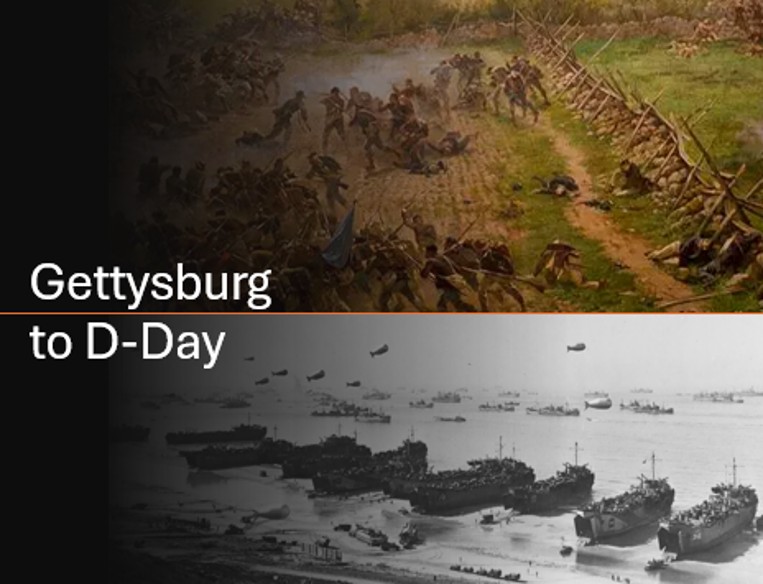


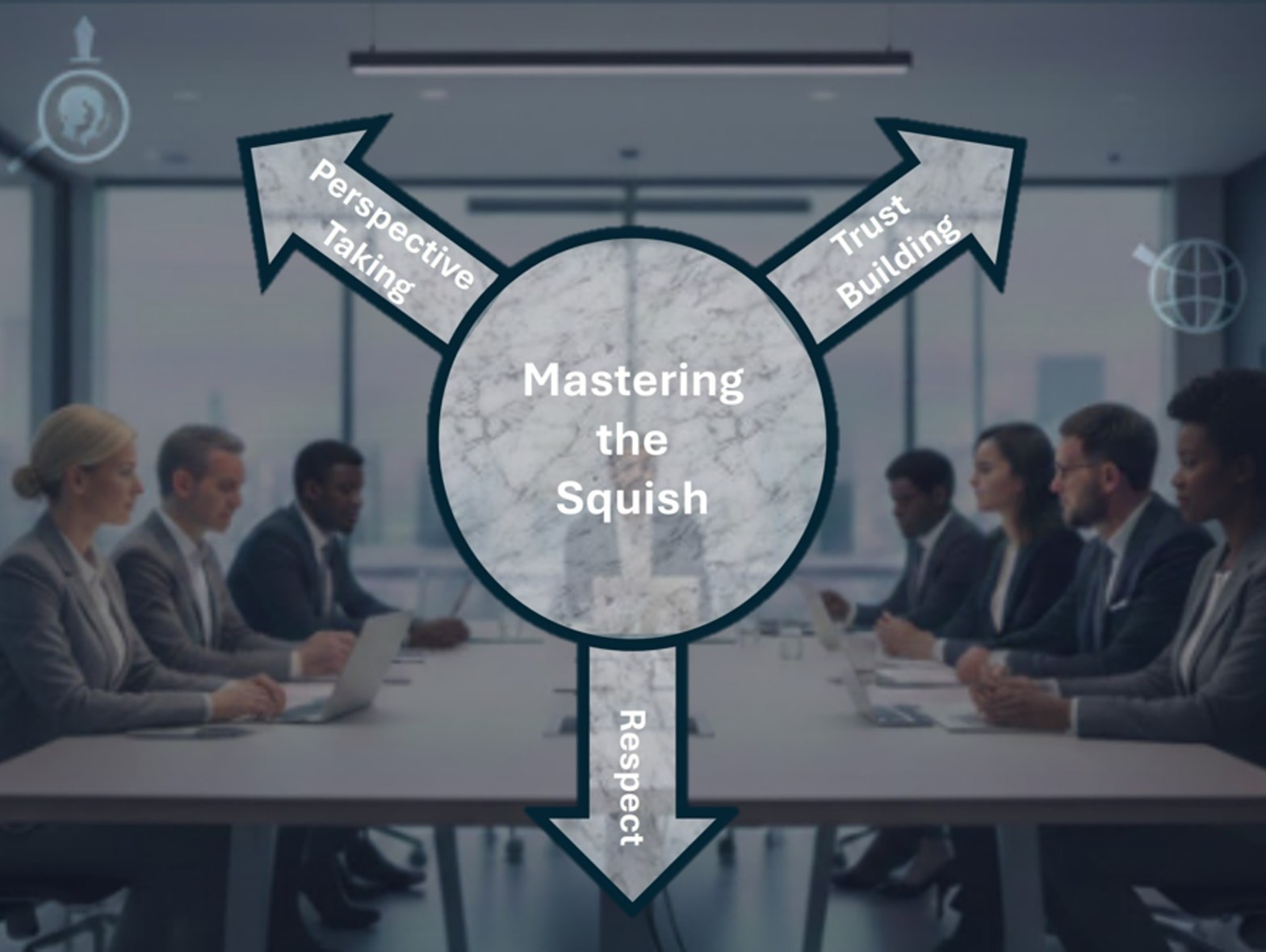
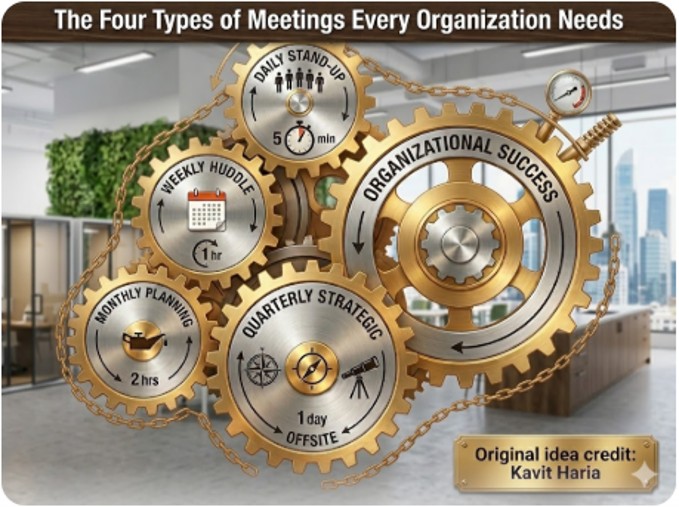

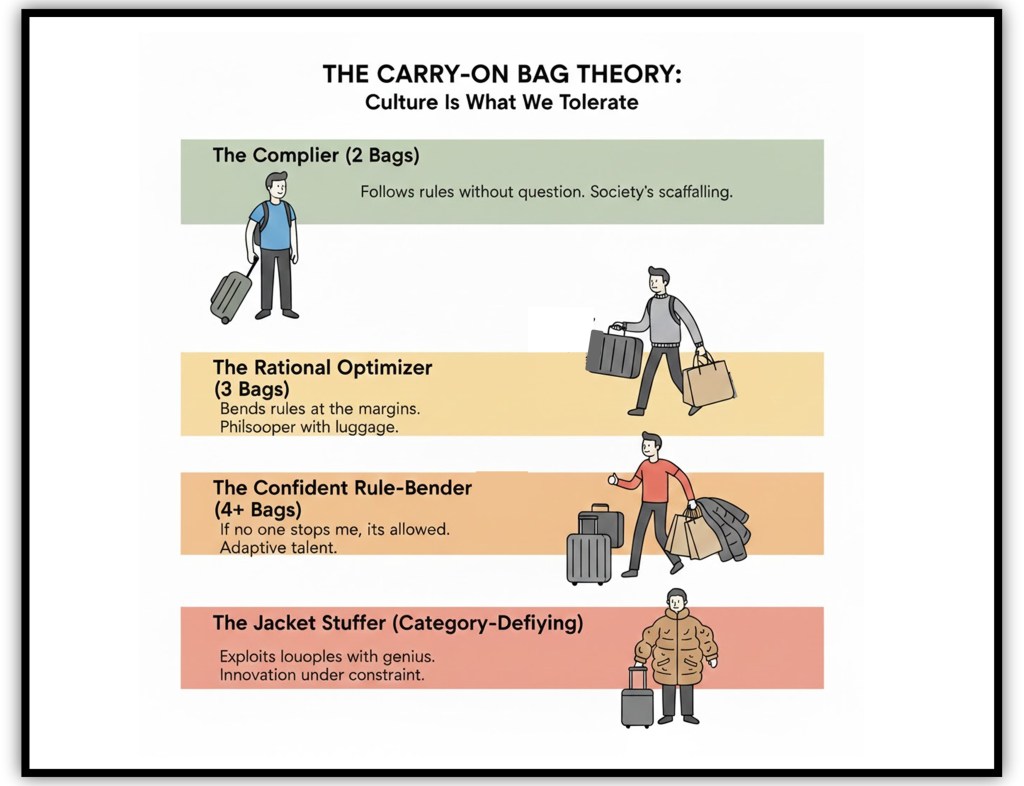

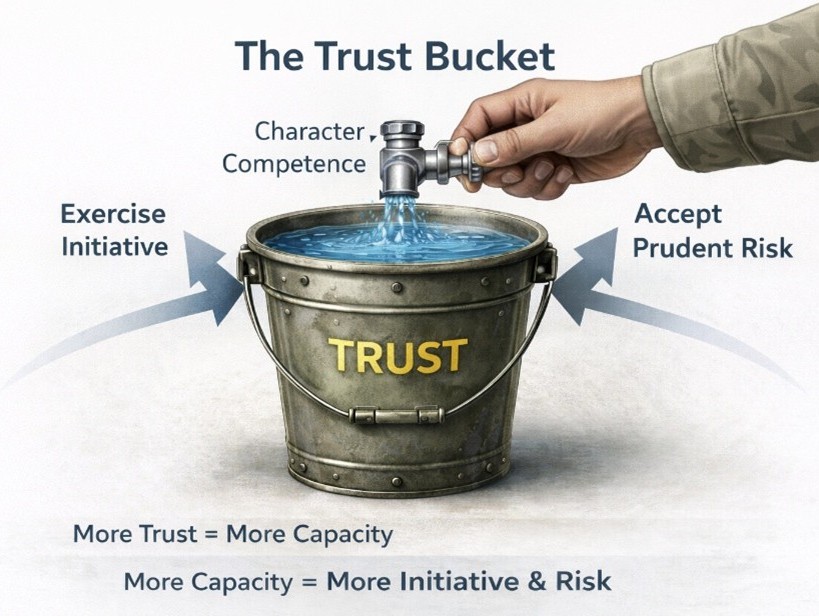

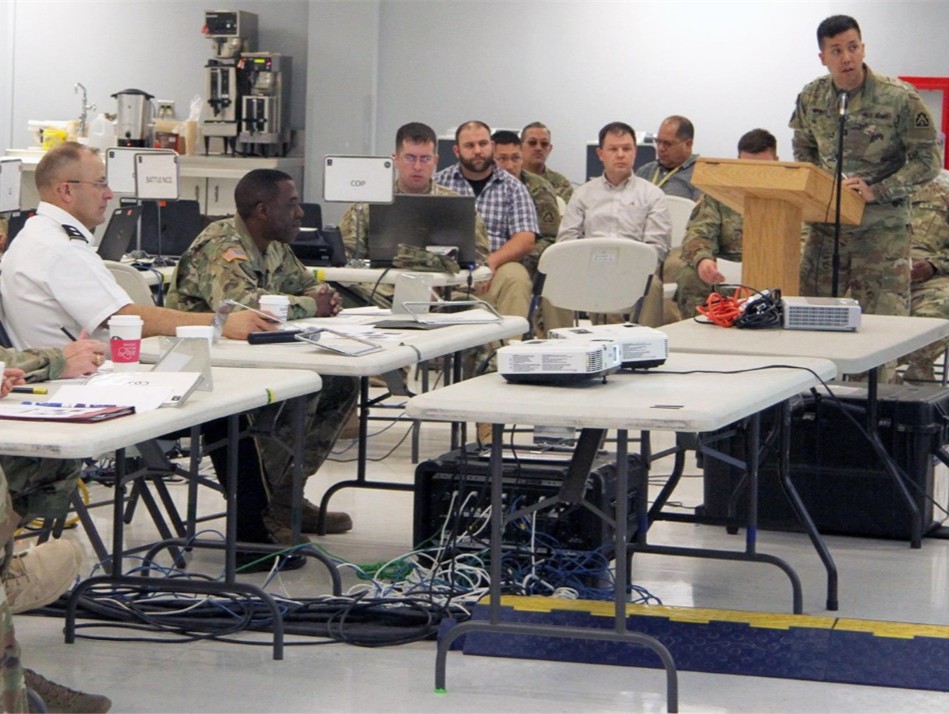






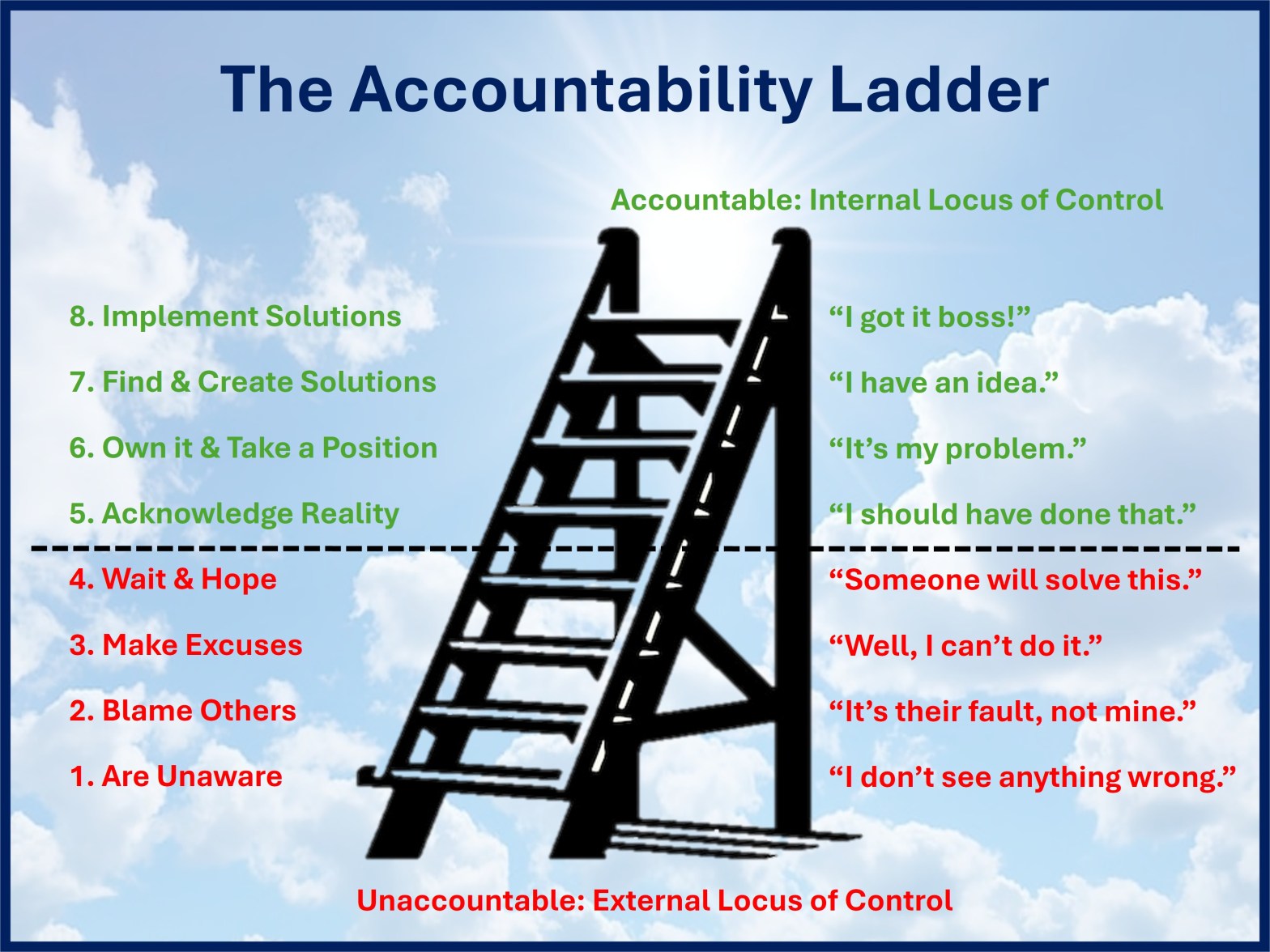


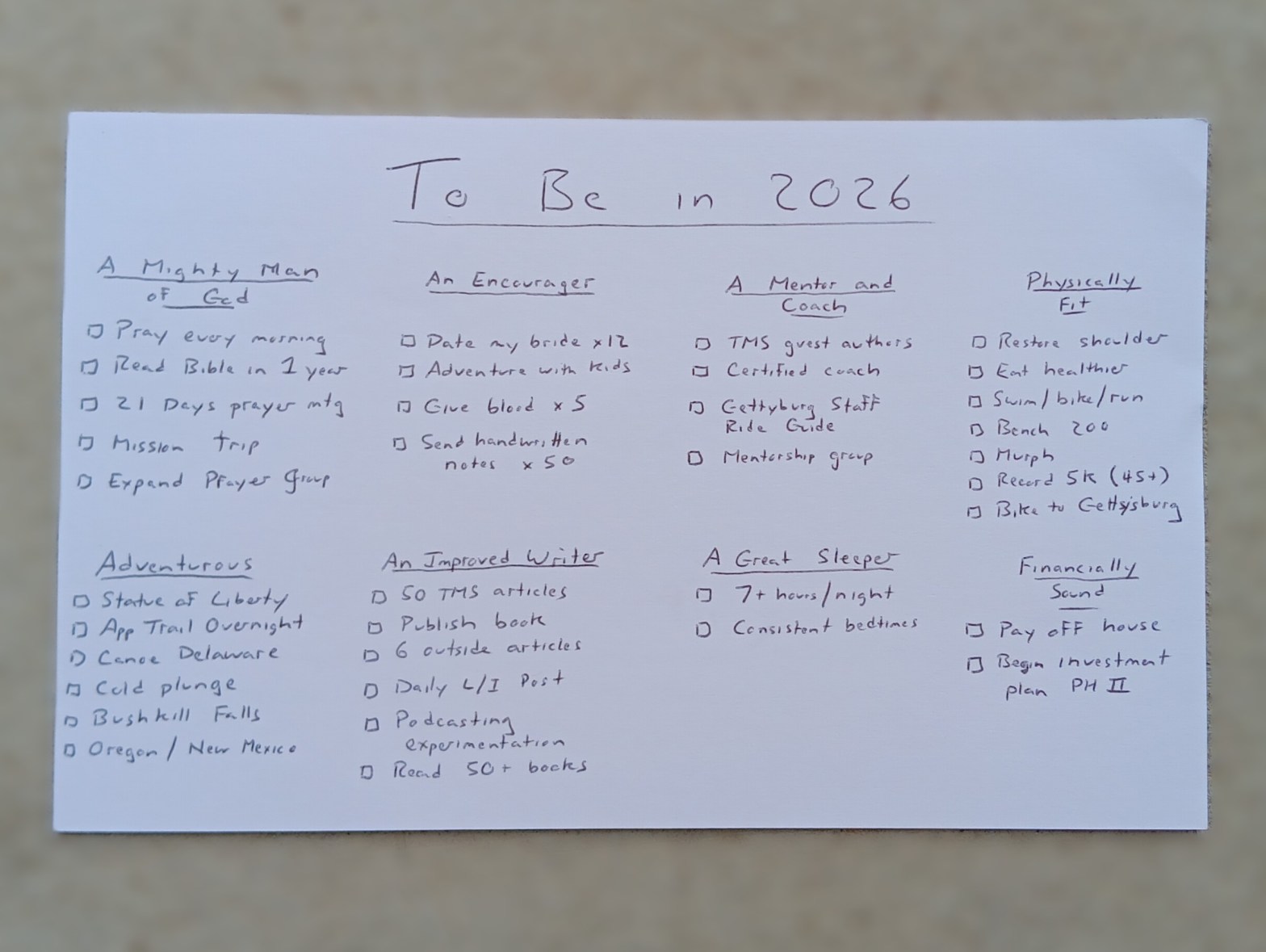











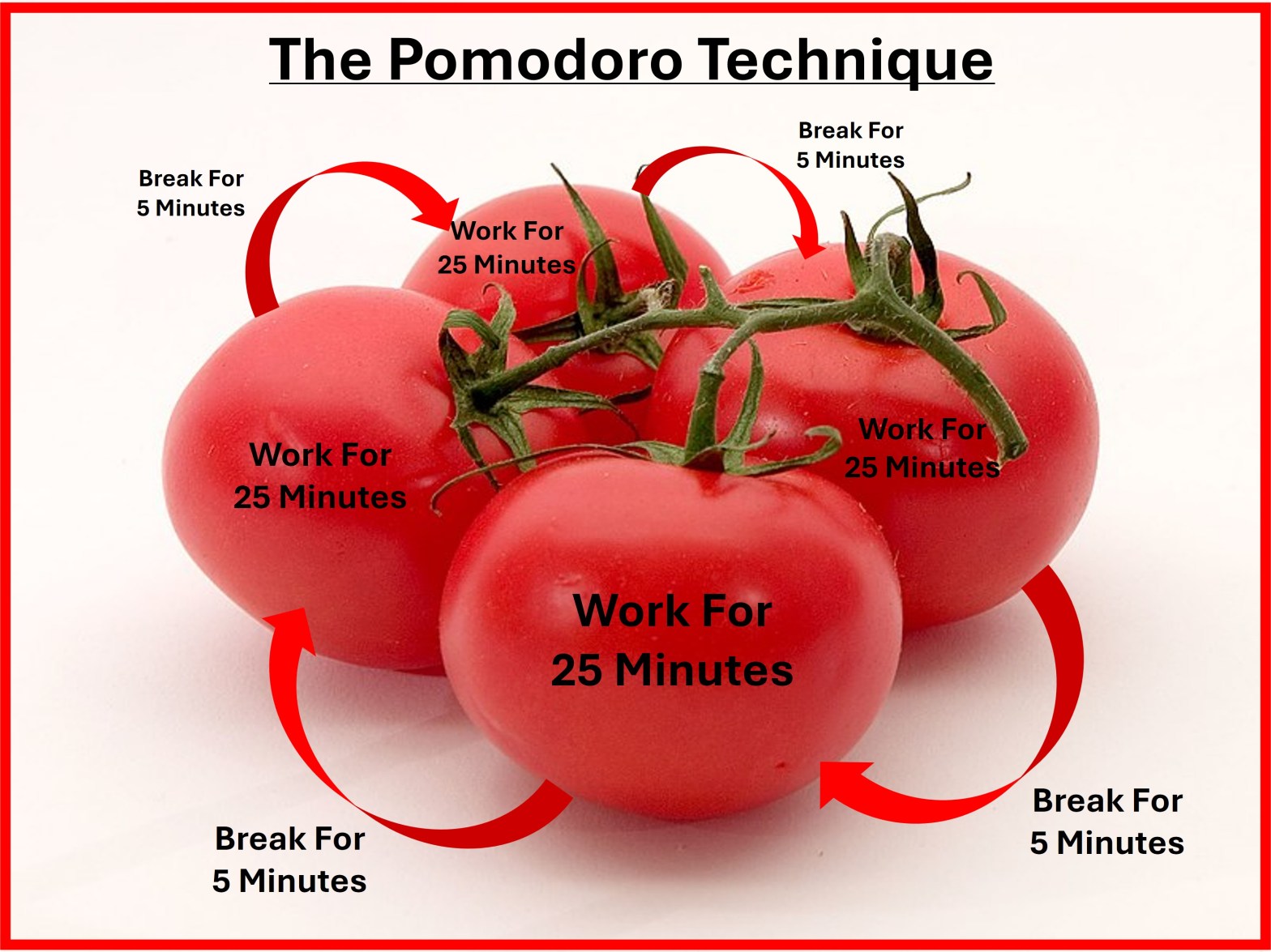










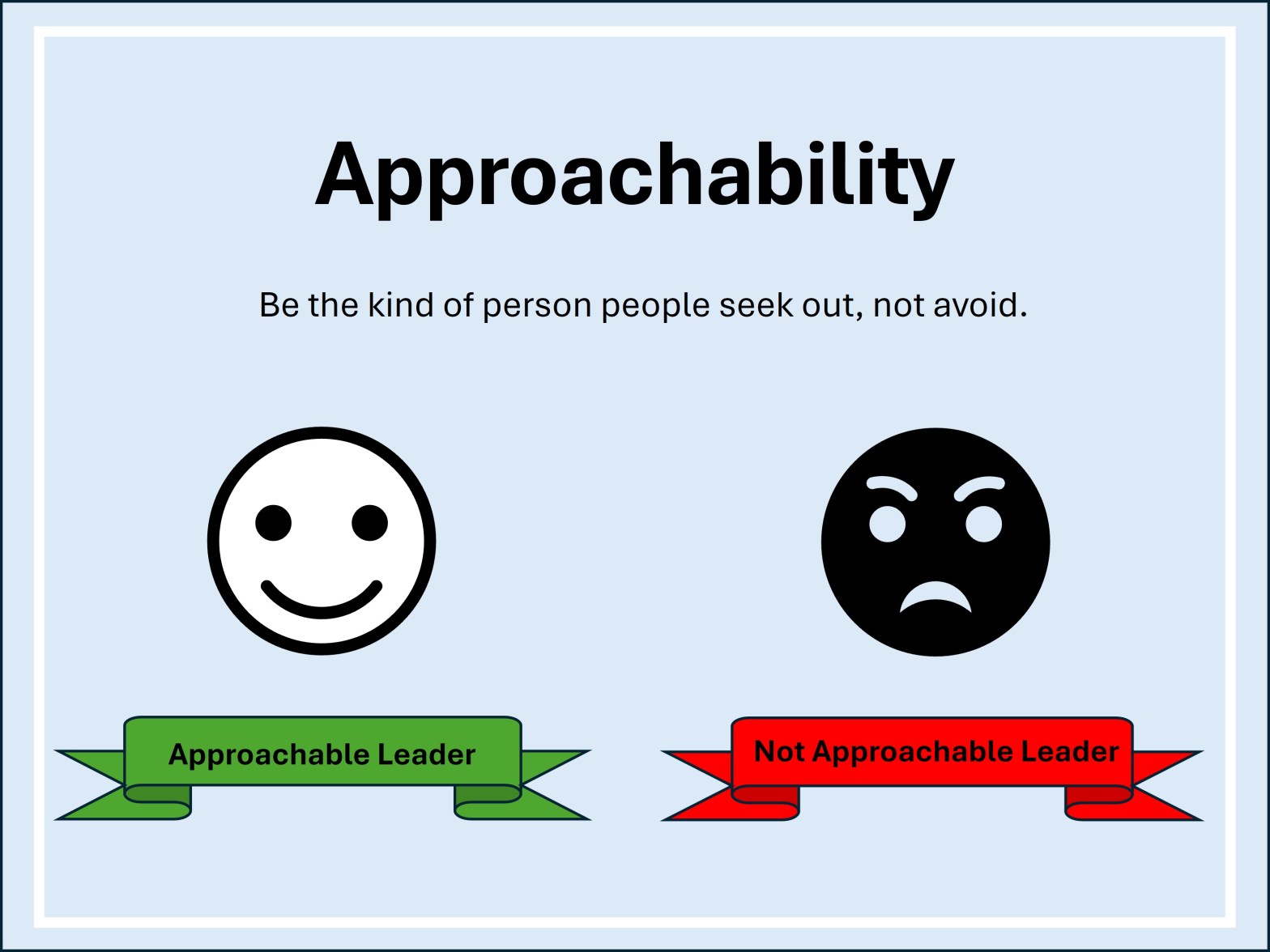


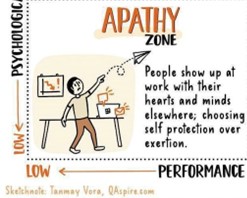


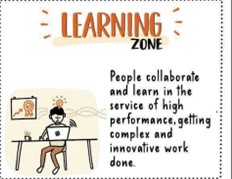





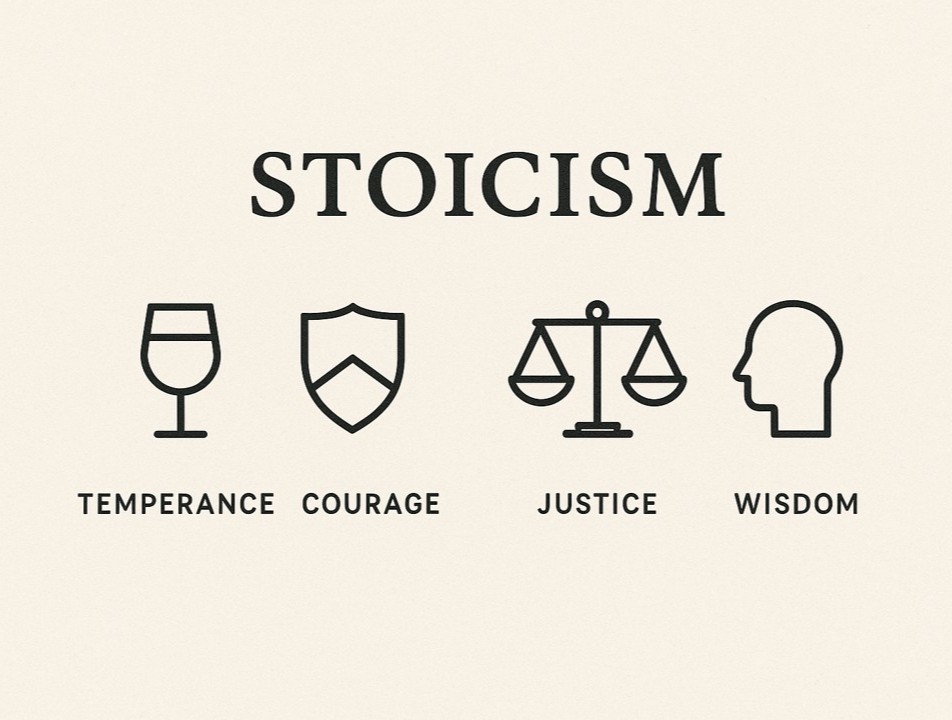









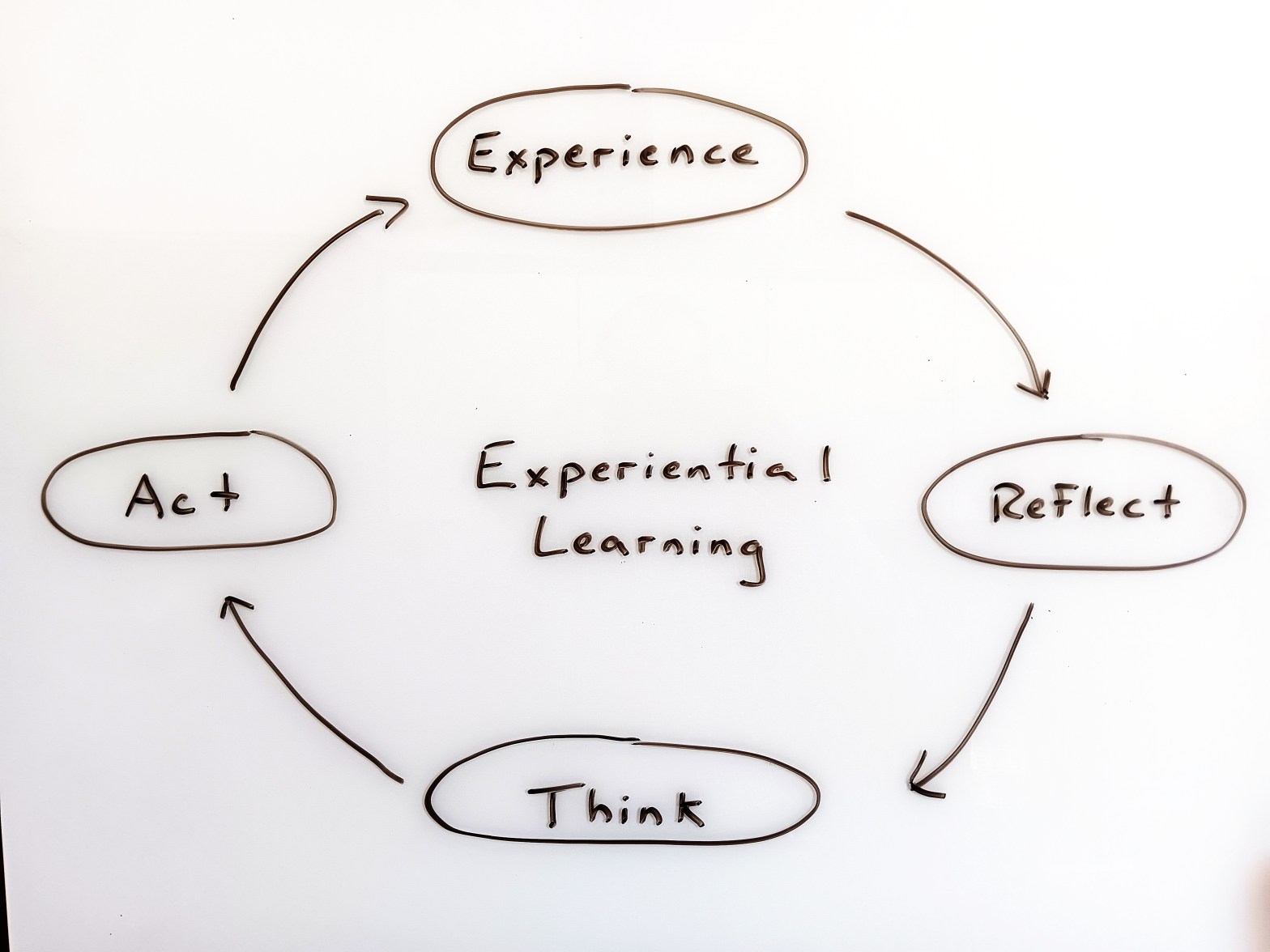





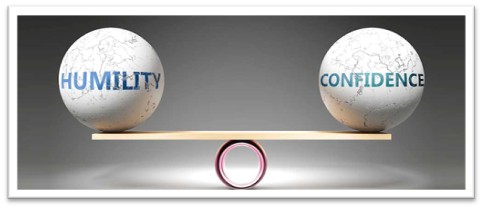

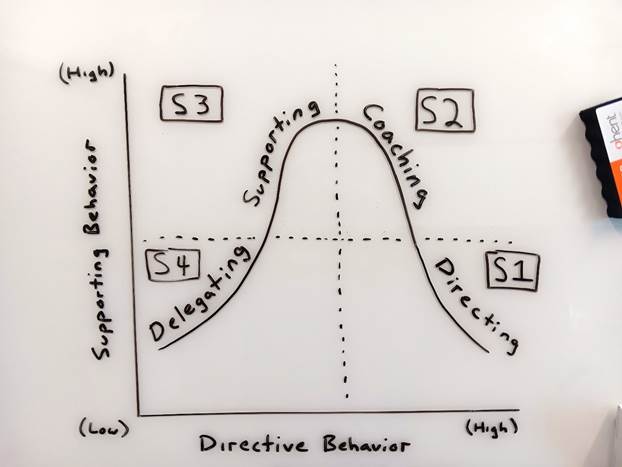

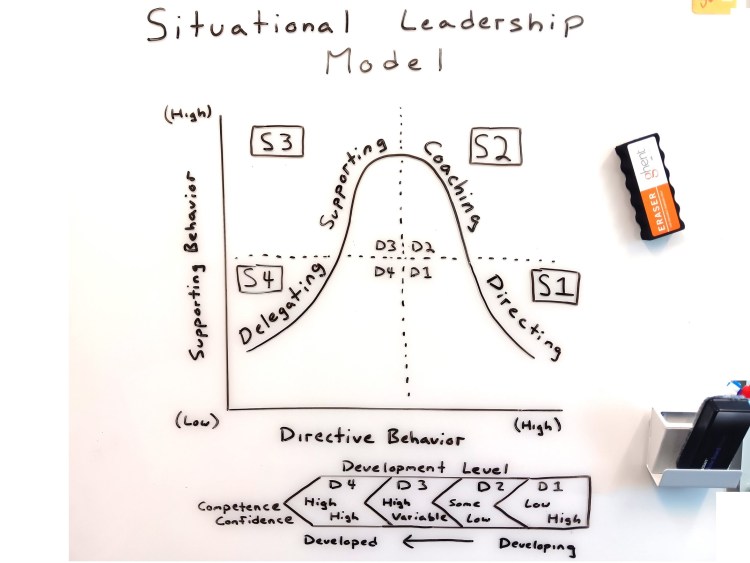
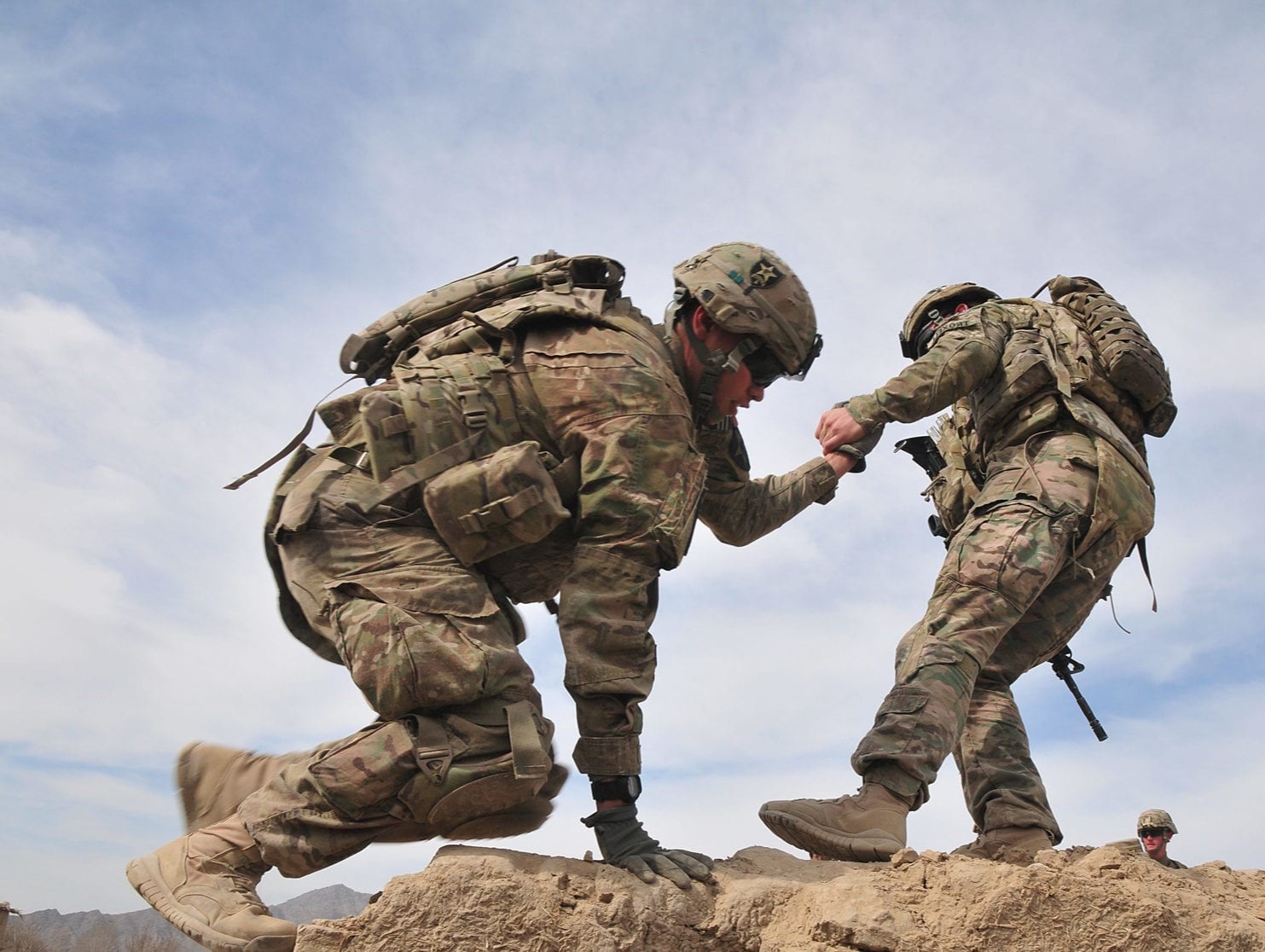


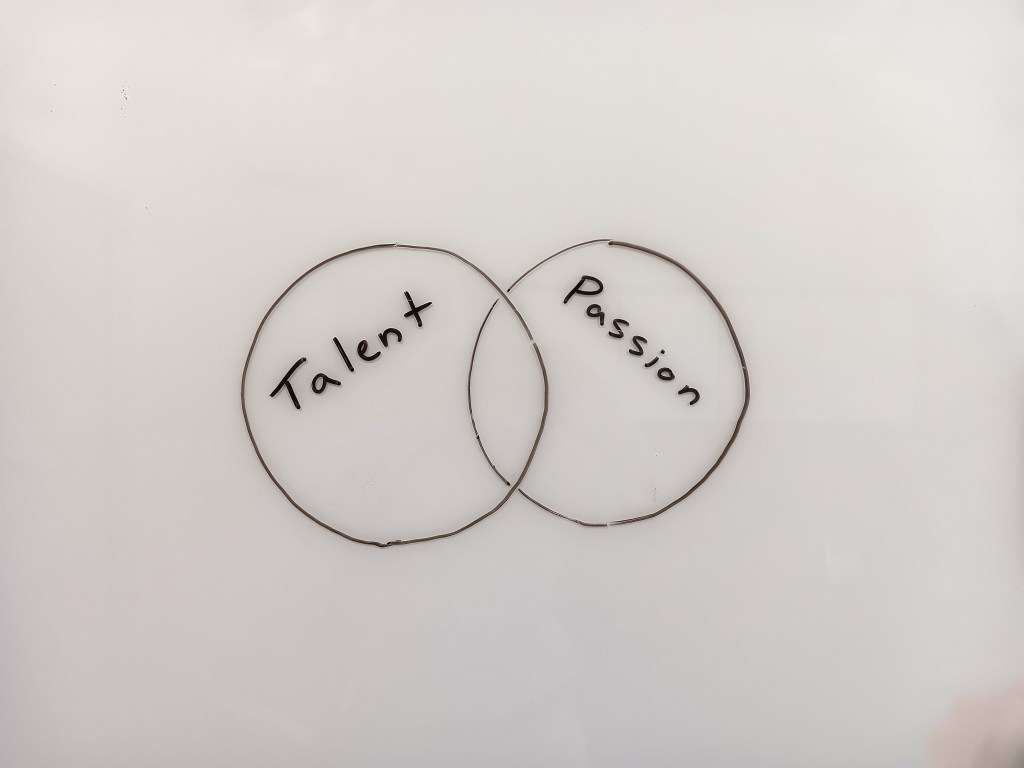
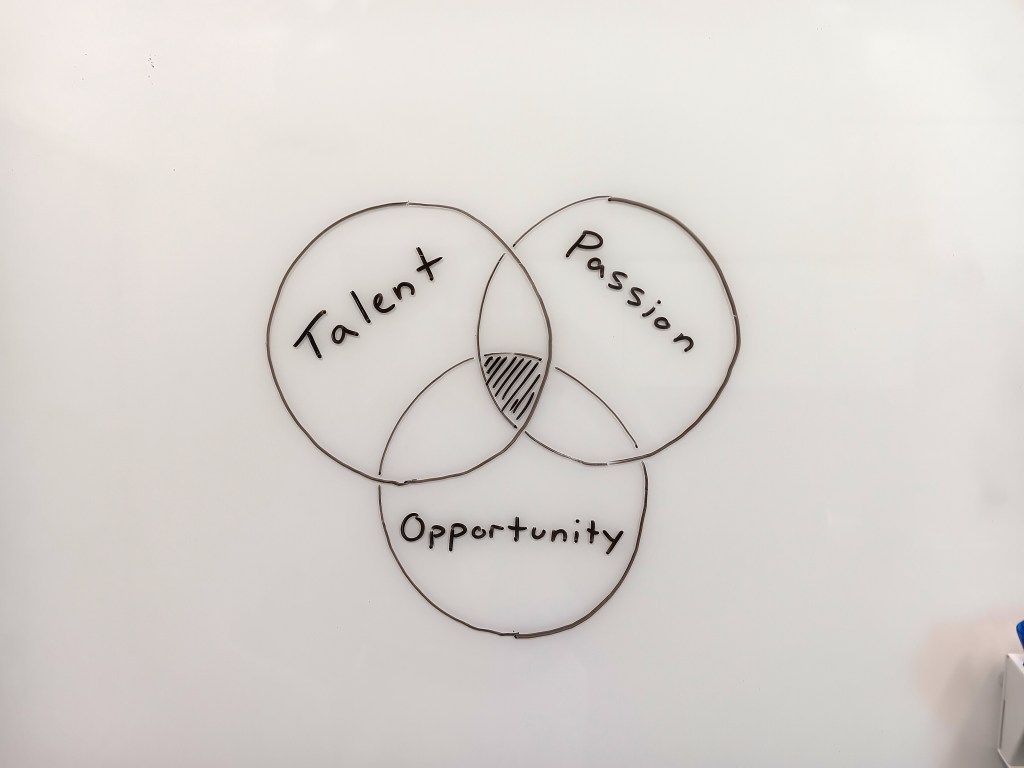


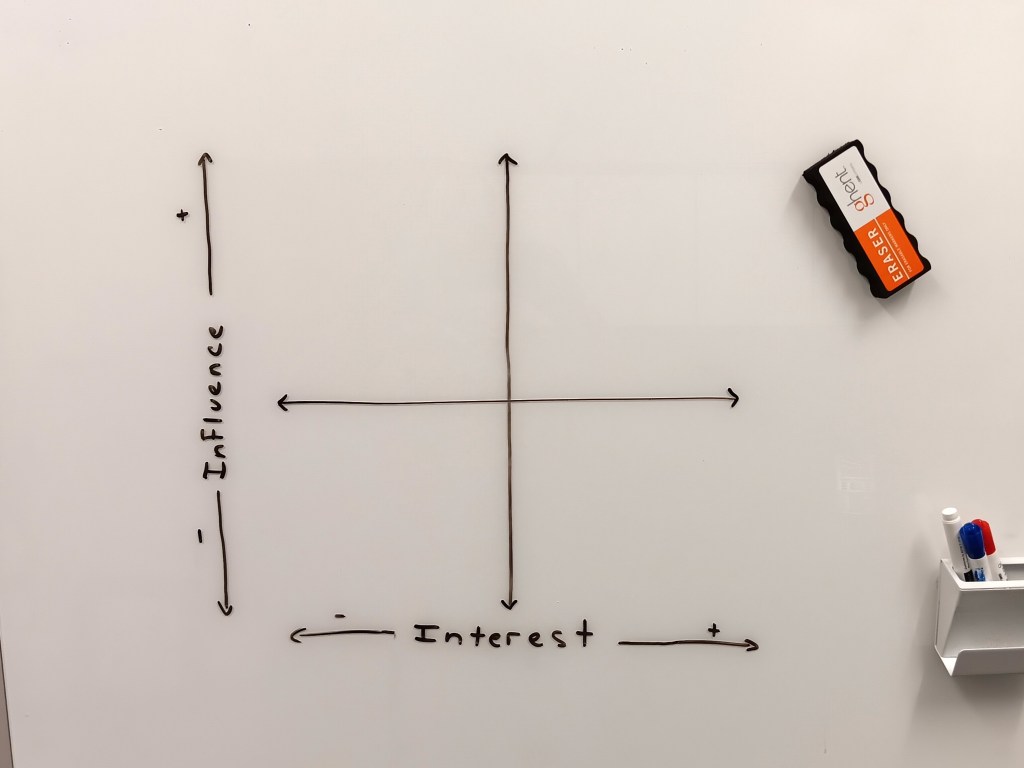
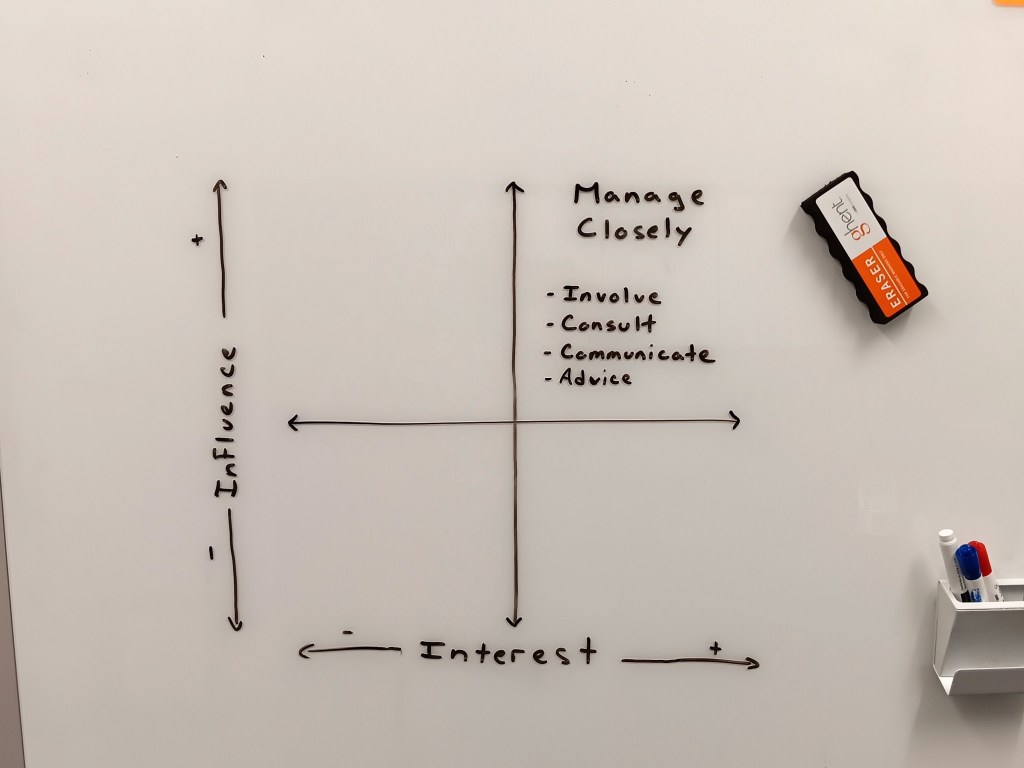


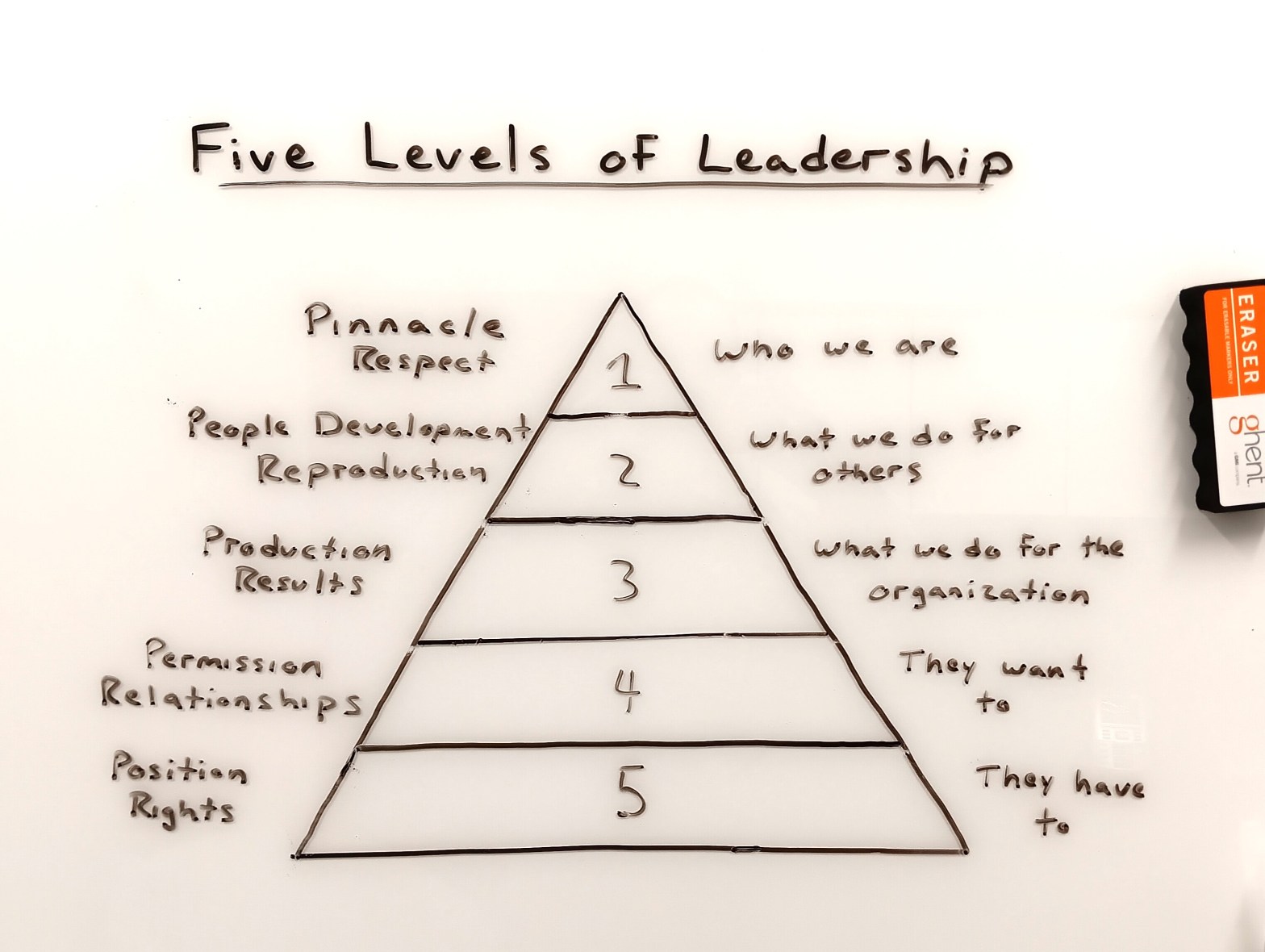
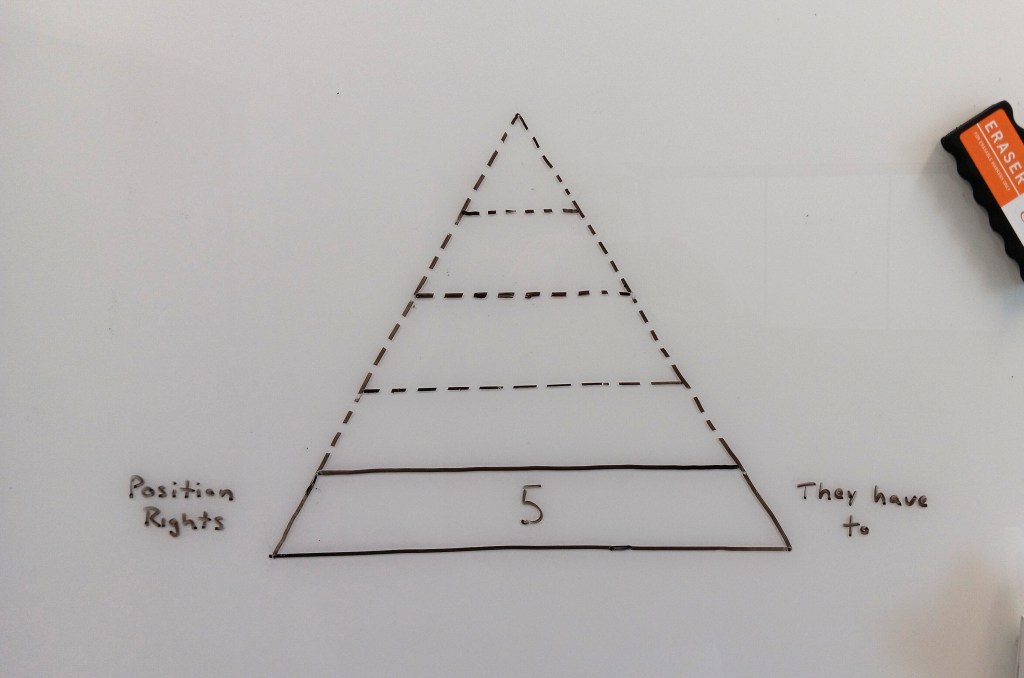
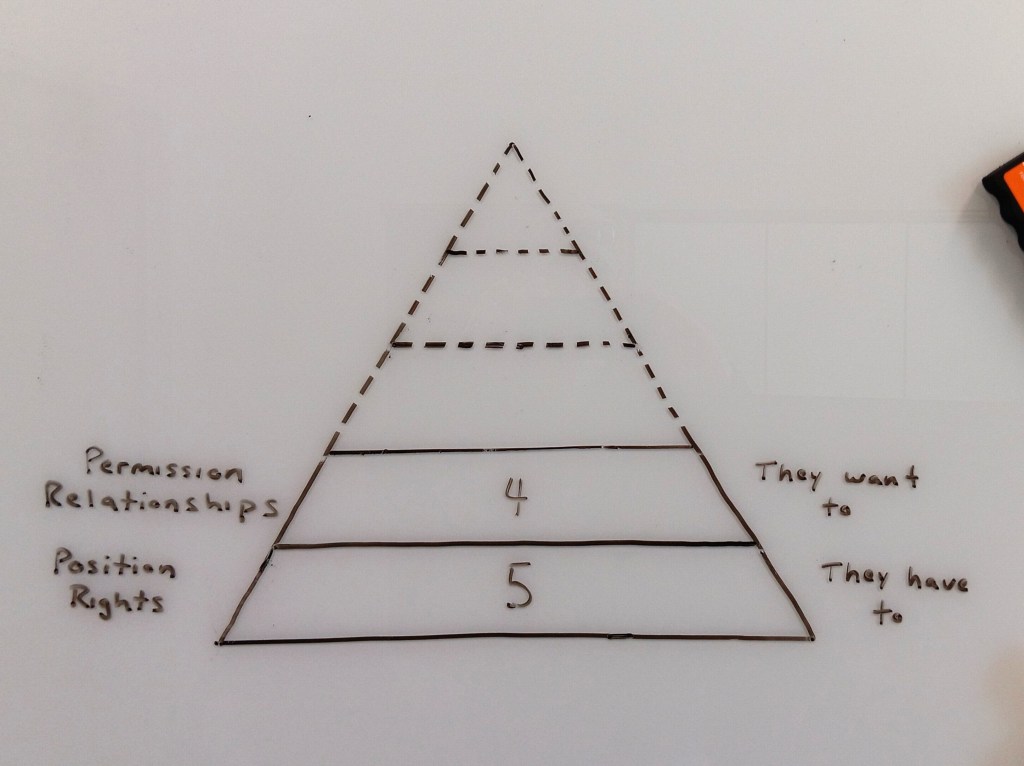
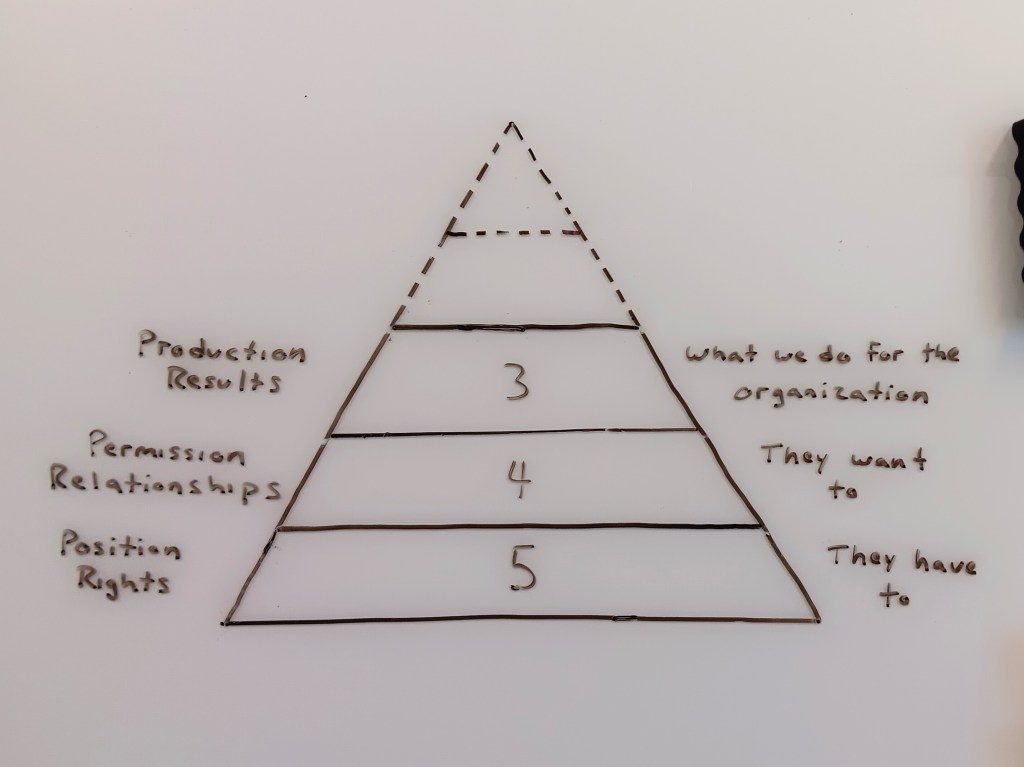
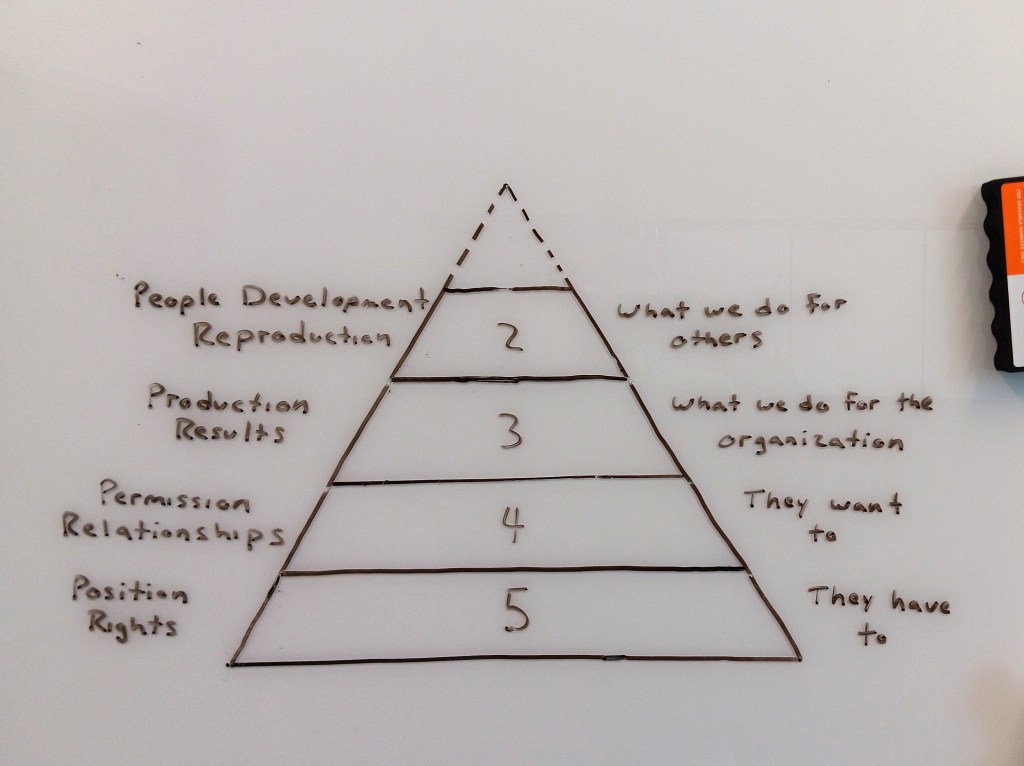
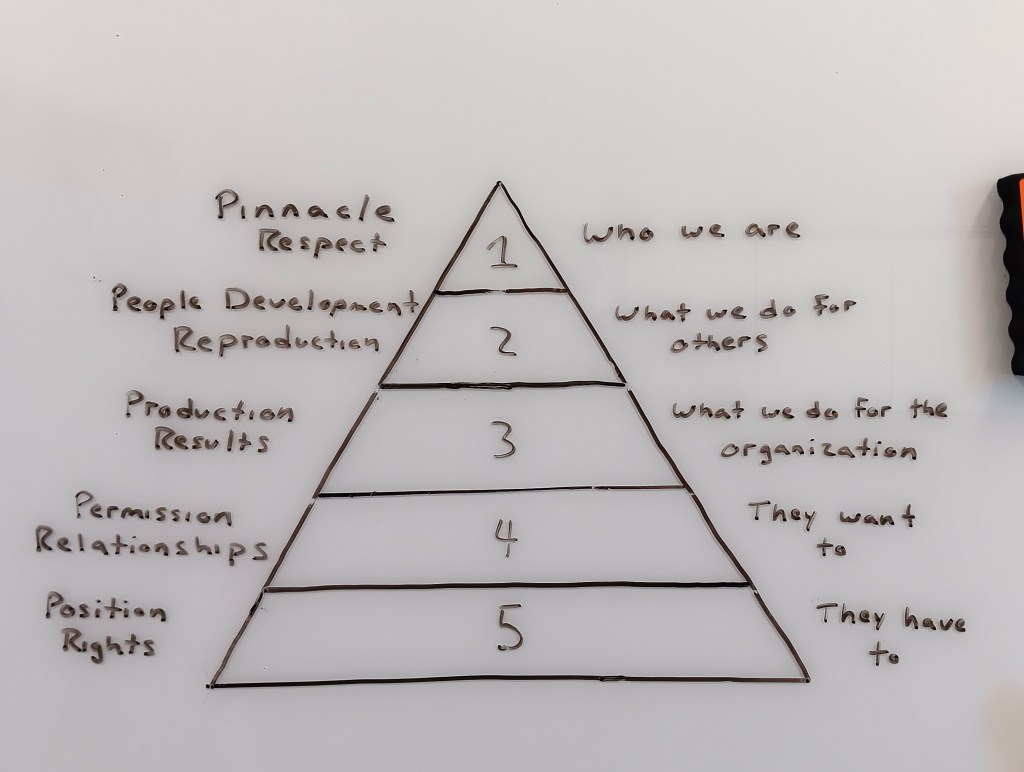
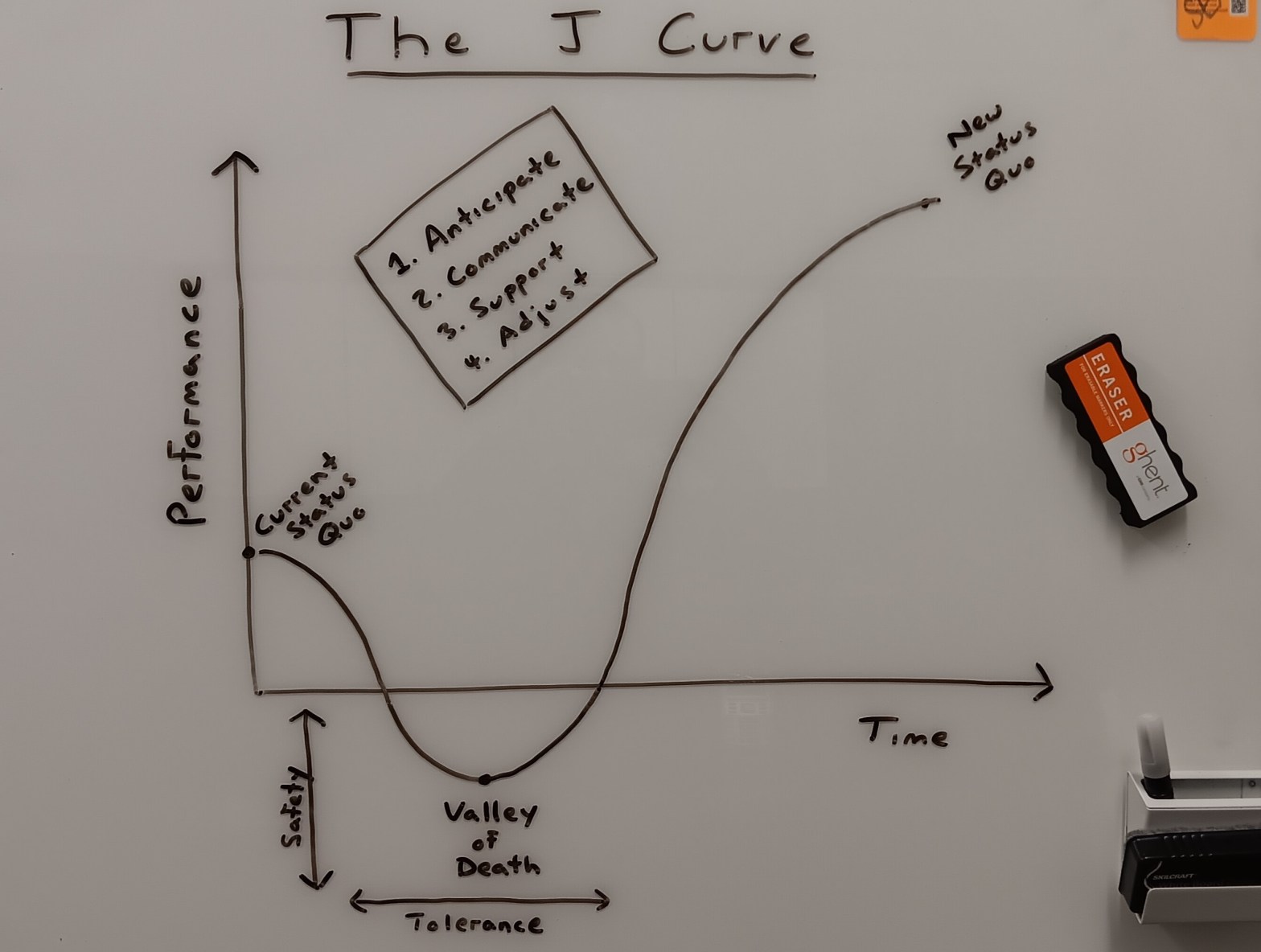

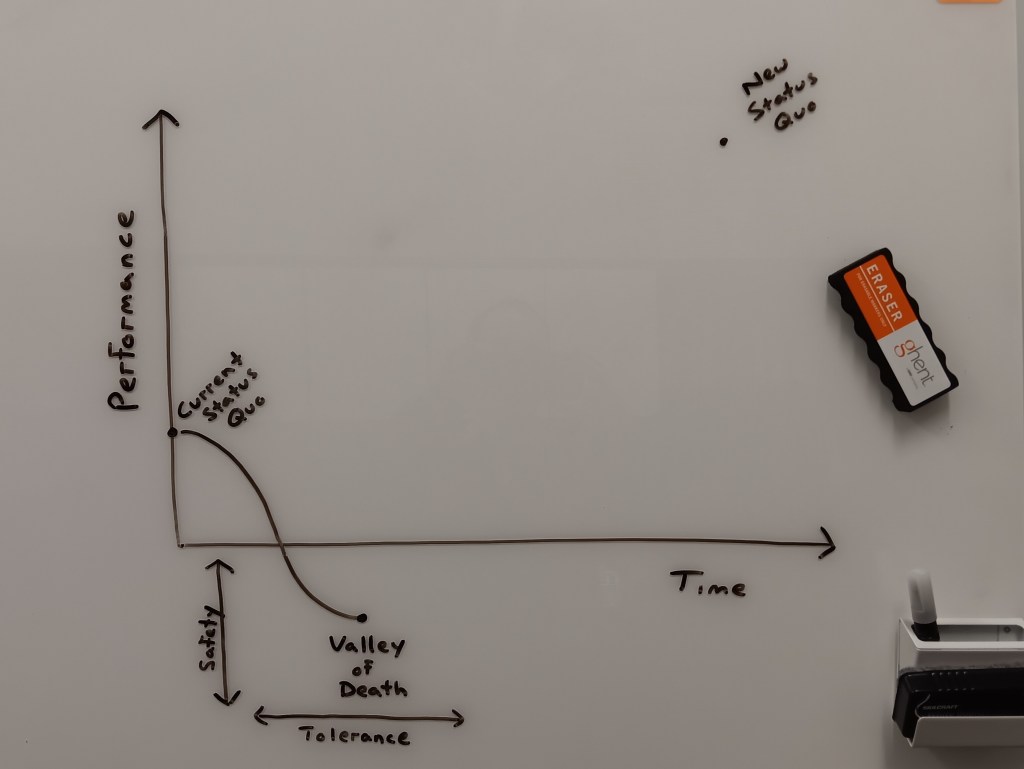


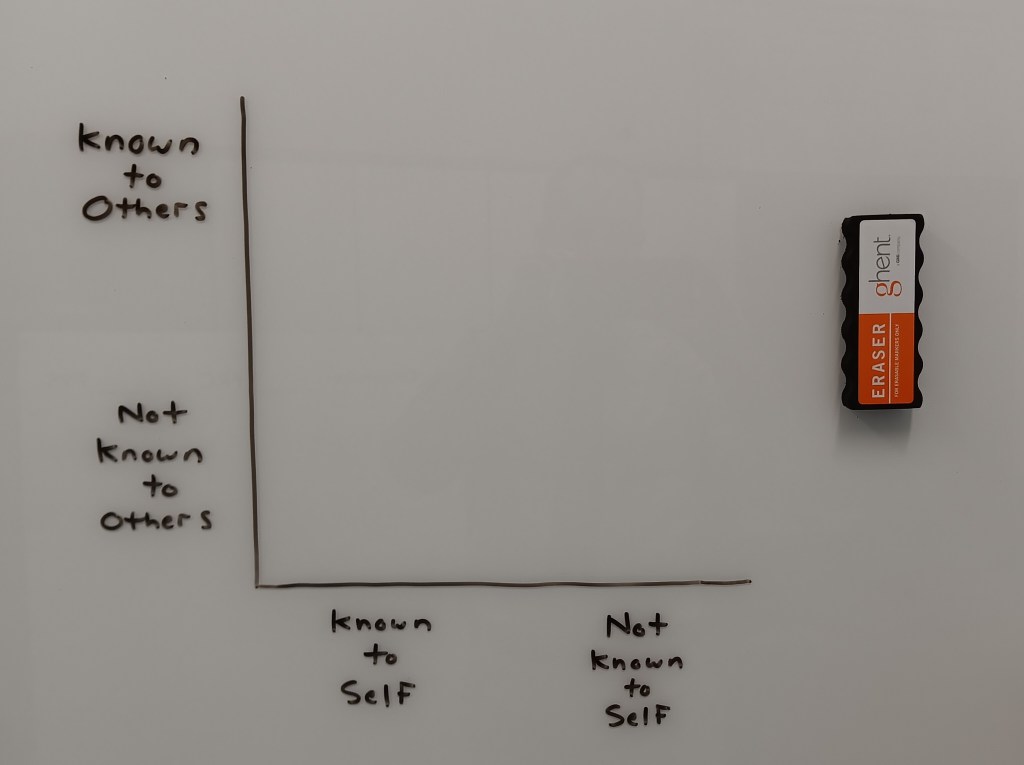
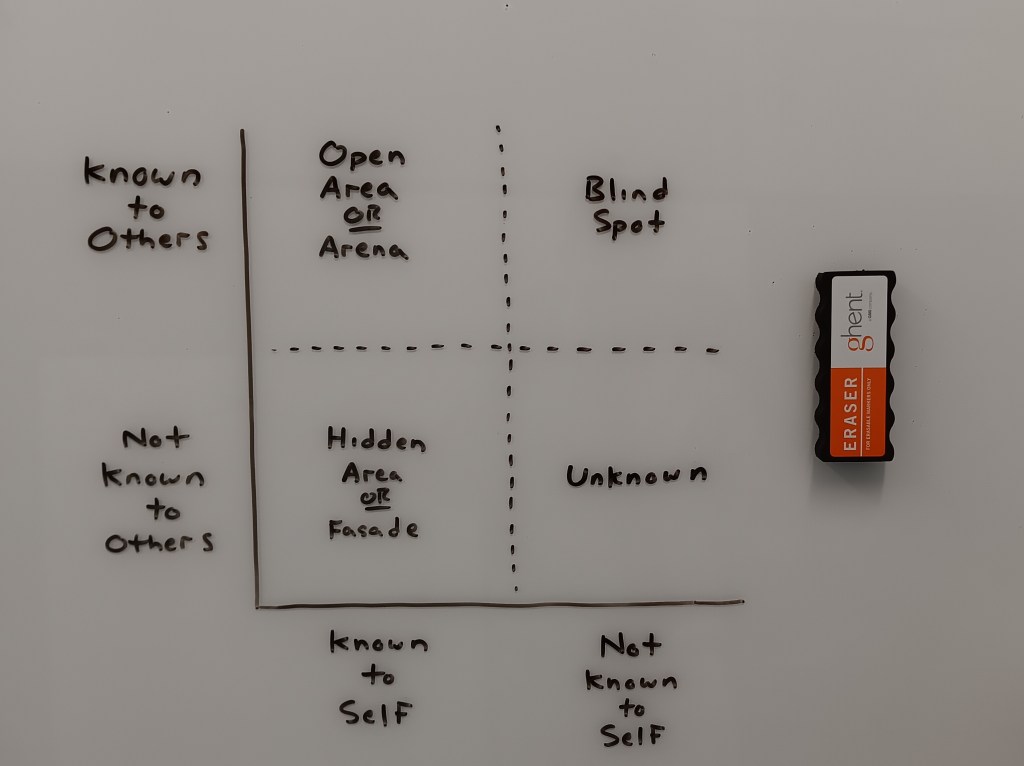
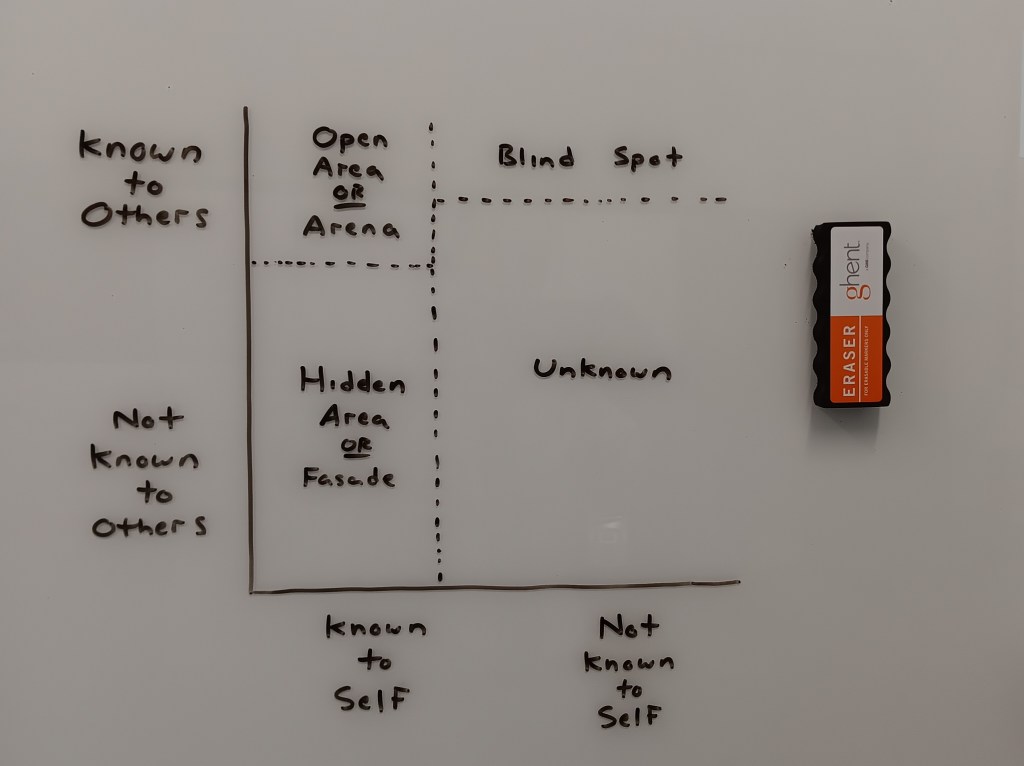
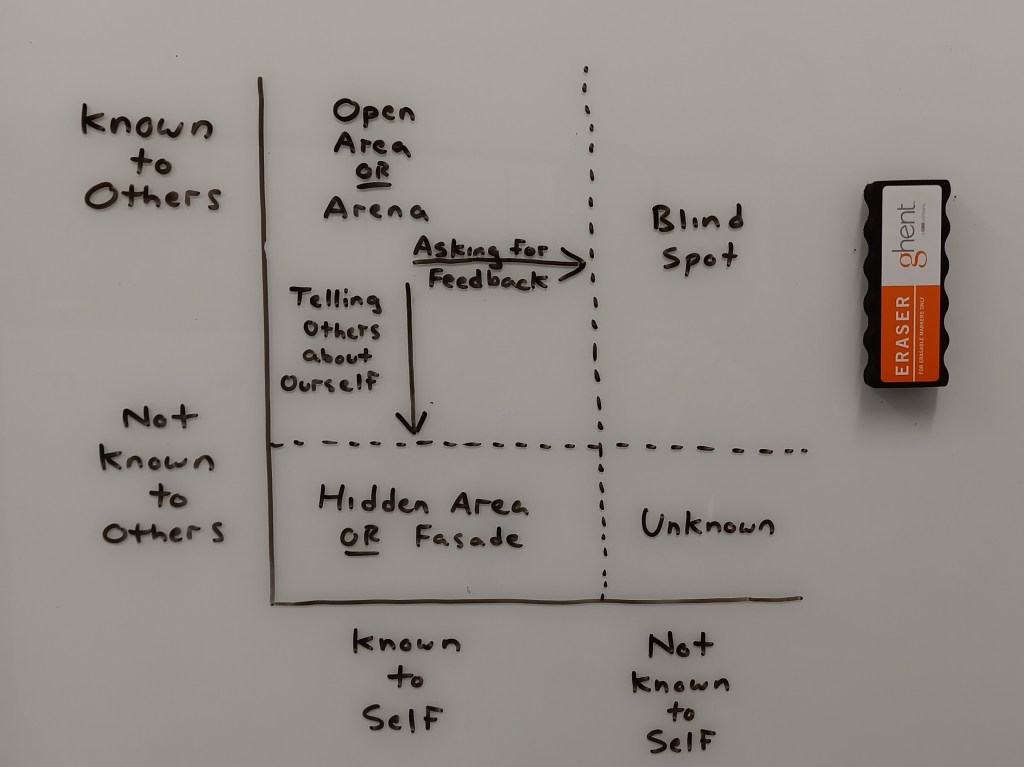


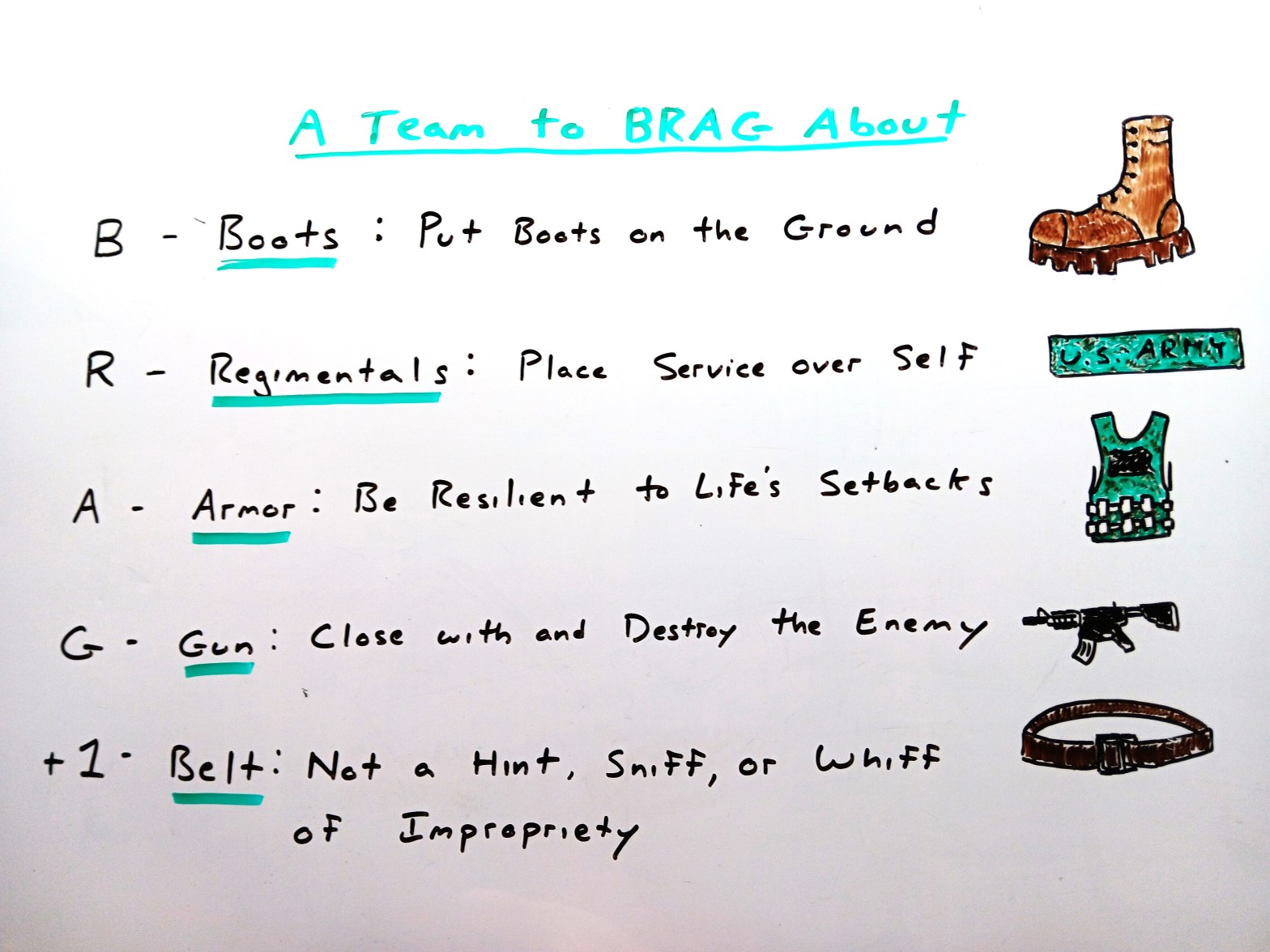


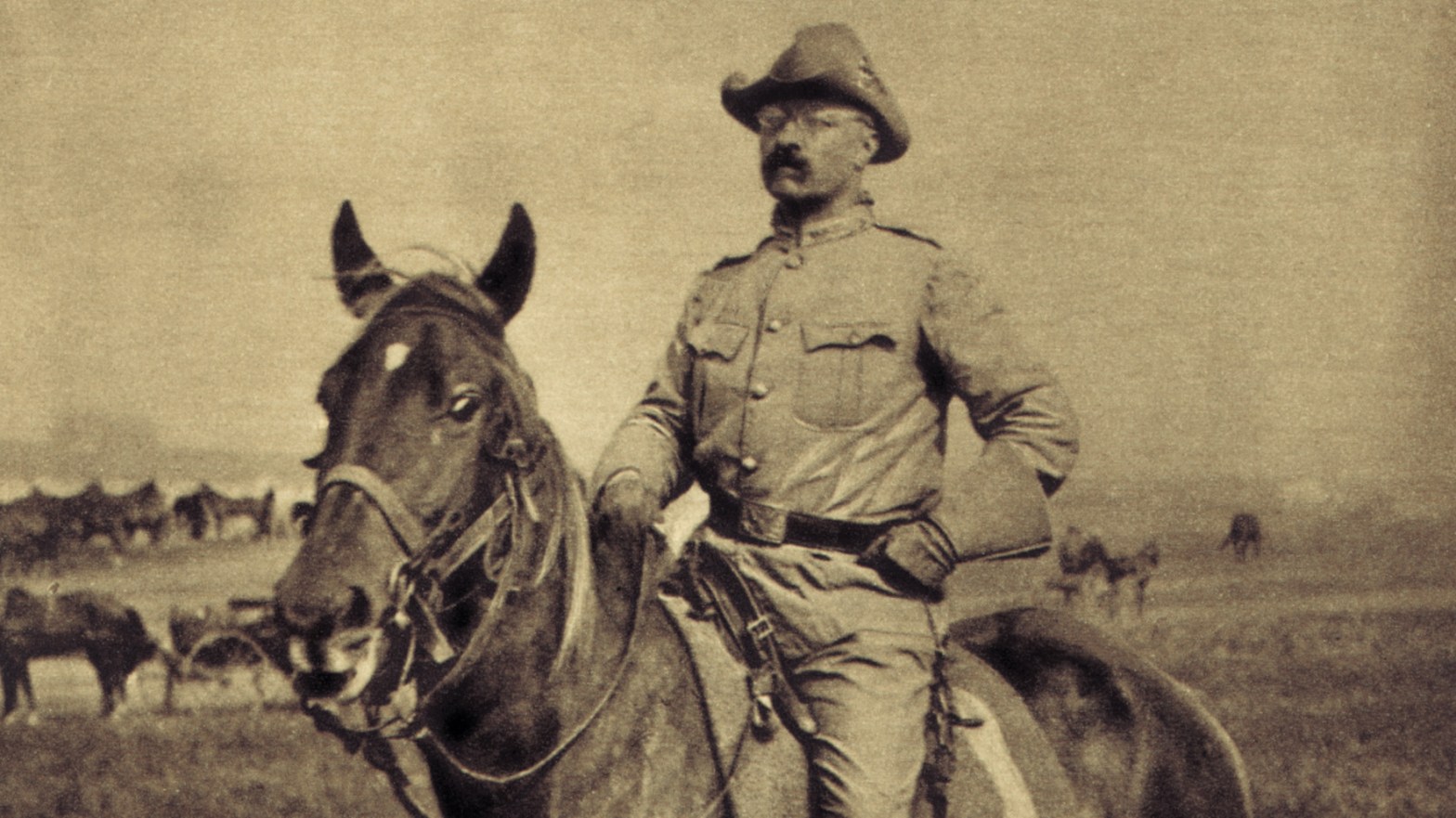

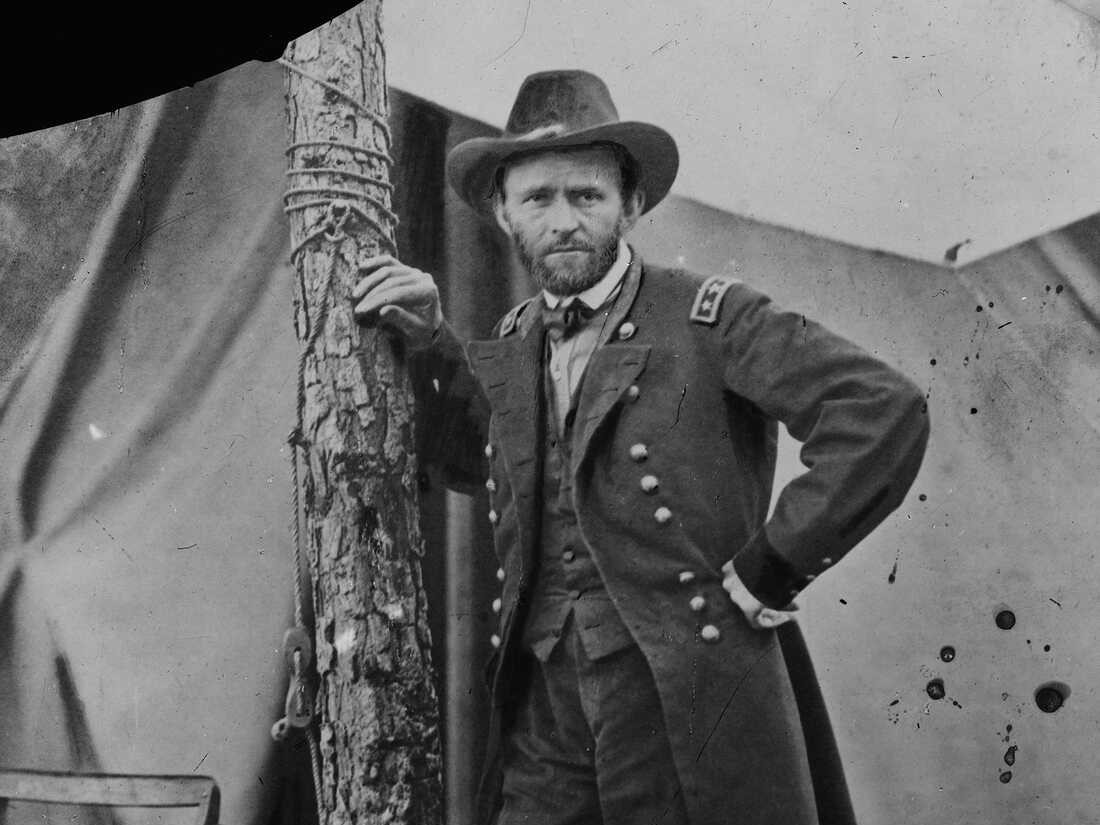






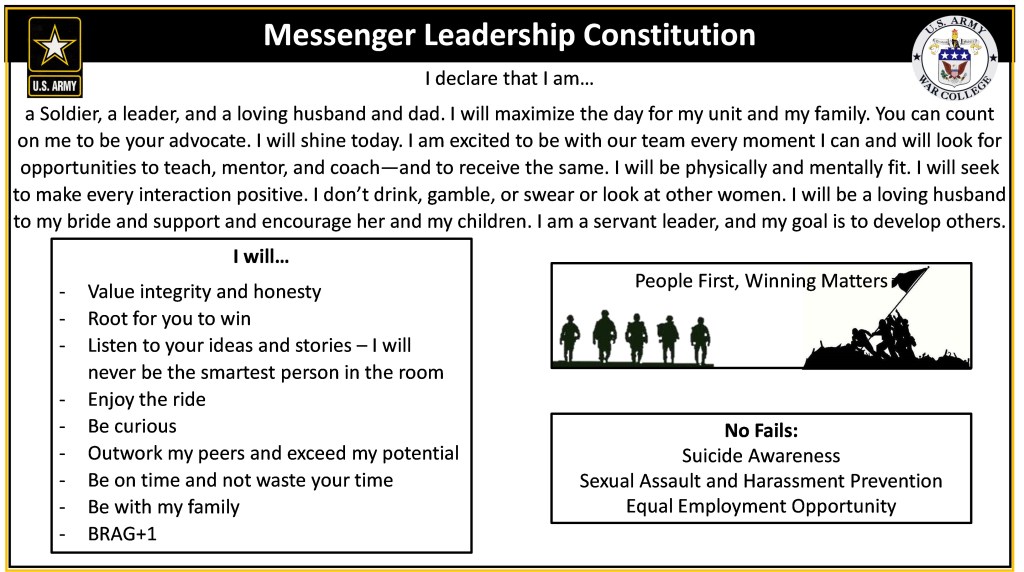







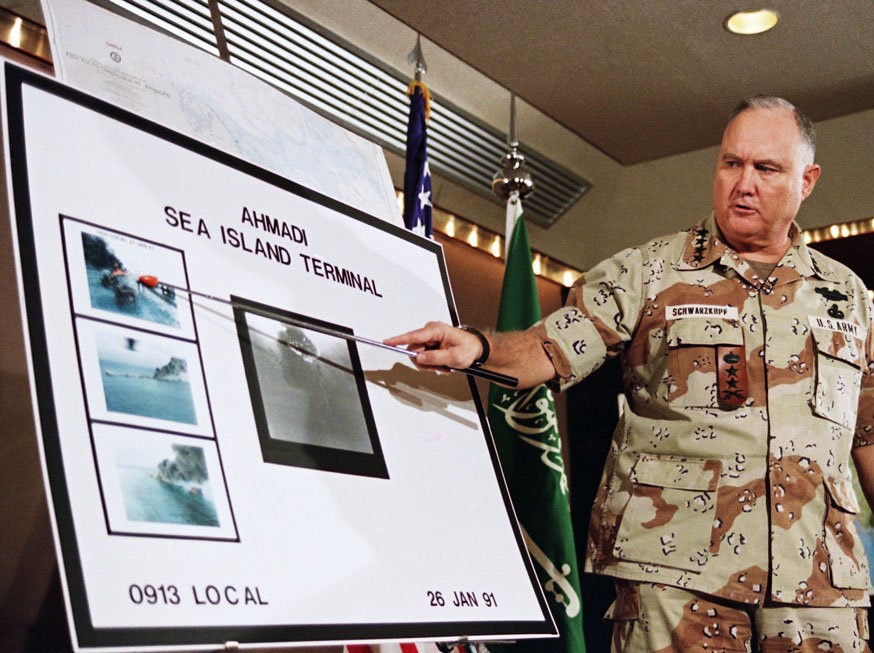





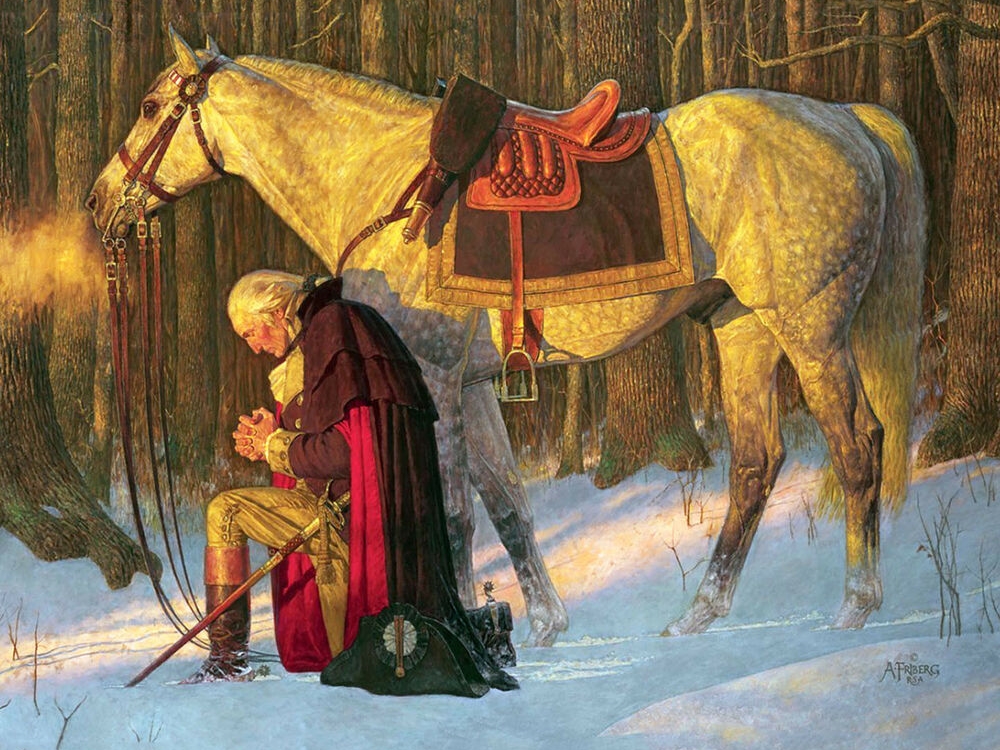
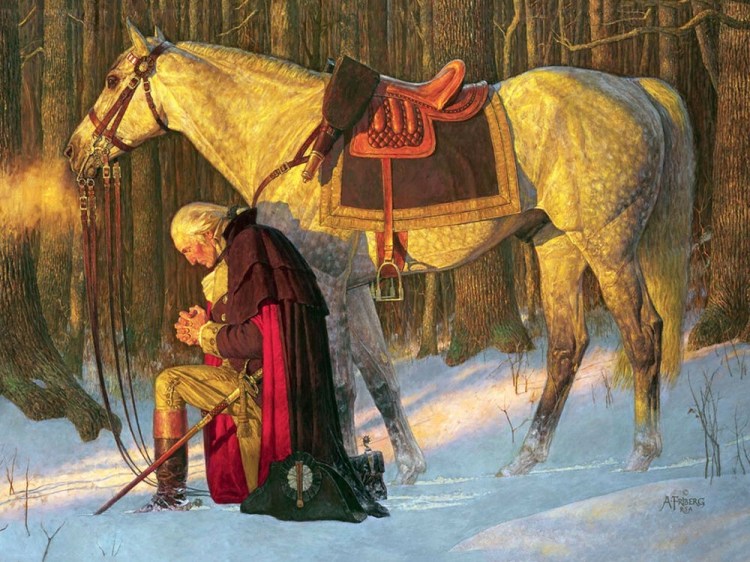


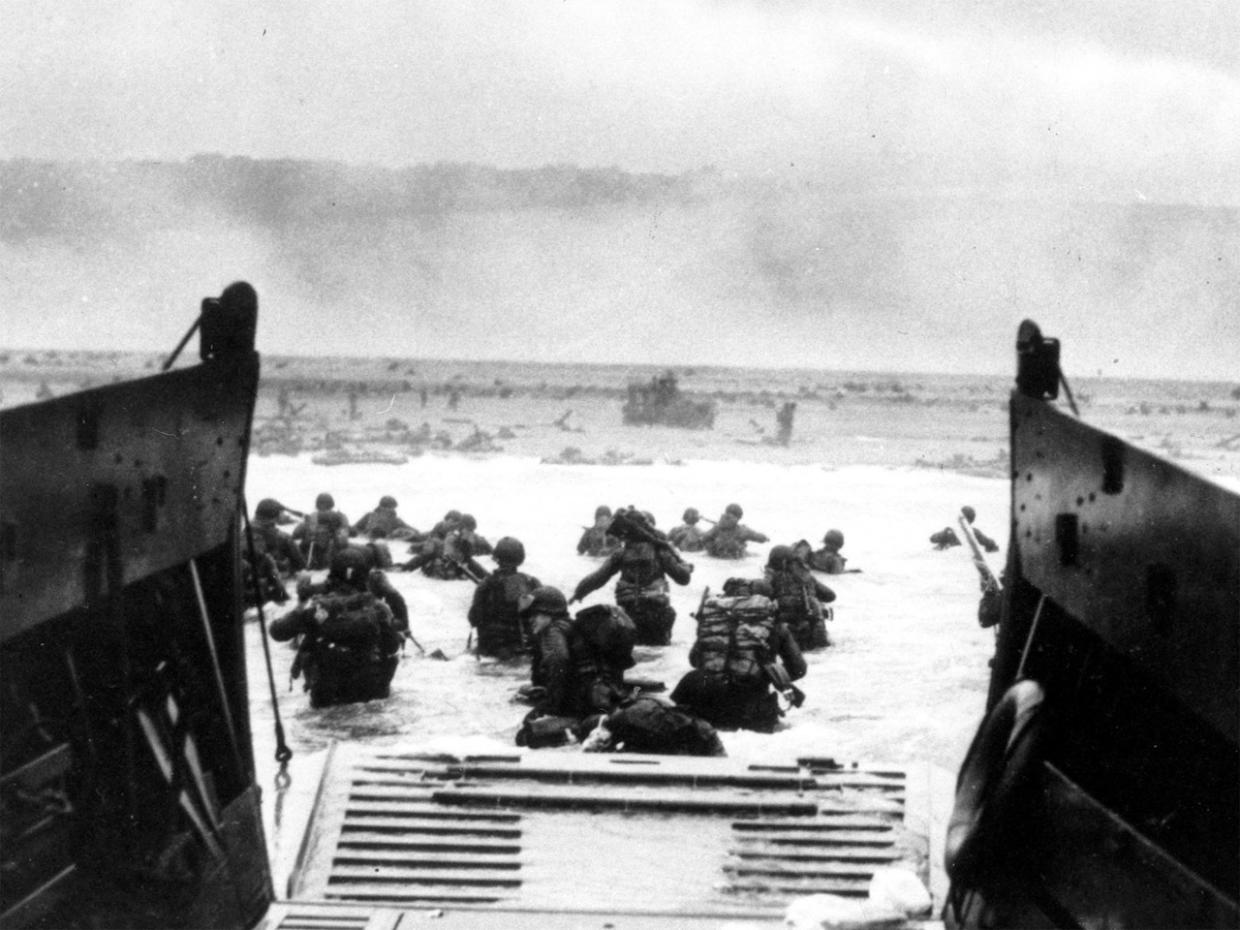



























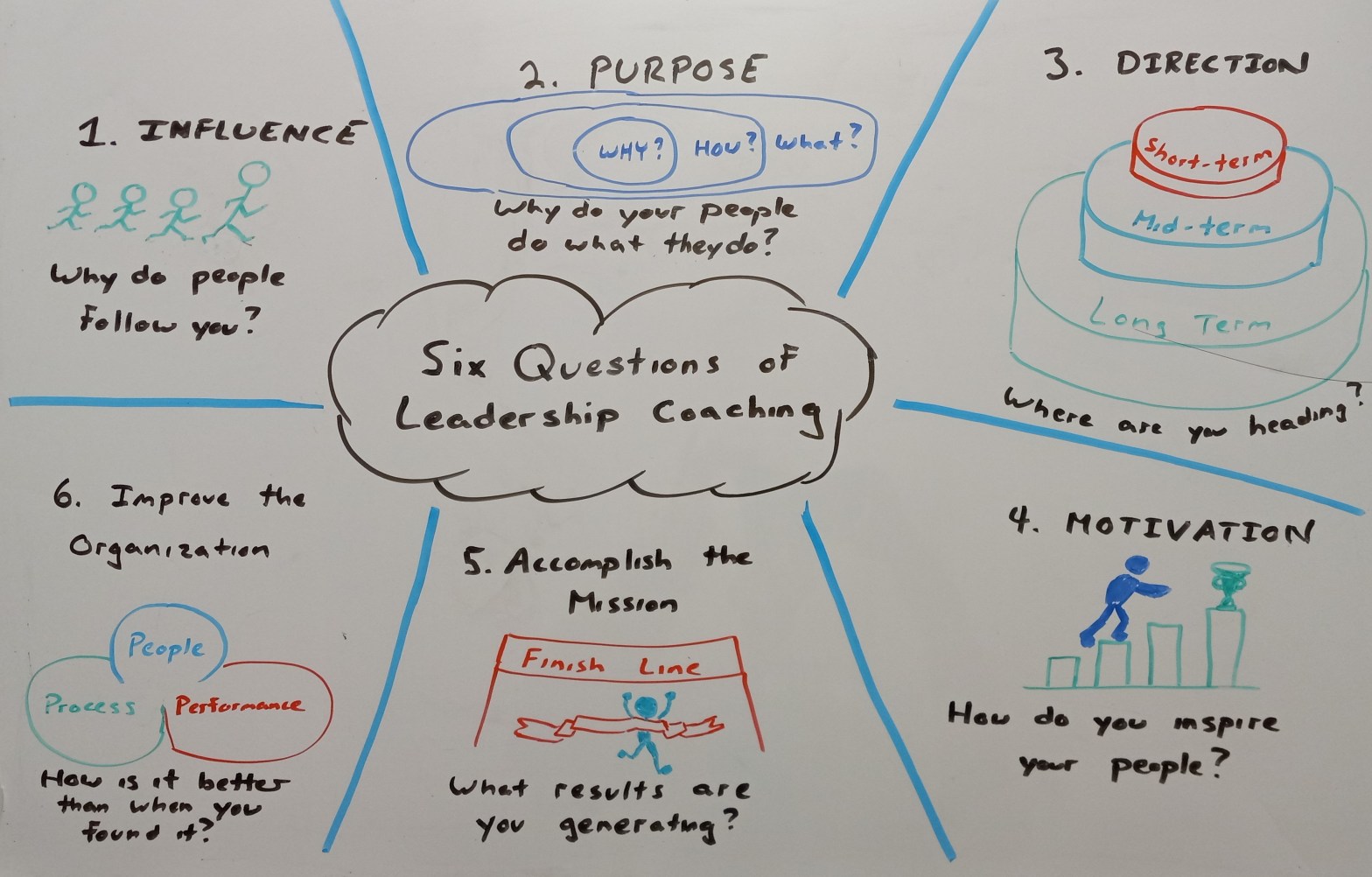
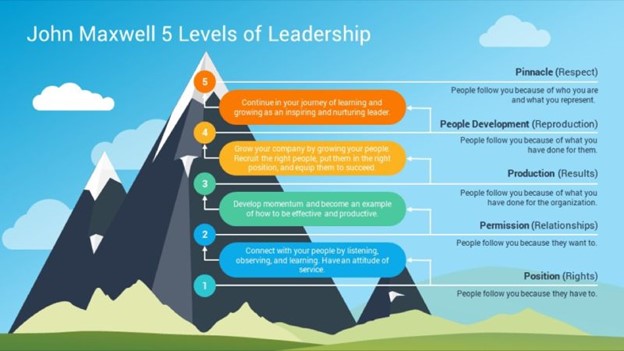
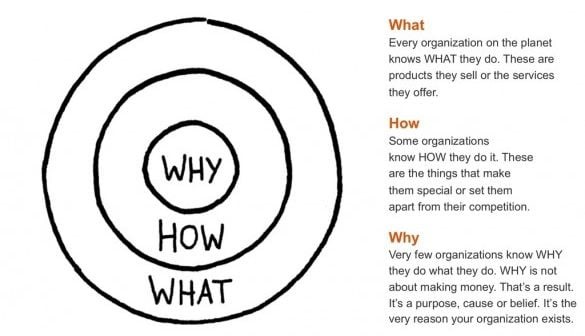
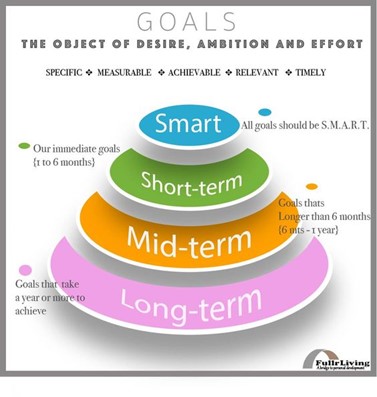
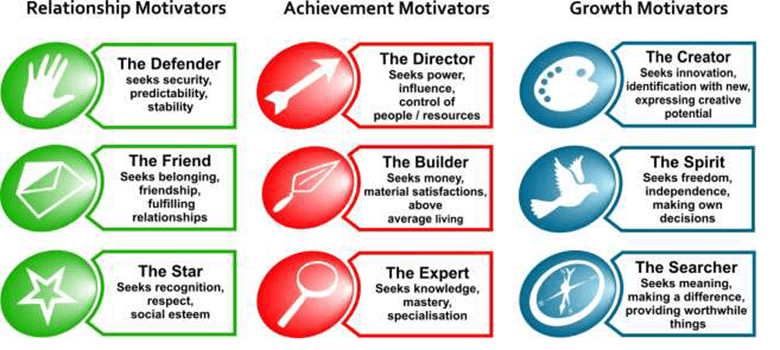
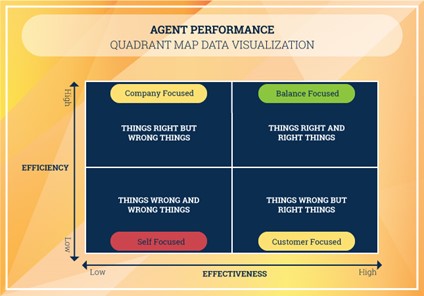






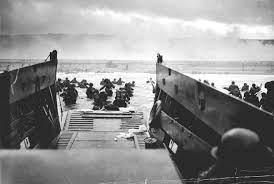





















 The Maximum Standard