Four Types of Listeners

November 29, 2022

by Stephen T. Messenger

Since I took my new job, I’ve packed my schedule with constant engagements that vary widely.

In one 48-hour period, I jumped from meeting to meeting, ranging from strategic planning to war dancing with Native Americans to allotting a large amount of money for construction projects to engaging county town boards to checking the health of deer.

I’ve found that in these varied encounters, I often have the least amount of knowledge of anyone in the room. Listening is the skill I need the most.

Leadership Requires Listening

Leaders know how to listen and filter information. They ask for advice, opinions, and recommendations. They engage through two-way communication. And they truly want to have a dialogue, not a monologue.

If a leader is in the room, no matter their role and the topic, they need to be fully engaged. My college professor once told us, “The best leaders can listen to any conversation about any subject and be able to intelligently ask questions and add to the discussion.” That requires knowing who you’re talking to.

The Four Kinds of Listeners

People listen in four different ways. If you know their listening style, you can communicate more effectively.

People-Oriented

The first type of listeners is people-oriented, and they value relationships. You need to invest time getting to know them. If you jump right into tasks, you’ll lose them from the beginning.

I often show up at meetings early just to shake hands and ask about peoples’ weekends. We briefly interact before business because it helps build relationships before we get to business.

We’ve all been in meetings where the boss walks in and the atmosphere of the room suddenly changes… in a bad way. Great leaders mitigate this and their presence changes things for the better.

Action-Oriented

The second type is action-oriented. These people are trying to stay on a particular topic to accomplish a task. They’re most likely not listening to the story about your dog, and they didn’t show up early to chat.

They want to talk about getting things done and moving onto the next target. I’m one of these people. I listen to identify what steps I’m going to take when I walk out the door.

These types of listeners get down to business, speak broadly, and focus on progress. Tailor conversations on tasks going forward.

Content-Oriented

Content-oriented people are the third type, and they live in the technical details. They want to listen to all sides of the issue and understand the depth and nuances of the topic.

They’re a great balance to action-oriented listeners as they ask questions to force us all to understand the real issues. These conversations take longer than action-oriented ones because these listeners want to appreciate every facet of the problem.

Spending a little more time in the details and making sure they understand the details will go a long way to communicating.

Time-Oriented

Finally, time-oriented listeners value efficiency. They won’t waste your time and will stay on task. They’ll come prepared, have goals, and seek to maximize their minutes.

You’ll often see them multi-tasking. The meeting may get a little long for them, and they’re brainstorming another topic quietly or thinking about the next meeting.

The goal with them is to be as efficient as possible and keep them on track. Speak in terms of deadlines and keep them moving.

Bringing Listeners Together

One-on-one, knowing listening styles is very helpful, but when different listeners are in a room together, it becomes more challenging. Often these styles conflict and not everyone is captivated by the same content.

A time-oriented listener wanting to keep the meeting moving will struggle with the content oriented-listener who slows it down asking questions to understand the details of what’s happening.

It’s important to know your audience, and more importantly the goals of the meeting up front. Or else you have multiple styles with different expectations.

How Do You Listen?

Perhaps most importantly, what is your listening style and how do you listen to others who may think differently? Once you identify your style or styles, you can communicate more effectively.

I know I’m a time- and action-oriented listener. I don’t go into details and want to get right to business. Just because that’s how I think, doesn’t mean every conversation I have should be that style.

It’s important to understand the listening style of who I’m talking to and adjust accordingly.  

When someone is talking to us, we must listen well. This means demonstrating real leadership by taking the time to understand how the other person listens.

Lead well!

We are seeking guest authors for 2023! You have great leadership ideas that you’ve been doing for years—come share them with us. Click here for info on writing with us.

Send a note to themaximumstandard@gmail.com with a proposed topic and we’ll help you get started. Our editing team is standing by.

Subscribe above for a weekly email and a new leadership lesson every Tuesday!

Thank you for growing and leading with us!

Thanking Like You Mean It

November 22, 2022

by Stephen T. Messenger

“Feeling gratitude and not expressing it is like wrapping a present and not giving it.”

-William Arthur Ward

This week, I was briefly tempted to take last year’s Thanksgiving article and repost it. I wanted to do this for two reasons:

1. It’s one of my favorites

2. I would have this week’s article wrapped up early

However, I knew that if I did that, I would be shortchanging not the readers, but myself. I owe myself the opportunity to reflect on gratitude and truly understand how I am and am not thankful. I truly hope you also spend some time thinking about this.

The above quote by William Arthur Ward really hit me. I’m pretty good at genuinely thanking people… unless I think about it. How many presents have I wrapped that are still sitting in my closet?

Failure is delay but not defeat.”

-William Arthur Ward

A few weeks ago, as I was walking into a meeting, I was handed a note. It was a formal thank you letter to one of our amazing employees, written by an important person much higher up in our organization located in another location. I was asked to present this to him.

I read the letter quickly, wasn’t quite sure what the accomplishment was about, and, knowing the gentleman was sitting in the room, decided to go ahead and give it to him right then.

Well, I failed. I asked him to stand up from a seat near the back, fumbled through describing his really important contributions to the team, quickly handed him the letter in the corner, and shook his hand. Then he left. It was underwhelming to say the least.

Well, this weighed on me. While I gave the wrapped present, I never truly recognized this stellar employee. I realized I went through the motions of thanking him, but I never really thanked him.

After going to his office a few days later, I privately apologized and gave more meaningful thanks. To his great credit, he was gracious and understanding. But I let him know what I now vow to do: next time I’m not just going to give someone something, I’m going to thank them.

My plan is to carve out time before the meeting and have the high performing employee come to my office. We’ll talk about their accomplishments and connect on a personal level. I’ll thank them in private and truly understand the nature of their contribution. Then we’ll walk into the meeting together, and I’ll thank them in public; they do, of course, deserve to be thanked publicly.

This will be more of a personal connection, and not an impersonal exchange.

“Gratitude can transform common days into thanksgivings, turn routine jobs into joy, and change ordinary opportunities into blessings.”

 –William Arthur Ward

Ward has this right. When done correctly, gratitude is a powerful leadership tool. When done poorly like I did, gratitude is a “check the box” moment, and most people watching realize this.

There are so many things to be thankful for as a leader. I once heard a pastor suggest this line when it comes to a spouse: “If you see something good, say something good.” It applies to work as well.

The Dale Carnegie Training Center claims our praise to criticism ratio should be about 5:1. This means five positive or thankful messages for every one correction or rebuke. I know I can be better at increasing my ratio with positive comments to my wife, my children, and the people I work with.

Sitting here reflecting, I can think of countless times I’ve missed an opportunity to thank people. As Ward states, I’ve missed opportunities to bring my team thanksgivings, joys, and blessings.

“God gave you a gift of 84,600 seconds today. Have you used one of them to say thank you?”

–William Arthur Ward

I encourage you, and me, this thanksgiving—along with the rest of the year—to increase your gratitude levels in both quality and quantity. Your people are doing great things. When was the last time you told them?

Lead well and be grateful! Happy Thanksgiving! 

I am glad I didn’t mail-in this week’s article and recycle from last Thanksgiving. It’s tempting to be passive when it comes to leadership. The best leaders are active. I encourage you to keep reading, thinking, discussing, and writing about leadership all the time. It’s the only way to get better! 

Subscribe above to join The Maximum Standard community. There is no cost and no ads, just a weekly email to help us all get better at leading!

Finally, I highly recommend Thanksgiving Article 2021: https://themaximumstandard.com/2021/11/23/start-and-end-with-thanks/

Breaking Entitlement Culture

November 15, 2022

by Stephen T. Messenger

Two of my kids play volleyball and soccer. Over the last five years we’ve moved every summer, and they’ve been a member in over fifteen different sports teams. They join these community and High School teams where the kids all know each other and have been playing together for years.

All these kids have had relationships and interactions since kindergarten. And because they’ve always been on the same team, often with the same coach, many feel entitled to playing a particular position because that’s how it’s always been done.

You Are Owed Nothing

I see this entitled view in the leadership world as well. Many people earn a position or promotion and suddenly feel entitled to certain “benefits” that come with it. They think that because they’ve been moved to the next level or been embedded in an organization for years and years, they are owed.

This could not be further from the truth. Leaders are not owed, they owe. They owe their leadership their best effort to understand their higher level’s intent. They owe the people that work for them their best effort every day to serve the workforce and remove obstacles preventing them from succeeding.

Yet I think we all have examples of a boss who felt they were entitled to special privileges.

Earn It from the Ground Floor

Back to sports and enter the new kids. I watch my children show up and have to earn everything from the ground floor. They’re an unknown entity to coaches who have no idea of their skills and talents.

They’re competing with years of coach-athlete history and have to earn every inch of recognition. They know they’re entitled to nothing, and their playing time rests not on their history with the team, but on today’s performance.

Sometimes, they end up in their desired position. Other years they find themselves riding the bench. But either way, they have to fight and scrap and earn their way into a new group.

I used to tell this to my cadets in a college Reserve Officers’ Training Corps (ROTC) program. As a leader who arrives to a new unit, no one cares about what you did yesterday, or in college, or that one time long ago. They only care about what you’re doing today. Your resume does not follow you, and you’re not entitled to anything.

Sports Entitlement

You see a lot of bad examples in professional sports. NFL athletes hold out in preseason. Tennis players pitch a fit over a call. NBA players ask to be traded because they don’t get enough playing time.

A good leader shows up every day and doesn’t rely on what they did, but what they’re going to do.

You also see a lot of good examples in sports. The best athletes have short term memories. They possess an uncanny ability to forget the last play, good or bad, and focus on the next task at hand. Professional team sports players know they can be pulled at any time for having a bad day. They have to perform now.

Kevin Eastman, former Los Angeles Clippers vice president of basketball operations said, “Entitlement never wins championships. Investment wins championships.”

Earn This

I try to teach this to my kids. They have no right to start on any team they join. They have to invest in training over the offseason and show up at tryouts ready to perform.

I also try to model this for my kids. I too have joined five different military teams in five years. Now, I have a hefty advantage over my kids because the military provides me rank, authority, and position. Yet I never take that for granted. I too have to prepare myself for the assignment, earn trust, and work relentlessly every day on behalf of the great men and women I’m assigned to lead.

It would be easy to take a key leadership position and assume we’re owed something. The reality is leaders are entitled to nothing and have to continuously earn everything.

Read, think about, discuss, and practice leadership! Subscribe in the link above to receive a free, weekly email with no ads to a new leadership concept every Tuesday. If you want to lead well, you have to earn it.  Keep leading!

Veterans Day: Leading in the Community

November 8, 2022

by Stephen T. Messenger

This Veterans Day, I want to express one thought: Gratitude. There’s no more noble act than raising one’s right hand to support and defend the Constitution of the United States. Millions of Americans have done this to ensure our freedom, and they’re one of the many reasons America continues to thrive.

Today, our armed forces consist of all volunteers, willingly ready to place their country above themselves. Millions before them volunteered as well, serving in every conflict from the Revolutionary War to today, serving across the globe on land, sea, and air. Moreover, they stood, and stand, ready during times of peace to protect our Nation.

However, prior to 1973, America used conscription to fill much of its ranks from as far back as colonial times. Since World War I, over 16 million service members were drafted. Those drafted into service were critical to helping break the stalemate of World War I, free the globe from international oppression in World War II, and perform noble service in Korea and Vietnam.

Today, there are about 18 million veterans in our Nation, and Veterans Day is for those who previously served and transitioned into community leadership.

Veterans Are Specifically Trained in Leadership

Leadership is the most pined after trait the world seeks. Employers desperately look to hire leaders in corporate America, government positions, privately owned companies, local and State jobs, and in every workplace. Volunteer organizations desperately need leaders to inspire, motivate, and attract people to help in their mission. And families need leaders to lead their spouses and children.

The military understands that leadership is the lynchpin to success. No matter the branch or service, veterans of all ranks have been specifically trained in this discipline.

For example, a soldier with four years of service has most likely been promoted to a team leader—responsible for between three and five other soldiers. They are solely accountable for their team’s well-being, health, and welfare. They train, coach, teach, and mentor their people. They ensure the mission is accomplished at all costs. And they are the ones who are held accountable for the team’s success and failure on and off the battlefield.

World War II Junior Leaders

Junior leadership was the differentiator in World War II. After the D-Day invasion into Normandy, paratroopers were scattered across Western Europe, the majority without their assigned leaders. Yet the most junior sergeant knew it was their job to gather whoever was around and complete their objective.

And did they ever! The enemy marveled at how the American non-commissioned officer corps took initiative. These junior and leaders didn’t need to wait on orders from officers. They only needed a task and purpose, and for everyone to get out of their way.

Veterans Serving in Our Communities

Veterans return to the civilian sector as leaders. They take their skills and make a difference. The brother and sisterhood in which they grew up have embedded in a culture of loyalty and leadership. The Chief of Staff of the Army has a great saying, “People first, winning matters.” Veterans understand this.

They know the mission cannot fail and their people are the ones who accomplish that mission.

Finally, veterans come with a warrior ethos. They have grown up in an ethics-based environment which only adds to their value outside the military. Veterans have a multiplying effect whether leading in their places of work, volunteer activities, or homes. They are truly people first, and know winning matters.

Thank You!

I am incredibly grateful for these leaders making a difference—first in the military and now in the community. One day, I too will leave my service as a military leader and become a retired Veteran. Those that have already done so, have served honorably, proudly, and humbly.

On this Veterans Day, I am grateful for all who have served. I hope you’ll pass this link on to a Veteran you know to thank them for their sacrifice.

Thank you!

Click above for a free subscription to The Maximum Standard. Every Tuesday morning you’ll receive a new idea on leadership. The way to become a better leader is to continuously read, think, discuss, and write about leadership. We hope you’ll join us in whatever leadership discipline you pursue.

Lead well!

Leaders Keep Swinging

November 1, 2022

by Stephen T. Messenger

The World Series began this week with the Philadelphia Phillies facing off against the Houston Astros. One thing I’ve noticed is that many of the great players on both teams take some big swings!

Now, many of these big swings result in big misses. The batters are putting a significant amount of energy into trying to hit home runs, and often come up short. But, if you want to achieve something big, you must swing for the fence. In leadership terms, you must take a bold risk to achieve a bold goal.

Learning from a Missed Swing

It’s okay for leaders to take big swings, and I argue it should be encouraged. I can look back on my life and remember several times where I could envision a home run, only to miss the ball as it sailed by. I prepared for these dreams, swung big, and missed.

  • My dream of West Point crashed after being unable to get past the initial nomination phase
  • After injuries, I was twice medically dropped out of Army Ranger School
  • Working for a Fortune 500 company, I applied for a big promotion and was passed over
  • For a resident PhD program, I was rejected in the application process
  • Every summer my dreams of doing a flip on a wakeboard end painfully

We can all look back on our lives and remember the times we struck out. And often in our minds, the failures overshadow the great things we accomplish. But every miss is a chance to learn.

If we’re never missing, it probably means we’re not swinging hard enough.

The Journey of Walking

It’s like a toddler learning to walk. No parent yells at them when they fall. There’s an “Uh oh, get back up!” moment, and the toddler tries again. They constantly fall, learn something, and give it another go.

Toddlers have unlimited opportunities in learning to walk. In baseball, there are three strikes, nine innings, and 162 games. In leadership, there are thousands of chances to try, fail fast, learn, and then try another way or attempt something new.

Because when we make contact off, our gains are much larger.

Swinging for the Fences in Philly

In honor of the Phillies World Series berth, some Philadelphia history of swinging big:

The founding fathers signed the Declaration of Independence knowing that if they missed, they would all be executed for treason. This decade, we’ll hit 250 years of thriving.

George Washington crossed the frozen Delaware River on Christmas Night placing the entire fate of the fledgling Nation on this operation. This home run saved the army from dissolving.

In more recent news, Rocky Balboa’s odds of beating Apollo Creed were scarce. Yet Rocky faced Apollo down and first tied, then defeated him in the ring.

Big swings lead to big gains! It’s about putting every ounce of energy into tackling Big Hairy Audacious Goals (BHAG) knowing that you may miss entirely, but always with the hope of connecting.

Risk vs. Gamble

It’s not just about taking big swings, but about preparing for those opportunities. A risk is a calculated move to seek a great advantage. It comes with planning, foresight, mitigation, and understanding the right time. It’s about taking that big swing when you believe a payoff is coming.

A gamble is pure chance, like closing your eyes and hoping to make contact. A gamble is a Las Vegas roulette wheel or investing in a flip property when you haven’t read the market nor calculated the repair costs.

Failures Lead to Success

The failures in my life noted above were risks. I was prepared for all of them and put time and effort into achieving them. I still swung and missed. But every time I learned something and kept swinging.

I can look back on my life and see the times I’ve stretched for some difficult goals and connected.

  • Applying to an Army ROTC college scholarship and getting it
  • Volunteering to attend Airborne School and earning jump wings
  • Trying to complete a doctoral program at night and now entering the dissertation phase
  • Competing for command positions and nominated to command an Army Installation

Each failure is one strike of many. Your people need to see a leader who’s not afraid to keep swinging. If you watch balls go by, your people will too. Everyone deserves a leader who will allow them to take chances and underwrite their failures.  

If you and your team are never swinging for the fences, you’ll never see those great gains.

Subscribe now! Leaders develop their craft and subscribing to The Maximum Standard is a no cost, ad-free way to grow in your leadership journey. Click above to receive a weekly email every Tuesday morning with a new leadership concept like this. We are here to develop leaders—join us!

Organized Team Sports: The Great Leadership Academy

October 24, 2022

by Tom Console

As someone who has been an active participant in organized sports my whole life, I’ve come to realize the correlation athletics have to the leadership professional. To me, five qualities routinely appear in great leaders, and these same qualities are organic to organized team sports. This is why the field of play is truly the “The Great Leadership Academy.”   

Team Sports: A Breeding Ground for Leaders

Being a member of a sports team prepares you for leadership. Teams collectively drive towards a common goal, gain external and internal discipline, and work hard to develop skills. Both sports and leadership disciplines require personal growth and development. Inability or unwillingness to do so ultimately leads to stagnation and failure.

As a former college football player, I knew that I could always get a little bit faster, tackle a little bit harder, or improve my footwork and agility. I quickly realized that, by being better every single day, I could be a more effective asset to my team.

Just like in football, I try to get a little better at leadership every day. I read books and blogs and watch videos about leadership styles and methods authored by great leaders in business, history, the military, and in sports.

I’ve been incredibly lucky to have been surrounded and mentored by some phenomenal leaders, trying my best to emulate them. Now, as an assistant coach for my former college team, I have countless opportunities to apply the lessons I’ve learned.

This is exciting, because there’s a chance to develop leadership ability at every practice, team function, and game. In this piece, I will tackle (pun intended) the five essential lessons of “The Great Leadership Academy” through the lens of football.

1. Confidence

All great leaders are confident. Confident in themselves, team members, and their organization. Confidence can be represented by a simple formula:

Knowledge + Competence + Adaptability + Consistency (K-CAC) = Confidence

Knowledge is knowing where I belong on a certain play. I understand when to blitz the quarterback or sit in coverage.

Competence is the ability to achieve an outcome. When I’m supposed to blitz, I must have the skills and technique to get around an opposing offensive lineman.

Adaptability is dealing with less-than-ideal circumstances. The linebacker in front of me got blocked, and now I have to adjust my angle and make an open tackle in space.

Consistency is routinely performing at a high level. I just broke up a pass intended for a wide receiver. Great! Can I do that again the next time?

Every repetition we take in each practice of the season, we grow in our Knowledge, Competence, Adaptability, and Consistency. Games provide us a benchmark to test these four areas, and if we perform well, we grow in our Confidence, week after week, season after season.

For leaders, K-CAC = Confidence

2. Staying in Your Lane and Building Trust

As leaders, it is often tempting to take over a subordinate’s project. You feel like you could do it better yourself, or you lack faith in someone else’s K-CAC.

If the linebacker doesn’t trust me (the free safety behind him) to cover my zone on a pass play, he may decide to compensate and drop deeper than he is supposed to. This leaves a shorter passing lane open and gives up easy yardage.

Leaders must resist the urge to micromanage. Instead, focus on what you’re supposed to be doing and trust your teammates to do their job.

3. Get Ready for the Next Play

Whether your last play was amazing or terrible, there’s another one coming up. Leaders must have a short-term memory and play with humility.

The Amazing Play: You just made a big hit that everyone in the stadium heard, completely taking the receiver off his feet. That’s awesome, and you can celebrate… a little. But no one likes a showboat. Be humble, because unless the game is over, you still have a lot of work to do.

The Terrible Play: You let up a big score, and your team isn’t too happy with you. Recognize your mistake and learn from it. Failure is a great teacher. It’s okay to fail, but not okay to repeatedly fail in the same manner. Again, there is still a game to play, and you need to mentally be ready.

4. Honesty

We have a great expression on our team: “The film don’t lie.” Simple and to the point, it illustrates how you can’t hide your mistakes forever.

Throughout your career, be it the football or leadership field, your boss WILL point out failures, mistakes, and shortcomings. It’s their job to help you get better.

Are you open to that criticism, or do you make excuses? Do you take responsibility, or try to pass the blame on to others?

Frequently during film breakdown after a game, I’ll ask players why they appear to be in the wrong spot on the field. Sometimes, their answer is great: “Well coach, according to the scouting report, I knew they were going to throw the ball to that receiver. I put myself in a better position to make a play.”

But most of the time on these leading questions, I can literally hear the excuse being constructed a word at a time, offering an explanation to cover up mistakes. Not only is there a refusal to take accountability, but everyone in the room can hear the lie, and that player loses credibility.

Occasionally I get, “That’s my fault coach, I messed up. It won’t happen again.” Accepting responsibility is a valuable tool for growth and development. I fail all the time. Acknowledging failure and getting better makes me a more effective coach and leader.

5. Mentorship

As a leader, you must constantly mentor your subordinates, peers, and superiors. You also must be open to being mentored from all directions.

It’s easy to mentor subordinates; they rely on your experience and knowledge. Mentoring peers and superiors is more challenging. A lot of people will instinctively think you are trying to one-up or embarrass them.

I was guarding one of our top receivers in practice and picked up a tell on his route. He would lean slightly towards the middle of the field with his shoulders while his lower body stayed in a straight line. To me, it was a dead giveaway. I told him about this tell and, at first, he accused me of trying to look good for the coaches.

I let him know that if I saw it, then other safeties around the league would see the same. After a few more times of running this route without getting open, he came to understand that I was just trying to help him out and later told me he used that piece of advice against opposing safeties to beat them on the same route.

This was a great lesson for me on how to mentor and be mentored. If you come at it from the angle of genuine care about their success and use good communication, you can get people to listen. If they don’t want to listen to your advice, you can try again with a different approach, or you can consider moving on and getting ready for the next play.

The Great Leadership Academy

Sports offer us many great leadership tools to utilize while developing our own personal style. To some people, leadership, like athletic ability, comes naturally. Other people work twice as hard to get the same results. No matter your natural propensity towards leadership, all leaders must work to develop their skills, and the great leaders understand that this work is continuous. Fully embrace the journey of the “The Great Leadership Academy.”

Subscribe above to receive a free, no-ad leadership message every Tuesday. Leaders grow by reading about, discussing, and practicing leadership. Thanks to Tom Console for being a guest author. We’re always looking for guest authors to share their leadership thoughts and will help you with your writing. Send us an email if interested.

Tom Console is a Defensive Quality Control Coach, University of Pennsylvania Sprint Football Team. He’s been voted Team Captain twice by his peers, was the 2010’s Penn Sprint Football All Decade Free Safety and was named the 2018 Penn Sprint Football Team MVP. He’s a Second Lieutenant in the United States Army and the recipient of the Army Health Professions Scholarship Program. In this program, he is currently earning his Doctorate degree at the University of Pennsylvania School of Veterinary Medicine, Class of 2024.

His thoughts do not represent University of Pennsylvania nor the United States Army.

The Easy-Hard Principle: The Consequence of Choices

October 18, 2022

by Stephen T. Messenger

This week I visited the Wisconsin National Guard Challenge Academy, an alternate high school program for 16- to 18-year-old students who have dropped out or are not advancing in a traditional setting. Cadets voluntarily join in a five-month commitment where they’re provided the tools to learn discipline, physical fitness, education, and leadership skills.

Amazingly, of the almost 180,000 cadets nationwide, over 60% earn their GED or high school diploma in this program, and many leave with college credit—a higher percentage at this Wisconsin program. I was invited to celebrate a lunch at their halfway point with these exceptional students and had the opportunity to hear their stories and how far they’ve come. It was inspirational.

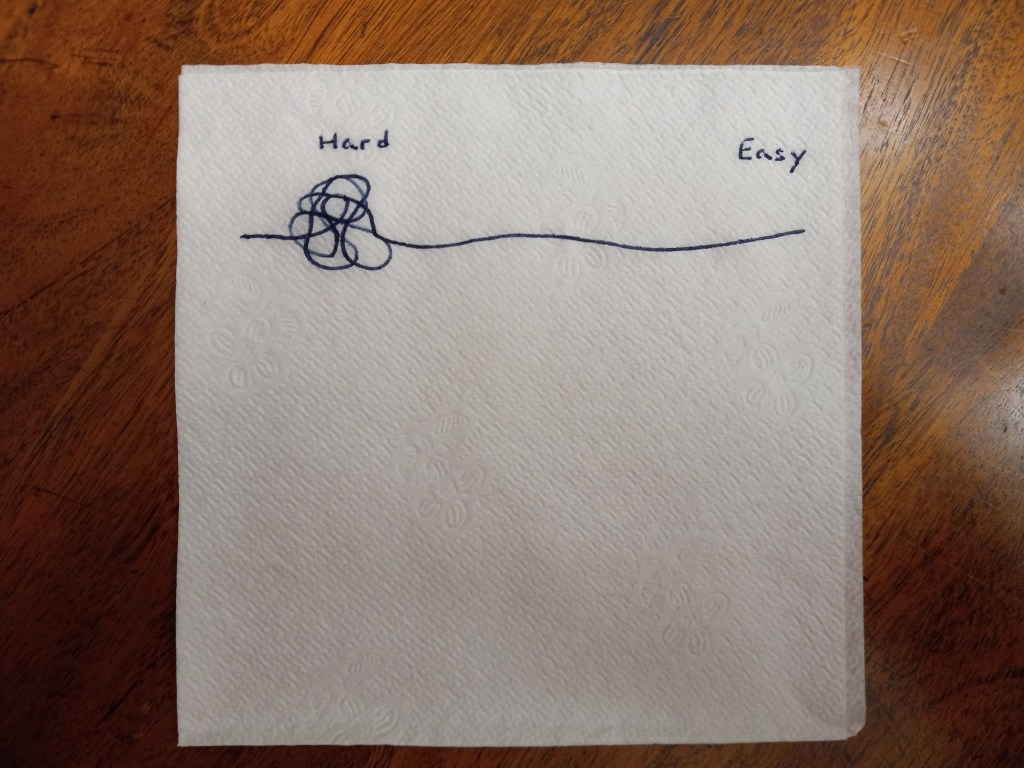
At the same time, I had the chance to talk with them about good and bad consequences of choices. Making hard choices today leads to an easier path in the future.

The Easy-Hard Principle

Bill Bowerman, University of Oregon track and field coach, popularized the Easy-Hard Principle. He would alternate hard and easy workouts to allow his athletes rest. An exhausting workout benefits the body by breaking down the muscles. A subsequent rest day builds them back up, and the next challenging workout becomes easier.

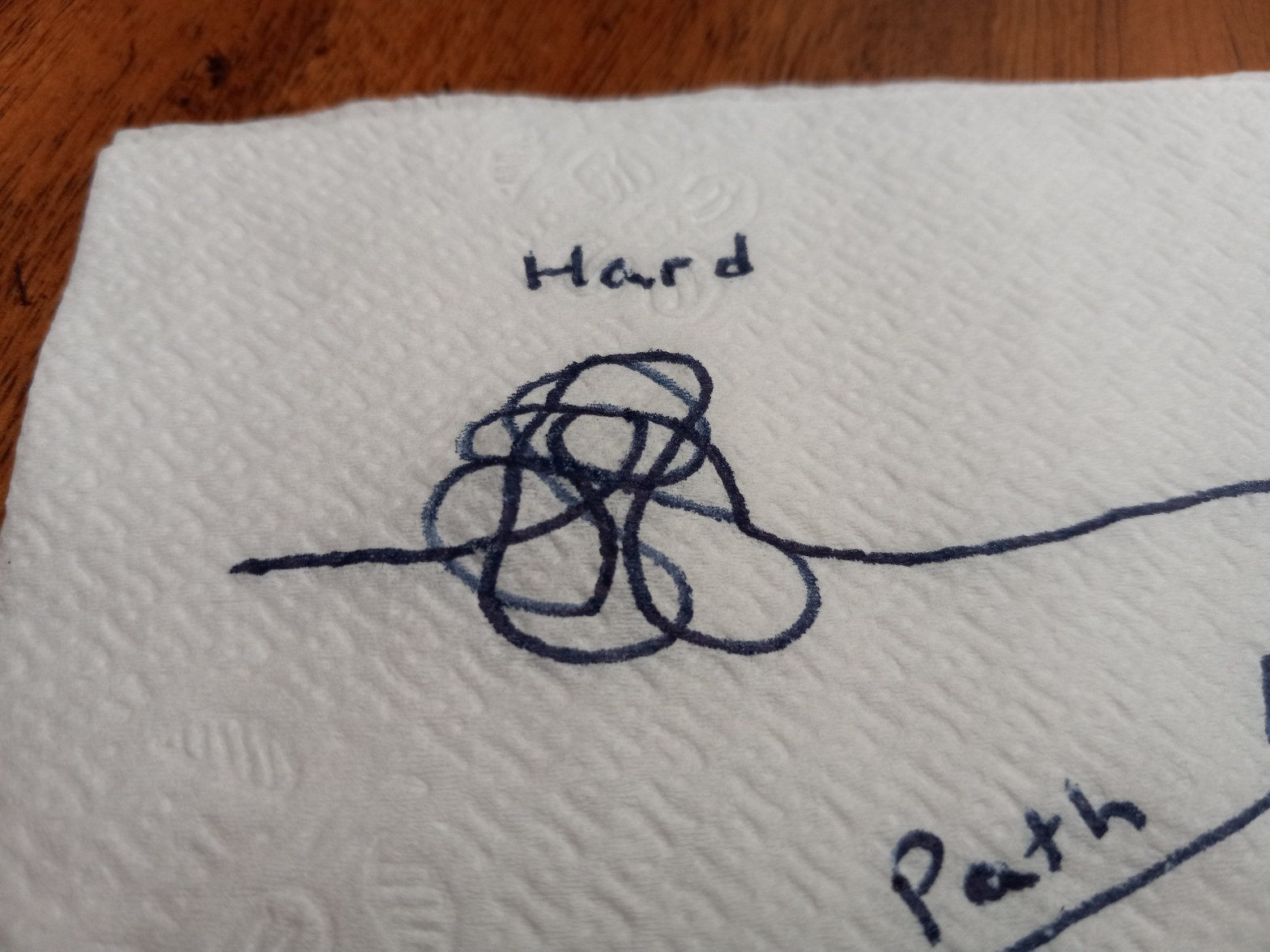
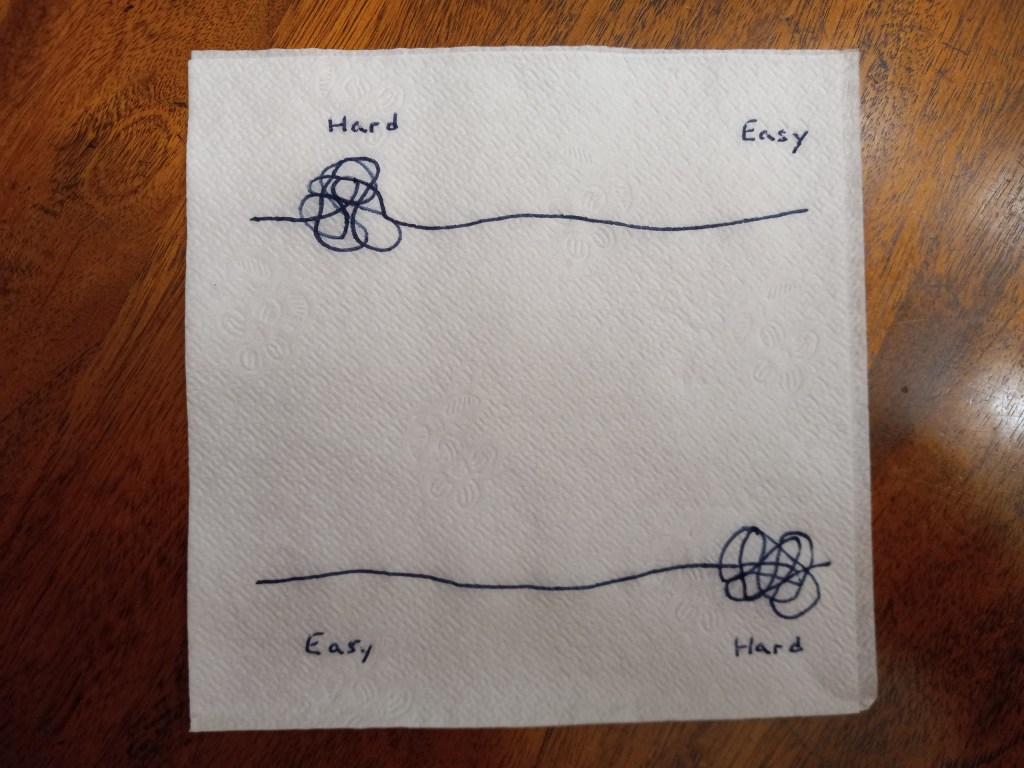
To state it another way, doing hard things today leads to an easier future. I saw this concept illustrated on LinkedIn by Nathan Janson from Ramsey Solutions the day prior to my visit. Grabbing a napkin, I drew the first portion of the Easy-Hard Principle for the cadets.

These cadets are doing hard things that they have never done before. They sleep in group barracks. Wake-up is at 0500. Workouts are tough. They’re here because of struggles in education, and at the Challenge Academy, school and studying are mandatory. They’re making hard choices to perform every day.

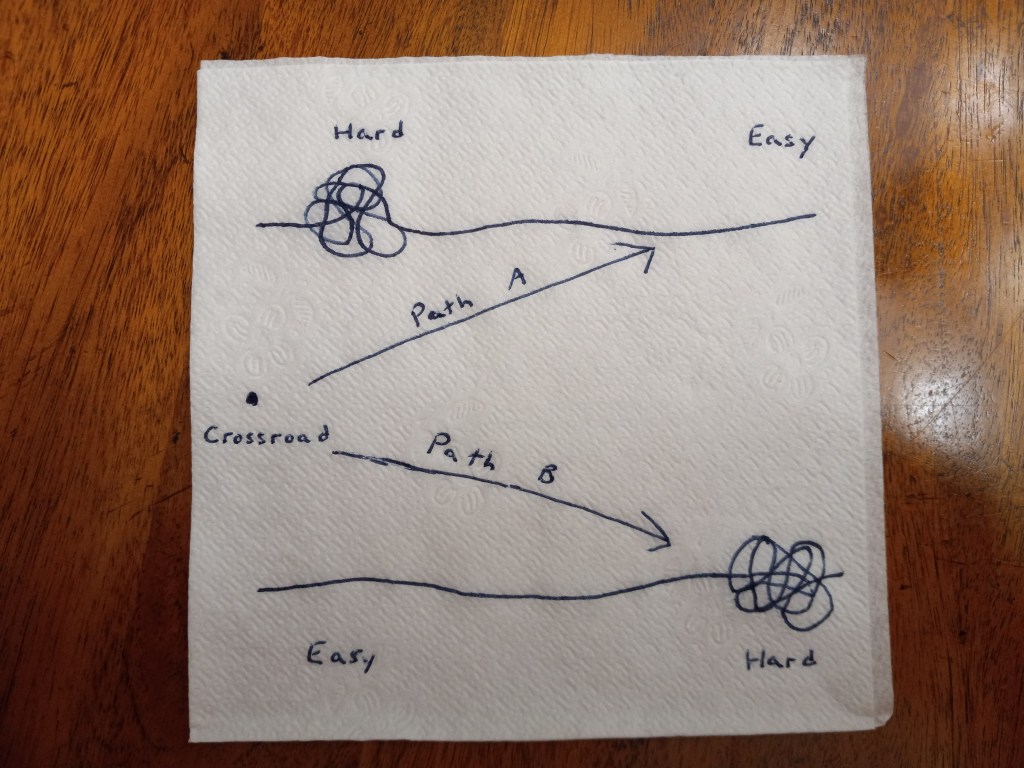
Under it I drew an alternate timeline. Here, easy choices were made in the beginning, leading to a harder tomorrow. Bowerman would liken this to taking a week off from running and paying for it at the next hard practice.

I asked some of these cadets if they ever thought of quitting. Many said yes, but not a single one regretted staying. Moreover, the cadets talked about the few who walked out of the course. These youth took the easy choice to leave, and the lives they walked back into at home were certainly harder than the program they left.

The Crossroads

I next spoke about the few times in my personal life where I came to a crossroads and had to make a big decision. If I took Path A it would have led me in one direction. If I took Path B it would have completely changed my life’s trajectory and led me to another future.

My big decision in life was whether to join the military or not. It was a hard decision back then. The military was unknown, there was no prior service in my family, and I was taking a step of faith.

Who knows the path I would be on if I took an easier or different way, but this one has taken me on a journey of leadership, adventure, and camaraderie. The hard choice 25 years ago has led to an easier today.

Every single one of these cadets made a huge decision to attend the Challenge Academy. This life changing choice took them out of their previous lives of struggling at school and home for various reasons to a trajectory of graduation, college credit, maturity, and leadership.

This choice was a hard one. It was challenging to leave family, friends, and familiarity for a regimented regime. It’s a journey of faith into the unknown, and these cadets are creating a new future. Their hard choices are bearing great fruit in their lives.

Hard and Easy Decisions Today

Every day we all must make hard or easy decisions. We choose which projects to tackle, where to spend money, and how to treat others. It’s easy to procrastinate, waste money on “now” instead of “later,” and focus on us rather than those we lead.

However, the more effort we put in today, the easier tomorrow will be. This is very true in running, as Bill Bowerman understood. This is just as true in leadership.

Leaders look to the future and put in the work now. They make tough choices and challenge the team to perform today so that tomorrow will be easier. Finally, they know that effort yields results. They inspire others to work for the future as well.

The cadets in the Challenge Academy are exemplifying making hard choices to create an easier tomorrow. We can learn a lot from them.  

We invite you to click the subscribe button above and join The Maximum Standard community. It is ad-free and no cost. You’ll receive a weekly email every Tuesday morning with a new leadership concept like the one above. Come join us in the conversation on leadership. Moreover, come write an article for us and improve even more!

Don’t Cut Corners: In Soccer… Or in Life

October 11, 2022

by Stephen T. Messenger

I’m the assistant coach of a 13 year-old soccer team, and the first things we do every practice are stretch and run a lap around the field. I noticed an interesting phenomenon on day one. The players didn’t run the full field and cut the corners by a few steps. To prevent this, I sprinted over the meet them at the first and third corners and stood there, warning, “Don’t cut corners—in soccer… or in life!”

One of the origins of the phrase “cutting corners” comes from carriage driving in the 1800s. When horse-drawn vehicles came to a sharp turn in town, instead of going all the way past the curb, some would turn early, and the rear wheel would potentially clip the sidewalk. This could result in the cab being overturned.

In other words, “to cut corners” means to ignore safe practices to get faster results.

Case Study: Cutting School Bus Maintenance

In 2013, St. Louis school districts signed their school bus contract with First Student Inc. to provide transportation for 80,000 students. They established a manager incentivization program called “Beat Your Budget, Build Your Rewards.” The managers received cash payouts in proportion to the money they saved in maintenance.

Naturally, investment in the buses decreased, resulting in broken heaters, bad brakes, rust, and tire issues. In 2014, a semi-truck crossed the double-yellow line, heading straight towards a school bus. The driver couldn’t use the horn because it was broken—maintenance cuts meant it wasn’t repaired.

After the vehicles sideswiped and the bus stopped, the driver couldn’t call for help because the radio was broken. Cutting corners almost resulted in the loss of children’s lives.

The Excuse: But It Makes Sense…

The problem with cutting corners is that it often makes sense at the time. I took a lap with the soccer team last week, coming up behind them and warning them not to short the corners. Yet in my haste to catch up, I cut a corner myself and was quickly corrected by some players behind me. It’s easy to mess up.

I can cite a number of areas where I often cut corners: failing to pull the roots while weeding, hitting the fast food drive-thru instead of eating healthy, and conveniently forgetting that dreaded flossing (hopefully my dental hygienist mother misses this week’s article).

We all do it, and cutting corners is just easier in the moment. That is, until the weeds keep growing, the fast food results in five extra pounds, and the dentist looks at you with haughty derision.

Leaders Setting the Example

Cutting corners as an employee is bad. Cutting as a leader is worse. When in charge, all eyes are upon you. Your people know when you’re taking shortcuts. Worse, you cutting corners allows them to do the same.

In a recent study, one in four employees regularly cuts corners. Those who do so were found to struggle with treating others well, focus on themselves instead of the team, and be impulsive. My theory is that those who cut corners have bosses who cut corners. They see their boss taking the easy path and emulate the leader.

Employees traditionally follow what leaders talk about and follow up on. If your team is cutting corners, either you are too lax, or you’re not enforcing the standard.

Let Them Know Where You Stand

After a few weeks of the season, I no longer had to stand at the corners, although I still do. In fact, I no longer have to say the full phrase. Most players now complete it for me. I only have to say, “Don’t cut corners–in soccer…”

“…Or in life” they finish.

Subscribing to The Maximum Standard is a no cost, ad-free way to grow in your leadership journey. By subscribing above, you’ll receive a weekly email every Tuesday morning with a new leadership concept like the one above. We’re here to develop leaders—join us!

When Performance Meets Potential: The Nine Box Matrix

October 4, 2022

by Stephen T. Messenger

As I look across my—or any—organization, there are so many talented, hard-working individuals. One of our jobs is to understand what talents each person brings to the team, and how to engage and interact with them appropriately.

I see how easy it is to treat everyone the same. Yet each person is unique and requires an understanding of what they value and how they like to receive praise, recognition, and opportunity.

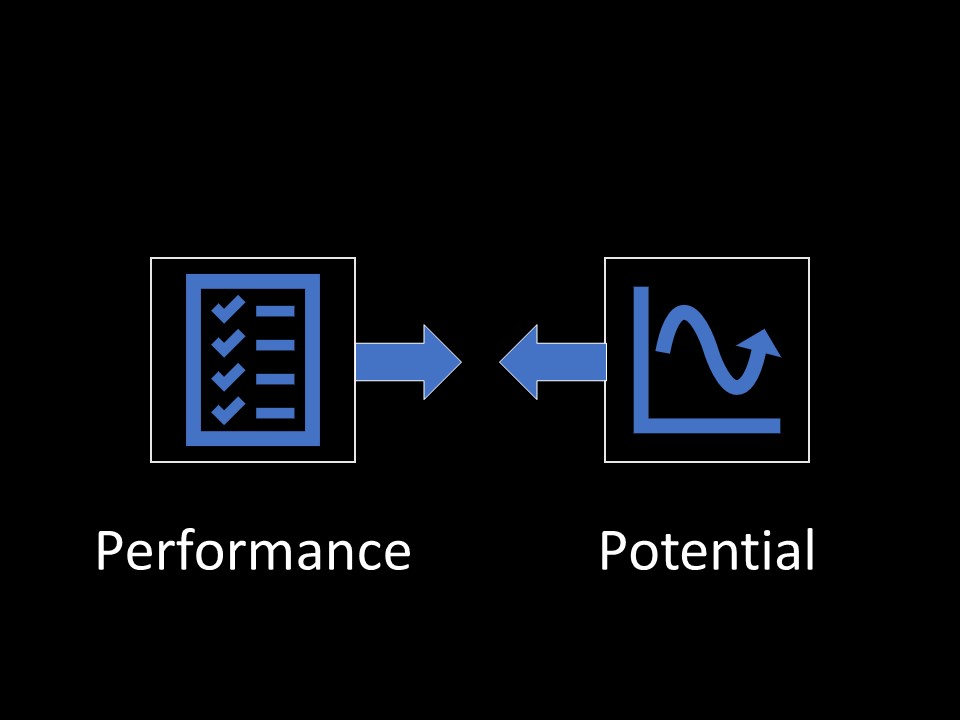
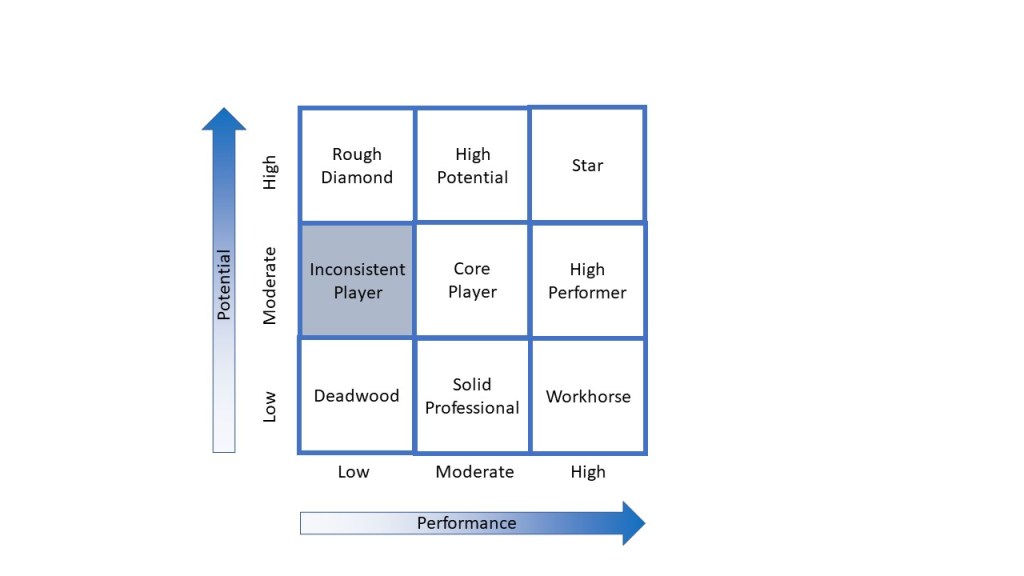
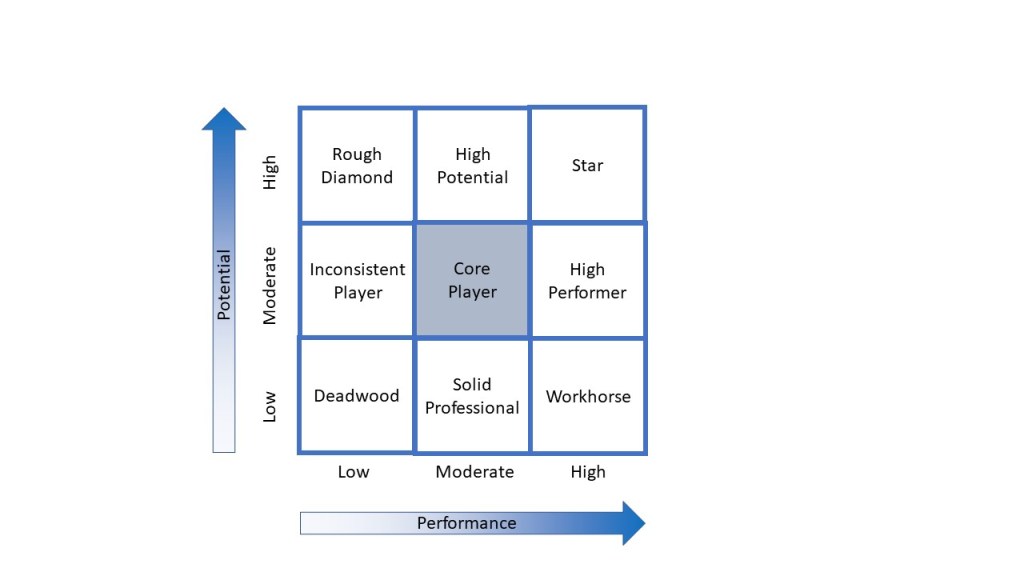
The Nine-Box Matrix is one of many tools that can help leaders categorize their employees based on assessing performance against potential. It’s also important to assess yourself and know where you stand on this scale.     

Defining Performance and Potential

Assessing Performance

Low Performance:  The employee is not meeting the expectations of their current assignment. If asked to create 100 widgets per day, they’ll create less for a variety of reasons.

Moderate Performance: The employee is meeting the expectations of exactly what they’re asked to do. They will generate 100 widgets per day, no more and no less.

High Performance. The employee is exceeding the expectations of their assigned roles and tasks. They consistently produce over 100 widgets a day and do so without complaint.

Assessing Potential

Low Potential: The employee is not expected to improve and has reached their maximum capacity based on either ability or desire. They will not be promoted nor expect to be. This is not necessarily bad.

Moderate Potential: The employee has the capability to increase knowledge and expertise in their current role. They are somewhat interested in other opportunities and have the capacity for more.

High Potential: The employee is already thinking well beyond their current role, finding additional assignments, and ready for increased responsibilities today. They’re hungry to improve and taking initiative on their own to go above and beyond.

Putting It Together

The Nine-Box Matrix provides a deeper assessment into your employees–and yourself as well. The goal is always to move up and to the right. Let’s break it down:

1. Deadwood. These employees are bringing your organization down. They’re often called “bad hires.” They fail to complete assignments, have no interest in improving, and take up most of your time. These people you must quickly move to the right or performance manage out of your team. They cannot stay at their current performance levels, or the rest of your team will notice and resent leadership for it.

2. Solid Professional. This person will do what you ask them. They are not seeking promotion and knock out their 100 widgets each day and go home. They may or not be happy, but they are making the mission happen. These employees need your thanks. You must tell them they’re a vital part of your organization, and you’re proud of them. This is most likely a good chunk of your team.

3. Workhorse. They come into work every day and knock it out of the park. They’re working for personal pride and no additional responsibility. They’re making more widgets than you ask and are looking for something: paycheck, praise, etc. This employee needs thanks as well, but also additional recognition for going above and beyond. Find out how they like to be recognized individually and celebrate with them accordingly.

4. Inconsistent Player. This person is not living up to their potential. Sometimes called the “Up or Out Dilemma,” leaders must try to figure out why they are not meeting goals, because they can. Sometimes it’s professional and sometimes personal. Your challenge is to help them overcome their obstacles and increase their performance on the scale. If not, they may become deadwood. Usually this is a motivational problem.

5. Core Player. Here’s where it gets fun! This group is meeting objectives and interested in doing more. They have opportunity for growth in your organization but need a little prodding. Thank this group, but also challenge them because they often won’t challenge themselves. It’s up to you to offer education, projects, opportunities, and ways to interest them. Get them more involved!

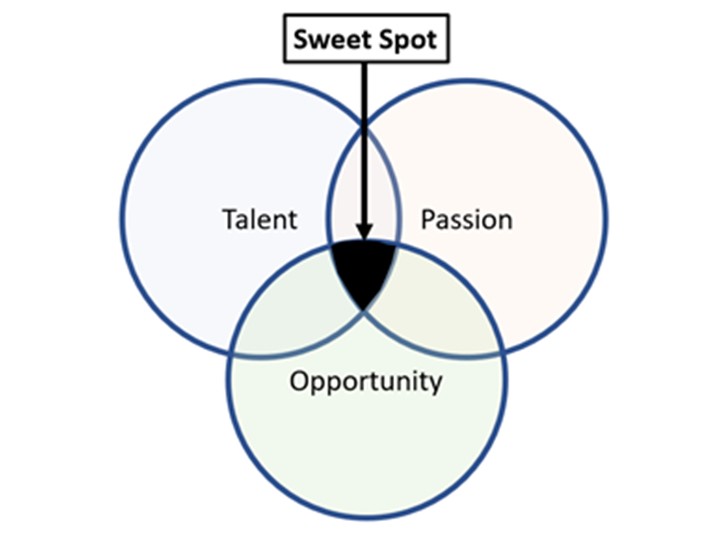
6. High Performer. These people are crushing their jobs and can do even more. Thank them, recognize them in ways they value, and challenge them with increasing opportunities for growth. The leader must understand what motivates them and match the employee’s talents with their passions to find opportunity for them to excel. Place them in their “Sweet Spot.”  

7. Rough Diamond. This person is typically new to their position. While performance is low, it’s because they’re learning the job. The Rough Diamond most recently was a core player or high performer and is now being challenged in a new position. This is a good thing. Thank and recognize them for learning, allow them to fail fast, encourage their journey, coach and mentor them, and watch them move to the right on the scale.

8. High Potential. Sometimes called “growth employees,” this group is the future of your organization. They are also categorized as learners and are growing into their role. Continue to thank, appropriately recognize, challenge, coach, mentor, and allow innovation and subsequent fast failures—let them learn. Know when you need to intervene (rarely) and when you can watch them excel. Interact regularly to ensure they’re happy in their role.

9. Star. Let em’ run! This group needs the positive interactions: thanks, individual recognition, and mentoring. But more than that, they need to be untethered. Do not overly manage this group. Leverage their innovation, creativity, and new ideas to propel the organization forward. Most of all, find them promotion opportunities and let them lead!

Know Who Works for You

So often, we treat everyone the same. You must know how your employees are performing, what future potential they have, what motivates them, how they desire recognition, and the way to treat them based on their personal desires.

While we all want a team of stars, everyone is at a different place in life, and that’s okay. Many people are content being solid professionals; thank them for that. Inconsistent players can be a great asset to your organization. Rough diamonds are learners. Each category is unique.

At the human level, we’re charged to understand who works for us and help individuals meet personal and professional goals. Move them up and to the right, and head that way yourself too.

Know your people, treat them accordingly, and lead well!

Subscribing to The Maximum Standard is a free, ad-free way to grow in your leadership journey. By subscribing above, you’ll receive a weekly email every Tuesday morning with a new leadership concept like the one above. We are here to develop leaders—join us!

Dunning-Kruger Effect: But I’m a Great Driver

September 27, 2022

by Stephen T. Messenger

I recently rode in the car with a really bad driver. He took the corners too fast, stopped abruptly, and generally made me fear for my life. Yet, when I subtly brought up his lack of driving skills, he brushed it off as if he could be a driving instructor in his spare time.

What would cause such a bad driver to think they’re good?

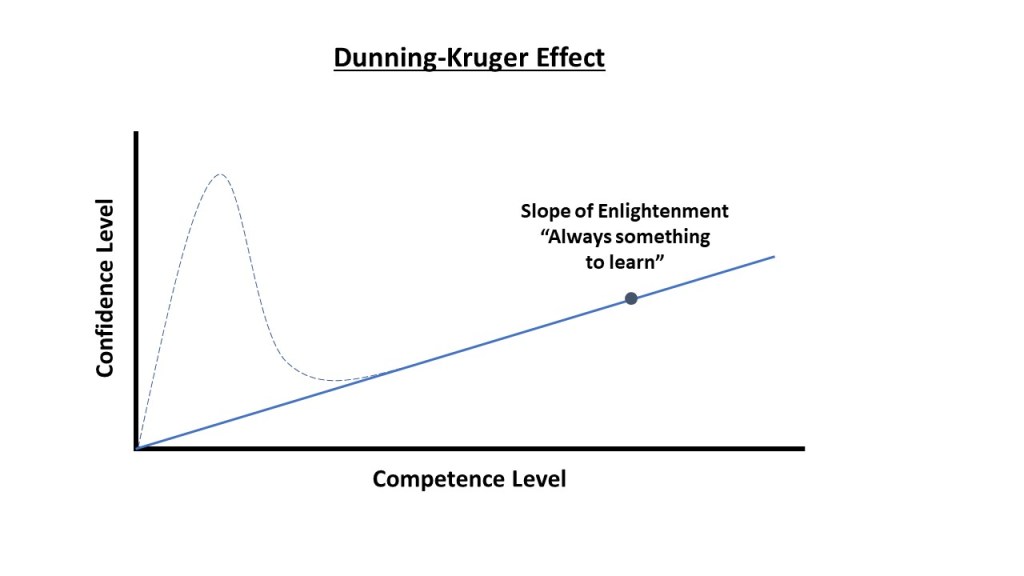
The Dunning-Kruger Effect states that people routinely overestimate their own performance in areas they lack competence, and they dismiss any evidence that would prove them wrong.

In other words, everyone sees I’m terrible, but I think I’m pretty good.

This dangerous concept traps all of us. We all think we’re above average at work, as a member of society, and yes, even behind the wheel of a car. Yet 50% of us will always be below average. Am I one of them and just don’t realize it?

Maybe a more interesting part of the Dunning-Kruger Effect is the graphing of a person’s competence and confidence over time.

Base Camp

I started my new job 76 days ago. On Day Zero, my competence was the same level as the number of days I had been working here: zero. I call this base camp. I didn’t know anything, I was concerned about my lack of knowledge, and I knew that in every meeting I was literally the most clueless person in the room.

This is not a scary place to be for me. Military organizations are built around great people, and they all want to see the new boss succeed. “Be comfortable being uncomfortable.” However, my confidence in making decisions was also extremely low, and rightly so.

Mount Hubris

Fast forward two-and-a-half months and my competence is… still low. But as the saying goes, “I know enough to be dangerous.” Never has a truer statement been made. My confidence is at an all-time high.

I’ve summitted Mount Hubris. I still know only a small portion of the job, yet I’m gaining the confidence to make increasingly complex decisions. I rely on experts less and make snap decisions more based on my still-limited knowledge. This is a scary place to be.

It’s similar to a teenager driving a car after two years of licensing. They’re feeling competent, extremely confident, and curious how high that speedometer actually will go. I’ve been there.

The Valley of Despair

What happens next is an incident that forces us to descend the mountain. For a new driver, it’s a fender bender. For a leader, it’s a failed decision.

Good leaders know they need to change at this point, and they descend Mount Hubris embarrassed. They didn’t know as much as they thought and enter the Valley of Despair. They realize there’s still so much left to learn.

I haven’t reached this point yet, but it could happen any day now. When it does, I guarantee my self-confidence will be shattered and my decision-making will be significantly more conservative for a while afterward.

The Path of Enlightenment

It’s a leader’s responsibility to acknowledge that they have more to learn, and their journey is just beginning. Only then will a leader continue to grow in competence and confidence at an equal rate.

We need leaders who understand that they don’t know everything and aren’t afraid to ask questions. We need leaders who ask for recommendations from their team for every decision. We need leaders who are not standing on Mount Hubris thinking they know everything.

In this new job of mine, I’ve challenged myself to “dampen the sine wave.” I want to take the irrational spike in confidence at the beginning of my job, and turn it into a steady, upwards slope of competence and confidence over time and remain on the slope of enlightenment.

Ways to go about this:

  • Be curious. Continue to ask questions to experts and grow your knowledge
  • Trust others. Leaders have smart people working with them. Use them!
  • Empower teams. If you’re making every decision, congrats! You’ve summitted Mount Hubris
  • Be humble. It’s okay to ask others for help, advice, or feedback. We’re in this together

Learning Never Stops

We need leaders with less hubris and more curiosity; leaders who are willing to learn continuously and leverage their great people for the good of the organization. We were not meant to lead alone. That’s why leaders have followers.

Believe me, your people will thank you for your slow ascent up the path of enlightenment. After all, not all of us are the best drivers on the road.

Lead well!

Subscribing to The Maximum Standard is a free, adless way to grow in your leadership journey. By subscribing above, you’ll receive a weekly email every Tuesday morning with a new leadership concept like the one above. We are here to develop leaders, not make money—join us!

The Servant as a Leader

September 19, 2022

by Stephen T. Messenger

I recently sat in a on a portion of a servant leadership class, which is one of my favorite subjects. I like to say that this type of leadership is “talked about by many but understood by few.”

Servant leadership often gets a bad rap. Many see it as a wishy-washy way of leading—a style that only focuses on the well-being of people and ignores the success of the organization. But done correctly, servant leaders both value people and accomplish the mission.

Servant Leadership Defined

I think some of the confusion on the goal of servant leadership stems from the original definition by its creator, Robert Greenleaf. He defined the theory in his 1970 essay, The Servant as Leader.

“A servant leader is a servant first. It begins with a natural feeling that one wants to serve first.” This definition is good and true, but it fails to address advancing the mission at the same time. It inadvertently creates a perception that the leader is all sacrifice with no return on investment.

The Purdue University Greenleaf Center for Servant Leadership extends this definition as “a philosophy and set of practices that enrich the lives of individuals, build better organizations, and ultimately create a more just and caring world.”

This is a more accurate definition of serving in a leadership capacity. Service is performed to reap the benefit in both people and the organization. While it remains people-centric, it acknowledges that leadership is designed to complete a mission.

The U.S. Army believes the effect of leadership is to “accomplish the mission and improve the organization.” Servant leaders meet both objectives.

The Effects of Serving Others

Take a look at this 3-minute video:

The producer of this video is trying to tell us that helping others is both a gift to the receiver and the giver. The gentleman certainly was going out of his way to serve other people with no expectation of reciprocation. However, I see a man who is both serving people and improving his community.

– Moving the plant beautified his town

– Helping the woman with the cart allowed her to connect to customers

– Giving money to the child provided for a more educated community

These acts of service were from a kind heart and giving spirit. The man cared passionately about others. Yet simultaneously, he made everything around him better beyond just the people.

A Cycle of Success

In essence, servant leadership is about taking care of people AND solving problems that others cannot solve themselves. In the three examples above, each person the man met had an obstacle in which they needed help from a leader. Once the obstacle was removed, the organization thrived.

Leaders come with resources that their followers don’t have themselves. They watch their people and see where they can serve. Leaders provide training, services, and resources when others require assistance to solve problems and improve themselves.

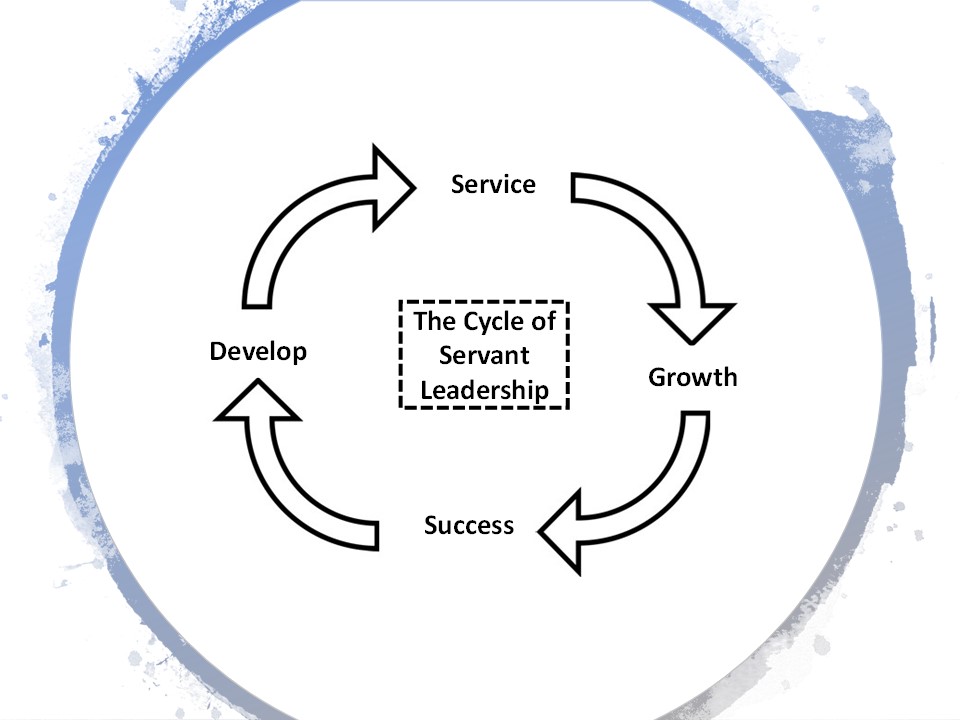
In doing so, servant leaders create a cycle of success:

  • Service. Servant leaders focus on the growth, development, and well-being of their people
  • Growth. Served leaders feel valued and desire to improve
  • Success. Performance increases across the organization
  • Develop. Served leaders become servants themselves

Serve Teams

I have a shirt I picked up from a very large church we once attended. It’s red and simply says, “SERVE” on the front. The church created “Serve Teams,” consisting of hundreds of professionals and laborers with all sorts of talents and resources—doctors, painters, lawn maintainers, counselors, carpenters, sports coaches, etc.

The teams would all don their red shirts and go out in the community to find needs they could address. Sometimes it was cutting grass, painting fences, or post-storm clean-up. Sometimes it was just talking to lonely people or playing basketball in the neighborhood. The intent was to find a need, any need, and solve it.

An amazing thing happened in the community. People felt valued, resources solved problems, the community improved, and the receiver often became the next servant. A cycle of success started to form where people were helping people, and others felt valued and cared for. Moreover, the community improved.

Change the Environment

Servant leaders understand the reason they serve is twofold: to value people and improve the organization. Much like the Greenleaf Center and the U.S. Army’s definition of leadership, serving is about completing the mission and building better teams.

Servant leadership is more than helping individuals, it’s about changing environments.

We invite you to subscribe using the link above. This leadership website is not for profit. There are no ads or fees—simply a desire to have you join in a conversation about leadership. Every Tuesday, you’ll receive an email with a different leadership concept. It’s about getting better… together!

Not Mine… Ours

September 13, 2022

by Stephen T. Messenger

I took command of United States Army Garrison Fort McCoy 62 days ago and quickly noticed an interesting thing. Many times, members of the team speak to me about the command and preface it with the word “your”—as in, “your garrison” or “your installation.”

I quickly correct them.  It’s “our” installation.

I find the “your” language interesting, particularly in a team setting. Leaders of any organization carry a hefty burden. However, it’s certainly not theirs and theirs alone.

In my case, it’s true that I’ve been assigned command over hundreds of people, thousands of things, and billions of dollars in property, equipment, and budget. Army regulation specifically states that I am “responsible for everything the unit [Fort McCoy] does or fails to do.”

Whatever position you are leading, you have a hefty responsibility.    

Army doctrine goes on to say the commander should abide by the four elements of command: authority, responsibility, decision-making, and leadership. They also leverage control through direction, feedback, information, and communication. But again, one person does not make an organization.

That’s why I always correct those who say, “your garrison.” It’s ours.

We” Put a Man on the Moon

One could argue it’s semantics. Everyone knows that they have a role to play, including the leader, and generally most play it well.

But I believe this difference in language is very powerful. The word “yours” subconsciously allows permission to abdicate responsibility. No one is purposefully using this word to slack off their jobs, but it’s easier when the weight of the organization mentally falls on someone else.

Using “your” language makes it about one person. Instead, it truly takes a village to run an organization, be it an installation, platoon, private business, or nonprofit.

It’s very similar to the 1962 story of President John F. Kennedy meeting a janitor during his first visit to NASA. He asked the janitor what his role was in the building, and the janitor replied, “I’m helping put a man on the moon.”

This man understood that “we” are putting a man on the moon. Not only the director of NASA. Not only the captain. All of us.

Leader-Leader

David Marquet writes about the difference between a leader-follower approach and a leader-leader approach in his book Turn the Ship Around!

  • Leader-follower: Followers listen to what the leader tells them to do. This type of command is limiting because the follower is always waiting for orders to come from above. They expect to be told what to do and how to do it. It rests on one person’s abilities and fails to take advantage of the entire team’s skills, knowledge, experience, judgement, and creativity.
  • Leader-leader: This model recognizes that everyone comes with talent. It allows leaders at all levels to make or recommend decisions from a different perspective. It reduces the need for one person to weigh in and make every decision. The organization shifts from judging “your” decisions to making “our” decisions.

This leader-leader model does not release the responsibility from the leader—quite the opposite. It maintains authority while demonstrating trust in the team.

To do so, leaders thoughtfully delegate control of certain decisions. They identify key tasks and goals, while letting others find the way to get there. Thus, they escape the dangerous trap of micromanaging employees.

“Our” Organization

This slight language shift enables others to take ownership of “our” organization and have skin in the game. “Our” language shows others they are trusted to lead. “Our” organization allows the janitor to know his critical role in the global space race.

It may seem like a small difference but changing from “yours” to “ours” allows others to take ownership, lead effectively, and mentally be a part of collective success!

Join us in The Maximum Standard! Subscribe at the link above to receive a free, Tuesday email to your inbox on the latest leadership article. The best leaders are always thinking about leadership. What are you doing today to be a better leader?

2021 Article Recommendation: High Performing Teams

57 Cents: Multiplying Leadership

by Stephen T. Messenger

September 6, 2022

Hattie May Wiatt was a six-year-old girl who lived in Philadelphia in 1884. One day, she walked to Grace Baptist Church, but it was too crowded for her to enter. As she stood there sobbing on the sidewalk, Russell Conwell, the minister and future founder of Temple University, saw her tears and told her they hoped one day to build a church large enough so everyone could come in.

Two years later Hattie died, and her parents told the minister of how she was saving to build a bigger church by running errands for a penny each. They gave the minister a bag containing 57 cents from under Hattie’s pillow with a note from her. It said: “To help build [the church] bigger so that more children can go to Sunday school.”

The minister told the story of Hattie May to the congregation, converted the money into pennies, and offered to sell each one to raise money. They raised about $250.

This money was used to buy property for the Primary Department of the Sunday School, where the first classes of Temple College were held. Later, this building was sold to fund the growth of Temple and the Good Samaritan Hospital, now Temple University Hospital. Hattie May’s 57 cents began a movement.

Multiplying Your Efforts

Great ideas often start with one person, but the tasks quickly exceed their abilities. Leaders need to take their individual efforts and multiply them, leveraging other people. It’s not so much about what you personally can accomplish, but the exponential impact you have through those you lead.

In the book Multiplier: How the Best Leaders Make Everyone Smarter by Liz Wiseman, the concept is moving from doing everything yourself to leveraging the incredible talent of those around you. You have so many hungry, intelligent, motivated members of your team ready to use their imagination to do great things—use them!

Yet, we all find ourselves at times micromanaging and exerting authority, stifling productivity in the process.

Shifting Your Leadership

Study this Leadership Shift from Kacy Maxwell, Executive Marketing Leader. He depicts these scales from leaders on the left “doing” to leaders on the right “multiplying.”

Leadership Shift created by Kacy Maxwell, Executive Marketing Leader

There are certainly times when leaders need to be on the left side of the scale. Hattie was when she earned her pennies.

But the best leaders camp on the right side. They think about the future, delegate tasks, coach through challenges, lead teams, and empower others to succeed. They take on a role as servant leader, providing vision and guidance while allowing others to maximize their talents and passions.

You don’t have to be the smartest one in the room, but you do have to be the best at identifying whose skillset matches with what tasks. Then, as author Stephen Covey would say in his book, Trust and Inspire, tell them what to do and let them wow you with how they did it. It’s less commanding and controlling others and more inspiring them to do great things while trusting them through the process.

Leaders multiply their efforts through others to achieve the organization’s maximum standard.

The Siren’s Song of Micromanagement

If you find yourself doing a lot of tasks that others can do in your organization, you are literally taking power from other people. And when you do, they will allow you to do their job for them. Not ideal. Leaders should do only the things that their position should be doing—everything else should be about empowering others.

This is hard. I find myself wanting to get into the tactical fight all the time because it’s fun… and comfortable. But that’s no longer my lot in life. It’s less about earning another penny to fund the building, and more about multiplying those pennies through other means.

This doesn’t mean you should never get your hands dirty. Last week, I took a tour of our waste water treatment plant and spent a few minutes cleaning out a pipe which collected all the trash from the toilets. Not a pleasant job, but critically important. And a few great men down at this plant clean the pipe every day to keep the water system moving.

Leaders need to see what their people are doing and understand their tasks. How else will you identify challenges and obstacles that exceed their capabilities? But the preponderance of your time should be focused on providing intent, resourcing others, and removing barriers so others can be successful.

Multiplying Cents into Dollars

Hattie May didn’t know her 57 cents would be the foundation for Temple University. Yet this effort grew exponentially through Dr. Conwell casting vision, inspiring others, and multiplying the full efforts of a team to create overwhelming success. Our job as leaders is to multiply the work of others to go above and beyond the original goals.

Take a look at the tasks you’re doing. Are you the only one who can do this, or can you trust and empower others so you can focus on multiplying the effects of your team?

Subscribe here for a free, no-ad weekly email sent to your box with a new leadership lesson each Tuesday. Read, study, discuss, and write about leadership—that’s how you get better every day! We invite you to join us on this journey by clicking the button above. This first step to improving leadership is no risk and will help you be a better leader!

The Most Read Article of the 2022: It Only Takes One

The Most Read Article of August: Never Walk by Trash

It’s About Who You Know: Paul Revere

August 30, 2022

by Stephen T. Messenger

“The British are coming!” shouted Paul Revere as he traversed the countryside surrounding Boston. We all know it well from elementary school that this storied rider warned local militias of the impending British invasion and generated significant resistance against the invaders the following day in Lexington. Then at Concord, farmers and locals were well prepared to beat back the world’s greatest army and thus began the Revolutionary War.

William Who?

However, Paul Revere was not the only rider that night. William Dawes had the same mission to ride through other towns and announce the dreaded arrival of the British. He left at the same time and carried the same message.

However, Dawes was not nearly as successful as Paul Revere. Many of the people he warned did not grab their rifles and confront the invaders. If so, we would be talking about the rides of Revere and Dawes—not just Revere.

It’s Not the Message; It’s the Messenger

Malcolm Gladwell, in his book The Tipping Point, cites his theory for this. He believes that the two men had different relationships with the townsfolk. It wasn’t the message that mattered; it was the messenger.

Paul Revere was an outgoing, extroverted man. Gladwell described him as “a fisherman and a hunter, a cardplayer and a theater-lover, a frequenter of pubs and a successful businessman. He was active in the Messianic Lodge and was a member of several select social clubs.” He knew the locals and had relationships with the important people.

Gladwell called him a connector. When he started his ride, he knew exactly who to talk to and where they would be. He connected the right people with the right information and his message went viral.

Dawes, on the other hand, did not have extensive connections, and he wasn’t as outgoing. He most likely didn’t know who to tell as he rode through each town. He told some people—probably a lot of people—but not the ones who would then spread it. His message didn’t resonate.

Know Your Network

It’s easy to be comfortable in our inner circle at work. There are probably a select few we really need to know and interact with often. But in a crisis, our network expands rapidly. It’s important to know that network before the emergency begins.

I’m not perfect, but I make it a point to know who works with and around me. I attempt to sit down with all those people to learn about their career, family, and interests. We talk about their future, challenges, and initiatives. We just hang out and get to know each other.

This develops a relationship of mutual trust and understanding. It’s the workplace equivalent of fishing, hunting, playing cards, or being in a social club. A connector builds relationships and knows who to talk to and how to spread information. They understand who the key players are and how to leverage their expertise.

Be a Connector

Paul Revere built his social network before the British invasion. He then used those connections to ride into town, announce the impending invasion, and ride out, letting those on the ground handle the next tasks. He was a connector, able to spread the message because he knew the right people.

It’s incumbent upon us to make crucial connections with our bosses, peers, and subordinates. If we wait until the crisis happens, it’s too late. Instead, talk with people, build a network, and lead well!

Now is the time to subscribe!  This is a free, no-ad leadership platform with the sole purpose of developing other leaders. We invite you to join us every Tuesday for a morning email delivered to your inbox on a different and unique leadership topic.

Never Walk by Trash

August 23, 2022

by Stephen T. Messenger

I was walking into my office building last week with a few colleagues when I clearly saw a piece of trash laying on the ground. I instinctively tried to ignore it when once again the all-too-familiar voice of a man I’ve never personally met, but once heard speak, echoed in my head.

“Never pass a piece of trash without picking it up.”   

General Michael Garrett, former United States Army Forces Command Commander, talks about his three leadership imperatives with the first being: never pass a piece of trash without picking it up, either literal or metaphorical. Since I heard that concept years ago, I’ve struggled to walk by litter.

What resonates most with me about his theory is example setting. While it’s good for the leader to beautify the area, it’s better that others follow their example be it trash collecting or treating others positively. What’s important to the boss is important to the organization.

When you’re seen picking up trash, others will follow. Sometimes because it’s the right thing to do. Other times to stave off future embarrassment. Either way, your organization becomes better.

Albert Schweitzer, French philosopher said, “Example is not the main thing of influencing others—it is the only thing. More depends on your walk than on your talk, what you practice than what you preach, what you do than what you say.”

What people see you do is more important than your words. A negative example from many years ago in my house was when I became frustrated and left the room, throwing my baseball cap on the floor. The kids happened to see it and seven years later I still hear playful comments from them on how I might throw a hat if I get upset.

In a positive example, three years ago I mistakenly took a pen from a restaurant. Upon realizing my mistake, I drove miles back to deliver it to the waitress. The kids talk about that as well.

Years later! They still remember incidents years later! John Maxwell stated that “Eighty-nine percent of what people learn comes through visual stimulation; ten percent through audible stimulation; and one percent through other senses… What they hear they understand. What they see they believe.”

Now, I’m human and I miss sometimes. In a more recent example, I overheard a side comment that could have been perceived as outside the bounds of appropriate at work. I always use this litmus test: if it can’t be said in front of my 17-year-old daughter, it shouldn’t be said in any context.

I should have stopped everything right there and turned to the person, seeking immediate clarification on what I might have heard. I should have picked up the potential trash comment. I didn’t.

Since I wasn’t quite sure what was implied by the comment (terrible excuse by the way), I ignored it. I left trash on the ground. That night, General Garrett’s voice resonated in my head, and the next morning, I went into work a little earlier and approached that person. It turned out to be an innocent comment but one that a bystander like myself could easily have interpreted as inappropriate if not in the conversation.

Next, I went to the person who received the comment and apologized for not taking immediate action. I picked up my trash.

I could preach on the importance of propriety in the workplace all day long. But until someone sees me confront it, they really don’t have a reason to believe I’ll act. The bystander in this example initially learned that I wasn’t going to uphold a standard of impropriety in the workplace.

After my apology and corrective action, they can assume I will in the future. That’s why example is so important.

Others must see us:

– picking up the (literal) trash in our organization

– taking difficult and immediate action on poor behavior

– recognizing others that emulate the value system of the team

– caring about the small details

They have to see us ‘doing.’ If the leaders aren’t upholding the standards, no one is. It is okay to miss sometimes. When I missed immediately addressing a comment, I fixed my mistake and now use this example to tell others about my error and how I’m human. We all learn best by doing, and I know I won’t do it again.

There is great power in example. It provides others both inspiration and a model of how others should act in your organization. And if not you, then who?

Now is the time to subscribe! Join us every Tuesday as we discuss another leadership topic. Simply hit the blue button and you’ll receive a free, no-ad, no-spam email once a week to grow in your leadership. We’re also always looking for guest authors! Let’s continue learning together! 

The Birthday Compliment

August 16, 2022

by Stephen T. Messenger

We have a tradition in our house where on your birthday and before we light the candles, everyone takes a turn to say something they appreciated about you that year. When we started this a decade ago, I would get five-year-old compliments like, “I like how you’re my dad” or “You’re nice.”

This year all my kids are now teenagers, and the quality of appreciation has gone through the roof. I won’t rehash what they said, but all four kids and my wife provided very specific and kind examples of gratitude. These birthday compliments were words they probably think about, but rarely verbalize.

The result was a gift that was better than any cake or wrapped present. It was genuine and heartfelt gratitude with specific examples directed at someone loved and respected.

Effective Praise

The Army calls this Effective Praise in their Master Resiliency Training. Based on the work of psychologist Dr. Carol Dweck specializing in motivation, personality, and social development, this theory is how praise and criticism are opportunities to shape behavior, enhance motivation, and build optimism and resilience.

However, most of us fail to use praise and compliments effectively. In our hectic lives we often forget to recognize the accomplishments of others. While my family takes one day to celebrate someone’s achievements, I’m not as good on the other 364 days of the year to verbalize my appreciation for my family.

And when we do take time to provide appreciation, we often do it in a way that is distracted or not from the heart. Dr. Dweck calls this Passive Constructive Responding. I find myself doing this often to people I briefly pass at work. I’ll chat for a few minutes and close with a “Thanks for what you do!”

While that’s nice to recognize them for something, I’m just proving I have no real knowledge of what they do, just that they do something. It’s the equivalent of my five-year-old son thanking me for being a dad. There’s nothing tangible to that compliment. It’s a passive response, and the conversation fizzles out.

Active Constructive Response

A better way is through Active Constructive Response. The best class I ever received on this technique was from Gary Roth, founder of Blue Collar Consulting Group. He understood and expertly practiced the art of providing compliments that contained authentic interest and elaborated the experience.

Active Constructive Responding is more than a simple, “Thanks for what you do!” It’s offering specific praise on a particular event generating gratitude and interest with firsthand knowledge. It’s calling out a behavior and celebrating that win.

That’s good—but keep going! A great compliment then starts digging into that behavior and involves the other person. Use questions like, “How did you think to do that?” and “Where do you get you inspiration from?” You involve the other person and have them elaborate on their positive experience.

This technique generates conversation and ideas for the future, and develops meaning in both the sender and the receiver. The two key traits to be successful are genuine gratitude and intellectual curiosity. If you can capture these two emotions, you’ll build stronger relationships, group cohesion, trust, well-being, and satisfaction for both parties.

Recognize Someone Today

We don’t have to wait until it’s someone’s birthday to give a heartfelt, genuine compliment. Effective praise can, and should, be used every day. Next time you want to say thank you to someone, don’t offer a flippant “thanks.” Recognize the positive behavior and impact, thank them from the heart, and ask questions on how they got there. Shake their hand and find someone else to recognize. It will make a difference in your organization!

Leadership is a journey that we’re all on, and none of us have arrived. I invite you to join us in The Maximum Standard as we publish a new leadership article every Tuesday by Email. We encourage you to subscribe for a free, no-ad leadership lesson delivered to your inbox every week. Let’s grow together!

The Myth of the Swinging Pendulum

August 9, 2022

by Stephen T. Messenger

I’m an all-or-nothing type person. For example, when driving on a hot day, I turn the air conditioner on full blast, and when I’m cold I turn it off. My wife hates this by the way. Or if it’s dessert time, I’m all in—there’s little moderation after dinner… unless I have none.

I used to see leadership styles in this same vein. Specifically, I would look at senior ranking leaders as either those who focus on the interpersonal aspect to get things done, or those who drive organizations through rigid goals. To me, this was a pendulum where you could only be on one side or the other.

I now call this the Myth of the Swinging Pendulum. The best leaders are not on one side of the spectrum, but they are people-oriented while challenging others to achieve extremely high standards.

The Interpersonal Leader

These leaders are people-centric. They get to know their team, have conversations about family and hobbies, and spend time collaborating and thinking through ideas. Interpersonal leaders seek to build consensus and bring others along with them. They shy away from conflict and seek to accomplish goals through teamwork and partnerships, but often value the relationship over organizational success.

The Standards Bearing Leader

These leaders come in with high goals and expectations. They are results-oriented and drive their team to accomplish great results, sometimes at the expense of relationships. They are firm and fair, but talk constantly about results and goals. Seldom will you see them in the break room asking others about their weekend, but always you will see them asking about progress and deadlines.

Relationships with Others Drive Results

I have fallen for the myth that you must choose to either get to know people or accomplish great things. I’m guilty because, at a young age, I saw so many leaders either drive teams while alienating them or build relationships without results. But I now realize the value of both.

The best leaders have high interpersonal skills and get to know their people on a human level so they can understand their talents and passions to leverage them to accomplish great things. People work best when they’re in The Sweet Spot of where talent, passion, and opportunity intersect. The leader must bring those three together.

Liz Wiseman, author of Multipliers, says the leaders who obtain exponential results from their people have these four surprising characteristics which are a mix of people skills and driving results:

1. They Have a Hard Edge. They see a lot in other people and expect a lot in return. They are constantly challenging others to achieve great results and bring out the best in people’s talents. They make others feel intelligent, important, and valued by knowing their unique talents and leveraging them against company goals.

2. They Don’t Play Small. These leaders capitalize on others’ skills and talents, but don’t just step out of the light themselves. They draw out ideas and invite others to run hard and fast alongside them. They use their skills to grow other people’s talents. This is about connecting people to the vision and developing organizational talent.

3. They Have a Great Sense of Humor. We’ve all been in offices where work is work and fun happens when you get home. Leaders must create an environment where people have fun, laugh, and enjoy being there. All teams will have setbacks and failures, and instead of ripping someone’s head off, it’s better to laugh at innocent missteps and set high standards going forward.

4. They Let Their Teams Run. They know they’re not the smartest person in the room and harness the power of individuals. They identify “what to do” and allow people autonomy on “how to do it.” There are no restrictions on their teams, and they let them run free and accomplish much. Great leaders do not inhibit, they encourage.

You Can Be Both

I’ve fallen for the trap that you are either a people person or a results-oriented leader. The Myth of the Swinging Pendulum ran strong in me. But I now see that you can be both.

Disclaimer: There will be times when you have to lean more on one that the other. An urgent deadline requires a directive style of leadership with a mission-oriented focus. A tragedy in the life of an employee requires empathy and understanding. But for normal operations, we have to find the right balance of interpersonal and results-driven interactions.

Get to know your people on a human level and understand their talents, passions, and interests. Build a relationship and learn about their families and hobbies. At the same time, set challenging goals and expectations that scare people, and then go out and achieve those results as a team. Leverage people’s unique skillsets and innovative ideas to make things happen.

It’s our job to create an environment that gets things done while valuing people. It’s our job to do both.

The Maximum Standard puts out a new leadership concept every Tuesday by Email. We encourage you to subscribe for a free, no-ad leadership lesson delivered to your inbox. Come join us as we grow together.

Make Every Interaction Positive

August 2, 2022

by Stephen T. Messenger

Recently, I met an important person that I’ll be working with a lot in the future. We shook hands, and I was ready for a longer conversation about how we can mutually help each other. But after about ten seconds, he politely excused himself and walked away.

There was nothing wrong with this behavior, but it struck me odd that he disappeared so quickly. A host of ridiculous questions popped into my brain. Did I do something wrong? Does he hate me? Was it my breath?

Most likely, the reality was that he’s a very busy person and had other things to do. It was an unexpected encounter, and I probably just caught him at a bad time. Unfortunately, not everyone is so understanding when they feel being blown off.

It’s Critical to Make Every Interaction Positive

I took this lesson going forward, as “Make Every Interaction Positive.” In a new leadership position with hundreds of people working for and with me, it’s nearly impossible to personally connect with everyone. That doesn’t mean I have to stop trying–quite the opposite.

As I roam all these different work areas, I make it a point to never walk by a room with someone in it. I stop, introduce myself, and ask some questions about them. It is simple, time consuming, and important.

You could get this right 100 times but much like my encounter, the first person you miss thinks the new boss is an uncaring jerk who’s too busy to flash a quick smile and say “hi.”

Leaders must get this right with both individuals and groups.

This week, I tried it out. I was invited to speak with a Reserve Army Engineer Company training at Fort McCoy, Wisconsin. I had worked with one of the Platoon Leaders in the past, a phenomenal young leader, and he asked if I would come out to their training area to speak with their company.

I could have showed up, talked for a few minutes, and walked away like I’ve seen many leaders do in the past. I wanted to do better than that.  

It’s Not the Words You Say, But How They Feel

I’m starting to realize that what comes out of my mouth is less important than how others feel after the interaction. Here was my game plan.

1. Thank Them. There is no better way to start speaking than with a thank you from the heart.

2. Get Personal. I started with asking a few questions about themselves. Where are you from? Who has the coolest civilian job? What was the best part of being in Wisconsin? Leaders need to personally engage the people they’re talking to. Public speaking is not about the speaker, it’s about the people.

3. Be Inspiring. I scanned my brain for a short, concise message that (hopefully) would inspire them. Everyone needs a bank of short speeches they can pull out to fit the audience they’re speaking with. I use the articles on this website—in this case, I pulled out Success Versus Significance talking about how personal success pales in comparison to leaving a legacy for others.

4. Educate Them. After speaking for less than five minutes, my Command Sergeant Major gave a short pitch on career paths and opportunities to educate themselves for free through the Army. It’s all about building others up and caring for their careers.

5. Connect Individually. After she was done, we walked through the formation, shaking everyone’s hand, thanking them for their service, and asking what their civilian job is. This personal connection shifts the feel from a disconnected leader pontificating ideas to a connected leader wanting to know about you individually, and truly caring about people.   

6. Be Memorable. We ended with a group photo and a surprise push-up session just for fun (yes, Army people have a different definition of fun than most). Afterwards, we sent them the photo.

What Will They Remember?

Who knows what they’ll remember, and I doubt they’ll deeply reflect, or recall, the words either of us spoke. But they are going to remember how they felt afterwards.

They’ll remember being brave enough to say they have one of the coolest jobs in the company. They’ll remember a personal handshake and a thank you. And they’ll remember a senior leader pushing the dirt with them for no reason at all.

Whether it’s a group or individual, while they’ll forget the words you say, they won’t forget that you cared enough to connect personally and spend time with what matters most to your organization: people. It’s up to you to make every interaction positive.

Leadership is all about people. We encourage you to join us in building others to be better leaders. Subscribe in the box above at no cost and with no ads to receive a weekly email about a new leadership concept every Tuesday. Thank you for leading in whatever profession, organization, or family you’re in!

Most Read Article of the Year: It Only Takes One

Most Read Article of the Month: Reflect Before Leading

Leadership Constitution

July 26, 2022

by Stephen T. Messenger

To be honest, I was a little intimidated this week when I described my Leadership Constitution to a brand-new team. A constitution is a set of rules that describe and guide how something functions. A Leadership Constitution is a leader’s promise on how they plan to lead and what values they live by.

As I stood there describing my Leadership Constitution, the intimidation came not because of the words I was saying, but from knowing the high standards that I was setting for myself. I was now publicly accountable to everyone in the room, and that was a good—and scary—thing; scary because I, like all of us, am a very fallible person.

James Kouzes and Barry Posner, authors of The Leadership Challenge, conducted a survey repeated every year for the past three decades identifying the number one leadership attribute that others will follow. Year after year for over 30 years, one attribute stood at the top: credibility.

Followers long for a leader who will do what they say they will do.

Credibility

Credibility is the foundation of leadership. Followers seek a leader who they trust. They want someone who is open, forthright, and transparent. People pine for someone who holds the highest standards, are not afraid to speak to them in public, and then lives those values.

 Credibility revolves around honest behavior. It’s the simple things such as:

  • Fulfilling commitments. If you say you’re going to do something today, complete it today
  • Showing up on time. Begin and end every meeting on schedule—don’t waste their time.
  • Thinking first, speaking second. Don’t say things just to please others. Take some time to think through your words.
  • Keeping confidentiality. If you can’t say something, don’t. Instead of breaching trust or lying that you don’t know, just explain you’re not at liberty to say.
  • Apologizing when wrong. We all make mistakes. Say sorry and move on.

People want to follow someone who is honest because the leader’s honesty is directly linked to the follower’s credibility. They want to work for someone with good morals, character, and principles—they then are perceived the same.

Leadership Constitution

We then need a way to publicly explain our values. After trying this for the first time, I believe everyone should have a Leadership Constitution. Scott O’Neil, CEO of several professional sports teams and author of Be Where Your Feet Are defines a Leadership Constitution as a document that defines your values and how you will lead.

He then recommends publicly explaining your Leadership Constitution to your team. What this does is hold you accountable to the values and commitments you’re making. Others know what you stand for, and they can validate your credibility.

My Leadership Constitution is as follows:

What I’ve found that it’s not easy to publicly announce your value system to others, but its critical. Everyone places importance on different values, and it’s easy to judge what other’s think are important.

During this exercise, however, I’ve found that others appreciate knowing who they’re following. It’s like you’re making a contract with them.

And they desire someone who has extremely high value standards. Someone who, on first impression by sharing their Leadership Constitution, is honest, competent, inspiring, and forward looking—the top four leadership characteristics in the Kouzes and Posner survey.

Your people may not agree with everything in it, but they also don’t have to. I don’t drink, swear, nor gamble. Nothing wrong with any of those, but for example, I’ve personally found that alcohol tastes terrible and doesn’t help my body perform its best. There’s no judgement from me on others who drink; I just don’t do it.

The Leadership Constitution is a way to think about how you’re going to lead, communicate it to your teams, and live out your best self.

Your people are looking at you to be credible above all else and do what you say you will do. To demonstrate this, you should develop your value system, tell others about it, and live it out every day. This is challenging. We’re all humans and will fail often.

Luckily, no one is looking for the perfect leader. They’re looking for one who is honest, competent, inspiring, and forward-looking; and they’re looking for a credible leader who knows what they stand for.

Be Great Today!

The Maximum Standard publishes a weekly article that you can receive free in your inbox by simply subscribing on the button above. I encourage you to become part of the journey to grow in your personal leadership – no ads, no money, just improvement!  Lead well and be great today!

Click here for the foundational article on The Maximum Standard

Click here for the most read article on The Maximum Standard—Lead Outside the Circle     

Be Great Today!

July 19, 2022

by Stephen T. Messenger

Last week, I took command of United States Army Garrison Fort McCoy, Wisconsin. My family and I are humbled and blessed to be placed in this position of responsibility that influences hundreds of wonderful people who work for the garrison, tens of tenant organizations, and thousands of people in the community.

On my first full day in command, I started at 6 am on the installation main gate. For those unfamiliar with military bases, each one has security checkpoints requiring identification to enter. Dedicated police officers, heroes of our community, scan each driver in and protect our families and service members.

After receiving a quick brief on how to use the scanner and asking repeatedly to have a taser (denied), I was ready to interact with drivers in 18-second increments. It was my first opportunity to meet most of the people who worked on or with the base. My goal was to provide a quick message about leadership.

Find those Small Moments to Inspire

To each driver I would quickly introduce myself. If I knew them, I would joke about bringing the dogs out to search their vehicle. I’d then ask their name and where they worked, thank them, and end with, “Be great today!”

So often our hard-working employees come into work and do a laudable job, but seldom feel they’re making a difference or recognized for their work. This can lead to stagnation, apathy, or mundanity that prevents teams and individuals from achieving their maximum standard.

“Great leaders all have one thing in common. They know that acquiring and keeping good people is a leader’s most important task,” writes John Maxwell in his book, Developing the Leaders around You. He goes on to say, “Find the best people you can, then develop them into the best leaders they can be.”

Sometimes though, you only have brief interactions with many you lead. You must capitalize on each engagement, no matter how small.

To inspire and retain your people, they need to know that you care, are thankful, and are rooting for them to, “Be great today!”

Catching the Bus

Every morning from elementary school through high school, I would walk out the door for the bus while my mom chased me out to say goodbye. She would lovingly shout out four things to me as I left, which the whole neighborhood could hear:

“Go get ‘em Tiger!

You’re a winner!

Do your best!

Make the Messengers proud!”

Even though I walked (ran) away, embarrassed by this message of encouragement, and hoping my friends didn’t hear, this simple act by my mom most likely changed my life.

Someone was rooting for me. Someone acknowledged that I was doing hard things. Someone recognized my potential.

I wanted inside to live up to those expectations.

Few of us have mom chasing us out the door in our adult life challenging us to do our best. As leaders and parents, we need to be the ones continuously encouraging our people to go above and beyond.

Meet Them at the Door

An interesting thing happened when I met people at the front gate which I didn’t expect: their countenance changed. Initially, they were on a mundane drive into work, sipping coffee, dropping off kids, and listening to country music.

But at the gate, suddenly they met a person in a leadership position, thanking them for their hard work and recognizing their contribution. As they drove off, they received an encouraging shout, much like my mom would yell at me as I left the house, to “be great today!”

Many had the same reaction I had as a kid: “I am going to pick up my game.”  Many told me to be great today as well. It inspired me back. 

We owe encouragement to our followers. All of us do so much at work that is seldom recognized or applauded. As leaders we must provide purpose, direction, and motivation to encourage others to excel.

A great place to do that is right when you meet them at the door.

Be inspiring today!

Be great today!

The Maximum Standard publishes a weekly article that you can receive free in your inbox by simply subscribing. I encourage you to become part of the journey to grow in your personal leadership – no ads, just improvement!  Lead well and be great today!

Click here for the foundational article on The Maximum Standard

Click here for the most read article on The Maximum Standard—Lead Outside the Circle     

Reflect Before Leading

July 5, 2022

by Stephen T. Messenger

So often, we leave a leadership position with success but seldom know why. We move onto the next assignment without much thought as to what we personally did right or wrong. We fail to reflect on our own actions.

In preparing to take an Army command position this summer, I deliberately carved out time over 30 days to reflect on my individual leadership. I’ve done this before in various military courses, but it was the first time I independently explored so many different facets of leading across a wide range of skills.

This reflection has positioned me to take the unit colors being more aware of how I lead others—the good, the bad, and the ugly.

Knowing Thyself

Using the book My Green Notebook: “Knowing Thyself” Before Changing Jobs, I examined my strengths and weaknesses over the last few assignments. These included many areas I was strong at and just as many areas in which I had opportunity to improve.

I recommend it. It’s a great exercise, and not for the faint of heart. It’s easy to explore topics such as adaptability, assertiveness, and self-control in a binary manner—either I’m good or bad at this—but instead, each category has so many layers of complexity that one can be both great and terrible at the same time.

This duality makes reflection necessary. Most of us, including myself, do not take enough time to thoroughly do so.

We review systems, exercises, and events to improve for the next time, but not our leadership. We give feedback to those that work for us, but rarely do we ask them on how we can improve. And we schedule meeting after meeting with no white space (time with nothing intentionally scheduled) in between to think about how individual data points in our jobs collectively contribute to the overall goal.

What Must I Do?

The real benefit of this 30-day reflection was in the last few pages—bringing the book’s 29 leadership dimensions together into actionable items:

  • What must I continue doing?
  • What must I stop doing?
  • What must I start doing?

I changed the language of the book slightly from “should” to “must.” For example, in my personal journey, I’ve discovered that I must:

  • Continue to communicate command philosophy and intent early and often
  • Stop letting email interrupt my schedule
  • Start journaling daily and increase white space reflecting

These revelations (along with many others) I’ll take into my next assignment to improve the effects of how I lead. The 15 minutes a day over the past month exploring leadership dimensions helped paint a holistic picture.

But more importantly, it’s helped me understand I must create time to routinely track, think about, and reflect on my actions. It is not enough to spend one, 30-day period between jobs trying to improve. It’s a daily and continuous process over years.

The Importance of White Space

One thing all leaders can do is create white space. A senior leader once told me a story about how he placed a block of time on the calendar every afternoon to think. When asked about it, he would always notice skepticism. Very few people understood, yet this was the most important time of his day—where ideas flowed and decisions were made.

If every day is crammed with activity, your brain will never be able to digest it all. It’s critical to take time and think about all the different pieces of information you digest and make sense of them all. Your job is to bring it together. White space does that.

Reflect Before Leading

Going into command, these 30 days of reflection helped a lot. But the biggest advantage was to spur a culture of daily reflection. I hope you will consider the same.

My Green Notebook: “Knowing Thyself” Before Changing Jobs can be purchased on Amazon.

Subscribe by clicking the link above! Reflecting is all part of the process along with reading, thinking, talking, and writing about leadership. One of the ways is to sign up for a weekly dose of leadership from The Maximum Standard – one free email leadership email every Tuesday morning. No ads, No fees. Just leadership!

The most read article of 2022: It Only Takes ONE

Win the Morning, Win the Day

June 28, 2022

by Stephen T. Messenger

“It is well to be up before daybreak, for such habits contribute to health, wealth, and wisdom.” –Aristotle

We Do More Before 9 AM than…

Productivity in the morning equates to productivity for the day. The old adage “Win the morning, win the day” rings true.

The United States Army televised a now iconic (and a bit cheesy) 1980’s commercial with the tagline, “We do more before nine a.m. than most people do all day.” The advertisement begins with an Air Force C-130 flying into the sunrise loaded with parachute-equipped soldiers about to jump.

The aircraft drops the vehicles, and the troopers launch out the side door assembling on the ground with their equipment in the early morning hours. It’s here, that a smiling paratrooper turns to his non-commissioned officer and says, “Hey, First Sergeant! Good morning!” as the sun crests the horizon in the background.

The military knows they are training to compete in a life-or-death struggle against an enemy force. The key to any victory is being more prepared than the enemy—physically, mentally, and emotionally. Good leaders understand this and pride themselves on being ready.

They plan for meetings, rehearse important conversations, and seek opportunities to forward their organization’s interests. If you look closely, the best leaders prepare for every engagement and have a game plan when they walk in the room.

Controlling Time

Yet, just as many fail to use the most important resource they have—time. Great leaders wake up early every morning and hit the ground running.

When I say running, I mean this in the metaphorical sense. Whether you lead an infantry platoon or a small business, waking up early and preparing yourself physically, mentally, emotionally, and nutritionally is imperative.

The difference between starting each workday one hour earlier over a year is 260 hours or 32 extra days of productivity. At a micro level, that’s five hours of productivity per work week, more if you wake up earlier. Leaders use this time effectively to prepare their minds and bodies to lead.

Physical Exercise: Studies have shown that exercise is linked to less depression, better memory, and quicker learning. Physical activity also improves emotional stability by the body releasing chemicals into the brain which can lighten moods and relieve stress. Just a few minutes per day can improve overall mind and body performance.

Mental Preparedness: Leaders have a wide breadth of information they need to be familiar with. In addition, there is always data at the periphery that fill in gaps and create more knowledge, assisting in decision making. Great leaders know what they need to know—and more. Taking time in the morning to expand your intellectual horizon by reading various topics will benefit the organization.

Emotional Stability: Different activities calm different people. Whether it is prayer, yoga, or deep breathing, a morning routine to align your emotions with your life can bear fruit both to you and those who work for you. An emotionally stable leader is one people want to lead them.

ETP – Eat To Perform. Have the breakfast that best suits your lifestyle whether for diet or calories. Feed your machine with what it needs.

Bonus Time: Gaining hours every week propels yourself ahead. A popularized phrase, “Hard work beats talent when talent isn’t working hard enough” applies here. Small businesses need to outwork and out-advertise their opponents. Athletes need to gain physical advantages against their competitors. Leaders need to prepare their minds, bodies, and souls. Two hours per day adds more than a full workday to your schedule every week!  

The Body Needs Rest

A quick warning: there are days when sleeping in is required to refresh. Vacations are essential to recharge. We all need to get our body batteries in check at times. Not one of us is Superman and getting rest is an integral part of physical and mental growth.

There is also the added complications of family and schedules based on your season of life:

– New babies can disrupt waking up early (and sleeping in general) very quickly.

– As children age, bedtimes change and teenagers are wired to be night owls—if they want to talk at night, you should talk with them.

– Every individual circumstance is different, and families need leaders too.  

Use the Hours You Have

However, the best leaders are the first ones up and productive before everyone else. To be successful at early morning productivity, you must go to bed at a decent time, wake up with the alarm, and most of all, be productive in those hours.

Don’t waste valuable time in the morning or it’s all for naught—have a plan before you go to bed on what you’ll do. Make every morning minute count and launch yourself past the competition.

Leaders do more before nine a.m., than most people do all day.

The Road Not Taken: Following Your Moral Compass

by Samuel Messenger

June 21, 2022

Two roads diverged in a wood, and I—

I took the one less traveled by,

And that has made all the difference.

–Robert Frost

Most of us have heard the last few lines of this poem, but maybe not the poem in its entirety. Often it is used to champion the idea that we shouldn’t go along with what the majority decides. Instead, we should pick the proper path for us, even if it’s less popular. While this is a good message, I believe there is another, equally important message to be gleaned.

Two roads diverged in a yellow wood,

And sorry I could not travel both

We’ve already faced numerous decisions in our life. From the mundanity of choosing an ice cream flavor to the insanity of choosing a future. We’ve all made choices, but we still have many more to make. And every choice we make affects our future and our world.

And be one traveler, long I stood

And looked down one as far as I could

To where it bent in the undergrowth

In my reading, Frost was trying to communicate the frustration of making a decision. He knew that whichever path he chose, he might look back and regret not choosing the other. And that is why making choices is so hard. It’s because once you choose, you’ve chosen. There’s no going back.

Then took the other, as just as fair,

And having perhaps the better claim,

Because it was grassy and wanted wear;

Though as for that the passing there

Had worn them really about the same,

That’s why I think it’s important to know how to make decisions. Otherwise, we’ll be standing in the woods, staring at those diverging roads forever. 

And both that morning equally lay

In leaves no step had trodden black.

Oh, I kept the first for another day!

Yet knowing how way leads on to way,

I doubted if I should ever come back.

So how do we know who we are? Who are you? Who am I? And once we know, how do we use that knowledge to make decisions?

My answer to you: follow your moral compass. Your moral compass shows you what road to take to find the things you value and directs you away from danger. Your moral compass shows you who you are. When faced with a difficult decision, we can only make the right choice when we know who we are.

Our society tends to hold values in contrasting pairs, as if we must be one thing or the other. But if you think about it, there are many opposing ideals which need to be balanced in order to mold us into who we want to be:

We must simultaneously be:

Rooted in our beliefs… and willing to change.

Forgiving of others’ mistakes… and able to hold people accountable.

Loyal to others… but also to ourselves.

Proud of our heritage, beliefs, intelligence, identity, and personality… but humble and receptive to others.

Kind when possible… but tough when necessary.

We also need to balance who we are with who we want to become.

This is how we know who we are. This is how we make decisions.

I shall be telling this with a sigh

Somewhere ages and ages hence:

Two roads diverged in a wood, and I—

I took the one less traveled by,

And that has made all the difference.

Samuel Messenger is pursuing a bachelor’s degree in music theory and composition at Rider University in New Jersey. He graduated from high school with honors as salutatorian, giving the above speech during commencement.

Click above to subscribe to The Maximum Standard, a free, no-ad leadership resource to help you grow in your leadership. You’ll receive an email in your inbox every Tuesday morning with a new way to think about leading. We’re also always looking for new authors to write and publish on our site – contact us if you’re interested!

Lead well!

MOST READ ARTICLE OF THE MAXIMUM STANDARD:

Lead Outside the Circle

Integrating Work and Life

by Stephen T. Messenger

June 14, 2022

Like many typical professionals, I’m pretty good at keeping work away from home. I compartmentalize my career and try to keep my family separate from the stressors of work or the burdens that come with it. Likewise, I rarely bring family matters into the workplace.

However, recently I’ve seen advantages in integrating the two worlds.

We would dramatically increase our leadership capability if the lessons we learn from our family, leisure, career, and hobbies seamlessly translate into other areas in our lives.

Integrating Life

At a recent ceremony I attended, the guest speaker noted that she gave up trying the traditional balance of work and life, a phrase we’ve all often heard. Instead, she spoke of integrating family and career activities together and prioritizing when needed. An intriguing concept!

This week I’ve found myself on an extended hiatus between Army assignments. It’s provided a chance to explore activities that are new, or I haven’t done in a while. Interestingly, the more diverse the activity, the more I see applicable lessons in the workplace.

The first item I wanted to catch up on was reading. I sought out some books that I traditionally shun for more professional, military-related topics. Suddenly, instead of visiting World War battlefields and sitting near national leaders, I found myself immersed in the seedy underbelly of magic, hunting down drug-dealers, and cheering on the U.S. 1936 Olympic crew team.

While I thought this would be a reprieve from professional reading, instead, these unique and unexplored topics provide much, if not greater insight, into the leadership profession.

Off-Topic Books That Are on Topic

In Fooling Houdini by Alex Stone, the author and magician learned holistic integration while pursuing the perfect magic trick. He integrated concepts from mathematics, theater, clown lessons, and pickpocketing to create an act worthy of performing at the International Brotherhood of Magicians competition.

Reading Killing Pablo by Mark Bowden, I learned about the brutal rise and fall of Colombian cocaine cartel kingpin Pablo Escobar. He exemplified Sir John Acton’s statement that, “Power tends to corrupt, and absolute power corrupts absolutely.” As people earn positions and promotions, it’s easy to lose sight of how they got there.

Next in The Boys in the Boat by Daniel James Brown, the 1936 U.S Olympic Rowing Team followed the path of nine lower-class athletes rising out of the ashes of the Great Depression and described how they overcame a host of adversities to compete in the Olympics. Persistence is a powerful concept.

Books about different experiences, power and ego, and true determination easily apply to all aspects of life. But then I found simple, everyday projects apply as well:

Everyday Life as Leadership Lessons

  • Weeding the garden. I pulled a small root that surprisingly reached over four feet and across tens of plants! The interconnectedness of one root system often has impact in other areas. My decision in one area has secondary and tertiary effects that I’m probably not thinking about.
  • Spackling our rented house to vacate. Attention to detail matters and creates decisions on how much effort you’ll do when no one will ever notice but you. I could have “mailed in” spackling since I’m the only one who’s really looking… but every task should be done to the maximum standard.
  • Surviving hotel living with four kids and a dog. Multiple days in a hotel with a large crew will try anyone’s patience. Creativity is needed to keep the clan happy and the parents sane!

I’m starting to realize that many activities at home make me a better professional at work, and many ideas at work make me a better family man.

The holistic leader compartmentalizes less and integrates more.

It’s about bringing family and friends into your world of professionalism, and work leadership lessons into the home to train the next generation. I’ve all too often separated these two worlds, strangely abiding by that whole “men are waffles” concept where the syrup never spills out of the waffle hole into another.

Living the Integrated Life

But combining all these lessons can help make us better leaders. It’s up to us to capture those ideas, integrate all facets of our lives into each other, and be the best version of ourselves at home and work.

“Somedays,” as Dirk Bentley noted in his video, “you’re living.” You’re reaping the full benefits of a holistic life, learning ideas that make you better across different facets. Reading certainly helps, but so do all the other activities across the spectrum of life.

Lead well, in every area!

We encourage you to subscribe for a free, weekly email (no ads nor fees) to the latest Maximum Standard leadership lesson. This is a no-threat opportunity to improve your leadership through reading, and then think about and discuss leadership with your peers to improve.

Seek First to Understand, Then Be Understood

by Jack Mateer

June 7, 2022

Seek first to understand, then be understood is a golden rule in communication. Stephen Covey discusses this approach in his Habit #5 of the 7 Habits of Highly Effective People.

This great, but difficult, rule is where one employs active listening to ensure they are receiving and understanding what another individual is transmitting. It’s very effective to gather information.

But we might dig in and take this “seeking first to understand, then be understood” to a deeper, more complete level… a level that takes the engagement of two or more individuals or organizations further, to the level of gaining a greater knowledge and deeper, common understanding of those involved.

Help Me, Help You, Help Me

Have you ever thought that an individual or organization upon which you rely on only exists to make your life more difficult? Me too.

As an aircraft maintenance officer in the U.S. Air Force assigned to the flight line, our Supporting Back Shop Component Repair team (effectively an offsite part repair group) seemed to always make it difficult for my team to keep our aircraft fully mission capable. They would slow roll repairs, fail to have the right expert available, or delay an inspection. Frustrating!

In a later assignment, I led those same back shop component repair organizations. Amazingly, my former flight line maintenance team was slow to provide parts for repair or were constantly changing the scheduled inspections. It completely upended my organization’s ability to plan for resources and manage parts.

Then one day, I asked myself, “Why would any organization make life more difficult for another when there is mutual reliance in the relationship? We, literally, were all on the same team, and, again literally, wearing the same uniform.”

I channeled my inner Covey to “seek first to understand, then be understood” and then dove to the next level. I did more than actively listen when inquiring into the other organization’s “failures” to support mine. I asked them what their challenges were and how I could “help you, help me.”

The Five Why’s

The 5 Why’s is an excellent and easy technique to identify root causes. It basically consists of a leader asking “why” each time a reason is provided as the cause of a problem.

Following each response, the leader asks another “why?” This proceeds for at least five “why’s”

Generally, the answer to fifth “why” gets to the root cause (Normally something relating to training, tools or “tech data” …but that’s a subject for another time) which can then be addressed. All the previous questions of “why” uncover symptoms of the root cause and will only reappear as a new symptom if given a cure.

In exploring the many “why’s” for the supporting organization’s “failures,” we gain an understanding of what constraints (things we’re forced to do) and restraints (things we’re prohibited from doing) the other organization is operating under. Additionally, we may find areas where our organization is impeding the progress of the supporting organization, thus uncovering where “I can help you, help me.”

In some of the cases, I experienced the back shops were lacking the required new subcomponents or they were experiencing high turnover of technicians causing delays due to training. In many cases, my flight line maintainers were not coding the malfunctions correctly thereby forcing the back shops into extended trouble shooting… we were the problem, and I didn’t know it! Once I was able to “understand” then I could do something to “help them, help me.”  

We Are Part of the Solution

When we are genuinely inquisitive and dig in to fully understand what is happing in another organization upon which we depend, we find out where we can be a part of the solution. Moreover, we might even find areas where we or our team were unknowingly the cause of a problem.

When we “seek first to understand, then be understood,” we are truly on the road to a much more meaningful, broader, and deeper success. We stop working against each other and actively bring others along on our journey.

We encourage you to subscribe for a free, weekly email (no ads nor fees) to the latest Maximum Standard leadership lesson. This is a great opportunity to improve your leadership through reading, and then think about and discuss leadership with your peers to improve. We are also always looking for guest authors to share their experiences like Jack Mateer expertly did this week. 

Lead well!

Jack Mateer is a recently retired Air Force Colonel with 32 years and 1 day of military service as an aircraft and munitions maintenance officer. His leadership experience spans operations, sustainment, logistics, and defense support to civil authorities where he focused on data driven solutions. He commanded at every major echelon from Group-Level and below and deployed multiple times to the Middle East. Jack earned three master’s degrees in Adult and Higher Learning, Leadership and National Security Studies and is a 1990 graduate of the Air Force Academy.

His thoughts do not necessarily represent the views of the United States Air Force nor United States Military.

Leaving a Leadership Legacy

by Stephen T. Messenger

May 31, 2022

Alfred Nobel is best known as the founder of the Nobel Prize. His beginnings however were not rooted in peace but in war. He invented dynamite and the blasting cap, was a weapons dealer, and owned a military arms factory.

In 1888, his brother Ludvig died, and the local newspapers confused him with Alfred. In a rare chance to read one’s obituary, Alfred opened the paper to the headline:

“The Merchant of Death is Dead… Dr. Alfred Nobel, who became rich by finding ways to kill more people faster than ever before, died yesterday.”

He was crushed. Not wanting to be remembered as a killer, in his will he allocated $250 million, the majority of his wealth, to create the Nobel Prize organization. Today, he enables others across the globe to be recognized for peace-making endeavors.

It raises the question: what kind of legacy will I leave?

I think we all ask ourselves as we leave a job, “Did I make an enduring impact?” and “How will I be remembered?” But, as I reflect on these questions, I’m finding that being remembered pales in comparison to making a long-term difference.

This week, I bid farewell to yet another Army assignment, moving to my sixth different position in as many years. My personal pride makes me want to be remembered, but the organization needs my lasting impact more than fond memories of a former leader.

Our job in any assignment is to complete the mission and make the organization better. We usually know if the mission is completed on our watch, but it’s harder to know if we made the place better after we left.

Leaving a legacy, ironically, is not about how well we’re remembered. Our personal legacy is irrelevant. It’s about how much better the team is upon our departure.

On my last day, I need to be forgotten as my successor steps in. All that matters is leaving a team that operates at a higher level than before.

Robyn Benincasa, world champion adventure racer, says, “You don’t inspire your teammates by showing them how amazing you are. You inspire them by showing them how amazing they are.”

It’s less about me and more about them

If I walk out of the organization and it falls apart, I’ve failed. Instead, I must empower others to be the success stories, not hoping I will personally be remembered as the savior who held it all together.

This legacy can only be accomplished by deliberate planning on day one. Leaders must go into assignments with the goal of focusing on people. This requires continuous talent management, professional development, training opportunities, counseling, and genuine care. Leaving an organization better does not just happen—you need to start today.

Complete the mission. Make the organization better. Fade into the background. That’s a great legacy!

Lao Tzu, a Chinese philosopher, once wrote: “A leader is best when people barely know he exists. Of a good leader, who talks little, when his work is done, his aim fulfilled, they will say, ‘We did this ourselves.’”

This past year, I provided a little bit of intent and guidance, a lot of leader development, and encouraged them to grow in their leadership journey. They have been incredible professionals in every way. Their greatest attributes have been their ability to innovate, try different things, and get better all the time.

I feel they are better than when I arrived, and I am better as well because of them. A successful legacy is accomplished through enabling your people to be better without you.

What is my legacy?

Alfred Nobel changed his legacy from “The Merchant of Death” to the founder of the Nobel Prize. What would your legacy be today if someone asked you, and what do you want it to be?

It’s never too late to start at work… and especially your home.

Lead well!

This article is dedicated to the incredible men and women of Joint Task Force Civil Support. Thank you for being such a confident, competent, tactically and technically proficient organization–you made a difference this year!

Hit the SUBSCRIBE button to receive a free, weekly email in your inbox on our most current leadership idea of the week. We all need to think, read, discuss, and write about leadership to get better. I encourage you to join us on our leadership journey!

We are also always looking for guest writers. Email us if you’re interested at themaximumstandard@gmail.com  

Never Forget the Sacrifice

by Stephen T. Messenger

May 30, 2022

Originally published May 31, 2021

Memorial Day evokes a wide range of emotions across our Nation.  Many consider this holiday to be the unofficial beginning of summer. The grill comes out, the lawn games appear, and the fun begins. Some take their first seasonal vacation and spend time at the lake, beach, or park. Others have to work and barely even designate Memorial Day as different from any other Monday. Unfortunately, life sometimes has a way to overshadow the unprecedented sacrifice our military has made to keep this Nation’s freedoms intact.

If you look closely, there are families and friends spending today in deep sadness and sorrow, staring at the gold star hanging in their window or a living room portrait of their fallen warrior. These images remind them of loved ones who never returned home from war, or a friend who may have died heroically saving their own life. Many others proudly remember their ancestors who served and perished, defending our Nation and our world from injustice and tyranny.

At 22 years old, Marine Corporal Jason Dunham was on a convoy in Husaybah, Iraq in 2004. After hearing small arms fire in the city and moving his squad towards the sound of the guns, an insurgent attacked him, resulting in a hand-to-hand struggle. During the fight, Corporal Dunham saw the insurgent release a grenade that endangered his fellow Marines. He first warned his squad and then covered the grenade with his helmet and body, saving the lives of at least two of his friends; he made the ultimate sacrifice.  

In his Medal of Honor ceremony, President George W. Bush stated that Corporal Dunham “gave his own life so that others may live.” What a profound statement. America has seen over 1.1 million combat deaths from the Revolutionary War to the War in Afghanistan. Each one of these service members has echoed President Bush’s statement—they died so that we may live.

Nine days ago, I walked the battlefield at Gettysburg and stood where Colonel Joshua Chamberlin from the 20th Maine Union Army gave the order to fix bayonets and charge downhill against an attacking Confederate Army. His heroic leadership, while resulting in the death of some of his men, helped save the battle and keep our Nation united. Nine months ago, I walked the Fort Leavenworth National Cemetery where this large plot of land hosts the final resting place of heroes who died, beginning in the Civil War and every war since.

It’s sobering to walk hallowed grounds such as these. Markers are everywhere representing the death of men and women who fell in battle. They represent the ultimate payment—it is humbling to think that they were willing to die on our behalf, and many are still willing today.

We must never forget this sacrifice. Every year, less and less Americans are connected to military service. Over the past two decades, the number of veterans in the United States declined by one-third to 18 million service members. That makes up only 7% of the adult population. Military service no longer permeates into every town as during draft years, and today’s military instead comprises family heritage and individual military decisions. Fewer families and communities are linked directly to these courageous service members.

Thankfully, we live in a Nation that still honors our heroes. From first responders to COVID medical personnel to essential workers, America recognizes selfless service. No act is greater than dying to save others. While Corporal Dunham laid down his life for his squad, he also laid down his life for us. He died, so that we may live.

Abraham Lincoln in the Gettysburg Address affirmed the importance of sacrificial nature: “That we here highly resolve that these dead shall not have died in vain—that this Nation, under God, shall have a new birth of freedom, and that government of the people, by the people, for the people, shall not perish from the earth.” The world needs American sacrifice—since 1775 it always has, and always will.

It’s perfectly fine to enjoy Memorial Day Weekend with friends and family. In fact, we honor those who died for our freedoms by enjoying what they have provided. But at the same time, we must never forget the sacrifice. Thank you for taking time today to honor the fallen in your own way.

Entering Their World

by Stephen T. Messenger

May 24, 2022

In New York City last year, 125 pedestrians were killed in motor vehicle accidents. That’s the most deaths since 2013, and Mayor Eric Adams is looking to pull that number back to zero.

One way he’s attacking this problem is by installing one hundred raised crosswalks annually. These consist of a flat-topped speed hump approximately 6 feet wide that forces cars to slow down as they approach heavily crossed roads. The raised walkway has been shown to reduce average speeds by 18% and accidents by 45%.

In effect, the drivers are forced to switch their mindset from owning the road to entering the pedestrian’s world.

The same applies to how we interact with those on our team. Often, leaders fail to enter the world of those who are following them. The leader thinks they own the road and treats everyone as if they must enter the boss’ world.

A better way to interact with people is to join their world. When my daughter was five years old, my father-in-law was on the floor for an hour with her talking about unicorns and princesses and flying. We applauded him for enduring so much imagination, and he responded: “It’s easy when you enter their world.”

This skill is about listening to and understanding the other person. Until you know what motivates them, it’s hard to influence them.

What concerns the leader is not necessarily what motivates the follower. Traditionally, employees think more about their personal role, their own lives, and what they need to do to be successful today. Honestly, we all do. They don’t always care about the bigger picture. It’s the leader’s job to flip the script.

Often, leaders hold meetings in their offices and conference rooms, mandating their people come to them. They sit around the table in the same office scenery, with the same thoughts, thinking about how the employee can best benefit the leader.

Instead, leaders need to go to people, meet them in their office, their place of work, or their conference room. They need to see what their employees see. They need to experience what their employees experience.

The Army calls this battlefield circulation. It’s when they move to the front lines and inspect the foxholes, talk to the troops, and see conditions for themselves. As discussed in last week’s article, General Eisenhower talked to the Airborne assault team the day before D-Day to enter their world before the invasion.

He could have easily sat in his headquarters and hoped the D-Day assault would go well. Instead, he chose to enter their world.

Those who forget to enter the other’s world quickly become disconnected from their people. They don’t understand what motivates their team, inspires others, and encourages them to succeed. They become isolated and take their finger off the pulse of the organization. They quickly fail.

Entering their world is about:

Relationships: You must know your people to lead them

Communication: You must talk to them to understand the issues

Empathy: You must put yourself in their shoes to see the problems

The reason pedestrian accidents decrease with raised sidewalks is because the cars enter the world of the walkers. The cars are forced to slow down, move to the level of the walker, and understand they are no longer in their own world.

Leaders must do the same. Enter the world of your employees and see how they respond.

Lead well!

Your followers expect you to be a better leader every day. This can only be done through experience, study, discussion, and training. I encourage you to subscribe to The Maximum Standard for a free, weekly email delivered to your inbox every Tuesday. Never stop learning!

How to Recognize Your Team

by Stephen T. Messenger

May 17, 2022

This week, we hosted an awards ceremony to recognize our team’s great work they performed during COVID operations the past year. We presented awards in a formal ceremony with accolades, short highlights, and thank yous all around. While formal recognition ceremonies are good, it makes me think about how I can be better at rewarding and recognizing my team on a regular basis.

Be…

Thankful. You must master these two words: thank you. I once had a boss that began and ended every meeting, and almost every conversation, with the words, “Thank you.” He did more than say it; he meant it. Ninety percent of your people are working hard on behalf of you. Acknowledge it every time you talk to someone.

Relevant. Recognize what you value. If you want your people to drive change, reward people for changing things. If you value productivity, recognize that. Your people notice what you reward others for and will increase that behavior when you highlight it.

Timely. You must recognize people when their great actions happen. If you wait too long, they think you’ve forgotten about them. General George Marshall once told President Roosevelt he received a medal 23 years after earning it in World War I. It certainly didn’t mean as much two decades later.

Unexpected. Again, formal ceremonies are great… and seen coming from a mile away. Imagine surprising people and praising their great work without them knowing it’s coming. Gather a small group, give unexpected praise, and watch what happens. It’s powerful.

Sincere. Your people know who you are. If you’re recognizing people and it’s not from your heart, they know. Make sure you praise people with passion and sincerity. An empty thanks is almost worse than no thanks at all.   

Varied. Reward people in different ways. If you’re always handing out the same trophy or certificate, your people get bored with your recognition. For those doing well, find out what motivates them. Then reward them with unique training opportunites, time off, monetary incentives, public recognition, hand-written notes, or a number of different ways they personally value.

Be Careful Not to…

Recognize Everyone. It’s so temping to hand out individual awards to every person, so no one feels left out. That’s what team awards are for. We all know not everyone deserves an award. Yet if everyone gets one, the highest performers feel slighted. Be judicious in awards—they mean more that way.

Recognize the Wrong People. Your people know who deserves accolades more than you do. They’re in the trenches and you’re not. If you praise people that don’t deserve it, your recognition, and you, lose credibility. Make sure you highlight the right people.

Apologize for Only Recognizing a Few. A compliment to one is not an insult to others. It’s tempting to hand out an award and then apologize that you couldn’t give one to everybody. Recognize those that deserve it. In the moment, focus your praise on that one person.

Miss Your Employees’ Need for Recognition. If you see your employees fishing for positive feedback, you’re not doing it enough. Look for signs that certain people need increased recognition, and then do it!

The best leaders recognize early and often. You can never say thank you enough, hand out too many awards, or over-highlight your people. Napoleon once said, “A soldier will fight long and hard for a bit of colored ribbon.” You have the authority, and “ribbons,” to recognize your team—do so boldly and often!

Lead well!

Join over 100 people who receive a weekly, free email on leadership every Tuesday from The Maximum Standard. This is one of many ways to grow as a leader—read, think, discuss, write, and practice leadership, and you will get better!

The Three Orders of Leadership Greatness

by Stephen T. Messenger

May 10, 2022

Many times, we gravitate towards following leaders that are good looking, physically fit, and well-spoken. This is especially true in politics, where often the most polished candidates become elected, sometimes regardless of their policies.

French philosopher Blaise Pascal understood this theory and spoke on what he called the three orders of greatness.

The First Order – The Body

Pascal called the first order the body. This is superficial, physical greatness where riches, beauty and physique are the contributing factors. They look the part. They are strong, attractive, and give off the appearance of leadership. On first impressions, these people are the ones that others will follow.

The Second Order – The Mind

The second order of greatness Pascal called the mind. It covers genius, science, and art. This is the intellectual aspect of leading others. These leaders have seemingly advanced insight into problems. They are well-spoken, articulate, and can inspire others through their knowledge and communication. This order is of a much higher plane than the first.  

Pascal talks about the greatness of the mind through specialized areas such as music, art, or language. In terms of leadership, these people are intellectually stimulating. They inspire others through their brilliance in words and deeds. Often this second order takes followers more time to assess than the first order.  

The Third Order – The Heart

The third order of greatness he called the heart. According to Pascal, this plane is far above the body and mind. Pascal talks about these three orders from a religious perspective, but from a leadership lens, the third order is live a life of humility and integrity above all else. It is to truly care about those we lead.

At times, many of us miss the mark on the third order.

We put so much effort into looking and acting the part of a leader. We wear the right clothes and practice our words to make a great impression. We focus on the superficial aspects of leadership so that others may follow based on pedigree, past achievements, and our hopeful brilliance.

But at the end of the day, it’s the third order of the heart that truly matters. We must go into every engagement with a heart for the people we lead. Often, we forget that every decision we make impacts our people.

Leading is so much more than making good decisions for only the bottom line and organizational success. It’s about understanding the impact we have on the people around us.

General Dwight D. Eisenhower

All three orders are important. An example of a leader who personified all orders is General Dwight D. Eisenhower in World War II. For the first order, he looked and acted the part of the Supreme Allied Commander of the Allied Expeditionary Force in Europe. He was physically and mentally strong.

For the second order, he was a military genius. He deftly maneuvered the politics of multiple countries and world leaders to defeat the German war machine. Moreover, he inspired his soldiers when he spoke to them.

But his leadership shone in the third order. General Eisenhower passionately cared about the service members in his command. He had an impossible decision to make in 1944 on whether to initiate the D-Day invasion based on poor weather forecasts and casualty estimates.

It was a gut-wrenching decision.

After deciding to go ahead with the attack, General Eisenhower placed himself among the preparing invasion force the night before to see off the troops. He mingled with the paratroopers and truly cared about the young men he was sending into battle.

One Red Cross worker gave the account of her giving him a cup of coffee. Eisenhower’s hand was shaking so badly from the stress of his decision and sending this force into combat, she was afraid the coffee would spill on his hand and burn him. She took the coffee away.

Eisenhower spent the night thanking his troops and wishing them good luck.

Despite sending these young men to their potential death, Eisenhower stood among them until the last plane launched.

His heart for his people far outweighed his stature or intellect. He displayed care and compassion for those under his charge. This story of walking among the troops and caring about the soldiers in his command is still told almost 80 years later. It is the heart that truly matters.

While the best leaders usually have all three orders of greatness, if you’re going to lead, focus on leading with your heart. Your team will notice. 

Lead well!

Join over 100 people who receive a weekly, free email on leadership every Tuesday from The Maximum Standard. This is one of many ways to grow as a leader—read, think, discuss, write, and practice leadership, and you will get better!

Overcoming Mental Barriers to Success

By Stephen T. Messenger

May 3, 2022

Last week I had my first, and hopefully last, positive COVID-19 test.

I was on a work trip staying in a hotel. On Monday night, a COVID truck ran over me and then backed up just for fun. It left me lying there out of breath and lacking the mental energy to beat it.

Tuesday morning, I went to the urgent care center and received my badge of honor, a positive COVID test.

I walked out defeated.

This put a full stop to my trip. I felt miserable; couldn’t swallow food, liquid, or medicine; and my family was over a thousand miles away.

Slinking back to the hotel after grabbing the bare minimum of Advil, cough drops, Jell-o (more of a childhood placebo), bananas, and chicken noodle soup, my spirits were at an all-time low. I was done.

Wednesday morning, I went to the emergency room. I was dehydrated, couldn’t sleep, had coughing fits, and felt horrible. While there, they gave me an IV bag and some antibiotics. Physically, it was some help.

But the doctor at the hospital did something that the care center didn’t. He saw I had a mental barrier towards feeling better, and he verbally pumped me up. He said that I can beat this by staying positive and using deliberate self-care.

That last part wasn’t medical advice but mental advice. I went back to my hotel with a different mindset than the day before. While physically the same, I walked out of the hospital mentally prepared to win. COVID was not going to have its day!

I attacked staying hydrated even through it really hurt to swallow. I forced down chicken noodle soup. I ran a load of laundry for fresh clothes and faced COVID with a renewed mental state.

Nothing changed physically from Tuesday to Wednesday except for my mindset, and with that, everything changed.

Your Employees Have Mental Barriers

If you look around your office and family, you’ll see some people that have mental barriers to certain tasks, maybe even their whole job. It’s easy to pick out some of the easy ones—disgruntled, upset, and angry. It’s harder to find the subtle barriers such as aversion to challenges, a feeling of non-appreciation, or a fear of change.

A leader’s job is to identify ways of breaking down these mental barriers in people. Some examples are:

Manage Emotions. Many times, people are blocked by their emotions. They feel hopeless or like failures. A large obstacle can paralyze people. My COVID diagnosis with a limited support system made me feel mentally worse than I should have. They need you to help calm their emotions.

Refresh Them. Some people are exhausted physically, emotionally, mentally, and/or spiritually. This can happen for various reasons. Leaders need to assess if any of those reasons are work related and deal with them. Talk about these issues. The IV physically refreshed me enough to get me moving on my own self-care.

Provide Purpose. We all need purpose in our lives to feel valued and important. Who in your organization does not feel valued, and how do you get them there? The ER visit gave me a renewed sense of purpose by telling me to stop letting COVID happen and actively manage it.   

Build Them Up. Encouragement is a powerful weapon. Your job is to inspire and influence others to meet their maximum standard and full potential. Positive words build others up more than you know, especially from a boss. My mental energy changed out of the hospital visit because the doctor built me up to defeat this sickness. Words change lives!

It’s like one of those lawnmowers you start with a pull cord.  Leaders need to pull the cord of their employees to get them moving on their own. After that, they just run themselves.

Rich Roll was 50 pounds overweight and an alcoholic at age 40. After realizing the danger, he embarked on a journey of fitness. Ten years later, Rich was an Ironman triathlete and recognized by Men’s Fitness as one of the top 25 fittest men in the world. He says:

“Understand that mood follows action. The way to change your mental and physical state is to take the action first, not wait for your emotional state to change first.”

Sometimes all it takes is you inspiring and influencing others to overcome a mental barrier. Who have you influenced today?

Lead well!

Join the over 100 people who receive a weekly, free email on leadership every Tuesday from The Maximum Standard. This is one of many ways to grow as a leader—read, think, discuss, write, and practice leadership, and you will get better!

The Croc Brain: Keys to Effective Presentations

By Stephen T. Messenger

April 26, 2022

Eaten by the Crocodile

A few years ago, I gave a presentation to a senior military leader. It was a brief I’d given several times before in different variations. I was well prepared, well-rehearsed, and felt both confident and nervous right before going on stage. It was GO time!

Four minutes in, this senior leader literally dismissed me. He said something to the effect of, “Yeah, thanks Steve. We have other things to talk about.” I slunk over to my seat in shame, and the meeting could not end fast enough for me.

He chewed me up like a crocodile.

While professionally embarrassing, this experience encouraged me to work on being a better presenter. I wanted to know the secrets to captivating an audience instead of boring them.  

I wanted to be one of those Ted Talks people who mesmerize the audience.

Thinking about the Crocodile

Oren Klaff, in his book Pitch Anything, talks about the give and take of communication.  People prepare presentations with the humanistic, thinking part of their brain (the neo cortex), but your audience first receives the ideas with the “croc” part of their brain, technically named the basal ganglia. This is where information is initially processed.

The croc brain has an instinctive fight or flight mentality. How do we know?

Some scientists thought it would be a great idea to wrestle crocodiles into an MRI machine and watch them think. What they found, besides the fact that crocodiles don’t belong in MRIs, was a primitive brain that only cares about things that are dangerous, new, or interesting. It is focuses on survival, filters out all perceived worthless information, and reacts only when stimulated.

  1. If it’s not dangerous, ignore it
    1. If it’s not new and exciting, ignore it
    1. If it’s new, summarize as quick as possible and forget about the details
    1. Do not send anything to the neo cortex for problem solving unless its highly unusual

In humans, the croc part of the brain is the gatekeeper of the mind. It’s the first to receive information and either pass it onto the thinking part of the brain to make better decisions or ignore it.

When introducing an idea in a speech, written document, presentation, or conversation, we must get past the receiver’s croc brain and into the thinking part. This is particularly important in social media.

You clicked on this article because your croc brain found it new, interesting, or threatening. Otherwise, you’d be onto the next email or post.

Engaging with the Crocodile

There are ways to tame the scaly beast.

  1. Be a Storyteller. People respond to stories that relate to them and evoke emotions. The best presenters capture their audience with a narrative and use humor or suspense to keep them.
  2. Time. All the important stuff must fit into the audience’s attention span. In a presentation, it’s less than 20 minutes. Use that time wisely.
  1. Confidence Is Key. You must understand your information cold and be prepared to go off script. Your confidence and excitement level rubs off on the audience—even if it doesn’t seem like it.
  2. Monitor the Croc Brain. The other person is trying to figure out if this is an emergency, important, or new. If not, they’re going to ignore it.  Continuously check the temperature of the croc.
  3. Never get flustered. If you’re a regular presenter on new topics, you’re going to have some hits and misses. It’s okay. The important thing is to end with confidence and learn for next time.

Counterargument

Some people you talk to begin with their neo cortex. They want to get right to business and skip the croc part. It’s important to know who you’re talking to, the environment, time constraints, goals of the meeting, and a host of other factors. The best leaders KNOW THEIR AUDIENCE and communicate effectively.  

Owning the Crocodile

Brian Hagen, author of Problems, Risks, and Opportunity, speaks about how leaders need to be star presenters. You must strive to be the one senior management loves hearing from based on your ability to speak directly and succinctly about issues based on narratives and solid data.

You are the one who is interesting, minimizes small talk, has a sense of humor, is confident but not cocky, and thinks from an enterprise perspective. Your audience wants to hear you speak.

You’re graded by how you present. Either people like hearing from you, want to throw you off the stage, or are somewhere in the middle. Whichever way they lean, learn from my failure, and put effort into being a world-class presenter at every crocodile encounter.

Lead, and present, well!

Join the over 100 people who receive a weekly, free email on leadership every Tuesday from The Maximum Standard. Leaders are like crocodiles and must find new, interesting, and threatening leadership information to hone their skills. We hope this forum is one of many ways you grow as a leader!

Message to Garcia

by Stephen T. Messenger

April 19, 2022

“Never tell people how to do things. Tell them what to do and they will surprise you with their ingenuity”

– General George S. Patton, Jr.

I recently assigned a task to an employee. It was neither simple nor complex. It did require a little bit of thought and effort to complete, but nothing out of the ordinary for their position or experience.

After I explained what needed to be done and why, I immediately received a barrage of questions about the assignment. They wanted to know where to start and who to contact. They were curious where the information could be found and if the deadline really needed to be that short. They continued asking probing questions to fully understand what they needed to do.

All these questions by themselves were reasonable, of course. However, they collectively inferred a question that no employee should ask: “How do you want me to do it, boss?”

The U.S. Army frowns upon telling people how to accomplish tasks. Instead, it uses a concept called Mission Command defined to empower subordinate decision making and allow soldiers the ingenuity to complete the job appropriately (full definition at the bottom).

My simplified definition: It’s telling people what to do, not how to do it.

This concept is a two-way street in which many struggle. You as a leader must assign tasks and let your subordinates have the freedom to complete it the way they want. You as a subordinate must receive a task and execute it efficiently.

In Elbert Hubbard’s 1899 short story Message to Garcia, based on true events, President William McKinley needed to quickly deliver a letter to the general of the Cuban insurgency during the Spanish American War. This man was located somewhere in the Cuban mountains and that’s about all the knowledge anyone had.

The staff summoned forty-one-year-old First Lieutenant Andrew Rowan. This man knew the location of Garcia no more than the President but was assigned one task: bring this letter to Garcia. Rowan didn’t ask how to do it but took the letter and started towards Cuba. He could have asked a hundred questions on how to do it, but he just went.

Shortly thereafter, he arrived on the small island and delivered the letter to the general. Hubbard characterized this leader as loyal, efficient, and focused on finishing the task.

If only all our employees were like that. If only we were like that!

When assigning or receiving a task, it’s tempting to give or ask for more information. Often, it’s important to get as many details as possible. But in the military, there’s a definitive line where questions cross from “what to do” into “how to do it.”

“An order should not trespass upon the province of a subordinate. It should contain everything that the subordinate must know to carry out his mission, but nothing more” (U.S. Army, Tentative Field Service Regulations, Operations (1939).

This type of leadership requires a level of trust with subordinates. It’s a trust that you as an employee are required to build with your boss. It’s a level of trust that you must develop first, and then communicate with them based on that level of trust.

Elbert Hubbard sums it up in his book:

“The man who, when given a letter for Garcia, quietly take[s] the missive, without asking any idiotic questions…never gets “laid off,” nor has to go on a strike for higher wages. Civilization is one long anxious search for just such individuals. Anything such a man asks shall be granted; his kind is so rare that no employer can afford to let him go. He is wanted in every city, town and village- in every office, shop, store and factory. The world cries out for such: he is needed & needed badly- the man who can carry a message to Garcia.”

Lead well!

Every single time you read, think, discuss, write, and practice leadership, you get better. Make this a daily habit!  Every week, we’ll post a new 3-5 minute read for you to exercise your leadership muscles. I want to encourage you to continue on your journey – it’s worth it!

Mission Command Definition: The Army’s approach to command and control that empowers subordinate decision making and decentralized execution appropriate to the situation using the principles of competence, mutual trust, shared understanding, commander’s intent, mission orders, disciplined initiative, and risk acceptance.

The Lost Practice of Delivering Tough Feedback

by Stephen T. Messenger

April 12, 2022

In half all of companies, low performers are happier than high performers. How can this be?

It’s interesting to look around an organization at the end of the workday. You may see a few different people.  Those that are:

  1. Gone. They packed up shop and are halfway home
  2. Laughing. There’s nothing left to do so they’re joking with friends
  3. Working. They’re concentrating on a task and continuing to get stuff done

Best case, those still working hard are your best employees diligently progressing on a project they’re passionate about, enjoying their job.

But more than likely, and worst case, the boss has taken all the work from those that left or are goofing off, and they rerouted it to their best people.

Unfortunately, many bosses task high performers to carry a larger load. The low performers are relegated to the corner and not assigned as many or as difficult projects. They go about their day happy because they have no responsibilities while the high performers are stressed and overtasked.

The Big Problem

Leaders are afraid to hold challenging conversations and provide tough feedback to those not meeting the standard. This is ironic because it’s one of the reasons we need leaders in organizations!

Mark Murphy addressed this issue in his book, Truth at Work: The Science of Delivering Tough Messages. In his study of over 30,000 employees, he asks people to rate this statement: I know whether my performance is where it should be. The results:

29% of all employees know where they stand.

36% said they never or rarely know where they stand.

21% occasionally know where they stand.

If this translates to your organization, seven out of ten people you supervise are not certain how you assess their performance.

I’m going to take a guess that most employees who know where they stand are the top performers in the organization. Why? Because leaders find it easy to tell people they’re doing well. But they struggle to tell people when to improve.

Murphy says that many managers are intimidated by initiating performance conversations at work, but there’s a science that makes it easier. He recommends a simple formula for initiating tough conversations with employees the first time they require correction by using the acronym IDEAS.

1. Invite them to partner. “Would you be willing to have a conversation with me about XYZ?”

2. Disarm yourself. “I’d like to review the situation to make sure I’m on the same page with you.”

3. Eliminate blame. “And if we have different perspectives, we can discuss those and develop a plan to move forward.”

4. Affirm their control. “Does that sound okay to you?”

5. Set a time. “Do you want to talk now, or would you prefer another time today?”

This method is all about looking to the future and helping get employees back on track. It’s designed to break down potential defensive barriers and initiate a conversation to level expectations.

The book, which I highly recommend reading to harness the full power of tough conversations, goes on to teach taking emotion out of the conversation, setting goals during the meeting, and clearly articulating expectations.

Murphy does a great job articulating a process for holding initial performance conversations with employees, and then escalating accountability if there is no improvement.

All too often leaders fail to hold tough conversations. That’s why your top performers are overworked and stressed while your bottom performers and generally happy. It’s our job to get everyone trending towards the top performance list and hold those who aren’t meeting the standard accountable.

Make your top employees love their job, and make the bottom employees meet the standard. Your team will thank you.

Lead well!

Every single time you read, think, discuss, write, and practice leadership, you get better. Make this a daily habit!  Every week, we’ll post a new 3-5 minute read for you to exercise your leadership muscles. I want to encourage you to continue on your journey – it’s worth it!

I Like Turtles – Joining the Conversation

by Stephen T. Messenger

April 5, 2022

I have a terrible habit of overpreparing for conversations. I’ll have a response keyed up while the other person is talking, sometimes before they even started. Once they pause or ask me a question, my pre-scripted answer just comes out.  

In a meeting, I’ll use a narrative I prepared beforehand, regardless of the conversation. Or even worse, I’ll use a mentally-rehearsed remark to reply to my wife—without listening to what she just said.

Jonathan and I are often of the same mind.

In one of my favorite video clips of all time, this young man had his line ready to go on the news. He just needed to be asked a question… any question.

Jonathan knew he was in an interview, and he knew what he wanted to say. When that chance came, nothing was going to stop him from talking about turtles.

We do this too often. Whether at work or home, we tend to prepare an answer before the question is even asked.

I can recall a work meeting where the group was talking about reallocating space within the building. I prepared for the meeting and had my thoughts ready to go.

The first 20 minutes were comprised of quality discussion and lively conversation. There were some great ideas and compromises. The brainstorming session evolved naturally over time and generated new initiatives, some of which conflicted with mine, but were better.

Then it was my turn: “I like turtles”—it was really some statement that didn’t naturally fit, but may have well been about turtles.

Fail.

One of a leader’s main jobs is to influence others. If they’re not even listening to the conversation, they have no opportunity to encourage behavioral change.

See the Big Picture

Conversation is an evolving dialogue, and yes, even during boring staff meetings. All too often people see their part as only a snapshot in time. Yet, if you focus on what you’re going to say or how you’ll be perceived, you’re going to miss the bigger picture.

We need leaders who think about more than just their part. They understand how their role and resources fit into the organization, and they contribute to the conversation with ideas that help not only the boss, but others around the table. Think about what others are thinking about, not just what’s going on in your world.

Join the Conversation

Many meetings have a natural place for you to provide input. If you’re not a scheduled speaker, usually at the end you get a chance to weigh in. But, when appropriate, join in the conversation.   

A former professor used to tell us, “A good leader can listen to any conversation, critically think about any topic, and weigh in with important questions to help move the group forward.”

Your boss needs you to come prepared to participate and help the organization.

Be Prepared

Participating in evolving dialogue does not mean to show up unprepared. The fact that you like turtles may be a great fit for the conversation. But you must also know about all the other backyard animals that may be discussed.

The path of any conversation is unpredictable. Having background knowledge and doing your homework helps you to be a contributing participant, not a static one.

I Like Turtles and…

If you come into the room prepared for the topic at hand, thinking about the bigger picture, and ready to engage in the conversation, when appropriate, you’ll help meet organizational goals. If you come in ready to talk about your turtles, you probably didn’t need to be there in the first place.

Lead well!

I highly enjoy being on this leadership journey with you! Thank you to everyone who subscribes to the free, weekly email distribution and for those who come in to catch an article every now and then. I appreciate all the leaders out there who are making our Nation better in whatever profession or family you’re focused on!

Hard To Do Does Not Equal Impossible – Ask Ukraine

by Stephen T. Messenger

March 29, 2022

This week I watched an Air Force Colonel retire after thirty-two years of military service. At the end of the ceremony, he left us with a few “deep thoughts” he learned over the years.  The one the resonated with me was:

Hard To Do ≠ Impossible

The reason it struck me is because I see so many people struggle to even start hard things. It’s much easier to maintain the status quo, resist change, and let someone else do the hard work. It’s also more comforting to avoid risk.

Yet leaders are placed in a position to tackle the hard problems. As another great Air Force colleague, also now a Colonel, used to say, “All the easy problems have been solved already. That’s why you’re here!”

When I think about the hard challenges I’ve faced in my work life, they usually originate from beginning a new job. A fresh perspective can identify issues that have been lingering in the organization for years, but no one wants to address them due to their difficulty.

More than likely, these challenges are not inherently new. Organizations and individuals across the globe have tackled, and defeated, the same mountain you’re probably facing.

It’s like looking at a puzzle right out of the box. Pieces are everywhere, the task is daunting, and no one knows where to begin.

The Jumbled Mess Makes Everything Look Impossible

Attitude Matters

Attitude is the one characteristic that makes the ‘hard to do’ possible. First, leaders need to have their own winning mindset. Second, they must provide purpose, direction, and motivation to change the mindsets of their people tackling the ‘hard to do.’

The situation in Ukraine is a perfect example of an impossible problem changed mentally into a hard one.

Russia should have rolled through their neighbor in a 72-hour lightning war and been standing on the steps of the Presidential Office Building in Kiev. Yet, more than one month after the invasion, Ukraine stands strong and is demonstrating the resolve to fight off the impossible.

President Volodymyr Zelensky gave his people hope in a dire situation. He changed the attitude of his citizens and the world from one of certain disaster to unrelenting resistance.

They looked at the hundreds of puzzle pieces, started building a defensive framework, grouped similar ideas together, and made the impossible seem possible.

Leaders Make the Impossible Make Slowly Make Sense

And it’s hard. The people of Ukraine are facing horrific suffering, bloodshed, and famine. They have evacuated over three million refugees from the country with millions more displaced. Every able-bodied man has been thrust into military service. They are bombed daily. People are dying. It’s hard!

But it’s not impossible.

They’ve assembled the puzzle enough that others see imagine it completed. President Zelensky has provided hope to his people and the world. Everyone now wants to help put the puzzle together (although not with boots on the ground). They want to believe in the impossible.

I’ve spoken with a lot of people lately about tackling some impossible challenges in their life. Some want to:

  • Start a major initiative at work which others mock as, “Many have tried, and all have failed.”
  • Earn a master’s degree—impossible while managing a full-time job, family, and life
  • Change their career and start something completely different in spite of impractical risks
  • Run a marathon, which is often considered an accomplishment beyond comprehension
  • Quit drinking—a task not tenable given an addictive hold on some people
  • Save a marriage that is beyond saving

All these tasks seem impossible. They initially look like a jumbled puzzle laying on the table that would take forever to complete. But others have put your puzzle together before.

Hard does not equal impossible.

Just yesterday I was practicing the new Army physical fitness test. One event requires throwing a ten-pound medicine ball over your head backwards. I’m consistently three meters short of the maximum score.

The Standing Power Throw at 9.3 of 12.3

My colleague stated that it was impossible to max, and my initial reaction was agreement. But I quickly regrouped and dug in.

“No wait. It’s not impossible. It’s just hard to do requiring a lot of dedicated practice and effort. I’ll get there… and so can you if you work at it!”

We need leaders who tackle the difficult challenges at work and home and encourage others to do the same. We need leaders to believe the hard things are possible. We need leaders that can inspire their teams and imprint a winning attitude on others. We need leaders to put the jumbled mess together that no one else wants to tackle.

Your organization and family need you to be the leader who can turn the impossible into possible. Start by changing your attitude towards your problems and encouraging others to try the hard things.

Lead well!

Subscribe here for a free, weekly email sent to your box with a new leadership lesson each Tuesday. Read, study, speak, and write leadership—that’s how you get better every day

Lead Like Your Kid’s Soccer Coach

By Stephen T. Messenger

March 22, 2022

Sports coaches have a wide range of leadership styles, ranging from complete stoicism to constant rage. Watching the March Madness tournament this month, it’s fascinating to see how each coach leads differently both during the game and in the locker room.

Most started their careers working with kids. In these youth sports leagues, coaches see children rotate in and out of their programs and have indelible impacts on them for the rest of their lives—good or bad. Across the nation, the leadership of coaches is talked about at dinner tables every night.   

Every so often, a family gets lucky with their child’s coach. This year we scored with, in my opinion, the number one coach in our soccer league. As the assistant coach, I get to watch how he coaches more than just sports, but character.

There’s a wide gap between an outstanding coach and a “we just need a coach” volunteer, just like there’s a wide gap between a leader in your workplace and someone who’s just supervising.

While coaching youth soccer and leading your organization are completely different, many of the traits that make a good coach also make a good leader.

Technically Proficient. The best leaders are students of the game. Our coach played at the national level and now passes on his knowledge to our 12 and 13-year-olds. Every week he’s teaching them a different skill to gain a competitive advantage.

  • Many leaders don’t know their people’s tasks. To truly understand how to lead, they need to be able to teach the details of what their employees do every day. Your job is to create efficiencies.

Hold High Standards. Our coach is constantly analyzing and providing feedback on each movement and kick from the players. He holds them to a high standard—if it’s wrong, do it again.

  • Mediocre leaders don’t know the standards themselves and when they do, they don’t correct mistakes. If a leader isn’t going to hold people accountable, why are they there?

Provide Positive Feedback. Phil Jackson, a former Los Angeles Lakers coach, tried to provide five positive comments for every one negative to his players. Our coach is a positive feedback machine. He rotates around the field and continuously compliments each player on how they’re doing, even if it’s just effort.

It’s All about Getting Better. Actor Dave Waters once said: “If a company isn’t continuously improving then it is slowly dying.” Our coach understands that everyone enters at a different level, and success is measured by overall development, not the number of wins. He knows every touch of the soccer ball is a chance to improve.

  • Often leaders solely focus on short-term wins at the expense of long-term gains. There must be a balance in deepening the bench and cross-training. 

Extremely Fun. The older I get, the more convinced I am that if a leader isn’t having fun, they need to find a new job. Coach loves to be on the field. He loves to instruct. He loves to make practice not just challenging, but enjoyable through games, competitions, and jokes.

  • If you as a leader aren’t having fun, your people aren’t having fun.  

Create Lasting Bonds. Coach takes extra care to learn each kid’s name on the first practice and use it often. He knows something personal about everyone and tries to make lasting connections. Even after only being in the league a year, he knows kids on the other teams, and they all want to come over and say hi.

  • The best leaders offer ways to connect even after leaving an organization. Leadership doesn’t end when people separate from work. Instead, it lasts for years and years. 

Sports coaching and organizational leadership have a lot of similarities. At work and at home, we all need to lead more like our kid’s soccer coach!

Subscribe here for a free, weekly email sent to your box with a new leadership lesson each Tuesday. Read, study, speak, and write leadership—that’s how you get better every day!

The Engaged Leader: Knowing the Pulse of Your Organization

by Stephen T. Messenger

March 15, 2022

Every organization has a reason for its existence. Most serve customers, perform a service, or make money. None exist solely to help its employees.

Employees are simply a means to an end and, paradoxically, they make or break a company.  

Sara Bittorf learned this the hard way when she was the Chief Brand Officer for Boston Market. On an Undercover Boss episode a few years ago, she discovered how customer service starts with employee service.

The company was so focused on giving the customers a good experience, they forgot to give the employees a good experience. The working conditions were not ideal, the hours were excessive, and employees were frustrated with management.

Her big takeaway was, “We need to find a way to value our employees as much as we value our customers!”

It got me thinking: How much do I value employees?

I see a lot of surveys in organizations that ask about working conditions, culture, or the pulse of the unit. The results are sometimes shocking. More shocking is that many leaders read these surveys and don’t care about making conditions better but care more about preventing poor results the next time.

Leaders need to do more than prevent poor surveys. The fact we need a survey in the first place to discover issues is a sad commentary on our inability to understand the pulse of our organizations.

Leaders must know the morale of their teams. It’s easy if you have three people. It’s significantly more difficult if you have 300.

So how do we understand the pulse of the organization and address its problems?

Through a simple question: “What can I do for you?”

I try every morning to walk through my organization of 21 people and say hi to every one of them. I often fail, but generally I talk to everyone multiple times a week just to connect at a personal level. I ask about their weekend, their family, what they did last night, and any other small talk.

But the one question I try to leave every conversation with is, “What can I do for you?”

It’s a dangerous question because the boss can’t take on the workload of the employee.

However, this simple question opens the door to concerns, problems, culture issues, and a host of other answers that allow you to see problems in the organization.

Granted, some responses may be complaints for sake of complaining. But every answer is a chance to see the perspective from those who work for you. It’s a chance to solve issues that are of concern to others. It’s a chance to explain why you act a certain way or made a certain decision.

It’s a chance to build trust.

An interesting thing is that as you remove barriers from your employees, you’ll find that the answer to “What can I do for you?” will soon be nothing. As you solve the little things, the big things start to take care of themselves.

Sara Bittoff listened to her employees, understood their concerns, and made significant changes to Boston Market to help her people be more effective and feel more valued. While we can’t all go undercover to see how our organization really works (thank goodness!), we can ask a simple question often to offer our people a chance to trust us.

“What can I do for you?”

Subscribe here for a free, weekly email sent to your box with a new leadership lesson each Tuesday. Read, study, speak, and write leadership—that’s how you get better every day!

The Identity Crisis & the Lie We Can’t Believe

by Stephen T. Messenger

8 March 2022

There’s a lie about our identity we all succumb to at times. I know because I’m tempted by it every day.

This world encourages our identity as a person and a leader to be constantly in flux. It’s based on a simple (and destructive) math equation:

My Identity = My Performance + What Others Think of Me

Do not believe this lie!

The problem with this equation is that everything is variable.  First, my performance fluctuates over time—some days I’m crushing it at work, sports, and parenting.  Other days I struggle.

Second, what others think of me constantly changes and often is speculative, at best. I then drive home after work with an identity shaped by various encounters, often taking baggage home.

Identity Lie Chart

Add these two up and my identity is completely unstable.

Imagine two stories from my job.

Day 1. “Work was amazing! I crushed the presentation I told you about. My boss noticed and told everyone in the room, ‘This is the example for all future projects.” It was awesome—I can’t wait to go in tomorrow!”

Day 2. “I struggled today. I lost my keys, showed up a little late, and missed that deadline. My boss noticed and let me know how disappointed he was. Peter looked at me like I was an idiot. I’m kind of embarrassed and really don’t want to go to work tomorrow.”

If I believe the identity lie in these two situations, my attitude the next day is going to be vastly different. Leaders, instead, need a constant identity.

Your people are always looking at you. They’re watching how you lead in good times and bad. They then emulate the attitude, behavior, and culture you bring, regardless of what happened or what others think.

NFL Quarterbacks live this every game. The home crowd loves them (except in Philadelphia), and the opposing crowd hates them. They must forget the last interception when starting the next series. They don’t have the luxury of letting performance or opinion influence their identity.

George Washington knew this well. His life was full of veritable highs and lows—mostly lows—during the Revolutionary War. In the winter of 1777, he led his Army to Valley Forge after a series of losses and the British capture of Philadelphia.

His performance was suffering, there was a shortage of supplies, disease ran through the camps, and he had limited funds. Accordingly, some members of the Continental Congress were calling for his removal due to incompetence.  By the identity math equation, George Washington’s personal and leadership identity should have been as low as the Valley Forge temperatures.

It would have been easy for him to give up. Not much was going well at this point, and his own Congress was debating replacing him. Yet George Washington knew his identity was more than performance plus reputation.

As leaders, our identity needs to be grounded in something other than work performance. We will inevitably fail, and others will often be disappointed with us.

The United States Air Force talks about identity through four pillars of Comprehensive Airman Fitness: mental, physical, family, and spiritual.

These pillars are more stable than fluctuating performance and opinion. Leaders instead have strength and stability grounded in mental toughness, physical fitness, family foundations, and/or spiritual bedrock.

The painting, “The Prayer at Valley Forge” depicts George Washington alone in prayer. According to the journal of local Nathaniel Snowden, he heard a story from Isaac Potts, who was eyewitness to Washington kneeling in the snow offering prayer for his Army and fledgling Nation.

George Washington didn’t believe the lie that his identity and worth were based on his performance or others’ perceptions. If so, he would have been a leadership mess in front of his Army.

In Washington’s case, he flipped the equation to where his identity was based on the love of his wife Martha and his country, mental endurance, exceptional fitness, and trust in his God.

Through this, he was able to maintain a positive identity and lead his army out of Valley Forge stronger than when he arrived.

Identity Truth Chart

Leaders must break the mindset of performance and opinion driving their mood. They must show up every day grounded in values that sustain them over time. Don’t believe the lie that your leader identity is based on your performance and what others think of you.

Acknowledge failures and that we are all flawed. Accept that not everyone will like you all the time. And show up every day ready to lead with a contagious identity that exudes success.

Ignoring this worldly identity lie and grounding yourself in enduring qualities that stand the test of time will allow you to lead more effectively and consistently.

I encourage you to continue this journey with us and join The Maximum Standard family. Subscribe here to receive a free newsletter every Tuesday – no ads, no cost, just leadership. We hope you’ll improve along with us!
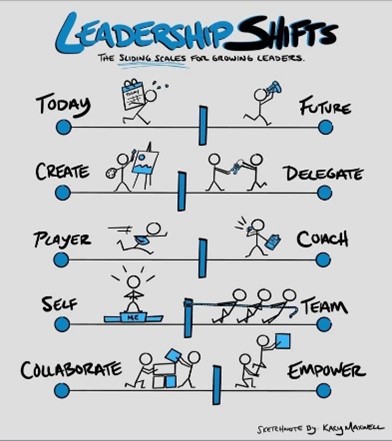
Leadership Case Study: President Volodymyr Zelensky

by Stephen T. Messenger

26 February 2022

All eyes are on the Ukraine this week as Russian forces began attacking on Thursday, 24 February 2022. Beginning the most intense European fighting since World War II, images of the atrocities of war are now flooding the airwaves from Russian aggression.

In this midst of chaos, there are always opportunities for leaders to excel. In this instance, the Ukrainian President Volodymyr Zelensky emerged as one who chose to fight for his people, and his country, at all costs.

Regardless of the outcome, President Zelensky has demonstrated ways that leaders should act during crises, most notably being present.

A surprising leader of his country, just a few years ago Zelensky was an actor on a Ukrainian television satire called “Servant of the People.” He portrayed a high school teacher elected president after posting a viral video about government corruption. 

From this emerged a political party with the same name, “Servant of the People,” and after running for President in 2019, he easily won the position. Now he finds himself on the world stage with limited political experience.

This is a classic David and Goliath tale. According to globalfirepower.com, Russia owns the second most powerful military in the world while Ukraine is number twenty-two. In power rankings, Russia rates over six times stronger than the Ukraine.

It would be easy for a leader to surrender and quit against such odds. President Zelensky could allow Russia to walk into his country unopposed by ordering his people and military to lay down their arms. This act would save hundreds if not thousands of his citizens’ lives, maintain a “semblance of normalcy,” and prevent widespread suffering.

He has also repeatedly stated that he is on the Russian kill list as enemy number one and his family as number two. As a father and husband, he must balance his job responsibility with his family’s safety.

On top of all this, the United States offered him a get-out-of-jail free card through evacuating him and his family out of the Ukraine. The cost to all this is simple: his nation’s freedom.

Thus far, President Zelensky has chosen to lead through presence. He rejected the American offer of evacuation saying, “The fight is here; I need ammunition, not a ride.”

The Russians know having the President abandon his country is critical to their success. They have enacted a massive informational campaign to convince the Ukrainians Zelensky has personally abandoned the country, yet the President has proved the opposite.

He has made numerous videos standing in the capital of Kyiv defiantly stating that he will stay and fight alongside his countrymen. He has abandoned his suit for a military drab uniform and in front of the Presidential Building on Friday night stated, “We are in Kyiv. We are protecting Ukraine.”

This is a tough message to give for a leader. He is committing the lives of his people for freedom along with the lives of his family. Yet the rewards of this bold leadership far outweigh the costs.

His only hope of saving the country is through continuous presence in the Ukraine and encouragement to his people. And he knows it.

In his last message on Friday night, he stated, “Tonight the enemy will use all their forces to break our resistance. It is despicable, cruel, and inhumane. Tonight, they will storm. We must all understand what awaits us.”

The enemy is at the door.  President Zelensky is handing out over 70,000 AK-47 rifles to his people and allowing broadcasting the recipe for Molotov cocktails. He is locking down all military aged men to defend the nation. He is encouraging his people to stand strong. He continuously meets with world leaders to solidify strategic partnerships.

He is leading in a time of crisis and leading well.

We all face giants in our lives. A leader cannot back down and must physically stand in front of their people to the point of taking up arms themselves, whether metaphorical or literal. Leaders do not give up in the face up aggression. They keep leading!

No one knows what the future holds for the Ukraine. But to date, one thing is certain. President Zelensky understands leadership is about presence, communication, and partnerships.

President Zelensky: “I am here. We are not putting down arms. We will be defending our country, because our weapon is truth, and our truth is that this is our land, our country, our children, and we will defend all of this.”

We encourage you to learn from his leadership.

May God bless the people of the Ukraine.

Even the Least of These

Joshua Messenger

February 22, 2022

“Big things are often just little things that people notice”

— Markus Zusak

It’s fascinating how people are motivated by simple appreciation from their bosses. I found that I’m no exception.

I work as a sports cameraman for my Division I NCAA University. When I rewatch the games later, it’s incredibly gratifying to see my handiwork on a polished broadcast. In my field, those moments are the tangible results of collective hard work.

We typically run four cameras, with three looking for replay angles and one live “play-by-play.” The zoomed out, live one—Camera 1—is the most important because it’s the primary shot the director uses throughout the game. Without it, the viewers can’t get a coherent sense of the action.

However, it’s also incredibly boring to work.

As soon as I settle into the proper light and zoom settings, it’s simply a matter of panning left and right, keeping the ball onscreen at all times. Easy. Ridiculously easy. And I hate it.

I vastly prefer the other cameras on the court. There, I get to seek different angles, I’m in the action, and no one notices if I make a mistake.

But last week, I was assigned Camera 1 at a basketball game, a guaranteed two hours of moving my hand side-to-side with little reprieve.

The game was extremely entertaining, and I could visualize the incredible angles my colleagues were getting elsewhere of the fans going crazy and the players juking and jiving, nailing three-pointers. Meanwhile, I felt like I wasn’t contributing.

So, I made up my mind. I was going to do it flawlessly.

I focused carefully on keeping any movements smooth and tidy, tweaked the zoom, and switched up the panning speed to reflect the atmosphere of the game.

With these small changes, I imagined the audience leaning in for a three-pointer as I zoomed slightly or holding their breath as I swept the shot across the court, following a long pass.

At the end of the game, I knew I did a great job!

But in the post-game meeting, the other cameramen got all the shoutouts from the director. That was disappointing. I had focused on creating a perfect product just as much as they had, but because I could only manipulate subtle things, no one noticed.

Next time I’m on Camera 1, it would be all too easy to give less effort. An ordinary job will probably generate the same amount of positive feedback. If the leader had taken just a few seconds to include me in the post-game praise, I may have gotten the validation needed to give more in the future. 

Of course, I’ll still try my best next time, but I’m reminded of those people in your organization who are working diligently on the most menial of tasks, and they want that same gratification from their work. You, their leader, are probably the only one who will provide it.

Janitors won’t get thanked by people who toss their food in the trash can. Security guards won’t get thanked by those passing through. It’s up to you to notice quality work and dish out the thanks, because no one else will.

With jobs that most people can do, it’s difficult to differentiate an acceptable job from a great job. No one notices if the shelves are restocked quicker, just like no one noticed the small things I was doing to enhance our broadcast.

And there’s no shame in not noticing! You would really need to pay attention to know when someone is doing incredible work in an ordinary position.

But these types of jobs are often the most important. Without them, it can be significantly more difficult to accomplish goals and meet standards.

It’s unrealistic to expect a leader to begin inspecting every worker carefully, looking for perfection amongst the humdrum. Instead, a leader should be aware of the workers who are solid citizens.

They don’t have to be all-stars, but a critical job completed is automatically important. Giving them praise and thanks will not only provide the gratification they seek, but most likely increase performance. Someone who finishes their reports early one week is likely to do it again the next time if they’re recognized.

Recognition and appreciation lead to improvement, which feeds into the overall mission of all our jobs: to do better.

When you evaluate your organization, try to call out all good work, because even the least of these has the potential to be the greatest.

Do you want to improve your leadership – there’s no better way than to read, think, talk, and write about it. Subscribe here to get a free, no advertisement, weekly article in your email to help you open up conversations in your organization. Lead well!

Social Loafing: The Seedy Underbelly of Group Dynamics

by Stephen T. Messenger

February 15, 2022

Social Loafing: People in a group tend to be less productive and apply less effort than when working individually

Last week at work we played football. There were no plays or plans, and there were way too many people on the field. It was less football and more a free-for-all.

I’m pretty sure they didn’t need me.

My personal goal that morning was to not sprain anything. I stood on the right wing most of the time and casually jogged out and back after every snap. I caught a pass, missed one, joked around by the sidelines, and generally stayed out the of increasingly aggressive fray.

After the game, I realized I was something I rarely am: A Social Loafer.

Maximillian Ringelmann discovered social loafing in 1913 when he conducted a study on the classic game of tug-of-war. With one person per side, each gave 100% effort. But for every member he added to the rope, their individual effort dropped. With eight people on each side, each person’s efforts were measured at less than 50%!

In my football game, we had 14 people on each side, so my effort was probably around 20%…

Yet before the game, I was throwing and catching the ball with three other people and operating in the high 80’s. Once people were added, my individual effort dropped.

Social loafing occurs in all sorts of group settings:

Work. Some employees jump right into projects and take over. The rest can simply sit back and watch it happen.

Virtual Meetings. Today, it’s way too easy to be in a virtual meeting while not actually participating – I have a theory most people are checking email, talking to coworkers, or just not listening.

School Group Projects. How often do one or two people pull all the weight in brainstorming, building, and presenting a project? Always.

Home. If it’s house cleaning day and you surge the entire family, you may notice your 14-year-old isn’t exactly giving their full effort as you’re scrubbing the toilet.

The problem is that motivation to work drops when we’re in bigger groups for three reasons:

  1. Nothing is expected of me. A large group will find a way to get the job done. There’s really no one in charge and no accountability
  2. My effort doesn’t seem to matter. Even when I participate, my individual ideas get combined with others, and my work fades into the background
  3. The outcome doesn’t affect me personally. I receive no credit or recognition.  The result is going to be the same

Suddenly, your team of individual high performers becomes a lackluster group with one or two people carrying the load and the rest like me jogging down the sidelines at 50%.

But there’s hope. Leaders must identify the social loafers and bring them onboard using four steps:

  1. Delegate. Assign everyone a task. The leader is like the offensive coordinator on a football team. Each person has a vital role to play, and leaders assign and coordinate the actions of everyone based on their sweet spot (mix of talent and passion) to maximize performance
  2. Launch. Divide them into smaller groups. The more people together, the less collective work is done. Send people out with individual jobs to accomplish their task. Jeff Bezos says if your group can’t be fed with two pizzas, it’s too big!
  3. Integrate. Bring everyone back together and have them talk about the progress they’ve individually made and how it’s affected the group, good or bad – hold them accountable.
  4. Recognize. Constantly thank and recognize your people who are doing all the work. Individual effort fades when your people don’t think anyone notices.

The Good News: Most of your people don’t even realize they’re socially loafing.

The Bad News (WARNING): Many leaders are the root cause by micromanaging and doing all the work themselves.

Your people want to be a part of your team and pull their fair share. They just struggle to find their place. A great leader can identify those that need a little extra motivation, assign them tasks, up their productivity, and make them feel valued.

After all, you’re leading not because you’re expected to do all the work and get all the credit. Your job is to empower others and help them fulfill their full potential for the good of the organization.

It’s not about me, it’s about them.

Click Subscribe to receive a weekly email with the newest leadership article. This is a free platform with no ads. It’s all about creating better leaders!

We’re always looking for new authors to publish! Contact us if you’re interested.

The Pygmalion Effect: Rasing the Bar

February 8, 2022

by Stephen T. Messenger

Watching the Winter Olympics, I enjoy listening to the coaches talk to their athletes. These coaches are at the top of their profession, and they understand the power of high expectations in earning medals.

Their advice is always positive, and the coaches expect the athletes to perform at their very best, all the time.

In Greek literature, there was a sculptor named Pygmalion who didn’t care for the local women. Instead, he created a beautiful statue of a woman and found it so attractive, he fell in love. He asked the Goddess Venus to bring the statue to life, which she did. Pygmalion found his bride, although not in a way I’d recommend.

Researchers in the 1970s transformed this story into a theory called the Pygmalion Effect. They found leaders that have high expectations of their followers increase performance.

The first study was performed in an elementary school. After giving students a test measuring intellectual potential, researchers informed the teachers which students would most likely excel this year.

However, it was all a lie. The identified bloomers were randomly selected—not the top performers on the test.

After a year, the randomly selected students the teachers believed to have most potential performed the best. The ones who scored higher on the test, but were not in the high expectations group, performed average or below.

This study has been replicated many times over with students, military members, and adults. In general, researchers found that heaping high expectations on someone improves their performance. But why?

Initially, I thought it was because the one on the receiving end feels those expectations and steps it up. That’s part of it. But ultimately it comes down to the leader.

There’s a common theory on selection bias in sports where players with birthdays earlier in the year have a higher chance of making it to the pros. In the NHL between 1980 and 2007, 36% of all professional players were born in the first three months of the year while only 14.5% were born in the last three. So what?

Players born earlier and playing pee-wee sports are just a little bigger, faster, and more mature (months matter when you’re five) than their peers. Coaches see this small advantage and subconsciously focus a little more on the better players. They provide extra coaching, playing time, and attention.

Suddenly, this child is playing in the better leagues, on the all-star teams, and given the best coaches and resources. Coupling maturity, success, advantages, and more coaching, these children benefit from the Pygmalion Effect without ever knowing it—all because they were born in February.

The Pygmalion Effect makes me reflect on my leadership. As a coach, organizational leader, or dad, I probably focus on my top performers a little more depending on the area. I selectively have higher expectations, coach more, challenge with difficult tasks, and take additional time to mentor.

But focusing on a few individuals isn’t going to help the entire team. Leaders have to Pygmalion everyone!

This means:

  1. Expect More. Challenge your team to perform above the level they’re currently at and expect them to do it! Make sure the goals are SMART – Specific, Measurable, Achievable, Realistic, and Timely.
  2. Resource the Team. Give them the tools, money, and time to accomplish their goals. Leaders break down obstacles for the real work to be accomplished.
  3. Coach, Teach, and Mentor. It’s not time to step aside. Monitor and track, providing adjustments as required.
  4. Encourage. The key to the Pygmalion Effect is to expect others to perform at a higher level. You are the driver of making hard tasks seem attainable.

As you’re following the Olympics this winter, I encourage you to watch how coaches raise the bar and emulate them in your workplace and homes.

_____

To go deeper click here: Thomas Edison’s mother knew this theory well as he struggled in school. She raised the bar for her young son and challenged him with high expectations. One person gave Edison the motivation to exceed his potential.

Clicking subscribe adds you to our email distro where every Tuesday morning you’ll get a thought-provoking leadership message. We hope you’ll let us join you as we all continue our leadership journeys together.

How Much of Success Is Luck?

by Stephen T. Messenger

February 1, 2022

A young seven-year-old at the playground wanted to find a four-leaf clover. This is certainly a challenging task as there’s one four-leaf clover for every 10,000 other clovers. Some friends saw her searching and joined in the task.

After a few minutes, her friends gave up or were distracted and began playing other games, but the girl kept searching. After over an hour, she plucked her prize out of the ground and shouted, “I’ve found one!”

The other girls ran over in amazement. “Wow!” they hollered, “You’re so lucky!”

Janice Kaplan, author of the book How Luck Happens and witness to this clover hunt, would agree that there was some luck involved. But not as much as the friends thought.

Kaplan argues that while you can’t make your own luck, you can certainly control portions of it. She says that luck is the intersection of chance, talent, and hard work. While chance is, by definition, random, hard work and talent are not.

For example, in any profession, the promotion system is based a little on luck and timing. It helps to have the right job, in the right place, with the right boss—generally all things you can’t control.

When placed in a position we feel isn’t best suited for us, no one wants to hear the dreaded words, “Grow where you’re planted.” We’d rather hear, “You’re right, I have a better assignment for you!”

But that might not happen. Instead, whether in a great job or a lousy one, we can control two things: hard work and talent.

  1. Hard work: This is the easiest to manage. You show up, as the Army would say, in the right uniform, at the right time, and in the right place. Then you focus all your energy into the job when you’re there. Honestly, if you do that, you’re going to be a rock star.
  • Talent: This is a little harder to control, but talented people work hard at being talented (see #1). They study to be students of their craft. They stay physically fit. They practice the skills needed to be successful and use them for practical purposes. They’re lifelong learners and hungry to get better. Talented people grow their skillsets.

Taking a closer look at the promotion system, luck seems to play a small role, but isn’t the biggest factor. Upon closer examination, you find those people who are constantly seeking improvement getting consistently lucky.

Nobel Prize winner Daniel Kahneman, author of Thinking Fast and Slow, did a study to see if wanting something can help make you luckier. He surveyed a group of 18-year-olds and asked them on a scale of 1 to 4 how important being wealthy was to them.

After 20 years he tracked them down and found that for every number up the scale, they made an additional $22,000 in annual income. Simply wanting something and then chasing after it makes you “luckier” in that endeavor.

This test wasn’t replicated in other areas, but you can be sure that those who are lucky in places they want to excel would have higher scores than the unlucky ones. This goal be in having a million dollars, shooting a great golf score, being a social media giant, or starting a family. Your goals dictate your luck.

This isn’t because the pieces fall into place better, it’s because your energy and efforts are focused on hard work and increasing talent in these areas.

Let’s come back to our young clover hunter. While it seems not much talent is needed to search the fields, she did need attention to detail, endurance, and the ability to ignore distraction. She failed thousands of times yet kept a positive attitude. These talents are all trainable.

Second, she had to put in the work.  She spent over an hour hunting before she pulled her prize. Sure, there was an aspect of chance, but if she looked at 100 clovers a minute, she saw over 6,000 clovers that hour. Her .01% chance to find four leaves moved to a 60% chance in that hour. If she searches for two hours, it increases to 120%.  I’ll take those lucky odds any day!

Overall, a leader must operate in that intersection between chance, talent, and hard work. When you focus on the areas you can control, you instantly become luckier. This luck trickles down to your team, and before you know it, you’re all finding four-leaf clovers.

Finally, luck begets luck. So go be lucky through hard work and talent.

_____

To dig deeper into luck, Janice Kaplin’s book, How Luck Happens, is a fantastic read. Pick it up today and check out our reading list of some great books to grab in your spare time.

Subscribing is totally free. There are no ads on this site – there is no money to be made. It’s all about developing leaders. Hope you’ll join us!

Loving Like a Boss

January 25, 2022

by Jon Price

“That guy drives me crazy!”

–Quote by Every Boss, Ever

When I was a young Army Platoon Leader in charge of 55 soldiers, a wise friend and mentor nearly twenty years my senior asked me, “Do you love your troops?”

Like most leaders, I honestly never thought about it.

I showed up to work, finished my daily responsibilities, focused on learning from my Platoon Sergeant, and tried to survive in a constantly changing environment. Admittedly, my leadership was about me.

My mentor also asked his father, a successful businessman who started two generations before me, the same question. His dad said he considered the employer-employee relationship as a transaction. His employees worked for him, and there certainly wasn’t any love in the office.

I wondered if I was of the same mind. As a young leader, and along with most of my soldiers, I showed up and went to work without any true consideration of others. During the mentorship session, I thought, “How I could change that?”

My mentor knew how. He explained to me that leaders must demonstrate a genuine love for the people who work for them. This one idea affected me and my leadership forever.

Many young leaders find it easy to love the hard workers, the approachable, and, to an extent, the goofy ones. The hard part is loving all your people equally, particularly the poor performers.

It’s easy to write off the ones who are at best apathetic, sluggish, complainers, or not fully competent. At best, they’re actively disrupting your team. However, it takes a humble leader who cares enough to bring those “less desirables” under their wing and train them to be the best version of themselves.

This means loving everyone no matter how they act.

The concept of love is founded in trust, and as leaders we must earn this from all our employees by showing unconditional love. This is an interesting concept when you compare the workplace to home.

Families love each other with no strings attached, but that doesn’t mean they don’t get upset, nor receive a free pass to do whatever they want. There remains accountability, two-way respect and communication, and mutual trust that they truly have each other’s best interests at heart.

For me, a fatherly, brotherly, and compassionate love means the leader will always act in the best interests of their subordinates. Sometimes what’s in their best interest doesn’t feel like love, but more like accountability and discipline. Love doesn’t have to be an emotion. It can also be an act.

When I was the second in command of an Army Company, the executive officer, I had a few problem performers and recommended they receive legal punishment. I was disappointed and frustrated with them.

It was hard to directly address their misgivings and force challenging conversations, especially when they didn’t show remorse. But I did. This love was less an emotional feeling and more of acting with fatherly love through caring discipline.

At that point, it would be easy to write one off as a terrible soldier. I’ve seen many leaders do this, and some consider it the norm. But as my mentor taught me, I loved them.

So, after the official punishment, I showed brotherly love through friendly banter, life conversations, and helping them turn wrenches in the motor pool. This wasn’t because it “was my duty” as a young leader, but because I genuinely enjoyed being around them. I wanted them to know that one act did not define them, and I wanted to help them have good experiences that outweighed their bad.

Some of them improved. Some didn’t. But either way, I tried to show compassionate love and provide opportunities to always return as a functioning member of the team.

Many of those soldiers remained in the Army. My mentor would say that treating them with a leadership love kept several one-time indiscretions from ruining great military careers. As for the ones that decided to get out, I can only hope that I somehow our experiences together encouraged them to show the same love and compassion wherever they go.

It’s easy to love the top performers in your organization. One of the great joys of leadership is working with a high-performing team and accomplishing much.

But loving all your employees requires a lot of forgiving, forgetting, and tough love. Leaders need to show a willingness to care for others, earn their trust, and love them unconditionally where they are in life. We’re all on a journey, and our job is to continuously improve our people and teams.


Jon Price is a five-year, active duty Army officer serving in the 1st Infantry Division. He received a Bachelor of Arts in History from Campbell University and is looking to continue his professional education with a Masters in History.

The easiest way right now to become a better leader: Subscribe by clicking the link below for a free, weekly leadership email delivered to your inbox with the latest article.

To grow as a leader, you need to read, think, discuss, and write about leadership. Subscribing is a great first step to get a weekly reminder to deliberately work on your leadership journey!

Share on your social media below!

The views of the author are his personal opinions and do not necessarily reflect the views of the United States Army

Oblitunity

January 18, 2022

by Stephen T. Messenger

Oblintunity: An obligation that one must do, but at the same time provides massive opportunity for personal growth and development

I’ve recently been part of a mission to place military medical professionals into civilian hospitals struggling with high numbers of COVID patients and staffing shortages. These military doctors, nurses, and technicians spend 30 days on-site with the potential for extension.

The way the teams get there is through an overwhelmed hospital requesting support, the State agreeing, and, if approved at the Federal level, the military sending teams to support local communities. When receiving orders, these medical professionals are obliged to leave their families for an extended period and provide medical care.

They are in support of the decisive effort in our Nation’s response to COVID.

Like good soldiers, sailors, and airmen, they take orders and defend our Nation. It’s the nature of the job. And they do it proudly.

However, this is tough. Many teams were away over Thanksgiving, Christmas, and New Year’s. The notification period is extremely short, and they could be assigned to any State in the Nation. Even during non-holiday times, families are disrupted, lives placed on hold, and routines completely changed.

As these teams integrate into the hospitals, I see an interesting phenomenon. The members turn this obligation into an incredible opportunity.

Every patient they meet is a chance to heal, connect, and encourage. They are directly impacting lives while demonstrating military leadership in towns that don’t traditionally see service members. They are taking 30 days to think about their personal goals and set conditions to improve physically, spiritually, emotionally, mentally, and familywise.

I’ve seen these leaders take a disruption and turn it into unbridled success.

It certainly got me thinking: what if every obligation a leader encountered at home and work, they turned it into an opportunity?

  • The new project from the boss you got stuck with is a chance to create lasting organizational change
  • That lunch with that difficult client is now a challenge to gain a large purchase order
  • The five-day work trip away from family develops deeper relationships with peers
  • Attending a mandatory work function allows you to meet people in the office you haven’t talked to before
  • Taking your sick child to the doctor is a moment to create a lasting memory during the car ride

Too often leaders get fixated on the tasks they want to do, when they want to do them. When a disruption in their life appears, it’s easy to dismiss this as a distraction instead of a benefit.

I’ve been on a string of extended work trips lately. While it’s tough being away from the family for long period of time, I’ve maximized that by building relationships, tackling online college assignments early so I won’t need to do them at home, working out every morning, improving my spiritual life, and saving money and hotel points for future family trips.

Obligations can turn into opportunity.

Building relationships is one of the largest opportunities. Leaders must form bonds with others inside and outside their organizations, and obligations are a time to connect with others. These linkages are critical to good working relationships and organizational success.

Most obligations come with a human dimension. You’re usually with other people who are forced onto the same project as you. Great leaders operate within the human domain and find ways to build teams and connect with others for future projects.

Finally, oblitunities must be met head on with a positive attitude. It’s critical that even when faced with a mandatory event, leaders put on a good face for their employees, peers, and yes, especially their kids.

I’ve been amazed to watch these medical professionals seamlessly integrate with civilian hospital teams. They quickly form bonds with their civilian counterparts and work side by side saving lives.

Their ability to be missioned on short notice, spend a month in a different State, proudly help others, and have a great attitude is a testament to the amazing service members we have out in the force. And many are taking time to improve their personal lives while out helping our Nation.

I love seeing obligations turn into opportunity!  We as leaders must capitalize on these Oblitunities* and encourage others to do the same.

Subscribing to The Maximum Standard is not an obligation, but it’s certainly an opportunity to develop yourself as a leader. I encourage you to sign up to receive a free, weekly 3-4 minute leadership read every Tuesday.  There’s no obligation and we would love to join you on your leadership journey!

*I first heard the term “Oblitunity” from Pastor Doug Echols of Bethel Baptist Church in Yorktown, VA in a sermon he preached in November 2021.

It Only Takes ONE

January 11, 2022

by Brittany Lake

Have you ever realized that it only takes one?

One opportunity to change your life. One decision to shift the direction in which you’re going. One moment to say yes or no. One person that will forever have an impact on your life.

As a young military officer, I’ve not always had the level of mentorship and leadership I expected when I initially entered the Army. The ones that were supposed to mold me and teach me at times left me behind, turned their backs on me, and failed me.

I am not saying that no one’s ever been there; I’ve worked with some amazing leaders that have pushed and encouraged me to be my best.

But I went through a period where I felt betrayed, depressed, scared, hurt, confused, and just downright broken. I wanted to give up on my career and the military because of some the people around me. Their behaviors were often damaging to others and encouraged emulating, not to use it loosely, toxic leadership.

I thought there was no way that I could continue in the military, but then I met “That One Person!”

I recently went on my first out-of-state mission and was the Officer In Charge (OIC) of a three person team. We were to link up with a more senior group outside our normal chain of command. This was unique for me, and I didn’t know what to expect.  

Amazingly, before I was even on the ground, the senior officer of the mission called just to say hi and give me a heads up on my responsibilities. It seemed like a simple gesture, but I immediately felt like part of the team.

Once on the ground, I was given tasks and trusted to accomplish them with no oversight but still was provided guidance, advice, and mentorship. I had a sense of pride and respect because I was trusted, and my suggestions were continuously being taken into consideration.

Even as a junior officer, I was considered an equal part of the team and was not put down or laughed at for things that I said. I felt this sense of accomplishment and value all because of “That One Person!”

I thought long and hard about why he was different. 

To begin, he was one of the most enthusiastic leaders that I have ever come across. He was motivating, intelligent, supportive, hospitable, and always willing to share knowledge. The mentorship that he provided, the feedback that he gave after briefs or conversations, and his everyday spirit that kept the team going far exceeded any previous leadership I’ve seen.

I had no idea that leaders like him existed. He was a leader with such a positive mindset and outlook on the Army. He allowed everyone to be a unique individual and encouraged the team to learn individually and collectively and become the best version of themselves.

He talked about “leadership as a drug” and it being the “best drug you can ever take.” He’s fueled by the impact he makes on other people’s lives and not his own personal accolades. Coming across a leader like this is rewarding because he builds up individuals and strengthens teams.

My path was completely altered by this one encounter.

Leaders, no matter what profession, do not always realize the impact that they have on someone’s life, whether that impact is positive or negative. I imagine many of my negative leaders had no idea the terrible impact they had on me. I also imagine many of my great leaders do not know the positive impact they have on me.

As I continue to grow and learn what kind of leader I wish to be, I take interactions with people like him to heart.

I want to be that daughter, sister, niece, friend, aunt, girlfriend, co-worker, and leader in my family, military, and community that understands the impact I’ll have on someone else’s life. I want to lead by example, set high standards, be successful, encourage others, and have a positive impact.

I want to be “That One Person.”

It only takes one person to change a life, one person to trust and encourage you, one person to meet you at the door, and one person to care.

I will be “That One Person” to someone else. 

I challenge you to be “That One Person” as well.

____________

Brittany Lake is a logistics officer with six years-experience in the United States Army. She was born and raised in Waterflow, New Mexico and is a graduate of both the New Mexico Military Institute with an associate’s degree in General Education and Norwich University with a bachelor’s degree in Psychology. She will be attending the Captains Career Course in 2023 to further her military career at Fort Lee, VA and is working towards her master’s degree in Teaching Early Childhood Education. She enjoys being involved in monthly 5K runs with her community and plans to complete her second half marathon this year. Her hobbies include spending time with her family and two cats, riding dirt bikes, traveling, and enjoying the outdoors.

The views of the author are her personal opinions and do not necessarily reflect the views of the United States Army

Subscribe by clicking the link below for a free, weekly leadership email delivered to your inbox with the latest article. The best way to grow as a leader is to read, think, discuss, and write about leadership. This is an easy first step to get a weekly reminder to deliberately work on your leadership journey!

Share on your social media below!

If Your Dreams Don’t Scare You, They’re Not Big Enough

January 4, 2022

by Stephen T. Messenger

“The size of your dreams must always exceed your current capacity to achieve them. If your dreams do not scare you, they are not big enough.”

— Ellen Johnson Sirleaf

Every year in January, much to my wife’s chagrin, I outline a list of twenty personal, audacious goals that I want to accomplish by December. These objectives require a significant level of motivation to achieve. At a minimum, they involve a deliberate and sustained effort over time.

As I put the finishing touches on this year’s list, I both felt the satisfaction of challenging myself along with the immediate stress of having to meet these goals over the next twelve months. The question always comes back to why I place this stress onto my year—and believe me, it is incredibly stressful!

Goal setting is a fundamental tenant of leadership. If you have no idea where you’re going, you’re never going to get there. However, these audacious, personal goals help mold me into a more holistic leader at work along with improving as an individual, husband, and father at home.

I divide my personal goals into four categories of learn, encourage, work out, and grow.

  1. Learning helps me think broader and more deeply, building mental capacity over time.
  2. Encouraging is about family and community, intending to forge deeper relationships.
  3. Working out is geared towards getting stronger and training my body to deal with the stressors of life.
  4. Finally, growing is about improving my spiritual, emotional, and financial health.

(To be clear, none of these twenty goals are work related; they are all personal achievements. Work goals stay in the office where they belong)

I also throw in a bonus category to challenge myself to get out in the world and see something new. These always include taking the family with me and enjoying time together.

Your goals must be bold and audacious. Ellen Johnson Sirleaf was the first female elected head of state in Africa. As a young woman, she repeatedly questioned Liberia’s ability and desire to stand up for equality, and she set a goal to solve this problem.

Along her journey, she faced prison, death threats, and exile. Yet she never gave up on her dream to improve the nation in the face of naysayers and setbacks.

Along the way, she graduated from Harvard, participated in numerous levels of government, won the presidency, and ultimately earned the Nobel Peace Prize. Her goals in life were always larger than what was possible and fraught with peril. Audacious goal setting is a scary journey to embark on but one that bears incredible success.   

My annual goals can’t compare to President Sirleaf’s, but collectively they provide a roadmap to improving my life mentally, physically, emotionally, and spiritually. It provides focus and forces me to invest time and energy to achieve these goals.

Once you determine what your goals are, you can efficiently use your resources to attack those priorities. You can plan your year and ensure you’re not wasting the precious commodity of time, but instead harness the power of the calendar to meet goals.

A personal goals list will not get you promoted or earn a better paycheck in itself; it will make you a better leader and direct your focus. You’ll see sustained growth in multiple areas and achieve more than you thought was possible. Over time, your capacity will grow across a wide range of skillsets as you seek to be more than you could ask or imagine.

One note: rarely do I achieve every task on my list. However, the energy put into working towards these goals bears tangible benefits in many other areas. For example, last year I had the goal to read twenty-six books. However, I was heavily involved in a degree program, and my personal reading took a back seat to academic reading and writing.

While I didn’t achieve my original goal, the books I did read helped shape my academic lens and assisted in many of the assignments. A task strived for and not completed still bears great fruit. Oftentimes it is the journey, not the destination.

Goal setting is hard. Great leaders pick goals to improve their personal habits, which leads to gains across the spectrum of leadership. This year, I challenge you to select some bold and audacious goals. You’ll see benefits over time as you steadily work towards accomplishing more than you thought possible.

Dream big and scare yourself!

This is your year! 

Leaders read, think, discuss, and write about leadership.  Your first step should be to sign up for The Maximum Standard’s weekly email where you’ll get a leadership vignette delivered for free every Tuesday morning — type in your email below! 

This could also be your year to get published in the Maximum Standard—we’re always looking for authors.  Lead well this year!  

The Battle of Kruger: The Power of Us

by Stephen T. Messenger

December 14, 2021

“Talent wins games, but teamwork and intelligence win championships.”

–Michael Jordan

Nothing brings out the true heart of a group better than going to battle together. I recently heard of the Battle of Kruger Pass through an exceptional “From the Green Notebook” podcast.

Scott O’Neil, CEO of a number of professional sports teams and author of Be Where Your Feet Are, described organizational roles through the lens of an all-out South African animal brawl captured through a YouTube video in Kruger National Park.

I highly recommend you pick up his book where this master storyteller describes the battle and other leadership concepts in detail.

In an eight-minute tourist video which you should watch before reading further, a herd of water buffalo approach a small body of water oblivious to a pride of lions crouching in wait. As they get within striking range, one lion attacks the smallest water buffalo, and the lion’s momentum flips them both into the water. The buffalo herd scatters as the other lions pounce on the helpless calf.

While they feast on their prize, a crocodile slinks out of the water and grabs the calf creating a tug of war with the lions. He tries in vain to steal the snack, but the lions drag their kill up upon the shoreline away from the crocodile.

The excited tourists from the safe side of the water narrate the entire event saying things like, “I’ve never seen anything like this” and excitedly shouting “The lions have won!”

As the lions settle in to eat, an amazing phenomenon happens. The scared and scattered water buffalo approach the lions together. They stand shoulder to shoulder and slowly approach their struggling calf. You can tell they’re unsure of themselves, but in lockstep, find the courage to move closer.

The group use their horns and force the lions to let go of their calf. They bring their teammate back into the fold and proceed to chase the lions away.

It’s a fascinating video to watch and a glimpse into organizational behavior. There are four types of characters, and each behaves a certain way whether in the African plain or in the workplace.

So, Scott O’Neil asks, who do you want to be?

The Lion. The lion is typically someone of importance in the organization but preys on the weak when he smells blood. This person walks around the office looking to tear someone’s head off. He sees something wrong and pounces on random people when things aren’t going his way. He shows little compassion and could care less about what’s going on in anyone else’s world.

The Crocodile. This leader loves to kick someone when they’re down. “Did you see how abysmal the other division’s numbers were this month?  I wonder if there’s an opening in that department.” The crocodile takes advantage of other’s misfortunes and instead of helping them up, he tears their leg off. A crocodile loves other’s misfortune.

The Tourist. These people sit on the sidelines and talk a lot with little action. They’re the bandwagon. When things are going well, they cheer and holler.  When things are going bad, they sit back and point fingers. They watch when others are tackling the hard problems. They watch even more when others work on easy problems like when the boss is the one putting out a fire that he should delegate.

To be fair, at times I’ve been every one of the above types of people in my home and work. We all have moments of weakness where we act in ways we don’t want to. Hopefully they’re just that—moments and not a way of life. But even better, we should strive to be the fourth type.

The Water Buffalo. This group of people understand the “Power of Us.” They know that only by mobilizing the team’s full efforts will they be successful. They band together and share ideas, leverage strengths, offset weaknesses, and feed off each other.

The Water Buffalo always works in the herd. They stand shoulder to shoulder and tackle any problem in front of them, together. They know when you harness the full power of the herd, only then can an organization reach its full potential.

The good news is that most people want to be a water buffalo. You have to find those exhibiting lion, crocodile, and tourist behavior and coach them to join the herd.

This is not just a workplace analogy. I showed this video to my family to talk about how we all act in our house.  

Scott O’Neil finishes his story by saying if you want to be successful in the sports business, “Work unreasonably hard, be intellectually curious, and be an extraordinary teammate.  Be the purple water buffalo.”

Pick up his book for so many other great leadership stories and as to why the water buffalo is purple.

Subscribe here to get a free, weekly leadership thought in your inbox. We’d love to be on this leadership journey with you!

People Don’t Quit Their Jobs… They Quit Their Bosses

by Stephen T. Messenger

December 7, 2021

I left the Army after only four years in 2004. There were a few different reasons, but I remember watching my leaders and wondering, “Do I want to be them in five, ten, or twenty years?”

Many of them were exceptional leaders. They loved their jobs, families, and life. But many were also stressed, frustrated, divorced, or workaholics, and often seemed like their job was more of a chore than a choice.

I had to decide whether I wanted that future. Looking back, apparently, I didn’t want to enough because I got out. Almost twenty years later, having returned to the Army, I realize now that I have people looking at me thinking, “Do I want to be like him in five, ten, or twenty years?”

This isn’t military centric. It applies to business leaders, community organizers, moms and dads, and hundreds of positions. Do other people want to be you someday?

Often, I’m asked which one of my jobs did I like the best. The correct answer is always, “This one.” While it may not be entirely true, and you can’t force liking your job at times, it’s important others see you passionate about your work. They need confidence that their leader enjoys the same work they’re currently doing.

I’ve had a few conversations lately with young military officers who are deciding whether to make the service a career. I usually ask how long they’re going to stay in and why.

They look at senior leaders in their organization and wonder if that life should be their future.

The ones who see leaders stressed, frustrated, and not enjoying their career don’t want to stay in. Why would anyone in any organization? I wouldn’t want my future to be as a disgruntled employee, workaholic, stressed husband, or disappointed worker sticking around only for a paycheck.

People don’t quit their jobs, they quit their bosses.

The ones who have leaders living their best lives want to stay in. They see these role models enjoy their careers, have a fulfilling family and home life, and cherish leading others.

Great leaders know that today is the best day of their life with unlimited opportunities in front of them. They exude optimism and mentor the next generation of leaders.

Having a boss that truly loves their job and sees a future for others in the organization makes the difference. Looking across a number of studies, it seems most people are dissatisfied with their jobs and very few people love them.

But imagine having a leader who loves their work.

Imagine being the leader who loves their work. You, as a leader, come in every day fired up to change lives and influence people. You:

  • Mentor others at every opportunity
  • Coach and teach
  • Understand you career is not about you but the next generation
  • Are a team player
  • Make time for family
  • Are pleasant to be around

None of this is hard to do. In fact, they’re simple tenants of leadership. Unfortunately, we can’t control the leaders we have. But we can be better.

Realistically, not everyone is going to like their job. It takes work and a mindset to go in everyday to be a positive influence on your team. But know that your people will take on your personality.

If you’re depressed, upset, and disgruntled, don’t be surprised if they are too. If you exude optimism and live for the present, they will as well.

Our charge is to ignore the moods around us and be that leader others want to emulate. We need to live in the present and help others envision the massive opportunities in front of them.

They need to look at us and want to be where we are in a few years. Because if we don’t love our job, why are we even doing it? Find something else.

Instead of dwelling on the hardships of the job, think about today’s privilege to lead men and women and act in a manner that others admire.

Optimistic leadership makes all the difference—show you love your work and your people, and they will follow.

Subscribe here to get a free, weekly leadership thought in your inbox. We’d love to be on this leadership journey with you!

Summit Fever

by Stephen T. Messenger

November 30, 2021

I recently tackled Greyrock Peak Mountain Trail in Fort Collins, Colorado, a challenging 7.2-mile hike with a 2,400-foot elevation gain, topping off at 7,600 feet above sea level. It was a beautiful day in the mid-50s, and everything was perfect except my start time.

I planned to begin before noon but didn’t hit the trailhead until a little after two. I was alone, the sun was already setting, the temperatures were dropping, and the climb was mostly in a canyon which was already shady. I knew I had to be fast.

As I got closer to the peak, I became more concerned about making it back in the daylight, but honestly, I had “summit fever.” This sickness is a mountaineering term that describes the intense desire of a climber to reach the summit of a mountain regardless of the cost.

Summit fever happens everywhere, not just on the sides of mountains. Leaders feel this sickness at work and home every day. I have moments of intense desire to plow ahead and:

  • Push towards finishing a work assignment without proper resources in place
  • Completing a work task from home even when my child is looking for attention
  • Gunning the car when the traffic light turns yellow – you know what I mean…

Oliver Burkeman, author of The Antidote: Happiness for People Who Can’t Stand Positive Thinking, discusses how setting lofty goals can be dangerous. This thought intrigues me because, if you’ve visited this site for any amount of time, you would know that I’m a huge proponent of setting audacious goals!

I believe setting high—and sometimes unachievable—goals is a way to stretch yourself and your team to reach your collective Maximum Standard.

Burkeman looks at this differently and notes how the stress level in an organization goes up when leaders make overly ambitious goals. Your people will work hard and emotionally overinvest in a goal that might become increasingly reckless as the summit looms closer and the sun sets.

I’m a strong believer that leaders cannot be risk averse. They must push ahead and challenge the team accomplish high goals.

However, leaders also have to be “risk-aware.” They must know that there’s a point where you have to look around and assess the conditions. Whether a mountain or work project, conditions constantly change. The Army calls this “reframing.”

Reframing is when you take a critical look at where you’re at, where you’re going, and decide whether your original plan will still work (military planners would say, “the enemy has a vote” and “no plan survives first contact”). The conditions on the mountain are ever changing; you must be aware of the risks.

Summit fever ignores the increasing risk and pushes ahead at all costs. Even when budgets are destroyed and your team is exhausted, reckless leaders keep climbing thinking they can make it.

Sometimes… they can.  But at what cost?

Sometimes… they can’t. And at what cost?

For me, on the mountain of leadership, I have a tendency to push hard to complete the mission, and I don’t think that’s a fatal flaw, as long as I continuously assess the risk and cost.

On Greyrock Mountain, I could see the summit. It was less than a mile away and only 600 feet more of elevation gain. As I stood there calculating the sun and temperature, I decided the risk wasn’t worth it, the cost was too great, and surprisingly, even to myself, turned around.

The walk down was interesting. Instead of celebrating some fleeting seconds on the summit, I thought about the amazing views, reflected on what I could do better, and planned for the next time.

I enjoyed the stress-free journey down the mountain and made it to the car in plenty of time. And I learned so much more from the “failure” to summit than I would have from celebrating the success.

Leaders need to be careful of pushing ahead at all costs and fixating on the summit. Instead, assess and reframe the situation, understand the risk, make better decisions, and learn from mistakes. Sure, sometimes you have to push, but sometimes it’s alright to fail and learn.

Summit fever can be costly. Think through it next time you’re climbing the leadership mountain.

Subscribe here to get a free, weekly leadership thought in your inbox. We’d love to be on this leadership journey with you!

Start and End with Thanks

by Stephen T. Messenger

November 23, 2021

“God gave you a gift of 84,600 seconds today. Have you used one of them to say thank you?”

–William Arthur Ward

I worked for a senior military leader who used to start and end every single meeting with “Thank you.” In large public forums, he would often say he hoped someone would submit a suggestion box comment with:

“The boss thanks us too much! Stop it. We get it, he’s thankful!”

I’m not sure that ever happened, but I do know this leader lived a life of gratitude through cards, notes, handshakes, and continuous verbal affirmation. I was inspired by how a senior leader understood that true leadership was about challenging others to achieve their maximum standard and then thanking them profusely for it.

In a commonly told story, there was a woman who worked as a janitor in a company for decades. One particular year, there was a change of management, and the new owner decided to write a thank you note to every employee in the company.

The woman read her card and began crying. She asked to go home, and her supervisor, thinking she was ill, let her take the rest of the day off.

The backstory was that this woman never once received a thank you of any kind from anyone in the company. Over multiple decades, not one person expressed any type of gratitude whatsoever for her very important services. When she heard there would be a new boss, she decided to quit.

The very same day she received the thank you note. She was overwhelmed. The gratitude this new owner showed through his note made her change her mind and remain with the company.

As a leader, I think about how many people do so much for me, and I fail to thank them. There are many followers that work hard, and I know I often miss the mark in recognizing their achievements—this is even after significant effort to recognize people. Still, I don’t get everyone and can do better.

Great leaders thank others. Not just those who work for them, but those who work around them. Here are some questions to ponder when you think about your leadership thankfulness:

  • Do you start and end every meeting with a thank you?
  • How often do you go out of your way to recognize someone’s performance?
  • When was the last time you wrote a thank you note and personally handed it to someone?
  • Have you called someone recently, not texted, just to show appreciation of their hard work?
  • Who was the last person you told, “I’m proud of you”?

Thankfulness is not one-time event; it’s continuous. If you aspire to be a leader known for gratitude, you have to actively practice it.

With Thanksgiving around the corner, it’s a great time to start expressing your appreciation for your people’s hard work. After all, if you’re doing it right and not micromanaging, they are the ones doing everything. Today is the day to recognize them.

Start small. With 84,600 seconds in the day, take a few of them to thank those who work hard on your behalf.

This Thanksgiving, I am thankful for leaders who strive to be better everyday!

Subscribe here for a free, weekly email sent to your box with a new leadership lesson each Tuesday. Read, study, speak, and write leadership—that’s how you get better every day!

Meet Them at the Door

By Stephen T. Messenger

November 16, 2021

As every individual walked in the door for the first time, I shook their hand and thanked them for being part of our team, and it mattered

It’s awkward meeting people, especially when you’re assigned to a new group. In those initial stages of team building, it’s important to get off on the right foot.

I recently led a newly formed team where we had to spend a few weeks at an out-of-state hotel. Some of us of us arrived the day before to prepare for the event.

We assigned a greeter to welcome everyone and make sure they arrived safely. They filtered in over a seven-hour period late into the night, and there were no issues, but it just felt like we didn’t greet them properly—leaders can always do better.

Fast forward to the next month when we welcomed a different team. Trying something new, I really wanted to impress upon this new group how important their job was and how thankful we were to have them. We wanted to start on the right foot. Here was the revised plan:

  1. Meet Them at the Door. As the one in charge, I wanted to personally greet them, shake their hand, and thank them for coming.
  2. Welcome Them as a Group. The whole team was hanging out to say hi when they arrived. They immediately were welcomed by multiple participants and were embraced as friends. We encourage new arrivals to stick around and greet the next participants as well.
  3. Provide Information. We drew up a one-page handout with timelines, restaurants, frequently asked questions, and information they could take to their rooms.
  4. Stay Up Until They Arrive. Yeah, some arrived very late. But we greeted every person on the team no matter the hour.

What we saw was a more cohesive, responsive, positive, and integrated group the next day. They already knew who we and some of the others were, had gotten over the initial awkwardness and small talk, and built some relationships before the event even started.

Greeting people at the door, no matter if they are higher or lower in your organizational hierarchy, sets conditions for future success. To translate this into everyday terms:

  • If someone is coming to your building for the first time, stand outside and wait for them.
  • When someone is visiting your workspace, get up and move to the entryway to shake their hand.
  • During a meeting you’re hosting, thank everyone for coming and, if able, greet them before the meeting starts
  • Hold the door for the other person.

Meeting them at the door sets conditions. It makes leaders more approachable, human, and engaging. This small act of servitude bears great fruit and immediately shows that you’re willing to build relationships and lay a foundation of teamwork.

Sometimes, you can’t always be there and that’s okay. Once I was pulled away by something important. A few times it was just too late for everyone to stay up and only one or two remained behind. But the representative should always welcome them on behalf of the leader who then needs to follow-up the next day with those they missed.

Once, as I was waiting in the hotel lobby for the last arrival after midnight, I questioned if this was worth it. This final person I’d known for a few months, was on my team at home, and he’d already said he’d be late and see me tomorrow. But I wanted to thank him when he arrived.

As he entered the hotel, weary from a long trek across the country, I did notice the surprise in his face and gratefulness that his leader cared enough to greet him at the door. It was worth it.

Trust is not given, it is earned. Door greeters earn trust with every encounter.

Subscribe here for a free, weekly email sent to your box with a new leadership lesson each Tuesday. Read, study, speak, and write leadership—that’s how you get better every day!

The Sweet Spot: A Veteran’s Day Leadership Message

by Stephen T. Messenger

November 9, 2021

We all have different talents, but sometimes those talents don’t overlap with our passions. Even when they do, there’s not always the opportunity to use our gifts. However, when all three come together, something magical happens.

As we enter Veteran’s Day, we remember Pat Tillman, NFL athlete who turned down a lucrative career to become a Soldier after the 9/11 attacks.

This hero understood where his talents, passions, and opportunities intersected, the definition of the sweet spot.

Pat Tillman was first known for his athletic ability as a safety. He proved his worth on the field at Arizona State University, and this earned him a contract with the Arizona Cardinals. Even though a smaller player by NFL standards, he broke the franchise record for single season tackles.

While he was a skillful football player, he had many other passions. He earned an accelerated degree in marketing, graduated Summa Cum Laude, was a voracious reader, competed in endurance races, pursued a Master’s in history, volunteered with the Boys and Girls Clubs and March of Dimes, and constantly mentored kids.

He found the areas where his talents and passions intersected and seized many opportunities to change lives.

We, as leaders, wander the halls of our organizations every day and cross paths with people that have many hidden talents and passions. Each one we talk to has their own secret gifts and desires that we’ll never know about unless we ask. 

Every organization, meanwhile, could capitalize on these talents in different ways. And yet, so often we fail to identify hidden talents, understand our peoples’ passions, and link them up to opportunity.

Once, upon entering a new job, I talked to a very gifted employee who understood his talents and passions, yet felt he was not given the opportunity to use them. His perception was that leadership was keeping him from achieving his full potential in the organization, and it was impacting his morale.

He suggested areas and tasks where he could be more useful and that were in line with his natural gifts. We then found an opportunity to use him on a mission that matched his suggestion.

In this position, he thrived!  He was unbelievably motivated in this new role, great at the job, and when given the opportunity to prove himself, crushed it!  His attitude and passion were then brought back to his daily duties, making him more impactful within the organization.

As a leader, you must ask your people the following questions to see how best to use them.

1. What are you deeply passionate about in this organization?

2. What activities do you feel you are “made to do?” 

Then, you must ask yourself the following question: How can I create opportunities to use this person’s talents and passions to best serve the team?

Leaders create opportunities to harness the potential of their people and transform this untapped power into action. 

Your people have ideas on how to improve the team. If you don’t ask, your organization will remain static. Give people opportunity, and you will be surprised.

Pat Tillman, on September 12, 2001, told a reporter: “At times like this you stop and think about just how good we have it, what kind of system we live in, and the freedoms we are allowed. A lot of my family has gone and fought in wars and I really haven’t done a damn thing.”

Just a few months later, he announced that he was placing his football career on pause to join the U.S. Army. Tillman knew his passion and talents lined up perfectly with the elite Army Rangers, and 9/11 offered him the opportunity to take that path. He found his calling and lived in the sweet spot.

Leaders must find the sweet spot within their team. People come with talents and passions. It’s our duty to provide opportunity and capitalize on their motivation. Only through knowing your team and leveraging their abilities will you be able to take your organization to the next level.

Finally, great leaders know their own talents and passions, then create opportunites in the organization outside their assigned responsibilities to make legacy impact.  Don’t wait for someone to hand you opportunity. Create your own! 

Pat Tillman of course was tragically killed in action in Afghanistan; however, he lived a life driven by passion and a call to service beyond himself. The Pat Tillman Foundation has provided over $20 million in scholarships to future leaders, hosted leadership conferences, events, and programs, and has changed the lives of thousands of people. His sweet spot is true leadership having legacy impact.

Thank you, Pat Tillman, for seizing your sweet spot.  And thank you to all Veterans who serve and continue to serve. 

Every Tuesday, The Maximum Standard publishes a new leadership article. Subscribe above for a three minute read delivered to your email every week!

The Power of Change

by Mario A. Oliva

November 2, 2021

I just can’t get away from change!

This is my twenty-sixth year of military service, and I absolutely love my job. But as with any great endeavor, it eventually must end. Retirement is looming in the next few months, and my life is about to change immensely.

You’d think it wouldn’t bother me. During my whole career I’ve been a “Jack of All Trades.” Every three to four years, my family and I moved to a different military base, and I had to start from scratch in an unfamiliar position and working environment. 

This included new jobs, new bosses, new co-workers, and, really, new lives. Often this caused me great frustration. After a few years in a previous assignment, I would master it and become very comfortable in a familiar routine.

I should be used to it by now, but it always bothered me at some level.

In his book, Who Moved my Cheese, author Spencer Johnson presents a simple parable of two mice and two little people. They have to look for cheese in a complicated maze in which to survive.

The characters spend most of their time running up and down the corridors seeking food. Turn a corner, run to the end, see if there’s any cheese, and if not, turn around and go back.

The parable depicts, in a very pragmatic way, the complexity of the human mind and our constant resistance to change. We want the cheese to be in the same place every single time. It’s in our nature to become comfortable with the status quo.

However, the truth is if we stagnate in our current ways, we miss the opportunity to learn through new skills, new people, or new experiences, to learn a new maze. But more importantly, we miss the opportunity to improve those around us—family, friends, and coworkers. 

So, change is not a bad thing after all!

The Greek philosopher Heraclitus wrote, “Change is the only constant.” This principle is true across everything we do in our personal and professional lives; they are in a constant evolution. 

As we negotiate different phases of life, we gain experiences and wisdom that continuously shape our leadership style. They help us deal and cope with the challenges that life throws at us every step of the way and, most importantly, help us grow as mature and responsible human beings.

I enlisted in 1995 and commissioned as an engineer officer. I am so proud to have had the opportunity to be part of the United States’ one percent that answers the call to protect and defend our great Nation.

But the constant change was always tough on me and my family. When we moved, I would turn the corner and look for the new cheese. It was always in a different spot. Using a short-term view, I was longing for the familiar and didn’t realize the immense benefits that change brought to me and my family during our twenty-six year journey while serving in the United States Army.   

As I reflect back, I now realize the powerful impact change made in my personal and professional lives.  I have been blessed to serve as a lieutenant colonel, explore rugged Alaska, represent the Army Corps of Engineers in Australia, serve alongside heroes in Iraq and Afghanistan, and meet leaders that have helped me be a better man, father, husband, soldier, and leader. Every new corner brought immense benefit.

I learned late in life to eagerly embrace change and the newness that comes with it. My big takeaway after a quarter century of military leadership is that we must reflect on the journey we’ve been through, understand how that shaped us, and most importantly, know what we represent to those around us.

Only then will we realize the goodness of change, the benefit of starting anew every now and then, and the opportunity of being challenged through new experiences every step of the way. 

As I turn the corner into retirement, I know there will be no cheese at the end of that corridor. And I’m okay with that. 

Keep charging and embrace change!  It is going to be great!

Mario Oliva is a proud military officer of over 26 years. He has served in a variety of assignments from enlisted and officer leadership positions in both command and staff. He is a loving husband and father of three. Mario will be retiring next year as a Lieutenant Colonel in the Corps of Engineers Branch and continue to seek change.  His thoughts do not necessarily represent the views of the United States Army or the Department of Defense

Subscribe below to receive a free, weekly leadership email with a three minute read to help develop skills. Leaders read, talk, think, and write about leadership. You should do the same! We’re always looking for guest authors! You could be next!

Listening Is Hard

by Stephen T. Messenger

October 26, 2021

I often get unsolicited directions. The kind where I casually mention a place I’m going, and a friendly soul steps in to explain the best way to get there using “third lefts” and unidentifiable landmarks. 

Thankfully, Google Maps has all but eliminated the need to interpret unclear directions. I can all but tune out which number traffic light to look for, and my brain stops processing data it doesn’t think it needs. I’m hearing the words but failing to listen. Not one of my better qualities.

Leaders listen to their people. They ask for advice, opinions, and recommendations. They counsel through two-way communication. And they truly want to have a dialogue, not a monologue.

Every interaction is a chance to learn, but often leaders tune out other people while awaiting their turn to respond. Some think their information is more important than those around them. Often, they can sit through a meeting that doesn’t interest them without listening at all.

If a leader is in the room, no matter the topic, they need to be fully engaged. At an elite military planning school, we were told the best planners can listen to any conversation about any subject and be able to intelligently add to the discussion.  Even ones they find uninteresting.

This requires work.  

Broken down, listening has five steps:

1. Hear. The brain is an expert at hearing what it wants to. Much like you can pick out your name in a background conversation, you hear what’s important to you. With the next conversation or meeting you don’t care about, convince yourself that the topic is of critical importance. Your brain will follow.

2. Understand. Process the information and make sure your meaning matches the one who said it. This requires special attention to body language and tone. One of my greatest weaknesses in communication is reading non-verbal cues. By recently focusing on this, I’ve found I understand the real meaning of the words better.

3. Evaluate. Process the information and decide what’s truly important to you. You’re not going to use it all but take away some highlights for the future.

4. Remember. I write down everything at work in a small notebook. It has meeting dates and notes I may want to recall later, to-do lists from last month, good ideas I heard or dreamed up, and leadership nuggets from other people. The most valuable part of the book is contact numbers of people I’ve met along with their interests or kids’ names that I can ask about next time we speak. If you’re terrible at remembering like me, write it down.

5. Respond. Leaders have to be flexible enough to adjust their message as they’re speaking. Pay attention to the room and make sure your message is getting across. If you’re getting a bunch of tilted heads and raised eyebrows, it’s time to adjust it.     

If someone is talking to us, we should be listening. This doesn’t mean checking phones or daydreaming but demonstrating real leadership through respect and care of those taking the time to interact with us.

And while Google Maps is nice, you never know what nugget you’ll learn by listening to those directions.

_______________

Subscribe below for a free weekly leadership article delivered straight to your inbox! Leaders intentionally seek ways to improve. Contact us if you want to try your hand at writing an article.

3 B’s of Communication

President Woodrow Wilson was once asked how long it took him to write a speech.

 “That depends on the length of the speech,” answered the President. “If it is a ten-minute speech it takes me all of two weeks to prepare it; if it is a half-hour speech it takes me a week; if I can talk as long as I want to it requires no preparation at all. I am ready now.”

Great communication takes work. One of my favorite guidelines when writing or speaking is the 3Bs of Communication.

Be Brief.

Be Brilliant.

Be Gone.

THE MAXIMUM STANDARD delivers a weekly, free article to your inbox by simply clicking the subscribe button.  We hope you’ll join us on this leadership journey!   

Sink the Rig? Making Better Decisions

by Stephen T. Messenger

October 12, 2021

I’ve been a runner for decades and typically hit the pavement five times a week. Honestly, there are some mornings when I make a conscious decision to half-heartedly run just to say I exercised. Rarely do I see any improvement from these easy sessions.

I can “brag” to my kids and co-workers I ran, but my speed and endurance remain the same. 

In other seasons of life, I’ve deliberately followed a race improvement plan. My running improves, and I can visibly see endurance and speed increase over time.  My purposeful decisions generate positive effects.

All too often at home and work, we make decisions on how to spend our time but get the wrong results. We’re busy, sure, but not productive. The decisions we make lead to outcomes that aren’t as beneficial as they could be.

In 1995, Shell Oil—United Kingdom decided to dispose of the Brent Spar, one of their dilapidated oil rigs in the North Sea, by sinking it in the Atlantic waters. This decision was fraught with environmental risk from the residual oil and chemicals on the platform. The other course of action Shell considered was to tow it to shore and dismantle it.

They conducted a thorough engineering and environmental assessment of both options. After numerous studies and with government support, Shell decided sinking it into the deep sea would be less complex, reduce the risk to employees, and have minor environmental effects to ocean life. 

Shell leadership and the British government were already looking to the next strategic decision when the unexpected occurred. Greenpeace boats were racing toward the rig to begin what would become a fifty-one-day standoff with Shell, complete with water cannons, to protest environmental abuse by the oil giant. 

While Shell may have made a right decision, they certainly didn’t get the right outcome. They made a decision based on convinience instead of results.

The military talks about this as “measures of performance” or doing things right and “measures of effectiveness” or doing the right things.  Ideally, both measures are one and the same.

However, when they fail to align, leaders suffer unintended consequences such as stagnation, disgruntled workforce, or in a worst case scenario, Greenpeace protesters storming your oil rig as stock prices plummet.

Leaders must understand that every decision and action they make generate effects, either positive or negative. Limited effects equate to limited success.

Those in charge must be careful not to confuse doing the right things with doing things right.  It’s easy to stay busy at work. However, every action must have purposeful intent to improve the organization. 

Often times, organizations perform tasks that have no value. We can all remember a meeting we sat through that was entirely pointless.  The lack of planning, information flow, and purpose led the attendees to walk out of the room wondering how they would get their hour back. 

That sixty-minute block could have been used to brainstorm new ideas, encourage team members, or connect with new business partners. Instead, leaders often fail to use time purposefully to generate results.

– If a meeting isn’t helping the organization, stop having it. If you’re attending a meeting that you don’t really need to go to – quit going.

– When a client arrives that has no intention of purchasing goods, don’t meet with him. 

– That thirty minutes at the gym where you went but really just walked around and looked at other people workout; yeah, you can make better use of your time.   

– That project hanging around because of sunk cost, sink it (as long as it’s not an old oil rig…)

Thinking about productive decisions always brings me back to Afghanistan as a young infantry platoon leader. We could easily get an insurgent off the streets by aggressively using military might through ransacking houses and creating property damage.

But this method would create ten more bad guys if we rubbed the local population wrong. Our real job was to help the Afghans and protect the property and rights of the people. A portion of this consisted of capturing the insurgents, but we had to do it the right way.

Every decision a leader makes should generate positive results. This takes planning before you make a decision. Think through the benefits, the consequences, and the best way to accomplish your goals.

Making quality decisions with how you spend your time and focusing on results instead of busyness will create a faster, stronger, and more efficient organization. Remember the guy who runs slow in the morning but doesn’t see any gains? Don’t be like him.

Instead, make productive decisions and use time effectively to generate results.

THE MAXIMUM STANDARD delivers a weekly, free article to your inbox by simply clicking the subscribe button.  We hope you’ll join us on this leadership journey!   

Who Is Your Second?

by Joshua J. Messenger

October 5, 2021

After an informational meeting for a club at my college, I asked the leader, “How long has the group been active?” He started with the history of the club and the large turnout they had last semester but then the story took a dark turn.

“We used to be going pretty strong, but the guy leading it left and no one else really took charge, so it evaporated.” Such is the problem with many organizations today.

As a college student, I’ve been through my fair share of clubs and organizations, and one thread that seems to connect them all is how recently they were established. Many of these organizations are identical to others in that they used to exist in some form or fashion. Why all the sudden starting and stopping?

The answer is one we can all relate to: no one is preparing their successor.

The simple fact is that one person can’t lead an organization forever. In a college setting, this concept is magnified with a traditional student only having four years to leave their mark.

We see rapid leadership transitions across the military, the Congress, and private sector businesses. As soon as a leader disappears, the organization buckles and could quickly break unless there’s someone to fill the leadership void.

It can be easy to feel like we’ll be in a position forever and, therefore, having a successor is irrelevant. But only shortsighted leaders neglect to prepare for an eventual departure. And even if we don’t think we’re leaving, we still need someone to keep the lights on when we’re on summer vacation.

So how do we go about selecting and preparing a person to help lead our program when we depart?

1. Keep Your Eyes Open. Tenures are finite; someone must be prepared to assume the next higher leadership position at any time. The best way to find the right person is to simply look for talent. Find qualities such as enthusiastic investment in the organization and its success, positive communication skills, an optimistic and uplifting attitude, and familiarity with both the organization’s procedures and members. Most importantly, who is the person who brings out the best in you as a leader? Typically, they’re the ones helping with menial tasks and advising you in the first place. That’s an easy place to start.

2. Bring Them in the Fold. How else will they be prepared to lead if you don’t show them how to do it? The Vice President certainly has to be informed just as much about the goings-on of the President. So too must your successor be involved in your current decisions. An added benefit is that they may begin shaping long-term vision and slowly changing the organization to adapt for the future.

3. Give Them Tasks. Sticking anyone, even the most qualified of individuals, into a leadership position without training is dangerous. There’s a learning curve to every position, so it’s better to give your potential successor a taste of what you deal with, the decisions you make, and the way to go about initiating change.

4. Trust Them. Micromanaging the future leader of the organization will at some point be damaging, undermining any confidence you’ve instilled in them. Consistently monitoring them is the best way to increase their dependence on you, so slowly draw away. Check in with them often, but sparingly make suggestions. If you continue to tell them what to do, they’ll keep calling you after you’ve left. Trust is key to establishing a confident leader.

If you’ve prepared your successor well, they can seamlessly replace you. A rough transition has been the end of many organizations, and the best way to prevent this is to begin planning today. It’s never too early to have a contingency plan and begin feeling out your subordinates for a potential successor.

At the end of the day, it’s not all about you; it’s about the organization you just happen to lead. What’s best for the organization may include allowing others to “trespass” on your domain, but if it’s for the wellbeing of the team, then it’s necessary.

Who’s your second in command?

Sign up below for a free, weekly email from The Maximum Standard. We hope to stay connected on this leadership journey!

It’s Not About Me

by Stephen T. Messenger

September 28, 2021

“That’s the whole challenge of life – to act with honor and hope and generosity, no matter what you’ve drawn.” –Anton Myrer

This week, I had the honor of promoting to the rank of Colonel in the United States Army. As I looked back over a 21-year career, I reflected to select one, seminal leadership lesson I wanted to pass along to military and civilian leaders, and especially my children. 

I thought finding this seminal lesson would be a challenging exercise, but I got to my answer rather quickly because, honestly, I’ve struggled with this more than I care to admit.

It’s not about me.

One of the biggest reasons I love the military is that it’s a team sport where organizational success is a collective goal greater than oneself, namely national security, comradery and esprit de corps, and small unit interaction. This profession is truly founded on selfless service, with people prepared to sacrifice their lives to support and defend the Constitution of the United States and the greatest Nation on Earth.

One of the challenges I have with the military is that it’s very promotion centric. There’s an “up or out culture” where the nature of the system sometimes leads toward direct competition for the top report card. While this can draw out the best in leaders and organizations, it sometimes creates an unhealthy environment based on individual personalities in a unit.

Anton Myrer’s novel Once an Eagle directly addresses the tension between organizational success and individual achievement.

The protagonist Sam Damon is a career Army officer who is the exemplar of a serving leader. He spends his military life focused on organizational goals and placing the unit above his career and himself. In World War I, he repeatedly risks his life charging through no-man’s land to allow other forces to exploit these gains.

He sets high standards and demanding training for both himself and his soldiers to prepare for the next engagement. Never one to shy away from honest and unpopular opinions, Sam provides frank assessments to superiors they may not want to hear. Through this, he achieves organizational and personal success while understanding his career is not about him.

His counterpart, Courtney Massengale, has many of the same positive traits and attributes as Sam. He is tactically and technically competent, smart, ambitious, and strives for organizational success. However, Courtney’s fatal flaw is that he believes the Army is there to serve him.

Courtney is driven by self-gain, personal accolades, and future opportunities. At one point in World War II, his unit is under an assault by the Japanese and one portion is in danger of defeat. However, Courtney pulls back a second unit that could have saved the other so Courtney could have the honor of capturing the first intact Japanese city. The opposite of Sam’s career mentality, Courtney lives his life thinking it’s all about him.

There are many nuances to these characters, but generally they are on opposite ends of the spectrum. Few leaders today can be characterized as either a pure Sam or Courtney. Instead, most leaders live tenuously in the middle of the personal accolades-servant leadership spectrum.

Below are a few examples across my 21-year career of when I’ve struggled with this same tension:

– Receiving a Mediocre Report Card. After pouring my heart and soul into both mission success and taking care of soldiers, I’ve at times still gotten less than stellar evaluations resulting in a subsequent, personal funk. Great leaders can shrug off what others think of them knowing they are trying their hardest to achieve mission goals while supporting their team. It’s not about your report card.

– Public Correction. Unfortunately, we’ve all had leaders who chastise in an open forum. After a public rebuke, it’s not about how you’re percieved by those around you, it’s how you pick yourself up and move forward to the next objective with those you lead. You are not defined by one bad encounter.

– Receiving Praise. It’s great to hear others complement you. However, leaders must quickly and unabashedly default to pushing recognition down to those who are truly doing the work. Leaders lift others up and highlight the skills and talents of those who are often in the background. It’s about them.   

– Trusting Subordinates. Micromanagement is an art that many, sadly, have mastered. However, great leaders provide their subordinates with tasks meant to result in shared understanding and then trust them to take initiative to complete their job. Don’t do their job for them.

– Thanking Others. Life happens fast. After one project is over, the next one is in your face. You have to take time to celebrate the wins and thank those that have sacrificed time, money, and effort to achieve your goals. A simple handshake goes a long way. A written note goes further.

The list of struggles I’ve had is endless. It’s easy for leaders to get caught up in themselves and consider how today’s actions affect tomorrow’s plans. But at the end of the day, leadership is not about the leader. It is about the organization’s goals and the people they lead.

As my children, my acquaintances, and I advance in life, I believe we will all be fully successful if we master this one lesson:

It’s not about me.

_______

We invite you to subscribe below to receive a free, weekly email with a focused leadership lesson. Leaders must work on leadership to improve.

Sit on the Bleachers

by Stephen T. Messenger

September 21, 2021

It’s funny watching kids play soccer.  I’m currently helping coach a 12-year-old team, and they’re at the point where they have skills but can’t quite see the bigger picture.  Much like watching a game of checkers where the pieces only move forward, the kids push fast and hard down the field and usually lose the ball.

As I watch from the sideline bleacher, it’s painfully obvious how the players are supposed to position themselves on the field. Their actions should be less checkers and more chess—concentrating on maneuvering instead of pure offensive push, sometimes even moving the ball backwards to go forwards.

Typically, this is hard to see when playing, but easier to observe when sitting on the bleachers.

When I was newly assigned as the lead of a University ROTC program, I made a number of rapid cultural changes that both put the organization on the right trajectory and simultaneously disrupted the military instructors and staff. 

Of course, I thought these decisions would have unquestionable, positive effects and in many cases they did.  However, the team became frustrated because of the rapid and compounding changes to the old way of doing business.

These changes were needed, but based on the frustration I witnessed, I wasn’t implementing change in a way to bring the team along with me.  I was pushing down the soccer field by myself and about to lose the ball. 

I sat on some upper bleachers in the gymnasium after a physical training session in early October reflecting on these decisions.  My seasoned, senior non-commissioned officer sensed my consternation and wandered over.  

The role of the senior advisor is to provide advice based on their years of expereince.  They understand the culture and impact of decisions more than anyone as they constantly engage individuals and assess the organization.  As a great leader and trusted advisor, he instinctively knew that I needed guidance and advice.   

As we sat on those bleachers, I had an opportunity to see the field from the sidelines and from a different perspective. 

He thoughtfully laid out his opinions on the impact of the changing environment and made recommendations as to the timing and communication on how to move forward.  His unsolicited feedback helped me improve my personal leadership and allowed the organization to become more effective moving forward. 

Without this bleacher time and reflection of my own leadership style, I would have struggled to improve, and the organization would have suffered instead.

We all find ourselves in multiple roles of this story over time.  If you are:

1. The Leader.  Take some time to sit on the bleachers and reflect about both where you’re at and where you’re going.  Invite a trusted agent to join you and look at the field together.  Don’t wait for unsolicited advice, but ask for it before it finds you, because sometimes it won’t.

2. The Trusted Advisor.  Find someone who’s sitting on the bleachers not asking for advice but obviously needs it.  Leadership is a lonely place sometimes, and everyone can use a second opinion and a different perspective.  Your feedback matters, and good leaders are open to improving.  

Reflection is key.  This world moves fast, and it’s important to take some time to think about your leadership. 

Sit on the bleachers and consider how your actions are affecting your organization.

Talk to trusted advisors early and often and ask where you can have more impact. 

Listen as others tell you what’s working and what isn’t. 

Find a quiet spot to reflect and make better decisions. 

Then, reflect some more.

Bleacher time gives you a different point of view than when you play on the field.  It’s a powerful experience to sit on the sidelines with a trusted advisor and speak frankly about ways to get better.

____________

Sergeant Major Randy Rivera was my trusted advisor in this story.  He’s currently leading a battalion in the 10th Mountain Division and has been positively impacting his Soldiers, peers, and officers for over twenty years.  He is one of many phenomenal leaders who have impacted my personal journey.

____________

Want to subscribe? You can receive a free, weekly email with The Maximum Standard delivered to you inbox. We invite you to join us!

To Be Wrong

By Stephen T. Messenger

September 14, 2021

Kathryn Schulz, in her 2011 Ted Talk, asks us what it feels like to be wrong. Not knowingly incorrect, but obliviously wrong.

She says it feels great!

When you don’t know you’re wrong but think you’re right, you feel pretty good about yourself.

I find myself in that position a number of times… usually multiple times day. I was packing the back of the car in preparation for a trip last week and found myself among a group of family spectators who all thought they knew a better way to pack than I did. Now, I’ve loaded this exact car hundreds of times with similar items, and I was feeling pretty smug.

But the dreaded moment came when the hatch didn’t quite close, and all my onlookers gave me the “I told you so” glance followed by a flurry of more suggestions.  I went from feeling great to terrible.

It’s easy to be wrong. Human nature wants to be right all the time, but odds are we’re going to mess something up… and soon. It’s important to gather all the data, have a trusted network that can help us see through our biases, and find better ways to solve problems.

The Columbia University Statistical Research Group in WWII conducted a study on bullet holes in returning bombers from Europe. They observed the majority of the pockmarked areas were located in the wings and fuselage, not the engine. The military planners believed that if you armored the areas taking hits, the planes would become more survivable, albeit weighed down with additional armor resulting in a slower, and less maneuverable, shorter-range aircraft.

Just like me packing a car—completely wrong.

Abraham Wald, one of the members of the group, inserted himself in the conversation. He realized they were missing one important set of data—the planes that never made it home.

While the bombers that returned routinely had bullet holes everywhere except the engines, the ones that were shot down most likely experienced damage to the motors and crashed because of it. The armor in fact needed to protect the engines.

This failure is known as survivorship bias. It’s where only the on-hand data is observed, and the rest is dismissed. It was again seen in the military when planners observed an increase in head injuries from the newly commissioned World War I Brodie Helmets. This was alarming, leading many military leaders to believe the helmet didn’t work. However, they failed to consider that those not wearing the protection were killed and the Brodie helmet was actually saving lives.

Before you think you’re right, you need to ask yourself:

What data is missing?

Are my assumptions valid?

Are there people around with more experience that I should listen to?

Have I considered follow-on effects?

Am I able to admit that I could be wrong and listen to others to see a different point of view?

It feels great to be wrong and not know it. The challenge is to be open to new ideas and fresh perspectives. This comes by gathering additional data, leveraging experienced partners, and thinking through problems. Only then will we have the best chance of getting to the right answer.

After all, while feeling obliviously wrong feels great, it feels even better to be knowingly right.

________

We invite you to receive a free, weekly email in your inbox every Tuesday with a new leadership article. We hope you’ll join us as we all seek to become better leaders!

9/11: Through the Lens of GenZ

By Caleb N. Messenger

September 11, 2021

Twenty years ago today, In the span of just a few hours, almost 3,000 people died, over 6,000 were injured, and many more were forever affected by the loss of family members, friends, and loved ones.  The worst terrorist attack on American soil left a permanent scar on our Nation and changed the landscape of the global perspective on terrorism.

Almost every adult can tell you where they were when terrorists hijacked four planes and crashed into the World Trade Center, the Pentagon, and the fields of Shanksville, PA.  They will always have that memory of knowing their exact location and the panic, the shock, and the fear they felt.  

I don’t have any of those memories.  I can’t tell you where I was on that day because I hadn’t been born.  In fact, the majority of Generation Z (born 1997-2012) can’t tell you where they were on 9/11 because they hadn’t been born either. 

So, what does this hallowed day mean to us? 

Every year we recount this tragedy in school.  We hear the stories, and we see the pictures.  We listen to the recordings of people in the towers saying how they wouldn’t make it out along with the heart-wrenching goodbyes to their loved ones.  

We watch videos of people jumping out of the windows of the World Trade Center, choosing to fall hundreds of feet to their deaths rather than being burnt alive by the flames.  

We learn about the surviving heroes—the firemen, policemen, and other rescue personnel that responded to the attack that day along with those who ran back into the buildings again and again to save one more person even after the first tower collapsed.

And we hear about the heroes who were killed trying to save others when the second building finally fell.  

We listen to stories about the military in the Pentagon, who rushed into the fire to save their fellow service members. 

We learn about the passengers of Flight 93, who, after hearing news of the other attacks, decided to rush the cockpit to try to regain control of the plane, ultimately losing their lives in the attempt.  

We hear and see all these things about something that happened twenty years ago, just a few short years before many of our lives began. 

Please know, 9/11 means something to us.  We understand.  It’s just not a story, or a list of facts in a history textbook.  It’s real, and it means everything.

Remembrance of 9/11 for us reflects the tremendous respect and admiration for all the sacrifices made by the American hero, personified by rescue personnel and the passengers of Flight 93.  It means sympathy and a deep sadness for those who lost family members or loved ones during the attacks or in the aftermath.  

It means inspiration because of the bravery of those whose story we know, and even from those miraculous and mysterious stories that are still untold.  They live on in the haunted memories of people who suffer deep-seated trauma from one unparalleled day of terror and grief.  

It also means an appreciation for those who dealt with the aftermath over the last twenty years whether military, government, or private citizens whose futures were fundamentally altered by this day’s tragic events.

9/11 happened before we were born, and we might not be able to tell the story of where we were that day, or how we felt. However, we have also been impacted by it—by the tragedies, the sacrifice, the bravery, the courage, and from everything that happened on that day.

This one event left a lasting effect on so many people, even those that weren’t born yet, and it will continue to affect many more as the years go by.

Today I hope we are all able to take a few moments from our busy lives to continue to reflect on everything that happened twenty years ago. It is also important to consider the impact that single day had on us personally, whether that be the loss of someone you still hold very dear or the inspiration and deep respect we’ve all gained from the acts of heroism that day.

9/11 has impacted us all, forever. 

———-

Caleb Messenger, native of New Jersey, is a High School Senior, Class President, varsity athlete, award-winning writer, and scholar. He is one of thousands of young men and women who will take up the torch of leadership in America, and is well prepared to do so.

The Maximum Standard publishes a new leadership article every Tuesday morning. Sign up for free below to receive an email link each week to help you continue on your leadership journey

Exceed Your Potential

By Stephen T. Messenger

September 7, 2021

Thomas Edison as a child overheard a conversation between his teacher and a school inspector. The teacher said it wasn’t worthwhile to keep Edison in school because he was “addled” and had trouble thinking clearly. In this one hurtful sentence, the teacher unfairly defined Edison’s potential according to his own perceptions.

The world likes to define your potential. It often measures your performance by observing a few snapshots in time and imposes judgements onto what you can accomplish in the future. Much like this teacher, the world has no idea what your true potential is and honestly, neither do you.

Potential is much different than performance. Potential is the capacity to achieve unrealized ability. Performance rises and falls on an almost daily, or even hourly, basis—think about playing a game of chess where you’re winning one minute and in checkmate the next. Potential is more constant over time and, for a leader who seeks constant improvement, can only rise.

Your potential is defined by three areas.

1. Your Outer Circle. These are the people with whom you loosely interact. They don’t see your full capabilities but only observe you on the peripheral at work, school, or through social media. From brief glimpses of your performance, they judge your potential early and mentally cap you at a certain level. They are not the most accurate assessors.

2. Your Inner Circle. This group knows you well. You are intimately involved in each other’s work, family, or social life. They see you at your best and worst. While they are a more accurate assessment of your potential because they observe you more, they are still biased based on their personal lenses of experience and history. This assessment is better, but not necessarily accurate.

3. Your Personal Voice. The most dangerous place judged potential comes from is yourself. I say dangerous because we’re all human, and it’s easy to fall into the trap of considering ourselves way less than we’re worth. Sometimes hearing negative feedback from the outer and inner circles can cause our own view of potential to drop.     

In Edison’s case, his teacher (inner circle) defined his potential to both the inspector (outer circle) and himself (personal voice). This event could have crippled one of the greatest minds of that time.  

The world should not define your potential. No one, not even yourself, knows how much you can achieve in the future if you fully commit to your goals. Ralph Waldo Emerson once said, “The only person you are destined to become is the person you decide to be.” 

We were at our daughter’s volleyball tournament where a common theme was for teams to have an inspirational quote on the back of their jerseys. I read with mild interest some of the motivational sayings defining each team’s mantra when my wife elbowed me to look at one.

EXCEED YOUR POTENTIAL!

The world is going to attempt to define our potential through comments, evaluation reports, and comparisons to others. Our job as leaders is twofold:

1. Prove them wrong and exceed that potential, no matter how high or low they judge it

2. Help others realize their unlimited potential

One first step is to ditch those in your life who are seeking to limit you. Refuse to listen to these voices who say you are not intelligent enough, strong enough, or capable enough to achieve your goals. They are wrong, and you need to eliminate these voices from your head.   

The second step is to be the voice that encourages and motivates others to achieve their maximum standard. Leaders help draw out unrealized potential in others and encourage them to do more.

Thomas Edison’s mom did both. After hearing about the teacher’s comments, she brought young Tom back to school and in his own words:

“…angrily told the teacher that he didn’t know what he was talking about, that I had more brains than he himself, and a lot more talk like that. In fact, she was the most enthusiastic champion a boy ever had, and I determined right then that I would be worthy of her and show her that her confidence was not misplaced.”

Edison’s mother fundamentally changed his life’s trajectory that day. Leaders first exceed their own potential and next help others realize their limitless future. Sounds like the definition of a great mom!

__________

The Wizard of Electricity. T.P’s Weekly. Volume 10. November 29, 1907 p. 695. https://books.google.com/books?id=7phFAQAAMAAJ&printsec=frontcover&source=gbs_ge_summary_r&cad=0#v=onepage&q&f=false

If you’d like to be part of this leadership journey, subscribe below to receive a free, weekly email to the next article. We hope you’re part of this leadership journey with us!

Lead Outside the Circle

By Gerald D. Eady

August 31, 2021

I was drafted by the Seattle Mariners twice, once out of high school and once out of college. There I spent four seasons in the Mariners’ farm system as an outfielder. I thought for sure I was going to the big leagues, and I actually made it. In spring training, I played two games with Ken Griffey, Jr. and shared the same outfield with him.

It was the highlight of my career to meet somebody I idolized as a kid and play with him on the same team, in the same stadium, at the same time. It’s an amazing thing to live out your dream.

Well, now I’m a military officer, a Battalion Commander in the United States Army, another dream of mine. One of the reasons I’m in the Army instead of on the diamond is because I couldn’t hit the slider. It’s a tough pitch. The scouting report was out on me. “Do not throw this kid a fastball; he’ll crush it. Throw him a slider, and he won’t see it.” That was me.

If we’ve met, you would know I’m quiet and reserved, but when I played ball, I was a head case. I was the guy who threw batting gloves and launched bats. I would fuss in the dugout. I would scream inside my glove in the outfield. I was an angry ballplayer.

Once after three straight sliders and a subsequent fit, my coach grabbed me, and he said, “Your antics are driving me crazy. Doing what you do on the sidelines because, why, you got out? So what? Look, I need you to do something. Whenever you’re frustrated, I want you to draw a circle, an imaginary circle, in the ground.”

He took his foot and drew a two-foot circle that surrounded where he was standing.  Coach said, “Anytime you’re in the circle, you can do all the antics you want—scream, fuss, yell. But when you step outside the circle, you have to remember that you have eight other people counting on you to do your job.”

I thought this was dumb, but I found myself in the outfield after striking out drawing the circle in the grass with my foot. I’d still be angry. But before the first pitch of the inning, I’d take a big step to my right and refocus my mind. I was ready.

Coach taught me something valuable that day about how my teammates deserved better.

As I began to control my frustration, I learned that when you’re in the circle carrying on, you’re not paying attention. You’re not mentally focused. You’re really not anything. In fact, you’re no good to anybody when you’re in the circle.

When I joined the Army, I began leading the best America has to offer. I remembered coach, the circle, and that my soldiers deserve a leader with a strong mindset. It’s true not just in this profession, but any profession. Even in your home life you have to have the right mindset. Every single day you have to look at yourself in the mirror and give the best version of yourself to those you lead.

Now is that hard to do?  I think so. I mean, I get cut off in traffic and I want to fuss real loud. Something doesn’t go my way, and I get angry. And yes, sometimes I’ll hit the batting cage and turn the switch to slider, and I still get a little upset. Even today, I’ll draw the little, imaginary circle that no one can see or hear inside.

However, I know I can’t be the best version of myself if I stay in the circle. As a leader, we all have a circle, and it’s okay to be alone in it for a little while. But before you interact with anyone, take a deep breath, step outside the circle, and realize there is a team of people counting on your leadership, not your fussing.

If you’re inside the circle while trying to lead others, build a team, or make an impact, you will fail because leaders inside the circle are worthless. They are angry, frustrated, and usually upset because leadership has become about them, and not the people they lead. Your followers deserve leaders who operate outside the circle and strive to fulfill their potential.

It’s okay to vent privately. It’s not okay to lead from a place of personal instablity. If you want to truly make a significant impact on other people’s lives, come out of the circle and lead.

________

Major Gerald Eady is former professional baseball player turned career Army Officer and currently serving as a Battalion Commander in Birmingham, Alabama. His thoughts in this article are his own and do not necessarily reflect the views of the United States Army.

———

If you would like to receive a free, weekly dose of leadership to your email inbox, simply subscribe below – it will help you become a better leader!

High Performing Teams

By Stephen T. Messenger

August 23, 2021

Redwoods thrive in groves. Standing somewhere around 300 feet tall and up to 30 feet in diameter, you would think deep roots are the key to keeping them up. Instead, their root system is shallow and broad extending over a hundred feet from the base. More amazing, they intertwine with one another to support high growth and work in concert.

Team performance is the bedrock to any organization. Some believe the success and failure of a team lie on the shoulders of the leader—in the redwood example, that one tree would lead the others. Organizationally speaking, this is true to some extent; however, team performance and interaction play a critical role in producing results. The leader’s job is to foster an environment where everyone is intertwined and support each other.  When good teams figure this out, they become really good!

Two weeks ago, I assumed a new position leading an extremely high performing team. It’s quite the blessing; in 22 years of military leadership and over 20 completely different teams, I’ve never been a part of one with such high professionalism and autonomy.

As I start learning the ropes of my job and observing these outstanding individuals working collectively together, a few points from the book Creating Effective Teams came to mind. Susan Wheelan, the author, speaks on the characteristics of high-performance teams, and I was able to understand why this group is taller than the rest.

1. Shared Leadership. Everyone takes ownership of their role and is a leader in their space. They are constantly demonstrating initiative, challenging assumptions, and striving to accomplish organizational goals at all costs. I am impressed by how much a team can accomplish when everyone shares the privilege, and burden, of leadership.

2. Credit Is Irrelevant. It’s thrilling to watch professionals completely focused on the mission without a care for who gets the credit. This team is truly working for the good of the organization and not themselves. Clearly, they want to see each other, and the mission, succeed.

3. All Agree on Team Goals. There is no ambiguity on what needs to be done. Everyone has a role, and each member understands how their piece fits into the bigger picture. While some may not agree with the methods of getting there, all know what needs to be done to achieve success.

4. They Talk Constantly about Problems and Solutions. Sure, there will always be problems, but great teams like this one continuously discover areas to improve upon and more importantly come to the table with multiple solutions. As my Dad used to say, “Don’t be a problem identifier; be a problem solver.”

5. High Performance is Expected. The implied mentality is for everyone to excel in their job with little to no oversight. They each hold themselves to their maximum standard and require others to do the same. This mindset across a team is challenging to achieve, but after many years, it is obvious this team has embedded a culture of excellence that newcomers, including myself, quickly understand is the norm.

6. They Truly Like Each Other. It’s a great moment to watch a group that enjoys both their work and the people they work with.

Organizations, like redwoods, have potential to grow beyond what anyone can either ask or imagine. However, the key for leaders is to foster an environment where the root systems of individuals can support each other to achieve organizational goals. Once you get teams taking care of each other, there is nowhere to go but up.

The Mental Retreat

By Stephen T. Messenger

August 17, 2021

I’ll admit, I felt a little guilty sitting by the water doing nothing. It was my third week of vacation between job assignments, and I’ve been relatively unproductive for a number of days. The kids and I were in the water more often than not and having a great time at my parents’ house.  For a moment, I forgot about my career, my college program, running, and even writing weekly Maximum Standard articles altogether. But I had mixed emotions about it.

Leaders always keep moving. At least that’s what I was taught from the early beginnings of my Army career. Great officers have a lot of tasks on their plate, they know how to prioritize, and they get stuff done. I’ve lived this for over two decades and never really mastered the art of recharging my batteries. I rarely took vacation and when I did, I was tethered to a phone and email.

Many bosses speak of the benefits of time off but rarely take it themselves. I fear I’ve become one of those. I’m very supportive of time off for others, but my actions certainly haven’t matched my words.

In a seminal Harvard Business Journal article from 1996, “When Executives Burn Out,” Harry Levinson talks about the dangers of fizzling leadership. He compares it to a slow burn where significant burdens are placed on great leaders over a long period of time.  At this pace, leaders who passionately care and work relentlessly for the good of the organization are at risk to burn out.

Levinson cited emotional warning signs include fatigue, anger, self-criticism, negativity, and short fuses. Behaviors could be withdrawal, absenteeism, aggressive venting, or isolation. However, I believe there is a more subtle sign to early burnout that I’ve experienced over two decades.

Frustration. Most leaders are in jobs we love; if we’re not, we need to find another profession. When leadership starts to become more frustrating than fulfilling, this is a warning we need a break.

As a cadet in college, I remember practicing patrolling techniques on a weekend for hours on end. Eventually, we were physically exhausted and mentally drained exhibiting most of the aforementioned warning signs of burnout to include frustration.

Our instructor pulled us off the patrol and said we needed a “mental retreat,” and he placed each of us against a tree with our eyes closed for about ten minutes. At the time I thought it was strange, but looking back, I see the immense benefits.

Mental retreats allow the mind and body to recharge and refocus on tasks at hand. This break mentally shifts activities back from frustrating to fulfilling. I know I’ve failed to take mental retreats in the past, whether it be ten minutes against a tree, ten hours off work, or ten days on vacation. Levinson states that burnout “can, does, and will happen.”  Some simple things to do are:

– Take Vacation! Companies provide it for a reason, and leaders have to sometimes kick people out the door to recharge and come back better. And yes, this applies to you (me) as well.

– Rotate Assignments. Exhausting positions exhaust people. It is easy to break the workhorses of the organization that do the lion’s share of work. They need rest too.

– Go Home. There will always be more tasks than time available. Anyone can work late into the night, every night. Leaders have to prioritize tasks and make time for personal lives for all employees, including themselves.

Thank People. Nothing says you value your team like thanking them early and often. People need to hear leaders appreciate hard work and diligent effort. Verbalize the pride in your employees—it is there so let them know

– Work Efficiently. An efficiency auditor observing an organization I once worked in said he watched a team produce reports that, at the end of the day and unbeknownst to them, were obsolete upon submission. He further said that he thought one of the employees figured this out because he didn’t do anything all day!  Actively performing useless tasks does not replace results. Make sure your team is doing things right, not just doing things that don’t matter.

– Have Fun. It’s not enough to enjoy your job. Your team needs to enjoy it as well. While you can’t control people’s emotions and state of mind, leaders can do things to create an enjoyable atmosphere, such as birthday and milestone celebrations, recognition, games, and offsites.

I needed a couple weeks of mental retreat before I started my new position. I felt recharged, energized, and motivated as I walked in the door ready to lead more of America’s best and brightest.

Everyone will experience warning signs of burnout throughout the course of their career and personal life. The key is to manage it over varying periods of time. Planning those small moments against a tree along with the large vacations that you’ll remember long into retirement will make all the difference.

Success Versus Significance

by Stephen T. Messenger

July 13, 2021

Last week I completed my Battalion Command experience—it has truly been an honor to lead America’s best and brightest. I was challenged, humbled, and encouraged by the great men and women who so diligently work on behalf of our Nation. While I learned many lessons from the job, my enduring takeaway came from a John Maxwell podcast I revisited when driving to my next duty location: “Success versus Significance.”

It’s easy to get wrapped up in personal glory in our workplaces. Unfortunately, much of any career rests on the next job assignment, evaluation report, or school. In the military, there is an up-or-out culture where after a few years in rank, the only two options are promotion or retirement. This forces military members to work towards getting that great report card which assesses their potential favorably against their peers. I know from personal experience this culture permeates the civilian sector as well.

Maxwell would call this success: the attitude of saying it’s all about me, my success, and my performance.  Success provides a feeling of personal accomplishment and pride. Although the desire to be the best is admirable, doing so solely for personal benefit is not.

General George Patton is an example of successful leadership. He was a highly gifted leader who relentlessly fought for victory and glory. His exploits were well known: Olympic athlete, leader of America’s first motorized attack in Mexico, General Pershing’s aide in World War I, and aggressive tank Commander in Europe during World War II.

He petitioned General Eisenhower for the prestige of leading Allied forces during the D-Day invasion. He was removed, however, for mistreatment of soldiers. In Europe, he constantly asked for the resources to fuel a push towards Berlin but was denied to support the collective needs of the Allied advance. To be fair, his aggressive leadership was crucial to the Allies victory. However, it always seemed more about Patton than about an overall victory.

Significance is the legacy that one leaves behind. Long after a leader departs an organization, their impact on organizational culture, attitude, and processes will remain. Moreover, their imprint on individual followers, peers, and supervisors will ressonate for a lifetime, good or bad. We can all remember leaders from our past that have left lasting impressions on how we lead.

This quality makes me think of General George Marshall. He had every right to become the Supreme Allied Commander instead of Dwight Eisenhower in World War II. President Roosevelt was ready and willing to appoint Marshall as the one who would liberate the world from Nazi oppression. However, Marshall understood his current position as Chief of Staff in Washington was more important than his personal glory. He declined this historic position and remained in the background of the war.

In this capacity, he was the architect of the Army’s senior leadership team. He was the one prior to World War II who replaced aging, senior leaders with the next generation of Army leadership. He was in the States as the mastermind of preparing American ground forces for the invasions against Germany and Japan. And he was the one who turned down personal success for the good of the Nation—General Eisenhower eventually went on to become President. Marshall’s actions created a lasting significance of leadership through others resonating across the armed forces and America.

During my command, I attempted to be significant. I wanted to channel my inner George Marshall and make a legacy impact on the battalion. Two of our four lines of effort were the following:

– Develop leaders of strength and character

– Set conditions for future success.

Leveraging these initiatives, I met every leader to talk about their personal lives, military service, goals and dreams, and systematic improvements. I attempted to have deep conversations about the enduring success and culture of the unit along with helping them achieve their individual goals. I tried to show them that they are more than just a cog in the machine, but a valued member of the organization. Moreover, I tried to create lasting changes that will positively impact the unit years from now.

I was successful as a battalion commander, but if personal glory is the measuring post of victory, we are measuring the wrong things. Leadership is never about the leader; it is about those we lead and the organizational mission. Success may be the by-product of great leadership, but it cannot be the objective.

Success is found in myself. Significance is found through others. I pray we all are leaders who consistently leave a legacy of significance and positively impact the lives of others for decades to come.

Independence Day

July 4, 2021

This Independence Day, we thought it would be appropriate to share one of our Nation’s foundational documents, the Declaration of Independence. The struggle our fledgling Nation went through to separate from Great Britain was leadership at its finest.

Fifty-six signatories supported by a countless background cast signed this declaration that would essentially earn American Independence or send each one of them to their deaths. Today, 245 years after the Declaration, we continue to live in the greatest country every placed on the Earth because of their foresight and bravery.   

Spelling and punctuation reflect the original.

In Congress, July 4, 1776

The unanimous Declaration of the thirteen united States of America, When in the Course of human events, it becomes necessary for one people to dissolve the political bands which have connected them with another, and to assume among the powers of the earth, the separate and equal station to which the Laws of Nature and of Nature’s God entitle them, a decent respect to the opinions of mankind requires that they should declare the causes which impel them to the separation.

We hold these truths to be self-evident, that all men are created equal, that they are endowed by their Creator with certain unalienable Rights, that among these are Life, Liberty and the pursuit of Happiness.–That to secure these rights, Governments are instituted among Men, deriving their just powers from the consent of the governed, –That whenever any Form of Government becomes destructive of these ends, it is the Right of the People to alter or to abolish it, and to institute new Government, laying its foundation on such principles and organizing its powers in such form, as to them shall seem most likely to effect their Safety and Happiness. Prudence, indeed, will dictate that Governments long established should not be changed for light and transient causes; and accordingly all experience hath shewn, that mankind are more disposed to suffer, while evils are sufferable, than to right themselves by abolishing the forms to which they are accustomed. But when a long train of abuses and usurpations, pursuing invariably the same Object evinces a design to reduce them under absolute Despotism, it is their right, it is their duty, to throw off such Government, and to provide new Guards for their future security.–Such has been the patient sufferance of these Colonies; and such is now the necessity which constrains them to alter their former Systems of Government. The history of the present King of Great Britain is a history of repeated injuries and usurpations, all having in direct object the establishment of an absolute Tyranny over these States. To prove this, let Facts be submitted to a candid world.

He has refused his Assent to Laws, the most wholesome and necessary for the public good.

He has forbidden his Governors to pass Laws of immediate and pressing importance, unless suspended in their operation till his Assent should be obtained; and when so suspended, he has utterly neglected to attend to them.

He has refused to pass other Laws for the accommodation of large districts of people, unless those people would relinquish the right of Representation in the Legislature, a right inestimable to them and formidable to tyrants only.

He has called together legislative bodies at places unusual, uncomfortable, and distant from the depository of their public Records, for the sole purpose of fatiguing them into compliance with his measures.

He has dissolved Representative Houses repeatedly, for opposing with manly firmness his invasions on the rights of the people.

He has refused for a long time, after such dissolutions, to cause others to be elected; whereby the Legislative powers, incapable of Annihilation, have returned to the People at large for their exercise; the State remaining in the mean time exposed to all the dangers of invasion from without, and convulsions within.

He has endeavoured to prevent the population of these States; for that purpose obstructing the Laws for Naturalization of Foreigners; refusing to pass others to encourage their migrations hither, and raising the conditions of new Appropriations of Lands.

He has obstructed the Administration of Justice, by refusing his Assent to Laws for establishing Judiciary powers.

He has made Judges dependent on his Will alone, for the tenure of their offices, and the amount and payment of their salaries.

He has erected a multitude of New Offices, and sent hither swarms of Officers to harrass our people, and eat out their substance.

He has kept among us, in times of peace, Standing Armies without the Consent of our legislatures.

He has affected to render the Military independent of and superior to the Civil power.

He has combined with others to subject us to a jurisdiction foreign to our constitution, and unacknowledged by our laws; giving his Assent to their Acts of pretended Legislation:

For Quartering large bodies of armed troops among us:

For protecting them, by a mock Trial, from punishment for any Murders which they should commit on the Inhabitants of these States:

For cutting off our Trade with all parts of the world:

For imposing Taxes on us without our Consent.

For depriving us in many cases, of the benefits of Trial by Jury:

For transporting us beyond Seas to be tried for pretended offences

For abolishing the free System of English Laws in a neighbouring Province, establishing therein an Arbitrary government, and enlarging its Boundaries so as to render it at once an example and fit instrument for introducing the same absolute rule into these Colonies:

For taking away our Charters, abolishing our most valuable Laws, and altering fundamentally the Forms of our Governments:

For suspending our own Legislatures, and declaring themselves invested with power to legislate for us in all cases whatsoever.

He has abdicated Government here, by declaring us out of his Protection and waging War against us.

He has plundered our seas, ravaged our Coasts, burnt our towns, and destroyed the lives of our people.

He is at this time transporting large Armies of foreign Mercenaries to compleat the works of death, desolation and tyranny, already begun with circumstances of Cruelty & perfidy scarcely paralleled in the most barbarous ages, and totally unworthy the Head of a civilized nation.

He has constrained our fellow Citizens taken Captive on the high Seas to bear Arms against their Country, to become the executioners of their friends and Brethren, or to fall themselves by their Hands.

He has excited domestic insurrections amongst us, and has endeavoured to bring on the inhabitants of our frontiers, the merciless Indian Savages, whose known rule of warfare, is an undistinguished destruction of all ages, sexes and conditions.

In every stage of these Oppressions We have Petitioned for Redress in the most humble terms: Our repeated Petitions have been answered only by repeated injury. A Prince whose character is thus marked by every act which may define a Tyrant, is unfit to be the ruler of a free people.

Nor have We been wanting in attentions to our Brittish brethren. We have warned them from time to time of attempts by their legislature to extend an unwarrantable jurisdiction over us. We have reminded them of the circumstances of our emigration and settlement here. We have appealed to their native justice and magnanimity, and we have conjured them by the ties of our common kindred to disavow these usurpations, which, would inevitably interrupt our connections and correspondence. They too have been deaf to the voice of justice and of consanguinity. We must, therefore, acquiesce in the necessity, which denounces our Separation, and hold them, as we hold the rest of mankind, Enemies in War, in Peace Friends.

We, therefore, the Representatives of the united States of America, in General Congress, Assembled, appealing to the Supreme Judge of the world for the rectitude of our intentions, do, in the Name, and by Authority of the good People of these Colonies, solemnly publish and declare, That these United Colonies are, and of Right ought to be Free and Independent States; that they are Absolved from all Allegiance to the British Crown, and that all political connection between them and the State of Great Britain, is and ought to be totally dissolved; and that as Free and Independent States, they have full Power to levy War, conclude Peace, contract Alliances, establish Commerce, and to do all other Acts and Things which Independent States may of right do. And for the support of this Declaration, with a firm reliance on the protection of divine Providence, we mutually pledge to each other our Lives, our Fortunes and our sacred Honor.

The Importance–And Challenge–of People First

By Stephen T. Messenger

22 June 2021

Know your people, see your people, love your people, and hold them accountable.

If you’ve been around the United States Army recently, you’ve heard Chief of Staff General James McConville say, “People First, Winning Matters.” I’m not sure there’s a more profound and relevant statement out there for leaders. However, it’s easy to say and hard to do.

My current job is production-based, where each employee needs to meet a challenging, yet attainable quota every year—winning matters. They work independently, often with a supervisor located in a different building, miles and often counties away. It’s interesting how some employees knock out their requirement in the first nine months while others struggle right up until the last day to meet the minimum goal, if at all. Strange, because I know each one has the potential to achieve their maximum standard and more.

I wanted to know why, so I spent the year visiting each employee at their own desk. After an investigation spanning four states and over 16,000 driving miles, I put together two theories:

1. Employees Are Consummate Professionals. The first thing I noticed was that, with a few exceptions, employees exude professionalism. The good majority are out there working hard, and they show up each day wanting to do a good job. They know what’s expected of them and are committed to the success of themselves and their team. By all indicators, everyone wants to and should be crushing their jobs.

2. We All Got Problems. As I truly got to know each one, it was clear that everyone was going through stuff. Life happens. Between medical, financial, family, work, or emotional issues, everyone, including myself, has problems. For many workers, it’s easy to let the stress of life seep into their jobs and affect work. It’s even easier to take the focus off what you get paid to do when there’s no constant supervision… and occasionally when there is.

The Chief of Staff calls us to place people first, and I wholeheartedly agree. I did this by physically travelling to each employee to try to really get to know them—not in a “Hey Bob, how was your weekend?” way. Instead, I spent an hour to know their history, families, hobbies, and career aspirations. This is just as important as knowing their issues at work. Yes, there’s a job to do, but followers must know that they are more than a number to their supervisors.

The Army calls seeing your team face-to-face “battlefield circulation.” You have to walk the foxholes the soldiers are sitting in if you want to know the pulse of the unit. When that’s not possible, phone calls are necessary to connect with your followers and provide a human touch.

Every conversation from a boss should end with, “What can I do for you?” I’ve found that if you end with this and, if able, solve whatever their response is, eventually you’ve solved all the problems you can control. If you really listen and work on their issues, their work problems start to go away. And your team sees you’re putting them first.

The challenge is supporting the needs of the workforce while maintaining a “winning matters” attitude. If you gave time off for people to solve all their problems, no one would ever be at work. The star employees can manage their personal issues and excel at their job simultaneously. However, the majority struggle to maintain this balance, and rightly so, with some of the problems they face.

However, the organization exists for a reason. Production goals must be met, and the company must deliver on their bottom-line objectives. First-line supervisors must counsel in writing those unable to meet goals and then allow every opportunity for them to be successful. This includes providing Training, Resources, Attitude, and Personal circumstance (TRAP) support when and where it is needed. Those that either cannot or choose not to meet goals will be performance-managed, barring exceptional circumstances.

I’ll admit, I’ve gotten this balancing act wrong on a number of occasions. Sometimes I wrongly ignored significant personal problems and asked for more effort. Other times I allowed people to take advantage of my sympathy. But over time, I’ve mostly learned to see when people need help and when people need accountability.

This is hard. Leaders like people. One of the great joys of leadership is to know your followers and enjoy being their leader. But one seldom talked about aspect of “People First” has a component of holding employees responsible for completing their daily tasks. After all, if the company cannot meet its objectives, everyone is going to be out of a job someday.

We’ve all got problems. The leadership challenge is to balance the issues your workforce has with the unrelenting organizational requirement to meet the bottom line. I’ve found this is an achievable goal. Know your people, see your people, love your people, and hold them accountable. If you can do this, you’ll meet assigned goals while you’re placing the human aspect at the front of your vision—and they will notice.

Student of the Game

by Stephen T. Messenger

June 22, 2021

Successful and unsuccessful people do not vary greatly in their abilities. They vary in their desires to reach their potential. –John Maxwell

We were teaching our young son baseball the other day at a minor league game. He was enjoying it but had no concept of the rules. As batters came and went, he was asking all kinds of questions. It was apparent that if we put him on the field, he would be one of those kids who ran to third base after hitting the ball. He simply didn’t have the knowledge.

That night, he began studying the game. After about the fifth inning, you could see a lightbulb go off. He was watching every pitch and the reasons behind the activity on the field. He slowly began to understand the players’ actions and what to do as a batter and fielder. While the most excitement from the evening came from the ice cream stand, his ability to play baseball increased exponentially in three short hours.

We all have that ability at work to grow in knowledge of the game. At your job, there are rules and details that guide your daily activities. Some employees know them all and can recite the manual. Some know only the simple concepts. However, it’s painfully clear that those who are students of the game are more successful than those who are not.  

Richard Sherman, current cornerback for the San Francisco 49ers, speaks about the importance of knowing all aspects of your craft. In this video, he shows how he took his achievements from ordinary to extraordinary by outstudying his opponents. Pay particular attention to Sherman talking to his teammates on the practice field.    

His peers have no idea what he’s trying to convey, and the confusion is evident. Yet it’s instinctual to Sherman as he can essentially see the future. Not because he’s naturally talented, but because he aggressively studies his job and strategizes with his team.

This interaction is the like difference between a player who knows the rules of chess and a player who studies chess. The one who knows the Italian Game, Sicilian Defense, and the Queen’s Gambit has a significant advantage of predicting the other’s response.

By studying hard and applying your skills, you could be the same type leader who outperforms goals through knowledge. You could be the one to explain the nuances as others sit there confused. The highest achievers are students of the game:

– Know the fundamentals. You have to work on the blocking and tackling to get to a championship. My son needed to know which way to run after you hit a baseball. Much later, he’ll continue his study and understand different pitches and utilizing bullpens properly. But until you know where first base is, you’re not going to get very far. This is a continuous process, and it always needs revisiting.

– Dig into Regulations. Every job has standard operating proceedures, regulations, and doctrine that no one reads. These are more than the basics. If you want to outshine your peers, study the details and be able to quote these documents instead of your own opinion on how things should be done. Be the subject matter expert in your organization.  

– Adjust Off Doctrine. Only after you know the rules, can you use them to your advantage. Try new techniques. Learn from your peers. Talk to industry leaders. Sherman knew where the book said he should play, but he leveraged this knowledge to bait quarterbacks into interceptions. Develop best practices, see what works and what doesn’t, and capitalize on your successes. You’ll only get there by reading, studying, practicing, and assessing.

Think of it as a cycle: Know the history of your organization, read the doctrine of how to operate, develop theories for success, and put them into practice. This creates new history, leading to start the cycle over again.

The best leaders know their craft, inside and out. Don’t just get by.  Study your job and exponentially increase your ability to lead and help the organization. There is so much knowledge out there to help achieve your maximum standard. Put in the effort to study hard and be a student of the game.   

The Joy Is in the Journey

By Stephen T. Messenger

June 15, 2021

The other day I was talking to the gym trainer about personal goals. While I was focused on conquering and achieving them, Devin was more interested in working on them.  He said, “The joy is in the journey.” This made me pause. While I agree with the theory, it made me wonder if I really believed it.    

We live in a very forward-thinking culture. The Stock Market, one of America’s icons, is a great study in the difference between achieving goals and working towards them. You can never “win the market.” The goal is simply to make more money and see how far you can go. Every day, stocks will either rise or fall, and you’ll either increase your total investment or lose assets. But no matter how many years you invest, the dollar goals keep shifting as your portfolio changes. If you make more, you want more.

John Maxwell, leadership author and speaker, tells a great story about how he became an expert in his field. He heard that if you spend one hour every day working on a topic, you’ll be an expert in five years. He began working for an hour each day and, after months of practice, Maxwell began growing impatient for the end of five years to proclaim himself an expert.

After a few years, he suddenly realized how much knowledge and understanding he had accumulated. Maxwell was so fixated on the end goal, he failed to see how far he had already come and learned. His entire mindset changed from wanting to be an expert in five years to asking himself “how far can I go with this?” The joy is in the journey.

The fictional Forrest Gump ran across the country at least four times. He had no end goal or final destination in mind. When he reached the Pacific Ocean on the first pass, he said, “since I’d gone this far, I might as well turn around, just keep on going.” When asked why he was running, he replied, “I just felt like running.” The joy is in the journey.

I know how easy it is to work for a promotion. The military has adopted an “up or out” culture. Service members need to get promoted, or they’re no longer in the military after being passed over a certain number of times. This subconsciously forces people into focusing on promotions instead of truly enjoying the leadership position they currently occupy.

I personally could do a much better job of living in the present. The kids will be out of the house before I know it. We’ll probably move with the military again and miss seeing local attractions in our current location. I’m taking some college credits and could enjoy the subject matter more than looking to finish the class. And I know my body is only getting older—what do I want to do before I settle into a rocking chair? Carpe diem is a rallying cry for us all.

Setting audacious goals is important. Perhaps what’s more important is enjoying the pursuit of these goals and the ride itself. One of my twenty goals this year was a physical accomplishment I started training for in January. When I met it a few weeks back, the achievement was, well, rather anticlimactic. I told Devin about my accomplishment at the gym, and that’s when he dropped his wisdom on me—the joy is in the journey. He was right. Looking back, I spent quality time with my daughter, saw steady results, and enjoyed the work to get there.

Life is hard at times, but you can choose to either enjoy it or suffer through it. As a leader in your field, you have to enjoy the ride. I once was told, when someone asks me what my favorite job is, the correct answer is always, “This one.” True or not, it’s important to speak that into existence. Whether it’s a goal in your family, work, physical, financial, or any other domain in your life, sometimes the most important thing is not the destination, but the journey.

Establish Your Foothold

By Stephen T. Messenger

June 8, 2021

This week commemorates the 77th anniversary of the D-Day invasion where on June 6, 1944 Allied forces began the operation to liberate Europe from Nazi Germany. There are many incredible aspects of this story, but one of the most interesting rests in the decision General Dwight Eisenhower had to make on the timing of the attack. He understood what great leaders do: establish your foothold now.

His decision was mind-wracking. On June 5th, he already postponed the attack one day because of weather, and any more delay would force the invasion into July based on the tides. This additional loss of time would in turn push the fighting into the unpredictable winter months once they reached Germany. The current weather projections were questionable for dropping the critical paratrooper units behind enemy lines and preventing reinforcements on the beachheads. Moreover, his staff gave conflicting recommendations to go or delay based on weather. The decision rested with Eisenhower alone.

He pondered aloud, “How long can you hang this operation on the end of a limb and let it hang there?” This is the question many of us ask ourselves every day. We have tasks to do, but for how long can we postpone starting them before they slip away. The first step is always to establish a foothold—make the decision to start the operation.

Procrastination is a bear. We have goals and plans but any excuse can delay a decision to start. I personally experience this in the online courses I’m taking. The most daunting task is to start putting words on paper. However, once I start writing and gain a foothold on the assignment, the rest quickly builds momentum. Just like Eisenhower who knew delaying would cost time and initiative, delaying your project has a sunk cost as well.

There are a few definitions of the term “foothold;” here are two of the best.

1. An area in hostile territory that has been captured and is awaiting further troops and supplies to continue the advance

2. A place of stability where you can put your foot securely enough to move forward

Both of these terms imply on the desire to gain more ground after the initial burst of energy. Leaders see beyond the first step and envision a greater future state. I personally see this initial step as critical across many areas of my life.

– Exercise. Getting up early on the first alarm. Sometimes the hardest part of exercise is to get out of bed.

– Work Projects. Setting an initial calendar invite to those on the project team. The first step is talking to others.

– The Next College Class. It is so easy to take a semester off. Enrolling immediately sets the pace for continuing the march towards graduation.

– Dating My Bride. Proposing a time and place for our next date with her ensures it will happen. Not having specifics sometimes allows weeks to pass without working on our marriage.

The list of areas to seize a foothold in is endless along with excuses that will prevent you from starting. Leaders must get the ball rolling. There are so many projects that you, your team, or your family is looking at you to start. They’re all watching to see if you’re going to lead them to the next level or kick the can down the road. It’s imperative that you identify these projects and get moving sooner rather than later.

As a counterpoint, sometimes based on the current environment, delays are a good thing. Perhaps the timing is wrong, the investment needs more time to develop, or the weather just isn’t going to allow the ships and planes through. In these cases, leaders make great decisions to mitigate risk and strike when the time is right. However, in most cases, we as humans are just lazy and delay starting the project. Leaders inspire action whether towards personal goals or the collective good.

General Eisenhower had one of the toughest military decisions to make in the history of warfare. He was committing not only the lives of tens of thousands of service members, but the success of the entire operation and the loss of surprise. A few minutes after his question of how long the invasion could possibly be postponed, he thoughtfully replied, “I am quite sure the order must be given.” He launched the D-Day invasion, and Allied forces began their march to Berlin.

The decision to make the first step is waiting for you today. In many cases, you’re quite sure the order must be given. Do it. Establish that foothold today and reap the rewards tomorrow.  

Never Forget the Sacrifice

By Stephen T. Messenger

May 31, 2021

Memorial Day evokes a wide range of emotions across our Nation.  Many consider this holiday to be the unofficial beginning of summer. The grill comes out, the lawn games appear, and the fun begins. Some take their first seasonal vacation and spend time at the lake, beach, or park. Others have to work and barely even designate Memorial Day as different from any other Monday. Unfortunately, life sometimes has a way to overshadow the unprecedented sacrifice our military has made to keep this Nation’s freedoms intact.

If you look closely, there are families and friends spending today in deep sadness and sorrow, staring at the gold star hanging in their window or a living room portrait of their fallen warrior. These images remind them of loved ones who never returned home from war, or a friend who may have died heroically saving their own life. Many others proudly remember their ancestors who served and perished, defending our Nation and our world from injustice and tyranny.

At 22 years old, Marine Corporal Jason Dunham was on a convoy in Husaybah, Iraq in 2004. After hearing small arms fire in the city and moving his squad towards the sound of the guns, an insurgent attacked him, resulting in a hand-to-hand struggle. During the fight, Corporal Dunham saw the insurgent release a grenade that endangered his fellow Marines. He first warned his squad and then covered the grenade with his helmet and body, saving the lives of at least two of his friends; he made the ultimate sacrifice.  

In his Medal of Honor ceremony, President George W. Bush stated that Corporal Dunham “gave his own life so that others may live.” What a profound statement. America has seen over 1.1 million combat deaths from the Revolutionary War to the War in Afghanistan. Each one of these service members has echoed President Bush’s statement—they died so that we may live.

Nine days ago, I walked the battlefield at Gettysburg and stood where Colonel Joshua Chamberlin from the 20th Maine Union Army gave the order to fix bayonets and charge downhill against an attacking Confederate Army. His heroic leadership, while resulting in the death of some of his men, helped save the battle and keep our Nation united. Nine months ago, I walked the Fort Leavenworth National Cemetery where this large plot of land hosts the final resting place of heroes who died, beginning in the Civil War and every war since.

It’s sobering to walk hallowed grounds such as these. Markers are everywhere representing the death of men and women who fell in battle. They represent the ultimate payment—it is humbling to think that they were willing to die on our behalf, and many are still willing today.

We must never forget this sacrifice. Every year, less and less Americans are connected to military service. Over the past two decades, the number of veterans in the United States declined by one-third to 18 million service members. That makes up only 7% of the adult population. Military service no longer permeates into every town as during draft years, and today’s military instead comprises family heritage and individual military decisions. Fewer families and communities are linked directly to these courageous service members.

Thankfully, we live in a Nation that still honors our heroes. From first responders to COVID medical personnel to essential workers, America recognizes selfless service. No act is greater than dying to save others. While Corporal Dunham laid down his life for his squad, he also laid down his life for us. He died, so that we may live.

Abraham Lincoln in the Gettysburg Address affirmed the importance of sacrificial nature: “That we here highly resolve that these dead shall not have died in vain—that this Nation, under God, shall have a new birth of freedom, and that government of the people, by the people, for the people, shall not perish from the earth.” The world needs American sacrifice—since 1775 it always has, and always will.

It’s perfectly fine to enjoy Memorial Day Weekend with friends and family. In fact, we honor those who died for our freedoms by enjoying what they have provided. But at the same time, we must never forget the sacrifice. Thank you for taking time today to honor the fallen in your own way.


Personal Responsibility and the Ford Ranger

By Stephen T. Messenger

May 25, 2021

This week, I was honored to speak at a commissioning ceremony for ten newly minted Army lieutenants.  I love watching young leaders begin their journeys.  Upon commissioning, second lieutenants outrank 82% of everyone in the military on Day One.  Similarly, leaders in many different roles, whether military or civilian, assume large responsibilities every day, and each leader has so much potential.   

To these new leaders, I spoke about “Personal Responsibility and The Five Cups of Leadership.”  It sounds like a book you might by in an airport gift shop, so simplified, it’s lead yourself and then lead others.

Personal Responsibility – lead yourself. 

Leaders operate in the fishbowl.  Everyone sees what you’re doing in both your professional and private life.  While leaders’ actions and words are not posted across the tabloids like celebrities, good and bad headlines will still make the rounds.  Followers see how you live and what is important to you in life. An excellent example is in the car you drive.

I drive a 1999 Ford Ranger bought with eight miles on the odometer.  I’ve had this truck since before I earned my commission as a second lieutenant.  It could not be more basic—the windows roll down with a crank, it has a manual transmission, the passenger door requires me to lean over and pull the handle to unlock it, and it had a tape deck that we converted to a CD player 12 years ago.  Two decades later, it’s still in great condition.

I love that truck and drive the same vehicle to work 22 years after it was purchased.  I bring up the truck not to brag (some may argue it’s nothing to brag about), but to illustrate that you need to have your personal affairs in order if you want to lead others in their public and private lives.  Now, managing finances is one of them, but there are five dimensions of what the United States Army calls Comprehensive Soldier Fitness where leaders must manage their own lives if they are to lead others.

The five dimensions are physical, emotional, spiritual, social, and family. 

Physical.  Studies have proven that physical exercise helps manage stress.  Not only does regular training help you look more like a leader, but it makes you feel more like a leader.  Do something physical every day.

Emotional.  You have to manage your emotional state.  This is accomplished through setting aside time for personal hobbies and activities that help you decompress.  It also means not being afraid to talk to people about life events and getting professional help if needed.

Spiritual.  Knowing and practicing your faith is critical.  Leaders know what they believe and can unapologetically talk about and own their faith.  Regardless of your belief, this is the foundation of your character.

Social.  Having a circle of trusted friends helps with sharing ideas, receiving advice, and decompressing.  Crucially, leaders understand their social media profile and the impact, both good and bad, that it has.

Family.  Whether this means a spouse and children, parents, siblings, or friends that you consider family, this core nucleus with whom you share values keeps you grounded for the long haul.  Make time for this inner circle and leverage their knowledge of you.

I always add a sixth dimension of finances.  What you spend your money on says something about you as a leader.  Hobbies and interests are important, but overly extravagant and wasteful living in your private life extends to your professional life as well.  Be responsible with your money, plan for the future, and spend money wisely on what is important to you.

If you want to be a professional leader, you have to lead yourself in your personal life.  You’re an open book when you’re in charge, and people are watching.  I almost chose to title this article “Life in the Fishbowl.”  People will see what you do privately and translate that to how they perceive you professionally.  Lead yourself, and lead others! Oh, and if you want to save over $156K over the next 22 years like me—I did the math of a $350 car payment invested at a modest 4% interest—keep driving that 99’ Ford Ranger.

Link here for the second half of the speech: Lead Others—The Five Cups of Leadership.

The Five Cups of Leadership

By Stephen T. Messenger

May 18, 2021

I often ask myself, “How full is my cup of leadership?” Some days I have lots to give, and others I find myself running low. I know that I owe it to those I lead to keep my cup not just full but running over and pouring into other people. Sometimes this is easy and sometimes this is hard. All leaders have the ability to pour into others, but many operate with a cup that never spills over.  I call this the Five Cups of Leadership. [i]

You have to decide what kind of leader you want to be. Each of us have the ability to make a difference by pouring into others and allowing others to pour into us. Imagine you have a cup full of liquid representing the amount of leadership inside you at any given moment. You can control how much you let in; you can control how much you let out.  We all have differing levels at differing times, but generally settle into one of five categories.

1. The Empty Leader.

The first cup has nothing in it. This leader does not receive leadership from others nor has any to give. They don’t even want to be leading. It’s almost like they have no purpose in their job and regret that they’re in a leadership position in the first place. They have nothing to pour out and little desire to improve. No one is following them by choice.

2. The Minimum Standard Leader.

This leader has just a little bit of leadership in the bottom of their cup. They see their role as irrelevant and useless, but they get paid and so aren’t going away. They’ll do the minimum: show up on time… probably; solve problems as they arise… maybe; and listen to followers but apathetically follow-up. They are punching the clock and can’t wait to head home. These leaders have limited to no impact on others and their organizations, and they never pour out of their cup nor seek to fill it.

3. The Undecided Leader.

This cup is half full, and the leader is half-in and half-out of their role. They are undecided if they truly want to give it all. They think leadership is important… but also a lot of work. They’ll lead when it’s fun… but disappear when it’s hard. The undecided leader takes the credit… but passes off the work. They care… but not enough to realize their full potential, and they’re content with that. They will allow others to pour into them but won’t actively seek improvement. They will be okay, but never great. It’s hard to follow these people because they are never fully committed to either individual or team growth.  

4. The Spotlight Leader.

This cup is filled to the very top, which is good, but also bad. The Spotlight leader is seeking the glory for themselves and fill their cup at all costs. They must get promoted. They need to outshine their peers. They are the best leader in their organization and aren’t afraid to tell you about it. They unnecessarily hang out with the boss and seek greater influence—more money, more followers, more power. It is all about them. But if it’s about one person, no one wants to follow. Everyone knows the spotlight leader is in it for themselves and understands there is really no difference between them and the previous three leaders. Nothing is spilling out of their cup.

These four types of leaders are in every organization. Now I realize, people have many different levels in their cup at many different times. I personally know that I can have a bad day and be an empty leader. I sometimes get wrapped around a promotion opportunity and make it more about me than about the team. Even at home leading my family, I can listen to my son talk about his day while my mind is wandering thinking about other things. We are all human.

But ultimately, I want to be the fifth cup.

5. The Maximum Standard Leader.

This cup is not just full but overflowing. This leader is filled with purpose to serve others, and they are the leader of the overflow. Everything they do is about building others and creating more potential for the team, the organization, their peers, boss, family, and friends.  They are the leader that pours into others and makes them better. Their eye is on the future.

Maximum Standard Leaders do this through filling their cup first. Other leaders pour into them, and they are receptive. They seek self-development through reading, writing, mentorship, reflection, and recovery time, then spill into other people. They find others to receive and provide purpose, direction, and motivation. They spill into those who are performing well and those that aren’t. They approach broken people, those hurting with depression, and ones struggling at home and see how to help. They impact lives, stay in touch with others over years, and continuously mentor, coach, and teach.

I want to lead that way.  I want to punch above my weight class and exceed my potential while pulling others along. The Maximum Standard Leader is not in it for themselves. They are in it to generate team wins, build future leaders, and set conditions for habitual, future success.

If you are not pouring into other people, you are not leading. I challenge you – let others fill up your cup and spill into other people. True leaders seek to build a network of others and continuously pour into them to grow the future.

A leader’s cup runs over!

Footnote:

i. This narrative was adapted from Pastor Dino Rizzo.  He preached on, not leadership, but us choosing who we want to be based on the amount of God we allow poured into our cup of life. Great message that I encourage you to watch.  Dino Rizzo. Church of the Highlands. August 23, 2020. My Cup Runs Over. https://churchofthehighlands.com/media/message/my-cup-runs-over/


Responding with Intention

By Joshua Messenger

May 11, 2021

Frantically, I scanned his text and drafted a response. He couldn’t back out from speaking tonight–not at the last minute! Sure, I could have swooped in and pulled out my emergency lesson I’d prepared a while back, but that would have defeated the entire purpose. I had to respond quickly, but I also needed to choose the right words.

So far, in the first few months of our new Fellowship of Christian Athletes Club, I’d been doing most of the heavy lifting. I knew there were others who were capable of leading, so I was eager to get some of them into the rotation. One guy in particular was had the potential to deliver an impactful message, and I was looking forward to this night. But after he made all the preparations and everything was ready to go, I received a text shortly before: “I don’t think I can do this.” 

Every conversation leaders have is an opportunity to leave a lasting effect. Think of the number of people you interact with every day, whether in-person, online, or by phone. Each engagement has a completely different context. They all require something from you, otherwise you wouldn’t be communicating. They need approval, laughter, information, a favor, or something else, and you need the same when you initiate the conversation. But to have the desired impact, leaders have to work through a certain process.

Recognize:  What is the context of this situation? We do this subconsciously every day in most interactions. They may be feeling sad, happy, peaceful, angry, surprised, or a combination of many other emotions. This requires the understanding that someone may be projecting a certain attitude but be feeling much differently within. 

Empathize:  What do they need from me? It sounds a bit awkward to phrase it that way, but it’s true. Are they looking for confirmation of a fact or an opinion? Do they need comforting or an earnest and personal dialogue? This is where we have to put ourselves in their shoes and understand what they need from us. Perhaps an employee appears to be slacking for no reason but is inwardly dealing with grief and needs a friend, not a boss. You may be the only one to perceive this unseen struggle.

Visualize:  How do I go about this? Once you understand what they’re feeling and what needs to be said, you have to determine how to respond. Is it time for a detailed reply or a simple phrase? Would a passionate delivery or quiet reassurance be best? Tone matters almost as much as the words you speak, so make sure to inflect as needed.

This all happens very quickly in conversation. Face-to-face communication is incredibly important, and it can be difficult to properly express what you need to in a short amount of time. You only have a few seconds to evaluate the situation and respond accordingly. 

Online, these steps are perhaps even more important. Any text or email can easily be misconstrued because there aren’t any nonverbal cues. A good technique I use is to read my response from the other person’s point of view. Am I getting the message across with the proper tone? A few minutes of editing and wordsmithing is always worth it to ensure the message achieves its purpose.

In the end, I could have responded in a thousand different ways to my friend’s text. I could have berated him for backing out or tried a “my way or the highway” approach. But ultimately, I recognized that anxiety was the root of what could have been easily misinterpreted as a selfish move. I was able to then empathize with him and visualize how to respond: reminding him of the reasons he would do well, while also gently pushing him in the right direction.

A fair number of conversations don’t need to go deep, but for many, a certain approach is required to deliver the desired effect. It’s far more useful to trade speed for tact in many situations. I still have room to improve, but since I’ve been intentionally choosing my words, I have found everything I say to be a little more genuine, and a lot more helpful.

The Science of Influence

By Stephen T. Messenger

May 4, 2021

Great leaders influence others to do more they can possibly dream or imagine.  We see this throughout history with great leaders such as George Washington, Martin Luther King, Jr., Nelson Mandela, and Mahatma Gandhi, to name a few.  While these public figures all changed nations, there are private leaders we meet every day who are changing and influencing lives in their own spheres of influence.  As leaders, we should all be students of how to influence others better.

In the book Influencer: The New Science of Leading Change, Joseph Grenny et al. simplifies the conventional definition of leadership: “what qualifies people to be leaders is their capacity to influence others to change their behavior in order to achieve important results.”  After all, if there is no need to change behaviors for the better, there is no need for a leader.  We must all be that leader.

The authors outline a way to provide influence across your organization, team, or family based on three keys:

1.  Focus and Measure.  Leaders have to start by knowing what the goals truly are.  If you’re playing competitive sports, it’s the number of wins.  In teaching, it’s the critical thinking skills of the student.  In a production job, it’s the number of widgets produced.

Are you measuring the right thing?  I’ve run two different production jobs now, once at Target and once in the military.  Both organizations were hyper-focused on production metrics and could pull and promote data at the collective, team, and individual levels across hundreds of categories.  In your organization, what is the metric that matters?

Leaders need to have clear and compelling goals, and they must be what you value.  Followers will focus on what you talk about.  Make it count. 

2.  Find Vital Behaviors.  The majority of people want to be recognized for a job well done in whatever they’re doing.  They ask two questions of themselves.  Can I do it (ability)?  Am I motivated (willingness)? 

Find one or two vital behaviors that will change the way employees act.  It’s based on the Pareto Principle, where 80% of your results come from 20% of your focus.  Find the little ways to make everyone’s life easier, and your team will improve.  In the sales-type job I’m currently in, I’ve challenged my employees with two behaviors – maximize contacts and be positive when speaking with potential leads.  By focusing on these specific employee behaviors, you can provide more coaching than simply, “work harder.”  

Finding vital behaviors takes some work.  Typically, there are some obvious things that people are missing, such as failing to follow a standard operating procedure.  When coaching little league baseball, one vital behavior is keeping your eye on the ball.  If kids can just watch the ball as they swing and make contact or follow it into their glove, their performance exponentially increases.

3.  Engage all Sources of Influence.

Finally, the authors discuss the six levels of influence.  They are framed against the two drivers of ability and motivation.  These two drivers can then be applied across three domains: personal, social, and structural.

https://readingraphics.com/book-summary-influencer/

I won’t go into all six sources.  Pick up the book if you’re interested in a deeper overview.  But it did teach me that each individual has unique influence needs.

First, on a personal level, a leader can help motivate and inspire through developing purpose and allowing autonomy.  A leader’s job is to help followers by equipping them with technical and tactical skills to be successful. Whatever inspires them while building confidence, find it.

Second, no source of power is greater than social networks and encouragement.  Everyone feels the need to be accepted.  A good leader provides positive encouragement that inspires the team.  A great leader builds a network of bosses, peers, and subordinates all motivating each other.  One sentence rightly placed makes a difference!  People in teams are more creative, inventive, motivated, and invested than when operating solo.  Create networks of trust to create teamwork—a rising tide lifts all boats.

Finally, make sure the environment facilitates success.  Look around and think deeply about how changing the physical space could improve efficiency.  Do people need to move their desks to operate better?  Are the right people near each other?  Does equipment need to be brought into another room?  See what’s broken and move it. Simultaneously, provide rewards for success.  The key is to reward quickly, ensuring there is a valued prize, and link the award to a vital behavior. 

Influence is the key to leadership.  Leaders are born to help others realize their maximum standard and live up to their full potential.  Take a look around and assess what is truly important to measure.  Find vital behaviors which will significantly improve those areas.  Finally, leverage the six sources of influence to motivate and provide the ability for employees to work better based on their individual needs. 

Leaders influence!

That One Sentence Matters

by Stephen T. Messenger

April 27, 2021

I have to admit, this was a moment of weakness.  I was at the track early on Monday running quarter mile sprints.  I felt slow, lethargic, and just plain old.  The last two weeks, my running has been declining, and I was starting to mentally feel like my glory days in athletics were behind me.  Suddenly, this older gentleman in an Ironman shirt plodded past me.  He looked me right in the eye and said, “That is one nice stride you have there.”  Then he was gone forever.

Amazingly, these eight words from a complete stranger were all I needed to get my mind back on track.  I immediately felt stronger, faster, and younger.  Nothing changed in my body.  Everything changed in my mind.  That one sentence mattered.

I see this often at work and home; one positive or negative sentence can make all the difference.  The majority of people show up to work every day to earn a paycheck and be proud of their efforts.  They’re trying hard to do well.  They love when the boss notices and acknowledges they are making a difference.  A leader’s words, even if only one sentence, matters.

There are two keys to being successful with your one sentence.

1.  If you think something good about someone, say it.  I heard this once in reference to marriage, and the same applies at work as a leader.  When walking around and interacting with your team, let them know that you notice their efforts.  It may seem like someone may know what you’re thinking, but that’s rarely the case. The one positive sentence you tell them may change a bad or normal day into a complete mentality shift on the spot.  It happened to me while running.

In “The Office” Season 4, Job Fair, the boss of Dunder Mifflin, Michael Scott, talks to a potential intern about their secretary, Pam, while she ‘s out of earshot.  He sings her praises and lauds her talents, but ends with, “But don’t ever tell her I said that.”  One systematic flaw of bosses is that they are too busy, distracted, or afraid to praise their employees.  Some think too much praise may lower productivity.  On the contrary, if you think something good about someone, say it.

2.  Provide concrete feedback.  If you’re going to limit your praise to one sentence, which isn’t necessary, make sure there’s a tangible example for the receiver to hold onto.  While simply saying, “Great job” is a start, giving a concrete example allows your coworker to understand what was great about their actions.

The United States Army Master Resiliency Training has a module called effective praise.  Adding details about specific behaviors behind a generic “great job” has three benefits.  First, is shows you were really watching.  Second, it adds authenticity to your remarks.  Finally, it allows the receiver to focus on those aspects of success and replicate them in the future.   

If you agree that one positive sentence truly does matter, then you also know the damaging consequences of a negative one or no words at all.  I’m not talking about providing feedback to problem performers.  They need consistent counseling and mentorship to improve.  This refers to someone working hard on a project and achieving success. For example, the boss comes around and focuses on a negative aspect of what they’re doing, or they don’t acknowledge their work at all –“Don’t they see the value I bring to the company?”  The follower suddenly becomes deflated and unmotivated just because a leader didn’t take a moment to recognize an employee’s noteworthy efforts.

We’ve all been there—working hard and waiting for recognition that never comes.  It’s frustrating and depressing at the same time.  A boss acknowledging their work could mean everything to some employees and immediately change their mindset.  Contrast this to a well-meaning, but degrading comment or a failure to say anything, and you could have the opposite effect.  We all can do better than this.

I challenge you this week to make those sentences matter.  If you see something good, say it.  Provide concrete feedback to highlight exactly what you see and why it was praiseworthy.  Try this both at work and especially with your spouse and children.  Try it with a total stranger like the stranger at the track did to me.  It’s amazing how one little comment in passing helped change my mindset. 

That one sentence truly matters.

Plans Are Worthless; Planning Is Everything

by Stephen T. Messenger

April 20, 2021

COVID scrapped our plans again.  We spent over two months planning an exciting, week-long, COVID compliant, offsite for our leadership team.  Between reinforcing our strategic narrative, sharing best practices, conducting one-on-one counseling, hosting a competitive event and team building, and providing ample down time, this event was destined to be a success!  Then COVID struck. 

Immediately following the evening social on the first day, an employee learned his wife tested positive for COVID.  He subsequently tested positive the next day.  All our plans came to a screeching halt.  Every event over the next 72 hours was predicated on personal interaction—if not, why even have an offsite?  Our plans were now worthless.  Yet our deliberate planning saved the day.

President Dwight Eisenhower once stated the Army taught him “plans are worthless, but planning is everything.”  He continued by explaining that in an emergency, the first thing “to do is to take all the plans off the top shelf and throw them out the window.  But if you haven’t been planning, you can’t start to work, intelligently at least.”  Those last three words say it all.

Too many leaders tie themselves to the plan, but the plan is only a vehicle to get to a desired end state by a certain time.  There are many roads to get there; your plan is just one of them.    

I’m a planner at heart.  I love to have timelines and schedules; to start on time and end on time; to let everyone know what the plan is; and to allow them to know with predictability what their day will look like.  Unfortunately, no plan survives first contact.  All planners are able to build and issue a plan.  The best ones can also:

Account for possible disruptions.  What is the most likely disruption that’s going to happen?  In our case—it being 2021—COVID will rear its ugly head.  In the planning process, you need to have already thought about the top two or three things that could go wrong.  A simple example is a considering the possibility of a flat tire while travelling and what could happen next.

Have a backup.  No one likes to build a plan that won’t be used.  Nonetheless, have a branch plan that allows a team to quickly shift from encountering a disruption to maintaining success.  You may never have to use the plan, but at least it’s there.  Backup planning is the spare tire or roadside assistance for your event. 

Bring Contingency Resources.  Backup planning is good; resourcing it is essential.  When things go awry, planners who have thought through different possibilities and backups still need to have those resources on hand.  It’s the difference between only having a flat spare versus one that’s full of air… with a jack… and a lug wrench.  Don’t let a contingency fail by forgetting the little things.

Know the Intent.  Planners keep their eyes on the prize.  The boss should have laid out clear intent for the event.  Focus contingency planning on how to achieve the “what” and the “why,” using a different “how.”  As long as you meet intent, your planning is successful.  In our flat tire example, if the intent is to be on time for a meeting, call an Uber.  If the intent is to have a fun, family vacation, make a memory with the kids changing a tire on the side of the road.

In our case, the team conducted a good site reconnaissance of the event and knew of many local resources.  We conducted COVID testing at a known site, provided a 40-hour buffer period to get test results, shifted to a temporary virtual platform where we could, held limited in-person contact with protections, and resumed COVID-friendly operations on the fourth day.  We still met the intent and kept our people safe.

Winston Churchill said, “the best generals are those who arrive at the results of planning without being tied to plans.”  The planning process is the critical piece of a successful event.  A plan will form out of it, but the most capable leaders have thought ahead and are flexible and agile enough to shift when needed. 

Vacuum Grief: Leading through Change

by Stephen T. Messenger

April 12, 2021

Every Sunday morning at 11:00 we clean the house for an hour right after church.  This has been going on ever since we moved into our new home, and while the kids don’t like it all that much, they diligently comply.  But not this week.  A scheduling change rearranged our Sunday, and we threw a hand grenade at the crew on Saturday morning: “Kids, time to clean the house!”  You would have thought we told them the dog died.

I witnessed the five stages of grief right there in front of me: denial, anger, bargaining, depression, and acceptance.  We had to go through the first four to get to cleaning the house; there were some amazingly sweet offers in the bargaining phase to avoid vacuuming!  What I never connected until this fateful weekend was that every time a leader makes a change, their followers go through the stages of grief.  It’s a leader’s job to know what stage their employees are currently in to help them quickly work through the process to arrive at acceptance. 

The Kubler-Ross Change Model is a method to understand the emotional stages that followers go through when faced with change.  Psychiatrist Elizabeth Kubler-Ross equated employees reacting to change as mourners in the stages of grief.  She considers the process the same, whether handling a cancer diagnosis or a new organizational initiative.  

Kubler-Ross renames and adds a few stages when dealing with change in an organization: shock, denial, frustration, depression, experiment, decision, and integration.  Often, leaders expect followers to naturally and effortlessly transition from the first phase of shock to the last phase of integration (guilty as charged); however, this is not always the case, especially when the follower base sees no reason to change.  Leaders must understand which phase each employee is in and how to successfully help them move along the model.

Shock: Just as my kids didn’t expect a shift to the weekly cleaning ritual, a team seldom enjoys surprises that disrupt their routine.  Leaders must ease into this step by communicating the change in advance.  We knew cleaning day was shifting far in advance but failed to tell the kids.  Dampen the shock by communicating early and with the why behind it. 

Denial: Depending on the size of the change, employees may retreat inside and attempt to validate the impending change as a rumor.  We’ve all done this.  Bad news must be personally verified.  Leaders must work on myth-busting any misconceptions and control the rumor mill by talking to the employee base early and often.

Frustration: Once the team is convinced the change is coming, that certainly doesn’t mean they’ll like it.  Occasionally, time is needed to process their grief.  Give them space while allowing them to vent.

Depression: Nothing makes you feel more like a bad leader than a depressed team.  Leaders must be able to encourage at this point.  They’re almost through to the upswing in morale.  Positive encouragement is key in helping others to see a brighter future.

Experimentation: Once reality sets in, there’s not much left to do but give the new way a shot.  For me, that looked like two kids slowly sweeping air in the kitchen floor.  Maybe not productive but certainly progressing in the right direction.  Leaders need to closely supervise at this point and coach behaviors.

Decision: This is where the team senses that change may be effective, and if not, they’re at least willing to try a new way.  Positive thoughts start to break through, and barriers start to collapse.  Leaders exploit this positive momentum and highlight small wins to show progress.

Integration: Finally, the team is back to operating effectively and returning to their former selves.  Attitudes have recovered and the changes are being implemented effectively.  Leaders provide praise and thanks for all the hard work getting to this point.

Ultimately, the foundational principle of change comes back to people. Organizations are living, breathing organisms that are often chaotic and uncertain on how they will react; there are no right ways to initiate change.  A wrong way is to communicate a change and expect it to occur automatically.

Change leads to stress, which is contagious across the entire organization. If left unchecked, change can have negative effects when people stagnate in the early phases. Leaders must be proactive and continue to move the organization along through each phase, following an acceptable timeline, which can prove difficult. However, communicating the plan and following a planned strategy will help move followers from depression to accommodation.

One note is that you are going to go through change yourself.  Be mindful of where you fall on the Kubler-Ross Change Model and accelerate through quickly.  Knowing where you are can help reduce time spent in the denial, depression, and frustration phases and move to the experimentation and beyond phases.

Few people love change.  My kids certainly didn’t want to spend a Saturday morning unexpectedly cleaning bathrooms.  However, leaders can mitigate these disruptions by knowing where along the timeline their followers lie and how to best communicate with them along that path.  By showing empathy, engaging how and when it matters, and effectively communicating your message, you can help your team accomplish change more efficiently.

The Special Speech: Impromptu Speaking

I wasn’t expecting to say anything, yet every eye was looking at me.  Walking around the organization, I was planning on making small talk with the team, thanking a few individuals, and asking questions on how things were going.  The next thing I knew, one of the workers asked if I would address the group as a whole.  They wanted to know my thoughts on some recent rumors they heard and how that might affect their daily activities.  Leaders have to be prepared to give a speech to their team at any time on any topic—I wasn’t.

Based on this failed experience, I now call impromptu speaking engagements “The Special Speech.”  In the Lego Movie, our hero Emmet was newly discovered as the leader of the Master Builders.  They needed a plan to defeat the bad guy, and Emmet, an ordinary construction worker, was the man the prophecy appointed to lead.  His mentor introduces him for the first time to the veteran group of Master Builders and without warning says: “The special will now give an eloquent speech.”  It only goes downhill from there.

I’ve found in my leadership journey that if you’re in charge of a group, no matter how small, they want to hear the leader’s thoughts.  Sometimes they have specific questions, but mostly, they want to know what the boss is thinking about.  Are they doing a good job?  Is management understanding and addressing their frustrations?  What does the future hold?  It is a leader’s job to be ready to speak in front of groups of people at any time, on any topic.  And the team expects it to be eloquent.

Personally, I am not an off-the-cuff speaker.  I am more comfortable with knowing I’ll be asked to speak about a specific topic and taking time to prepare my thoughts.  However, I’ve also realized that leaders are called upon to speak often, and it is impossible to anticipate every single one.  But there are ways to be prepared for the surprise.

First, if a leader is going to be walking around a group of people, assume there’ll be a time when they get asked to say some words.  Simply by assuming, it eliminates any surprise.  The Special Speech goes from an unexpected event to a known item on the agenda that removes the shock of not knowing what to say.  Moreover, the words move from a random mix of sentences to a well-thought-out flow of ideas that actually have a positive impact on the group.

Second, have a planned speech.  A planned speech is different from a canned speech in that the leader thinks about the audience and tailors it to the group.  This narrative usually has the following components:  Thanks for the hard work; specific accomplishments and who recognizes those; the bigger picture; acknowledging challenges the group faces, providing purpose, direction, and motivation for the future; reinforcing your key leadership themes; and more thanks.  The speech must hit at areas the group truly relates to instead of generic issues.  Caution: watch the clock.  People want to hear you, but it is easy to talk too much.

Third, write it down.  Having notes on a 3 x 5 card is a great way to ensure you hit the main points.  It is important to touch on key themes and messages so that the team feels valued, catches the vision, and understands what you are asking of them.  A notecard keeps the leader on topic and within time.  While holding a card isn’t preferred, laying it on a nearby surface can help keep the speaker on track with a momentary glance.

Fourth, know current events.  Teams want to see that you’re maintaining currency and understanding the impact on the group.  Know what is important to the team and how recent events affect their lives.  For example, are there rumors floating around that everyone is talking about, do world events affect how business is done, or does an external, public decision impact the team?  Don’t get blindsided by what everyone is already talking about.

Finally, smile.  Leaders need to project confidence and thankfulness.  A smile goes a long way in connecting with the audience.  No one wants to be led by an angry manager.  Even if you’re not, look like you’re having a good day.

The Special Speech can be a challenging event if not anticipated.  Leaders need to be able to speak at any time about almost any subject, even if the answer is that you simply don’t know at this time, and you’ll get back to them.  However, expecting have a group call upon you to give an eloquent speech and having a preplanned message goes a long way to building a repertoire.  Every speaking event is an opportunity to advance the team—don’t let a Special Speech go to waste.

Flat Tire Leadership: No Fail Missions

by Stephen T. Messenger

March 30, 2021

Once I saw it, I only had three seconds to decide before it was too late.  I was driving home on the highway when I noticed a car up ahead on the shoulder with a blown-out tire.  My mind flooded with excuses not to help: They probably already called AAA, or he can change his own tire. 

But I pushed those excuses to the back of my mind and violently pulled onto the shoulder, having to back up about 200 feet.  Instead of a middle-aged guy, there were three women: a daughter, her mother, and grandmother. They were returning from the hospital, still two hours from home, and desperately needing help.  After changing the tire, I threw the flat in my truck and led them to a repair shop.  Crisis averted.

Leaders across the Nation have to make these split-second decisions every day in three critical areas I call no-fail missions: sexual harassment prevention, equal opportunity, and suicide awareness.  In the first, there are some disgusting predators out there who are going to test you.  They’ll make inappropriate comments and see what you’ll allow now in the hopes of going further next time.  In the second, those with discriminatory mindsets will also try to see what you’ll accept in the way of jokes or derogatory remarks.  The last is less of a test and more of a potential cry for help.  In all the three no-fail missions, leaders only have seconds to decide what to say before the moment is in the rearview mirror.

Before a situation like this even happens, you must already know how you’ll respond—decisively and with resolve.  Before I even see a car on the side of the road, I’ve mentally trained myself to stop immediately—I call it flat tire leadership.  This mindset removes all debate and excuses.  Similarly, when encountering a no-fail mission, leaders must default to immediate intervention.  It’s hard at times, but imperative.

Sexual Harassment Prevention.  There are some terrible people out there that want to prey on others.  They begin by seeing what you’ll tolerate.  An offhanded comment.  A Sexual innuendo.  An improper touch.  Stamp this out immediately.  If you allow the little things, larger things will appear.  You must have zero tolerance for the slightest hint of impropriety along with aggressively destroying anything larger you find.  Others are watching for your response.

Equal Opportunity.  It is 2021.  The fact we still have to talk about this is unbelievable.  But we do.  When leaders get a whiff of discriminatory behavior, they must immediately confront it.  They see it through intolerant jokes, comments, or glances, and it indicates a precursor to discrimination in the workplace.  When you hear a comment, snuff it out.  You have seconds to decide whether you will let it go or respond.  Take action.  Then ask yourself how much more you must dig into this behavior.

Suicide Awareness.  There are people hurting out there in your workplace.  They are sad and depressed and waiting for you to ask how they’re doing.  When you talk to someone who may need help, lovingly confront them.  When I sense potential signs, I’ve gotten unapologetic about directly asking, “Have you thought about committing suicide?”  Care about the mental health of your followers.  Asking shows you are willing to stand alongside of them in their crisis.

This has been mainly about leadership in work situations, but it also applies to other areas of your life.  Keep your eyes and ears open.  How can you safely intervene to prevent harassment, discrimination, or suicide wherever you see it?  Others need your leadership.

Conversations move at 70 miles per hour sometimes, and when you see something, you have mere seconds to decide how to respond.  One moment you’re enjoying a pleasant back and forth and the next you have to react to an unacceptable comment or reply to someone seeking emotional help.  Your job is to violently pull off the highway, back up 200 feet to the last comment, and unapologetically intervene.   

In my short time at Target Corporation, the culture bombarded me with the phrase, “If you see it, you own it.”   What a great lesson in all areas of our lives, not just for no-fail missions.  Intervention can be uncomfortable at times, especially when it’s so easy to ignore the hazard lights flashing in your face and go about your life.  But these three no-fail missions are simply an area our Nation cannot afford to drive by.  You have seconds to react before that comment is in your rearview.  Resolve in advance to intervene.

Move the Desk!

by Stephen T. Messenger

March 22, 2021

Throughout my career, I’ve moved thirteen times, had twenty different job positions, and occupied as many desks or workspaces.  After multiple transitions, I’ve developed a theory: Move the Desk!  On the first day of owning my new area, the first thing I do is grab the corner of that bulky piece of wood and loudly drag it to a new position.  Moving the desk sets an immediate tone that you’re different from the last occupant.  Not necessarily better or worse—just different.

Day One in Your New Space.  Just like in those HGTV shows where they stand in the doorway of a new house, let your imagination run wild.  Change the flow.  Remove all the terrible furniture. Make it more inviting.  Add some new furniture. Now that you’re an amateur interior designer, the key is to set up your place for functionality. Don’t just keep stuff because it’s was there.

Ask yourself some hard questions about your new work area.  Should your office be open and collaborative to facilitate dialogue?  Create an area for discussion.  Does your job entail a slight ambience of power, and you want a barrier between you and your guests?  Centrally locate your desk.  Or are you a visual person and need a whiteboard as the focal point?  Clear out the wall and add some chairs.      

There are numerous layouts to choose from.  Whichever you thoughtfully select, next drag that desk across the floor.  If people near you can hear the terrible screeching, all the better.  You want them to know that things are changing.

One warning: this is going to scare the people around you.  Few people like change when it’s happening; only when it’s complete.  They’re going to hear the terrible sound and peek through the doorway wondering what’s going on.  They’re going to comment how it was fine the way it was.  They’re even going to offer advice that there are no other good ways to arrange your workspace other than the old way. 

This consternation is not about your office; it’s about you changing other things that may affect them in the future. As this concern manifests itself in furniture movement, and while you have their attention, this is the perfect opportunity to give your “Move the Desk” speech.

“Oh,” you greet your visitors with a smile like you weren’t expecting them to show up (you were—hence the excessive noise).  “I appreciate that, but I have a theory called ‘Move the Desk.’  Every time I take on a new role, I change the office so that everyone knows that I’m not like the previous occupant.  I’m not better or worse, but I am different.”  This combination of moving a desk and now your verbal acknowledgment broadcasts both visually and verbally that you’re a new face with fresh ideas.

One consideration: I’ve often moved into a cubicle or desk that was bolted to the room.  This makes it challenging to rearrange, to say the least.  However, there are many ways to change the nature of the area even if you can’t move the main components.  Develop ideas to make it different—relocate the computer, hang some wall paintings or photos, or change the angles the best you can.  And always have a photo of your family or friends on display.    

We rotate leaders for a reason.  If no change is needed when you arrive, then why are you there?  Your organization needs you to arrive with fresh thoughts and a new perspective on old ways of business.  Leaders arrive in new positions, evaluate current methods, and make changes for the better.

It’s the same model as moving the desk:  Arrive at your new office, study the old layout, and change it.  People will take notice that you have arrived and are ready to lead.  Your ideas are needed to change the organization for the better.  And even if you’re not new to your position, it’s never to late to rearrange the office and look for better ways of leading. Step one: Move the Desk!

Increasing Competitive Capacity

by Stephen T. Messenger

March 15, 2021

While I always strive my hardest to place first in anything I do, rarely do I actually finish there.  In fact, I can only think of two times when I was first in any school, competition, or evaluation.  Even though I don’t take home the trophy often, I can claim that I’m consistently competitive.  I attribute placing high, but not first, on two foundational principles: hard work and continuous learning.  Combining these two qualities can move an average guy, like myself, to routinely competing with talented peers.

John Kotter, noted leadership author, calls this competitive capacity[i].  This is the ability to deal with an increasingly competitive and fast-moving environment.  Things will always change around you, and to continue to compete for first, leaders have to change accordingly.  To slightly riff off high school basketball coach John Notke’s saying, “Hard work beats talent when talent isn’t working hard enough.”

Kotter’s model talks about everyone having a unique, personal history in addition to natural skills and abilities.  These two factors are the foundation for your competitive capacity.  Ultimately, this is talent.  Everyone is born with different levels of it.  But to get the most out of your abilities, you can’t just use it; you have to continually improve it.

My theory of creating a competitive advantage through hard work and continuous learning mirrors Kotter’s model.  He, more accurately, calls these two categories competitive drive and lifelong learning.

Competitive Drive.  A leader must sincerely desire to always be at the top of their game.  When I know someone is attending a school, I encourage them to be the honor grad.  This is the gold standard for any educational setting, be it a two-week course or multi-year degree.  Leaders must tackle any school, competition, or grading event knowing they have the ability to place first. 

They need to start with a desire to excel and hold themselves to the highest standards by outworking those around them.  Honor grad or bust!  This first category is about generating short-term wins to improve disciplines in many different areas and maintain pace with those around you.

Lifelong Learner.  The second category focuses on long-term growth.  These leaders seek new challenges and reflect on their behavior after both success and failure.  This of course includes professional education and certificates along with company-sponsored training events. 

More importantly, it includes self-learning such as independent reading plans, learning from experts, and teaching others in turn.  It is challenging yourself in a number of different areas physically, mentally, emotionally, spiritually, and financially.  You can accomplish lifelong learning through countless ways; the key is to sustain this over time and continuously grow.

These two categories increase competitive capacity over time which creates opportunities.  For example, my attendance in a year-long Army school (Command and General Staff College) as a lifelong learner, coupled with a competitive drive to excel, created a path to a second year of follow-on education (School of Advanced Military Studies).  At my next job, this second school, augmented by hard work, then opened the door to be selected to join a senior leader’s personal team (Commander’s Action Group).  A snowball effect such as this then leads to additional personal growth, diverse experiences, and more chances to compete for additional opportunities.  

Kotter elaborates on this by defining the power of compound growth[ii].  He cites two employees who are equal in their leadership abilities. If they were to grow at separate but steady rates of competitive drive and lifelong learning, they would be at drastically different levels twenty years later. 

Imagine they both start at, say, 100 units of competitive capacity.  The first leader improves 1% every year while the second improves at a 6% rate.  Over two decades, the difference will be 122 versus 321 units!  Investing in your growth exponentially increases your abilities.

You can increase your competitive capacity through consistent hard work and continuous learning.  I equate this as living up to your Maximum Standard.  You must constantly challenge yourself through audacious goals and leadership growth to help you achieve compound results opening doors and opportunity.

We all have natural talents, skills, and backgrounds that have brought us personal success. However, the market is constantly changing, and you need to change with it. Your challenge is to harness your competitive drive and lifelong learning to maximize your competitive capacity.


[i] John Kotter, Leading Change (Boston: Harvard Business School Press, 1996), 179.

[ii] Kotter, 181.

Not A Hint… Whiff… Sniff… (5 of 5)

by Stephen T. Messenger

March 9, 2021

Every afternoon, I leave work and am immediately faced with a dilemma.  There’s usually no one around the empty parking lot, and by far the most expedient way out is through the way I came in—a short, eighty-foot access road to the main highway.  The only problem is the signs, which clearly say that this is not the exit.

The official way out is by taking a right then a left, weaving through some barriers, and making an awkward left turn onto a busy intersection.  It takes about ninety seconds longer, adds a traffic light, and, one could argue, is less safe.  It is the legal way to exit.  Or I could go the easier and, some might say, safer way (see how I can justify it?).  Unfortunately, “Should I take the right action?” in this situation is a question many leaders ask of themselves; they shouldn’t have to.

Leaders cannot have a hint, a sniff, or a whiff of impropriety about them. This is the final leadership characteristic in the RALE+1 Leadership Philosophy.  I started this narrative two months ago with a Starbucks case study about how the public percieved the coffee conglomerate as not environmentally conscious.  Starbucks responded by updating their practices to remove any semblance of excessive waste or misuse.  They understood that if the public thought they were acting improperly, improvement was needed.  You’re the same.  If your followers think you are lowering the standard on business or ethics practices, you instantly create a new and lower standard.

I talk about leadership a lot in my job using this RALE+1 Framework.  A common question I’ve heard, but never been asked in these types of forums, is “What keeps you up at night?”  Now, I’m not important enough to be asked what my sleep-preventing thoughts are—unlike our Nation’s important leaders—but I’ve thought about this question a lot.

After reflecting on my life—starting a leadership website, regularly speaking in front of groups about leadership, and being an example to my kids—I know exactly what would keep me up at night.  I would be crushed if someone said this about me:

“You know, Steve talks a great game.  He’s always saying things about being a better leader, but if you really watch him, you’ll see that his actions don’t match his words.  He tells us to go and fulfill our maximum standard, but he doesn’t.  He speaks about leading others but doesn’t try hard himself.  And most of all, he talks about avoiding impropriety, but he’s cutting corners and doing some questionable stuff.”

Hearing that would kill me.  Leaders cannot afford to have followers watching you do something inappropriate.  And there are so many inappropriate things out there, for example, cheating on a travel voucher for a few extra bucks, manipulating data to make your organization sound better than it is, cheating on a test to get a few points higher, or going the wrong way down a one-way exit because it saves a mere ninety seconds.  

None of these are going to make a big difference in the long run.  But it’s not about money, recognition, scores, or time; it’s about credibility as a leader.  As everyone watches what you do, they will emulate your example and follow your lead.  When in charge, you set the pace: physically, mentally, psychologically, and ethically.  It is your job to hold yourself and your team to the highest standard.  I could rattle off hundreds of examples in the workplace and at home, but you know where you can improve.  It’s there, somewhere in your gut.  Take time to consider what area in your life needs a little improvement.

Now we all make mistakes.  No one is perfect and we’re all going to have many future lapses in judgement.  But by pausing when there is a questionable action, and determining whether you want your team emulating you, you can dramatically improve how others perceive you.  You can’t be flawless, but you can be better.   

Every day I drive the long way out of the parking lot.  Occasionally I’ll see a car or two exit illegally and beat me out.  I admittedly get frustrated that I’m doing the right thing while others are not.  Then I wonder where else in their life they’re cutting corners and am glad I took the right path.  Leaders do their best to avoid a hint, a sniff, or a whiff of impropriety.  This is a high calling, not for the faint of heart, and one worth investing time in to improve.     

RALE+1 Leadership Philosophy Introduction Article

Reject Passivity (1 of 5)

Accept Responsibility (2 of 5)

Lead Boldly and Courageously (3 of 5)

Expect the Greater Reward (4 of 5)

Expect the Greater Reward (4 of 5)

by Stephen T. Messenger

March 2, 2021

We finally got a dog.  After many years of deflecting the pressure from our kids, my wife and I allowed a four-legged tornado into our house.  Puppies, no matter how innocent they look, are a lot of work.  They require constant attention, aren’t potty trained, eat everything in sight, and turn a simple family outing into a complicated planning cycle to care for the needed pup.  Maybe this wasn’t such a great idea…

However, we also knew of the potential benefits for our family.  We looked beyond the messes on the floor, cold walks in the rain, and eaten socks, and we imagined the immense possibilities to build responsibility in our kids and increase the joy in our house.  We believed good would come out of this. 

Expecting the greater reward is the fourth attribute of the RALE+1 Leadership Philosophy.  Great leaders are experts in optimistic leadership, encouraging themselves and the teams they lead to fulfill the maximum standard.  However, expecting a greater reward is more than being an optimist.  It is about accomplishing tasks to pursue a bigger objective.  Leaders inspire, motivate, and help others to do more than they can possibly ask or imagine.  They lead with an eye towards potential, not performance.  They see the larger picture and expect positive impact outside their assigned responsibilities—a greater reward.

In a quote often linked to Mixed Martial Arts (MMA) fighting, “Optimism is the essence of every fighter; the belief that no matter what you’ll find a way to win.”  Randy Couture exemplified this quote throughout his fighting career.  A former soldier, he began Ultimate Fighting Championship (UFC) at 33 years old and after an amazingly successful run, retired nine years later.  In one of the greatest fights of all time, Couture came out of retirement in 2007 to battle Tim Sylvia for the UFC Heavyweight Title. 

Couture was seven inches shorter, weighted 40 pounds less, hadn’t fought in 13 months, and was 11 years older at 43.  He shouldn’t have won this fight, but he believed he could and came out swinging, literally.  His initial volley put Sylvia on his heels, and Couture won by decision.  Couture’s attitude got him in the cage in the first place, and his hard work earned him a victory. 

This fight perpetuated his MMA legendary status.  In all, Couture had six UFC title reigns across two weight classes and was inducted into the Hall of Fame.  Today, he has his own gym chain and clothing line.  But more importantly, he runs the Xtreme Couture GI Foundation, raising awareness and financial support to wounded veterans.  His fighting led to bigger things.

Expecting the greater reward is about believing in a better future.  Organizations demand a leader who can move through uncertain times with confidence and link an individual’s task with corporate goals.  Followers need to be reminded of how their individual hard work creates both short- and long-term successes.  Leaders build confidence in the team and remind them of how great their impact resonates far beyond personal gain. 

Leaders who expect the greater reward should:

1. Imagine larger possibilities.  Couture returned from retirement because he felt he could still be the best heavyweight in the world.  His optimism led to victory which eventually led to a larger purpose beyond his personal championships.  Now he’s helping hundreds of veterans.  Find the bigger picture and go after it through small wins.  

2. Speak life into organizations.  Your followers need encouragement.  Everyone struggles to see their own potential.  They need you to reintroduce them to their best self.  Leaders find out what motivates individuals and teams… then say it.  You also need to surround yourself with people who breathe the same life into you.

3. Expect to win.  Randy Couture walked into the octagon and stared seven inches up into Tim Sylvia’s eyes.  Couture never once doubted he would slay the giant.  Leaders imagine victory before it happens, and they come out swinging.  Leaders complete the mission.   

4. Work hard.  Positive talk is good, but leaders must roll up their sleeves and get to work.  Nothing is accomplished through hope and happy talk.  Communicate the vision and build deliberate plans to focus effort and activity towards success.  Work relentlessly and accomplish much.

After many accidents on the carpet and many non-edible things consumed (to include drywall at times), our dog is now (mostly) under control.  He’s housetrained, the kids adore him, and he’s a well-adjusted member of the family.  Knowing it would be hard work, we saw beyond the challenges and focused on the potential.  He has helped the kids become more responsible and brought our family joy in a way we never would have had realized without him.

Expecting the greater reward imagines the possibilities and extends beyond just the task at hand.  Walking with faith creates exponential impact that reaches far beyond your sphere of influence.  They need you to see what they cannot and exude confidence that it will happen. 

RALE+1 Leadership Philosophy Introduction Article

Reject Passivity (1 of 5)

Accept Responsibility (2 of 5)

Lead Boldly and Courageously (3 of 5)

Lead Boldly and Courageously (3 of 5)

by Stephen T. Messenger

February 23, 2021

Never in my life had I been so scared.  I was 20 years old at Fort Benning, Georgia, recently starting my military career, and staring out the open door of a C-130 Hercules Air Force cargo plane.  It was my first jump at Airborne School, a place where they teach soldiers to forcefully launch both themselves and their parachute out of an aircraft.  When you arrive at your Army unit, you can then jump with hundreds of your friends and seize an airfield or some other piece of valuable terrain behind enemy lines. 

Today, the only job I had was to launch my body out of a perfectly good airplane into the empty blue sky and pray the parachute opened above me.  I’ve been training on the ground for the last two weeks, and on my first jump, was pretty sure this was the last day of my life.  Even though it was about to end, I thought, I had a good run.  And with that, I stepped out the door and into the unknown.

Leading boldly and courageously sounds great on paper.  But put into practice, this third attribute of the RALE+1 Leadership Philosophy is challenging to say the least.  Stepping out boldly into an unsure future is not natural.  However, leaders are called every day to walk with confidence when they cannot predict what’s around the next turn.  Perhaps the hardest part is to simply resolve to try your hardest and see who follows.

The 82d Airborne Division, our Nation’s global response force, has a stored legacy when it comes to airborne assaults.  One unique tradition is that the leader goes out the airplane before his paratroopers.  For example, the platoon leader will be out the door before any of his soldiers.  This tradition started in World War II when the officers jumped first to demonstrate leading from the front through a bold and courageous act.

This act is not done out of privilege.  In fact, jumping first puts the leader in the most danger both being the initial target and landing on the leading edge of the drop zone with all the firepower behind them.  Instead, this act shows their followers that they are ready and willing to face the same danger and lead from the front.  Leaders must be willing to face these same challenges without hesitation.

While boldness and courage are synonyms, there is an important nuance.

Lead Boldly: This means going beyond the usual limits of conventional thought or action.  Difficult problems require bold answers.  We need leaders because they are there to solve complicated problems; all the easy ones have been solved already.  Many organizations live with the status quo for years and never break from their stagnation.  It is up to you to find a new and unique way of advancing your organization forward.

Lead Courageously: Courage is not the absence of fear but the ability to act in the face of it.  Great leaders have a different quality in their minds that allow them to face difficulty, danger, or pain and continue to move forward.  These situations are not always physical.  They can be threats to your emotions, mental state, career, or family.  However, the best leaders push through the fear to gain results that others want to emulate.

Leaders are called to be both bold and courageous.  Your team is looking for you to lead them out the aircraft door.  They need a leader who will take risks to make the organization better and experiment on the team’s behalf to create positive change.  They desire to follow someone who is innovative, creative, and working hard for collective success.  And most of all, they want to see you exit the aircraft first.

My first jump was by far the scariest.  As I clearly remember staring at the open canopy, beautifully and thankfully deployed above me, I now realize that the hardest part of leading boldly and courageously is taking the first step.  When I got to my unit, it was still scary, but not as hard to exit the airplane.  I looked back and saw a platoon of soldiers all looking at me to jump first.  Followers like them deserve someone to run after into the unknown.   

It’s your job to challenge the status quo and create positive organizational change when everyone is stagnant but comfortable.  It is your duty to act in the face of psychological fears when your big idea could be rejected by your boss.  Finally, it’s your responsibility to tackle the tough problem your team faces when no one else in the past wanted to deal with it.  And as you, the leader, launch yourself out of that proverbial airplane, the rest of your team will follow.  

RALE+1 Leadership Philosophy Introduction Article

Reject Passivity (1 of 5)

Accept Responsibility (2 of 5)

Photo Courtesy of: AP Photo/The Fayetteville Observer, David Smith

Accept Responsibility (2 of 5)

by Stephen T. Messenger

February 16, 2021

All new Army officers take the oath of enlistment to begin their career.  In this oath, they raise their right hand and swear to “well and faithfully discharge the duties of the office upon which [they are] about to enter.”  In effect, they are taking accountability for their future actions.  This verbal acknowledgement to accept responsibility represents the second of the five attributes in the RALE+1 Leadership Philosophy

Unfortunately, accepting responsibility has become a dirty term in today’s language.  We misinterpret it to where someone has done something wrong, but they are willing, or usually pressured, to own up to their actions and publicly admit their shortfalls.  While this is one aspect of a leader taking responsibility for their team, make no mistake, this is NOT what accepting responsibility means. 

Steve Smith is an internationally renowned Australian cricket player holding numerous awards, to include at one point the second highest all time batting rating.  In 2018, Smith was captain of the Australian Test Team and was aware of his team’s plot to illegally tamper with the ball during a match against South Africa. 

The day of the match, he knew his teammates were bringing sandpaper on the playing field, and he purposefully turned a blind eye.  After the umpires caught them, Smith was charged with premeditated cheating, suspended for one year, and restricted from leadership positions for an additional 12 months, along with losing his sponsorships.  In a statement, he said, “I take full responsibility.  I made a serious error of judgment and I understand the consequences.” 

Smith is only holding himself accountable because others found him guilty; by true standards, he never assumed accountability of his team in the first place.  A true leader would take proactive measures to uphold the sanctity and enable success of their team.  He had a chance to enforce standards and lead, but he chose another path.  Accepting responsibility is less about admitting failure and more about preventing failure.

The best leaders own all aspects of their team: the good, the bad, and the ugly. They are relentless in driving the group towards mission and ethical success.  The Army has a tradition at changes of command where the unit’s colors (each unit has a symbolic flag that represents the organization) are passed from the outgoing commander to the incoming commander.  The colors are the commander’s symbolic authority representing his or her responsibilities to the organization. 

In my change of command ceremony, I clearly remember the quiet pause as I held the colors.  Time stood still for a moment.  The narrator stated in a clear and resonating voice that the undersigned, me, now assumed command of the unit, effective immediately, according to Army Command Policy.  The regulation states that “commanders are responsible for everything their command does or fails to do.”  I could tangibly feel the burden of command now resting in my hands.  Military commanders never have to state they accept responsibility for a success or a failure; they legally own everything.  

While there may not be an official ceremony for most leadership positions, the concept remains the same.  This responsibility is not retroactive, but forward-looking.  Leaders accept responsibility for their teams and organizations at the beginning.  This responsibility drives the group in the right direction on day one, not after an indiscretion.  Leadership responsibility is centered on this phrase: “I am the one who must make this happen.”  Leaders do this by:

Placing People First.  Followers are the heartbeat of any organization.  You must have their best interests in mind at all times, or you will not have followers for long.

Knowing Winning Matters.  You were put in charge to make things happen.  Leaders have goals and missions.  Accomplish them with fervor and gusto while bringing the team along with you. 

Understanding the Organization.  Military leaders use battlefield circulation, also called management by walking around.  When you get out and see something broken or wrong, fix it.  While Steve Smith didn’t cheat, he allowed cheating to happen.

Delegating and Holding Others Accountable.  You can’t do everything.  Leaders delegate with clear standards and goals, then follow up.  If it’s not happening, leaders must get involved before it’s too late.

Passing Praise and Absorbing Blame.  If something good happens in an organization, the praise filters down to those who were successful.  If something bad happens, the external pressure stops at the top.  Leaders then fix the problem themselves.

Applying It Across Their Own Lives: Ownership translates across businesses, families, volunteer organizations, civic institutions, finances, health, education, and hundreds of public and personal areas.  Take responsibility of your life in every area. 

Accepting responsibility is an honor and a privilege, not a dirty phrase.  Steve Smith did not take full responsibility when he admitted his failure.  He proved he never accepted it in the first place.  True leaders stand up on the first day in charge and take a mental oath to well and faithfully discharge their duties in whatever role they assume.  They hold the symbolic colors in their hands and feel the burden of owning all aspects of the organization.  Moreover, they take proactive and deliberate action to lead their teams to success in an ethical and moral fashion. 

When you find yourself in charge of a business, team, family, individual, or personal project, the first step is accepting responsibility.  You are responsible for everything that team does or fails to do.  Lead with this in mind.

https://www.facebook.com/The-Maximum-Standard-109727647456400

Reject Passivity (1 of 5)

by Stephen T. Messenger

February 9, 2021

I watched my eleven-year-old son holding on for dear life at the top of this swaying tower at a rock-climbing gym.  He had scampered up there with no problem, but fear was paralyzing him from coming down.  It seemed safe enough from the ground: a harness and automatic pulley system to slow the descent.  We urged him, “Jump down!  It’ll be fun!  You can climb back up!”  But from the air, he experienced a much different perspective.

I can’t blame him.  I can remember all the times in my life where I wanted to accomplish something and lost initiative by hesitating for weeks, months, or in some cases, years.  Rarely has inaction been the right decision.  Over time, I’ve learned that leaders have to take action if they want to be followed.  That’s why the first of five attributes in the RALE+1 Leadership Philosophy is to reject passivity.  The old Chinese proverb where a journey of a thousand miles begins with the first step does not ring more true.  Leaders set goals, get off the couch, and take the first step.      

I’ve witnessed successful financial planners reap the benefits of exponential growth, decades after investing their first dollar.  I’ve noticed that the people with college degrees enrolled in their first class years ago.  And I’ve observed that marathon finishers only conquered their goals because months ago they took their first step of purposeful training. Very few success stories happen overnight; most of these stories can be told because one day, long ago, the champion decided to take action and pursue their dreams.

For leaders, rejecting passivity is more than just an attribute, it’s a way of life.  Leaders need to identify a problem and make decisions to move forward.  As a young infantry platoon leader, my instructors and commanders beat into my head, “Make a decision, Lieutenant.”  I can remember a particular exercise involved assaulting a well-fortified bunker which required a hundred-meter assault up a steep incline.  At the bottom, I hesitated.  In the after-action review my commander asked why I paused.  When I meekly stated I wasn’t quite sure of the situation, he told me that I would never be sure of what’s going on out there.  My job isn’t to be sure, it’s to lead.  And the only way to lead was to start moving up that hill. 

There will always time constraints.  There will always be excuses to not start something.  There will always be doubt and hesitation.  But at the heart of leadership, leaders make decisions and decide to act.  It doesn’t have to be the perfect decision; it just has to be one.  And by the way, not making a decision is a decision—not in a good way.

This year I have a number of audacious goals that I want to accomplish.  Each one requires a first step and action today to achieve a long-term impact.  Which areas have you been accepting passivity in your life?  Be it financial planning, exercise, education, family, work, or hundreds of other areas, the first step is the most critical in order to move towards the prize. 

For me, I showed great passivity in starting this website.  I’ve been dreaming about this for over two years now with the capstone article written and ready to go.  Even after we set up the foundation of the website, six months passed before I took the leap and hit ‘publish.’  My mind filled with doubt about churning out terrible ideas and boring articles.  But even if no one likes or reads these posts, I still harvest the benefits of writing my ideas down and improving my personal leadership through reflection and study.  By being passive, I cheated myself out of six months of growth.  There are people in your organizations and families that are waiting for you to lead.  Now is the time to reject passivity!

My son jumped off the rock-climbing wall in the end.  It was terrifying the first time, but the rope system supported his weight, and he scrambled back up the next climb without a fear in the world.  I’m not sure he even remembered what he was scared about after he jumped.  I know I often wonder whether I’m going to be okay when I take that first leap.  But I always am.

RALE+1 Leadership

Stephen T. Messenger

February 3, 2021

Leadership is hard to define.  Thousands of scholars and practitioners have placed their unique spin on this topic and tried to describe what leaders are and how they act.  But wading through these definitions, its often hard to communicate leadership to others from a simple and practical perspective.  The best way I’ve found to concisely explain leadership is framed from a book by Robert Lewis about raising young leaders into adulthood.[i]

————–

Leadership is the most pined after attribute our Nation desires.  We need it in our places of work, military, government, civic institutions, religious organizations, and most importantly, our families. It is an action.  At its core, leadership is about realizing the full potential of both the leader and their teams to achieve collective success and the maximum standard.  

As a leader all eyes are upon you, and your behavior and decisions are closely scrutinized by those you lead.  It is important that others choose to follow you—not out of obligation, but desire.  Good leaders have four primary characteristics along with a bonus attribute.  These leadership qualities can be easily remembered through the acronym RALE+1.  Leaders:

Reject Passivity

Accept Responsibility

Lead Boldly and Courageously

Expect the Greater Reward

Do Not Have a Hint, a Sniff, or a Whiff of Impropriety about them

Leadership is about taking action quickly and confidently, accomplishing the mission, remaining optimistic in troubled times, and always being ethically grounded.  If you can follow these attributes, or at least strive to meet them to the best of your ability, you are a leader! 

We all stumble and fall at some point.  That’s why it’s called a leadership journey, and none of us ever fully arrive.  However, it’s important to have guiding principles and continuously improve every time you encounter an opportunity to lead.  Focusing on RALE+1 Leadership will turn your ideas into action.  Moreover, it provides an easy way to communicate leadership with your team.   

Throughout February, we’re going to unpack all five qualities.  Every week we’ll dive into a different characteristic and why it’s important to the men and women you lead.  We invite you to join us this month by signing up at no cost to subscribe and follow us below; you’ll receive an email with a link to each post when published.

Lead well!  


[i] Lewis, R. (1997). Raising a modern-day knight: A father’s role in guiding his son to authentic manhood. Focus on the Family Publishers.

Overcoming Leadership Fog

by Stephen T. Messenger

January 27, 2021

I always get motivated about a new leadership opportunity.  It’s exciting to know that I’ll be at the tip of the spear and leading innovative men and women to tackle a challenging project or assignment.  I was once newly assigned at a Fortune 500 distribution center to lead an outbound warehouse shipping team.  We were responsible for loading up to fifty trucks per shift headed to various stores.  I prepared well: conducting research, reading books that helped me see the big picture, talking to others with similar experience, and outlining a vision.  I stepped into my position with confidence and gusto!  But then the leadership fog set in.  Amidst a sea of personality conflicts and preexisting discontentment, I struggled to lead through adversity.  When a leader has a clear vision yet encounters unforeseen complications, the only antidote is fortitude.

The great Prussian strategist Carl von Clausewitz talks about the fog and friction of war.  By fog he means the lack of information on the battlefield and the challenge of using information at hand.  Friction he defines as the intersection of chance and action and the “force that makes the apparently easy so difficult.”  He further talks about war as two wrestlers vying for a position of advantage over the other.  On the battlefield a commander deals with a lack of information, an element of chance, and an enemy who has a vote against your plans.  All too often, it feels like leadership is a wrestling match.

Perhaps you’ve encountered the same challenges I have: leaders who don’t want to take charge; subordinates who don’t want to follow; workers who don’t want to perform, or disruptive personalities that cause you to spend eighty percent of your time on twenty percent of your problems.  My leadership difficulties manifested through an overly apathetic team who was not ready to embrace change or improve their performance.  I’ve also in my career encountered exceedingly enthusiastic team members who have recklessly damaged the vision by leaning too far in.  That, in addition to yes men, insubordination, angry followers, and a myriad of personalities, can destroy a team from the inside.  At the end of the day, it sure felt like I was wrestling with someone… and at times was ready to tap out.

Leaders, however, do not give up.  They have to endure to achieve their vision and a better state of affairs.  Leadership is lonely at times, and often no help is coming.  After all, you were put in charge to solve these problems, not call for assistance.  Leaders with the proper vision who face internal and external fog and friction have to demonstrate steady endurance, leverage trusted advisors, and maintain an optimistic attitude.

Steady Endurance.  I’ve run a marathon where I went out too strong in the beginning and at mile twenty my body shut down.  With little to no energy, I was six miles from the finish line with the goal of completion fading rapidly.  But I retained my original desire from months ago to finish the marathon.  I had put in the work, and I only had to endure.  Six painful miles of walking later, I met my goal.  Leaders, when they know their visions will demonstrate eventual success, have to endure.  Change is difficult and there will usually be passive and active resistance, organizational rigidity, and the fog and friction of life.  However, leaders persevere by placing one foot in in front of the other and never give up.

Trusted advisors.  To stay the course, you must know that your vision is correct.  However, this is impossible without predicting the future.  To align the vision correctly, you need to surround yourself with a team of trusted advisors, preferably ones who think differently than you.  They act in two ways.  The first is to bounce around ideas and move towards better decisions.  The second is to continuously provide input to reframe the vision and adjust as needed.  In the book Team of Rivals, historian Doris Goodwin describes Abraham Lincoln’s decision to take his opponents after the election and make them cabinet secretaries.  His trusted advisors consisted of those who possessed vastly different beliefs of the President, and he used them to make the best decisions and confirm his vision for the country.   

Optimistic attitude.  Leadership is challenging, and it is easy to question your leadership when the fog rolls in.  If you have a well thought out plan, validated by trusted advisors, you need to lean on optimism.  Admiral James Stockdale, American fighter pilot and eight-year resident of Vietnam’s Hanoi Hilton prisoner of war camp, survived by being an optimist.  The Stockdale Paradox argues that a leader must balance the enduring faith of eventual victory with the ability to face your current and brutal reality.  A leader will not prevail without both halves.  Admiral Stockdale used this to survive.  Organizational leaders in peacetime use this to thrive.  When everything seems to be going wrong with your well thought out plan, an optimistic attitude will both light an internal flame and an external following.  Leading others is never easy, but followers gravitate towards positive people and confident intelligence.

As a reminder, these three qualities will only work if your vision will help the organization.  It is critical to have a plan which will move the team forward, or else your steady endurance will drive you into failure.  I have seen many leaders with a poor vision dig in with unwavering endurance, thinking they were doing the right thing, yet walk down a path to disaster.  This is why you must leverage your trusted advisors to help you craft a plan and make decisions which are collectively beneficial.  While no help may be coming from your boss, there should be plenty of help from within your team.  Then use your charisma and positivity to lead well.

No matter how many books your read, once you are in the trenches of leadership you encounter unanticipated fog and friction.  If you have a vision and a plan that will take your team to the next level, you must demonstrate fortitude to succeed.  In my distribution experience, I knew the team had to improve and aggressively stayed the course to hold people accountable.  It was not pleasant, but over time, the problems began to fade, and the team’s performance increased.  By leveraging steady endurance, trusted advisors, and an optimistic attitude, leaders can overcome the friction needed to raise the level of any organization.

The Art of the Thank You

by Stephen T. Messenger

January 17, 2021

It was the day after one of my peers and good friends left the organization.  I walked into the office and staring me in the face that morning was a white envelope with my name on it.  Outside was his name professionally printed on quality cardstock.  Inside I found a handwritten note from my departed comrade thanking me for our time working together.  It wasn’t brilliant, articulate, or transformative.  Instead, it was a simple, heartfelt thank you from a professional who took the time to pen some words to a good friend.  This was the moment when I realized that leaders must master the art of the thank you—and I was failing.

I went on a journey the weeks after to learn how to thank people better.  In my sock drawer at home, I pulled out a handful of handwritten thank you notes from various people in my career.  Not shockingly, my drawer contained zero thank you emails I printed out to save.  Rereading those cursive notes I had, they helped me remember the great leaders I worked with.  They cared enough about another person to buy stationary, ponder why they are thankful, write it down, and seek out a benefactor.  It sounds so simple yet remains so rare.

A thank you is one of the most powerful tools a leader has in his arsenal.  This simple act demonstrates that a person values another enough to formally thank them for their impact.  In a sea of false accolades and inflated evaluation reports, a thank you differentiates leaders who care from those who care about themselves.  The best leaders take time every day to appreciate those who will never be written about in the history books but keep the organization successful.          

Admittedly, I realized I wasn’t thanking people nearly enough.  As a leader, every success you have is carried on the shoulders of those who work for you.  They deserve the credit and recognition for any accolades you may receive.  To master the art of the thank you, there are three buckets leaders should focus on:

1.  Meetings:  The best commander I ever had started every meeting and ended every meeting with a sincere thank you.  He stated that he was going to thank people so much that he expected people to write on climate surveys that he was over thanking them.  I don’t think that ever happened, but his simple act of appreciation always went a long way with the team.  It truly showed this leader cared.

2.  Daily Ambush Thanks:  Once a day, I find someone to verbally thank.  This could be in the building or over the phone.  It might be someone inside or outside the organization.  Face-to-face is always best, and the art of looking someone in the eye, shaking their hand, and thanking them from the heart goes a long way.  People desire to be seen and recognized by their leadership.  A thank you does both.     

3.  Handwritten Thank You Note:  This is where leaders make their money.  A handwritten, tangible thank you goes far beyond simply verbal recognition, and allows them to take that thanks home, share it with family and friends, and remember it for years.  By penning an appreciation note, leaders can give a legacy gift that lasts long after they leave the organization.  It demonstrates that the leader takes personal time to think about the importance of an individual, values their contribution, and goes out of his way to recognize their worth.

Invest in this process.  Purchase cards and envelopes with your name inscribed on the outside and blank inside.  Hand deliver or mail these cards to those who are making an impact in the organization.  They will receive them as a badge of honor and keep them in their sock drawer for years to come.

Leaders master the art of the thank you.  Your employees, peers, and yes, even your boss, deserve to be thanked.  They are working hard for the good of the organization and, sadly, are rarely recognized for their efforts.  It is up to you to find those that are making an impact, great or small, and thank them for supporting you.

Acing Transformational Leadership

Stephen T. Messenger

January 7, 2021

Roger Federer and Andre Agassi are two of the most successful tennis players of all time.  With over 2,000 match wins between them, they ruled the courts of their day and demolished their competition.  Interestingly enough, one loves the game while the other hates it.  Federer found his motivation through the joy of the playing while Agassi found himself frustratingly going through the motions.  Ultimately, this is a tale of two tennis titans and the difference between transformational and transactional leadership.

A transactional style of leadership is accomplished by leveraging rewards or punishments to encourage action.  Parents do this when they give an allowance to their kids for mowing the grass.  Businesses issue paychecks for performance.  Managers establish achievable goals and employees meet the standard; but that does not mean they are living up to their full potential.  A recent Gallup Poll found 54% of all American employees are “not engaged” at work.[i]  They put in the hours to meet the minimum expectation but simply do not have the desire to support organizational goals.  Even scarier, 14% are “actively disengaged” at work, meaning they spread their frustrations to peers. 

Andre Agassi was a transactional employee.   From an early age, he played tennis to please his father.[ii]  As a professional athlete, every match brought with it a desperate fear of losing.  His motivation was to avoid punishment (failure) and play for other people, not himself.  Think of your employee base.  They have standards to meet and a job to do.  How many are driven by fear, performance anxiety, not being fired, or the desire to just meet the minimum and go home?  How many are going through the motions, perhaps performing well but becoming dissatisfied with career and life?  This type of employee may seem fine on the outside or even may be doing well at work, just like Agassi, but also may suffer from depression or worse, just like Agassi.

Transformational leaders help others transcend individual interests for the good of the group. This leadership makes employees aware of the importance of their jobs and performance to the organization along with providing a sense of purpose and joy.  They provide opportunities to develop followers’ personal growth, motivating them to work to meet organizational goals.  Employees are not working solely for a paycheck (albeit important) or to avoid being fired (also important), but for the goals of the company through their personal contribution to the organization.  They feel a special bond with their group and connect with the mission, values, and importance of their job.

Roger Federer was a transformational employee.  He loved the game from the beginning and maintained his joy throughout his career.  He played with passion and, win or lose, maintained his work ethic.  He simply loves tennis.  He’ll play at home smiling with family and friends for the joy of the sport, not for winning or pleasing someone else.  In his interviews, you can hear the love affair he has with the tennis profession[iii].  He’s not out to set records but to love the game.

Not every employee can be a Federer.  However, great leaders can help employees move from a transactional towards a transformational mindset.  They do this by:

Communicating the Importance.  Stress the value of each worker’s task to meet organizational goals.  Every person in important.  T-Mobile states that employees are their #1 priority and the customer is the why.  Followers must know their job makes a difference.  Thank them for that.

Developing the Team.  Create opportunities for their team to grow and evolve.  This could be providing formal or informal education, leveraging individuals on unique projects, giving them a challenge, or simply sharing information with them.  Help them think broader and catch the vision.

Motivating Employees.  Be a charismatic leader, excited and enthusiastic about organizational goals.  If you aren’t excited, they won’t be either.  Demonstrate your confidence in their abilities to maximize potential.       

Making It Fun.  Work does not have to be boring.  In fact, it’s a leader’s responsibility to help people enjoy what they’re doing—acknowledging sometimes this is impossible based on task and personality.  Find ways to meet organizational goals while enjoying what you do.  This could be through organizing friendly competition, fun communications, and office games. 

Connect with People.  Know your employees.  Ask them about their past and future goals.  Find out what motivates them.  Care about their families.  Call when they are sick.  Lead with passion.

Realistically, no one is going to change overnight from transactional to transformational.  Leaders must see this as a journey fostered through deliberate planning.  Every interaction must be focused on building a transformational mindset and developing broader vision.  While challenging, this slow evolution will completely change how your organization acts, thinks, and performs.

Andre Agassi was a hall of fame tennis player with an amazing career and eight Grand Slam Titles.  However, his journey of playing for the wrong reasons led him down a dark path of depression and drug abuse along with a hatred of his profession.  In contrast, Roger Federer loves the game, has a peace at home, and is tied for winning the most Grand Slam Titles at 20.  Great leaders help followers find that purpose and passion in their work to move towards a transformational mindset.

By the way, Federer beat Agassi over 70% of the matches they played.


[i] Jim Harter, Historic drop in employee engagement follows record rise, Gallup.com, July 2, 2020. https://www.gallup.com/workplace/313313/historic-drop-employee-engagement-follows-record-rise.aspx

[ii] Stuart Jefferies. Why did Andre Agassi hate tennis? The Guardian, October 28, 2009. https://www.theguardian.com/sport/2009/oct/29/andre-agassi-hate-tennis

[iii] Roger Federer, Roger reflects: Federer for the love of the game, YouTube, September 10, 2016.  https://m.youtube.com/watch?v=5F9EbxARMP8

2021 – Setting Audacious Goals

Stephen T. Messenger

1 January 2021

“The size of your dreams must always exceed your current capacity to achieve them. If your dreams do not scare you, they are not big enough.” — Ellen Johnson Sirleaf

Every year in January, much to my wife’s chagrin, I outline a list of twenty personal, audacious goals that I want to accomplish by December.  These objectives are comprised mostly of items that require significant amounts of blood, sweat, and tears to achieve and those I currently lack the capacity to accomplish.  At a minimum, they involve a deliberate and sustained effort over time.  As I put the finishing touches on this year’s list, I both felt the satisfaction of challenging myself along with the immediate stress of having to meet these goals over the next twelve months.

The question always comes back to why I place this stress onto my year—and believe me, it is incredibly stressful!  Goal setting is a fundamental tenant of leadership.  If you have no idea where you’re going, you’re never going to get there.  In addition, if you don’t know where you’re going, the people following you are going to be lost as well.  These goals help mold me into a more effective leader and provide a foundation for improvement as a husband, father, and manager.

To be clear, none of these twenty goals are work related; they are all personal achievements.  Work goals stay in the office where they belong.  Personal goals help me construct a base to use daily.  I divide my personal goals into four categories of learn, encourage, workout, and grow. 

Learning helps me think broader and more deeply, building mental capacity over time.  Encouraging is about family and community, intending to forge deeper relationships.  Working out is geared towards getting stronger and training my body to deal with the stressors of life.  Finally, growing is about improving my spiritual, emotional, and financial health.  I also throw in a bonus category to challenge myself to get out in the world and see something new.  These always include taking the family with me and enjoying time together.  

These goals must be bold and audacious.  Ellen Johnson Sirleaf was the first female elected head of state in Africa.  As a young woman, she repeatedly questioned Liberia’s ability and desire to stand up for equality, and she set a goal to solve this problem.  Along her journey, she faced prison, death threats, and exile.  Yet she never gave up on her dream to improve the nation in the face of naysayers and setbacks.  Along the way, she graduated from Harvard, participated in numerous levels of government, won the presidency, and ultimately earned the Nobel Peace prize.  Her goals in life were always larger than what was possible and were fraught with peril.  Audacious goal setting is a scary journey to embark on but one that bears incredible success.     

My annual goals can’t compare to President Sirleaf’s, but collectively they provide a roadmap to improving my holistic life mentally, physically, emotionally, spiritually, and familywise.  It provides focus and forces me invest time and energy to achieve these goals.  Once a leader determines where their priorities lie, they can efficiently use their resources to attack those priorities.  They can plan their year and ensure they are not wasting the precious commodity of time, but instead harness the power of the calendar to meet goals.

A personal goals list will not get you promoted or earn a better paycheck in itself; it will make you a better leader and also direct your focus.  You will see sustained growth in multiple areas and achieve more than you thought was possible.  Over time, your capacity will grow across a wide range of skillsets as you seek to be more than you could ask or imagine.

One note: rarely do I achieve every task on my list.  However, the energy put into working towards these goals bears tangible benefits in many other areas.  For example, last year I had the goal to read twenty-six books.  However, I started a degree program in July, and my personal reading took a back seat to academic reading and writing.  While I didn’t achieve my original goal, the books I read before July helped shape my academic lens and assisted in many of the assignments.  A task strived for and not completed still bears great fruit.  Oftentimes it is the journey, not the destination.

Goal setting is hard.  Great leaders pick goals to improve their personal habits leading to gains across the spectrum of leadership.  This year, I challenge you to select some bold and audacious goals.  You will see benefits over time as you steadily work towards accomplishing more than you thought possible.

Wearing Different Hats

by Stephen T. Messenger

January 1, 2021

I have three baseball caps in my house.  One is a clean tan Army hat that I wear outside in public at places like sporting events and beach gatherings.  This reminds me that I am a military officer both on and off duty and represent the profession of arms.  The second is my old, washed out Army hat.  I put on this hat when I exercise, take a long run, or cut the grass.  I know when I wear this one that I am about to do some serious work and sweat is inevitable.  The third is a light gray Life is Good hat with a “Grateful Dad” caption.  This hat I use when I play with my kids.  It reminds me that my kids are a blessing, and I have to enjoy every moment with them as soon they will be moving out and on their own. 

When I put them on, these hats help frame my mind.  I know that my attitude running a sprint workout does not necessarily work well when playing with my eleven-year old.  I need to have different styles of interaction in different settings.  I have found this analogy true in my leadership journey as well.  Many times, different leadership scenarios require wearing different hats.

I once started leading an organization with significant morale and cultural problems.  The team was individually very competent in their requisite skills, but it was a very top-down driven organization that stunted developing future leaders.  This team needed someone who fostered leadership journeys, empowered decision making, and challenged them beyond what they thought was possible.  The hat that I needed to wear was extremely specific to improving the culture, not in accomplishing goals or meeting metrics.  Every day, I knew that to create lasting change, I would need to embolden them to take ownership and teach them to lead well. 

Another organization I walked into was one with struggling performers and poor teamwork.  More than half the team was purposefully failing to meet goals and perform within the required standards.  In this case, the team needed a disciplinarian.  By nature, I do not enjoy being the bad cop nor continuously holding people accountable.  However, instead of using skills that I am comfortable with, I knew I had to put on my authoritarian hat.  By doing so, I spent the first few months determining who wanted to stay and meet the standards and who would be leaving the company either by their own choice or termination.  Ninety days later, we had a team that was happy to see problem-performers depart and work together to meet company objectives.  While I did not enjoy wearing the disciplinarian hat, I had to put in on temporarily to build a functioning team.

Wearing different hats is a challenging endeavor.  We are all valued programed differently through our unique leadership journeys to see, hear, and react to situations in a similar way to the last time.  After all, if it worked before, why would it not work again.  Yet, every situation we encounter requires a distinctive leadership nuance to solve a problem.  It requires us to assess our leadership portfolio and know what skills to use and when: negotiate or direct; take bold steps or be conservative; drive change or build on current successes.

This task becomes even more complicated when we have to wear multiple combinations of hats at the same time.  When dealing with individuals, wearing the right hats can be fairly straight forward.  An employee performing admirably needs to see your thankful and motivational hat.  It is up to you to know when it is the right time to add another layer of increasing goals, challenging high performers, mentoring her for future positions.  If an employee is struggling, you may need a disciplinarian hat coupled with either an encouraging instructive hat or improvement or, eventually, a riot helmet as you walk down a path to termination.

Where it becomes more difficult is in large groups where it is hard to be both a motivator and a disciplinarian.  Yet large groups of people need a to hear a message that resonates with both those performing and those not.  Leaders must celebrate wins with the team while sending a message that those underperforming know they are not hiding in the shadows.  Here, you are required to wear a delicate combination of hats to inspire the best from your team.  Only through thoughtful analysis and understanding of the current environment will you know which hat to wear.  The key is to think it through before you lead.

Of course, there are some hats that you can never take off: integrity, empathy, listening, and decision-making to name a few.  You must be comfortable enough in your own identity to stay true to your personal and core leadership values, while being able to adapt to any situation.  Your identity will remain the same, but using different hats in your workplace, community, and family allows you to maximize your influence using the breadth of your leadership abilities.  After all, damage can be done when you are wearing your sweaty, intense workout hat while you are trying to have a tea-party with your daughter. 

Not a Hint of Impropriety

by Stephen T. Messenger

January 1, 2021

In 2007, Starbucks faced backlash for a failure to protect the environment.  Between wasting over six million gallons of water per day from constantly running faucets and selling more than two billion unrecyclable paper cups per year, their environmental footprint, or lack thereof, was not making any friends.[i]  Starbucks wasn’t doing anything wrong, per say.  They were simply working on being profitable.  However, there was certainly a perception of environmental impropriety about them that some found unacceptable.  This outside lens lost them support, customers, and profit.

Leaders must not have a hint, a whiff, or a sniff of impropriety about them.  We can all remember that boss who slipped up.  Whether it was embarrassing himself after drinking too much at a company party, napping in the office, or making an offensive comment, his actions instantly lost him credibility with his employees.  Credibility is the bedrock of leadership.  As a young infantry platoon leader, it was easy to see which leaders had the respect and support of their Soldiers and which did not.  Those teams who admired the integrity and confidence of their leaders would rise to the top.  Those leaders who failed to gain respect would constantly be working to prove themselves worthy of leading American Soldiers into combat.  Sometimes, one wrong move can tarnish a reputation.

When I stood in front of the platoon formation, all eyes were upon me.  Based on our working proximity and time together, this group naturally saw both my positive leadership qualities in addition to my many flaws.  As a platoon leader, most Soldiers had more experience in the Army than I did.  I found they could easily forgive my lack of knowledge or competencies, so long as I was actively working on improving, but they could never forgive a lapse in judgement.  I witnessed a few leaders who made poor ethical decisions and lost the respect of their peers and subordinates.  Once lost, it is difficult to get back.

I’ve found that its easier to strive for moral success one hundred percent of the time rather than ninety-nine percent.  Much like being on a diet, you hear people say they’re on a cheat day.  In that twenty-four hour period, their regular diet no longer applies, and they can eat whatever they want.  This logic typically results in negative gains from a temporary rush.  Leaders don’t have the luxury of being on a cheat day.  If they allow themselves permission to slip up ethically, it becomes much easier to repeatedly err in the future.  It might begin with embellishing a travel form to garnish a few extra dollars on a company trip.  But what is next? Once Pandora’s box is open, the next time becomes much more tempting and easier to cheat.  What’s worse, a seemingly private indiscretion turned public will ruin a reputation for a long time.

Starbucks understood this concept.  In 2008 they began making massive changes to their environmental footprint.  They decreased their water usage by twenty-one percent, increased their ability to recycle paper cups and backroom cardboard, rewarded customers for bringing in reusable cups, and used analytics to identify excessive water use from other sources.  Starbucks understood that as a world leader in coffee products, they cannot afford to have a hint, a whiff, or a sniff of impropriety within their business because all eyes were upon them.  As a leader, neither can you, because your team is watching.


[i] UKEssays. (November 2018). Environmental Management System of Starbucks Coffee. Retrieved from https://www.ukessays.com/essays/environmental-studies/environmental-management-system-starbucks.php?vref=1

Follow Me!

by Stephen T. Messenger

January 1, 2021

The most powerful words any leader can say are “Follow me.”  Leaders lead from the front and are the first to walk into any conflict—be it the field of battle or boardroom.  You cannot expect your team to do what you say unless you do what you said.  Leaders have a wide variety of managerial tasks they must accomplish on any given day.  However, they must also understand the challenges and difficulties at the most junior level of the organization and be willing to participate in the hardships that employees face in their lives.  Leaders must match their words to their actions, and nothing is more potent than “Follow me!”

World War II Soldier Aubrey S. Newman, United States Army Infantry Colonel, led his regiment in an amphibious assault onto the shores of Leyte, Philippines on October 20, 1944.  The Japanese responded with withering fire and pinned the men down on the beaches.  Colonel Newman rose up, ran forward, and yelled, “Follow me!” leading the unit to overrun the enemy defenses.  These iconic words are memorialized on a statue of a soldier leading troops forward into battle outside the infantry school in Fort Benning, Georgia, and have become the motto of United States Army Infantry.  Leaders lead from the front.   

Standing in front of your team and describing the game plan requires key leadership attributes.  It takes a mix of planning, organizing, and preparing to move your group from concept to action.  However, once the proverbial (or real) bullets start flying, leaders have to be with their teams directing the next move.  The wartime classic Heartbreak Ridge depicts a strong contrast to Colonel Newman. Lieutenant Ring, Clint Eastwood’s platoon leader, gives a rousing speech to motivate his marines before a wargame.  However, they are dressed battle with weapons and battle gear, while he remains in garrison uniform and fails to accompany the men to the field.  Their leader is at home preparing a paper on tactics and strategy, while they learn and execute tactics and strategy.  The Marines take notice and lose respect for their supposed leader.

There is nuance however to leading from the front.  After all, when not in conventional war, it’s hard to identify where the forward position may be.  A leader must position himself at the point of friction.  Sometimes this is leading men off the beach to attack the enemy, but sometimes it’s about being in the command post to organize logistics for follow-on missions or in the sales office encouraging increased productivity.  A leader does not always need to lead every action, but to be willing to perform any action that he asks of his people.  Great leaders conduct what the military calls battlefield circulation otherwise known as management by walking around.  This is when the leader gets out of his office and joins the team in their duties.  Some examples are:

– conducting interviews with human resources

– helping unload a truck on the loading dock

– making cold calls with the sales team

– taking out the trash in the breakroom

– Penning personal hand-written notes to employees

These actions show that a leader is willing, but not required, to understand more of the day-to-day challenges the team faces.  No longer is the boss considered sitting in the ivory tower but is part of the team, facing the same gratification and frustration seen in the trenches every day.  This knowledge can then be used to make better decisions to resource the team.  Moreover, battlefield circulation shows empathy, caring, and passion for people.  It may be the most important thing you do all day.  

Leaders have to get demonstrate their willingness to get their hands dirty and perform any action asked of the organization.  They must be as comfortable in the meeting room as in the mailroom.  They speak frequently with the most junior leaders of the team and have their finger on the pulse of the unit.  The best leaders both manage from the point of friction and strategically look to the next decisive action.  Colonel Newman knew this well.  The majority of his command, he was planning, preparing, and assessing his regiment for organizational success.  But he knew that when the team was pinned down and shows signs of stagnation, it is time for the boss to get out front and shout, “Follow me!”     

Doing Things Right

by Stephen T. Messenger

January 1, 2021

I’ve been a runner now for many years typically hitting the pavement five times a week.  In periods where I run just to say I exercised; I rarely improve. I generally don’t see changes in my performance except preventing atrophy.  I can tell my coworkers I ran to impress them, but my body doesn’t show any increase in speed or endurance.  In this case, I am certainly doing the right thing by exercising, yet failing to show improvement.  However, in other periods in my life I deliberately place myself on a running plan.  The internet is flooded with the “Ultimate 5K Plan” or the “Runner’s Guide to a Half Marathon.”  When I follow a plan, my body improves, and I can visibly see my endurance, speed, or both increase week after week.  My purposeful intentions generate positive effects.  In this case, demonstrating improvement over time proves that I’m doing things right.

The military calls these metrics “measures of performance” or doing the right things and “measures of effectiveness” or doing things right.  Ideally, both measures are one and the same.  However, when they fail to align, leaders suffer unintended consequences such as stagnation, disgruntled workforce, or in my case, logging miles without getting any faster or in better shape.  Leaders must understand that the decisions and actions they make generate effects, both positive and negative.  Limited effects equate to limited success.

The Army defines a measure of performance as a way “to assess friendly actions that is tied to measuring task accomplishment.”[i]  The military is notorious for assigning mandatory training in a number of different areas.  For example, summer safety, human trafficking, and cyber security awareness classes are annual requirements.  Many of these classes are online and can be clicked through quite easily with limited knowledge retention.  Some do not require more than an acknowledgement that the information was viewed.  I would argue that a unit can have one hundred percent of its summer safety training completed without some members of the team improving their safety skills in preventing sunburn this year.  A unit’s achievement metrics may look good, but it’s hard to tell if they are any safer than before the training.  

The Army goes on to define a measure of effectiveness as a way “to assess changes in system behavior, capability, or operational environment that is tied to measuring the attainment of an end state, achievement of an objective, or creation of an effect.”  In laymen’s terms, it is a way to see if positive change is occurring.  Taking the previous example, measuring how many people were sunburned after training and comparing it to last year’s statistics could give you an indication of if the task accomplishment leads to benefits for your team.  In a more serious example, conducting meaningful sexual harassment training and seeing a rise in profound conversations outside the training environment will provide an indicator of generating positive effects.

Leaders must be careful not to confuse doing the right things with doing things right.  It is easy to stay busy at work.  However, every action must have a purposeful intent to improve the organization.  The intent may be as simple as building one more widget to sell, hence generating money.  This action has a positive effect.  Often times though, organizations perform tasks that have no positive outcome.  We can all remember a meeting we sat through that was entirely pointless.  The lack of planning, information flow, and purpose led the attendees to walk out of the room wondering aloud how they would get their hour back.  Your employees could have used that sixty-minute block brainstorm new ideas, encourage team members, or connect with a nascent business partner.

Leaders need to purposefully use theirs and their team’s time to generate positive effects.  If a meeting isn’t helping the organization, kill it.  When a client arrives that has no intention of purchasing goods, don’t meet him.  That thirty minutes at the gym where you say you went to the gym but really just walked around and looked at other people workout; yeah, stop doing that.  There are so many tasks we do on a daily basis just for the sake of completing a task.  Make sure that for every act you perform, there is goodness and positive effects that help advance your organization.  


[i] Army Doctrine Reference Publication 1-02, Terms and Military Symbols, February, 2015, pg 1-37.

Cup of Coffee Philosophy

by Stephen T. Messenger

January 1, 2021

What would you get your boss if she asked you for a cup of coffee first thing in the morning?  One of my mentors asked me this very same question ten years ago.  I pictured myself walking to the break room to fill up a Styrofoam cup two-thirds full of whatever coffee another employee left in the pot; maybe throwing in some cream and sugar for taste.  As I was thinking about having some coffee myself, my mentor snapped me back to reality letting me know we were talking about leadership, not coffee, and that I failed his mental exercise.  You need to get the boss what she doesn’t know she wants. 

In my mind, a fairly warm beverage served with some sugar answered the mail.  My mentor envisioned something much different.  He went on to explain to me what the boss was really looking for—even if she didn’t know it at the time.  She was asking for a steaming hot cup of coffee, served in her favorite mug with a small plate underneath and stirring spoon to the side.  She wanted the cream in a carafe served at room temperature with three sugar cubes in a glass bowl accompanied by a small serving spoon.  The accoutrements should not go in the coffee since it’s hard to predict exactly how someone likes their beverage.  I was to serve this mug on a silver platter with a cloth napkin neatly folded on the side.  On a second plate, there should be a bakery treat with a knife, fork, and second napkin.  Next to the treat is a small bowl of diced fruit.  A thermos on the tray contains a refill of coffee, and finally my mentor warned me not to forget a blank thank you note that the boss could fill out and write to whoever helped me with the mid-morning masterpiece.

Often, your boss doesn’t know exactly what she wants.  Leaders provide purpose, direction, and motivation to move the organization forward.  This entails a myriad of tasks to include vision, design, guidance, and counseling.  They are managing hundreds of tasks and seldom have time to either know the specifics or describe the details of what they visualize in their heads.  It is up to you to take their vague task and turn it into success far beyond what they envision.  Or at the very least, provide a menu of options for the boss to continue fleshing out ideas.

There are four types of employees who receive tasks:[i]

1. Deadwood: This person will receive the task and perform to a substandard level that does not meet your expectations.  The coffee will arrive black, lukewarm, and in someone’s else’s used mug.  This is typically about ten percent of your workforce.

2. Solid Citizens. This employee will do exactly what you asked.  You will have a hot cup of coffee with a normal amount of cream and sugar.  They will meet the minimum level of expectations, but never exceed them.  Forty percent of your employees are solid citizens.

3. Learners.  Learners are independent thinkers in your organization and will exceed your expectations.  They will ask probing questions such as, “How do you like your coffee?” and have a cup prepared like that ready for you tomorrow.  They consist of forty percent of your workforce.

4. Stars.  This employee is anticipating your move without asking.  They think about all possible contingencies to complete the task and go above and beyond the requirements.  The boss didn’t have to ask for coffee, the star just brought it.  The boss lets this person run and receives much more than anticipated.  A star’s work has positive follow-on effects for the organization.  Stars are the top ten percent of your team.

Now obviously, no employee is going to orchestrate a feast when asked for a physical cup of coffee.  However, when asked for a metaphorical one, the best employees prepare a banquet.  They have the ability to anticipate their boss’ needs and go above and beyond the call of duty.  They are in the boss’ head, thinking about what she needs to be successful to both her organization and her supervisor.  Stars prepare a buffet with different and creative options the boss can ask questions about and choose from.  Stars have the ability to put themselves in the supervisor’s shoes and solve their problems before they even know there is a problem.  The best employees arrive with more than just a simple beverage and ease the burden of leadership for their supervisor. 

After all, no one ever asks for a cup of coffee AND a napkin anticipating a spill.  They just ask for coffee.  Moreover, no one will ever ask for a blank thank you note after such a simple task, yet a handwritten appreciation from your boss’ boss has the ability to change someone’s future work ethic.  Get the boss what she needs, not what she asks for.


[i] General (Retired) Darren W. McDew (United States Air Force), “Perspectives on Leadership,” Scott Air Force Base, IL, March 18, 2014.